Where Is Hot Springs National Park? Location & Travel Guide 2026
If you have ever looked at a map of America’s national parks and wondered why one sits inside a working American city, you are not alone. Thousands of travelers search for where is hot springs national park every year, curious about a park blending thermal springs, mountain forests, and downtown streets into one historic district.
This guide part of the same destination-research approach used across CA Travel Times covers the park’s exact location, Arkansas geography, its unusual history, and what makes it worth visiting.
Where Is Hot Springs National Park Located?
Hot Springs National Park sits in central Garland County, Arkansas, immediately adjacent to the city of Hot Springs. Its address, according to the National Park Service, is 101 Reserve Street, Hot Springs, AR 71901. The park’s coordinates place it at roughly 34.51°N, 93.05°W, tucked into the eastern edge of the Ouachita Mountains a range that runs east to west, unlike most other mountain ranges in North America.
Here is a quick breakdown of the essentials:
- State: Arkansas, United States
- County: Garland County
- Nearest city: Hot Springs, Arkansas
- Mountain range: Ouachita Mountains
- Region: Central Arkansas, roughly 55 miles southwest of Little Rock
Because the park boundary runs directly along Central Avenue in downtown Hot Springs, visitors can walk out of a hotel, cross the street, and be standing on federally protected National Park Service land within minutes. This is part of what makes the park’s location so unusual compared to other parks in the system.
A Park Inside a City
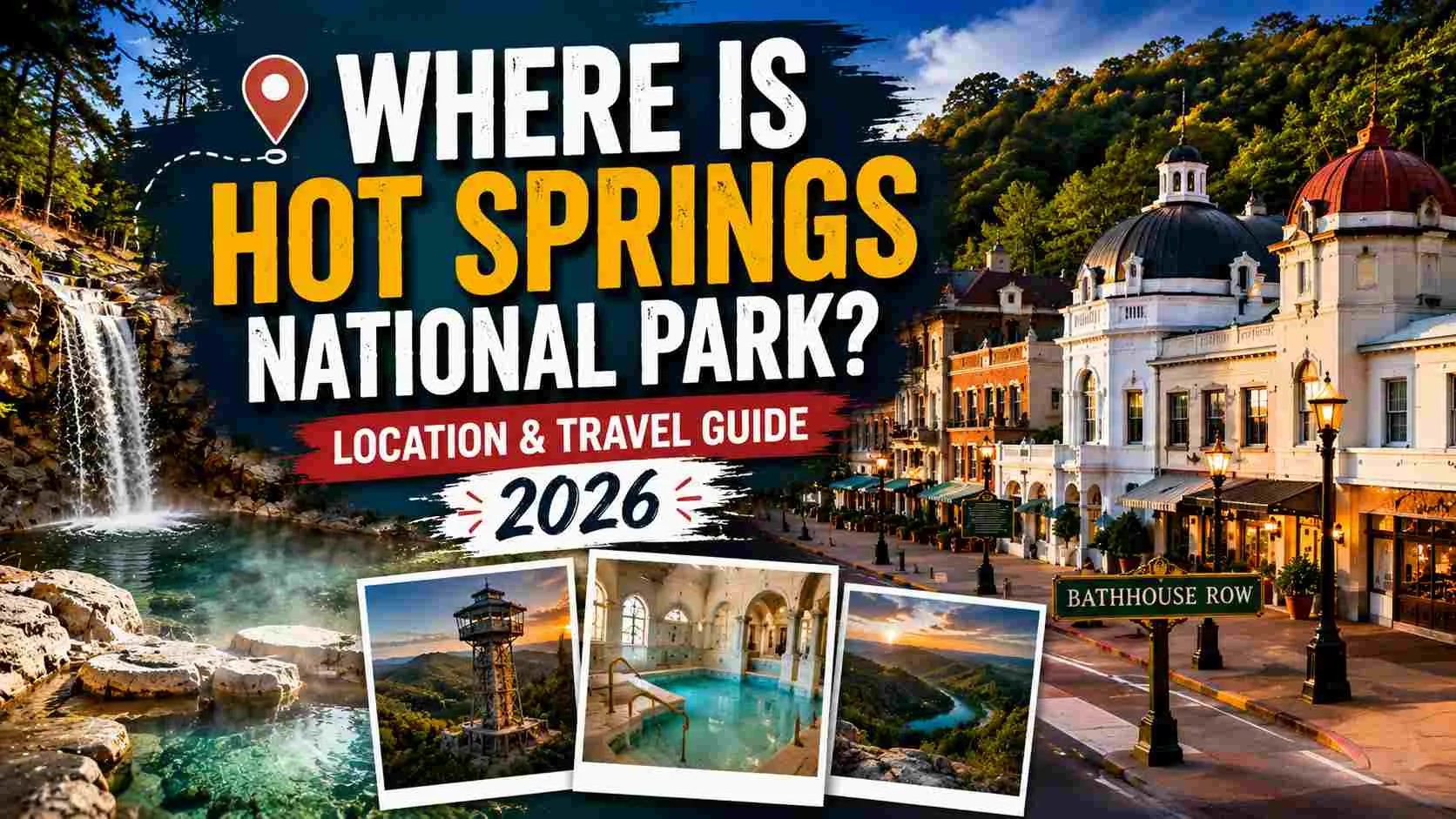
Hot Springs National Park is often described as the only national park that shares its boundary with a fully functioning downtown district. Bathhouse Row, the park’s most iconic feature, faces directly onto the city’s main street, meaning the line between “park” and “town” is barely visible in places.
How to Get to Hot Springs National Park
Knowing the park’s location is only useful if you also know how to reach it. The park is served by several regional routes:
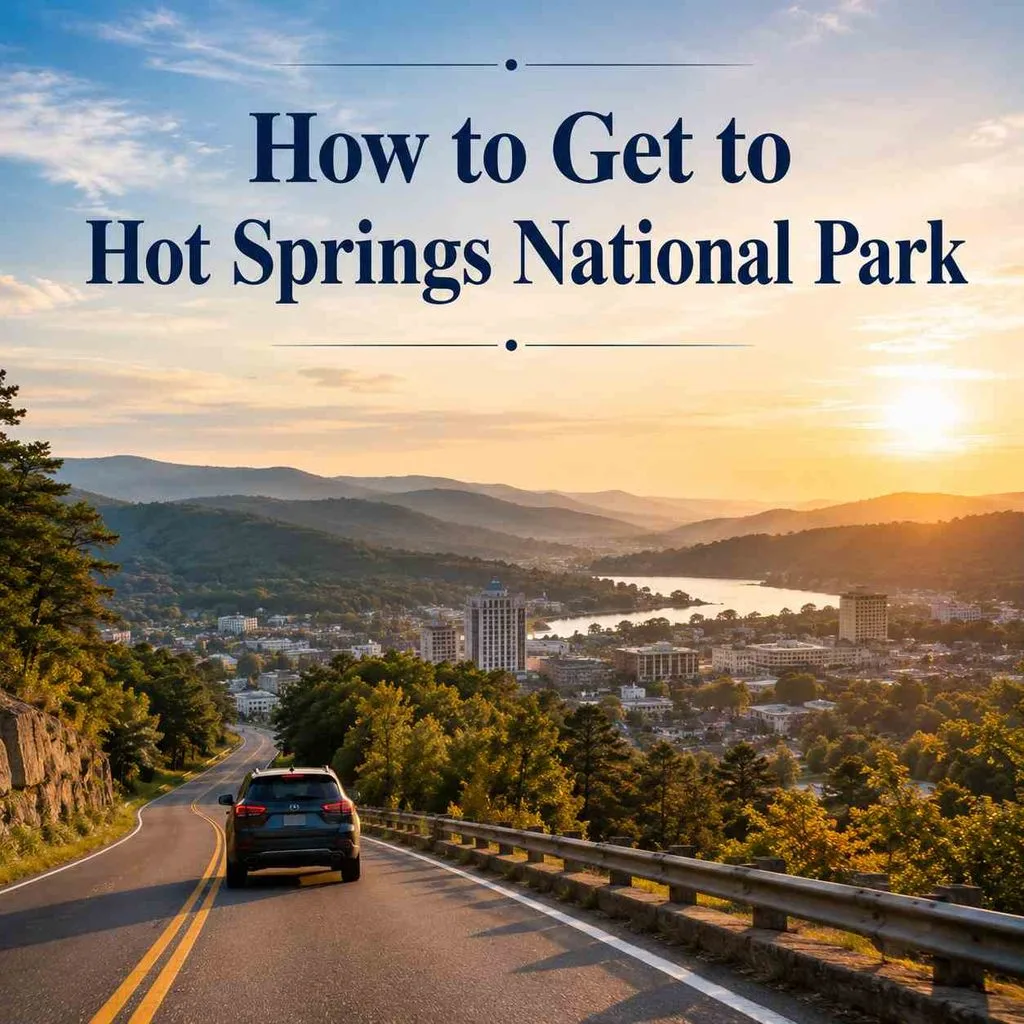
- By car: Take Interstate 30 from Little Rock, then connect to Highway 70 or Highway 7 directly into Hot Springs.
- By air: The closest major airport is Bill and Hillary Clinton National Airport in Little Rock, about a 1-hour drive away. A smaller regional airport, Hot Springs Memorial Field, also serves the area.
- By bus or shuttle: Regional shuttle services and tour operators run routes between Little Rock and downtown Hot Springs.
- On foot within the park: Once you arrive, Bathhouse Row and the visitor center are fully walkable, and hiking trailheads begin right in town.
For travelers combining this trip with a broader tour of America’s national parks, it helps to plan routes in advance something the destination guides at CA Travel Times cover extensively for travelers building multi-stop U.S. itineraries around natural landmarks like this one.
Why the Location of Hot Springs National Park Matters
The site was not chosen randomly. The park exists exactly where it does because of a rare geological feature: more than 40 thermal springs emerge from the western slope of Hot Springs Mountain, producing over one million gallons of naturally heated water each day.
Rainwater seeps deep into the Ouachita Mountains, gets heated by the Earth’s internal temperature over thousands of years, and rises back to the surface through fault lines near the mountain’s base.
The Geology Behind the Springs
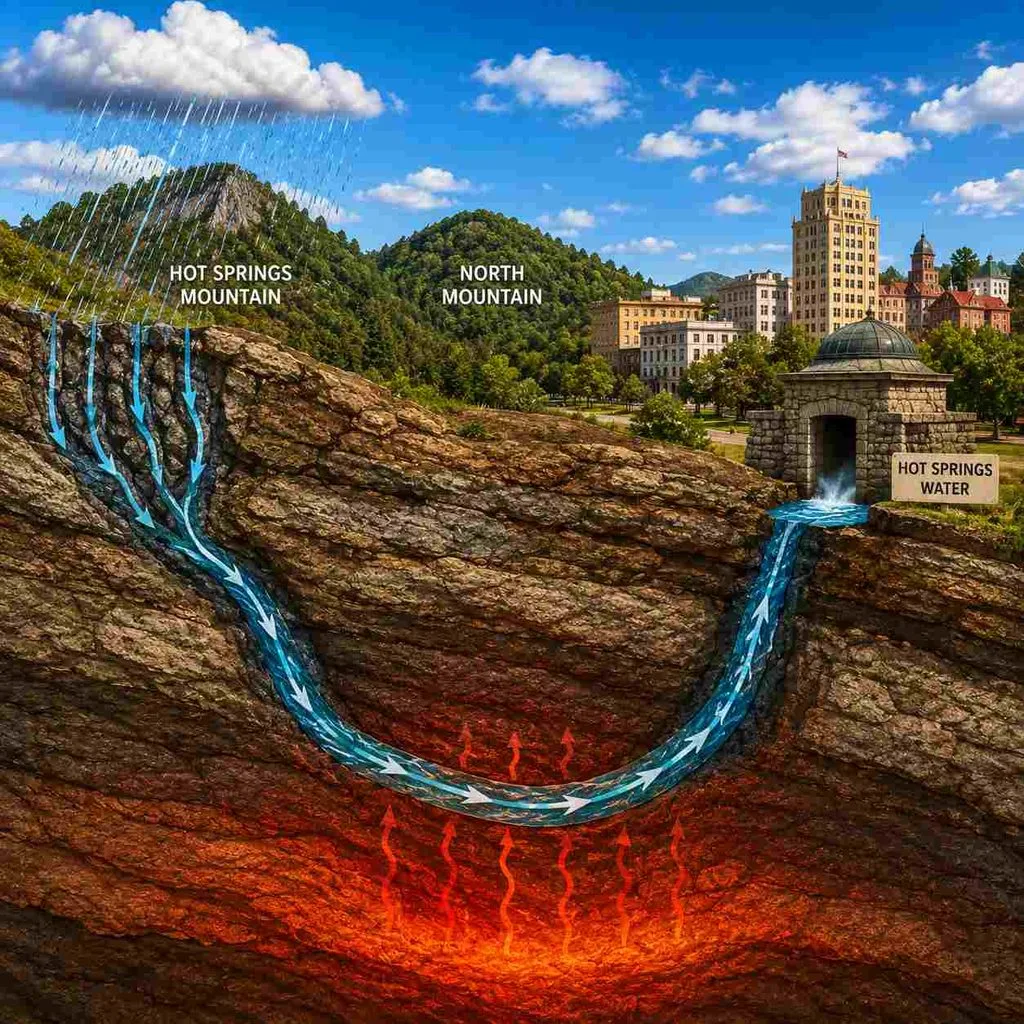
- Rainwater infiltrates through exposed rock on Hot Springs Mountain and North Mountain.
- It travels roughly 4,000 to 8,000 feet underground over a period estimated at several thousand years.
- Geothermal heat warms the water to around 143°F (62°C) before it resurfaces.
- The water emerges nearly free of surface contamination, which historically made it prized as “healing water.”
This geological process is the entire reason the city of Hot Springs — and later the national park developed at this specific spot in Arkansas.
The History That Shaped This Location
Long before it became a national park, this location held cultural and practical importance for Native American groups, including the Quapaw, Caddo, Choctaw, and Cherokee, who considered the springs neutral ground where different tribes could bathe and trade in peace.
Key historical milestones tied to the park’s location include:
- 1541: Spanish explorer Hernando de Soto is believed to be the first European to document the springs.
- 1673: Father Marquette and Jolliet explored the wider Mississippi River region, indirectly opening the area to European claims.
- 1803: The land became U.S. territory through the Louisiana Purchase under Thomas Jefferson.
- 1804–1805: Explorers William Dunbar and George Hunter surveyed the springs on behalf of the federal government.
- 1818: The Quapaw ceded the surrounding land to the United States by treaty.
- 1832: The U.S. Congress set aside the springs as Hot Springs Reservation the first time the federal government protected land purely for public use, decades before Yellowstone existed.
- 1921: Hot Springs Reservation was officially redesignated Hot Springs National Park by an act of Congress, becoming the 18th national park in the system.
The Oldest Federally Protected Land in the System
Because Hot Springs Reservation was established in 1832, this location technically holds the record for the oldest federally protected land in the National Park System — even though Yellowstone is credited as the first official “national park” in 1872. This historical nuance is part of why so many people are surprised by the park’s setting, expecting a remote wilderness area rather than a historic Arkansas spa town.
What You’ll Find at This Location Today
Once you know the park’s location, the next question is usually what there is to actually do there. The park packs a surprising range of experiences into its relatively small footprint of about 5,550 acres, making it one of the most compact parks in the system.
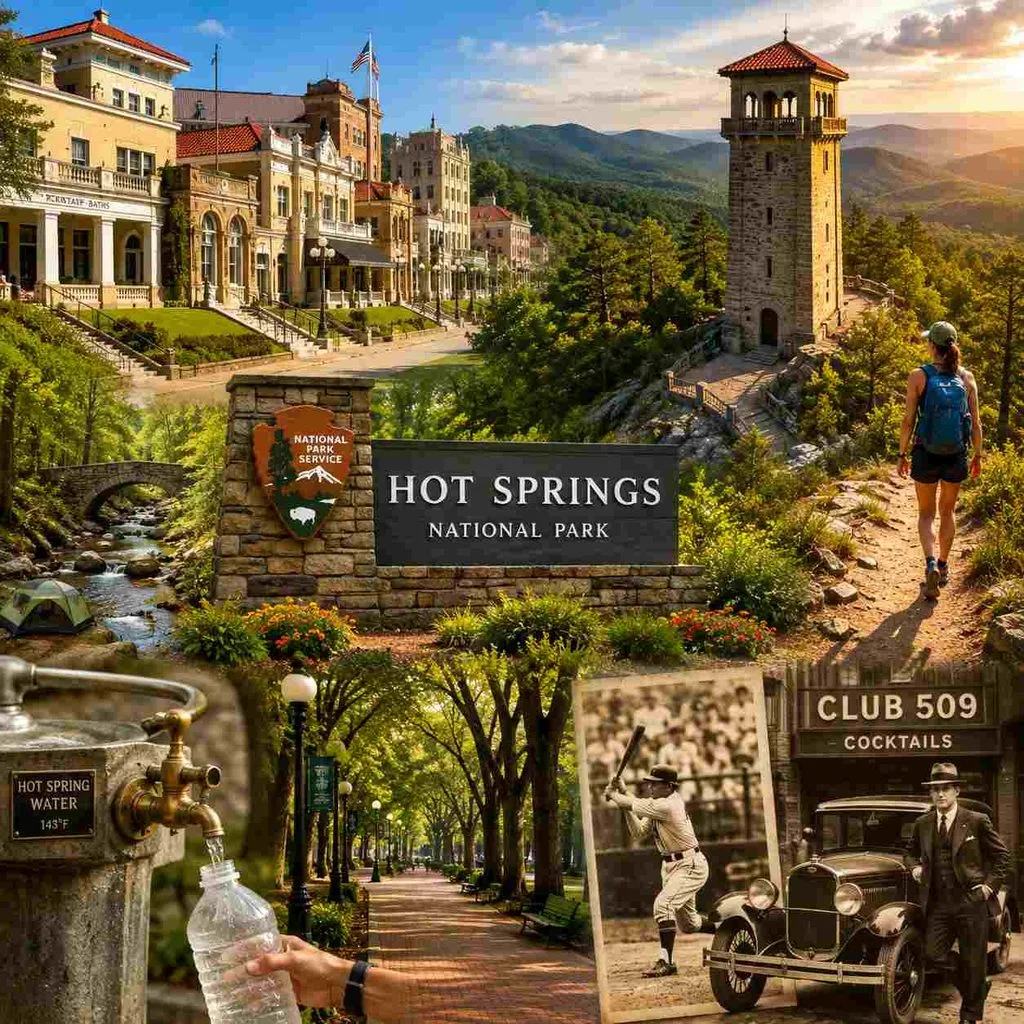
- Bathhouse Row: A National Historic Landmark District featuring eight early-1900s bathhouses, including the restored Fordyce Bathhouse (now the visitor center), the Buckstaff Bathhouse (still operating as a traditional bathhouse), the Quapaw Bathhouse, and the Maurice Bathhouse.
- Hiking trails: Over 26 miles of trails wind through the surrounding Ouachita Mountain forest, including routes up Hot Springs Mountain and West Mountain.
- Hot Springs Mountain Tower: An observation tower offering panoramic views across the Ouachita Mountains and downtown Hot Springs.
- Gulpha Gorge Campground: The park’s only developed campground, tucked along a scenic creek.
- The Grand Promenade: A brick-paved walkway behind Bathhouse Row lined with century-old trees, part of an Old-Growth Forest Network site.
- Thermal water fountains: Public taps where visitors can still fill jugs with the naturally hot spring water, free of charge.
A Park With Baseball and Prohibition-Era History
Few visitors expect to learn that this same location once hosted Major League Baseball spring training, illegal gambling dens, and Prohibition-era speakeasies frequented by figures like Al Capone. Nearby Oaklawn Park racetrack and the historic Army and Navy Hospital add further layers to the area’s unusual past, all shaped by the presence of the thermal springs.
Best Time to Visit Based on Location and Climate
Because Hot Springs National Park sits in central Arkansas, it experiences a humid subtropical climate rather than the alpine conditions found at higher-elevation parks.
- Spring (March–May): Mild temperatures, blooming dogwoods, and fewer crowds than summer.
- Summer (June–August): Warm and humid, popular for hiking early in the day before afternoon heat sets in.
- Fall (September–November): Comfortable temperatures and vivid foliage across the Ouachita Mountains.
- Winter (December–February): Cool but rarely harsh, with the thermal bathhouses offering a warm indoor experience.
Nearby Attractions Worth Combining With Your Visit
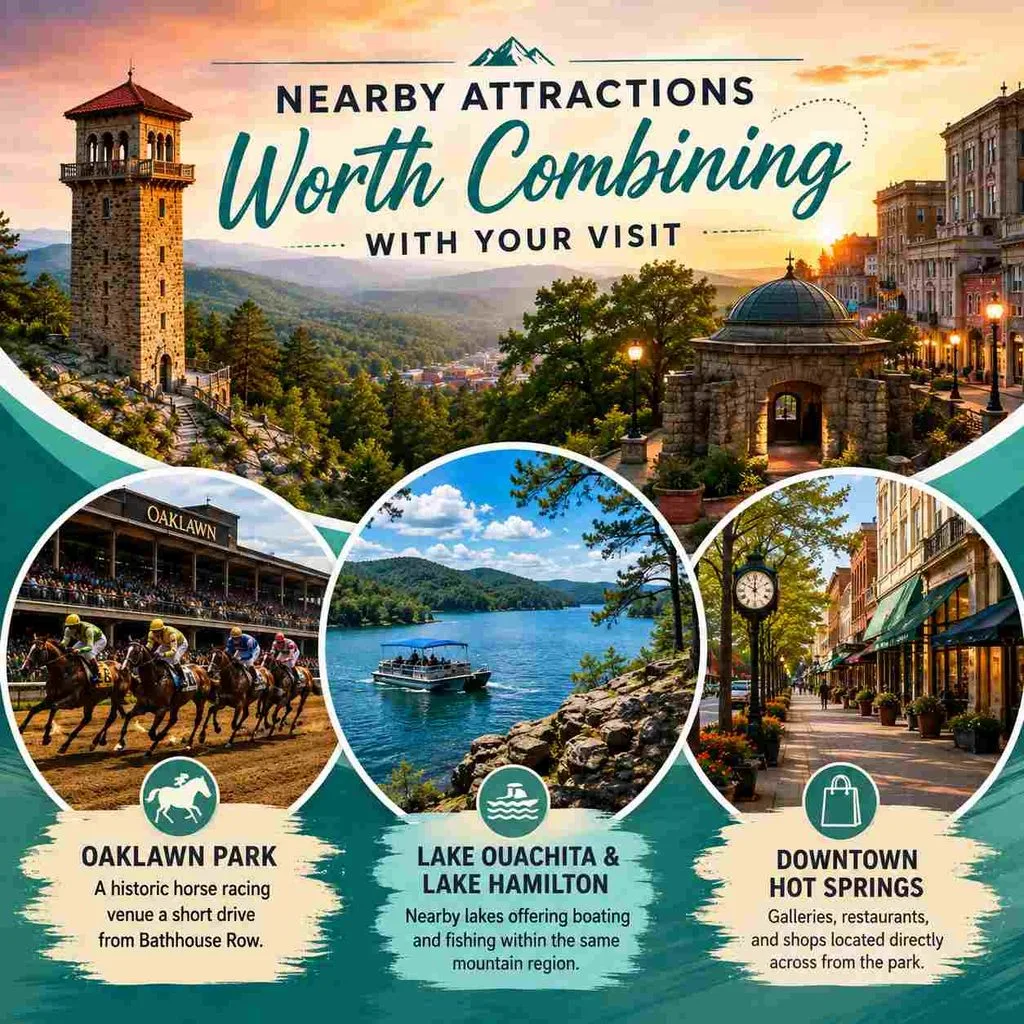
Given its central location, Hot Springs National Park pairs well with several other Arkansas destinations. Travelers planning a broader national park road trip often compare parks across different states before finalizing an itinerary — our guide to Redwood National Park is a good example of how to plan around another iconic, geothermally rich U.S. park.
- Oaklawn Park: A historic horse racing venue a short drive from Bathhouse Row.
- Lake Ouachita and Lake Hamilton: Nearby lakes offering boating and fishing within the same mountain region.
- Downtown Hot Springs: Galleries, restaurants, and shops located directly across from the park boundary.
Final Thoughts
For anyone still asking where is hot springs national park, the answer comes down to a rare mix of geology and geography: naturally heated springs rising through the Ouachita Mountains in Garland County, Arkansas, right at the edge of a small city.
Its compact size, historic Bathhouse Row, and surrounding trails make it easy to explore in a day or two. Check the National Park Service’s official Hot Springs page for current hours, fees, and alerts before you plan your own trip.
Frequently Asked Questions
Where is hot springs national park located exactly?
Hot Springs National Park is located in Garland County, Arkansas, directly adjacent to the city of Hot Springs, within the Ouachita Mountains region of the state.
How far is hot springs national park from Little Rock?
The park sits approximately 55 miles southwest of Little Rock, Arkansas, roughly a one-hour drive via Interstate 30, making it an easy day-trip destination for Little Rock visitors.
How big is hot springs national park?
The park covers about 5,550 acres, making it one of the smallest national parks in the United States by land area, yet it still offers 26 miles of hiking trails.
Is hot springs national park the same as hot springs state park in Wyoming?
No. Hot Springs National Park in Arkansas is a federally managed National Park Service unit, distinct from state-run sites like Hot Springs State Park in Wyoming.
Does hot springs national park have an entrance fee?
No entrance fee applies to the park grounds or Bathhouse Row itself, though certain bathhouse treatments and camping sites at Gulpha Gorge Campground charge separate, individually set fees.