Pan de Muerto Recipe: Soft Orange-Anise Bread You Can Bake Today!
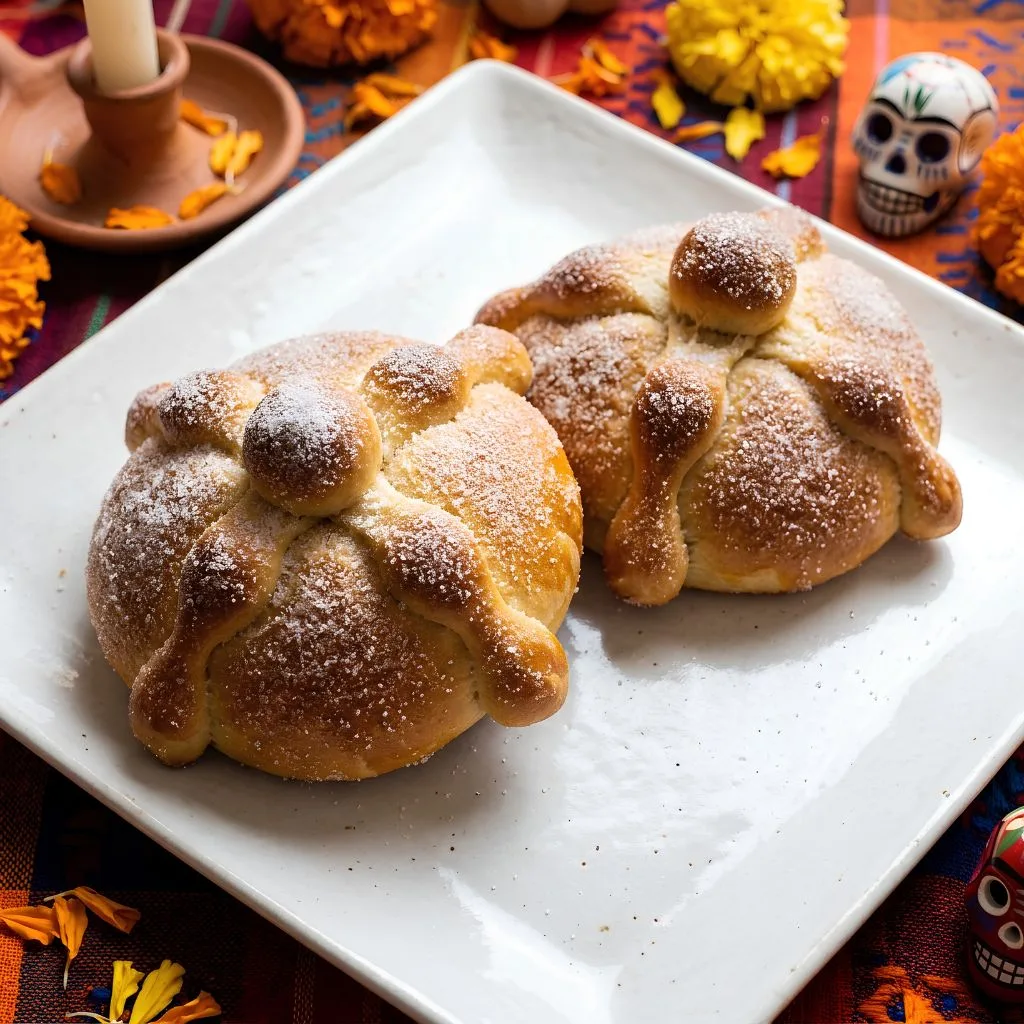
I baked my first batch of Pan de Muerto Recipe on a cool October afternoon, and my whole kitchen smelled like orange and anise for hours. I was nervous about shaping the bone-style dough on top, but it turned out much easier than I expected.
The bread came out soft, fluffy, and lightly sweet, with a buttery sugar crust that I could not stop picking at. This simple pan de muerto recipe makes six medium loaves, so there is plenty to share with family and friends. Grab a mug of Mexican hot chocolate, and let me walk you through every step.
Cooking Time
Pan de muerto is not a rush recipe, but most of the time is hands-off. Here is how the clock breaks down.
- Prep Time: 30 minutes
- Cooking Time: 40 minutes
- Total Time: 4 hours 40 minutes (includes rising and cooling)
Pan de Muerto Ingredients
The pan de muerto ingredients are simple pantry staples plus fresh orange. If you live in California, you can use fresh local oranges and pick up anise seed at almost any Mexican market.
For the dough:
- 2/3 cup whole milk: warm it to about 110°F so it wakes up the yeast without killing it.
- 2 1/4 teaspoons active dry yeast: this gives the loaves their airy, pillowy rise.
- 1/2 cup granulated sugar: it feeds the yeast and gently sweetens the dough.
- 2 1/2 cups bread flour: it adds structure and a soft chew.
- 2 1/2 cups all-purpose flour: it keeps the crumb tender, so don’t skip the mix.
- 1 teaspoon fine salt: it balances the sweetness and builds flavor.
- 1 teaspoon anise seed: it adds a mild licorice note, so use fresh seeds.
- 1 cup unsalted butter, melted: it makes the bread rich, so let it cool slightly first.
- 4 large eggs: they give a golden color and a soft crumb.
- 2 teaspoons orange zest (about 2 medium oranges): this is the signature aroma, so grate it fresh.
- 1 teaspoon oil: it keeps the dough from sticking to the rising bowl.
For the topping:
- 1/4 cup unsalted butter, melted: it helps the sugar coating stick.
- 1 teaspoon orange zest (about 1 orange): it adds a bright citrus finish.
- 1/2 cup granulated sugar: it creates that classic sparkly crust.
Note: serves several. This makes 6 medium loaves.
Equipment You Need
You do not need fancy tools for this recipe. Here is what I kept on my counter.
- Stand mixer with dough hook: it kneads the sticky, buttery dough for you.
- Large mixing bowl: it holds the dough while it doubles in size.
- Two large baking sheets: they give each loaf room to puff up.
- Parchment paper: it prevents sticking and makes cleanup easy.
- Kitchen towel: it keeps the dough covered and warm during both rises.
- Pastry brush: it spreads the orange butter evenly over the warm loaves.
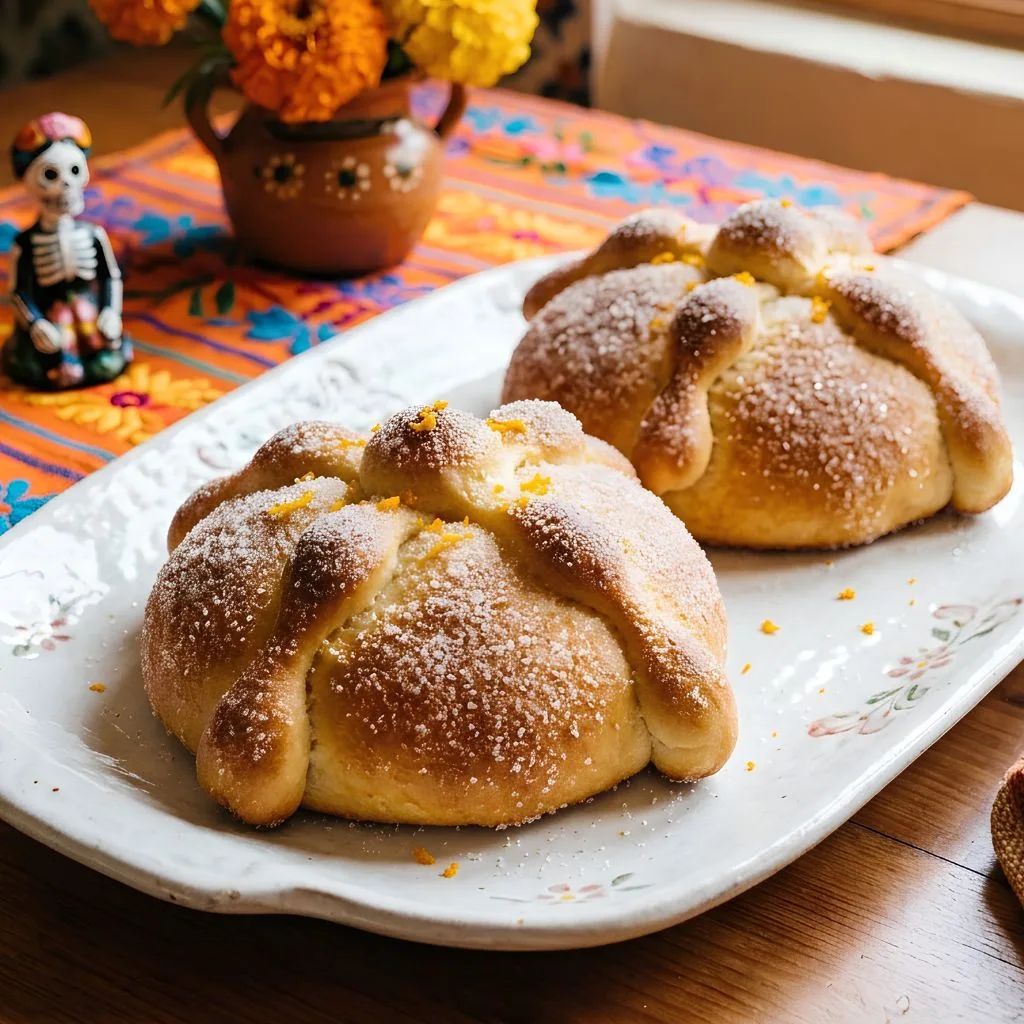
How to Make Pan de Muerto Recipe?
This bread looks fancy, but the steps are easy once you break them down. Read through everything once, then take your time with the rises.
Warm the Milk and Activate the Yeast
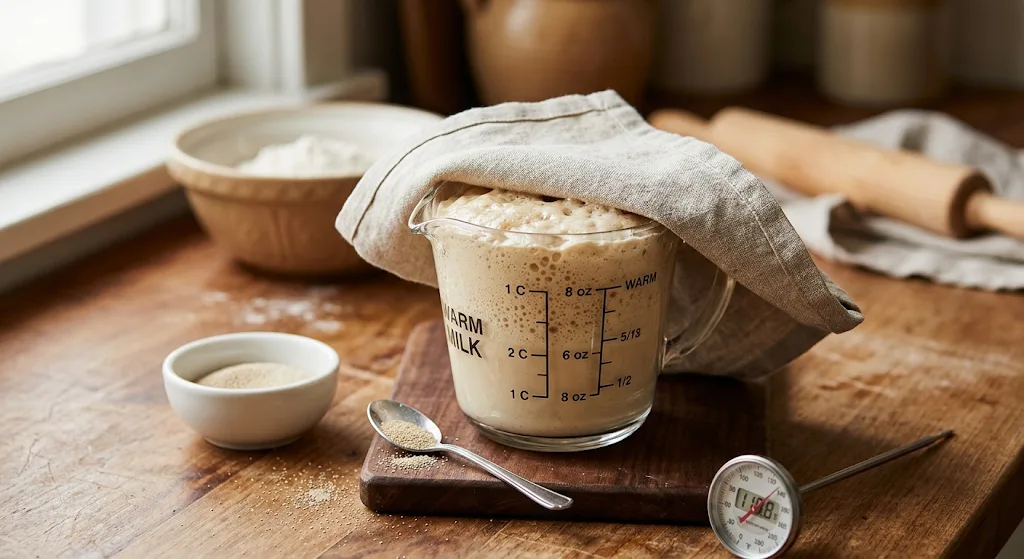
Heat the milk until it feels just warm to the touch, around 110°F to 115°F. Stir in the yeast and sugar, then loosely cover the cup. Wait about five minutes until the mixture turns very foamy.
Mix the Dry Ingredients
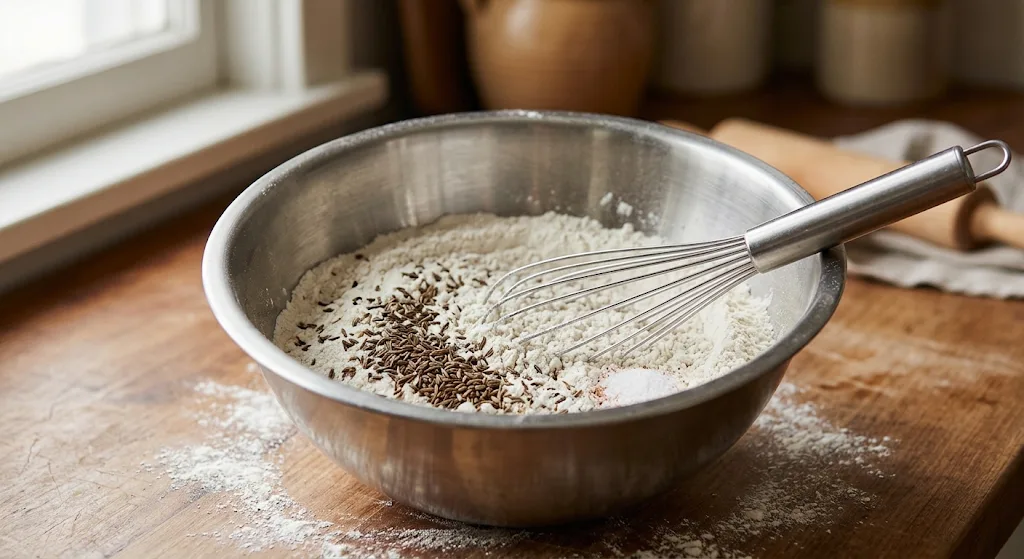
Add the bread flour, all-purpose flour, salt, and anise seed to the bowl of your stand mixer. Whisk everything together so the anise spreads evenly. This step takes a minute and saves you from pockets of salt later.
Knead the Dough
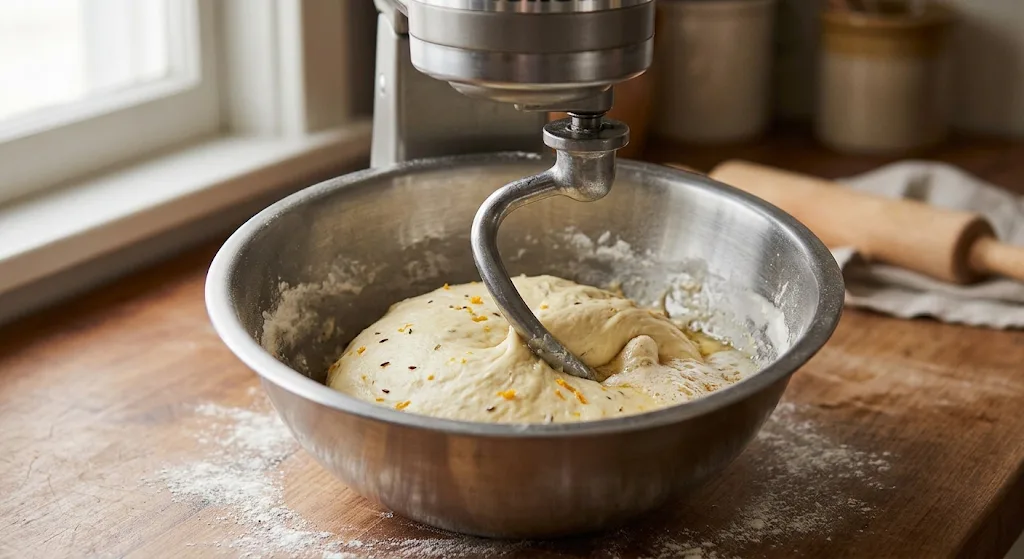
Attach the dough hook, then add the melted butter, eggs, orange zest, and foamy yeast mixture. Mix on medium-low speed for six to eight minutes. The dough is ready when it looks smooth and elastic and pulls away from the bowl.
Let the Dough Rise
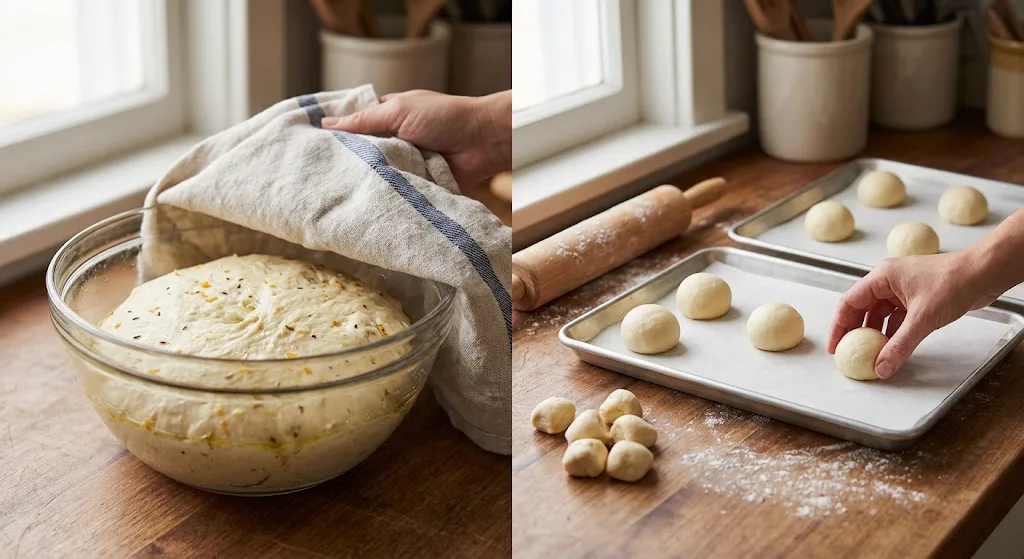
Coat a large bowl with oil and shape the dough into a ball inside it. Cover it with a kitchen towel and leave it in a warm spot. Give it about two hours, until it doubles in size.
Divide and Shape the Loaves
Line two baking sheets with parchment paper. Divide the dough into six equal pieces, then cut one quarter off each and set those aside. Roll the six large pieces into smooth balls and place them on the sheets.
Make the Bones and Top Balls
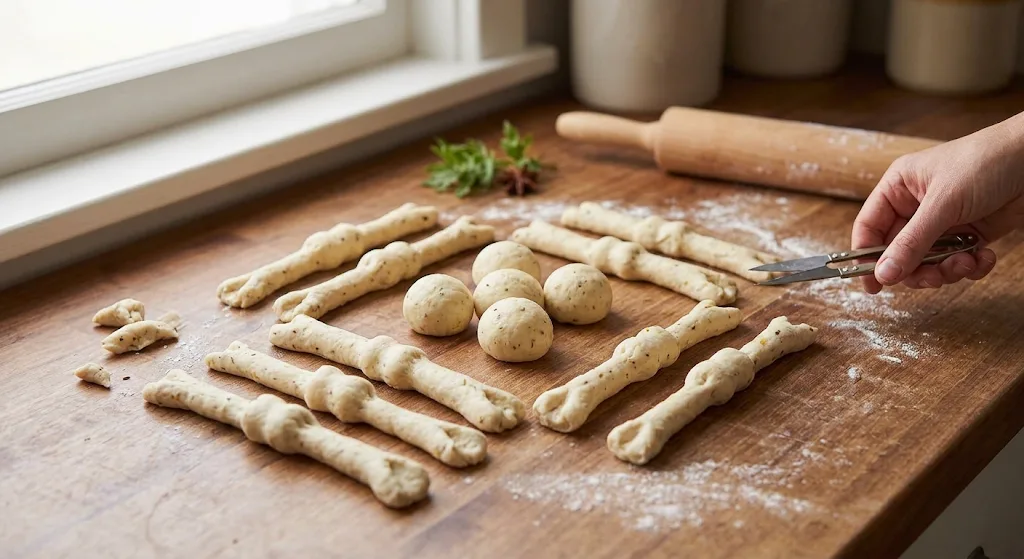
Tear a small piece off each reserved portion and roll it into a little ball for the top. Cut the rest of each portion in half, then roll those pieces into ropes about seven inches long. Pinch each rope at intervals so it looks like a bone.
Assemble and Let Them Rise Again
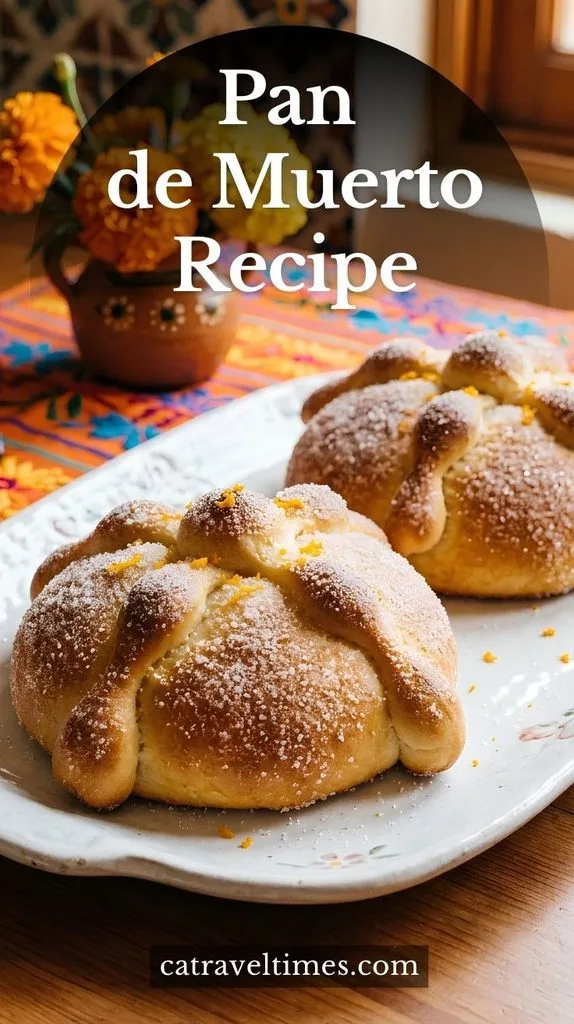
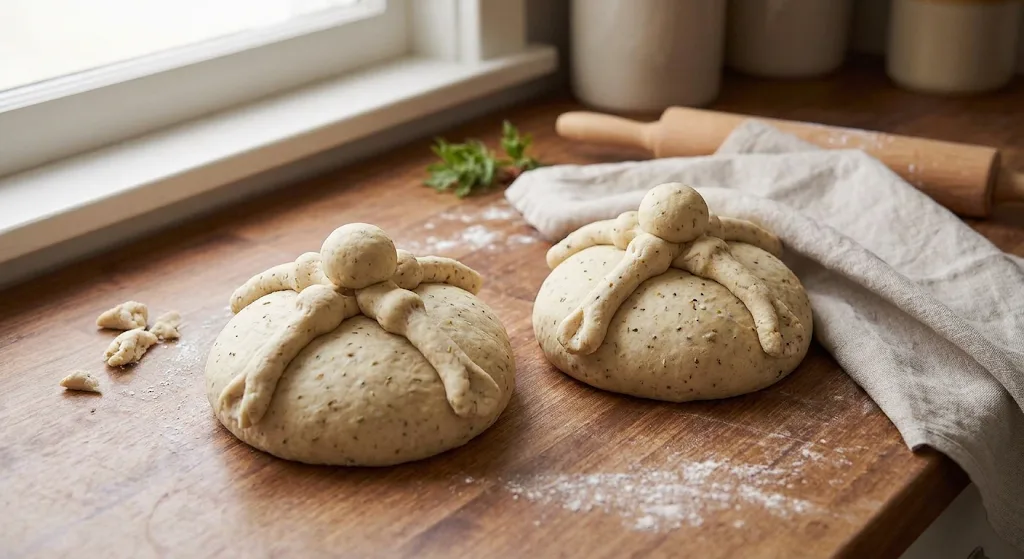
Drape two bone ropes over each loaf in a criss-cross shape. Set one small ball in the center where the ropes meet. Cover the loaves lightly with a towel and let them rise for another 90 minutes.
Bake the Loaves
Preheat the oven to 350°F about 15 minutes before the second rise ends. Bake for 35 to 40 minutes, until the tops are golden brown and the bread is cooked through. If you are in the UK, that is roughly 180°C.
Cool the Bread
Move the loaves to a wire rack and let them cool for at least 30 minutes. The bread should still feel slightly warm when you add the topping. That warmth helps the butter and sugar cling to the crust.
Brush with Orange Butter and Coat in Sugar
Whisk the melted butter and orange zest in a small bowl. Brush it generously over each loaf, then roll or brush the loaves in granulated sugar. Press gently so the sugar coats the bones too.
Additional Tips for Making This Recipe Better
A few small habits made my loaves softer and prettier. These are the tips I wish I had known the first time.
- I never rush the rise. Slow rising is what gives this bread its pillowy texture.
- When my kitchen felt cool, I placed the covered bowl in the oven with only the light on. It rose beautifully.
- I always use fresh orange zest and fresh anise seed because they carry the whole flavor of the bread.
- I brush on the butter and sugar while the loaves are still slightly warm so the topping sticks well.
Common Mistakes to Avoid
Most pan de muerto problems come down to temperature and timing. Here are the mistakes I made or saw other bakers make.
- Using milk that is too hot: I once overheated it and the yeast never foamed. Aim for warm, not steaming.
- Cutting the rising time short: my first dense batch taught me to wait until the dough truly doubled.
- Skipping the fresh zest: bottled or dried zest made my bread taste flat, so I only use fresh now.
- Sugaring cold loaves: the coating slid right off for me, so I always sugar the bread while it is still warm.
How to Serve Pan de Muerto?
Pan de muerto is lovely on its own, but a warm drink makes it feel complete. I like to serve it the way it is meant to be shared, with family around the table.
For drinks, my favorites are a mug of Mexican hot chocolate, café de olla, or a warm cup of atole. A glass of cold milk works too. The lightly sweet bread soaks up all those flavors nicely.
For presentation, set each loaf on a wooden board and let the sugar sparkle. Add a few orange slices or marigold petals beside the bread for color. If you are building an altar for Día de los Muertos, place one loaf there and keep another to share.
For a full dessert spread, pair it with conchas. A good conchas recipe is a great next project. Across California, from Los Angeles to San Diego, panaderías fill their shelves with this bread every fall. If you search for pan de muerto near me, you will often find it sold in mid-October.
Variations
You can adjust this bread to fit your pantry or your diet. These swaps worked well for me.
- Mini pan de muerto recipe: divide the dough into 12 small loaves and shorten the bake time, checking early.
- More traditional flavor: replace half the butter with lard.
- Orange blossom water: add a splash for a floral aroma that many regions love.
- No anise: use a smaller amount or swap in a pinch of ground cinnamon, or even a little vanilla.
- Instant yeast: pan de muerto recipe instant yeast versions work well too. Mix it into the flour and skip the foaming step.
Nutritional Information
Here is a rough look at what one loaf provides. These numbers are approximate and come from automatic calculations.
- Calories: 857 kcal
- Protein: 18 g
- Carbohydrates: 97 g
- Fat: 45 g
Make Ahead and Storage
This bread holds up well, so you can bake it a day or two before your gathering.
Storage
Keep cooled loaves in an airtight container or bag at room temperature. They stay soft and tasty for about two to three days. I add the sugar topping fresh if the coating looks dull.
Reheating
Warm a loaf in a 300°F oven for about eight to ten minutes. You can also toast a slice in a pan with a little butter. Both ways bring back that fresh-baked softness.
Freezing
Wrap the cooled loaves well and freeze them for up to two months. Thaw them overnight on the counter, then warm them in the oven. For the best sugar crust, add the butter and sugar after thawing.
Why You’ll Love This Recipe?
This is one of those Mexican desserts that feels special without being stressful.
- Simple to follow: the steps are easy, and a stand mixer does the hard kneading. Anyone can bake this with a little patience.
- Meaningful tradition: the bone-shaped dough and sugar topping tell a beautiful story. It makes a great way to celebrate Día de los Muertos at home.
- Perfect for sharing: one batch makes six medium loaves. I give a few away and still have plenty left.
- Cozy flavor: orange zest and anise give a warm aroma that fills the house. The soft crumb tastes lightly sweet and buttery.
- Easy to customize: you can make mini loaves, add orange blossom water, or change the sugar coating. It adapts to your taste and your pantry.
FAQs
Can I use instant yeast instead of active dry yeast?
Yes, you can. Mix the instant yeast right into the flour and add the warm milk. The dough will still rise well, though it may move a little faster.
What if I cannot find anise seed?
Use a smaller amount or replace it with a pinch of ground cinnamon. A little vanilla also works if you want warmth.
Can I make this recipe with measurements in grams for the UK?
I recommend a kitchen scale for the most accurate dough, since cup measures vary. Set the oven to about 180°C, and watch the loaves near the end of baking.
Can I make smaller loaves?
Yes, you can divide the dough into 12 small loaves or 2 large ones. Adjust the baking time and check early so they do not overbake.