California Pozole Rojo Recipe – Rich and Cozy Red Chile Pork Stew
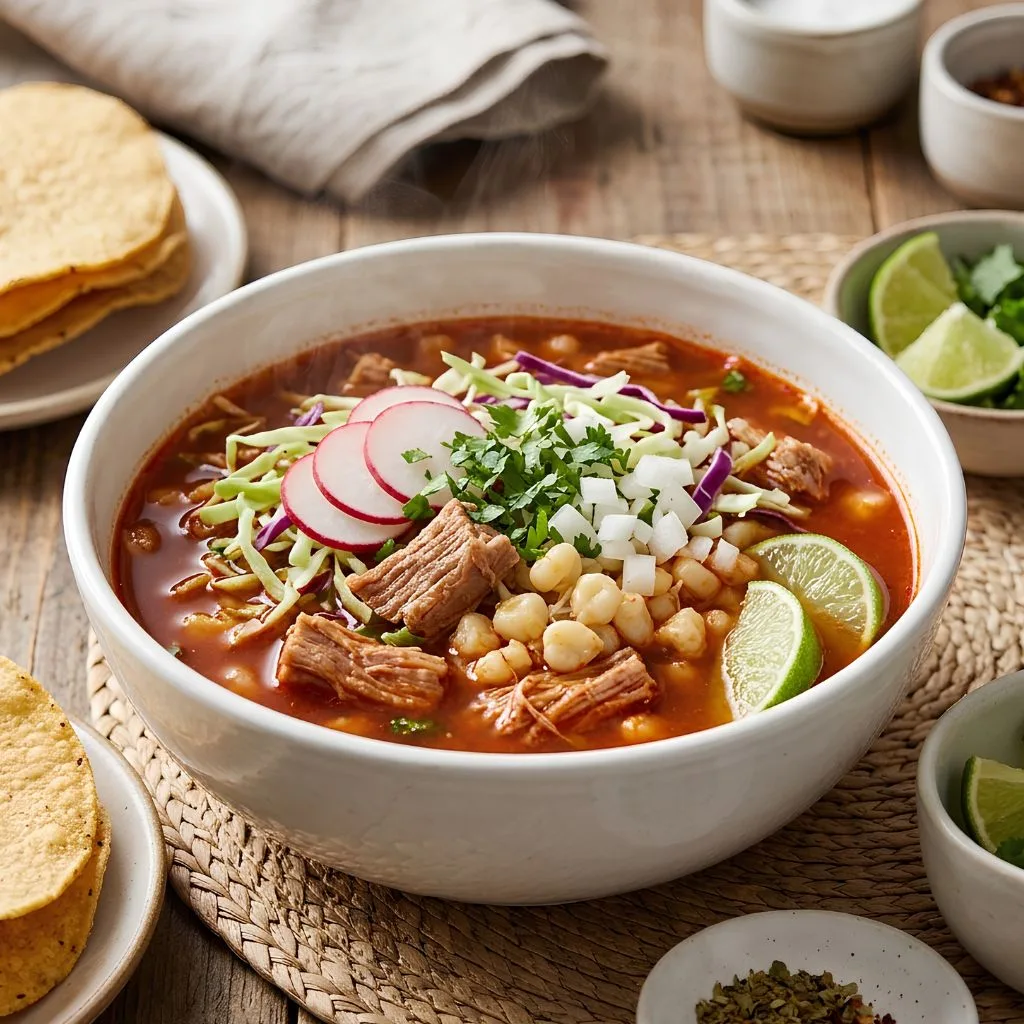
I made this California Pozole Rojo Recipe on a foggy weekend, and my whole kitchen smelled like toasted chiles by noon. The pork turned so tender that it fell apart the moment my spoon touched it. I loaded my bowl with crunchy cabbage, radishes, creamy avocado, and a big squeeze of lime.
It reminded me of the steaming bowls you find at little taquerias across California. If you want an easy pozole rojo recipe that tastes truly authentic, I promise this one delivers.
Cooking Time
Pozole is a slow, patient soup, so plan your afternoon around it. Here is how the time breaks down.
- Prep Time: 30 minutes
- Cooking Time: 3 hours
- Total Time: 3 hours 30 minutes
Ingredients for Pozole Rojo
This authentic pozole recipe uses simple pantry staples and a few fresh toppings. Every ingredient has a clear job in the pot.
- 4 ounces dried guajillo or ancho chili pods: They create the deep red color and smoky flavor, so never skip them.
- 3 pounds pork shoulder, cut into 1 to 1 1/2 inch cubes: Pick a well-marbled, bone-in cut for the richest broth.
- 1 large can (108 ounces) white hominy, drained and rinsed: These puffy corn kernels make pozole what it is.
- 8 garlic cloves (4 chopped, 4 whole): The chopped cloves flavor the pork, and the whole ones go into the sauce.
- 3 bay leaves: They add a gentle, earthy background note.
- 1 teaspoon ground cumin: It brings warmth without overpowering the chiles.
- 2 tablespoons dried oregano, Mexican if possible: Rub it between your palms before adding to wake up the oils.
- 2 tablespoons olive oil: Just enough to brown the pork well.
- 5 quarts water, plus 3 cups for soaking chiles: This builds a light, brothy base that is perfect for toppings.
- Salt, about 2 tablespoons plus more to taste: Pozole needs more salt than you think, so keep tasting.
- 1/2 small cabbage, thinly sliced: It adds fresh crunch against the rich broth.
- 1 bunch cilantro, chopped: Add it at the end so it stays bright.
- 1/2 white onion, chopped: It gives a sharp, clean bite.
- 2 avocados, chopped: Slice them right before serving so they stay green.
- 4 limes, quartered: A good squeeze lifts every spoonful.
- 1 bunch red radishes, thinly sliced: They bring a peppery crunch.
- 24 tostada shells: Serve them on the side for scooping and crunching.
Note: Serves 10 to 12
Equipment You Need
You do not need fancy gear for this pozole rojo soup. A few sturdy basics are enough.
- Large 10 to 12 quart stockpot: It holds the pork, hominy, and plenty of broth.
- Cast iron pan: It toasts the chiles until they soften and smell fragrant.
- Medium pot: It heats the water for soaking the chiles.
- Large sauté pan: It gives the pork a deep golden sear.
- Blender: It turns the soaked chiles into a smooth red sauce.
- Fine mesh sieve: It catches tough chile bits for a silky broth.
- Ladle and skimming spoon: They help you serve and remove extra fat.
- Cutting board and sharp knife: They make quick work of the pork and garnishes.
How to Make California Pozole Rojo Recipe?
This recipe moves in a few easy stages. You soak the chiles, brown the pork, blend the sauce, and let everything simmer together. Most of the time is hands-off, so you can relax while the pot works its magic. Follow the steps in order, and you will get a bowl worthy of any California taqueria.
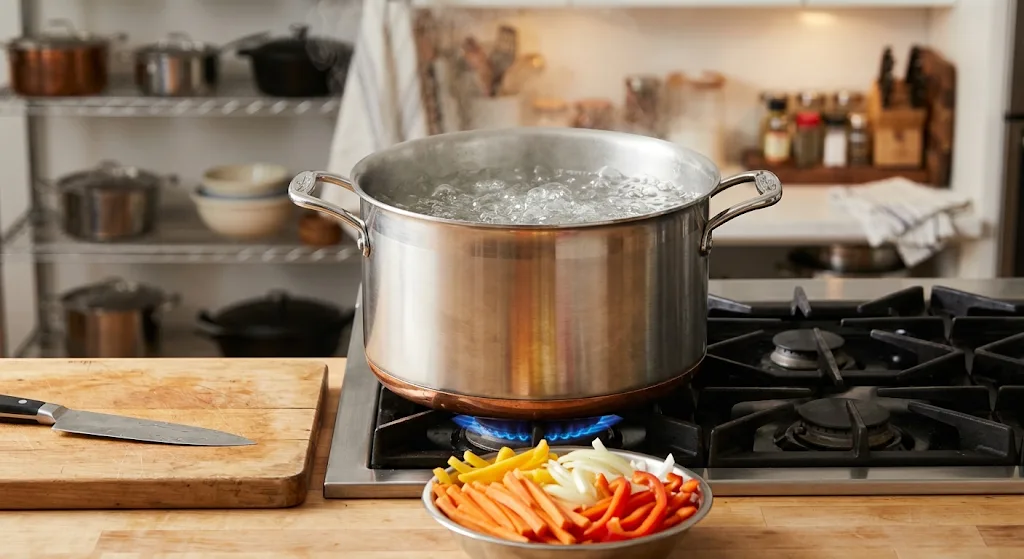
Boil the Water
Fill your large stockpot with 5 quarts of water and set it over high heat. Let it come to a boil while you prep the other ingredients. Starting the water early saves time later and keeps the cooking rhythm smooth.
Toast and Soak the Chiles
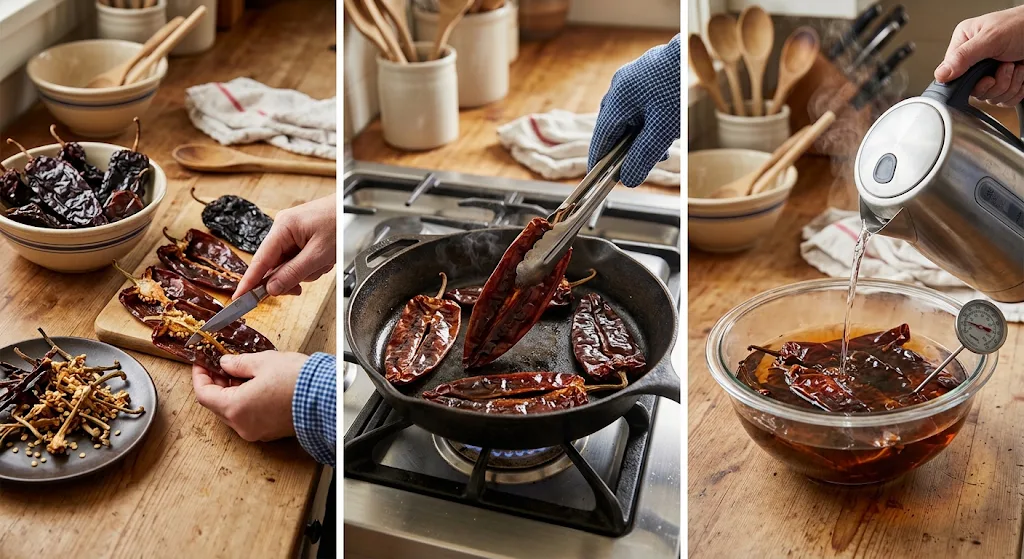
Remove the stems, seeds, and large veins from the chili pods. Warm them in a cast iron pan over medium-high heat for a couple of minutes until soft. Watch closely so they do not burn. Then cover them with 3 cups of hot water and soak for 15 to 20 minutes.
Brown the Pork
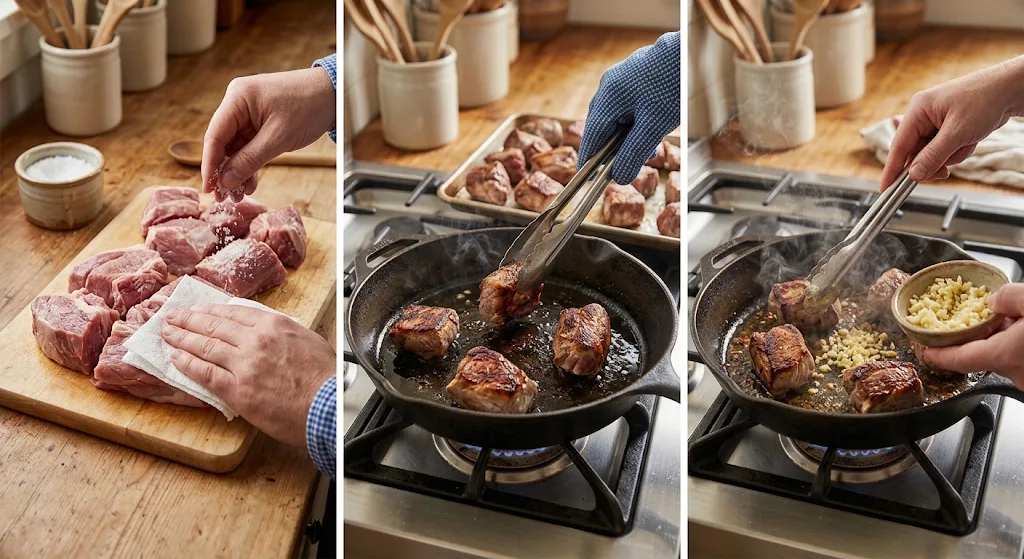
Pat the pork dry and sprinkle it generously with salt. Heat the olive oil in a large pan and brown the meat in small batches. Do not crowd the pan. At the very end, stir in 4 chopped garlic cloves and cook for about a minute.
Build the Pot
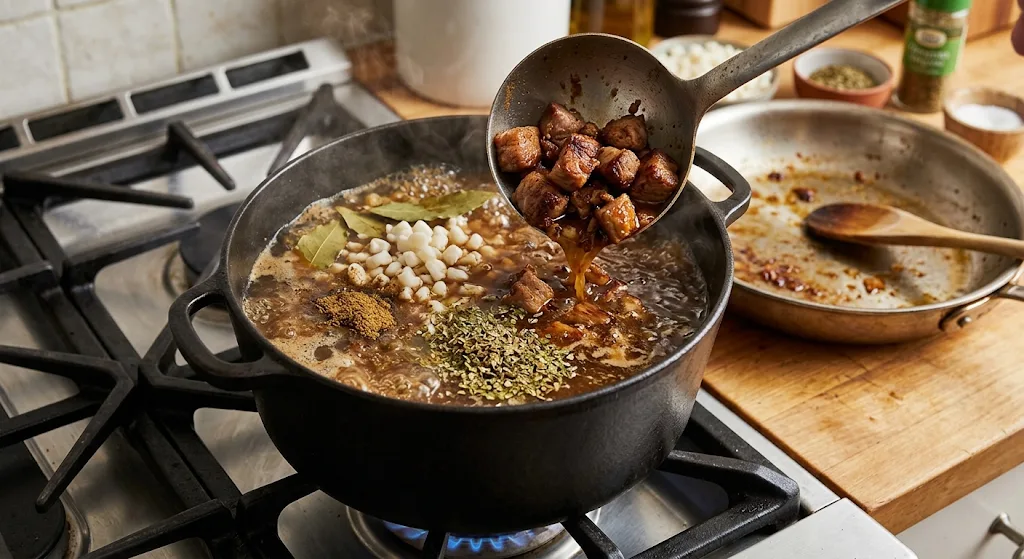
Move the browned pork into the boiling water and scrape every tasty bit from the pan into the pot. Add the hominy, bay leaves, cumin, and oregano. Crush the oregano with your hands as it goes in. Add 1 tablespoon of salt, simmer, and cook for 15 minutes.
Blend the Red Sauce
Place the soaked chiles, 4 garlic cloves, 1 teaspoon salt, and about 1 cup of the soaking liquid into a blender. Blend, then add the remaining liquid up to 2 1/2 cups total. Pour the sauce through a sieve and discard the tough bits. This step makes the broth silky and smooth.
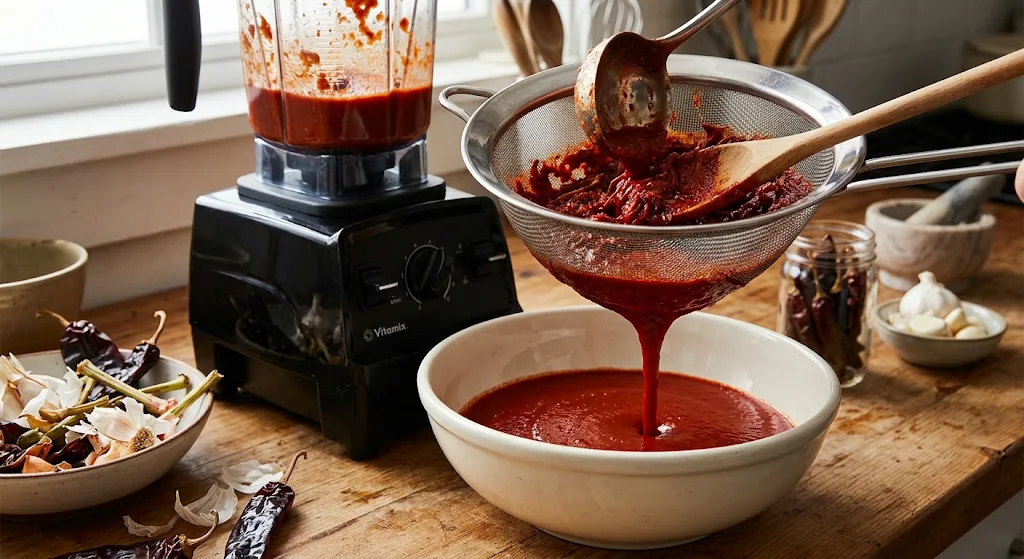
Simmer Until Tender
Stir the red sauce into the pot and add a couple more teaspoons of salt. Bring it back to a simmer, then lower the heat and partially cover. Cook for 2 to 3 hours until the pork is completely tender. Skim off extra fat and add water if the soup gets too thick.
Season and Prep the Garnishes
Taste the broth and add more salt, often a full tablespoon or more. The soup should stay rather brothy because the toppings add so much body. While it simmers, slice the cabbage and radishes, chop the cilantro and onion, and cut the limes.
Serve It Up
Ladle the hot pozole into deep bowls. Set out every garnish in small bowls so everyone can build their own. Serve with tostada shells on the side, or tortilla chips if you cannot find them.
Additional Tips for Making This Recipe Better
After making this pozole rojo many times, I have picked up a few habits that make a real difference.
- I always choose bone-in pork shoulder because the bones give the broth a rich body.
- I toast the chiles only until they smell fragrant, since burnt chiles turn the whole pot bitter.
- I start the blender with just 1 cup of soaking liquid to avoid pressure and messy splatters.
- I season in stages and taste often, because hominy soaks up a lot of salt.
- I skim the fat during the last hour so the broth stays clean and bright.
- I chill leftovers overnight, because the flavor gets even deeper the next day.
Common Mistakes to Avoid
Pozole is forgiving, but a few small slips can dull the flavor. Here is what I learned the hard way.
- Skipping the sieve: I once left the sauce unstrained and the broth felt gritty, so now I always strain it.
- Burning the chiles: I let them scorch once and the soup tasted bitter, so I now watch them closely.
- Under-salting: My first batch tasted flat until I added much more salt than I expected.
- Crowding the pan: When I rushed the pork, it steamed instead of browned, so I work in batches.
- Cutting the simmer short: I tried pulling the pot early once, and the pork stayed chewy, so I give it the full 2 to 3 hours.
How to Serve California Pozole Rojo?
A great bowl of pozole is as much about the toppings as the soup. Think of it as a colorful build-your-own feast.
- Ladle the soup into wide, deep bowls so there is room for toppings.
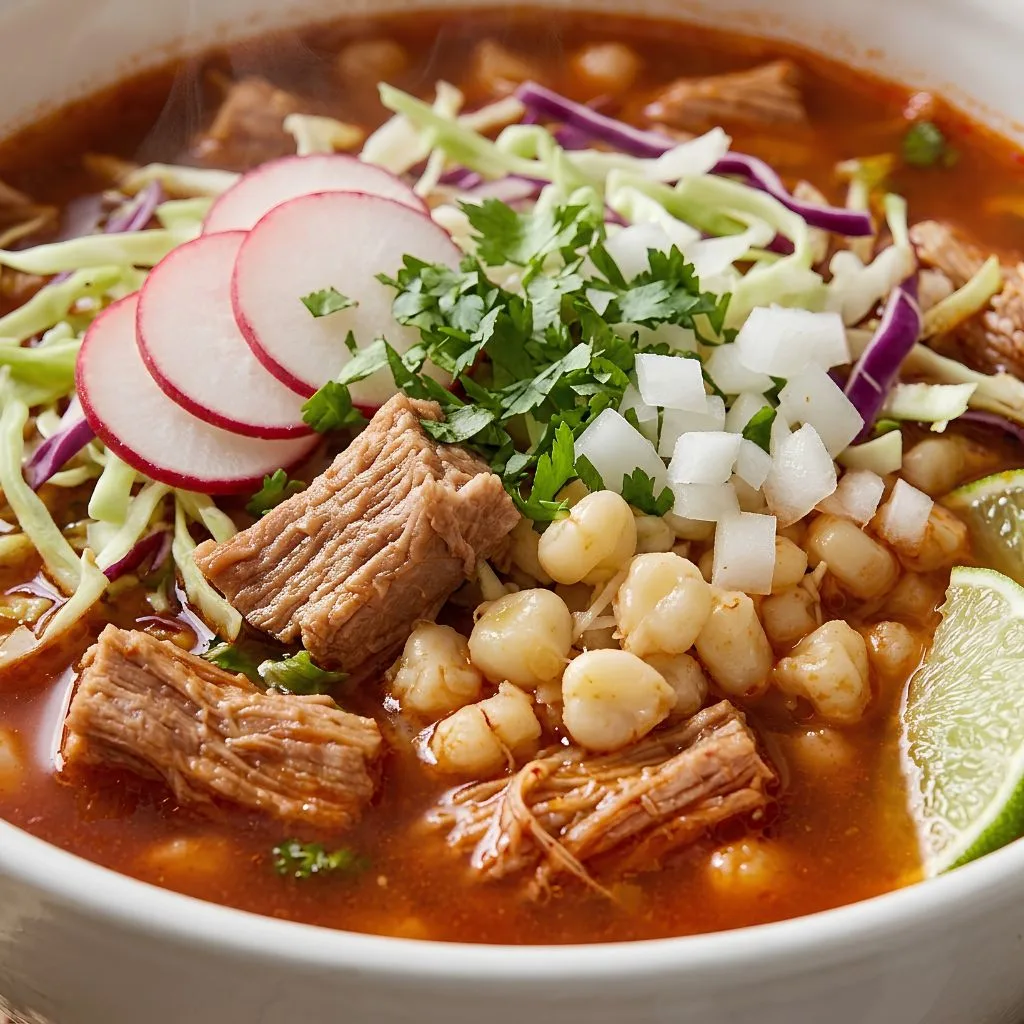
- Pile on shredded cabbage, sliced radishes, chopped onion, and cilantro for color and crunch.
- Add fresh diced avocado, which feels very California, along with a big lime wedge on the rim.
- Crush a little dried oregano over the top for aroma.
- Serve tostada shells on the side, or crumble them right into the bowl.
- Place all toppings in small bowls in the center of the table so everyone can customize.
Variations
Once you master the base recipe, it is easy to switch things up. Here are a few ideas I enjoy.
- Chicken pozole: Swap the pork for bone-in chicken thighs and shorten the simmer time.
- Extra spicy: Add a few dried chiles de arbol to the sauce for more heat.
- Milder bowl: Use only ancho chiles for a sweeter, gentler flavor.
- Pozole verde: Replace the red chile sauce with a tomatillo and green chile blend for a tangy twist.
- Vegetarian version: Use mushrooms and vegetable broth in place of pork.
- Crunch boost: Fry corn tortilla strips and scatter them on top.
Nutritional Information
Here is an approximate breakdown for one generous serving. Exact numbers will vary with the cut of pork and your toppings.
- Calories: About 350 kcal
- Protein: About 28 grams
- Carbohydrates: About 24 grams
- Fat: About 16 grams
Make Ahead and Storage
Pozole is one of those dishes that gets better with time. Here is how I store it.
Storing
Let the soup cool, then move it into airtight containers and refrigerate. Keep the garnishes in separate containers so they stay crisp.
Reheating
Warm the pozole slowly in a pot over medium-low heat. Add a splash of water or broth if it has thickened, and taste for salt.
Freezing
Freeze the soup without garnishes in freezer-safe containers for up to 3 months. Thaw it overnight in the fridge before reheating.
How Long It Stays Fresh
Leftovers stay fresh in the refrigerator for 3 to 4 days. Always fresh-cut your toppings right before serving.
Why You’ll Love This Recipe?
This pozole rojo soup checks every box for a cozy family meal. Here are my favorite reasons to make it.
- Deep, authentic flavor: The toasted chiles and slow-cooked pork create a rich, layered broth. It tastes like something from a beloved neighborhood spot in Southern California.
- Mostly hands-off: After the first hour of prep, the pot does the work for you. You can relax while the soup simmers and fills your home with amazing aromas.
- Perfect for crowds: This big batch feeds 10 to 12 people with ease. It is ideal for holidays, game days, and weekend gatherings.
- Fully customizable: Everyone builds their own bowl with the toppings they like. You can adjust the heat, the crunch, and the freshness to match every taste.
- Naturally gluten-free: The soup is built on pork, hominy, and chiles, so it works for many diets. Just check your tostada shells if you need to be strictly gluten-free.
FAQs
Is pozole rojo spicy?
Not really. Guajillo and ancho chiles give deep flavor and color with only mild to medium heat. Add chiles de arbol if you want it hotter.
Can I use a different cut of pork?
Yes, pork shanks work well too. Just pick a well-marbled cut so the meat stays juicy.
What is the difference between pozole rojo and pozole verde?
Pozole rojo gets its color from dried red chiles. Pozole verde uses tomatillos and green chiles for a brighter, tangier taste.
Can I make pozole in a slow cooker?
You can, though I prefer the stovetop for better control. Brown the pork first, then cook everything on low until the meat is tender.
What if I cannot find tostada shells?
Tortilla chips are a great stand-in. Warm corn tortillas also work nicely on the side.