California Honey Garlic Salmon Recipe: Sticky, Sweet, and So Easy
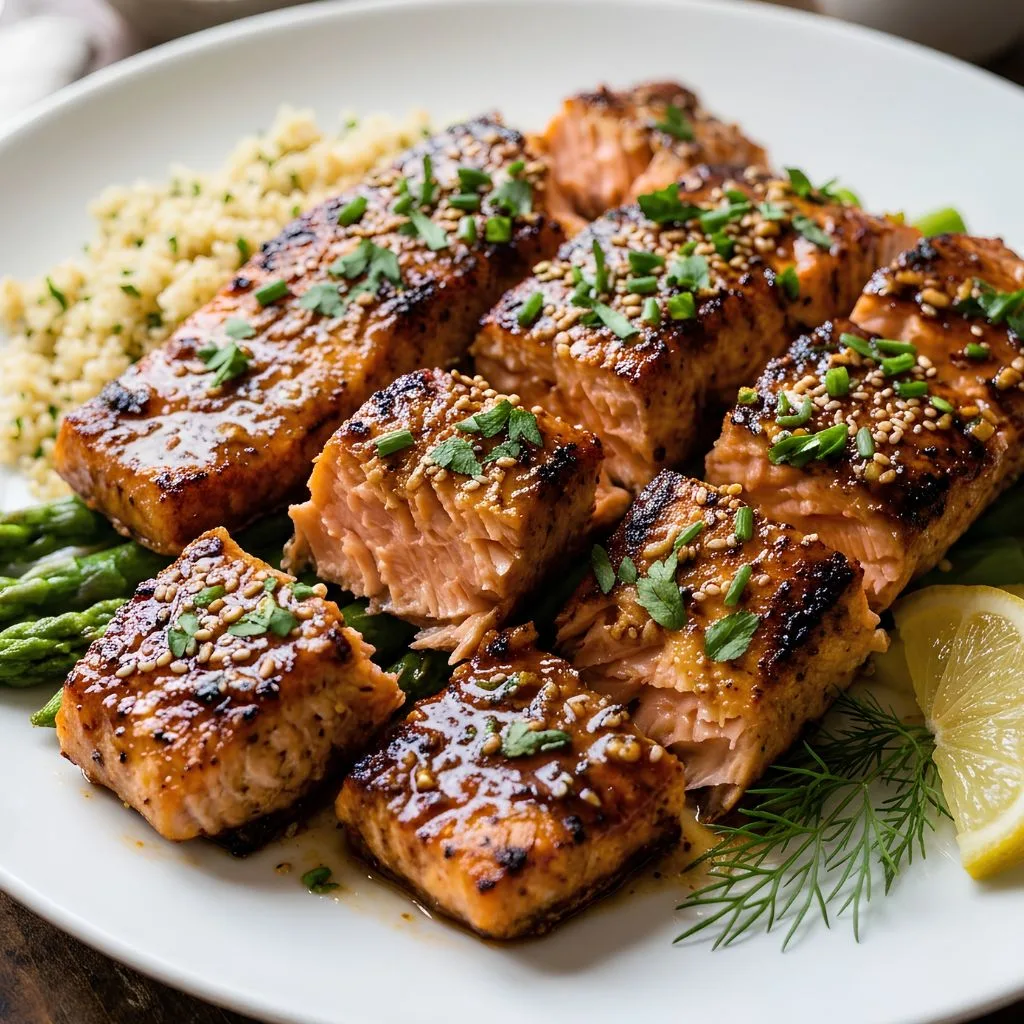
I made this California Honey Garlic Salmon Recipe on a busy weeknight, and I honestly did a little happy dance at the stove. The glaze turned sticky, golden, and just a little bit charred under the broiler. It reminded me of those sunny dinners you get along the California coast, where fresh fish and simple flavors do all the work.
I loved that it all happened in one pan, with almost no cleanup. If you want the best honey garlic salmon recipe for a fast dinner, I think you will be as happy with it as I was.
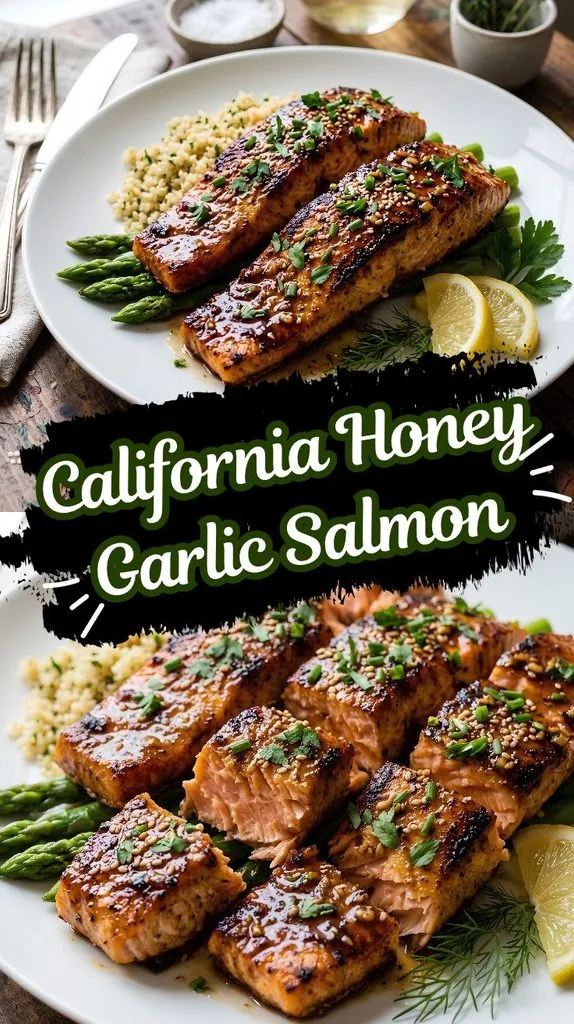
Cooking Time
This recipe is quick enough for any night of the week. Here is how the time breaks down.
- Prep Time: 8 minutes
- Cooking Time: 10 minutes
- Total Time: 18 minutes
Ingredients You’ll Need
Everything here is simple, and most of it is probably in your kitchen already. I kept each note short so you can shop fast.
Salmon and seasoning:
- 4 salmon fillets (6 oz each): Fresh fillets of even thickness cook the most evenly.
- 1/2 teaspoon kosher salt: Seasons the fish itself so it isn’t only the sauce doing the work.
- 1/2 teaspoon black pepper: Adds a gentle bite to balance the sweet glaze.
- 1/2 teaspoon smoked paprika: Gives a warm, smoky color, but regular paprika works too.
- 1/4 teaspoon blackening seasoning (optional): A tiny pinch adds a subtle spicy edge.
Honey garlic sauce:
- 3 tablespoons butter: Makes the sauce rich and silky.
- 2 teaspoons olive oil: Keeps the butter from browning too fast.
- 6 cloves garlic, minced: Fresh garlic gives the real punch, so skip the jar.
- 1/2 cup honey: Creates the sticky glaze that caramelizes under the broiler.
- 3 tablespoons water: Loosens the sauce so it bastes easily.
- 3 tablespoons soy sauce: Brings the salty, savory depth that makes this a true honey garlic soy salmon.
- 1 tablespoon sriracha: Adds mild heat that balances the sweetness.
- 2 tablespoons lemon juice: Brightens everything up, and fresh juice tastes best.
Note: serves 4
Equipment You Need
You only need a few basic tools for this recipe.
- 12-inch oven-safe skillet: Holds the sauce and the salmon, and goes straight under the broiler.
- Large spoon: Lets you baste the fillets with the glaze while they cook.
- Paper towels: Helps you pat the salmon dry so the seasoning sticks.
- Small bowl: Keep your spices ready to sprinkle.
- Instant-read thermometer: Confirms the salmon is cooked safely without guessing.
How to Make California Honey Garlic Salmon Recipe?
This is one of the simplest honey glazed salmon recipe methods I have tried. There is no pan-searing and no flipping, so there is no risk of a broken fillet. Just follow these steps in order, and you will have dinner on the table in under 20 minutes.
Prep and Season the Salmon
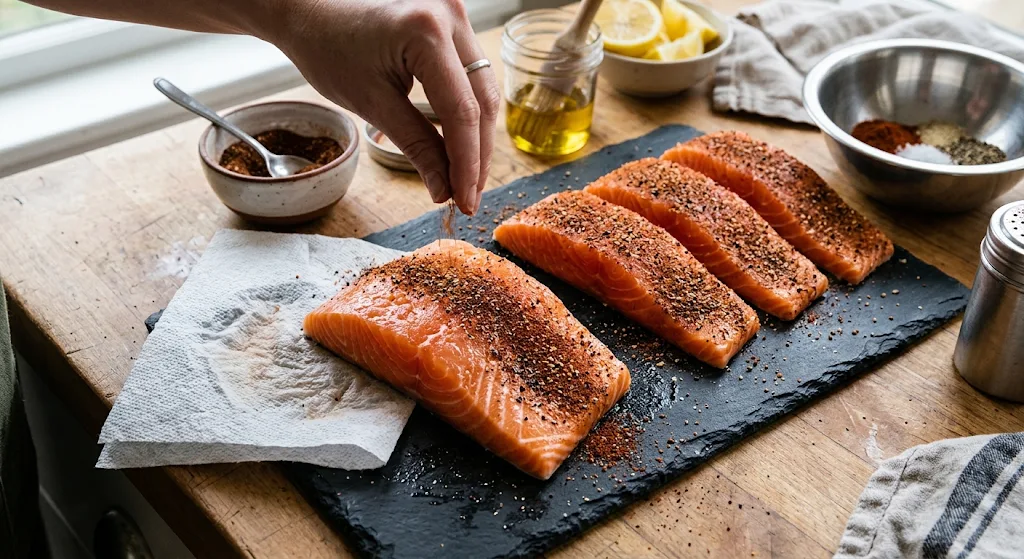
Pat each fillet dry with paper towels. This helps the seasoning cling and gives you a better glaze later. Sprinkle the salt, pepper, smoked paprika, and blackening seasoning evenly over all sides, then set the fish aside.
Move Your Oven Rack and Heat the Broiler
Place your oven rack in the middle position before you turn on the broiler. This step matters more than anything else. If the rack sits too high, the honey sauce will burn before the salmon cooks through, and you will end up with a bitter glaze.
Build the Honey Garlic Sauce
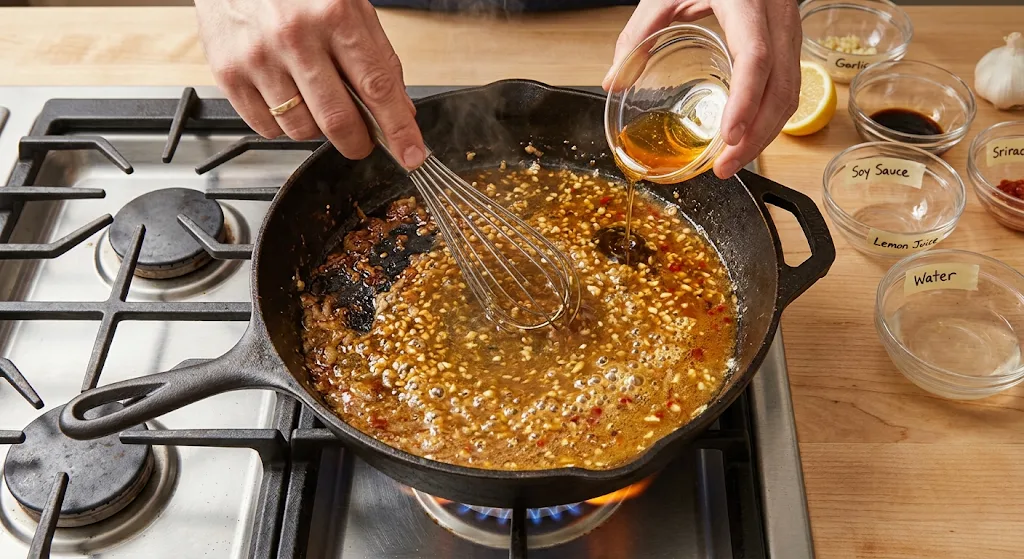
Add the butter and olive oil to a large oven-safe skillet over medium-high heat. Once the butter melts, stir in the garlic, water, soy sauce, sriracha, honey, and lemon juice. Cook for about 30 seconds, just until the sauce is warm and smells amazing.
Cook the Salmon in the Glaze
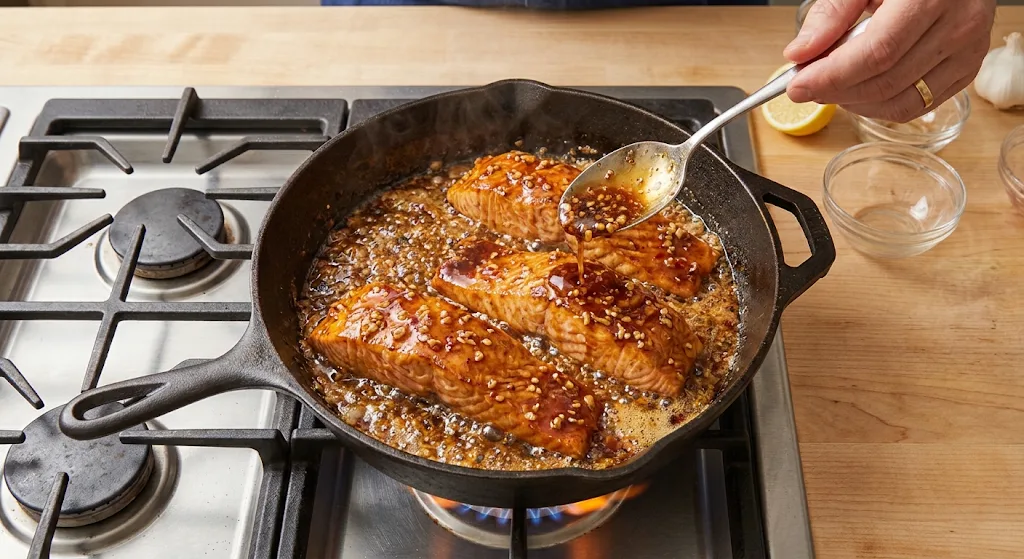
Place the salmon in the skillet, skin side down if your fillets have skin. Let it cook for 3 minutes while you spoon the bubbling sauce over the top again and again. This basting builds flavor, and it works like a quick marinade right in the pan.
Broil Until Sticky and Caramelized
Slide the skillet into the oven and broil on high for 5 to 6 minutes. I baste the fish once more halfway through to keep the glaze glossy. The salmon is ready when the top looks caramelized and the center flakes easily with a fork.
Garnish and Serve
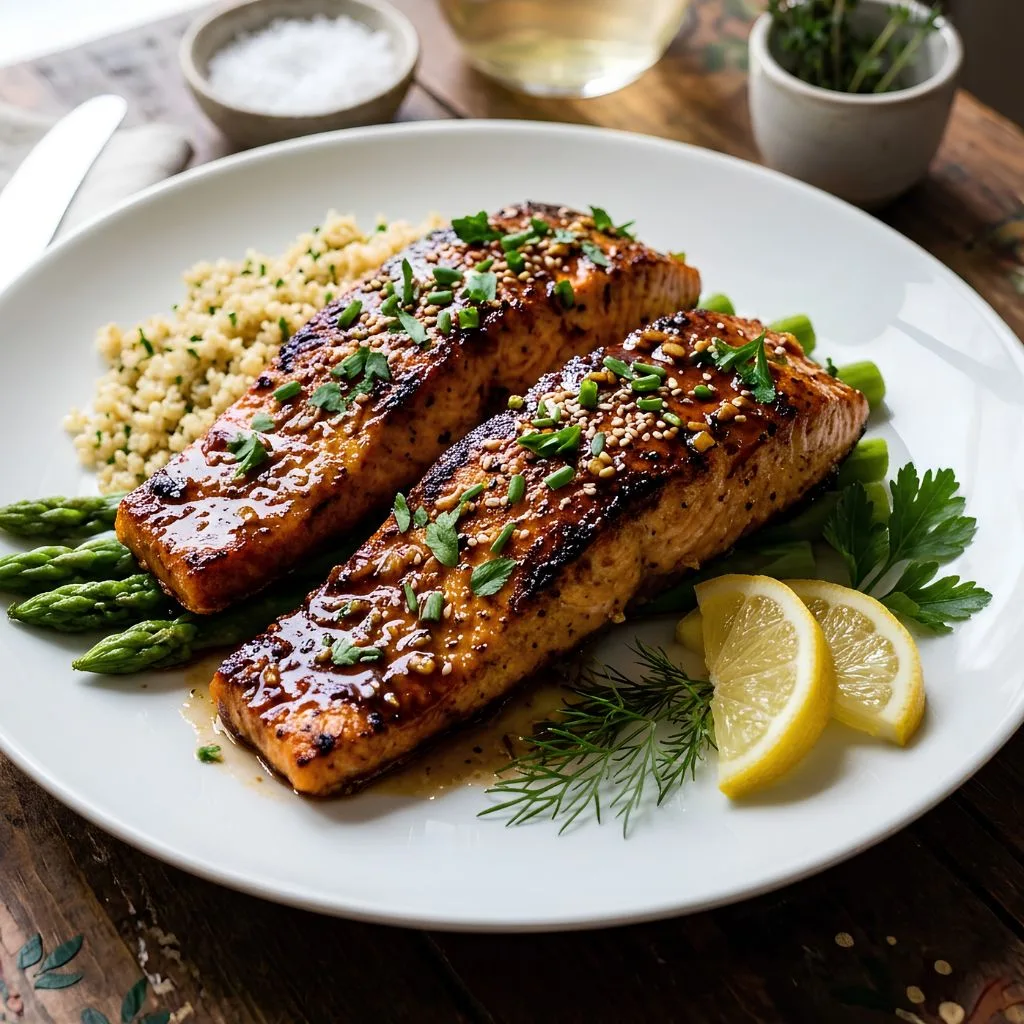
Carefully take the hot skillet out of the oven and spoon extra sauce over each fillet. Sprinkle on a little minced parsley if you like some fresh color. Serve right away while the glaze is warm and sticky.
Additional Tips for Making This Recipe Better
A few small habits make a big difference with this recipe. These are the lessons I picked up after making it a few times.
- I always buy fresh salmon from the fish counter when I can, because bagged frozen fillets tend to be thin and cook unevenly.
- I try to cook the salmon within a day of buying it, since fish loses its freshness fast.
- I use fresh lemon juice every time, because bottled juice tastes flat next to the honey.
- I check the center with a thermometer and aim for 145°F, which is the safe temperature recommended by the USDA.
- If my sauce looks a little thin, I simmer it for a minute before adding the fish, or I use a bit less water.
- I keep the skillet in the middle of the oven and watch it closely, because broilers vary a lot from one kitchen to another.
- I save a spoonful of sauce from the pan to drizzle over the finished plate, because that extra glaze is the best part.
Common Mistakes to Avoid
Salmon is forgiving, but a few small slip-ups can spoil the glaze. Here are the ones I see most often.
- I used to put the rack too close to the broiler, and my honey sauce burned in minutes, so now I always use the middle rack.
- I once skipped patting the salmon dry, and the seasoning slid right off, so I always blot both sides first.
- I overcooked salmon early on and ended up with dry fish, so I now pull it out the moment it flakes easily.
- I tried walking away while it broiled, and the glaze went from golden to dark fast, so I stay close to the oven.
- I used thin frozen fillets once, and they cooked far too quickly, so I choose thicker, fresh pieces now.
How to Serve California Honey Garlic Salmon Recipe?
This salmon looks gorgeous on the plate, so it is worth a little styling. I like to give it a California-style dinner feel with bright, fresh sides. Here are the ideas I come back to most.
- Serve it over steamed white or brown rice so the extra glaze soaks into every grain.
- Pair it with roasted broccoli or asparagus for a crisp green contrast.
- Add sliced avocado on the side for a creamy, West Coast touch.
- Pile it on a crisp salad. The salmon is also very cold, so leftovers work beautifully this way.
- Garnish with minced parsley or sliced green onions for a fresh pop of color.
- Add a few thin lemon wheels on top for a bright, sunny look.
- Drizzle the leftover pan sauce over the fish just before serving for a glossy finish.
Variations
You can easily change this recipe to match your pantry or your diet. I have tried a few of these myself.
- Pan-sear version: Sear the salmon on both sides first, remove it, warm the sauce in the pan, then return the fish and spoon the sauce over it.
- Bold lemon: Add lemon zest or a few lemon slices to the pan for a stronger citrus flavor.
- Lime twist: Swap the lemon juice for lime juice for a slightly different brightness.
- Green onion topping: Finish with sliced green onions for a fresh, savory bite.
- Orange swap: Use a little orange juice instead of lemon if you run out, which gives a mellow, fruity sweetness.
- Dairy-free: Replace the butter with more olive oil or a plant-based butter.
- Lower sugar: Use a bit less honey, or try a sugar-free syrup, and expect a slightly thinner glaze.
- Gluten-free: Use tamari or a gluten-free soy sauce in place of regular soy sauce.
- Less heat: Reduce the sriracha or leave it out for a milder sauce.
- Chicken version: The same sauce works on chicken, but cook it until it reaches 165°F inside.
Nutritional Information
Here is a quick look at what one serving gives you. These are estimates, and your numbers can shift with the brands you use.
- Calories: 481
- Protein: 34 g
- Carbohydrates: 40 g
- Fat: 20 g
Make Ahead and Storage
Make Ahead
This salmon tastes best fresh from the oven. You can whisk the sauce ingredients together a day early, though, to save time. The cooked salmon is also tasty cold on a salad, so you can make it a few hours ahead for that.
Refrigerating
Let the salmon cool for a few minutes, then place it in an airtight container. Keep it in the fridge and eat it within 3 days. Fish is best enjoyed fresh, so I never push past that window.
Reheating
Warm the salmon gently in a low oven or in a skillet over low heat. I add a splash of water or a spoonful of leftover sauce to keep it moist. Avoid the high heat of a microwave, which can dry the fish out quickly.
Why You’ll Love This Recipe
This is the kind of dinner that earns a permanent spot in your rotation. Here is why I keep making it.
- It is ready in 18 minutes. With only 8 minutes of prep and 10 minutes of cooking, it fits the busiest weeknight. You do not need any special skills either.
- It uses one pan. The sauce, the salmon, and the broiling all happen in the same skillet. That means fewer dishes and a much easier cleanup.
- The flavor is balanced and bold. Sweet honey, salty soy sauce, bright lemon, and a little heat all come together. Every bite tastes rich without feeling heavy.
- It is easy to customize. You can adjust the spice, swap the citrus, or change the sweetener. It also works with simple swaps for dairy-free and gluten-free needs.
- It is a great way to eat well. Salmon is packed with protein and healthy omega-3 fats. You get a nourishing meal that still feels like a treat.
FAQs
Does honey garlic salmon need a marinade?
No, this recipe skips the marinade. The sauce works as a quick pan glaze, and basting the fish builds plenty of flavor in just a few minutes.
Can I make this honey garlic salmon baked instead of broiled?
This recipe finishes in the oven under the broiler, which gives you the sticky, caramelized top. It is the same idea as salmon with honey and soy sauce in the oven, just faster. I have only tested it as written, so I can’t promise exact results with other methods.
How do I know when the salmon is done?
The salmon should flake easily with a fork, and a thermometer should read 145°F in the thickest part. If you like it a little less done, pull it out slightly earlier.
Can I use frozen salmon?
You can, but fresh fillets work better here. Frozen bagged pieces are often thin, which makes them easy to overcook. If you use frozen, thaw it fully and pat it very dry.
Why is my sauce watery?
A watery sauce usually means the sauce needs a little more time or less water. Simmer it for a minute before adding the salmon, or cut back on the water next time.