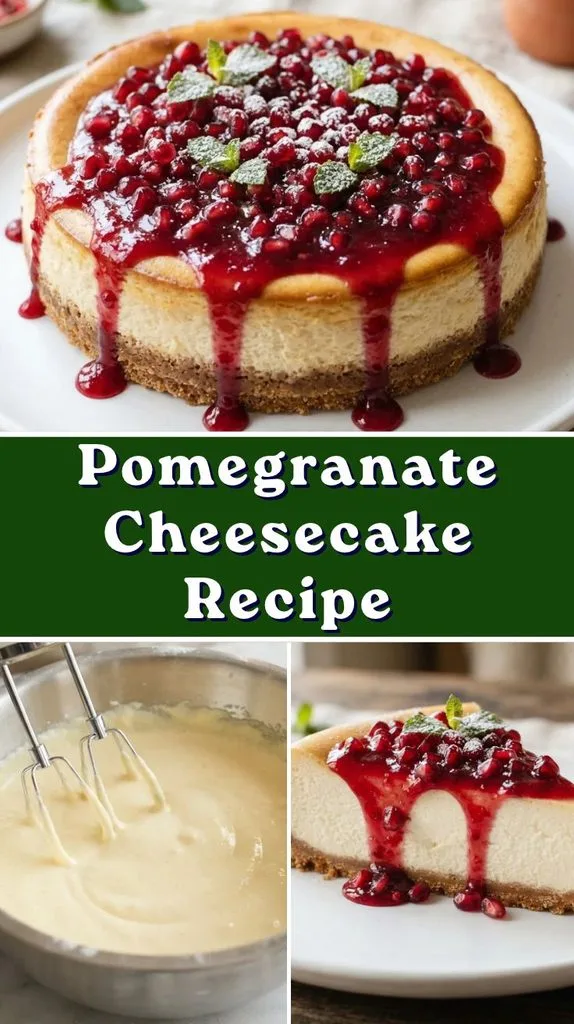
Creamy Pomegranate Cheesecake Recipe with a Glossy Ruby-Red Sauce
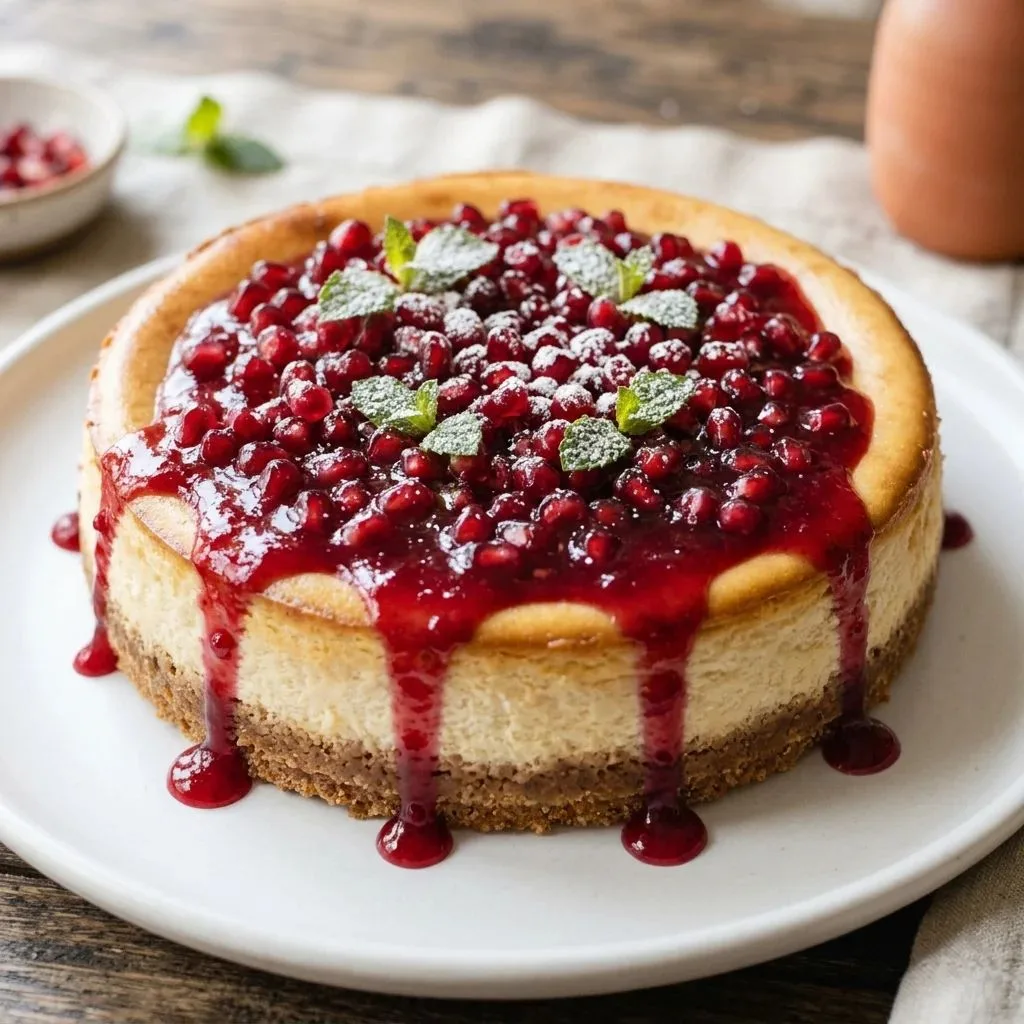
I made this Pomegranate Cheesecake Recipe on a chilly weekend, and my kitchen smelled like warm cinnamon crust within minutes. The filling bakes up thick, smooth, and creamy, with just enough lemon to keep every bite fresh.
The glossy pomegranate sauce on top is tangy, lightly sweet, and so pretty that I took photos before I sliced it. Pomegranate season in California runs from fall into early winter, so this is when I love making it most. If you want a stunning dessert with no water bath and no stress, this recipe is for you.
Cooking Time
Plan your day around the chilling time, because this cheesecake needs a few hours in the fridge to set properly.
- Prep Time: 25 minutes
- Cooking Time: 1 hour
- Total Time: 4 hours 25 minutes (includes cooling and chilling)
Ingredients
Everything here is simple and easy to find. I like to set out the cream cheese and eggs early so they come to room temperature.
For the Crust
- 2 1/2 cups graham cracker crumbs: Fine crumbs pack tightly and slice cleanly.
- 2 tablespoons granulated sugar: Adds a light sweetness to the crust.
- 1/2 cup unsalted butter, melted: Binds the crumbs without making the crust too salty.
- 1/2 teaspoon ground cinnamon: Gives the base a warm, cozy flavor.
For the Filling
- 3 packages (8 oz each) cream cheese, room temperature: Use full-fat blocks, not spreadable tubs.
- 1 can (14 oz) sweetened condensed milk: Sweetens the batter and keeps it silky.
- 1 1/4 lemons, juiced (about 1/4 cup): Fresh juice cuts the richness, so skip the bottled kind.
- 1/2 teaspoon vanilla extract: Rounds out the flavor.
- 3 large eggs, room temperature: They set the filling, and cold eggs can leave lumps.
- 1 pinch of salt: Sharpens all the flavors.
For the Pomegranate Sauce
- 2 cups pomegranate juice: Pure juice gives the best color and tang.
- 3/4 cup granulated sugar: Balances the natural tartness.
- 3 tablespoons cornstarch, sifted: Thickens the sauce, and sifting prevents clumps.
- Fresh pomegranate seeds, a small handful (optional): Add crunch and a jewel-like shine on top.
Note: Serves several, about 8 slices.
Equipment You Need
- 9-inch springform pan: Lets you release the cheesecake without damaging it.
- Electric mixer: Makes the cream cheese fluffy and smooth.
- Large mixing bowl: Gives you room to beat the filling.
- Medium saucepan: Cooks the pomegranate sauce evenly.
- Wooden spoon: Helps you stir the sauce and check its thickness.
- Wire cooling rack: Let air circulate so the cheesecake cools gently.
- Thin knife: Loosens the edges to help prevent cracks.
- Fine sieve: Sifts the cornstarch for a lump-free sauce.
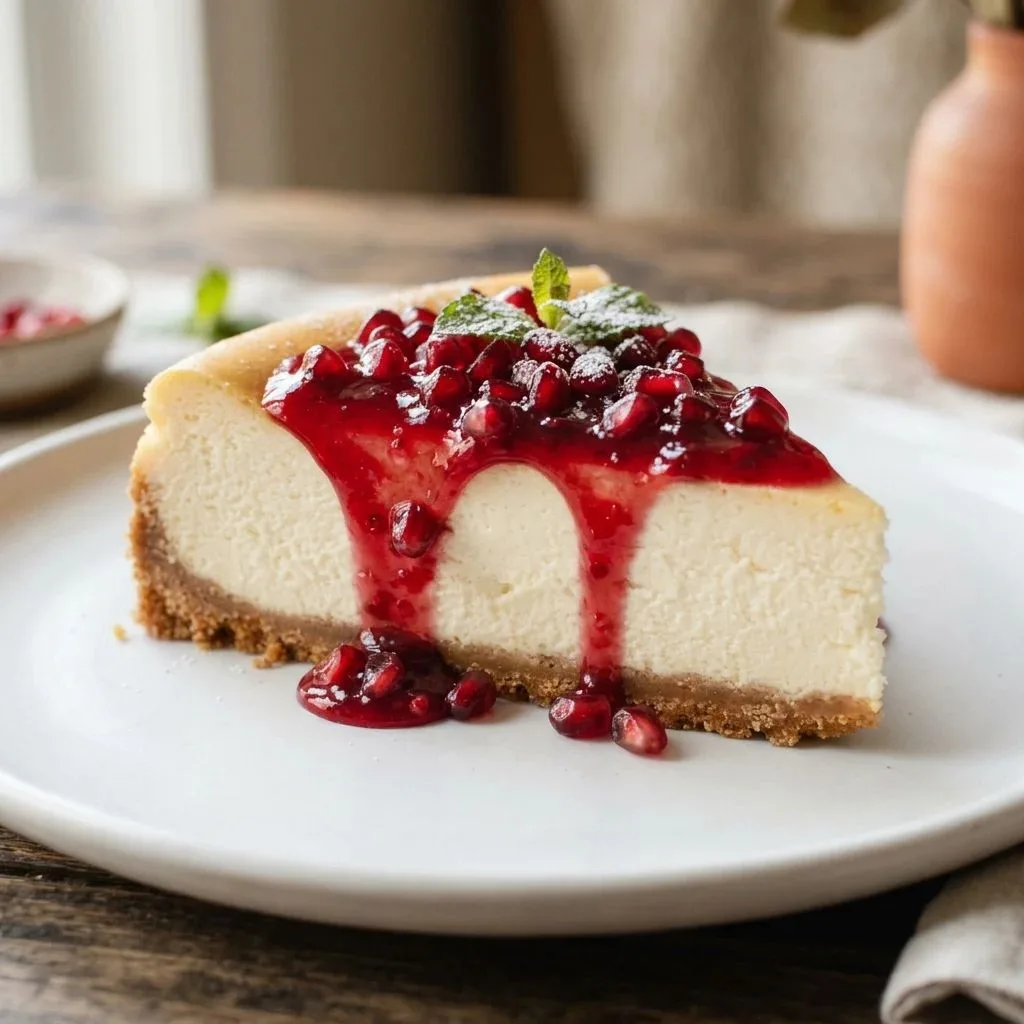
How to Make a Pomegranate Cheesecake Recipe?
This recipe has three parts: the cinnamon crust, the creamy filling, and the pomegranate sauce. None of them is hard on its own. Follow the steps in order, and your cheesecake will turn out smooth and beautiful.
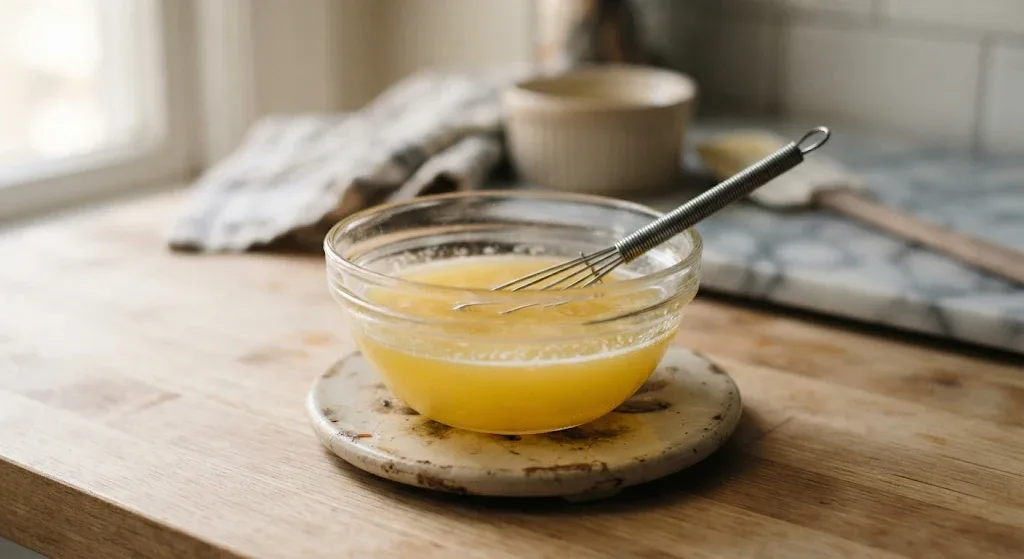
Melt the Butter
Place the unsalted butter in a small bowl and melt it in the microwave or on the stove. Let it cool for a minute. Hot butter can make the crust greasy.
Mix the Crust
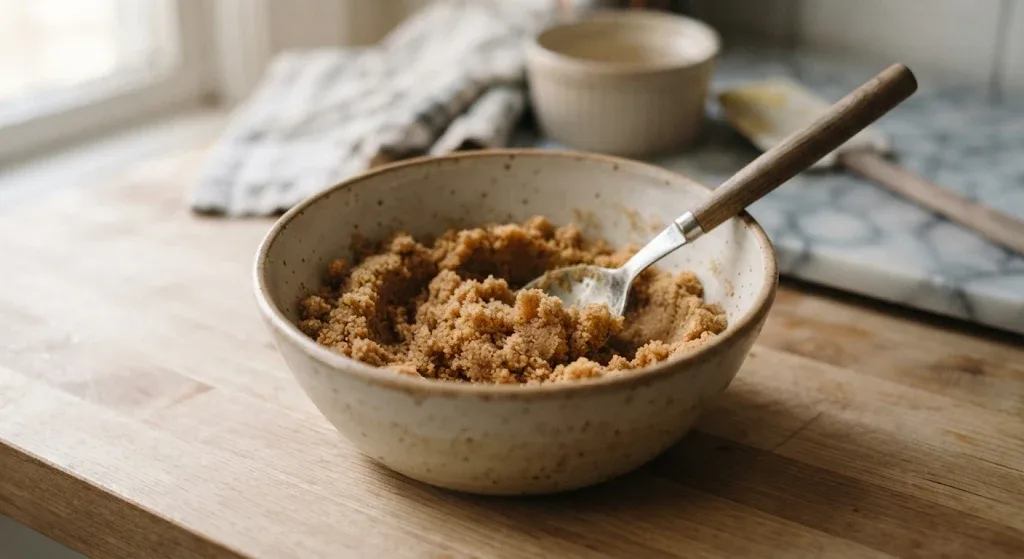
In a medium bowl, stir together the graham cracker crumbs, cinnamon, and sugar. Pour in the melted butter. Mix until the crumbs look like damp sand.
Press and Chill the Crust
Press the mixture into the bottom and up the sides of an ungreased 9-inch springform pan. Use the flat bottom of a measuring cup to pack it down. Refrigerate for 30 minutes so it firms up.
Preheat the Oven
Heat your oven to 300°F (150°C) while the crust chills. This low temperature bakes the cheesecake gently. It helps keep the top smooth and crack-free.
Beat the Cream Cheese and Condensed Milk
In a large bowl, beat the cream cheese on medium speed until fluffy. Pour in the sweetened condensed milk slowly. Keep mixing until the batter looks creamy and smooth.
Add the Lemon, Vanilla, and Salt
Add the fresh lemon juice, vanilla extract, and salt. Mix until everything is blended. The lemon gives the filling a gentle tang that I really love.
Beat in the Eggs
Add the eggs one at a time on low speed. Mix just until each one disappears into the batter. Overmixing adds air, and air can lead to cracks.
Bake the Cheesecake
Pour the batter into the chilled crust and smooth the top. Bake for 45 to 50 minutes. The edges should look set, and the center should still jiggle slightly.
Cool and Loosen
Cool the cheesecake on a wire rack for 10 minutes. Then run a thin knife carefully around the edge of the pan. Let it cool for another hour at room temperature.
Cook the Pomegranate Sauce
In a medium saucepan, whisk the sugar and sifted cornstarch. Stir in the pomegranate juice. Cook over medium heat, stirring constantly, until the sauce coats the back of a wooden spoon, then let it cool.
Top and Chill
Once the cheesecake is fully cool, remove the springform sides. Pour about one-third of the sauce over the top. Chill overnight, or for at least 2 hours, and serve the extra sauce on the side.
Additional Tips for Making This Recipe Better
These small habits made a big difference in my kitchen, and they are easy to follow.
- I always bring the cream cheese and eggs to room temperature first, because cold ingredients make a lumpy batter.
- I use a low mixer speed once the eggs go in, since too much air is the main cause of cracks.
- I buy pure pomegranate juice, not a sweetened juice cocktail, so the sauce tastes bright and not sugary.
- I stir the sauce nonstop while it thickens, because it can catch on the bottom of the pan very quickly.
- I let the sauce cool fully before pouring it on, since a warm sauce will slide off and look messy.
Common Mistakes to Avoid
Here are the slip-ups I made early on, so you can skip them.
- Using cold cream cheese: I once got tiny lumps in the batter, so now I always soften it first.
- Overbaking: I used to bake until the center was firm, but it will set as it cools, so pull it out while it still jiggles.
- Skipping the knife around the edge: I learned that a cheesecake can stick to the pan and crack as it cools, so I always loosen it.
- Pouring on warm sauce: My first try turned runny and pink, so I now wait until the sauce is completely cool.
- Serving too soon: I rushed one slice and it was soft and messy, so I now give it at least 2 hours in the fridge.
How to Serve Pomegranate Cheesecake?
This cheesecake looks stunning with very little effort. A few simple touches make it feel bakery-worthy.
- Cut slices with a knife dipped in warm water, and wipe it clean between cuts for neat edges.
- Spoon a little extra pomegranate sauce over each slice, and let it pool on the plate.
- Scatter fresh pomegranate seeds on top for crunch and color.
- Add a small mint leaf for a pop of green against the red.
- Serve it with a dollop of whipped cream or plain yogurt if you like a lighter finish.
It also travels well. I have packed slices for a sunset picnic along the California coast, and they were a hit.
Variations
Once you know the basic recipe, it is easy to play with the flavors.
- Pomegranate pistachio cheesecake: Add finely chopped pistachios to the crust, or press them around the edge for a green border.
- Orange and pomegranate cheesecake: Swap some of the lemon juice for orange juice and add a little zest to the filling.
- Pistachio, pomegranate, and clementine cheesecake: Top the cheesecake with thin clementine slices and chopped pistachios.
- Pomegranate molasses boost: Stir one to two tablespoons of pomegranate molasses into the sauce for a deeper, tangier taste.
- Pomegranate cheesecake no-bake: Skip the oven, fold whipped cream into sweetened cream cheese, and chill it for several hours until firm.
- Dairy-free: Use dairy-free cream cheese and plant-based butter, and check that your condensed milk swap is dairy-free too.
- Sugar-free: Choose a sugar-free condensed milk and an unsweetened juice, and use a baking sweetener in the crust and sauce.
Nutritional Information
Here are the approximate values for one slice, based on 8 servings.
- Calories: 340 kcal
- Protein: 1.7 g
- Carbohydrates: 52.2 g
- Fat: 14 g
Make Ahead and Storage
This is one of the best desserts to make in advance, which makes holiday hosting much easier.
Make Ahead
You can bake the cheesecake up to two days before serving. Keep it covered in the fridge and make the sauce separately. Add the sauce on the day you serve it for the freshest look.
Storage
Store leftover slices in an airtight container in the refrigerator. They stay fresh for about 4 to 5 days. Keep the extra sauce in a small jar, covered, in the fridge.
Freezing
Wrap the plain cheesecake tightly and freeze it for up to 2 months. Freeze it without the sauce for the best texture. Thaw it overnight in the fridge before serving.
Reheating and Serving
This cheesecake is best served cold, so no reheating is needed. If the sauce has thickened in the fridge, warm it gently for a few seconds. Then stir it and let it cool before spooning it on.
Why You’ll Love This Recipe?
Here are the reasons I keep coming back to this one.
- Easy to make: There is no water bath and no fancy technique. You mix, bake, and chill, and the oven does most of the work.
- Beautiful on any table: The ruby-red sauce looks impressive with very little effort. It works for holidays, birthdays, and weekend dinners alike.
- Perfect balance of flavor: The creamy filling is rich, and the tangy pomegranate sauce keeps each bite from feeling heavy. It is sweet, but never too sweet.
- Make-ahead friendly: You can prepare it a day or two early. That leaves you free to enjoy your guests instead of baking at the last minute.
- Easy to customize: Add pistachios, orange zest, or a splash of pomegranate molasses to make it your own. The recipe welcomes small changes.
FAQs
Can I use fresh pomegranates instead of juice for the sauce?
Yes. Blend the seeds, strain the juice through a fine sieve, and measure two cups. Fresh juice gives a bright flavor, but bottled pure juice works well too.
What can I make with pomegranate molasses besides this cheesecake?
I like to stir it into this sauce, drizzle it over yogurt, or brush it on roasted vegetables. It adds a deep sweet-tart flavor to many dishes.
Why did my cheesecake crack?
Cracks usually come from overmixing, overbaking, or cooling too fast. Mix the eggs on low, bake at a gentle temperature, and loosen the edges as it cools.
Can I make this cheesecake without a springform pan?
A springform pan works best because it releases cleanly. If you do not have one, line a deep pan with parchment and leave an overhang to lift the cheesecake out.