California Burritos: History, Recipe & Best Spots 2026
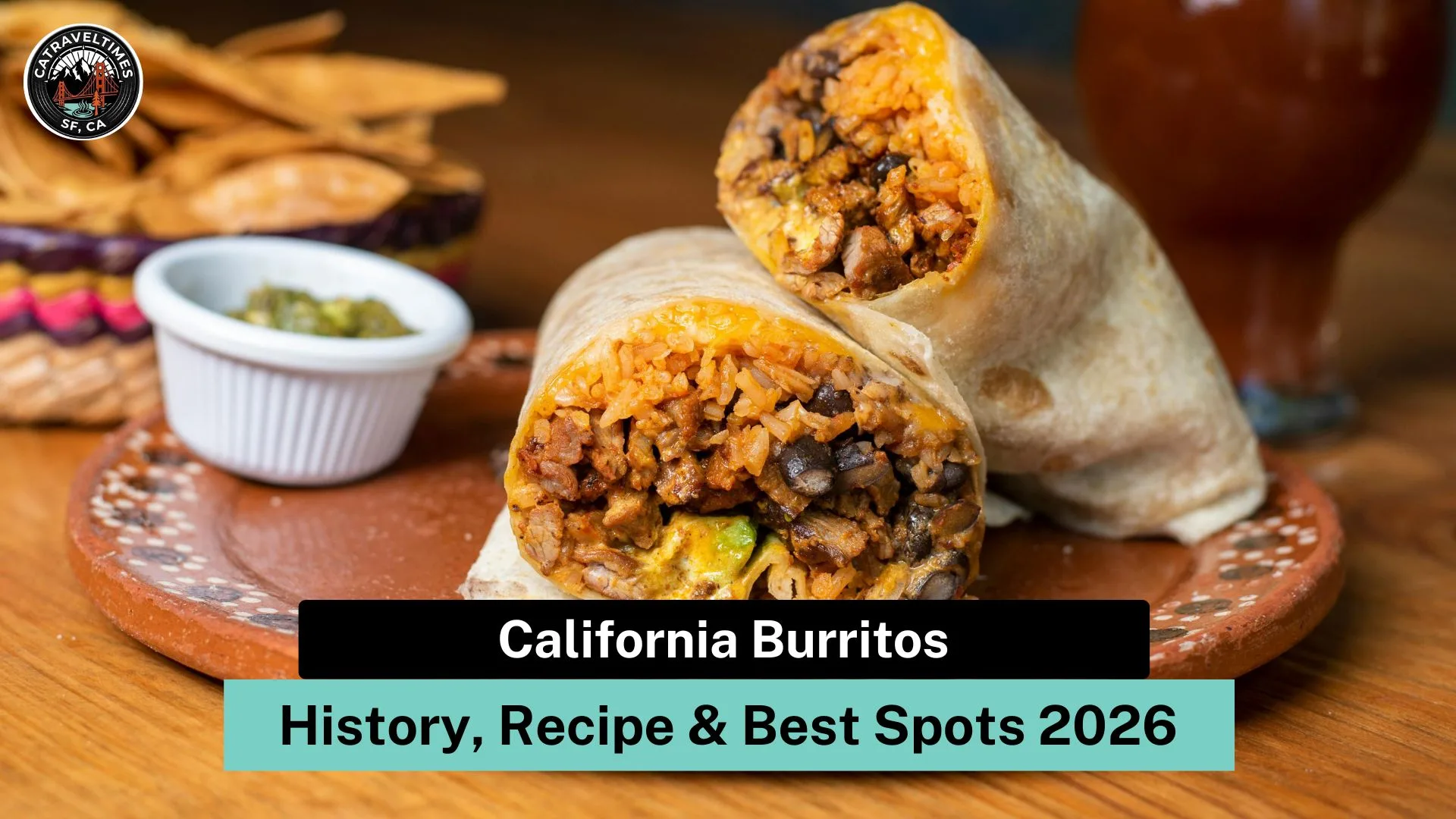
I grew up in San Diego, which means I grew up eating California burritos. Not the watered-down versions you sometimes find out of state — the real ones. The kind where the tortilla is warm and barely holding together because it’s stuffed with juicy carne asada, crispy French fries, melted cheese, and a generous swipe of avocado crema. The kind you eat leaning over a tray because there is no graceful way to do it.
If you’ve been searching for everything you need to know about California burritos — what’s in them, where they came from, and how to make one at home that actually tastes like San Diego — you’re in the right place. Over at CA Travel Times, we cover the food and experiences that make California worth visiting, and this burrito is very near the top of that list.
What Is a California Burrito?
A California burrito is a large flour tortilla stuffed with grilled carne asada, French fries (inside the burrito, not on the side), melted cheese, guacamole or avocado crema, sour cream, and salsa. It replaces the rice and beans of a standard burrito with crispy seasoned fries — and that one swap is everything.
It’s a San Diego original, born from the border food culture of SoCal, and it remains one of the most satisfying, unapologetically indulgent meals in the state. In 2026, the San Diego Tourism Authority officially celebrated it on National Burrito Day, calling it the city’s answer to New York’s pizza and Philadelphia’s cheesesteak.
California Burrito vs. Regular Burrito — What’s the Difference?
People ask me this all the time. Here’s the quick breakdown:
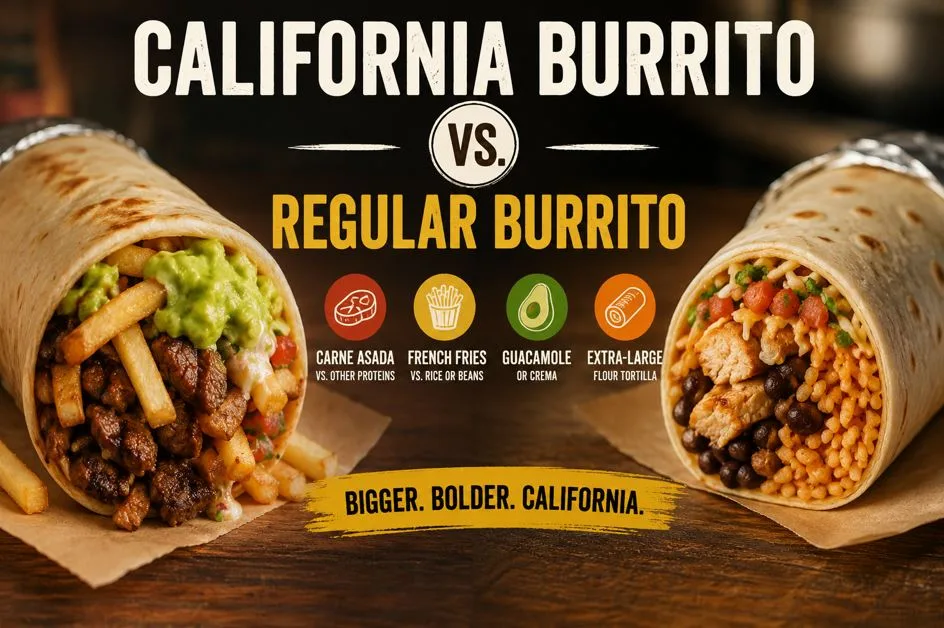
| Feature | California Burrito | Regular Burrito |
| Protein | Carne asada (grilled marinated beef) | Chicken, carnitas, beans, or beef |
| Starch | French fries | Rice and/or beans |
| Cheese | Yes — generous | Sometimes |
| Avocado | Guacamole or crema | Optional |
| Tortilla | Extra-large flour | Standard size |
| Origin | San Diego, CA — 1980s | Mexico / Tex-Mex border |
| Calories (avg) | 700–900 | 500–700 |
The fry swap is the whole game. It adds crunch, saltiness, and heartiness that rice simply can’t match. A standard burrito is a meal. A California burrito is an event.
California Burrito Ingredients: Everything You Need
Every authentic California burrito has five core components. Everything else is optional.
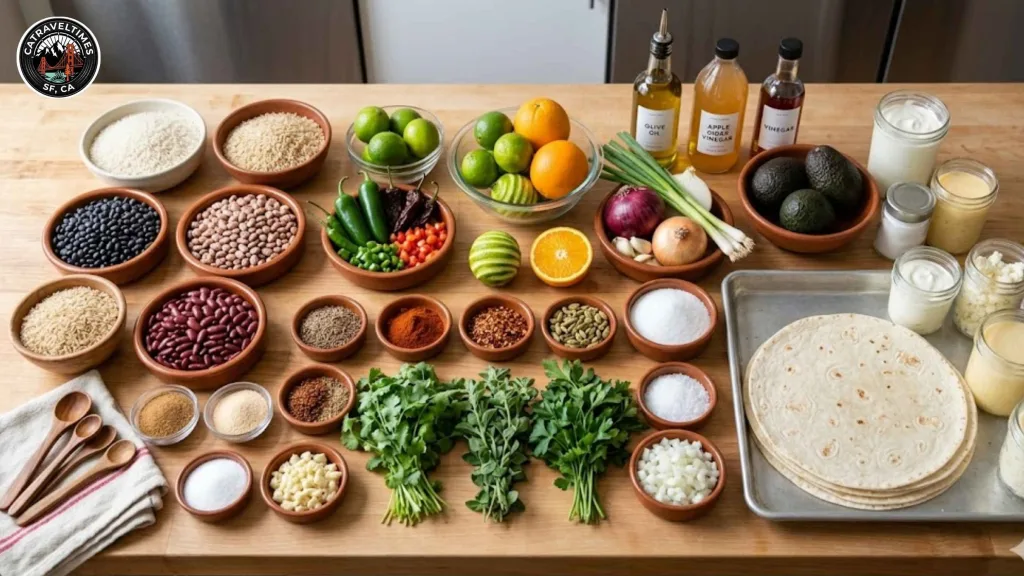
For the Carne Asada Marinade
The carne asada is the heart of this whole thing. Skirt steak or flank steak are both excellent choices — skirt steak has a little more fat and chew, flank is leaner and slices cleaner. Either way, you want the meat marinated for at least 4 hours, ideally overnight.
A proper carne asada marinade includes:
- Orange juice and lime juice — the citrus breaks down the muscle fibers and tenderizes the meat
- Soy sauce — adds depth and umami
- Liquid smoke — optional but worth it for that char-grilled flavor
- Olive oil
- Ground cumin, chili powder, smoked paprika, garlic, onion powder, salt, pepper, cayenne pepper
- Brown sugar — a small amount balances the acid and helps the meat caramelize on the grill
Don’t marinate for more than 12 hours. The citrus in the marinade is highly acidic, and if you leave the steak too long, the fibers break down and turn mushy instead of tender.
For the Mexican French Fries
These aren’t plain fries. Toss your sliced potatoes with olive oil, then season generously with:
- Salt and pepper
- Garlic powder
- Ground cumin
- Chipotle pepper (ground)
Bake them at high heat on a sheet pan, flip halfway through, then broil at the end for maximum crispiness. The chipotle and cumin make them taste like they belong in a burrito — because they do.
For the Avocado Crema
Instead of using plain guacamole and sour cream separately, blend them into one creamy, tangy sauce. You’ll need:
- 2 large avocados
- 1 cup sour cream
- ¼ cup mayonnaise
- 2 tablespoons lime juice
- Salt, cumin, and garlic powder
Blend until smooth. Store with plastic wrap pressed directly onto the surface so it doesn’t brown. This keeps for up to 3 days in the fridge.
How to Make a California Burrito at Home — Step by Step
Making california burritos from scratch takes planning, but none of the individual parts are complicated. The key is to work in stages: marinate the beef the night before, then prep everything else while it rests before grilling.
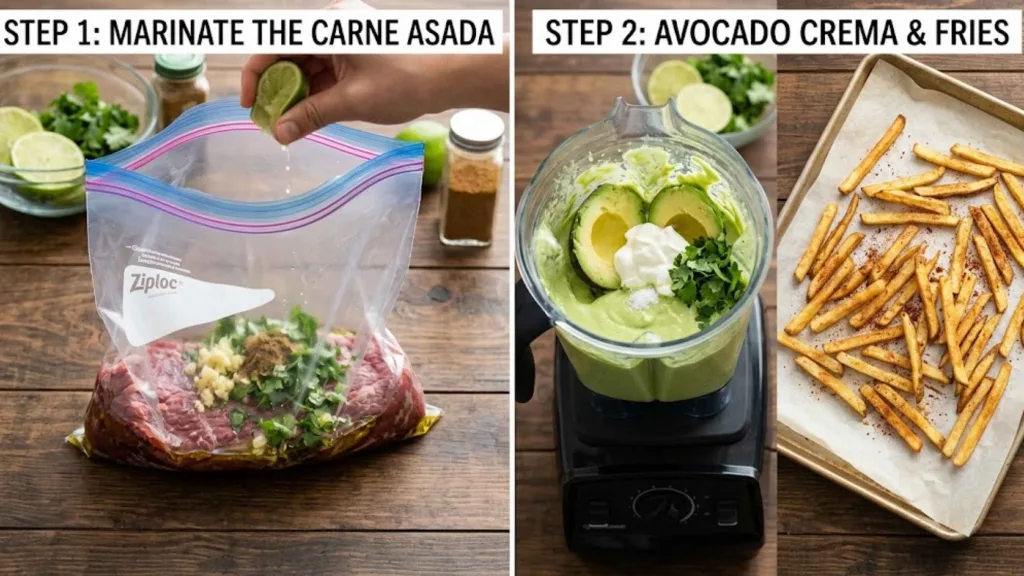
Step 1 — Marinate the Carne Asada
Combine all marinade ingredients in a freezer bag or bowl. Add skirt or flank steak, coat fully, and refrigerate for 4 to 12 hours. Before grilling, take the steak out and rest at room temperature for 30 minutes — cold steak on a hot grill cooks unevenly.
Step 2 — Make the Avocado Crema and Bake the Fries
Blend avocado crema ingredients until smooth and refrigerate. Get fries seasoned and in the oven — about 30 minutes total (20 minutes, flip, 10 more, then 2–3 minutes under the broiler for crunch).
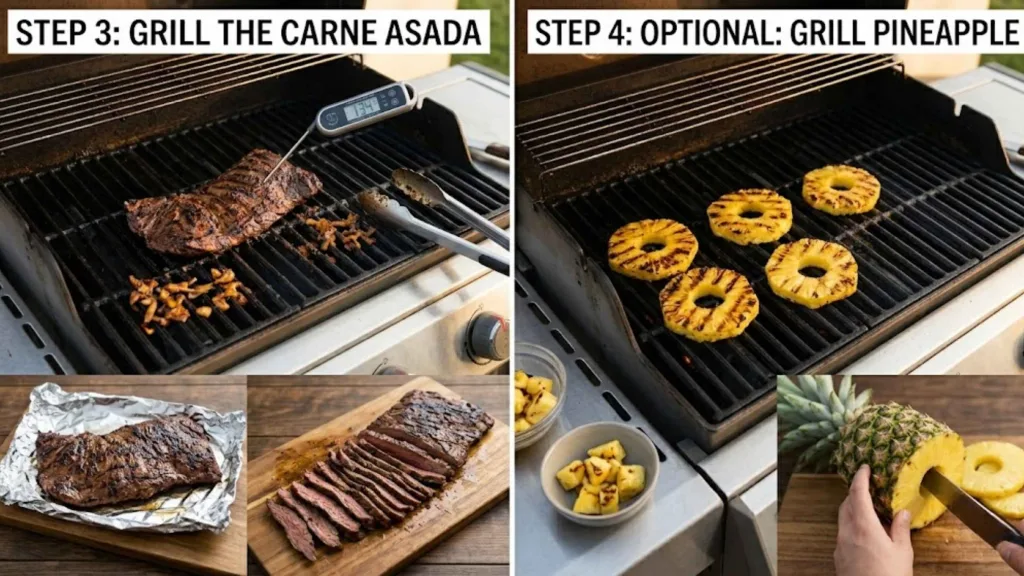
Step 3 — Grill the Carne Asada
Preheat grill to medium-high (around 400°F). Shake off excess marinade. Grill 5 to 6 minutes per side. Use an internal thermometer — 130–135°F for medium-rare, 140°F for medium. Skirt steak cooks fast; watch it closely. Let it rest 10 full minutes before slicing. Cut thin, across the grain.
Step 4 — Optional: Grill Pineapple
Slice a pineapple into rings and grill 6 to 8 minutes per side until caramelized. Chop and discard cores. The sweet, smoky contrast with the savory beef and fries is a San Diego upgrade worth trying.
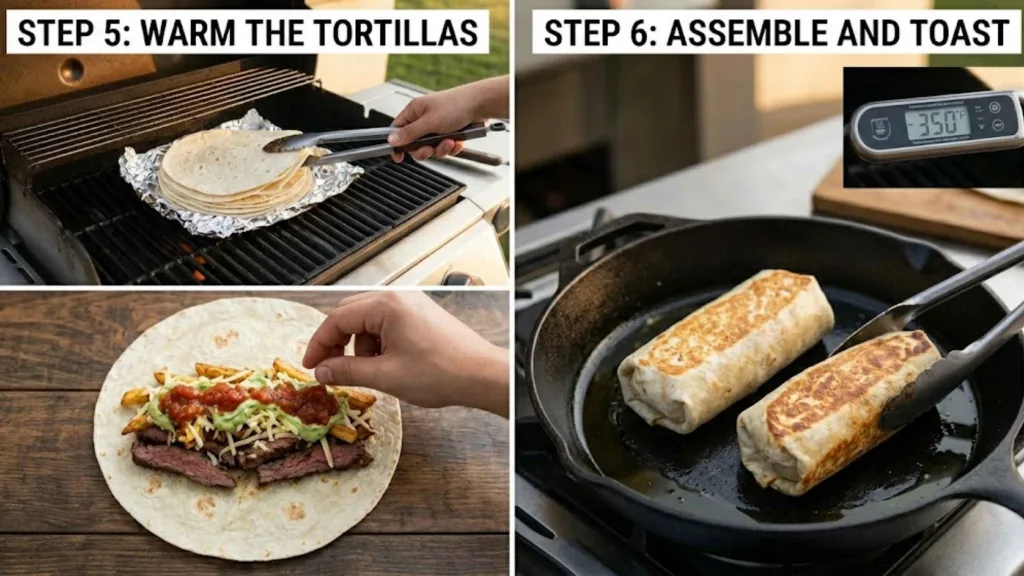
Step 5 — Warm the Tortillas
Wrap large flour tortillas in foil, place in a 350°F oven for 10 minutes. This is not optional if you want a burrito that rolls without tearing.
Step 6 — Assemble and Toast
Lay a warm tortilla flat. Layer in order: carne asada, fries, cheese, avocado crema, then salsa. Don’t stack higher than 1 to 1.5 inches or you won’t be able to roll it. Fold in top and bottom, roll tight burrito style, seam-side down.
Then heat a skillet over medium-high with a little olive oil and toast each side for about 1 minute until golden. A toasted exterior holds the whole thing together and adds the best texture.
Toppings and Variations
The five core ingredients are fixed. Everything else is fair game.
Classic toppings:
- Salsa roja or salsa verde
- Pico de gallo — fresh tomato, onion, cilantro, jalapeño, lime
- Sour cream or Greek yogurt
- Shredded sharp cheddar, pepper Jack, or cotija cheese
- Sliced or chopped avocados
Upgrade toppings:
- Grilled pineapple — caramelized, sweet-smoky contrast
- Pickled red onions — bright, tangy crunch
- Roasted jalapeño crema — heat plus creaminess
- Chipotle aioli — smoky and rich
- Hot sauce on the side so everyone can customize the heat
Protein variations: Some San Diego taquerias offer the same build with carnitas, spicy chorizo, or thinly grilled chicken. The fries and cheese always stay. Only the protein changes.
If you want something to pair alongside your California burrito night at home, the California Crunch Roll is another San Diego-inspired recipe worth adding to the table.
How to Store and Reheat California Burritos?
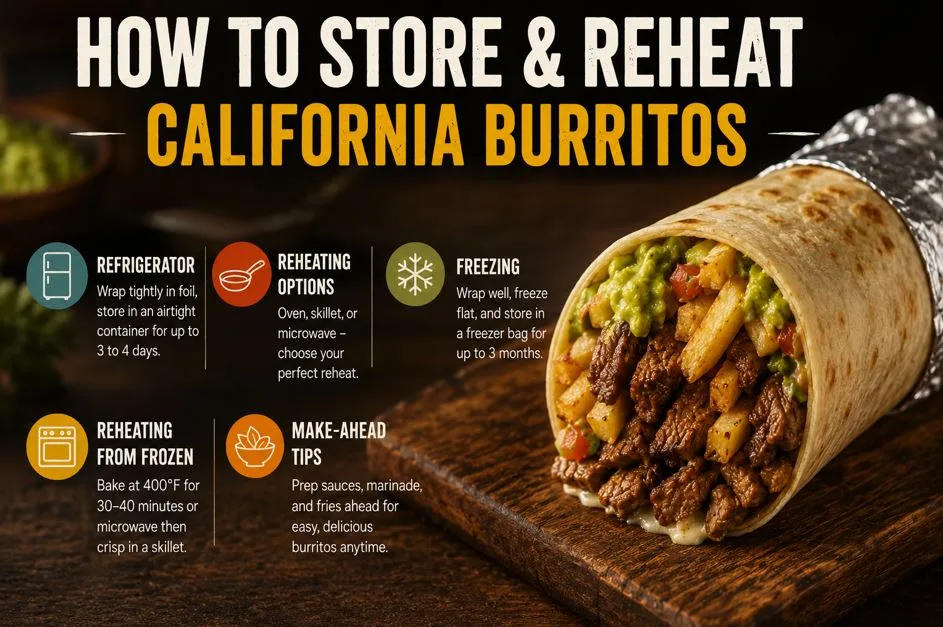
Refrigerator: Wrap tightly in foil, store in an airtight container for up to 3 to 4 days.
Reheating options:
- Oven: 350°F for 15 to 20 minutes — most even, best overall result
- Skillet: Medium heat, 3 to 5 minutes per side — crisps the tortilla beautifully
- Microwave: 1 to 2 minutes on high, flip once — fast but the tortilla stays soft
Freezing: Let the carne asada and fries cool completely before assembling — warm fillings create steam that makes the tortilla soggy. Wrap each burrito tightly in foil, freeze flat on a baking sheet, then transfer to a freezer bag. Keeps up to 3 months.
Reheating from frozen: Remove foil, place on a baking rack, bake at 400°F for 30 to 40 minutes. For microwave: remove foil, heat 4 minutes, then crisp in a skillet for best texture.
Make-ahead tips: The avocado crema keeps 3 days refrigerated (with plastic wrap pressed against the surface). The marinade can be prepped the day before. Fries reheat best in an air fryer — about 4 minutes at 375°F brings the crispiness back.
Expert Tips for the Best California Burrito
These are the things that separate a good burrito from a great one — the details I’ve picked up from making these dozens of times and eating them at taquerias all over San Diego.
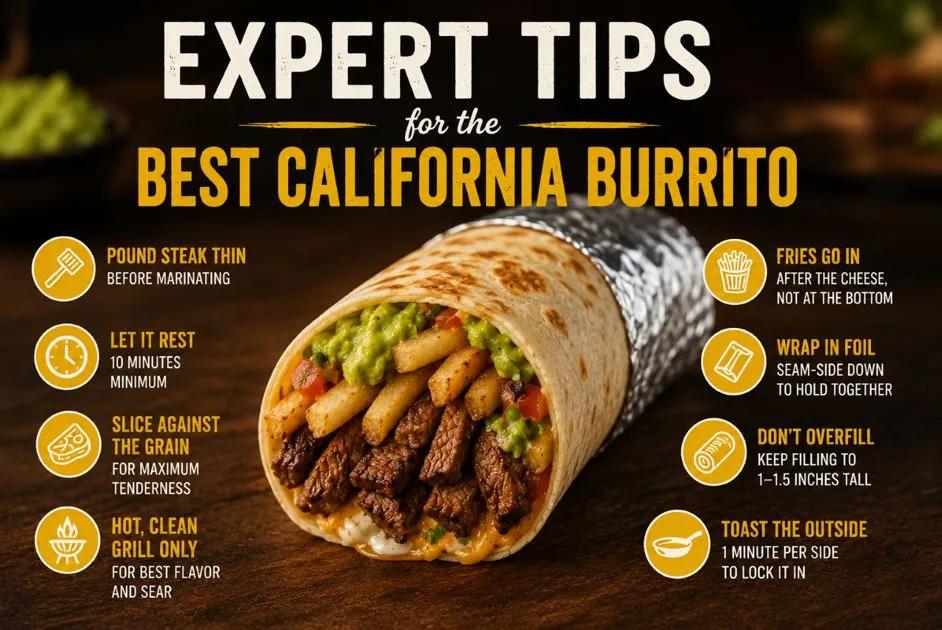
- Pound the steak thin before marinating — even a quick pass with a meat mallet tenderizes it significantly and helps the marinade get deeper into the meat.
- Let it rest — 10 minutes minimum. Cutting the steak early sends all the juices onto the cutting board, not into the burrito.
- Slice against the grain. Look for the direction the muscle fibers run and cut perpendicular. Shorter fibers equal more tender bites.
- Hot, clean grill only. A dirty grill causes sticking and adds off flavors. Heat it fully, lid closed, before the steak goes on.
- Fries go in after the cheese, not at the bottom. Fries on the bottom steam and soften from the heat below. Layering them above the cheese keeps them crispier inside the wrap.
- Wrap in foil seam-side down if you’re carrying these to a beach picnic or packing them for post-surf refueling — they hold together far better.
- Don’t overfill. Keep the pile no more than 1 to 1.5 inches tall in the center. Too much filling and you can’t seal the tortilla — and it falls apart on the first bite.
- Toast the outside. A minute per side in a hot skillet crisps the tortilla and locks the whole thing in place. Never skip this step.
California Burrito Nutrition — What to Expect
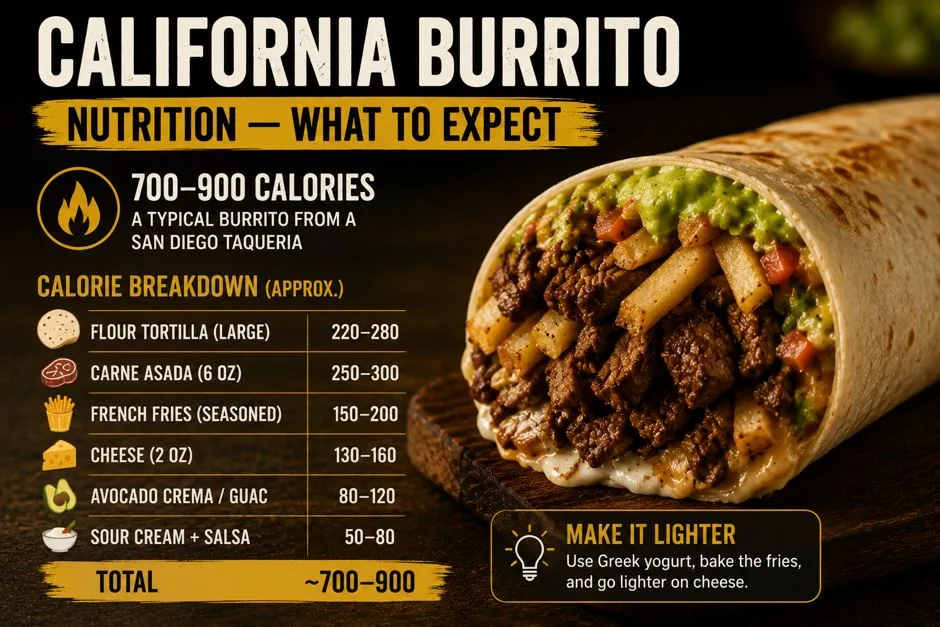
A typical California burrito from a San Diego taqueria runs between 700 and 900 calories, depending on size and toppings. The carne asada and cheese carry most of the calorie load. Here’s a rough breakdown by macros:
| Component | Approx. Calories |
| Flour tortilla (large) | 220–280 |
| Carne asada (6 oz) | 250–300 |
| French fries (seasoned) | 150–200 |
| Cheese (2 oz) | 130–160 |
| Avocado crema / guac | 80–120 |
| Sour cream + salsa | 50–80 |
| Total | ~700–900 |
You can reduce calories by using Greek yogurt instead of sour cream, baking instead of frying the fries, and going lighter on cheese. But honestly — this is not a dish that benefits from a lot of trimming. It’s meant to be filling and satisfying.
California Burrito Prices in 2026
California burritos aren’t cheap anymore. Prices have climbed sharply since the pandemic — Harry’s Taco Club now runs $15.99, Roberto’s around $13, and Lucha Libre at $16. Local restaurant prices rose 6.3% in 2025, with San Diego leading all major U.S. metros.
The best value? The Taco Stand at $10.19 — nearly a pound and a half of burrito. Lolita’s topped the 2026 weight rankings at 1 lb 5.9 oz, followed by Harry’s at 1 lb 5.6 oz. Making your own at home still wins on both price and quality.
Best Places to Eat California Burritos in San Diego (2026)
If you’re visiting San Diego, skip the sit-down restaurants. The best california burritos are at taco shops — the fast, counter-service spots that have been doing this since before it was famous.
- Roberto’s Taco Shop — the OG, credited with popularizing the style citywide. Simple, unpretentious, consistent.
- Lolita’s Mexican Food — heaviest burrito in the city per 2026 testing, with a cult following in San Diego.
- Harry’s Taco Club — premium ingredients, runs about $15.99 but the quality shows.
- Lucha Libre Taco Shop — colorful, fun atmosphere, strong carne asada.
- The Taco Stand — best value in the city at $10.19, nearly a pound and a half, no compromise on flavor.
- Santana’s Mexican Grill — one of the two original claimants; their tagline has always been “home of the California burrito.”
For a full breakdown of San Diego’s best neighborhoods and where to eat in each one, check out the California Local Guides section on CA Travel Times.
California Burrito vs. Carne Asada Fries — What’s the Difference?
This one comes up constantly. Carne asada fries are essentially all the same ingredients — carne asada, cheese, guacamole, sour cream, salsa — but served open-faced over a plate of fries instead of wrapped in a tortilla.
Same flavors, different format. Carne asada fries are also a San Diego invention, and many taquerias serve both. The burrito is portable; the fries are not. For post-surf refueling on the go, the burrito wins. For sitting down and sharing, the fries plate is its own experience. If you’re new to San Diego food, order the burrito first, then come back for the fries.
Frequently Asked Questions
What makes a California burrito different from a regular burrito?
French fries inside instead of rice and beans. That’s the defining feature. Everything else — carne asada, cheese, guacamole, sour cream — exists in other burritos, but no other style puts fries inside the wrap.
What cut of steak is used for carne asada?
Skirt steak or flank steak. Skirt has more fat and a richer, beefier flavor. Flank is leaner and slices very cleanly. Both need a good marinade and should be grilled over high heat and sliced thin across the grain.
Can I bake the fries instead of deep-frying them?
Yes — toss potato slices in olive oil, season with cumin, chipotle, garlic powder, salt, and pepper, roast on a sheet pan at 425°F, flip halfway, then broil for 2 to 3 minutes. They come out crispy and flavorful.
How long do California burritos keep in the fridge?
3 to 4 days wrapped tightly in foil in an airtight container. Reheat in the oven at 350°F or in a skillet for the best results. The microwave works but softens the tortilla.