Welcome to California Sign: Everything You Need to Know
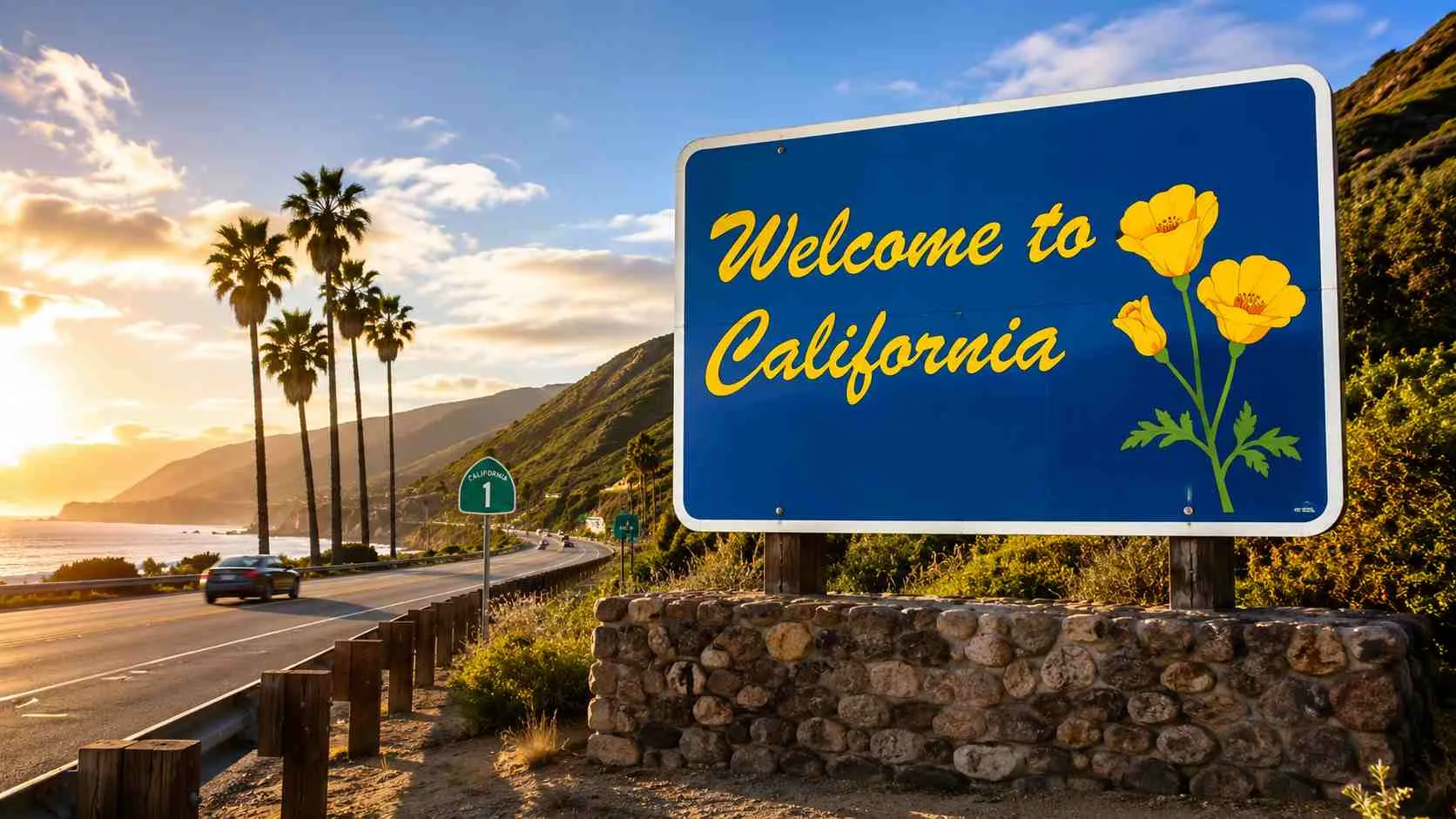
Few roadside symbols capture the excitement of a journey quite like the welcome to california sign. Whether you’re driving up the coast on Highway 101, crossing the desert on Interstate 40, or rolling into the Golden State on historic Route 66, spotting this sign is a rite of passage for road trippers. It marks the moment a journey officially becomes a California adventure.
Over the decades, this roadside marker has evolved from a simple identification post into a genuine tourist attraction, complete with photo stops, regional variations, and even a modern makeover under the state’s beautification programs. This guide covers its history, where to find it, and how to make the most of your visit.
What Is the Welcome to California Sign?
The sign refers to the official gateway markers installed by the California Department of Transportation (Caltrans) at major highway entry points into the state. These signs greet drivers as they cross state lines from Oregon, Nevada, Arizona, and even the U.S.-Mexico border.
While the classic design most people picture is a blue-and-yellow roadside sign reading “Welcome to California,” the state has increasingly moved toward larger, more artistic gateway monuments that reflect the character of the surrounding region — from coastal redwoods in the north to desert palms near the Colorado River.
The History Behind the Sign
California’s welcome signage dates back to the mid-20th century, a period defined by the rise of automobile travel and the expansion of the interstate highway system. As more Americans took to the road, state tourism boards recognized the value of a strong visual first impression.
Early Roadside Markers
The earliest signs were modest — plain lettering on a simple background, often positioned along major routes like U.S. Highway 101 and the original Route 66 alignment through the Mojave Desert. Their purpose was twofold: guide travelers and signal that they had arrived somewhere special.
As highway infrastructure matured through the 1960s and beyond, these markers were gradually refined with brighter colors, the state seal, and imagery meant to represent California’s diverse geography, from mountains and coastlines to palm-lined deserts.
Where to Find the Welcome to California Sign
California shares borders with three states and Mexico, and it has multiple major highway gateways, meaning there isn’t just one welcome to california sign — there are several, each with its own character. Notable locations include:
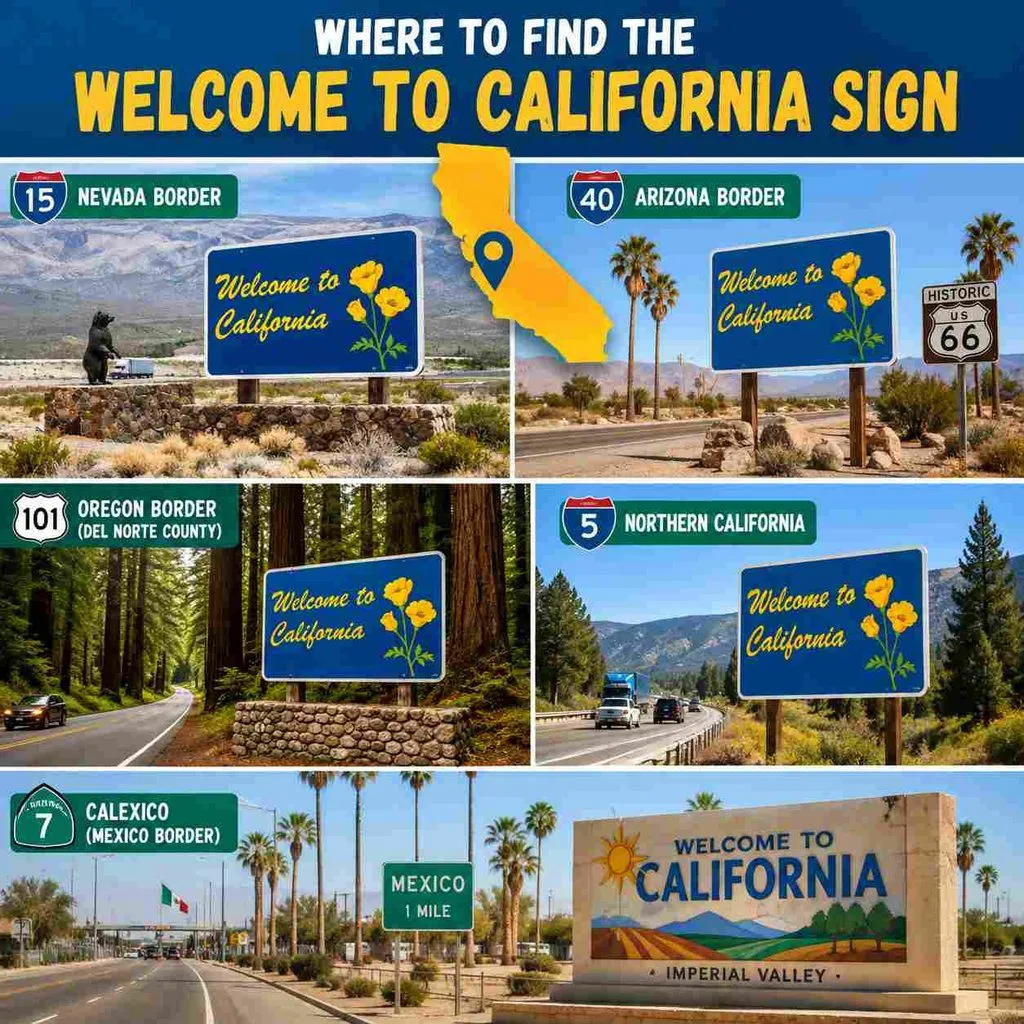
- Interstate 15 near the Nevada border — a popular stop for travelers heading between Las Vegas and Southern California
- Interstate 40 near the Arizona border, close to Needles, historically known as the “Gateway to California” on old Route 66
- U.S. Highway 101 and Highway 199 at the Oregon border in Del Norte County, framed by towering redwoods
- Interstate 5 in Northern California, one of the busiest entry points for interstate travel
- State Route 7 near Calexico, welcoming visitors crossing from Mexico into Imperial County
Each location offers a distinct backdrop, which is part of why these signs have become such popular photo destinations for travelers documenting their road trips.
A New Generation of Gateway Signs
In recent years, Caltrans has been replacing many of the traditional welcome to california sign designs with large-scale gateway monuments as part of Governor Gavin Newsom’s Clean California initiative — a multi-year, multi-billion-dollar effort focused on beautifying public spaces and highway corridors across the state, according to Caltrans’ official news releases.
Some standout examples include:
- Del Norte County — new monuments on U.S. 101 and U.S. 199 featuring elk, salmon, and California poppies, replacing the older signs that stood for decades
- Calexico — a $1.9 million “Welcome to California/Imperial Valley” monument at the U.S.-Mexico border
- Calaveras County — gateway monuments built with rhyolite stone, honoring the region’s Gold Rush history
- Eureka — a new monument at the city’s southern entrance designed to reflect local identity
These projects aren’t just cosmetic. Since the Clean California program launched, Caltrans has reported picking up millions of cubic yards of litter and creating thousands of jobs alongside the artistic upgrades, turning ordinary highway entrances into landmarks worth stopping for.
Why the Redesigns Matter
These new monuments aim to do more than mark a border crossing; they tell a visual story about the region travelers are entering. A three-line explanation is enough to capture the shift: older signs were purely functional, while today’s designs are commissioned with community input, blending art, local history, and state pride into a single roadside experience.
Notable Moments in Welcome Sign History
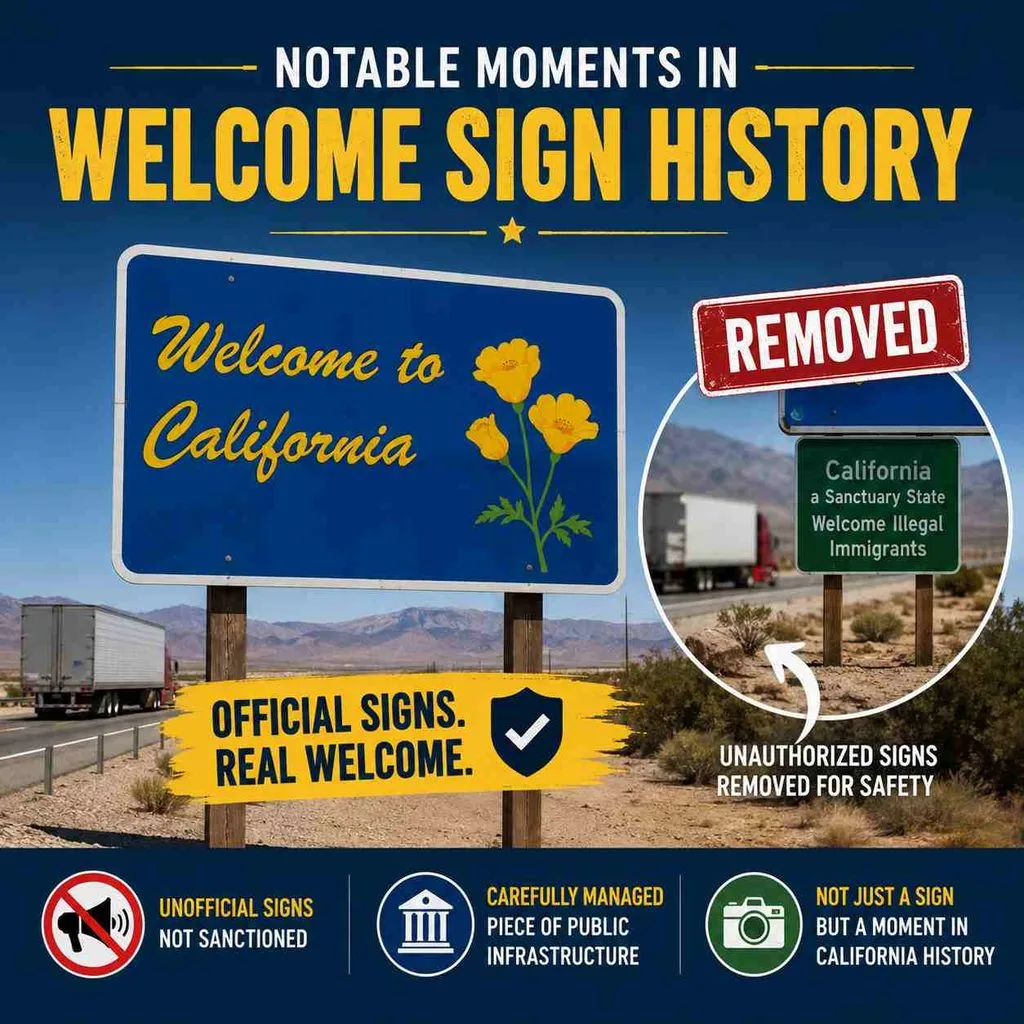
Not every chapter in this roadside sign’s story has been about beautification. In early 2018, unofficial signs briefly appeared below several official markers along highways near the Nevada and Arizona borders, referencing California’s sanctuary state legislation. Caltrans confirmed the unauthorized additions were not sanctioned and had them removed for safety reasons, noting that no unofficial signage is permitted within the state right-of-way.
While these prank signs generated headlines at the time, they were short-lived and never part of the state’s actual signage program — a reminder that the official marker is a carefully managed piece of public infrastructure, not just a backdrop for viral moments.
Best Photo Spots Along the Way
For travelers hoping to capture the classic road-trip shot, a few locations stand out:
- Needles, California — long known as the historic “Gateway to California” on Route 66, with its own vintage-style welcome marker near the Colorado River
- Del Norte County’s redwood gateways — dramatic forest backdrops make these some of the most photogenic entry points in the state
- Calexico’s international monument — a striking option for travelers entering from Mexico
If you’re planning a Southern California desert route, it’s worth building in time beyond the sign itself. The Mojave and Colorado River regions near Needles sit close to several natural hot springs, popular for a relaxing soak after a long stretch of highway driving. For a curated look at where to find them along your route, CA Travel Times has a helpful guide to California’s best hot springs, which pairs well with a desert road trip that starts at a border-crossing photo stop.
Tips for Visiting the Welcome to California Sign
A little planning goes a long way when adding one of these stops to your itinerary:
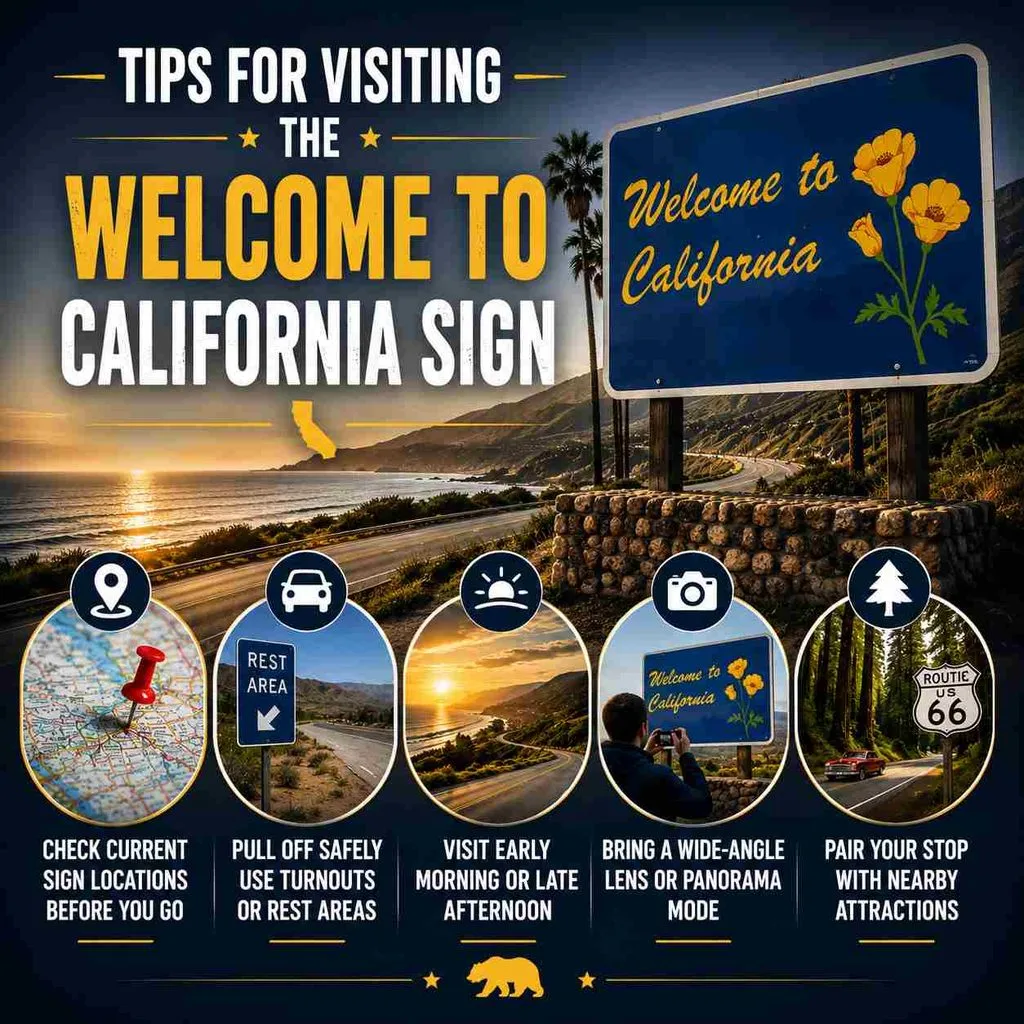
- Check current sign locations before you go, since several older markers have recently been replaced with new monuments
- Pull off safely — many signs sit close to active highway shoulders, so use designated turnouts or rest areas rather than stopping on the road
- Visit early morning or late afternoon for the best light and fewer crowds at popular stops
- Bring a wide-angle lens or phone panorama mode, since many of the newer monuments are larger than the classic signs
- Pair your stop with nearby attractions, such as Route 66 landmarks near Needles or redwood parks near the Oregon border
Nearby Attractions Worth Exploring
Because these gateway sign locations are spread across the state’s major highway corridors, they naturally line up with some excellent road trip detours:
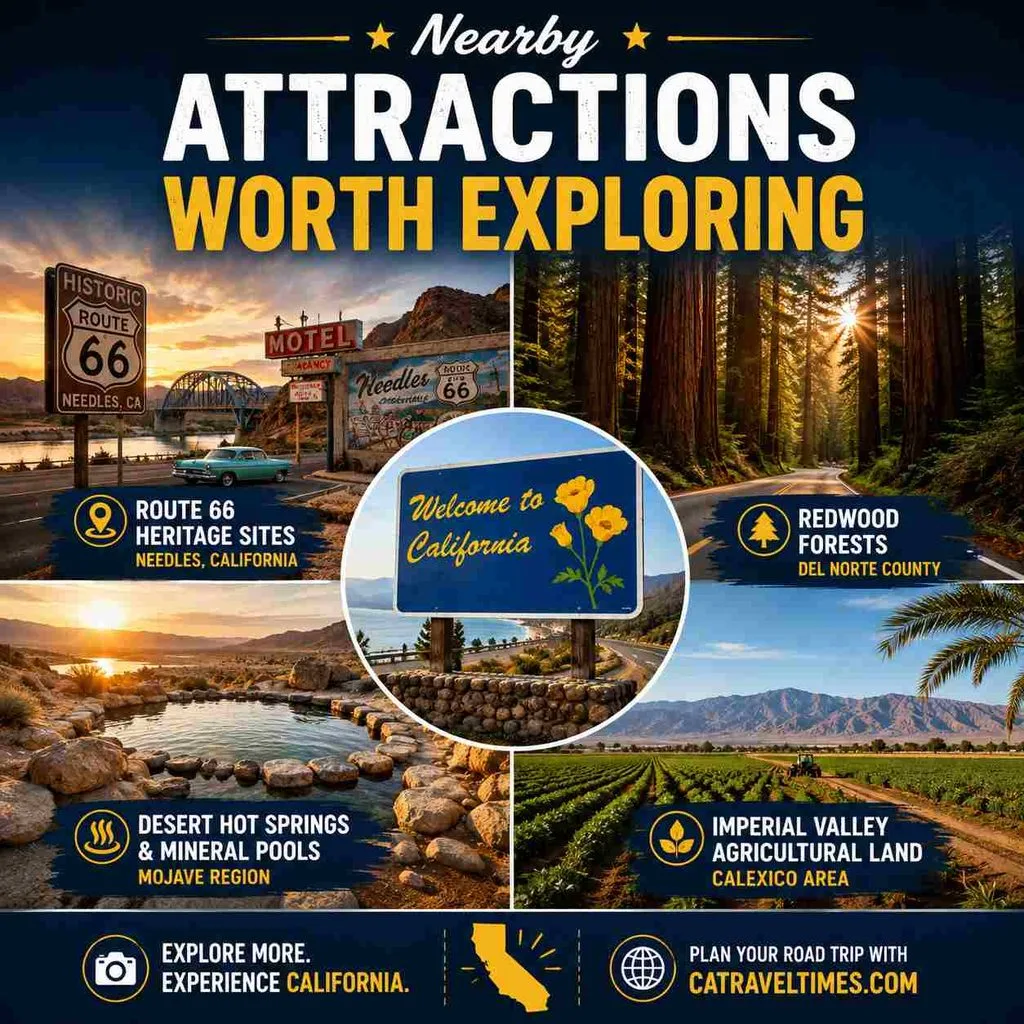
- Route 66 heritage sites around Needles, including historic motels, murals, and the Trails Arch Bridge over the Colorado River
- Redwood forests near the Del Norte County gateways, home to some of the tallest trees on Earth
- Desert hot springs and mineral pools scattered through the Mojave region, a favorite stop for travelers looking to unwind after crossing the state line
- Imperial Valley agricultural land near the Calexico gateway, offering a very different side of California’s landscape
For deeper coverage of these regions, including detailed hot springs recommendations and road trip planning tips, browsing through CA Travel Times is a good next step before you hit the road.
For official, up-to-date details on highway conditions and current gateway projects, Caltrans’ Clean California program remains the most reliable source, since sign locations and designs continue to change as new monuments are completed.
Final Thoughts
The welcome to california sign is more than a piece of roadside infrastructure it’s a milestone moment for anyone driving into the Golden State, and increasingly, a genuine work of public art. From the classic blue-and-yellow markers of decades past to the new wildlife-themed monuments rising along Highway 101 and Highway 199, these gateways continue to evolve while serving the same purpose: telling travelers, in the clearest way possible, that they’ve arrived somewhere worth exploring. Whether you’re chasing the perfect photo or simply passing through, the welcome to california sign remains one of the state’s most recognizable and rewarding roadside stops.