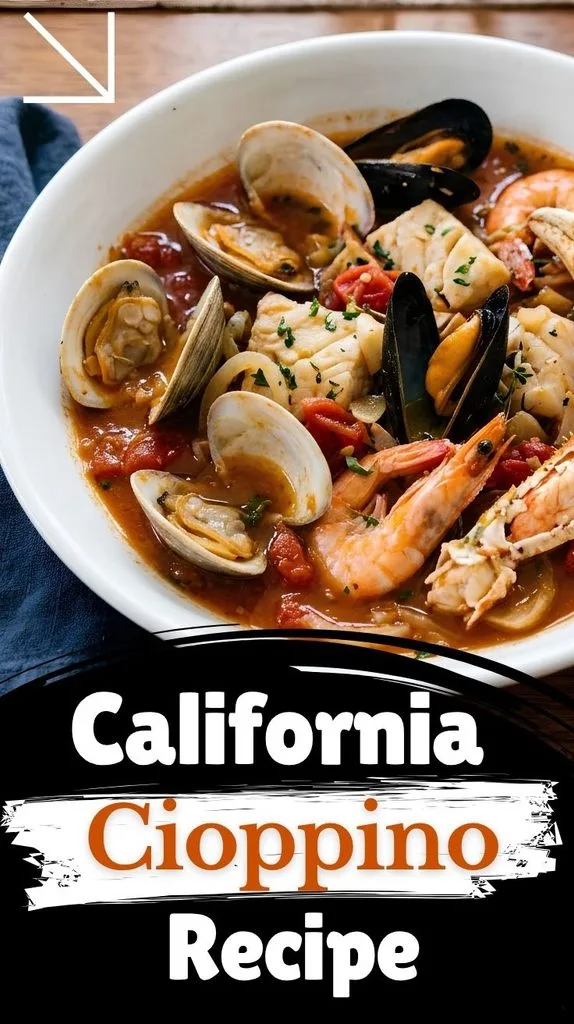
California Cioppino Recipe: Best Easy San Francisco Seafood Stew
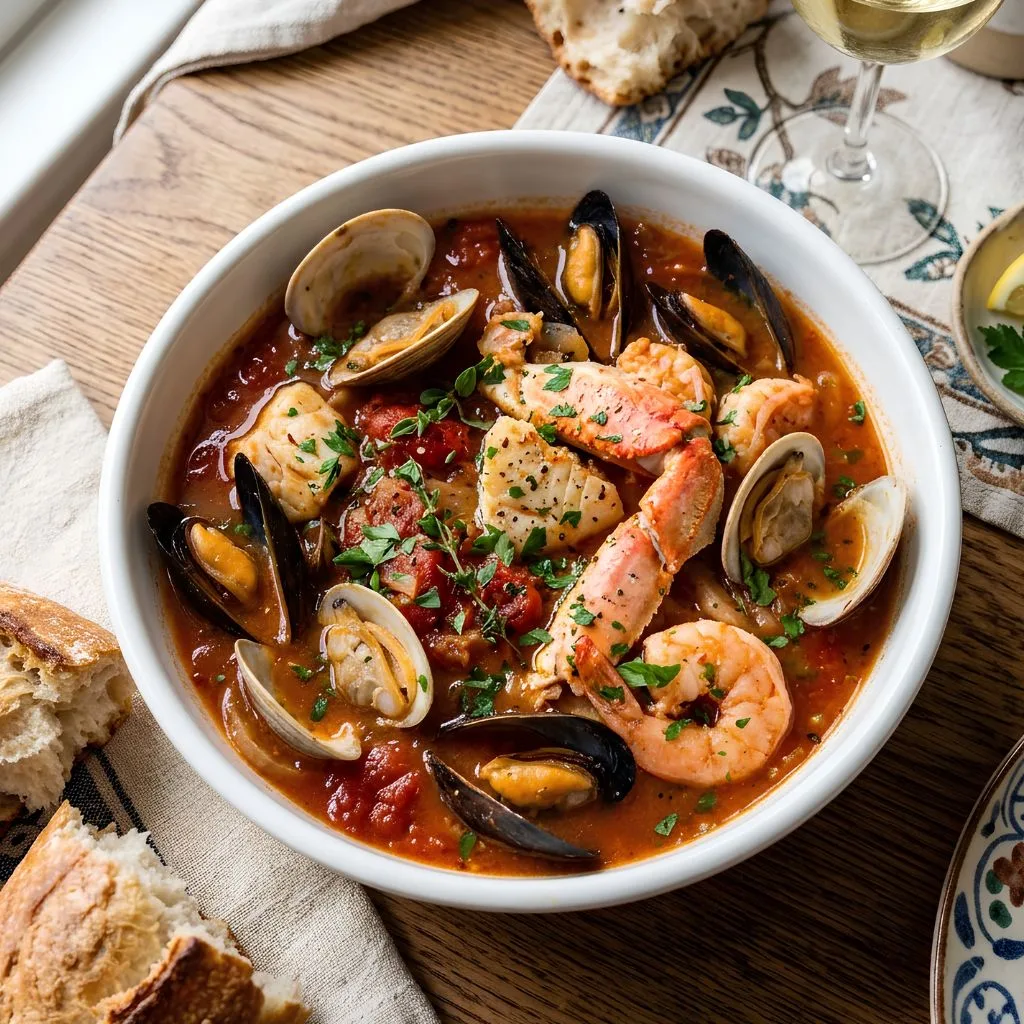
I still remember the first time I made this California Cioppino Recipe for my family on a chilly weekend. The whole kitchen smelled like garlic, fennel, and simmering tomatoes, and honestly, I felt like I was standing on a pier in San Francisco.
I was surprised at how easy it was to pull off, because it looks so fancy in the bowl. My friends kept reaching for more crusty bread to soak up every last drop of that broth. If you want a San Francisco cioppino recipe that feels special but never stressful, I’m so happy to share mine with you.
Cooking Time
Here is how long this cioppino takes from start to finish. Most of it is gently simmering.
- Prep Time: 20 minutes
- Cooking Time: 50 minutes
- Total Time: 1 hour 10 minutes
Ingredients
Cioppino started in the late 1800s, when Italian fishermen around the San Francisco Bay cooked up the catch of the day in one big pot. This easy cioppino recipe is built the same way.
- 2 tablespoons olive oil: Gives the aromatics a gentle, fruity start.
- 1 large yellow onion, thinly sliced: Adds natural sweetness to balance the tomatoes.
- 1 cup thinly sliced fennel: Brings that soft anise flavor cioppino is known for.
- 4 cloves garlic, thinly sliced: Slice it, don’t mince it, so it won’t burn.
- 1/2 teaspoon red chili flakes: Adds a gentle warmth, so adjust to your taste.
- 1 bay leaf: Gives the broth a deep, savory background note.
- 2 sprigs fresh thyme: Fresh is best, but 1/4 teaspoon dried works too.
- 2 sprigs fresh oregano: Adds an earthy, Italian-style flavor to the stew.
- 2 tablespoons tomato paste: Stir it in well to build a richer, deeper base.
- 1 cup dry white wine: Use one you would happily drink, never cooking wine.
- 2 bottles (8 ounces each) clam juice: Bottled clam juice is easy to find and tastes great.
- 1 can (28 ounces) whole peeled tomatoes: Crush them by hand for a rustic, chunky broth.
- 24 littleneck clams, scrubbed: Scrub them well to remove sand before cooking.
- 1 pound mussels, scrubbed and debearded: Pull off the beard right before cooking.
- 1 pound large shrimp, peeled and deveined: Large shrimp stay juicy and don’t overcook quickly.
- 1 1/2 pounds king crab legs, cracked and cut into pieces: Cracking the shells makes eating much easier.
- 1 pound firm white fish, cut into 2-inch chunks: Halibut or cod holds its shape well in the broth.
- 3 tablespoons unsalted butter: Use unsalted, because the seafood is already salty.
- 1/4 cup chopped fresh parsley: Adds a fresh, bright finish right before serving.
- Crusty bread, for serving: Sourdough is the classic San Francisco choice.
Note: serves several
Equipment You Need
You don’t need fancy gear for this stew. A few basic tools will do the job.
- Large Dutch oven or heavy stockpot: Holds all the seafood and keeps the heat steady.
- Wooden spoon: Helps you stir the base and scrape up tasty browned bits.
- Sharp knife and cutting board: Used for slicing the onion, fennel, garlic, and fish.
- Kitchen shears: Make cracking the crab legs quick.
How to Make California Cioppino Recipe?
This cioppino comes together in simple stages. You build a flavorful tomato broth first, then add the seafood in order. That timing is the secret to tender, perfectly cooked bites.
Prep the Seafood
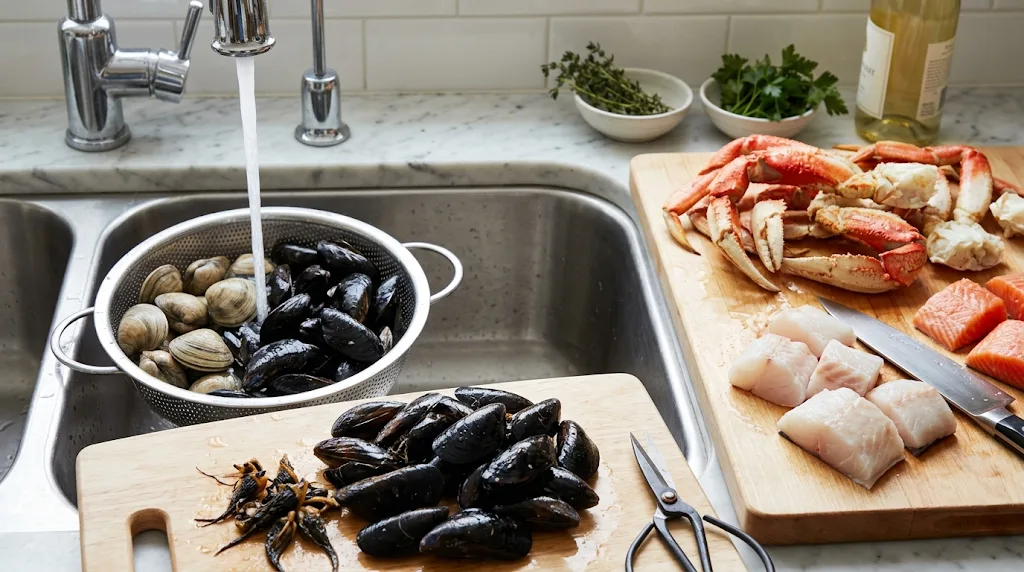
Rinse the clams and mussels under cold water and scrub the shells well. Pull the beards off the mussels and discard any that stay open after a gentle tap. Crack the crab legs, cut the fish into chunks, and keep everything chilled until you need it.
Sauté the Onion and Fennel
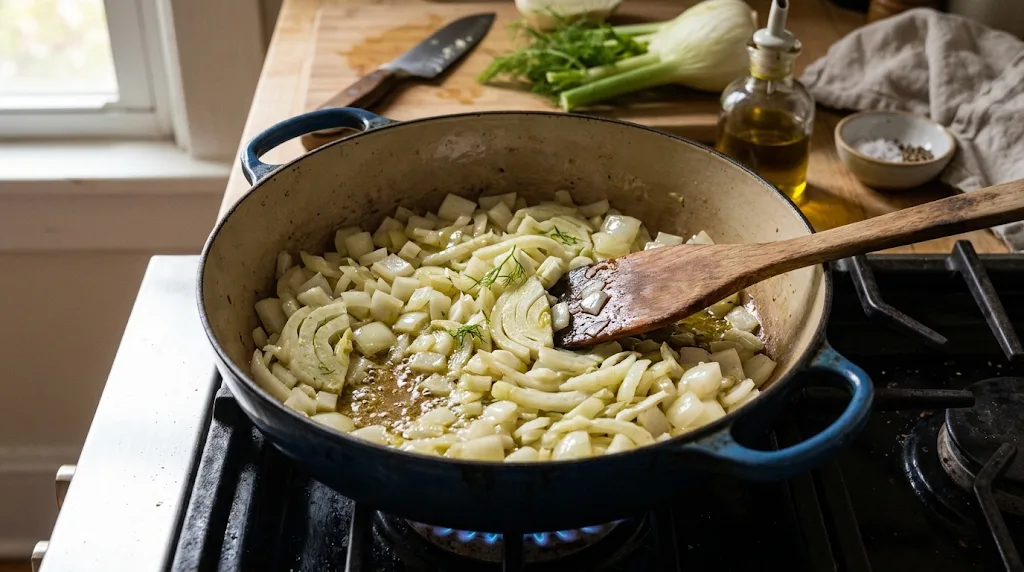
Heat the olive oil in a large Dutch oven over medium heat. Add the onion and fennel and cook for about 8 minutes, until soft and translucent. Stir often so nothing browns.
Add the Garlic and Herbs
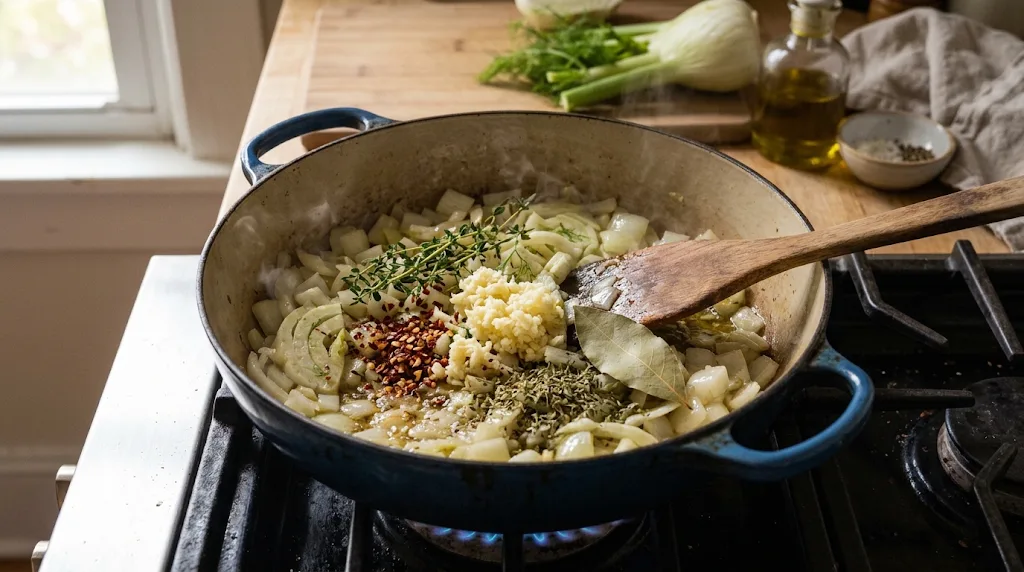
Stir in the garlic, chili flakes, bay leaf, thyme, and oregano. Cook for 2 to 3 minutes until the kitchen smells amazing. Keep the heat steady so the garlic never turns bitter.
Stir in the Tomato Paste
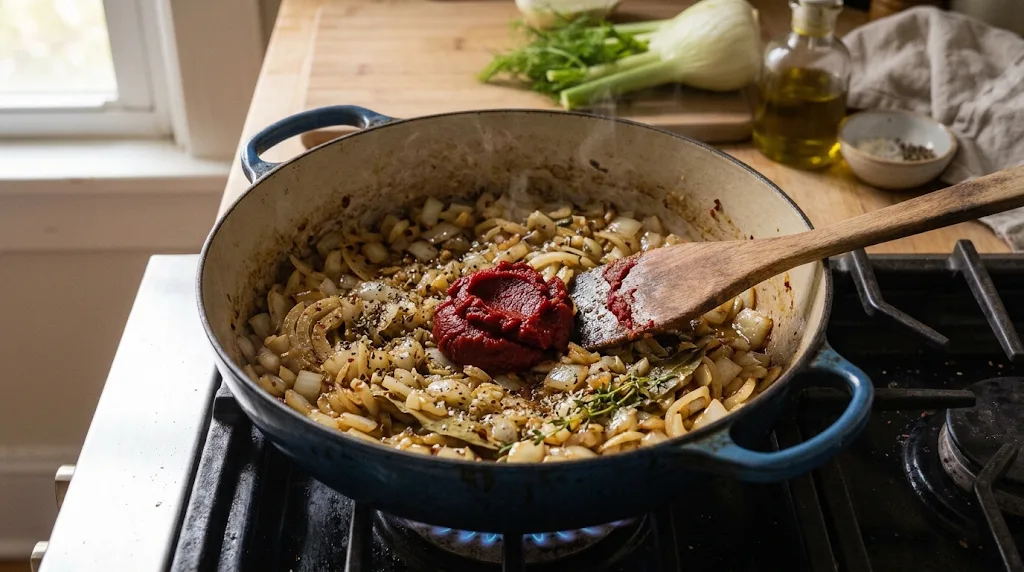
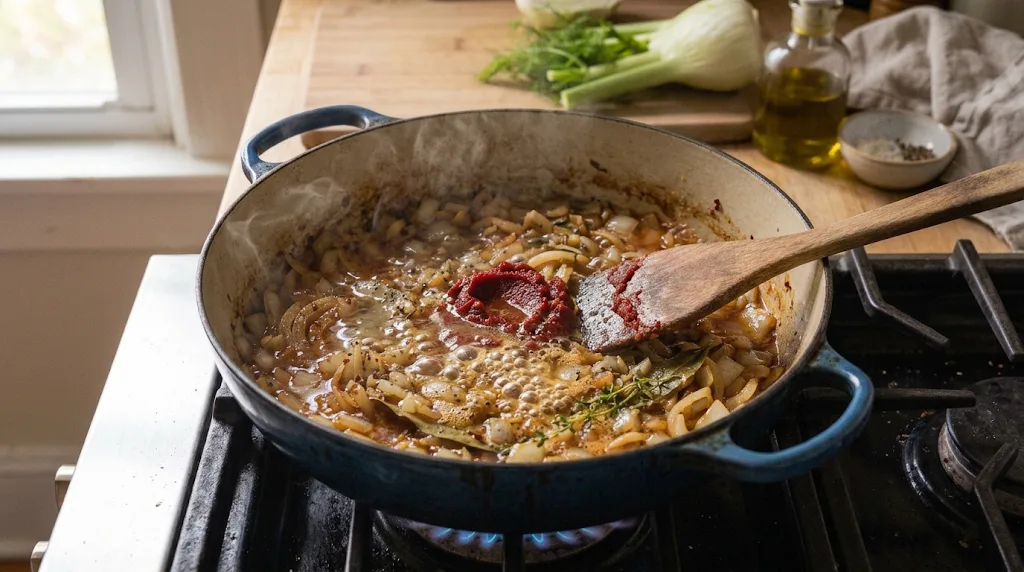
Add the tomato paste and stir until it blends into the vegetables. Season lightly with a small pinch of salt and pepper. Go easy here, because the seafood will add plenty of salt later.
Pour in the Wine and Clam Juice
Add the white wine and clam juice and bring the pot to a simmer. Let it bubble for about 5 minutes so the wine mellows. This takes away the sharp alcohol taste.
Simmer the Tomato Broth
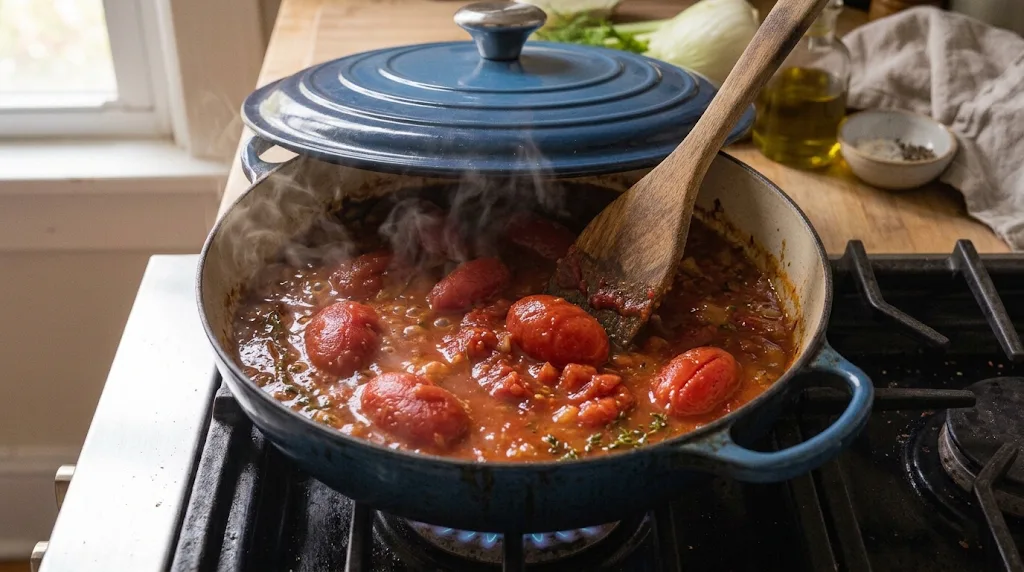
Add the whole peeled tomatoes and crush them with your spoon. Cover the pot and simmer on low for about 20 minutes. The flavors will blend into a rich, herby broth that tastes like it cooked all day.
Cook the Clams
Turn the heat up to a gentle boil and add the clams. Cover the pot and cook for about 5 minutes, until the shells start to open. Clams need a little head start.
Add the Mussels and Crab
Add the mussels and the cracked crab legs next. Cover again and cook for 3 to 4 minutes. The mussels open quickly, and the crab just needs enough time to warm through.
Finish with Shrimp and Fish
Lay the shrimp and fish on top and gently push them into the broth. Cover and cook for 3 to 5 minutes, until the shrimp turn pink and the fish turns opaque. Stir very gently so the fish stays in nice big pieces.
Add Butter, Parsley, and Serve
Take the pot off the heat and discard any shells that didn’t open. Stir in the butter until it melts into the broth, then scatter the parsley on top. Ladle the stew into warm bowls and serve right away with crusty bread.
Additional Tips for Making This Recipe Better
These small things made a real difference in my bowl.
- I always add the seafood in stages, because each type cooks at a different speed. This keeps every bite tender.
- I taste the broth before adding the seafood, then adjust the salt only at the very end.
- I use a dry white wine that I enjoy drinking, and it makes the broth taste cleaner.
Common Mistakes to Avoid
Here are slip-ups I have made so you can skip them.
- Dumping all the seafood in at once: I did this once and ended up with rubbery shrimp. Add it in stages instead.
- Over-salting the broth early: Seafood adds natural salt, so I now season lightly and fix it at the end.
- Using salted butter: It pushed my stew over the edge once, so I always reach for unsalted.
- Skipping the scrub on clams and mussels: Gritty bites are no fun, so I scrub every shell carefully.
- Keeping shells that stay closed: I toss them out, because a closed shell after cooking isn’t safe to eat.
How to Serve California Cioppino Recipe?
In San Francisco, cioppino is often served at Fisherman’s Wharf in big bowls with the shells still in. You can bring that same fun, casual feeling to your own table.
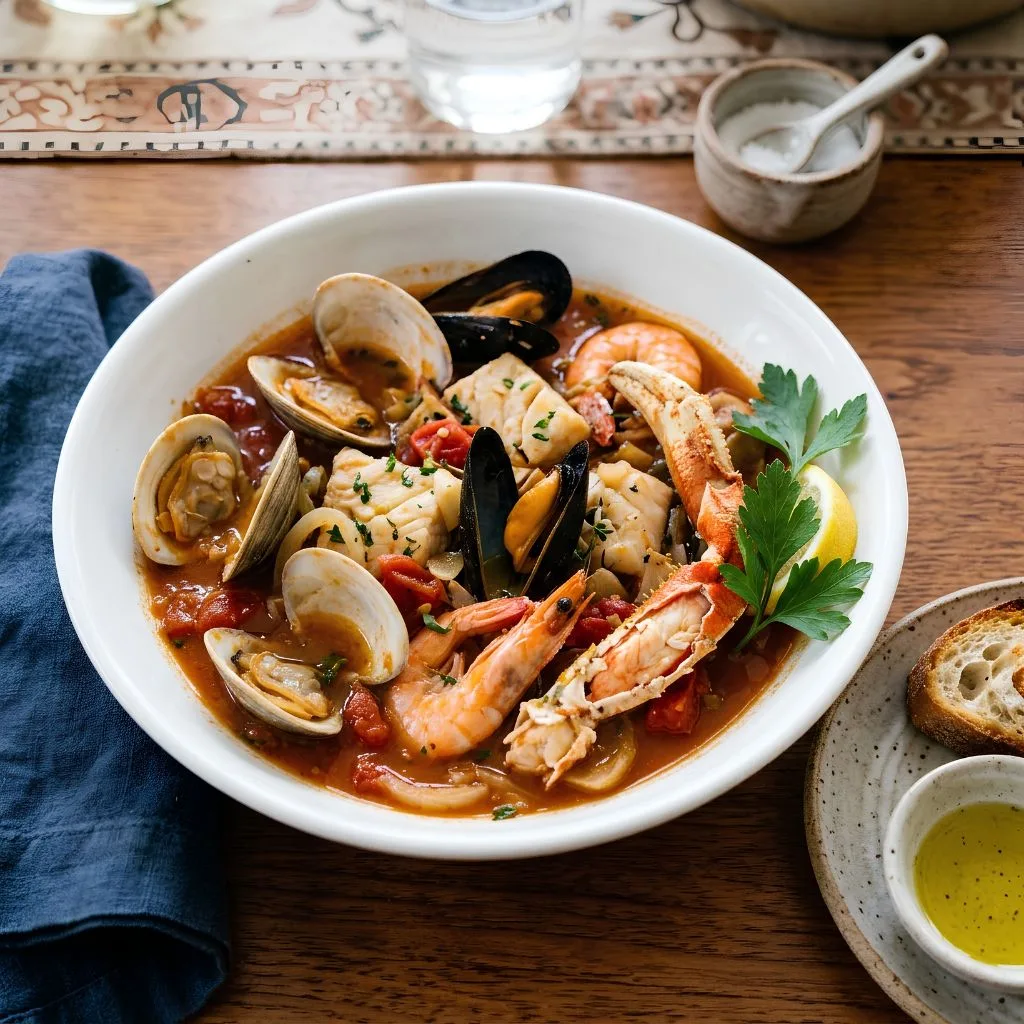
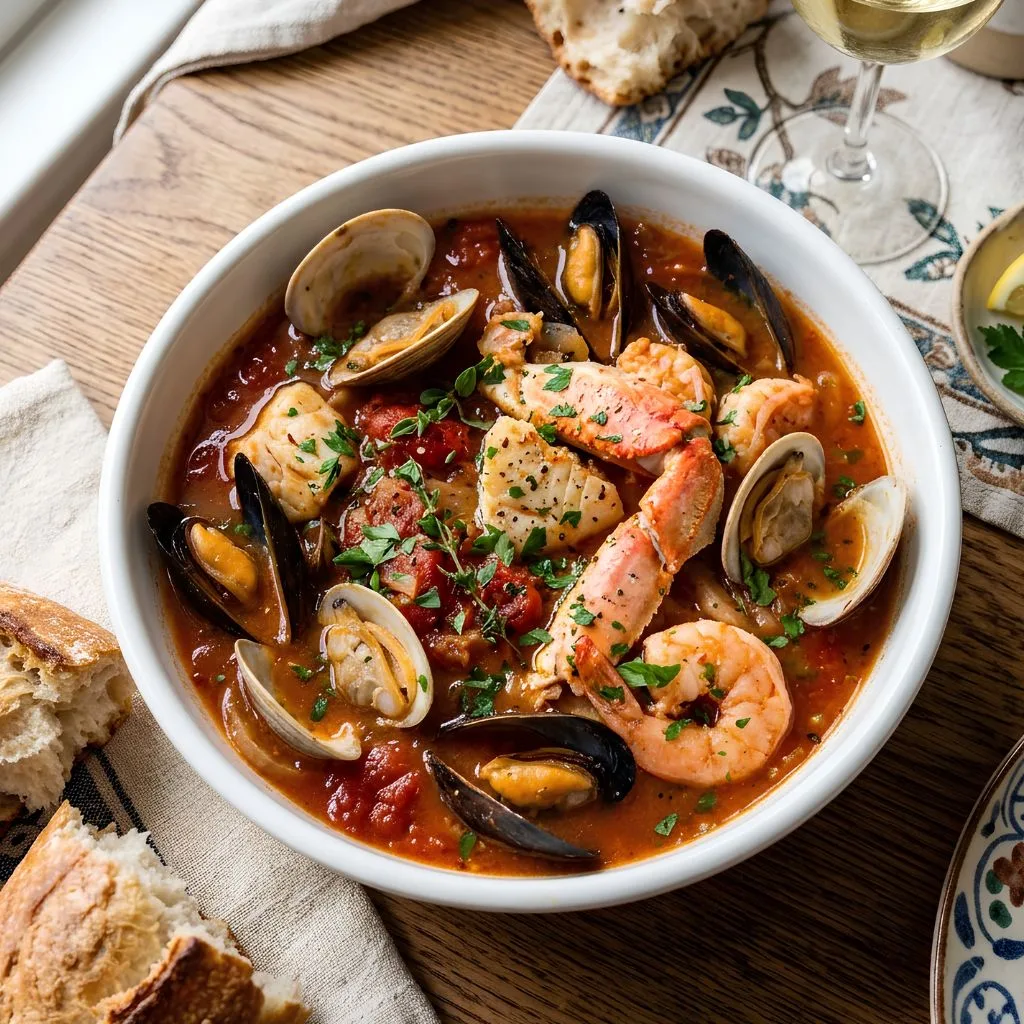
Ladle the stew into wide, warm bowls so the seafood sits on top. Arrange a crab leg across the rim and tuck a few clams and mussels around the edge. Finish with a shower of fresh parsley and a thin lemon wedge on the side. Serve it with toasted sourdough, the classic Bay Area pairing, and a crisp green salad on the side.
Variations
This stew is very flexible, so feel free to make it your own. Here are my favorite ways to change it up.
- Dairy-free: Swap the butter for an extra tablespoon of olive oil. The stew will still taste rich and silky.
- Cioppino recipe with potatoes: Add 1 pound of baby potatoes, halved, to the broth during the simmer. Cook until they are fork tender before adding the clams.
- Different seafood: Use scallops, squid rings, or cod, based on what looks best at your market.
Nutritional Information
Approximate values for one serving, based on six servings.
- Calories: 390 kcal
- Protein: 42 g
- Carbohydrates: 14 g
- Fat: 15 g
Make Ahead and Storage
Cioppino tastes best fresh, but a few steps can be done early.
Make Ahead
You can make the tomato broth up to two days ahead and keep it in the fridge. Reheat it until simmering, then cook the seafood fresh right before serving. It is my favorite dinner party trick.
Storage
Store leftover cioppino in an airtight container in the fridge for up to 2 days. Remove the crab shells first to save space. Seafood is delicate, so I never keep it longer.
Reheating
Warm the stew gently in a pot over low heat, stirring now and then. Don’t let it boil hard, because the shrimp and fish will turn tough. Heat just until it is steaming hot.
Freezing
I freeze only the plain tomato broth, not the seafood, for up to 3 months. Thaw it overnight in the fridge before using. Add fresh seafood when you reheat the broth, and it will taste like new.
Why You’ll Love This Recipe
Here is why this stew is a favorite in my kitchen.
- Easy to make: It looks fancy, but it is mostly chopping and simmering.
- Perfect for special occasions: It makes a stunning centerpiece for holidays and dinner parties.
- Fully customizable: Swap in whatever seafood looks freshest at the market.
- Rich, authentic flavor: The herbed tomato broth tastes like a real San Francisco classic.
- Great for dietary needs: With small swaps, it works for dairy-free eaters too.
FAQs
Can I use frozen seafood for this cioppino?
Yes, frozen seafood works well if you thaw it fully in the fridge first. Pat it dry before adding it to the pot. Fresh is still best for clams and mussels.
What is the best wine for cioppino?
Choose a dry white wine like Sauvignon Blanc or Pinot Grigio. Avoid sweet wines and anything labeled cooking wine. A wine you enjoy drinking will taste best in the broth.
Can I use fish stock instead of clam juice?
Yes, fish or seafood stock is a good substitute. I prefer bottled clam juice because it is easy to find and adds great flavor. Use the same amount.
What bread goes best with cioppino?
Crusty sourdough is the classic choice, especially in California. Toast it lightly so it holds up in the broth. Any rustic loaf works too.