Bombay Beach California: Art, History, and Resilience on the Salton Sea
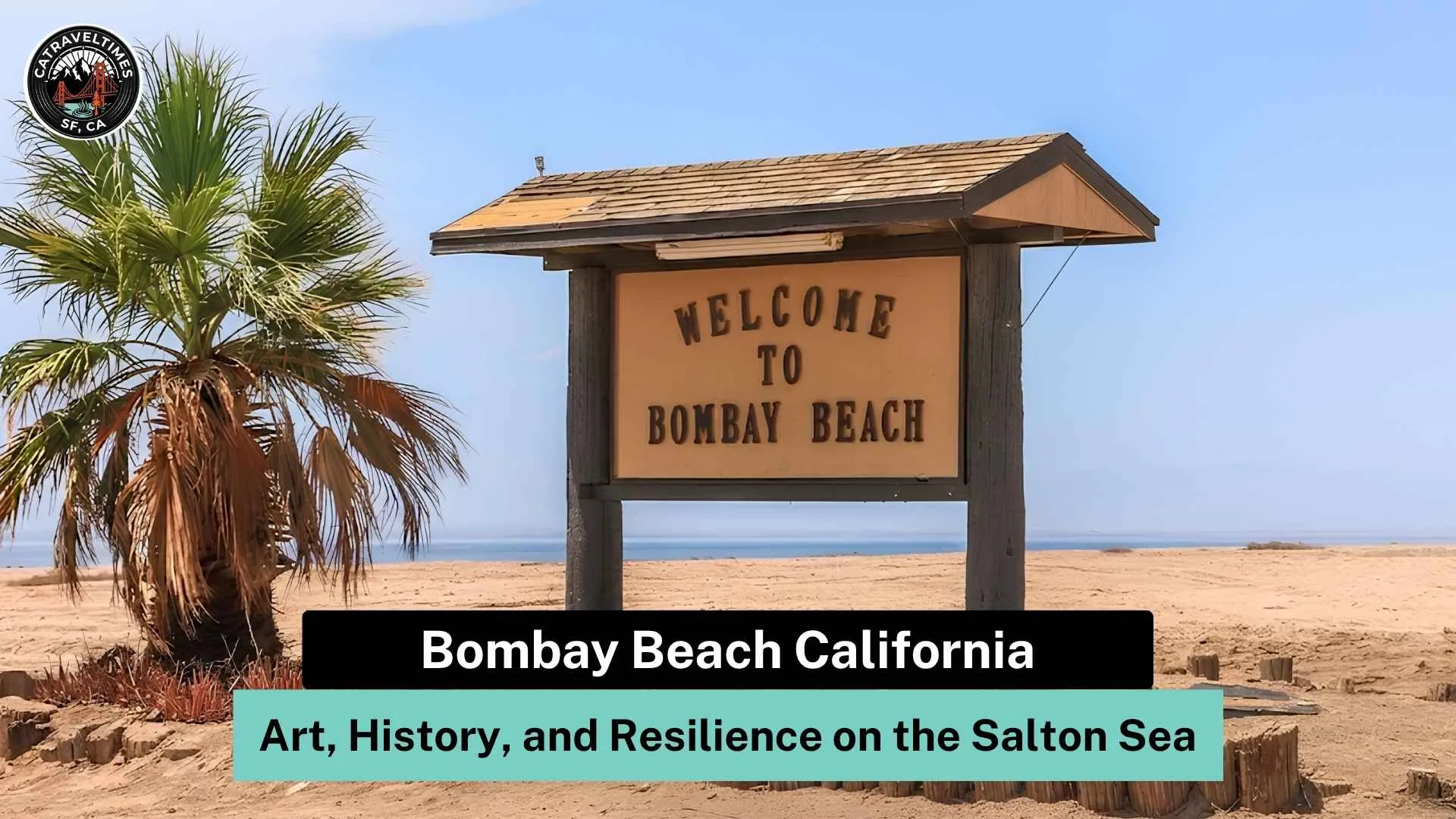
I first drove to Bombay Beach California on a whim—just another checkpoint on a Salton Sea loop. I didn’t expect much. What I found was a place that breaks every rule about how American towns are supposed to look, feel, and recover from collapse. It’s beautiful in a way that makes you uncomfortable. It’s real in a way that most travel destinations aren’t.
This is a place where families fought to stay after everyone else left. Where artists arrived in the rubble and turned decay into conversation. Where you stand 223 feet below sea level, breathing in air thick with history and salt, wondering how something this broken became this fascinating.
If you’re looking for another polished California destination, you’ll want to look elsewhere. But if you want to understand what environmental disaster looks like, what community resilience actually means, and see some of the most unconventional art I’ve encountered anywhere—Bombay Beach California is worth your time.
The Salton Sea: The Lake That Shouldn’t Exist
Before I explain Bombay Beach, you need to understand the Salton Sea. And the Salton Sea’s story starts with a mistake that became permanent.
In 1905, the Colorado River flooded through a weakly built irrigation canal in Southern California. For two years straight, water poured into the Salton Sink, a basin that had been dry for centuries. Engineers finally sealed the breach, but they left behind something unexpected: a massive new lake.
The Salton Sea wasn’t supposed to be permanent. It was an accident. But the water stayed. The lake grew. And by the 1950s, Southern California had a new playground.
The 1950s Boom: When Bombay Beach California Was Glamorous
I needed context for why Bombay Beach matters, so I spent time researching old photographs from the 1950s. What I found surprised me: this place was the destination.
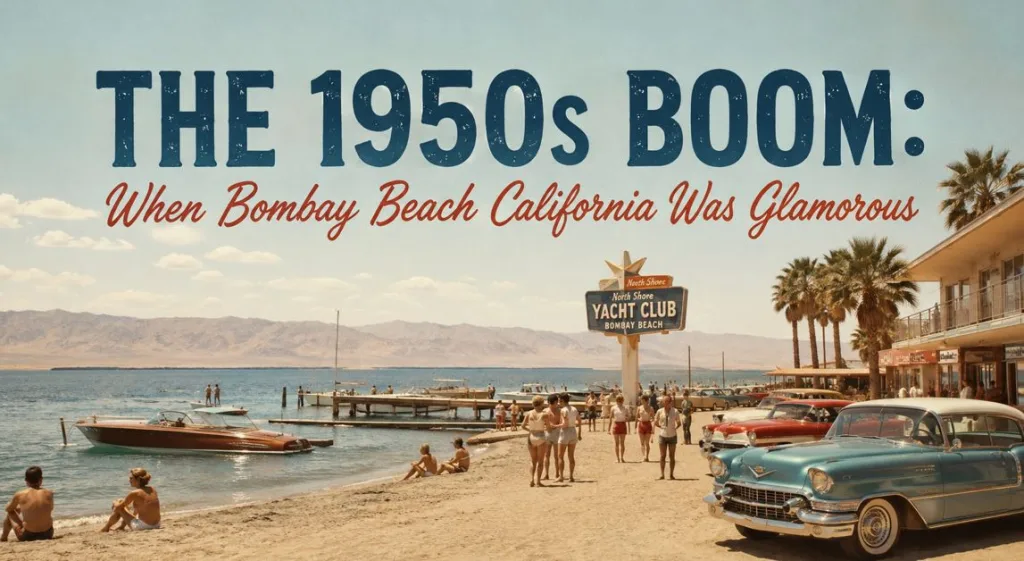
In the early ’50s, Bombay Beach California became a resort town that rivaled Palm Springs. Frank Sinatra came here. Bing Crosby. The Beach Boys. Jerry Lewis. Desi Arnaz. These weren’t casual visitors—they owned property. They invested. They believed in the Salton Sea as a permanent fixture.
The lake offered something you couldn’t get anywhere else: world-class fishing, water skiing, boating. The North Shore Beach and Yacht Club opened as the largest marina in Southern California. Property values skyrocketed. At its peak, the Salton Sea attracted 1.5 million tourists annually—more than Yosemite National Park was getting at the same time.
It was called the “Salton Riviera.” The “miracle in the desert.” Developers couldn’t build fast enough. Then everything broke.
The Collapse: 1970s–1980s Environmental Disaster
Here’s what nobody talked about in the glossy brochures: the Salton Sea has no natural outlet. Water enters. Water evaporates. And everything the Colorado River carried—salt, pesticides, agricultural runoff—stays behind and concentrates.
By the 1960s, scientists were already warning that the lake would eventually die. Nobody listened.
The environmental destruction accelerated through the ’70s. Irrigation runoff from the Imperial Valley farms brought not just water, but chemicals. Salt levels rose. Fish began dying. Then it got worse: in 1976 and 1977, two major hurricanes—rare for Southern California—flooded the Salton Sea. Hurricane Kathleen raised the water levels by 8 feet in just 3 hours. Marinas were destroyed. Developments were abandoned mid-construction.
By 1986, California had to ban fishing. The water was too toxic. Too dangerous.
The people who had invested their dreams in Bombay Beach California watched the collapse happen in real time. Property values collapsed. Businesses closed. Residents packed up and left. The population dropped from 991 in 1990 to 231 by 2020.
But some people stayed. They were either too poor to leave, or too connected to the place to abandon it.
Why Bombay Beach California Became a Ghost Town
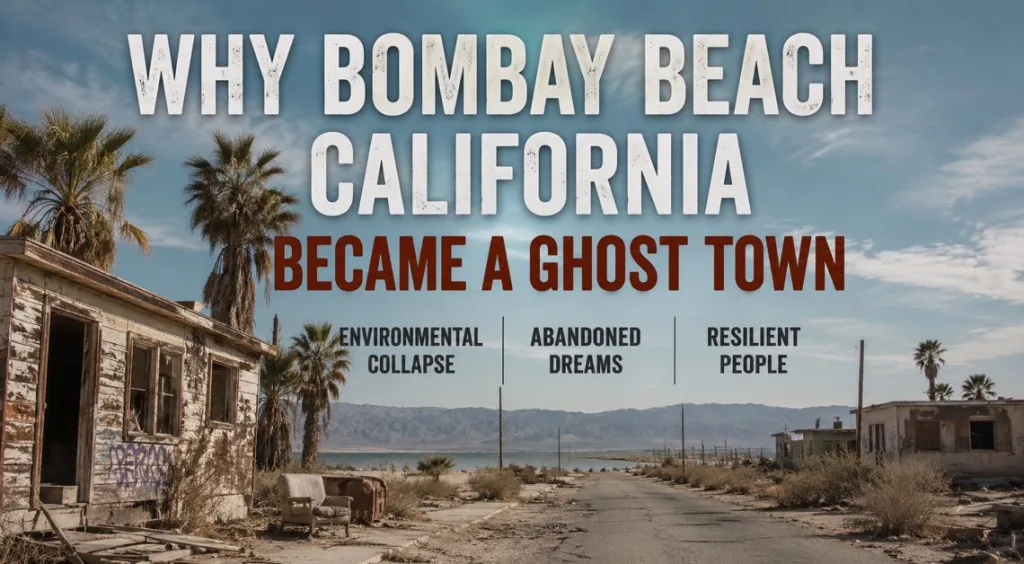
I walked through the Bombay Beach Estates on a quiet afternoon—abandoned buildings scattered across silent streets. Children’s toys lay scattered in overgrown yards. Furniture visible through boarded windows. Lives interrupted, never resumed. The Salton Sea’s decline was stark: a 2019 Pacific Institute report revealed that ten years prior, the sea contained 100 million fish. By 2019, over 97 percent were gone.
Residents described an overwhelming smell of decomposing fish that drove families away. Yet beneath this environmental collapse lay an untold human story. The residents who remained refused to surrender. They held on. And slowly, something unexpected emerged from the ruins.
For more unique desert and off-the-beaten-path California destinations, check out our California Local Guides series.
The Art Rebirth: Bombay Beach California Becomes a Creative Hub
Starting in the 2010s, artists discovered Bombay Beach California—drawn by affordable property, abundant space, and abandoned structures awaiting transformation. Unlike trendy art communities focused on aesthetics, these creators sought to revitalize a forgotten place. The 2016 turning point arrived with the first Bombay Beach Biennale, founded by filmmaker Tao Ruspoli, hotel owner Stefan Ashkenazy, and art producer Lily Johnson-White.
Each spring, they’ve transformed the town into a grassroots art festival featuring 100+ installations. Unlike Coachella, there are no corporate sponsors or VIP passes—just artists, philosophers, and makers creating meaningful work in abandoned houses and empty lots. Murals layered with stories. Immersive experiences. Decay reimagined as living artwork. The community became a canvas for authentic creative expression.
What to See in Bombay Beach California
The Ski Inn
This is the only bar and restaurant in town, and it’s exactly what you’d expect from a place 223 feet below sea level: gritty, authentic, and completely unpretentious. The Ski Inn has been open since the 1950s (though it’s changed hands). The interior is decorated with dollar bills—literally plastered on every surface, a tradition that’s been going on for decades. The owner doesn’t do this for tourists. They do it because that’s what the Ski Inn is.
I grabbed lunch here, and the experience was surreal in the best way. The bartender wasn’t trying to make conversation or sell me something. She was just doing her job, serving the locals and the few travelers who wandered in. The food was solid. The drinks were cheap. It felt real.
Fair warning: it’s dive-bar real. Not everyone’s comfortable in these spaces. But if you are, this is essential.
The Bombay Beach Drive-In
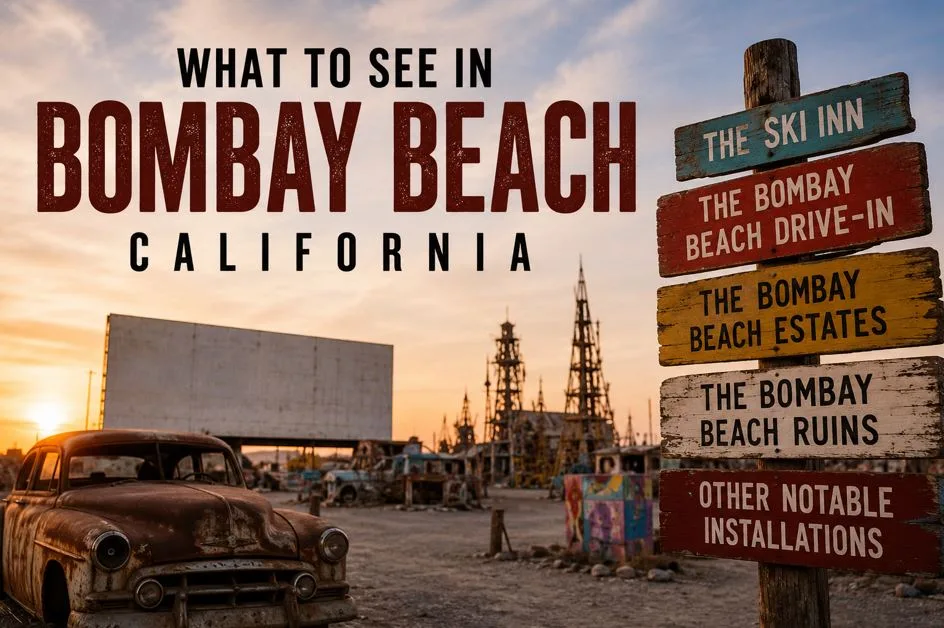
This is a large-scale art installation that looks like it emerged from a post-apocalyptic film. Rusted cars—some from the ’50s, some from the ’80s—are lined up in perfect rows, all facing a white semi-trailer that serves as a movie screen.
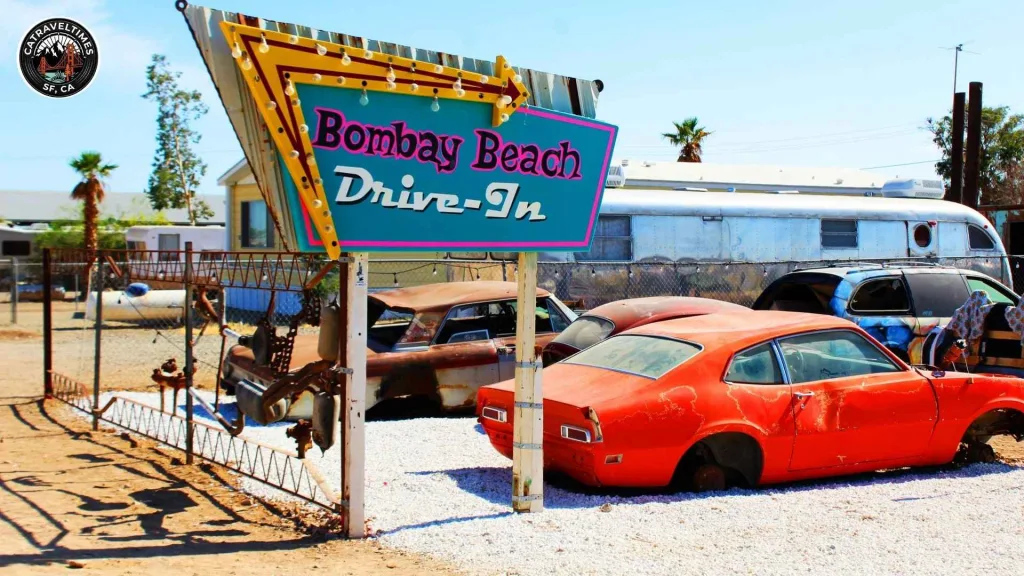
The detail work is incredible. Each car has been decorated individually. Some have old vinyl records scattered inside. Some have family photos. Some have quotes from cult films. The installation was created by Stefan Ashkenazy and Sean Dale Taylor, who sourced the vehicles from metal scrapyards across Imperial County.
Sometimes they actually show movies here. People drive in, sit in the wrecks, and watch a film under the desert stars. I didn’t catch one during my visit, but even without a film, the drive-in is worth the stop.
The Bombay Beach Estates
This abandoned neighborhood is where much of the street art lives. You’ll see walls covered in intricate murals—some abstract, some representational, all of them detailed and intentional.
The most striking piece I found was a building where an artist had written a full confession on the exterior walls in white paint. Another house had been turned into a dark room with strings creating spiderweb patterns, with pairs of underwear and confessions pinned throughout.
One building is called “The World’s Shittiest Museum”—painted in vibrant colors, it’s part art, part commentary on the state of things. It’s unsettling and brilliant at the same time.
The Bombay Beach Ruins
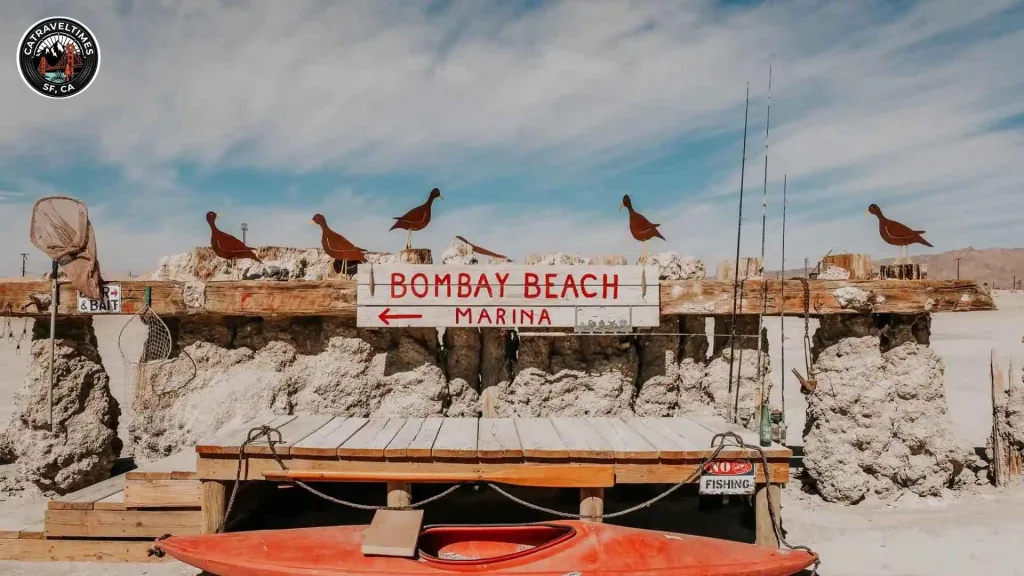
At the marina, you’ll find the remnants of the town’s resort era mixed with newer art installations. There’s a giant concrete star covered in barbed wire and metal rods. Metal towers rising from the beach. A swing set rising out of the water, peaceful and eerie at the same time.
The ruins change constantly as water levels recede and new art gets added. Every visit will be different.
Other Notable Installations
The “Flying Fish” sculpture sits in front of a house near the main street—a giant metal fish with wings, spinning on its base in the wind. The “Last Resort” sign is the modified remnant of an old resort sign that now perfectly captures the town’s dark humor. There are painted TVs stacked in colorful piles. A Burning Man art car that found permanent residence. Hand-painted walls featuring everything from political statements to abstract patterns.
The art isn’t confined to specific locations. It’s woven throughout the streets.
Practical Information for Visiting Bombay Beach California
When to Go
Bombay Beach California gets extremely hot. Summer temperatures regularly hit 120°F. If you go then, bring an enormous amount of water, and only plan on being there for an hour or two.
Fall and spring are ideal. I visited in early winter, and the temperature was perfect—low 70s, clear skies. Winter brings the most consistent weather, though you might see occasional dust storms.
Where to Stay
There are no hotels in Bombay Beach itself. Your options are:
- Niland (20 minutes away): A few small motels exist here, though they’re sparse.
- Salton City (30 minutes away): More amenities, though still limited.
- Coachella Valley (45–60 minutes away): Best bets for real hotels. Palm Springs is an hour away.
- Airbnb: Recent reports suggest a few vacation rentals have opened in Bombay Beach itself, though this was not the case when earlier competitors reviewed it.
What to Bring
- Water: More than you think you need. The desert is unforgiving.
- Sunscreen: This is direct, intense sunlight at low elevation.
- Closed-toe shoes: There’s broken glass, metal, and debris everywhere.
- A full tank of gas: The nearest gas station is 20 miles away in Niland.
- A sense of humor: You’re visiting a place defined by its contradictions.
How Long to Spend
If you’re just driving through, 2–3 hours is enough to see the main attractions and grab lunch at the Ski Inn.
If you want to really explore, wander the streets, and soak in the atmosphere, plan on 4–6 hours.
Safety Considerations
Bombay Beach is safe in the sense that violent crime isn’t a significant threat. What you should be aware of:
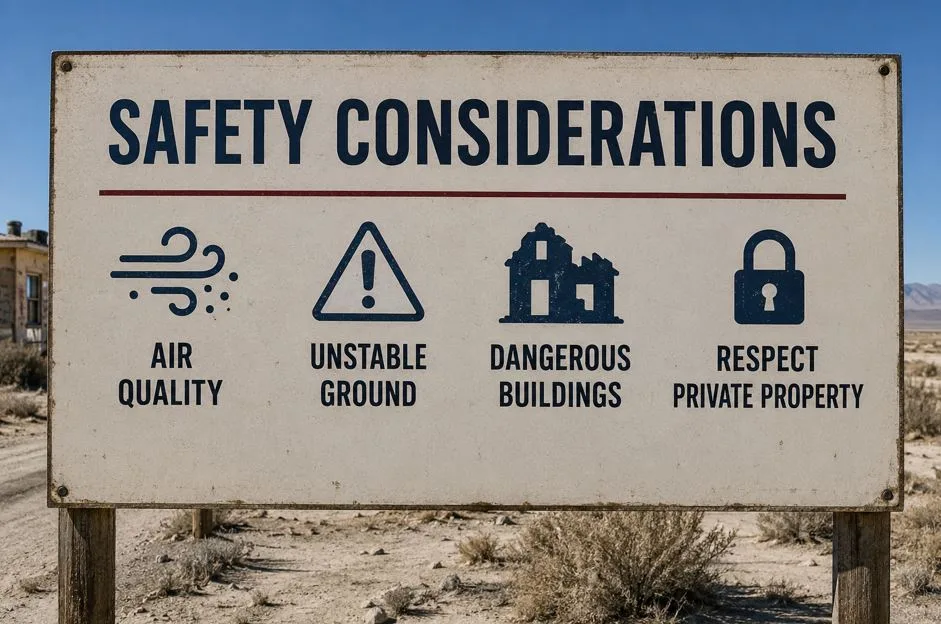
- The air quality can be poor due to dust from the shrinking lake and agricultural runoff. If you have respiratory issues, check air quality reports before visiting.
- The ground is unstable in places. Watch your footing, especially around the ruins.
- Some buildings are dangerous to enter. Use common sense. If a structure looks like it’s about to collapse, don’t go inside.
- Respect private property. This is still someone’s home, even if it looks abandoned.
Nearby Attractions
The advantage of visiting Bombay Beach California is that you’re close to other unique desert destinations:
- Salvation Mountain (30 minutes): A hand-painted mountain covered in religious messages and bright colors.
- Slab City (30 minutes): An off-grid community in the middle of the desert.
- East Jesus (30 minutes): An art installation community adjacent to Slab City.
- Joshua Tree National Park (1.5 hours): Classic desert hiking and geology.
Many visitors do a circuit hitting all of these in a single road trip, which makes sense geographically.
The Environmental Crisis Isn’t Over
Visiting Bombay Beach California reveals art flourishing against genuine environmental challenges. The Salton Sea continues shrinking—water levels have dropped nearly 10 feet since the 1990s. Exposed lakebed containing decades of concentrated pesticides and salt becomes airborne as toxic dust during windy periods.
Locals experience some of California’s worst respiratory health, with asthma rates significantly exceeding state averages. This represents a public health crisis, not romantic poetry. California’s November 2022 announcement of a $250 million restoration plan—addressing habitats, dust management, and recovery—represents progress but remains a partial solution to decades of neglect.
Why Bombay Beach California Matters
I’ve visited a lot of California places—we review them extensively here at CA Travel Times—and most fit into predictable categories: beautiful natural areas, charming towns, food destinations, adventure spots.
Bombay Beach California doesn’t fit any category. It’s uncomfortable. It’s real. It challenges the narrative that California is uniformly glamorous and successful.
What I experienced was a place where crisis and creativity coexist. Where a community faced abandonment and chose to stay, to build, to create meaning. That’s a story worth telling, and that’s why people keep coming back.