
Fried California Roll: Crispy, Golden & Easy Recipe
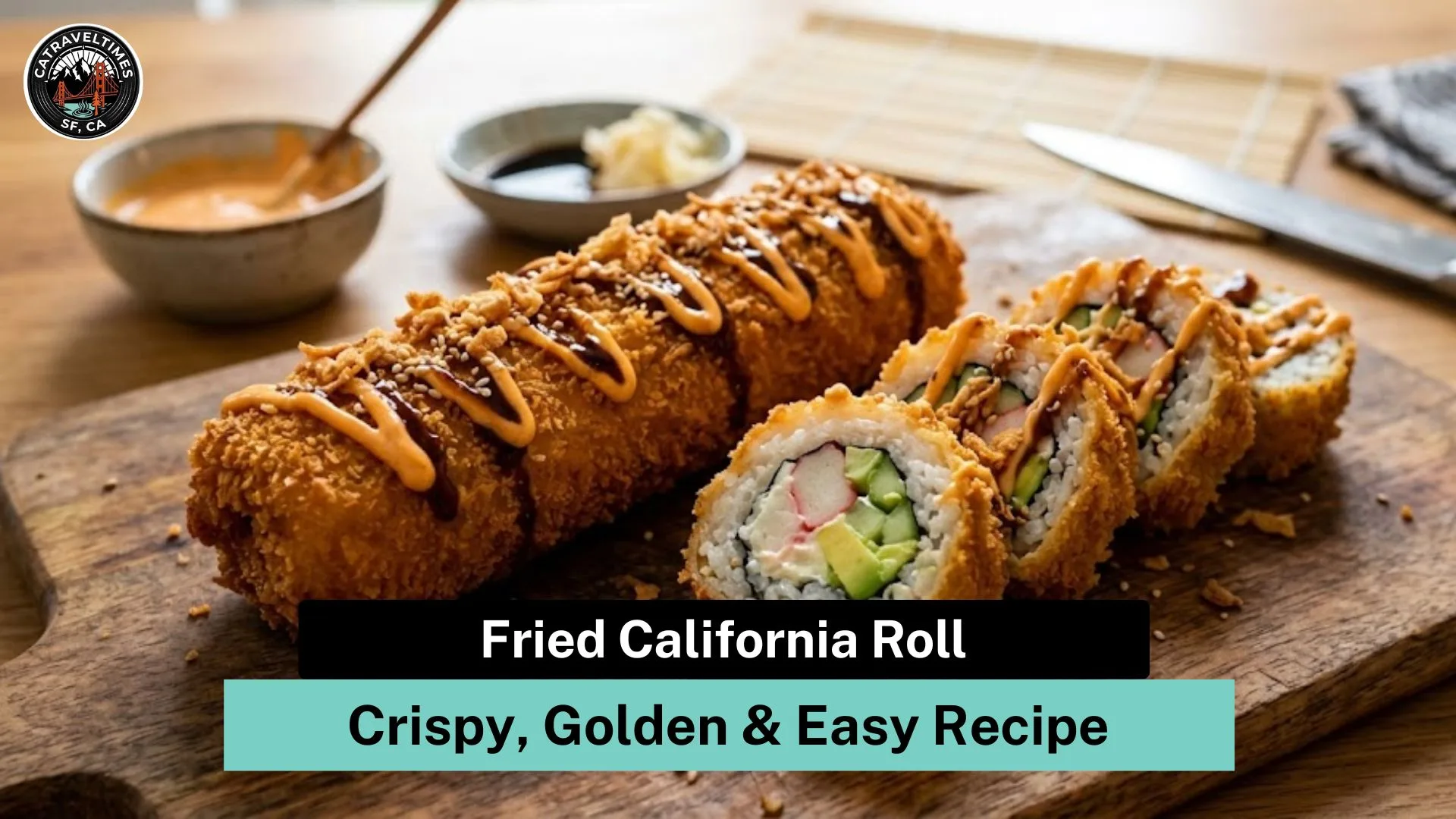
Growing up in San Diego, I was basically raised on sushi. But the first time I bit into a fried California roll — that hot, golden, panko-crusted outside giving way to creamy avocado and cool imitation crab inside — I understood why people lose their minds over it.
This isn’t your standard sushi roll. It’s battered and fried to a crispy crunchy perfection that a plain California roll will never hit. I’ve tested this recipe more times than I’d like to admit. Over at CA Travel Times, we’re all about experiencing California flavor in every form — and this recipe absolutely counts.
Whether you call it a California crunch roll, a tempura roll, or a playboy roll, the concept is the same: a fully enclosed sushi roll, dipped in a seasoned egg wash, rolled in panko bread crumbs, and fried until golden. It’s an appetizer, a main, a snack — it’s everything. Let me walk you through exactly how to make it.
What Is a Fried California Roll?
A fried California roll is a classic California roll — imitation crab, avocado, and cucumber wrapped in sushi rice and nori seaweed — that gets taken one step further. The whole roll is sealed shut, coated in a panko bread crumb crust, and shallow-fried in oil until the outside is golden and crispy.
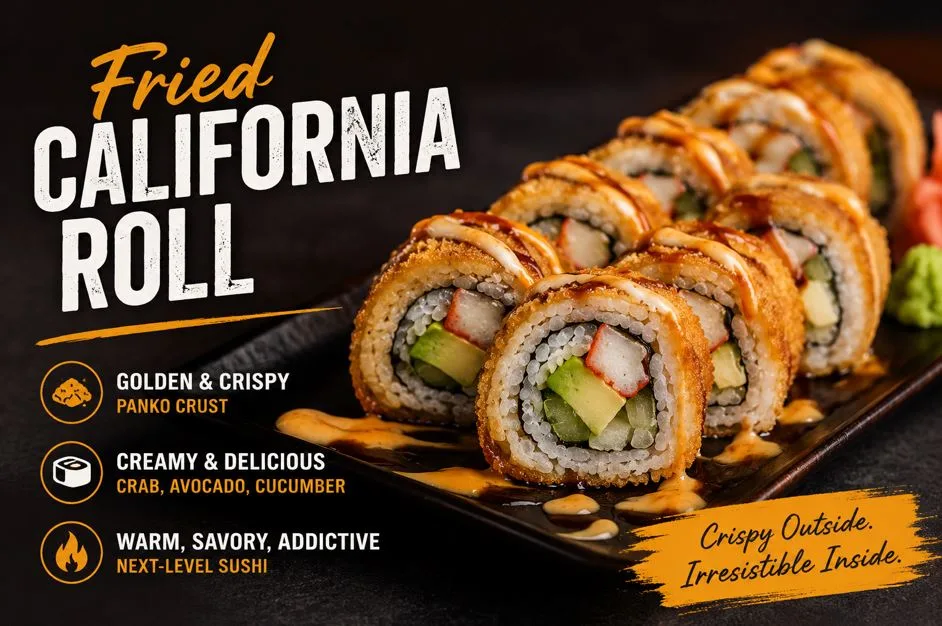
It goes by several names depending on where you order it:
- California Crunch Roll — named for the crispy panko coating
- Tempura California Roll — when a tempura-style batter is used
- Playboy Roll or Dragon Roll — regional restaurant names for a similar deep fried sushi style
The main difference between a regular California roll and this one? The regular version is soft and cold. The fried version is warm, crunchy on the outside, creamy on the inside — and absolutely addictive. Think of it like the difference between a regular sandwich and a deep-fried Monte Cristo. Same idea, totally different experience.
Ingredients for Fried California Roll
Here’s the full list for one to two rolls. Everything can be found at a regular grocery store — most items are in the Asian food aisle.
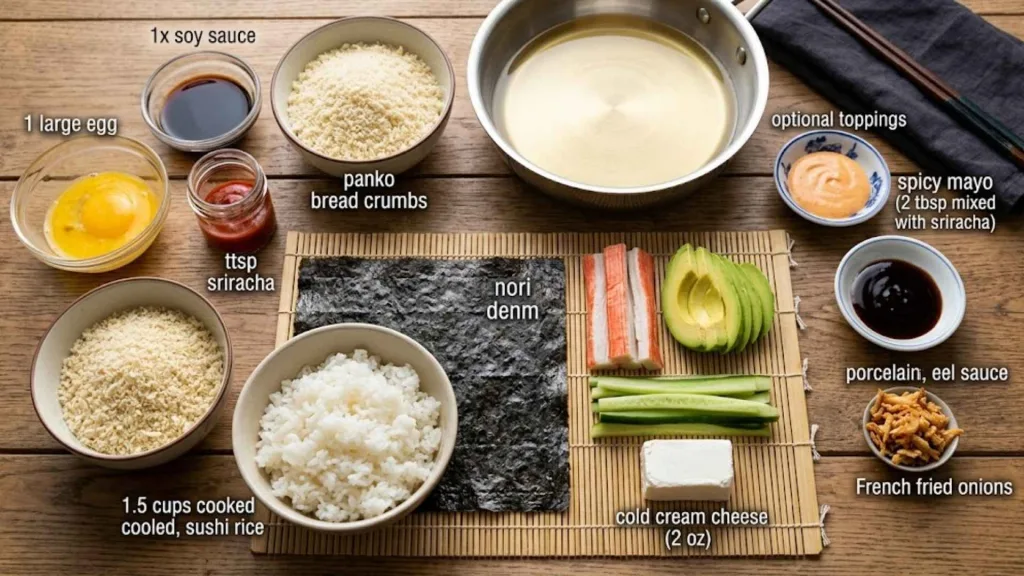
For the Roll:
- 1–2 cups cooked sushi rice, cooled
- 1–2 sheets nori seaweed wraps (go for smaller sheets or cut large ones to about ¾ size)
- 3 sticks imitation crab meat, sliced into thin strips
- ½ avocado, thinly sliced
- ½ cucumber, thinly sliced
- 2 oz cream cheese (optional, but it adds a rich creaminess)
For the Batter & Frying:
- 1 large egg
- 1 tsp soy sauce
- ½–1 tsp sriracha (optional, skip if you want a milder batter)
- 1 cup panko bread crumbs
- Oil for frying — canola oil, corn oil, or peanut oil all work well (about 1–2 inches deep in the pan)
For Topping:
- 2 tbsp spicy mayo (2 tbsp mayo + 1–2 tsp sriracha, mixed)
- 1 tbsp eel sauce or oyster sauce (Asian food aisle)
- French fried onions — optional but they add a great crunchy onion crunch topping
Tools You’ll Need
Nothing fancy here, just a few kitchen basics:
- Sushi mat or a clean kitchen towel — to help compress and shape the roll
- Plastic wrap — essential for rice-out rolling
- Rolling pin — to flatten the rice evenly
- Rectangle baking dish — to hold the egg wash for dipping the full roll
- Skillet or frying pan — wide enough to fit the roll
- Sharp serrated knife — for slicing without tearing the roll apart
How to Make a Fried California Roll — Step by Step
Step 1: Prep Your Fillings
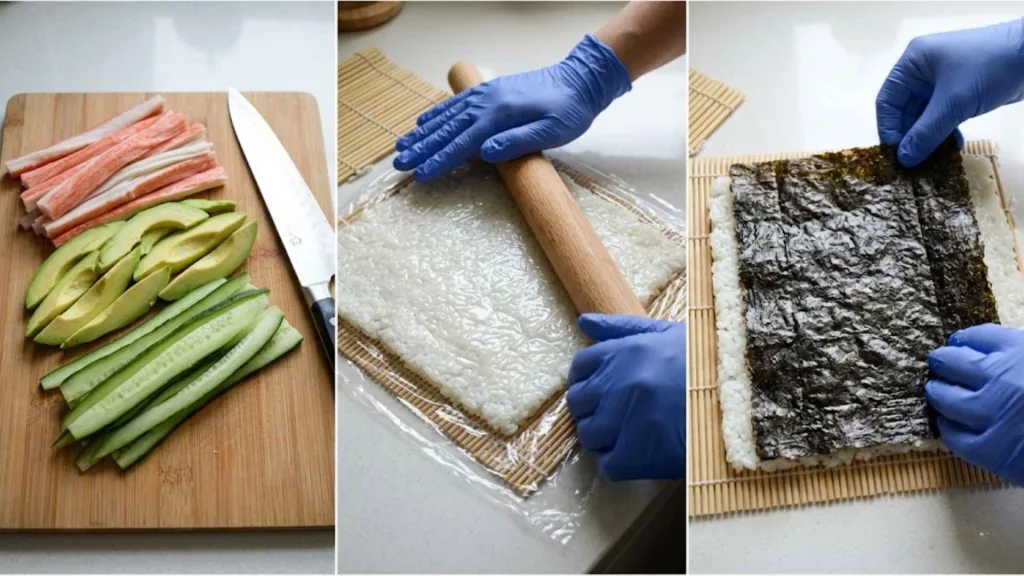
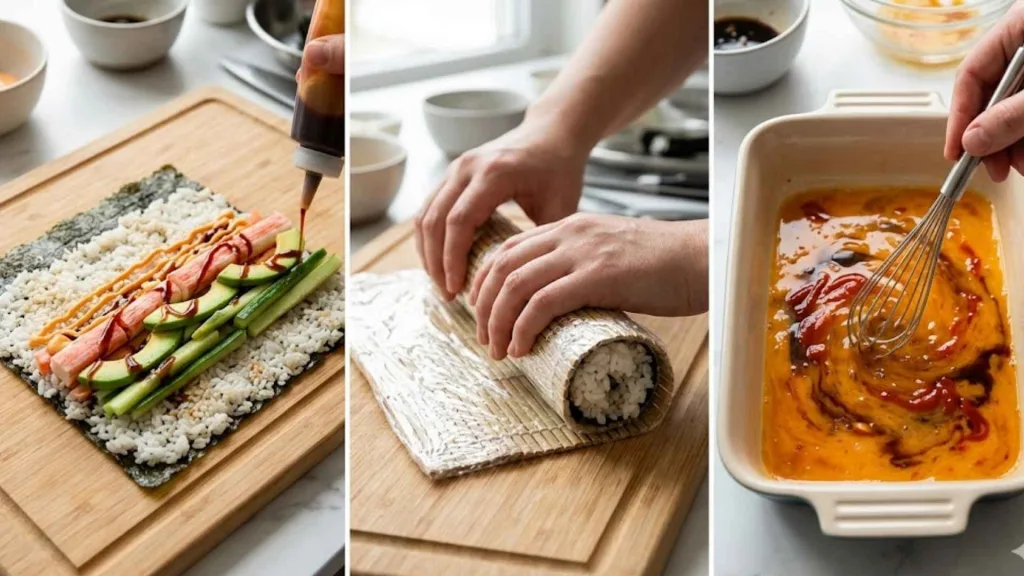
Slice the imitation crab, avocado, and cucumber into long, thin strips. Keep everything ready before you start rolling — once the nori touches the rice, things move fast.
Step 2: Flatten the Sushi Rice
Lay a piece of plastic wrap on your sushi mat or work surface. Add 1 to 1½ cups of cooled sushi rice and spread it out roughly with your hands. Cover it with another piece of plastic wrap and use a rolling pin to press the rice into a flat, even rectangle — about ½ inch thick. The shape should roughly match your nori sheet.
Step 3: Place the Nori
Remove the top plastic wrap. Cut your nori sheet to about ¾ size if it’s large, then lay it rough side down directly onto the rice. It sticks immediately, so place it carefully. Tuck a little extra rice along the short ends — this is what seals the roll when it fries.
Step 4: Add the Fillings
Arrange the imitation crab, avocado slices, and cucumber across the center of the nori. Add a thin line of spicy mayo and a small drizzle of eel sauce right over the fillings. Cream cheese is optional here — I skip it sometimes, but it does add a nice creamy spicy crab stuffed roll effect.
Step 5: Roll It Tight
Lift both sides of the plastic wrap up and toward the center, bringing the roll together so the edges of the rice meet or slightly overlap. Turn it on its side and use your hands (still with the plastic wrap on) to press and compress the roll into a firm cylinder. Then use your sushi mat or a clean towel to press it further, getting a tight, even shape.
This is the most important step for a fried California roll — the roll must be fully enclosed. Pack rice into both ends so no filling is exposed. A leaky roll in hot oil is a problem.
Step 6: Make the Egg Wash
In a rectangle baking dish long enough to fit the roll, whisk together the egg, soy sauce, and sriracha. This egg mixture is your binding coat before the panko crumbs go on.
Step 7: Coat in Panko
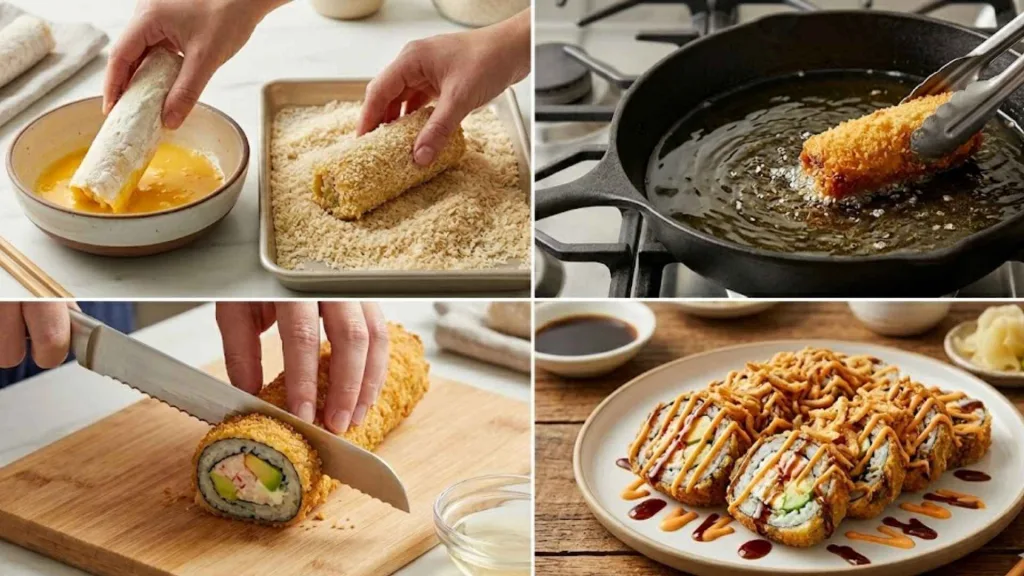
Roll the sealed sushi roll first through the egg mixture, turning to coat all sides. Then roll it through the panko bread crumbs, pressing gently so the crumbs stick evenly. You want a full, even crust — no bare patches — for a consistently golden crispy outside.
Step 8: Fry It
Heat 1–2 inches of canola oil, corn oil, or peanut oil in a skillet to 350–360°F. Carefully lay the roll in the pan. Fry for 2–3 minutes per side, turning gently, until every side is deep golden brown. You’re not cooking the filling — everything inside is already ready to eat — so you’re just frying for that golden crispy crust.
Remove from the skillet and place on a paper towel or cooling rack to drain excess oil.
Step 9: Slice Carefully
Dip a sharp serrated knife in rice vinegar or water before each cut. Gently saw through the roll — don’t press straight down or you’ll crush it. Wet knife, slow sawing motion, and you’ll get clean, beautiful pieces every time.
Step 10: Top and Serve
Drizzle spicy mayo and eel sauce over the sliced pieces. Add French fried onions if you’re using them — that crunchy onion crunch topping adds a whole extra dimension of texture. Serve immediately.
Finishing Touches and Serving
Once your fried California roll has cooled slightly, it’s time to add the final flourishes:
- Drizzle additional spicy mayo across the top
- Add more eel sauce if you like
- Sprinkle optional French fried onions for extra crunch
- A light dusting of toasted sesame seeds makes it look restaurant-quality
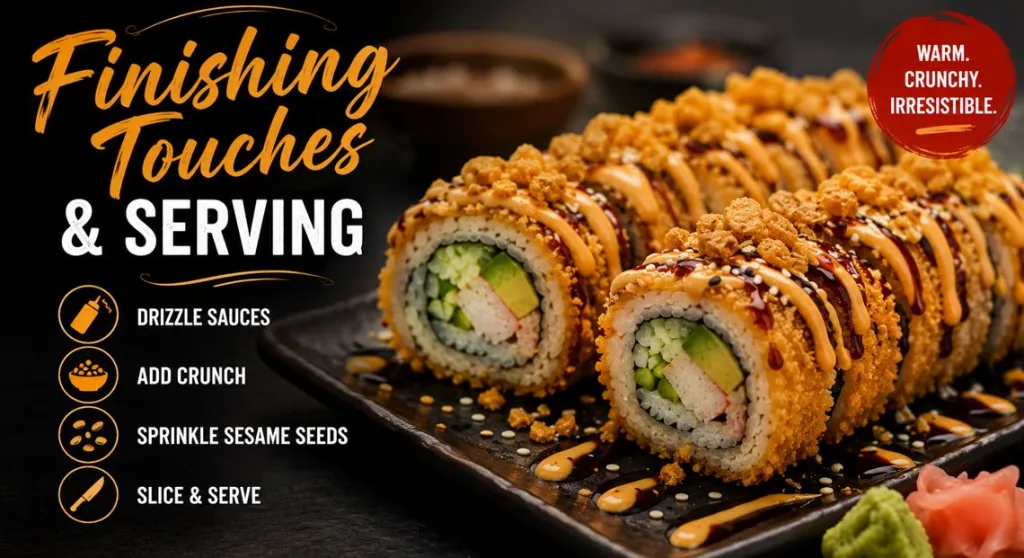
To slice, use a sharp serrated knife dipped in rice vinegar or water between each cut. This prevents the nori from tearing and the fillings from smearing. Gently saw through the roll rather than pressing down hard—this keeps everything intact.
Serve immediately while the outside is still warm and crispy. The contrast between the hot, crunchy exterior and cool interior is half the appeal.
The Sauces: What to Drizzle and Why
The toppings on a fried California roll are just as important as the roll itself. Here’s how each one works:
| Sauce | Flavor Profile | How to Use |
| Spicy Mayo | Creamy, tangy, mild heat | Drizzle generously over the top |
| Eel Sauce | Sweet, thick, umami-rich | Light drizzle — it’s strong |
| Oyster Sauce | Savory, slightly sweet | Substitute for eel sauce |
| Soy Sauce | Salty, clean | Use as a dipping sauce on the side |
| Sriracha | Pure heat | Add directly to mayo or drizzle sparingly |
To make homemade spicy mayo: mix 2 tablespoons of mayo with 1–2 teaspoons of sriracha. For a creamy spicy mayo swirl, thin it slightly with a few drops of water and drizzle it from a squeeze bottle.
Variations of the Fried California Roll
Once you’ve mastered the base recipe, here’s how to switch it up:
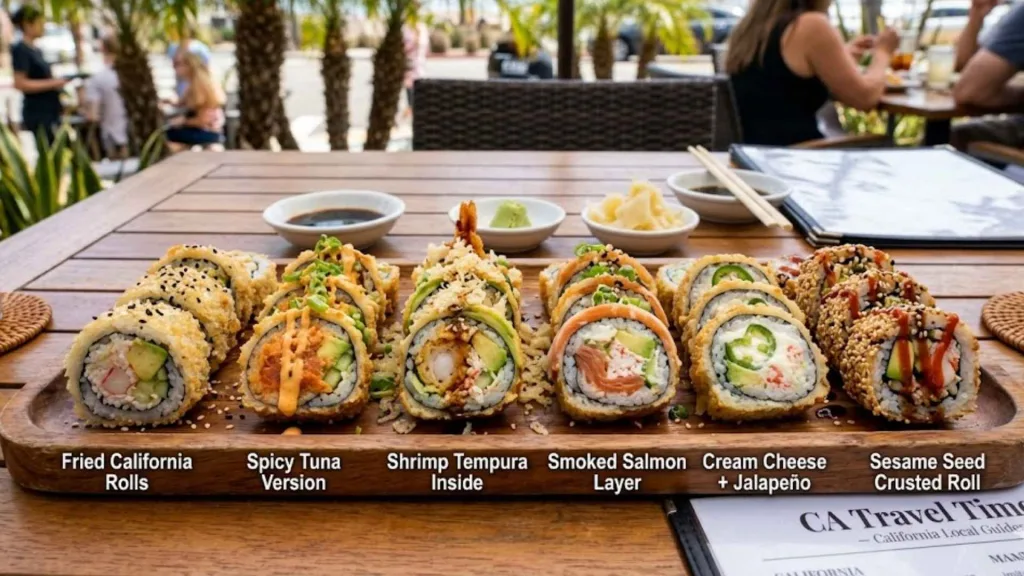
- Spicy tuna version — replace imitation crab with a spicy tuna mix (canned or fresh tuna + sriracha + mayo)
- Shrimp tempura inside — add a piece of cooked tempura shrimp before rolling for double crunch
- Smoked salmon layer — tuck thin smoked salmon strips alongside the crab for a richer flavor
- Cream cheese + jalapeño — add both inside for a spicy, creamy contrast
- Sesame seed crusted roll — add sesame seeds to the panko crumbs before coating for a sesame seed crusted roll finish
- Baked version — brush with oil, bake at 400°F for 15–18 minutes, flipping once. Less crispy but lighter
For more California-style food inspiration, browse the California Local Guides on CA Travel Times.
How to Store and Reheat
Fried sushi is always best fresh — straight from the pan. That said, leftovers can be saved.
- Storing: Place in an airtight container and refrigerate for up to 1 day. The crust will soften in the fridge.
- Reheating: Use an air fryer at 375°F for 3–4 minutes or a dry skillet over medium heat for 2 minutes per side. Both methods bring back some crunch. Avoid the microwave — it turns the panko crust rubbery.
- Do not freeze. Avocado and sushi rice do not survive freezing well.
Tips for Getting It Right
A few things I learned the hard way so you don’t have to:
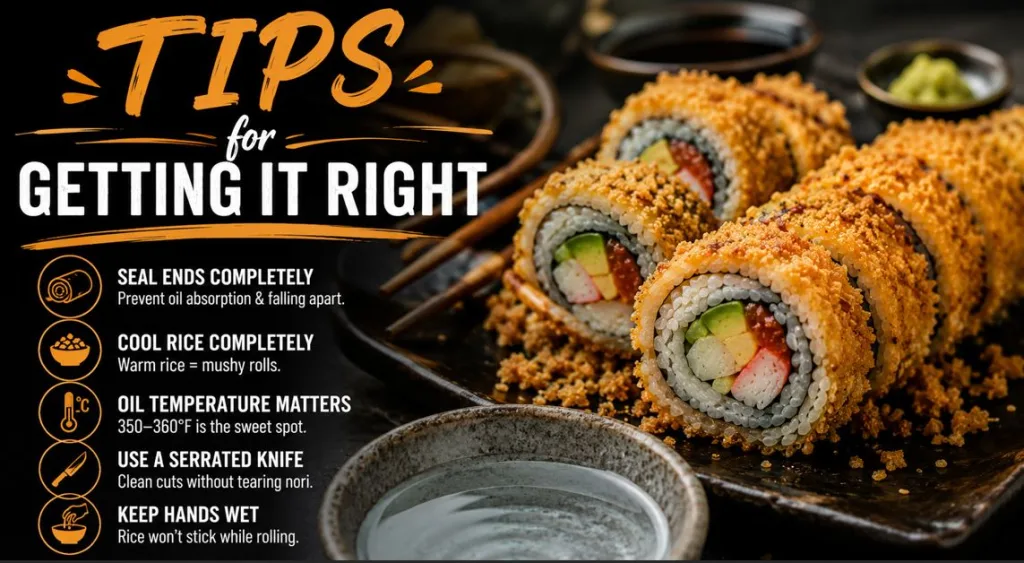
- Seal the ends completely. Any gap in the rice coating on the ends will let the roll absorb too much oil or fall apart. Pack extra rice in.
- Don’t skip cooling the rice. Warm rice makes the roll mushy and harder to handle. Let it cool completely before rolling.
- Oil temperature matters. Too hot and the panko burns before the roll is warm through. Too cool and it absorbs a lot of oil. 350–360°F is the sweet spot.
- Use a serrated knife, not a straight blade. A straight chef’s knife tears the nori wrap instead of cutting through it cleanly.
- Keep a bowl of cold water nearby. Wet hands keep rice from sticking to your fingers while rolling.
Nutrition & Dietary Notes
Deep fried sushi is not a low-calorie dish — no surprises there. Here’s a general breakdown for one full roll sliced into 8 pieces:
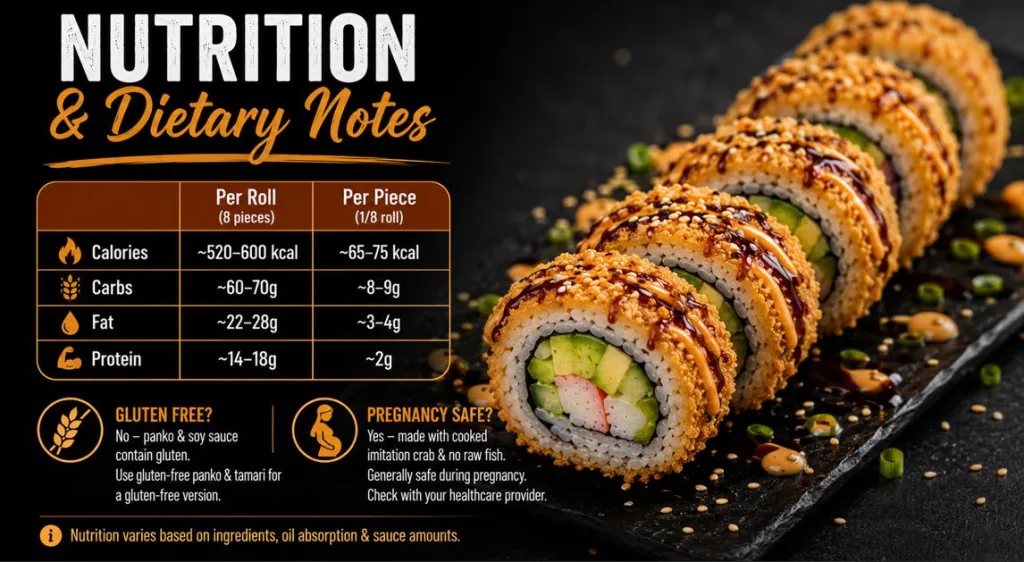
| Per Roll | Per Piece (1/8) | |
| Calories | ~520–600 kcal | ~65–75 kcal |
| Carbs | ~60–70g | ~8–9g |
| Fat | ~22–28g | ~3–4g |
| Protein | ~14–18g | ~2g |
Numbers vary based on oil absorption, cream cheese inclusion, and sauce amounts. These are estimates based on standard ingredients.
Is it gluten free? No — panko bread crumbs contain wheat, and soy sauce has gluten. For a gluten-free version, use gluten-free panko and tamari in place of soy sauce.
Is it safe during pregnancy? Yes — this recipe uses imitation crab (fully cooked) and no raw fish. According to the FDA’s guidance on seafood during pregnancy, cooked seafood dishes are generally safe. As always, check with your healthcare provider for personal guidance.
Frequently Asked Questions
What is a fried California roll called at restaurants?
It goes by several names — California crunch roll, tempura roll, deep fried California roll, playboy roll, or dragon roll, depending on the restaurant and region.
Can I bake it instead of frying?
You can. Brush the panko-coated roll with oil and bake at 400°F for about 15–18 minutes, flipping halfway. It won’t get quite as golden and crispy as the fried version, but it’s a solid lighter option.
What oil is best for frying?
Canola oil and corn oil are the most neutral choices and work great. Peanut oil gives a slightly richer flavor. Avoid olive oil — the smoke point is too low for deep frying oil temperatures.
Why did my roll fall apart while frying?
Usually one of two things: the ends weren’t sealed well enough, or the roll wasn’t compressed tightly enough before frying. Make sure the rice fully covers both ends with no gaps, and press the roll firmly before coating.
Can I make this ahead?
You can roll and coat the sushi up to a few hours in advance and keep it in the fridge, uncovered. Fry it right before serving — fried sushi does not reheat well and loses its crunch fast.