
Hot Springs Arkansas Weather Guide & Forecast (2026)
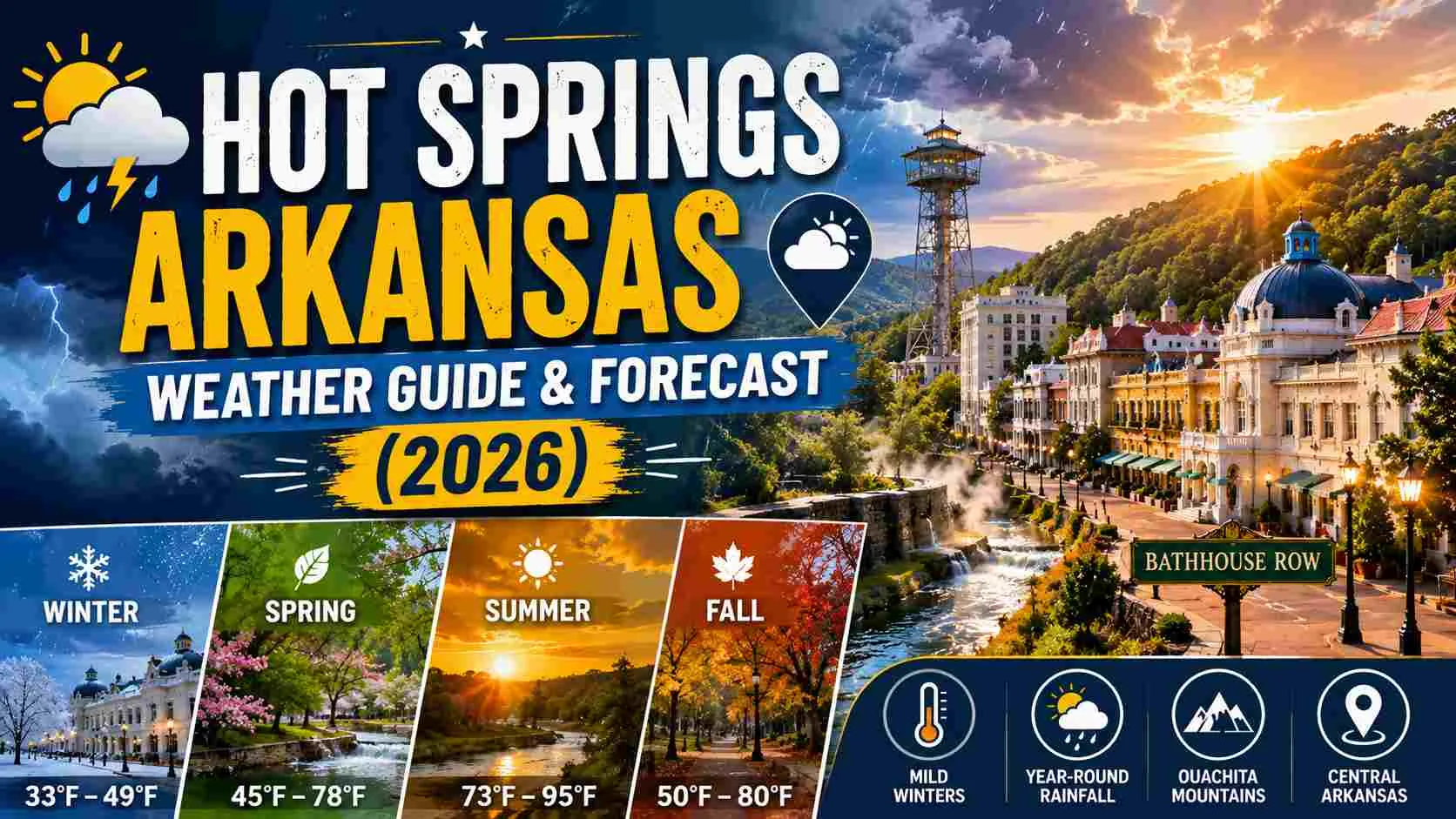
Nestled in the Ouachita Mountains of Garland County, Hot Springs, Arkansas is known for its historic bathhouses, thermal springs, and a climate that shifts across four distinct seasons. Whether you’re planning a soak, a hike through Hot Springs National Park, or just want to know what to pack, understanding hot springs arkansas weather patterns helps you time your trip right.
For more planning tips, see this guide to Hot Springs destinations. This article covers current conditions, the extended forecast, and seasonal averages you need to plan confidently.
Current Weather Conditions in Hot Springs
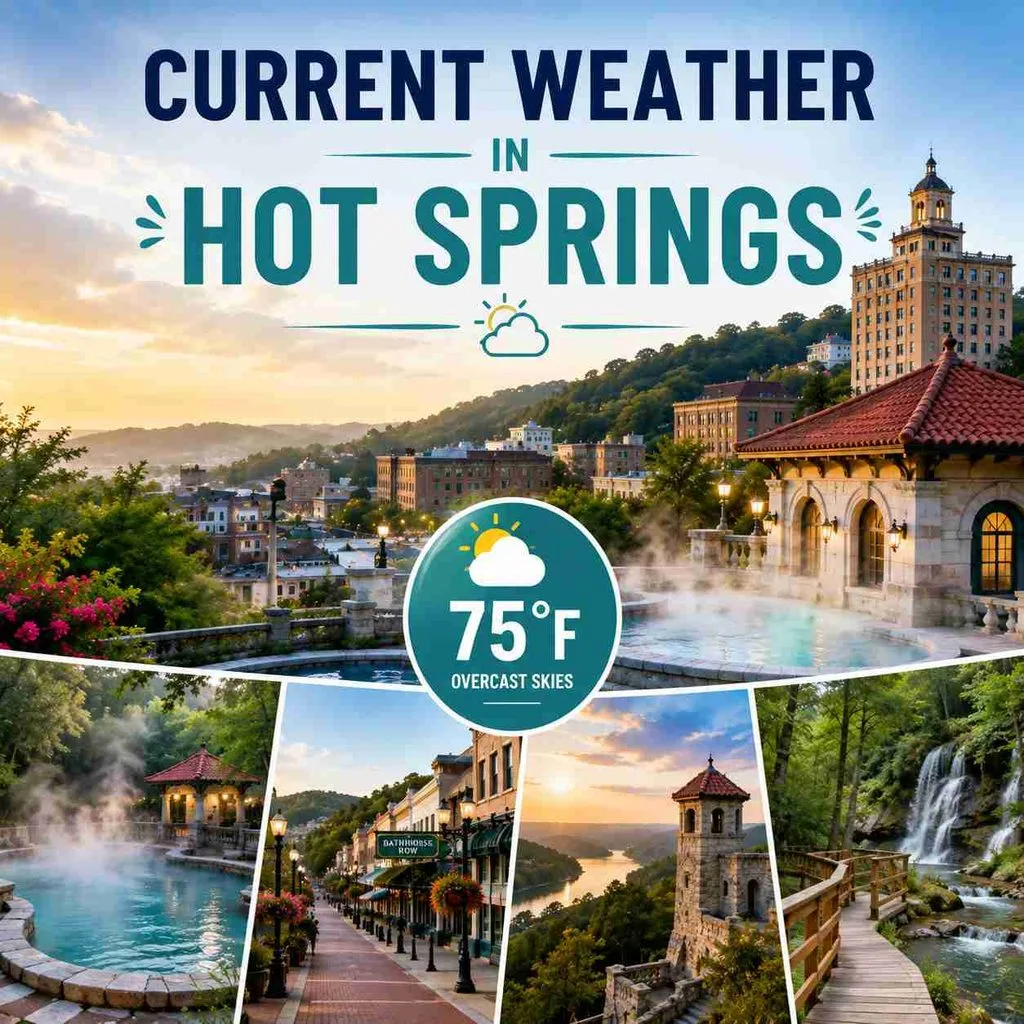
Local conditions are tracked at Hot Springs, Memorial Field Airport (KHOT), which sits at roughly 541 feet in elevation near downtown. As of late August, the area is experiencing typical late-summer conditions: overcast skies, temperatures in the mid-70s overnight, high humidity near 90%, and light easterly winds around 5–7 mph.
- Station: Memorial Field Airport (KHOT), Hot Springs, AR
- Coordinates: 34.48°N, 93.1°W
- Local forecast office: National Weather Service, Little Rock, AR
- Time zone: Central Daylight Time (CDT / UTC-5)
For real-time readings — including barometric pressure, dew point, and visibility — the National Weather Service publishes continuously updated observations for the KHOT station, making it the most reliable free source for hot springs arkansas weather data at any given hour.
Hot Springs Arkansas Weather Forecast: What to Expect This Week
Late-summer forecasts for the area typically follow a familiar rhythm: hot, mostly sunny afternoons with a slight chance of afternoon storms, followed by warm, muggy nights. A representative extended outlook looks like this:
- Overnight: Mostly cloudy with a slight chance of showers and thunderstorms; lows near 73°F
- Daytime highs: Mostly sunny and hot, climbing into the mid-90s, with heat index values pushing past 100°F on the warmest afternoons
- Midweek: A slight chance of afternoon thunderstorms as heat and humidity build
- Late week: Skies clear out, with sunny days and comfortable overnight lows in the upper 60s to low 70s
- Winds: Generally light, around 5 mph, shifting between east and southwest
This pattern — hot, sunny days interrupted by brief pop-up storms — is standard for Arkansas in August, and it’s one reason so many travelers check the hot springs arkansas weather forecast a few days out before booking outdoor activities like hiking Hot Springs Mountain Tower or biking the Northwoods Trails.
Hourly and Extended Outlooks
For hour-by-hour planning, the NWS graphical forecast tool breaks conditions down into short intervals so you can time hikes, drives, or bathhouse visits around any incoming rain. Tourism-focused planning resources — including detailed seasonal guides like what to do in Hot Springs, Arkansas — are worth pairing with the hourly forecast so you know exactly which activities suit the day’s conditions.
Hot Springs, Arkansas Climate Overview
Hot Springs sits within a humid subtropical climate zone (Köppen classification Cfa), meaning there’s no true dry season — rain falls in every month of the year, though totals shift seasonally. Because the city sits in a valley within the Ouachita Mountains, local terrain can create small microclimates, with slightly cooler temperatures and morning fog more common near the ridgelines than in the flatter parts of Garland County.
Key climate characteristics include:
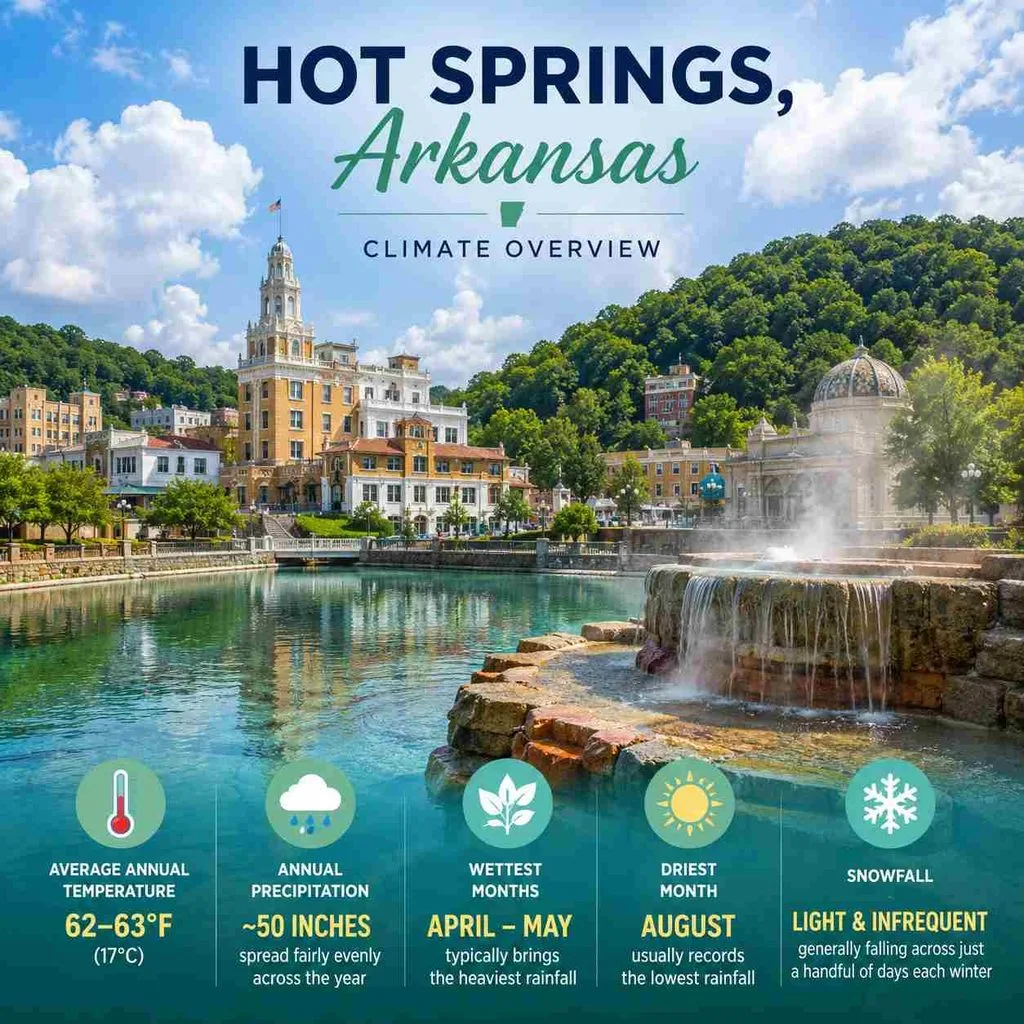
- Average annual temperature: Around 62–63°F (17°C)
- Annual precipitation: Approximately 50 inches, spread fairly evenly across the year
- Wettest months: Spring (April–May) typically brings the heaviest rainfall
- Driest month: August usually records the lowest monthly precipitation despite being the hottest
- Snowfall: Light and infrequent, generally falling across just a handful of days each winter
Hot Springs Arkansas Weather by Season
Winter (December–February)
Winters here are mild compared to much of the Midwest but can still turn sharply cold for short stretches. Average highs sit in the upper 40s to low 50s°F, while lows dip into the low-to-mid 30s. Occasional Arctic air masses can push wind chills down to 15°F, and light ice or snow events happen a few times per season, so it’s worth checking road conditions before mountain drives.
- Average January high: ~49°F, average low: ~33°F
- Snowfall: Roughly 2 inches per year on average, concentrated in January and December
- Rainy days remain common even in winter months
Spring (March–May)
Spring is one of the more unpredictable — and most scenic — times to check hot springs arkansas weather, since wildflowers bloom against a backdrop of frequent rain showers and occasional severe thunderstorms. Temperatures swing widely, from cool mornings in the 40s to warm afternoons approaching 80°F by late May.
- Highest rainfall totals of the year typically occur in April and May
- Severe weather season (thunderstorms, occasional tornado watches) peaks in this window
- Humidity begins climbing steadily as summer approaches
Summer (June–August)
Summer is hot, muggy, and the peak season for heat-related weather alerts. Highs regularly reach the mid-90s, and heat index values — how hot it actually feels when humidity is factored in — can exceed 105–110°F on the worst days. The National Weather Service’s Little Rock office frequently issues Extreme Heat Watches or Warnings during these stretches, so hydration and shade breaks matter if you’re exploring Bathhouse Row at midday.
- Warmest month: July, with average highs near 92°F
- Afternoon thunderstorms are common but usually brief
- Lowest monthly rainfall of the year typically falls in August, despite the heat
Fall (September–November)
Fall brings some of the most comfortable conditions of the year, with humidity dropping and daytime highs easing from the low 80s in September down to the 60s by November. Fall foliage across the Ouachita Mountains pairs well with cooler hiking weather, making this alongside spring the season most locals recommend for outdoor exploration.
- Average highs fall steadily from ~83°F (September) to ~63°F (November)
- Rainfall is moderate and generally less intense than spring storms
- First light frosts typically arrive in late November
Average Temperatures, Rainfall & Humidity at a Glance
- Hottest month: July/August, highs averaging 91–92°F
- Coldest month: January, highs averaging 49°F, lows near 33°F
- Most humid months: Summer, with dew points frequently exceeding 65°F (“muggy” territory)
- Rainiest months: April, May (spring storm season)
- Sunniest months: June through August, averaging 10+ hours of daylight sun
- Annual rainy days: Around 148 days see measurable precipitation
Best Time to Visit Based on Hot Springs Arkansas Weather

- Spring (April–May): Best for wildflowers and mild temperatures, but pack a rain jacket
- Early Summer (June): Warm without the peak humidity of July/August
- Fall (September–October): Widely considered the sweet spot — comfortable highs, low humidity, fewer storms
- Winter (December–February): Ideal for a quieter, budget-friendly visit if you don’t mind cooler days and the occasional cold snap
Travelers planning a full itinerary around the area’s thermal pools and trails often pair current conditions with a broader trip guide — for example, this Hot Springs National Park location and travel guide to decide which season fits their plans best.
Weather Alerts, Storms & Safety Considerations
Because Hot Springs sits within Arkansas’s active severe-weather corridor, it’s worth monitoring official alerts year-round rather than relying solely on a 10-day forecast app. Key hazards tracked by local authorities include:
- Heat advisories: Triggered when heat index values cross warning thresholds in summer
- Severe thunderstorms and tornado watches: Most frequent in spring
- Winter weather advisories: Issued for occasional ice or light snow events
- Drought monitoring: Arkansas periodically experiences drought conditions that affect fire weather risk
- Fire weather outlooks: Issued when dry, windy conditions raise wildfire risk in the surrounding Ouachita National Forest
The official Hot Springs National Park website posts current alerts specific to the park itself, including trail closures or advisories tied to extreme weather a useful companion to general city-level forecasts, especially before a backcountry hike.
Where to Check Hot Springs Arkansas Weather
For the most accurate, up-to-date picture, it helps to cross-reference a couple of sources rather than relying on just one app:
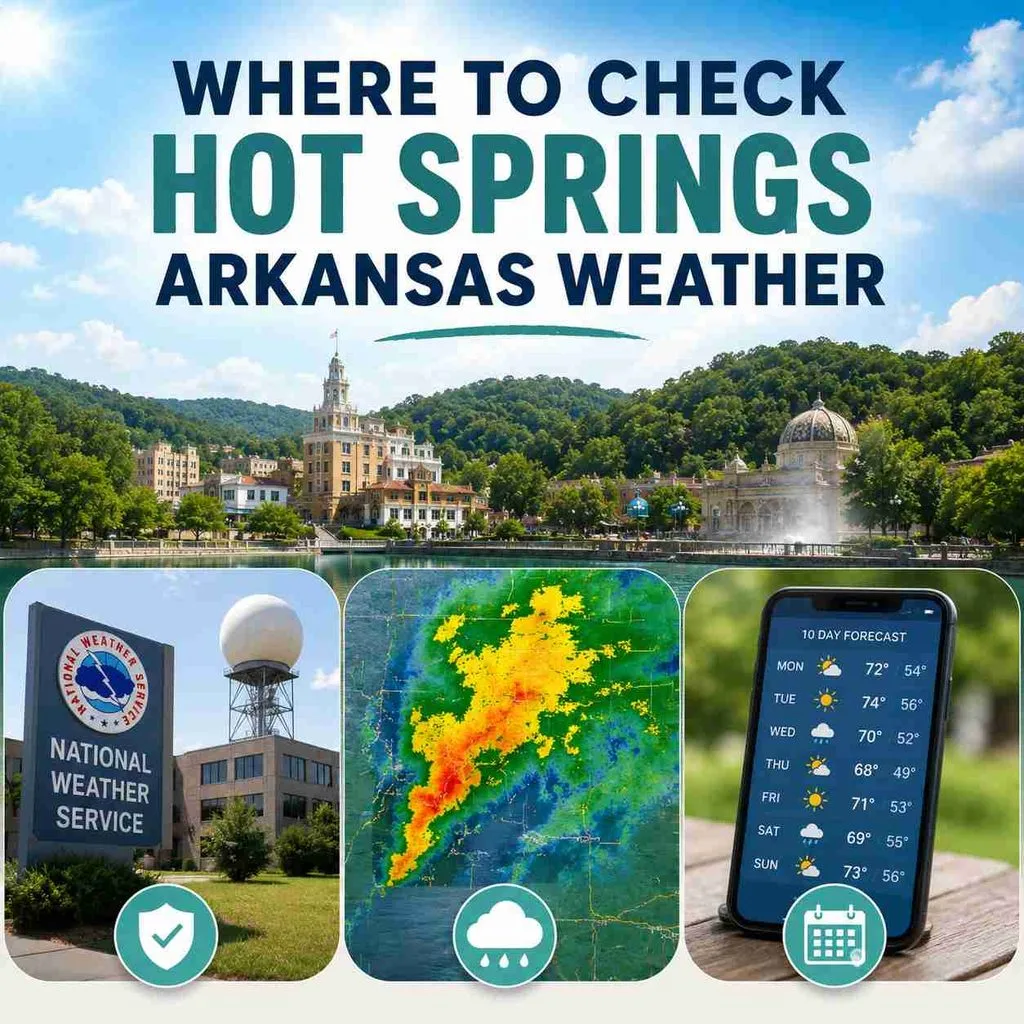
- National Weather Service (NWS): Official government forecasts, radar, hazardous weather outlooks, and text products for Garland County
- Local radar and satellite imagery: Useful for tracking incoming storms in real time during spring and summer
- Extended 10–15 day outlooks: Best used as a general trend guide rather than a precise forecast, since accuracy drops significantly beyond about 7 days
Final Thoughts
Tracking hot springs arkansas weather before your trip makes a real difference in how you experience the area, whether that means catching mild fall days on the trails or planning around a midsummer heat advisory. Rain, humidity, and heat index all shift quickly here, so checking both the short-term forecast and seasonal averages keeps you prepared. Pairing the official forecast with a solid trip itinerary, like this guide on things to do in Hot Springs, will help you make the most of whichever season you choose to visit.
Frequently Asked Questions
What is Hot Springs, Arkansas weather like year-round?
Hot Springs has a humid subtropical climate with hot, muggy summers, mild winters, and rain spread across every month, with spring and early summer typically the wettest.
Does it snow in Hot Springs, Arkansas?
Yes, but only lightly. The area typically receives just a couple inches of snow each winter, spread across a handful of days between December and February.
What month is hottest in Hot Springs, Arkansas?
July and August are the hottest months, with average highs near 92°F and heat index values that can climb well above 100°F on humid afternoons.
Is Hot Springs Arkansas humid?
Yes, summers are especially muggy, with high dew points making the heat feel more intense. Checking the heat index is more useful than raw temperature in summer.