Saline Valley Hot Springs: The Real Guide to Death Valley’s Remote Soak
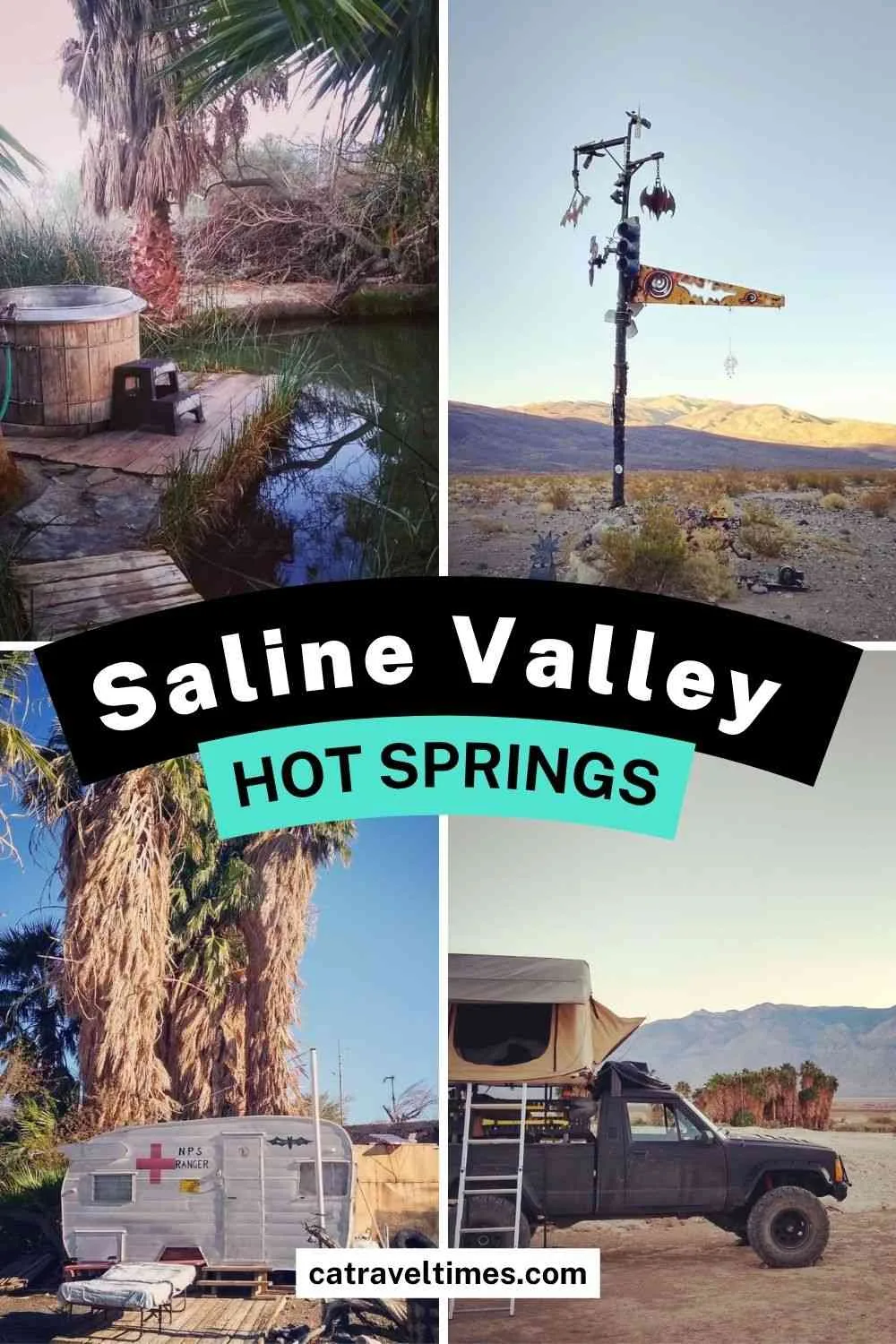
I’ve been hunting hot springs across California for years, but nothing prepared me for the commitment Saline Valley demands. Located deep inside Death Valley National Park, about 60 miles from Big Pine via the North Pass route, the Saline Valley Hot Springs are 3 primitive thermal soaking pools.
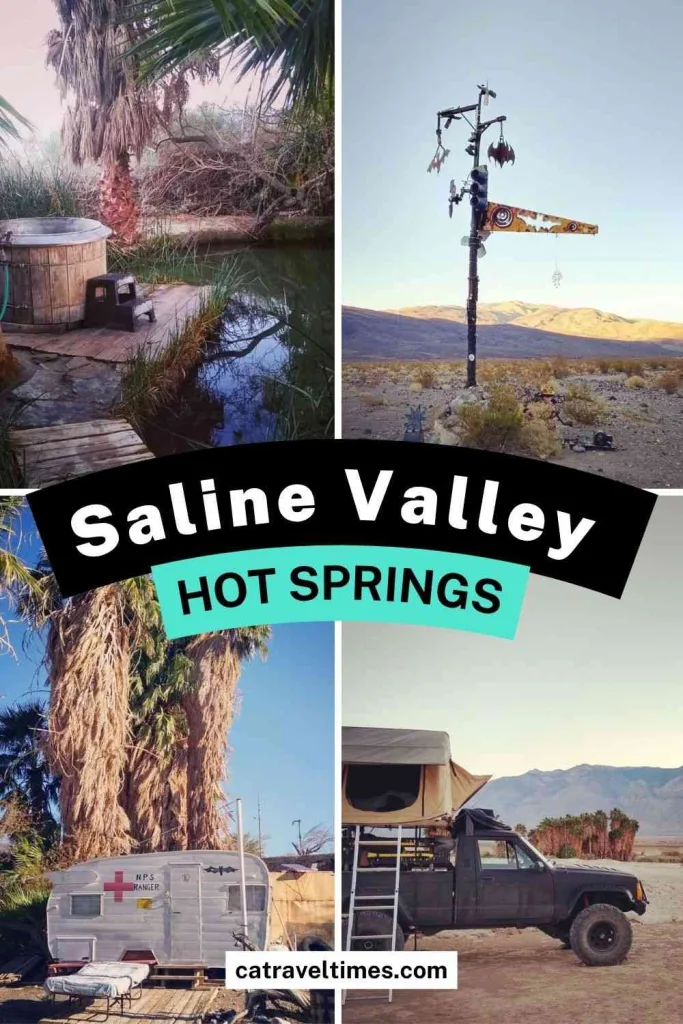
The Wizard Pool, Volcano Pool, and Upper Hot Spring, with water ranging from 98°F to 112°F, free camping, and zero cell service. This is the real off-grid California, and catraveltimes.com has more like it.
What is Saline Valley Hot Springs? Quick Details
Location: Death Valley National Park, Death Valley, CA 92328, accessible via 50+ miles of unpaved road. Entry requires a $30 seven-day Death Valley National Park vehicle pass; camping is free.
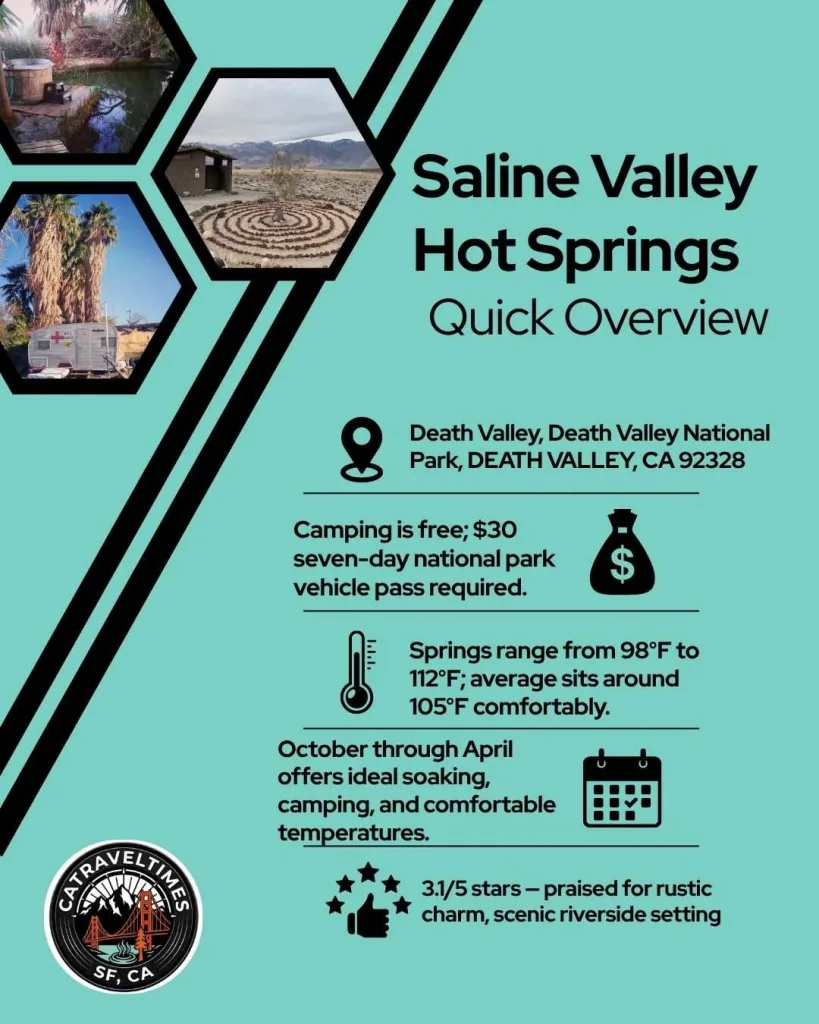
Water temperatures hold between 98°F and 112°F, with the most comfortable soak averaging around 105°F. Best visited October through April. Google visitor rating: 3.0 out of 5 a reflection of the difficulty getting here, not the experience itself.
How to find Saline Valley Hot Springs? Directions & Map
- Located at South Warm Springs Road, Death Valley National Park, CA 92328. GPS coordinates: 36.7498° N, 117.8069° W. Access via North Pass from Big Pine (Highway 168 to Death Valley Road, ~60 miles of mostly dirt) or South Pass from Highway 190 near Olancha (~50 miles of unpaved road).
Saline Valley Hot Springs Photos Stunning & Scenic Views
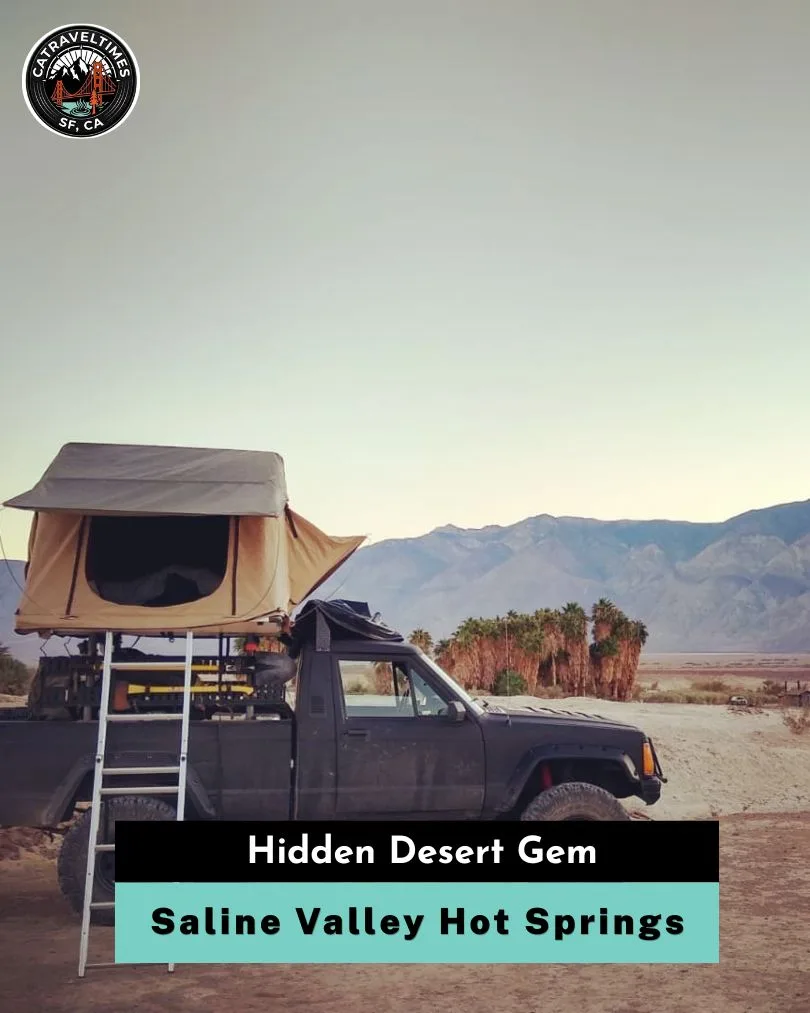
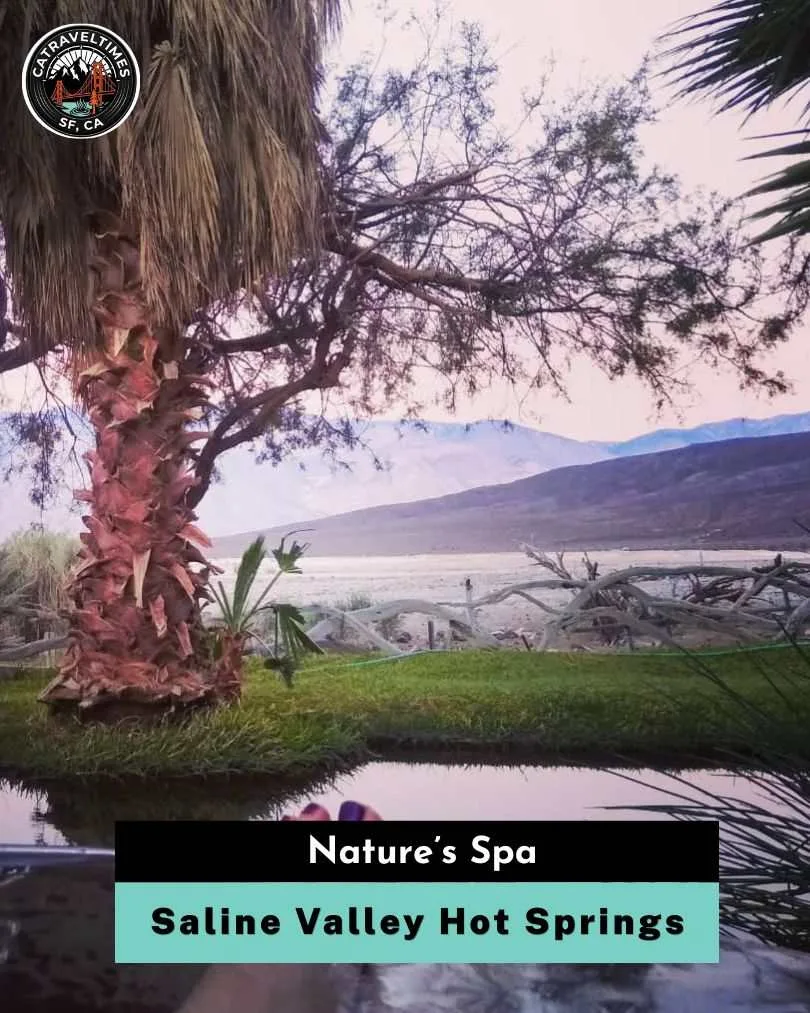
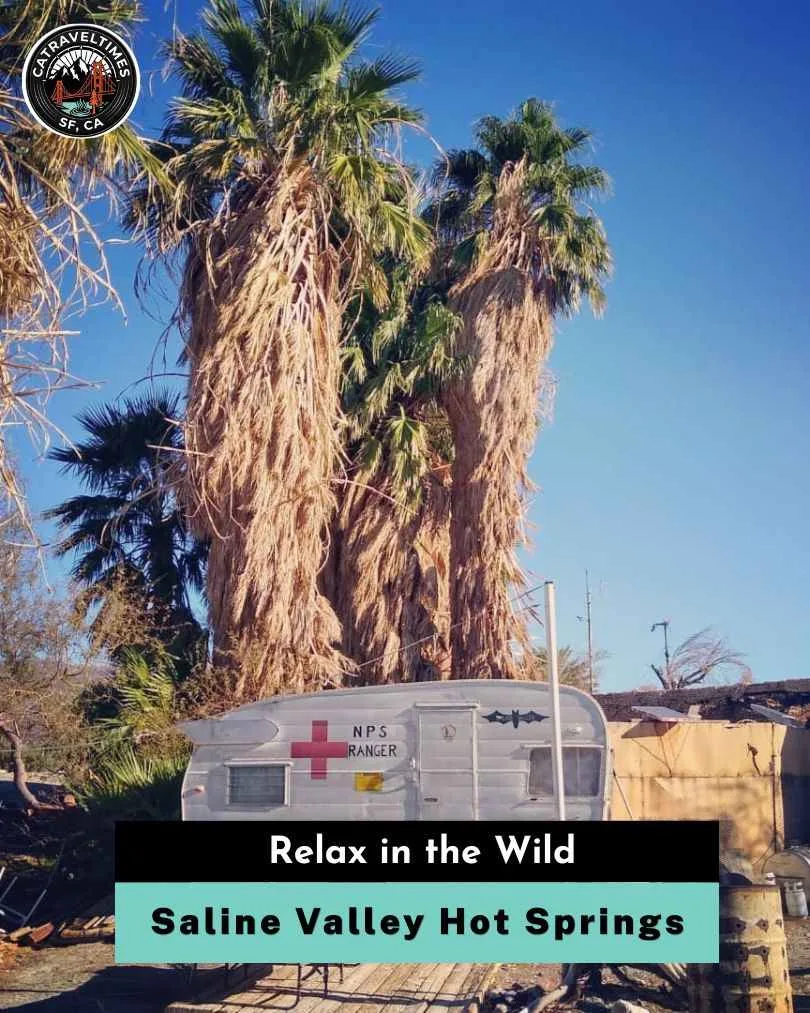
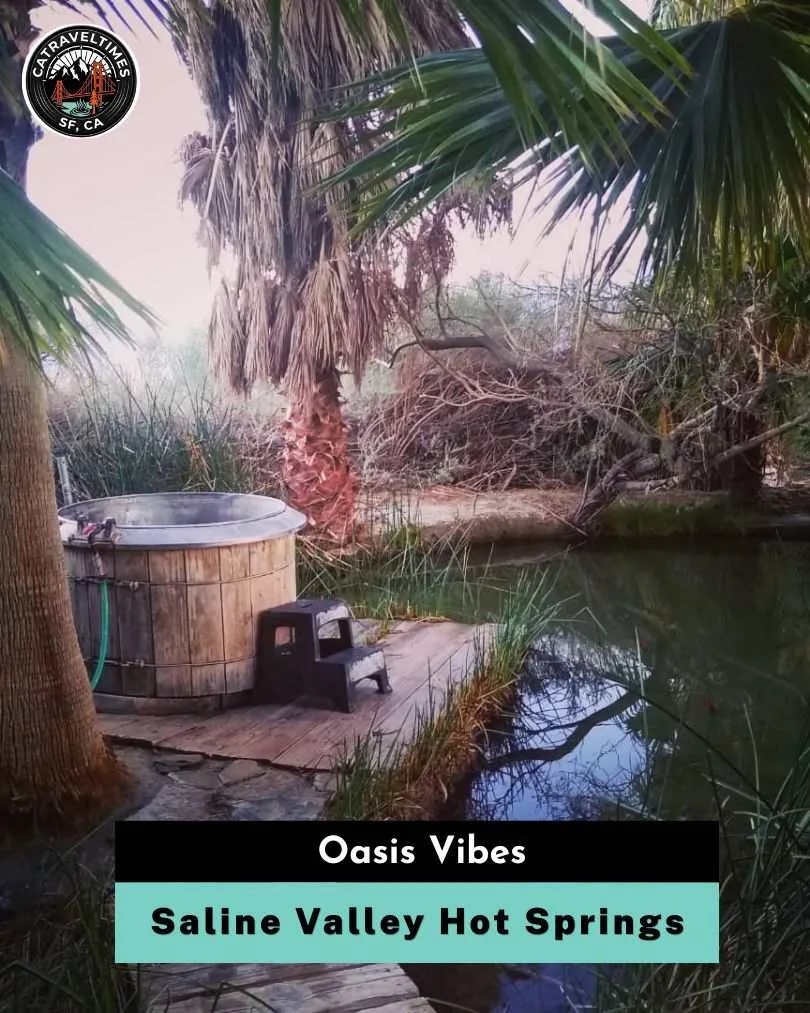
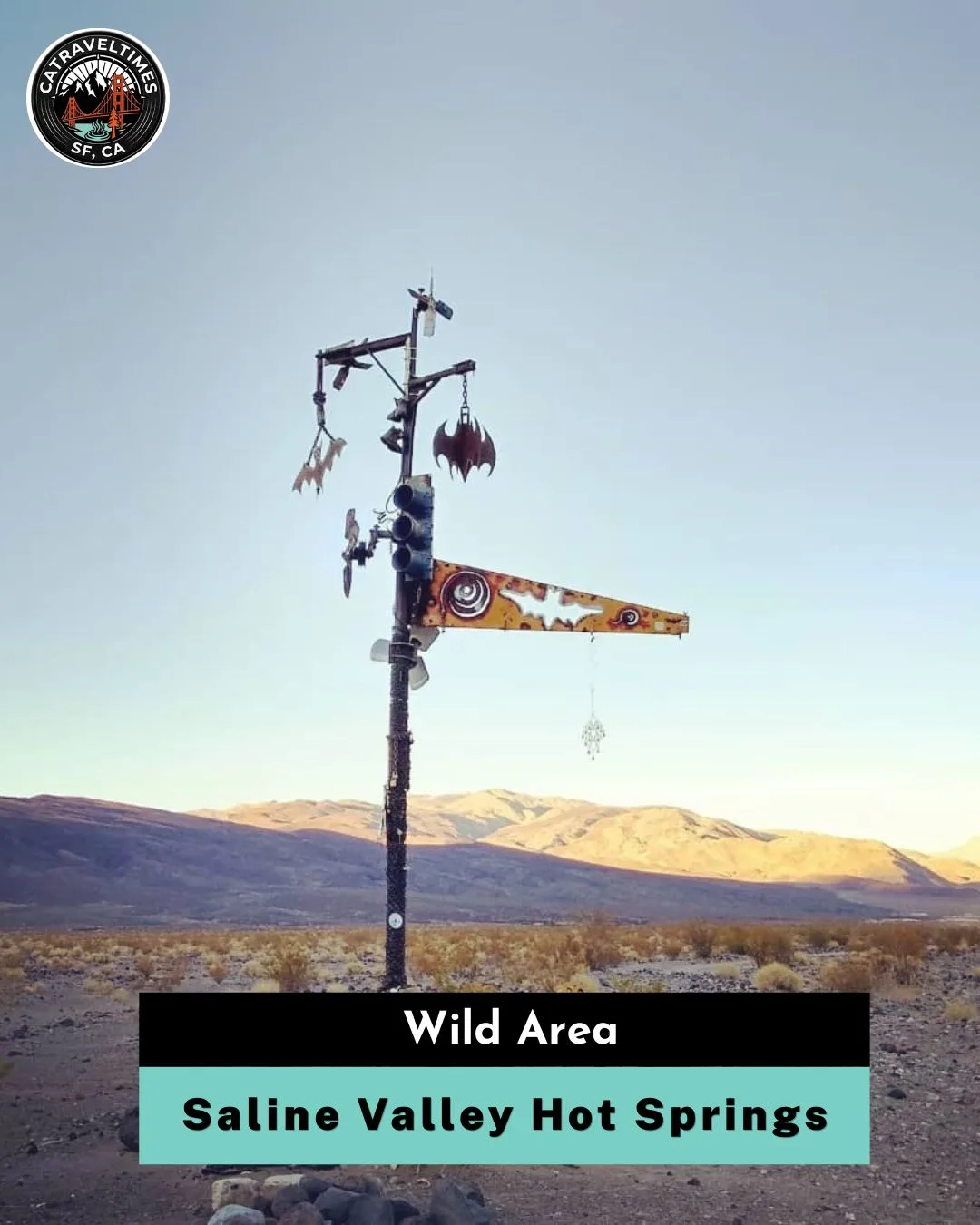
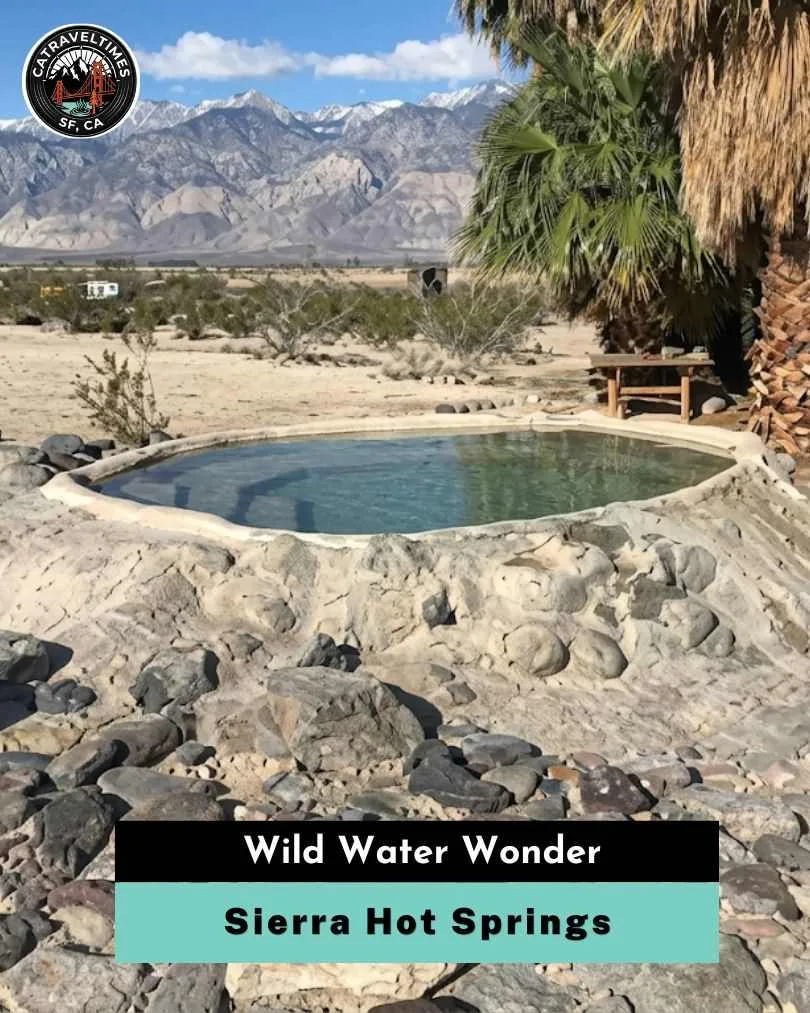
Saline Valley Hot Springs Road Conditions
The road in is not a casual drive. Both access routes, North Pass (7,300 feet elevation) and South Pass (5,997 feet), cover roughly 50 to 60 miles of unpaved, washboard dirt road. High-clearance vehicles are strongly recommended; 4-wheel drive is advisable, not optional, especially after rain.
The washboard sections are punishing I watched a guy in a sedan bottom out twice before turning around. Plan on 2 to 4 hours of driving after you leave the last paved road. Road conditions can close both passes entirely during winter storms, so check with the National Park Service (NPS) station in Big Pine before heading out. There is no cell service anywhere on the route.
Saline Valley Hot Springs Forum & Community
One of the things that sets Saline Valley apart is its volunteer culture. The pools are drained and scrubbed regularly by visitors who pitch in during their stay. There is an active online forum community that posts real-time road condition reports, supply requests, and weather updates search “Saline Valley Warm Springs” forum for the current thread.
Past visitors post what’s needed on site: paper towels, cleaning supplies, even firewood, and new arrivals bring what they can. A community fire burns at the lower springs most evenings. I joined the crew that drained and scrubbed one pool on my last morning there. It took an hour. It was worth it.
Water Temperature & Best Time to Visit Saline Valley, Hot Springs
The 3 pools at Saline Valley each run at different temperatures, giving you options depending on how much heat you can handle. The Wizard Pool runs hottest at 105°F to 112°F. The Volcano Pool is the more approachable soak at 98°F to 104°F. The Upper Hot Spring emerges at 102°F.
Summer is not a visit window it’s a survival scenario. Avoid May through September entirely. If you’re still exploring which Hot Springs fit your season and comfort level, fall and spring are consistently the safest windows across most desert soaks in California.
| Season | Why Visit | Best Time | Water Temperature |
| Summer | Do not visit Death Valley air temperatures reach 120°F+ and have been recorded at 134.1°F. Risk of heat stroke is real. | Avoid entirely | N/A — unsafe conditions |
| Winter | Ideal contrast: cold desert air and 105°F water. Watch for road closures on North Pass above 7,300 ft. | Nov – Feb (check roads) | 98°F – 112°F |
| Spring | Most popular season mild temps, clear skies, occasional wildflowers. Roads are reliably open. | March – May | 98°F – 112°F |
| Fall | My personal favorite window. Fewer crowds than spring, cool evenings, stable road conditions. | Oct – Nov | 98°F – 112°F |
| Year-Round | Springs flow year-round. Access is the variable always check North Pass and South Pass conditions before driving in. | Anytime (Oct–Apr) | 98°F – 112°F |
Tips for Visiting Saline Valley Hot Springs
There are no shops, no gas stations, and no cell service from the moment you leave the paved road. Everything you need for the full visit food, water, fuel, first aid comes in with you. Pack more than you think. Here’s what actually matters:
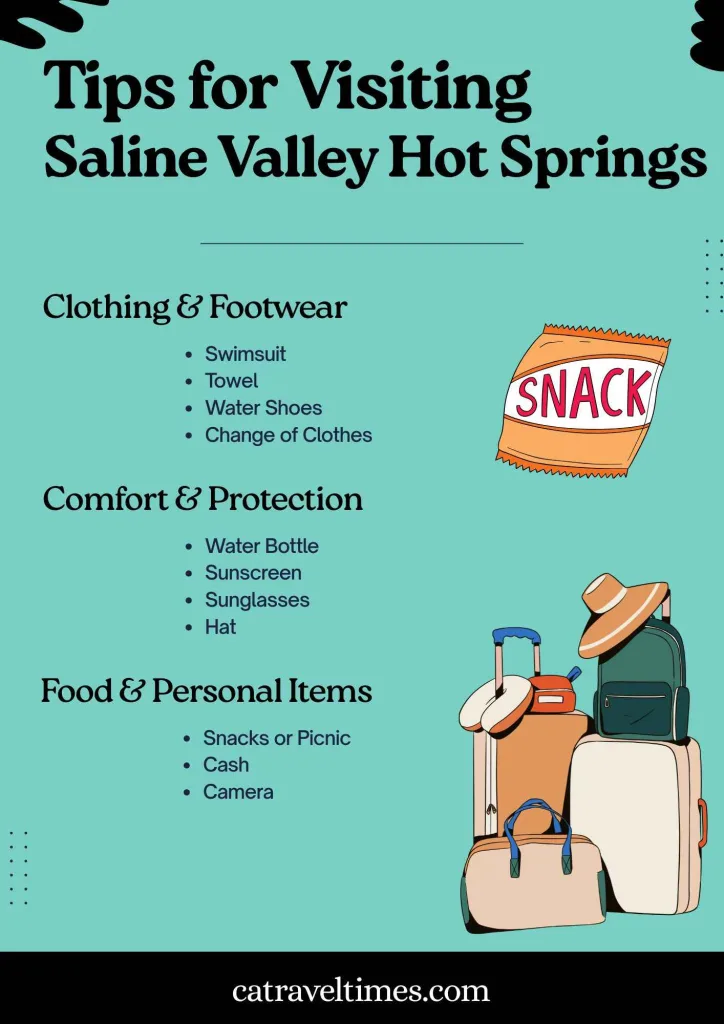
Clothing & Footwear
- Swimsuit — The pools are clothing-optional, but bring a suit regardless of personal comfort.
- Towel — No rentals here; pack 2 if you’re staying multiple nights.
- Water Shoes — Pool bottoms are concrete, rock, and tile, not flat or smooth.
- Change of Clothes — You’ll want dry layers for cold desert evenings after soaking.
Comfort & Protection
- Water Bottle — Bring 2 gallons per person per day, minimum, soaking in heat dehydrates fast.
- Sunscreen — Desert sun at elevation hits harder than you expect, especially near water.
- Sunglasses — Reflected light off the pools and sand is brutal midday.
- Hat — Wide brim — the shade structures at the springs are minimal.
Food & Personal Items
- Snacks or Picnic — The nearest food is in Lone Pine or Big Pine, hours away. Bring everything.
- Cash — No card readers exist within range. Cash for the park pass if needed.
- Camera — The Saline Valley landscape at golden hour is worth documenting but respect the clothing-optional culture before pointing a lens.
Things to Do at Saline Valley Hot Springs
The springs themselves will eat most of your time that’s the point. But the surrounding Death Valley landscape rewards those who explore further. Here’s what’s worth the detour:
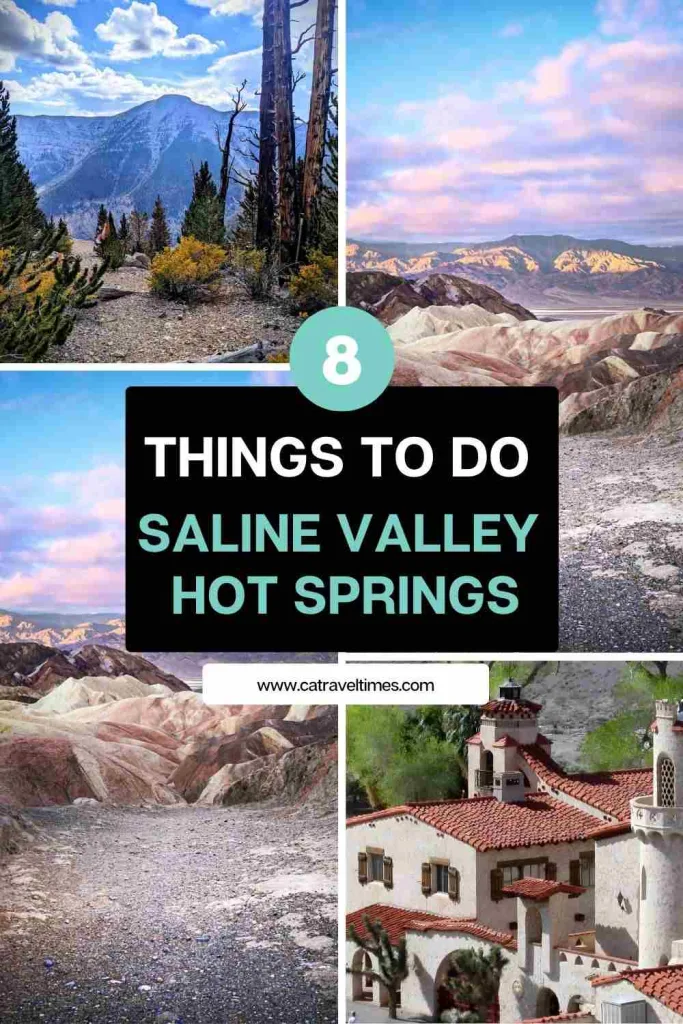
- Death Valley National Park — The full park encompasses Badwater Basin, Zabriskie Point, Mesquite Flat Sand Dunes, and Artist’s Palette — each worth a half-day stop.
- Scotty’s Castle — A Spanish Colonial mansion deep in the park is now partially closed for flood restoration, but the area around it is open and historically fascinating.
- Golden Canyon Trailhead — A 3-mile round-trip hike through red-layered badlands, easily combined with a Death Valley visit day.
- Furnace Creek Visitor Center — The best place to check road conditions, pick up paper maps, and understand the park’s geology before heading into Saline Valley.
- Desert View Overlook — Dramatic views across the valley floor worth stopping at on the drive out via South Pass.
- Goldwell Open Air Museum — Unexpected outdoor sculpture installation near Rhyolite, Nevada — a strange and memorable side trip on a longer Death Valley loop.
- Mt. Charleston Wilderness — If you’re routing through Nevada, the Spring Mountains offer a cool escape with hiking trails completely unlike the desert floor below.
- Stargazing from camp — Saline Valley has near-zero light pollution. On clear nights, the Milky Way is sharp enough that you’ll stop mid-sentence to look up.
What to Know Before You Go
- Carry sufficient water and fuel: The nearest gas station is in Lone Pine or Big Pine, well over 60 miles from the springs. Carry extra fuel in a proper container. 2 gallons of drinking water per person per day is the minimum.
- The springs are clothing-optional: This is enforced by the community, not a loophole. It’s been this way since the 1960s. Respect it either way.
- No photography of other visitors without consent: This is a firm community rule. Ask before pointing a camera at anyone in or near the pools.
- Rinse off before every pool entry: There is a shower and rinse station near the lower springs. Use it every time. The volunteer pool-cleaning crew keeps this place functional help them.
- No glass containers near the pools: Broken glass on a concrete pool floor is a serious hazard. Leave glass bottles at camp or in the vehicle.
- Dogs are allowed but not in the pools: Keep dogs on a leash at all times. Wild burros and coyotes are common around camp, and they will investigate your gear.
- Maximum 30-day camping stay: The NPS enforces this limit. Most visitors stay 2 to 5 nights plan accordingly.
Getting There: Road Conditions & Access
There are 2 routes in. The North Pass from Big Pine is the more popular option take Highway 168 toward Death Valley for 3 miles, turn right onto Death Valley Road, continue 14 miles to Woucoba Saline Valley Road, and follow it approximately 60 miles to the springs.
Expect 3 hours of driving after you leave the pavement. The South Pass from Highway 190 cuts about 10 miles off the total distance, but is steeper and sometimes rougher. Both passes can close during winter storms. North Pass sits at 7,300 feet.
High-clearance 4WD is strongly recommended for both routes. A capable 2WD SUV can make it in dry conditions, but do not attempt in a standard sedan. There is no vehicle rescue service within reach. Parking at the springs is dispersed camping; there are no designated stalls, no hookups, and no entrance booth.
Where to Stay & Eat Near Saline Valley Hot Springs
There is no accommodation within Saline Valley itself camping at the springs is your only on-site option. The nearest towns with hotels and restaurants are Lone Pine, Pahrump, and the Death Valley resort areas, all 2 to 3 hours away. Travelers who want a more structured hot spring experience before or after the Saline Valley commitment often stop at Calistoga Spa Hot Springs, where thermal pools come with actual amenities a useful contrast if you’re building a longer California soak itinerary.
Hotels & Where to Stay
- Panamint Springs Resort — On-site motel rooms and RV hookups, positioned on Highway 190 — closest lodging to Saline Valley, roughly 50 miles from the springs via South Pass.
- Stovepipe Wells Village Hotel — Basic motel rooms inside Death Valley National Park, useful as a staging point before the drive in.
- The Ranch at Death Valley — Full-service resort at Furnace Creek — rooms, pool, dining — the most comfortable base if you want amenities after the wilderness.
- Holiday Inn Express & Suites Pahrump by IHG — Pahrump, Nevada side — a cleaner, more modern option for travelers routing in from Vegas direction.
- The Retreat on Charleston Peak — Higher-end lodge near Mt. Charleston — good for those extending the trip into Nevada.
Restaurants & Where to Eat
- Panamint Springs Restaurant — The closest actual sit-down meal near Saline Valley — American comfort food, beer on tap, basic but welcome after the dirt road.
- Toll Road Restaurant – The Ranch at Death Valley — Full-service dining inside Death Valley National Park at Furnace Creek; open for breakfast, lunch, and dinner.
- Badwater Saloon — Casual bar and grill at Stovepipe Wells Village pizza, burgers, cold drinks, exactly what you want post-soak.
- Smokin’ J’s Barbecue — Pahrump, NV — solid smoked meats for the Nevada approach corridor; good stop heading in from Las Vegas.
- World Famous Sourdough Saloon — Death Valley Junction old-school Californian roadhouse with character; worth stopping at if you’re passing through.
Saline Valley Hot Springs Reviews: What Do People Think?
Google visitors rate Saline Valley at 3.0 out of 5 but read the reviews carefully. Most of the lower scores come from people who underestimated the road, showed up without supplies, or expected facilities that don’t exist.
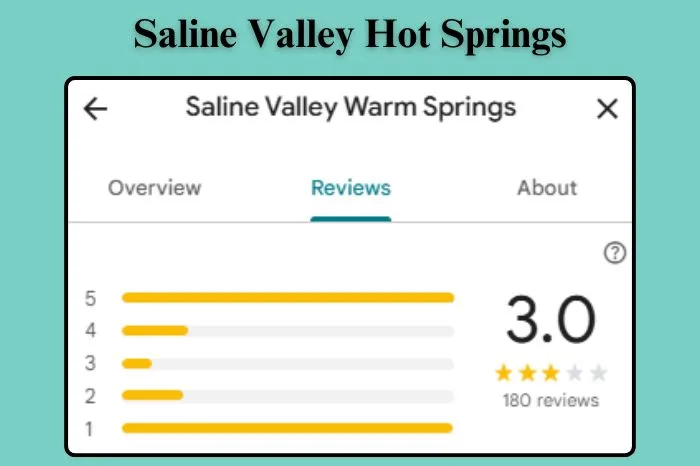
The visitors who came prepared consistently describe it as one of the most memorable soaks in California. AllTrails contributors call the pools well-maintained and the volunteer community thoughtful. I’d put it firmly in the category of: worth every difficult mile, if you know what you’re signing up for.
Final Thoughts
Calistoga Spa Hot Springs is not a wild soak. There’s no hike in, no sulfur cloud hitting you at the trailhead, no question of whether you brought enough water. What it is is a well-run resort with genuinely therapeutic geothermal water in a wine country setting that earns its reputation.
For travelers who want to experience the other end of California’s hot springs spectrum remote, rugged, and completely off-grid Remington Hot Springs is worth adding to your list. But this is the right trip for couples, solo travelers who want comfort alongside their mineral soak, and anyone coming specifically for the mud bath, which is unlike anything you’ll find elsewhere in California. The detail that stayed with me: sitting in the 104°F whirlpool at dusk, open air, with the Mayacamas mountains turning dark behind the vines. Worth the drive, worth the price.
FAQs
Q. How much does it cost to visit Saline Valley Hot Springs? Camping at the springs is free. Entry to Death Valley National Park requires a $30 seven-day vehicle pass. Annual America the Beautiful passes are accepted and cover entry.
Q. Do I need a 4WD vehicle to reach Saline Valley Hot Springs? A high-clearance 4WD vehicle is strongly recommended. A capable 2WD SUV can manage in dry conditions, but standard sedans should not attempt either the North Pass or South Pass roads. The roads are unpaved, washboard, and remote — 60+ miles from the last paved road.
Q. Is Saline Valley Hot Springs clothing optional? Yes. The springs have been clothing-optional since the 1960s. Visitors are welcome regardless of clothing choice, but the community norm is to be relaxed about it. Respect others’ preferences either way.
Q. Can I camp at Saline Valley Hot Springs? Yes — dispersed camping is allowed for up to 30 days per year. There is no camping fee. There are no hookups, no water supply, and no services. Camping is prohibited within 100 feet of the spring sources.
Q. Is there cell service at Saline Valley Hot Springs? No. Cell service ends when you leave the pavement. Bring a satellite communicator if you need emergency contact capability. Tell someone your itinerary before you leave.
Q. When is Saline Valley Hot Springs closed? The springs themselves are never officially closed, but both access roads can close during winter storms — particularly the North Pass at 7,300 feet elevation. Check with the NPS ranger station in Big Pine before driving in during November through February.
Q. Are there facilities at Saline Valley Hot Springs? Minimal ones — vault toilets, a shower/rinse station, and a dishwashing sink maintained by volunteers. No running water, no electricity, no food concessions, no store. Everything you need comes in with you.