Death Valley National Park: A 2026 Guide with Everything You Need
I’ll be honest — when I first told my fellow San Diegans I was heading to Death Valley National Park, most of them looked at me like I’d completely lost the plot. A desert park named after death? In California? But if you’ve spent any time with me here at CA Travel Times, you already know that’s exactly the kind of destination I live for.
I’m Vanessa, a San Diego native who approaches every corner of this state like an auditor with a hiking pack, measuring, verifying, and experiencing everything firsthand so you don’t have to guess. What I found in Death Valley shattered every assumption I walked in with. This guide covers everything from what state it’s in to the wildflowers, water, camping, hotels, and the safety tips that could genuinely save your life. Let’s get into it.
Death Valley National Park at a Glance — Key Facts
Here are the essential facts every visitor needs before arrival:
| Fact | Detail |
| Official Name | Death Valley National Park |
| Location | Southeastern California (Inyo County) + western Nevada |
| Total Size | 3.4 million acres — largest national park in the lower 48 |
| Established | National Monument 1933; National Park October 31, 1994 |
| Lowest Point | Badwater Basin — 282 feet below sea level |
| Highest Point | Telescope Peak — 11,049 feet above sea level |
| Record Temperature | 134°F (56.7°C) — highest ever recorded on Earth (July 10, 1913) |
| Annual Rainfall | Approximately 2.20 inches — driest national park in the U.S. |
| Wildlife | 51 native mammals, 307 bird species, 36 reptiles, desert bighorn sheep, coyotes, kit foxes |
| Park Phone | 760-786-3200 |
| Park Address | P.O. Box 579, Death Valley, CA 92328 |
What Is Death Valley National Park?
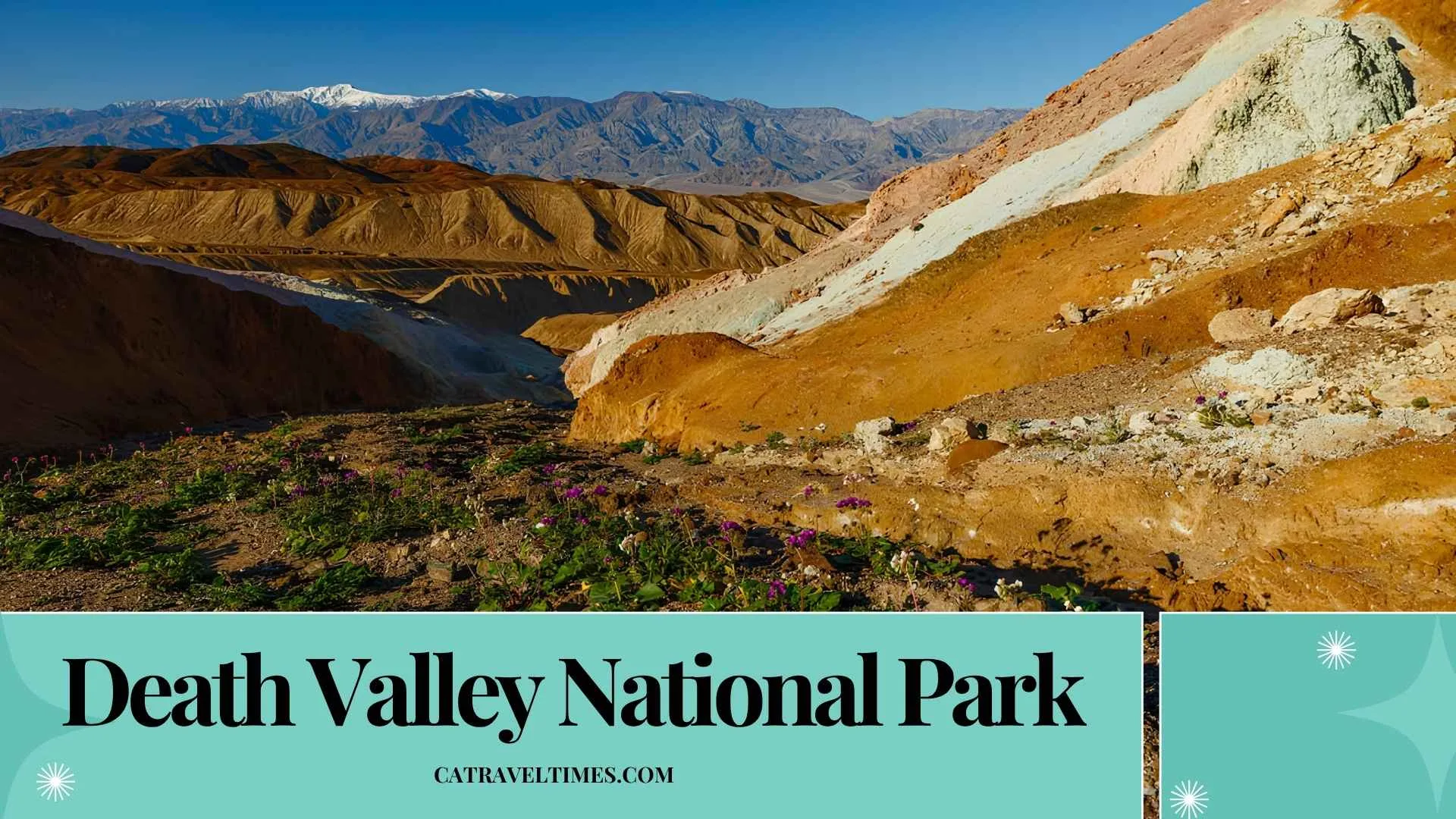
Death Valley National Park is the hottest, driest, and lowest national park in the United States and the largest in the contiguous 48 states. Sitting in the Mojave Desert of southeastern California and stretching into western Nevada, it spans 3.4 million acres of salt flats, volcanic craters, sand dunes, colorful badlands, and spring-fed oases.
The name dates to the winter of 1849–1850, when a group of pioneers became lost here. As the survivors finally escaped, one looked back and said: “Goodbye, Death Valley.” The Timbisha Shoshone people, however, had called this land home for over a thousand years before that moment and maintain a presence here today. Explore more protected California landscapes on our National Parks page, or start planning your full trip at CA Travel Times.
Before you can fully appreciate what Death Valley is, you need to understand what it looks like on a map — because this park is big in a way that surprises nearly every first-time visitor.
Death Valley National Park Directions & Google Map
The single most important thing I did before my trip was download an offline map. Cell service is essentially nonexistent inside the park, and with 3.4 million acres to navigate, that is not a detail you want to discover at the trailhead. The park spans from the salt flats of Badwater Basin in the south to the volcanic craters near Scotty’s Castle in the north — a drive that takes well over two hours end to end.
The main hub is Furnace Creek, which sits roughly in the center of the park. From there, key distances are:
| Attraction | Distance from Furnace Creek |
| Badwater Basin | ~17 miles south |
| Zabriskie Point | ~4 miles southeast |
| Dante’s View | ~24 miles southeast |
| Mesquite Flat Sand Dunes | ~23 miles northwest |
| Artist’s Drive | ~9 miles south |
| Ubehebe Crater | ~53 miles north |
| Racetrack Playa | ~80+ miles north (dirt road) |
Download maps via the NPS app or Maps.me before you lose signal on Highway 190. Pick up a paper map at the Furnace Creek Visitor Center the moment you arrive — I cannot stress this enough. The park also has over 300 miles of paved roads, 300 miles of improved dirt roads, and several hundred miles of unmaintained 4×4 tracks. What looks close on a map is often 45 minutes away on a rough dirt road.
And one more thing worth knowing before you drive in: the park never actually closes. Let me explain what that means in practice.
Is Death Valley National Park Open? Park Access & Hours Explained
Yes — Death Valley National Park is open 24 hours a day, 365 days a year, with no seasonal closures for the park itself. There are no entrance gates to pass through. That said, specific roads, campgrounds, and visitor centers operate on their own schedules. Some unpaved roads close temporarily after flash floods which can happen fast and without warning even in dry seasons. Always check road conditions at nps.gov/deva before setting out, especially after any rain event.
Important Road Closures (2026 Update)
November 2025 flooding caused extensive damage across the park. As of spring 2026:
- Titus Canyon Road — Closed; unlikely to reopen before spring 2027
- Darwin Falls Road — Closed until summer 2027
- Lower Wildrose Road — Closed until summer 2027
- Southern Badwater Road — Open with hazards (loose gravel, soft shoulders, unpaved sections)
The first place I’d send you to get current, reliable updates on all of this? The visitor center — which is worth a stop in its own right.
Death Valley National Park Visitor Centers — Your First Stop
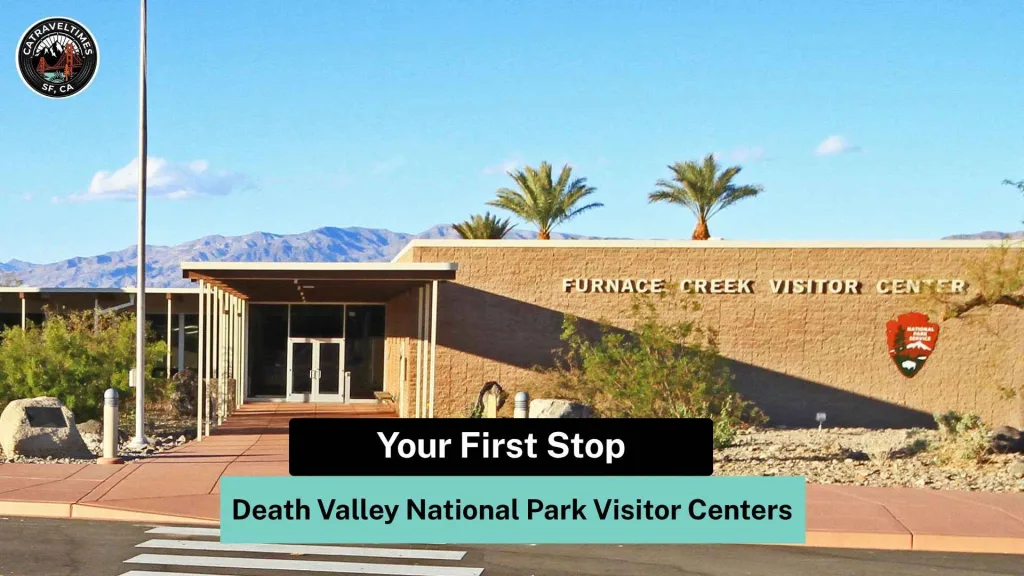
There are multiple visitor centers across the park, and stopping at one before diving into trails is absolutely worth the time. Rangers here gave me current, real-world intel that no app could replicate — including confirmation of a section of Badwater Road that had been recently damaged.
| Visitor Center | Best For |
| Furnace Creek Visitor Center | Primary hub; maps; entrance fees; ranger talks; park orientation film; open daily 8 a.m.–5 p.m. |
| Stovepipe Wells Ranger Station | Western section access; Mesquite Flat Sand Dunes info |
| Scotty’s Castle Contact Station | Northern section; Ubehebe Crater; flood recovery tour info |
The Furnace Creek Visitor Center is the essential first stop for every visitor. It houses exhibits on the park’s geology, climate, wildlife, and human history — including the Timbisha Shoshone story. The 20-minute orientation film is worth watching before you head out. Rangers here post daily updates on road conditions, trail closures, and current wildlife activity that you simply cannot get online.
Once you’ve oriented yourself and grabbed your paper map, the next stop is understanding what it costs to get in — and trust me, there’s a pass that makes this an incredible deal.
Death Valley National Park Tickets, Passes & Entrance Fees
This surprises many first-time visitors: there is no complex permit system just to enter Death Valley. The park has a straightforward fee structure, and the America the Beautiful Pass makes it exceptional value if you are visiting more than two national parks in a year.
| Pass / Activity | Fee |
| Vehicle Pass (7-day) | $35 per vehicle |
| Individual Entry (walk-in / cycling) | $20 per person |
| Motorcycle | $30 |
| America the Beautiful Annual Pass | $80 (covers all national parks for 12 months) |
| Scotty’s Castle Flood Recovery Tour | $35/person — separate ticket; select Sundays; sold out immediately in 2026 |
| Backcountry Camping Permit | Free; issued in person at visitor center |
The park has been cashless since June 2023 — bring a card or pre-pay at Recreation.gov. My honest recommendation: if you plan to visit at least two or three national parks this year, the $80 America the Beautiful Pass pays for itself on day one and covers every federal park entrance fee you encounter.
Now that you know the cost of getting here, let’s talk about something that will genuinely determine whether your trip is magical or miserable — the weather.
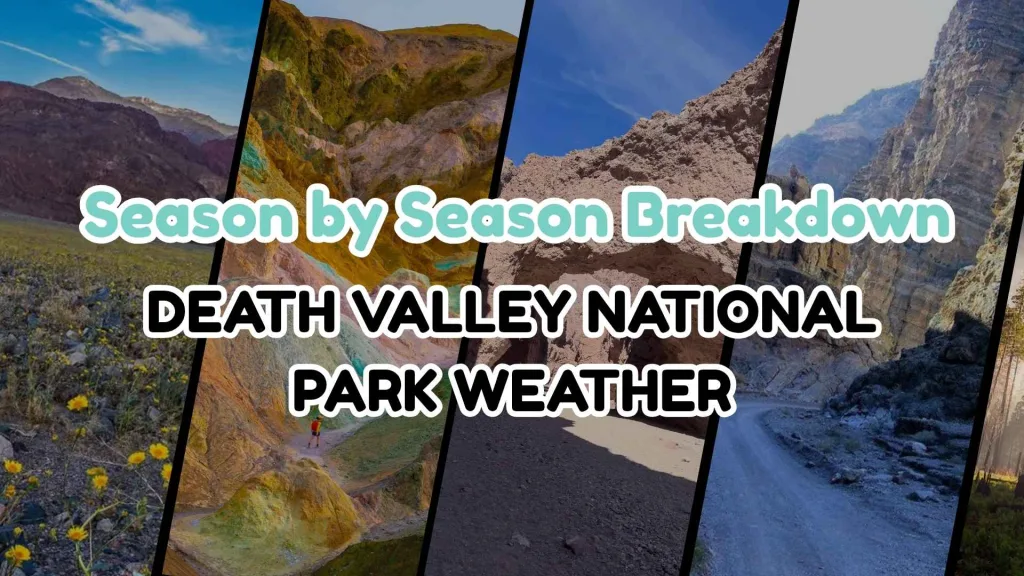
Death Valley National Park Weather — Season by Season Breakdown
The weather here is unlike anywhere else in California. Death Valley holds the world record for the highest reliably measured air temperature — 134°F at Furnace Creek on July 10, 1913. That context alone tells you that when you visit matters enormously. Summer is not just uncomfortable; it is genuinely life-threatening.
| Season | Temperatures | Verdict |
| Winter (Dec–Feb) | Days 60s–70s°F / Nights near freezing | Best time to visit — comfortable, quiet, incredible light |
| Spring (Mar–May) | 75–95°F | Excellent — wildflower season; mornings still cool |
| Summer (Jun–Sep) | Regularly 110–120°F+ | Dangerous; people die here from heat every year |
| Fall (Oct–Nov) | 80–100°F | Good; crowds thin significantly from peak summer |
Pack layers regardless of when you visit. Even winter mornings can be cold near freezing under the open desert sky. A wide-brimmed hat, quality sunscreen, and light, breathable long sleeves are non-negotiable year-round.
If I had to pick one month above all others to visit? I’d choose December — and what I found there completely rewrote my expectations.
Death Valley National Park in December — My Personal Favorite Time
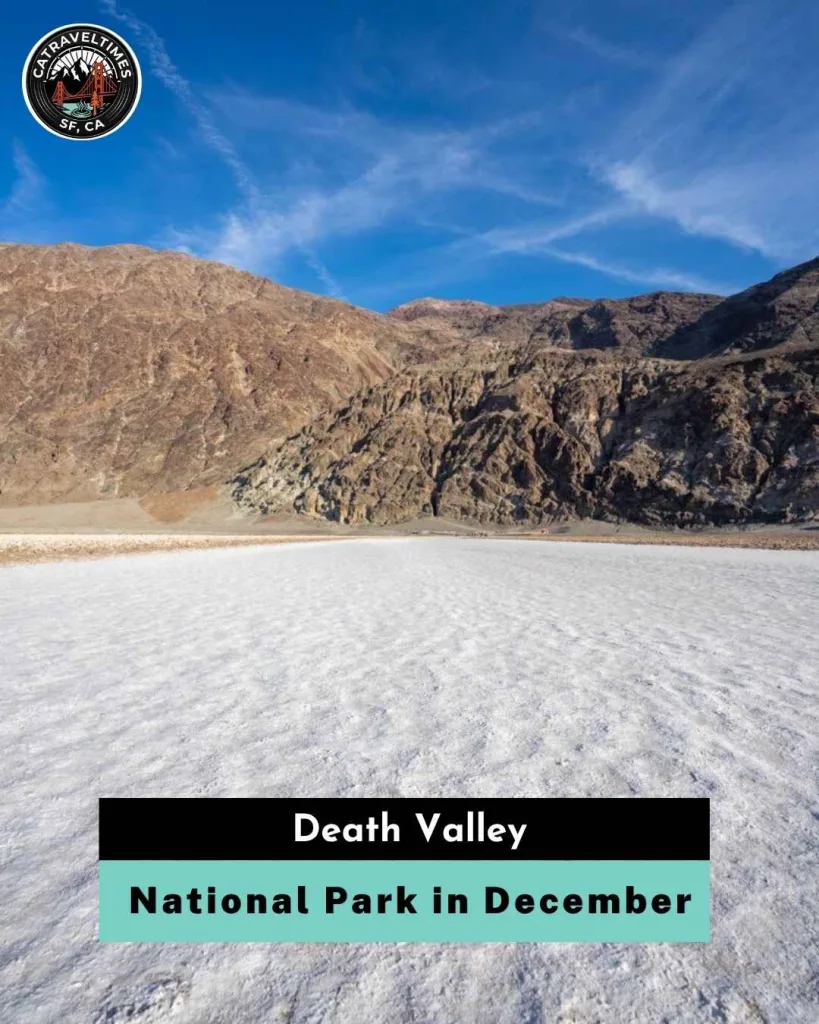
December in Death Valley caught me completely off guard. I had packed for cold and expected grey skies instead, but I got golden afternoon light that turned the whole valley into something from a painting. I was the only person at Zabriskie Point before sunrise, watching the badlands go from dark shadow to blazing amber in about four minutes flat.
That night, I drove out to Badwater Basin after dinner with zero expectations. The Milky Way was so bright it cast a faint shadow of my hand on the salt flat. I stood there for almost an hour, completely alone, not wanting to leave.
But if early spring is your window, there’s another reason entirely to make the drive out — one that happens only once a decade.
Death Valley National Park Wildflowers & The 2026 Superbloom
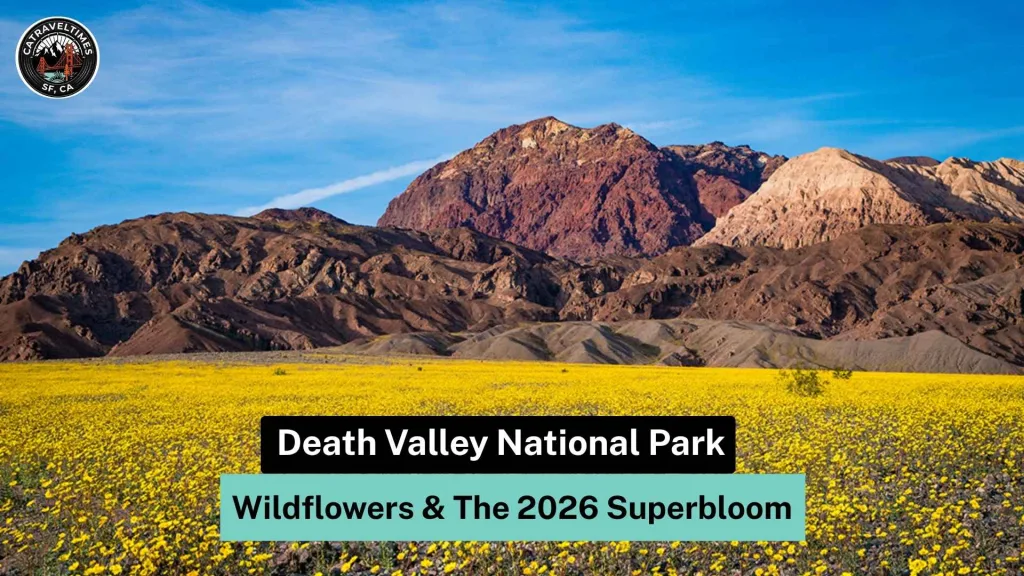
I have never seen anything like what Death Valley looked like in early 2026. After record rainfall in fall 2025, 2.45 inches, already beating the entire annual average, the desert floor simply exploded with color. Driving down Badwater Road in February felt surreal. Miles of bright yellow Desert Gold stretched in every direction, broken up by patches of purple-blue Phacelia on the hillsides and pale Mojave Poppy pushing up at mid-elevation. Near Ashford Mill Ruins, the
blooms were so dense I pulled over three times in two miles just to stand in them. This kind of superbloom happens roughly once a decade — 2016, 2005, and 1998 were the last three. Higher-elevation blooms along Highway 190 are still active through June 2026.
Death Valley National Park Lake — When the Desert Fills with Water
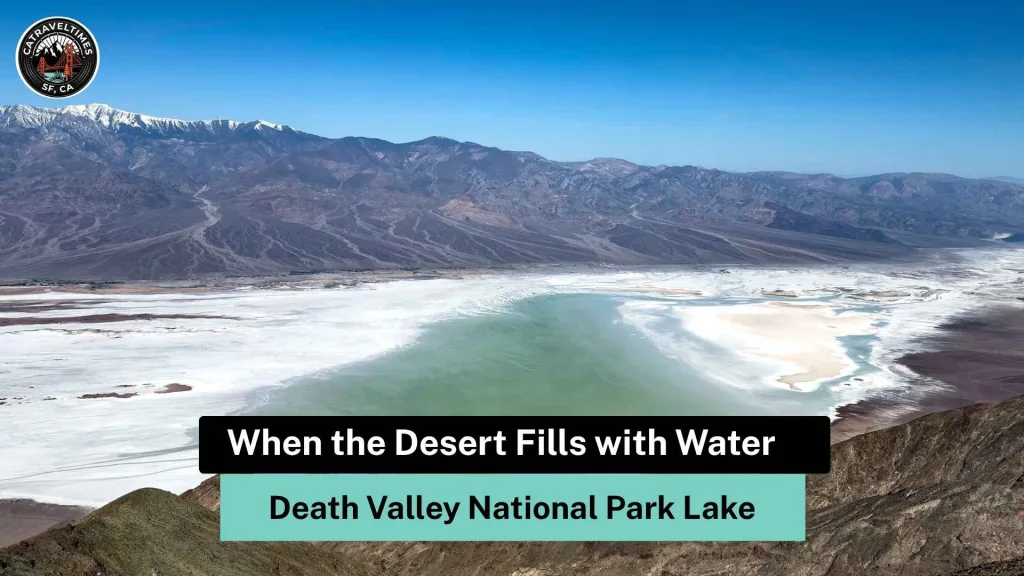
One of the most surreal sights of my research trip was hearing that Death Valley had a lake again. Lake Manly, an ancient body of water that once reached depths of 7,000 feet — temporarily returned after the record November 2025 storms. The shallow lake formed at Badwater Basin, the lowest point in North America at 282 feet below sea level.
By mid-March 2026, visitors were still finding standing water in the basin against the backdrop of the White Mountains. It doesn’t happen often. If you’re reading this in spring 2026, go check it before it evaporates. Just make sure you’re prepared before you head that far out — and that starts with what you’re carrying in your pack.
Death Valley National Park Water — Staying Alive in the Desert
Carry at minimum one gallon of water per person per day — two gallons in warmer months. I carried more than I thought I needed and still ran low on a warm December afternoon. Potable water is available at Furnace Creek and Stovepipe Wells, but do not count on finding it mid-route. Water is not available at most trailheads, campgrounds at higher elevations, or backcountry areas.
Signs of dehydration and heat illness come on fast in dry desert air: dizziness, nausea, and headache mean get into shade and drink immediately. Never hike in the midday heat between May and September. In any season, if you feel off, turn back. No viewpoint is worth your life.
Getting to Death Valley safely starts well before you arrive inside the park. Let’s talk about the drive in.
Getting to Death Valley — Closest Airport & Driving Routes
Death Valley sits in one of California’s most remote corners, and getting here requires some planning. The park has no in-park shuttle service, no public transport between trail areas, and a car is essentially required to explore it properly.
| Airport | Distance to Furnace Creek | Drive Time | Notes |
| Harry Reid Intl, Las Vegas (LAS) | ~120 miles | ~2.5 hours | Closest major airport; best option for most visitors |
| Los Angeles Intl (LAX) | ~274 miles | ~4.5 hours | Good if combining with SoCal trip |
| San Diego Intl (SAN) | ~330 miles | ~5 hours | Option for southern California visitors |
| Burbank Bob Hope (BUR) | ~235 miles | ~4 hours | Smaller; fewer airlines; quicker from LA side |
Harry Reid International in Las Vegas is the clear best choice for most visitors — 120 miles, roughly 2.5 hours, served by virtually every major U.S. airline, and with an extensive rental car selection. The drive from Las Vegas through Beatty and Nevada Route 374 into the park’s eastern entrance is itself a scenic experience through wide desert plains and canyon approaches.
There is no meaningful rail access to Death Valley. Amtrak serves Barstow, California (142 miles away), but you would still need a rental car from there. I flew into Las Vegas and drove in — it remains the easiest and most affordable approach by a significant margin.
And once you land in Las Vegas? The road trip pairing practically plans itself.
Death Valley National Park to Las Vegas — The Ultimate Road Trip Combo
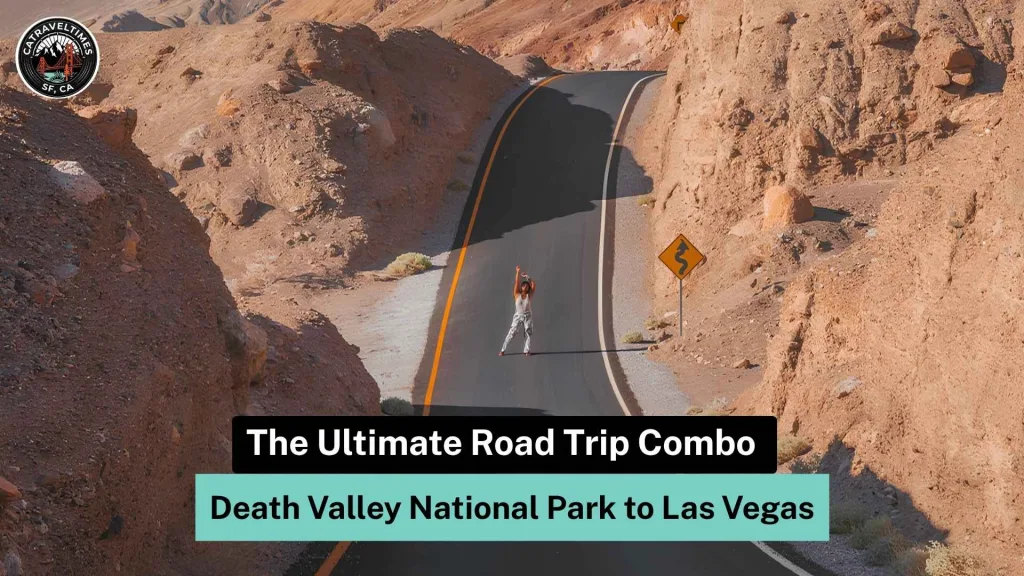
At just 2.5 hours from Las Vegas to Furnace Creek, Death Valley pairs perfectly as a multi-day addition to a Vegas trip. Take Nevada Route 374 west through Beatty, a genuinely characterful old mining town worth a short stop, and enter the park through the east entrance past the dramatic canyon walls of Hell’s Gate. The NPS officially maps four routes from Las Vegas:
- Fastest Route: I-15 South → NV-160 → Pahrump → Death Valley Junction → CA-190 to Furnace Creek (~2 hours)
- Easiest Route: US-95 → NV-374 via Beatty → East entrance (~2.5 hours; most scenic approach)
- Ghost Town Route: Via Rhyolite and Beatty; adds fascinating mining-era ruins
- Most Scenic Route: Via Shoshone and CA-127; enters from the south through Badwater Road
Most Las Vegas day trips cover Badwater Basin, Zabriskie Point, and Artist’s Drive — a solid introduction to the park. But if you have even one night to stay inside the park, the sunset and the stars alone justify the overnight.
Best Time to Visit Death Valley National Park
The sweet spot for visiting Death Valley is October through April. October and November bring comfortable temperatures and thin crowds. February and March are wildflower season, and in a year like 2026, a full superbloom.
December and January offer the best hiking conditions of the year, with cool days and extraordinary stargazing nights. Summer is a different story entirely. June through September regularly hits 120°F and heat emergencies happen every season. If summer is your only option, move only at dawn and dusk, and carry twice your normal water supply
Things to Do in Death Valley National and State Parks
The park offers far more than salt flats and heat records. Here is everything worth putting on your list:
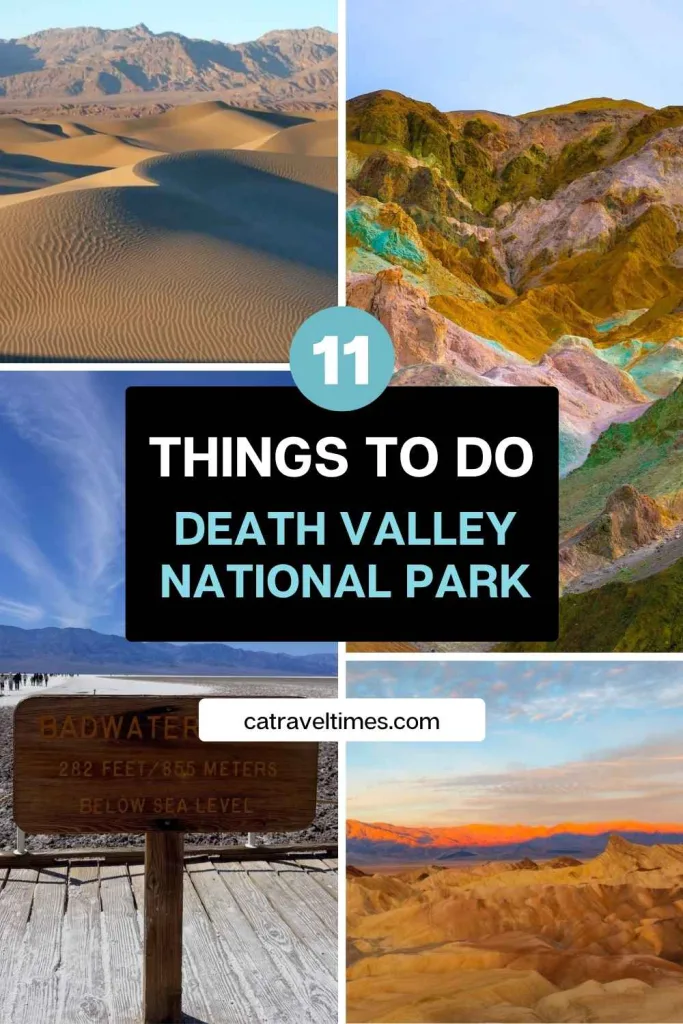
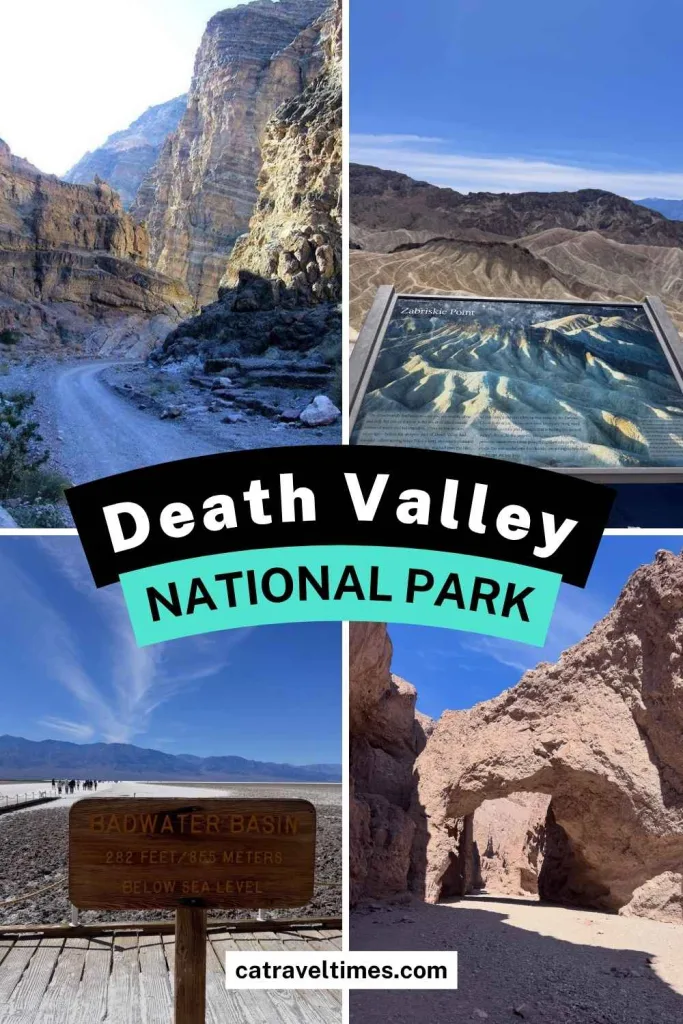
- Walk Badwater Basin — At 282 feet below sea level, Badwater is the lowest point in North America. The salt flat polygon patterns are extraordinary up close, and when Lake Manly water is present (as in 2026), the scene becomes truly otherworldly. Best visited at sunrise or golden hour when the light turns the salt into a mirror.
- Sunrise at Zabriskie Point — One of the most photographed viewpoints in California. The eroded golden badlands unfold in layers of ochre and amber at first light. Arrive 30 minutes before dawn and you will likely have it to yourself. A short, paved walk from the parking area.
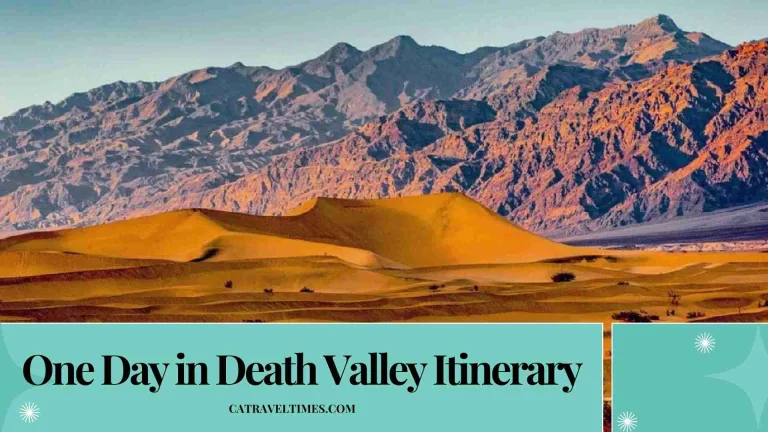
- Mesquite Flat Sand Dunes — The most accessible dunes in the park, right by Stovepipe Wells Village. The tallest crests reach about 100 feet. Go at dawn, let your shadows stretch across the rippled sand, and allow at least two hours. No trail markers — you simply walk in any direction.
- Artist’s Drive & Artist’s Palette — A 9-mile one-way scenic loop through badlands of pink, green, blue, and purple — produced by volcanic mineral deposits. Mid-to-late afternoon light makes the colors most vivid. One of the few Death Valley highlights you can experience entirely from an air-conditioned car.
- Dante’s View — At 5,475 feet elevation, this viewpoint delivers a panoramic perspective that is genuinely disorienting — you can see both Badwater Basin below and the snow-capped Panamint Mountains simultaneously. Paved access road; manageable in a standard car.
- Devil’s Golf Course — Giant salt crystal formations reaching knee height, popping and cracking audibly as they expand in the heat. Eerie, alien, and unlike anything else in California. Easy access off Badwater Road.
- Golden Canyon Hike — A short, well-marked walk through canyon walls that glow deep gold in afternoon light. The 2-mile round-trip is accessible and family-friendly. Combine with Gower Gulch for a longer loop through colorful badlands past old borax mines. For a full breakdown of trails, see our guide to the best hikes in Redwood National and State Parks for how we approach trail research, and apply the same methodology to Death Valley’s trail system.
- Ubehebe Crater — A half-mile-wide volcanic crater in the northern park, with vibrant red and orange exposed layers. Hike the rim for sweeping views, or descend into the crater itself if you are prepared for the climb back. About 1.5 hours north of Furnace Creek.
- Racetrack Playa & the Sailing Stones — Rocks that appear to move on their own across the dry lake bed, leaving trails in the cracked mud. Scientists confirmed in 2014 that thin ice sheets allow wind to move them overnight. Getting here requires 27 miles of dirt road — high-clearance vehicle recommended.
- Scotty’s Castle (Limited Access) — The park’s most famous historic landmark, a Spanish-style mansion built in the 1920s for eccentric Chicago businessman Albert Johnson by the con man “Death Valley Scotty.” Closed since 2015 flooding, limited flood recovery tours launched in January 2026 at $35 per person on select Sundays. Join the waitlist at DVNHA.org for 2027 dates.
- Stargazing — Death Valley holds a Gold-Tier International Dark Sky Park certification with Bortle Class 1 skies — the darkest designation that exists. The Milky Way is bright enough here to cast faint shadows on the desert floor. Find an open viewpoint away from any artificial light, wait 20 minutes for your eyes to adjust, and stay out as long as you can.
Death Valley National Park Camping — Grounds, Fees & What to Expect
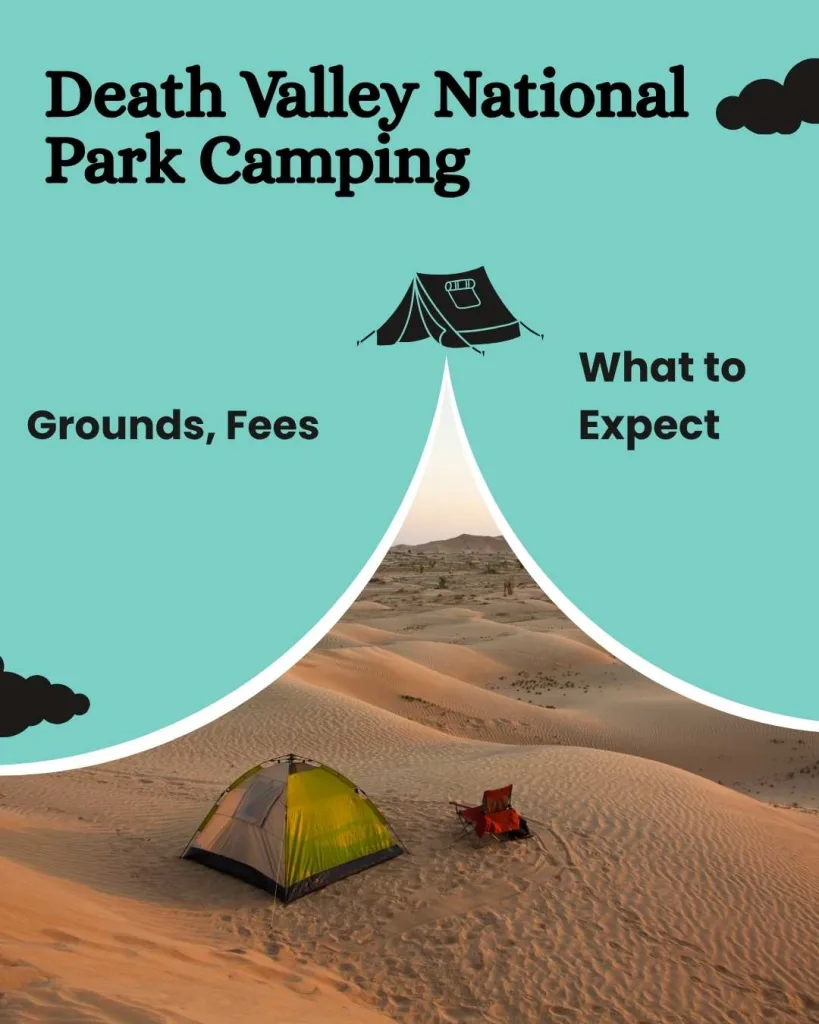
Camping is one of the finest ways to experience Death Valley — the silence after sunset, the cold desert air, and the overhead sky are unlike anything you encounter in a hotel room. The main camping season runs October through April. There are nine designated campgrounds and open backcountry camping throughout the park.
| Campground | Location | Reservations | Fee | Notes |
| Furnace Creek | Central (near visitor center) | Yes — peak season | $22–$36/night | Only NPS campground with reservable sites and full hookups; fills fast |
| Texas Spring | Above Furnace Creek | First-come, first-served | $16/night | Scenic; tents and RVs; great desert views |
| Sunset | Near Furnace Creek | First-come, first-served | $16/night | 230 sites; almost always has space even in peak season |
| Stovepipe Wells | Western area | First-come, first-served | $14/night | Next to Mesquite Flat Dunes; RV-friendly |
| Mesquite Spring | Northern section | First-come, first-served | $14/night | Higher elevation; cooler in warm months |
| Wildrose | Western highlands | First-come, first-served | Free | High elevation; best option in summer |
| Emigrant | Western entrance | First-come, first-served | Free | Tents only; shaded; good for a quick overnight |
| Backcountry Sites | Throughout park | Free permit; in person at visitor center | Free | No facilities; carry all water; hike-in access |
Book Furnace Creek through Recreation.gov as early as possible — peak season dates fill months in advance. In summer, move to higher-elevation campgrounds (Wildrose, Emigrant, Mesquite Spring) where temperatures are significantly more manageable. Privately operated camping is also available at Stovepipe Wells RV Park, The Ranch at Death Valley, and Panamint Springs Resort.
Where to Stay and Eat Near Death Valley National Park?
Staying inside the park is ideal, but when everything is booked — and in peak season it fills fast — these outside options are worth knowing.
Where to Stay:
- Beatty, Nevada — The closest outside town, just 30 minutes east via Nevada Route 374. A handful of budget-friendly motels line the main street, including the Atomic Inn and Stagecoach Hotel. Gas is significantly cheaper here than inside the park, so fill up before entering.
- Pahrump, Nevada — About 60 minutes from Furnace Creek on the eastern approach from Las Vegas. More accommodation variety than Beatty, with chain hotels, grocery stores, and full services. A practical overnight stop if you are driving in from Vegas.
- Lone Pine, California — About 90 minutes west of Furnace Creek on Highway 395. A charming small town with well-reviewed hotels, stunning Alabama Hills views, and the best restaurant scene of any nearby town. My personal pick if park lodging is unavailable.
- Shoshone, California — A tiny desert town about 60 minutes south of Furnace Creek on CA-127. Very limited options but puts you close to the southern entrance. Good for a quiet, off-grid overnight.
Where to Eat:
There are no standalone restaurants outside the three developed park areas. Inside the park, dining is available at Furnace Creek, Stovepipe Wells, and Panamint Springs — but options are limited and prices reflect the remote location. My honest advice: pack a cooler and prepare your own lunches for trail days. Driving back to a developed area mid-day costs you hours of the best morning light.
- The Inn Dining Room (Furnace Creek) — The most refined dining inside the park. Breakfast and dinner service with a full menu. Worth it for at least one evening meal.
- The Ranch Grill (Furnace Creek) — More casual than The Inn. Good for a hearty breakfast before a long trail day.
- Toll Road Restaurant (Stovepipe Wells) — Basic but reliable. Convenient if you are exploring the northern half of the park.
- Panamint Springs Restaurant — A surprisingly good menu for such a remote location. Cold beer after a long desert hike feels well-earned here.
For groceries and serious meal prep, stock up in Las Vegas, Lone Pine, or Pahrump before entering the park. General stores at Furnace Creek and Stovepipe Wells carry basics but at premium prices.
What Visitors Say — Death Valley National Park Reviews
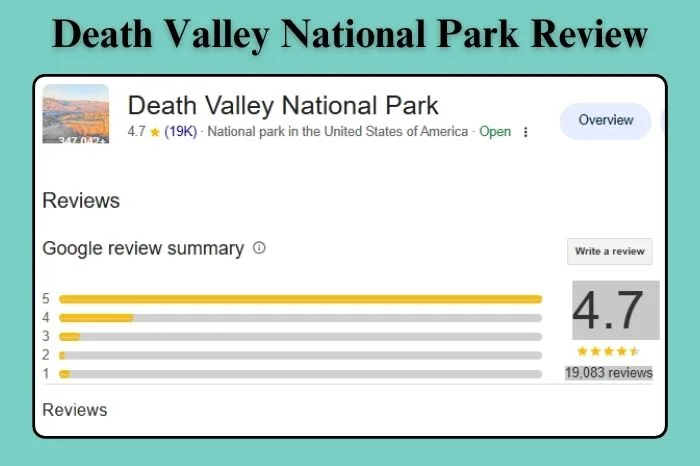
Death Valley National Park holds an impressive 4.7-star rating across 19,083 Google reviews — and after visiting myself, that rating makes complete sense. Visitors consistently describe it as the most otherworldly landscape they have ever witnessed, praising the silence of the salt flats, the surreal colors of Artist’s Palette, and the breathtaking scale of the badlands. One visitor called Zabriskie Point at sunrise “a moment I will never stop thinking about.”
Another described Badwater Basin as “standing on another planet entirely.” I felt exactly the same way. The moment I walked out onto those salt flats and looked up at the elevation sign painted high on the canyon wall above me marking sea level from 282 feet below something genuinely shifted in how I understand scale. Death Valley does that to people. It is not just a national park; it is a perspective reset.
Death Valley National Park Photos — Best Spots & Shooting Times
Death Valley is a photographer’s dream, with an extraordinary diversity of subjects across a single park. The key rule: light matters more here than anywhere else I have photographed in California. The harsh midday sun flattens everything; golden hour transforms it.
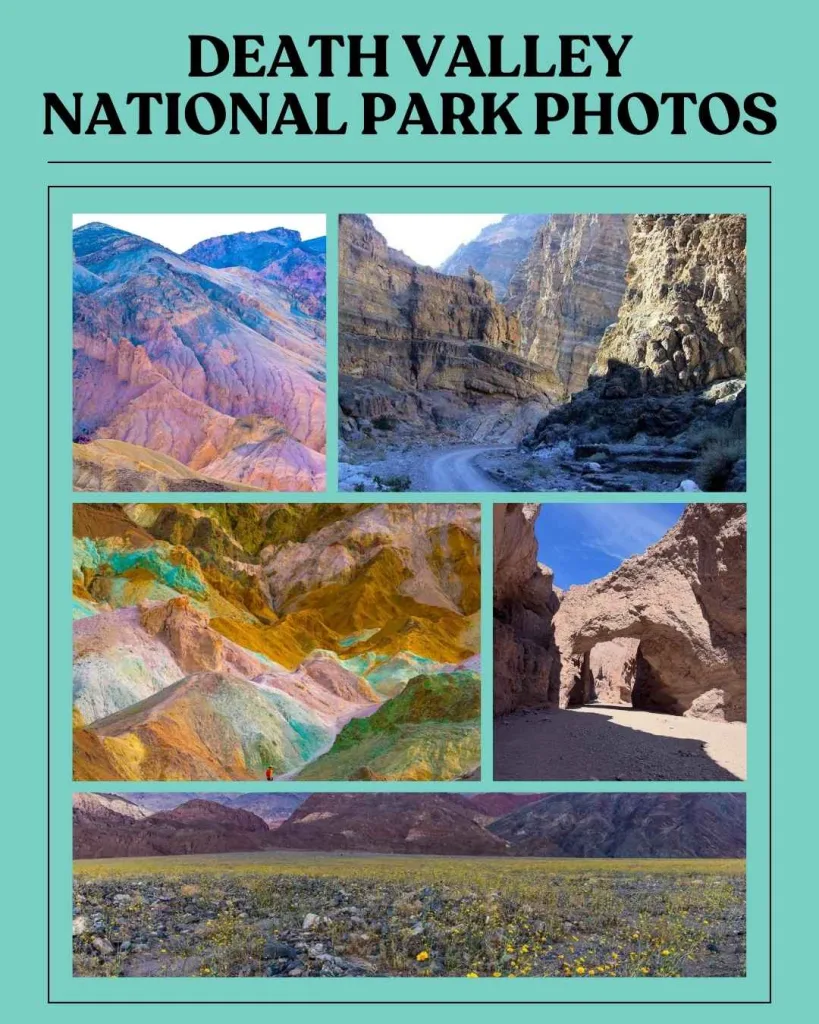
My best results came from these specific spots and times:
- Zabriskie Point at sunrise — arrive 30 minutes before dawn; the badlands shift from grey to deep amber to blazing gold as the sun crests the Black Mountains
- Mesquite Flat Sand Dunes at first light — long shadows, rippled textures, and no footprints if you arrive before other visitors
- Artist’s Palette in late afternoon — the volcanic mineral colors intensify dramatically as the sun drops; mid-to-late afternoon is when the pinks and purples truly glow
- Badwater Basin at night — Bortle Class 1 skies and the reflective salt flats create surreal long-exposure compositions
- Death Valley National Park superbloom along Badwater Road — fields of Desert Gold with the Black Mountains behind; currently active through spring 2026 at higher elevations
Bring a wide-angle lens for landscapes and a telephoto for compression shots across the valley floor. A tripod is essential for night photography and dawn/dusk canyon shots. If you are here during the 2026 wildflower season, do not delay — superbloom years happen once a decade.
How Many Days Do You Need? My Honest Itinerary Breakdown
Death Valley rewards longer visits, but even a day trip delivers memories. Here is how I would structure it depending on your time:
- 1 Day: Zabriskie Point at sunrise → Badwater Basin → Devil’s Golf Course → Artist’s Drive in the afternoon → night sky at Badwater Basin
- 2 Days: Add Mesquite Flat Sand Dunes at dawn → Golden Canyon hike → Dante’s View → Ubehebe Crater
- 3 Days: Full north-to-south coverage — add Racetrack Playa (high-clearance vehicle needed), Scotty’s Castle area, and a proper stargazing session from a dark spot in the northern park
- 4+ Days: Backcountry camping, Telescope Peak hike, Mosaic Canyon, Darwin Falls (check road conditions first), and deep exploration of the western side via Panamint Springs
Practical Information — Everything Else You Need

- Pets: Pets are permitted in developed campgrounds, on paved roads, and in parking areas, but are not allowed on most trails or in the backcountry. In summer, hot pavement and ground temperatures can fatally injure a dog’s paws within minutes. Leave pets in temperature-controlled vehicles only in cooler months.
- Accessibility: The Furnace Creek Visitor Center is fully wheelchair accessible. Badwater Basin has a paved boardwalk section. Dante’s View is accessible by car. The Newton B. Drury equivalent here — the best accessible scenic drive — is Artist’s Drive, which is paved and manageable in any vehicle.
- Food & Gas: There are no restaurants or food services outside the three developed areas (Furnace Creek, Stovepipe Wells, Panamint Springs). Gas is available at all three but costs significantly more than outside the park — typically $5–6 per gallon. Fill your tank before entering. I learned this in a way I would rather not repeat.
- Cell Service: Essentially nonexistent throughout the park. Save important phone numbers before you leave signal range, and tell someone your itinerary before heading into the backcountry.
Death Valley National Park Safety Tips (Non-Negotiable)
I approach Death Valley the same way I approach every technical California destination: with serious preparation. These are the rules I follow and share with every reader:
- Water first, always. Minimum 1 gallon per person per day; 2 gallons in warm months
- Download offline maps before you lose cell service — not optional
- Never hike midday in summer. Dawn and dusk only from May through September
- Fill your gas tank outside the park — fuel inside is expensive and not always available
- Tell someone your itinerary. Cell service is nonexistent in most of the park
- Wear sun protection year-round — sunscreen, hat, sunglasses, light long sleeves
- Carry a physical map — your phone GPS will fail you
- Check road conditions before every drive — especially after any rain event
- If you feel dizzy or nauseous, stop immediately, get into shade, drink water
Death Valley is one of the most extraordinary places I have ever stood. It is also one of the most unforgiving. The two facts are not contradictory — they are exactly what makes it worth planning carefully and visiting with full awareness.
My Honest Verdict After Visiting the Hottest Place on Earth
I went in expecting a barren wasteland and left completely humbled. Standing at Badwater Basin, the lowest point in North America, with snow-capped mountains visible 85 miles away, does something to your sense of scale that no photograph prepares you for.
I watched a superbloom carpet in a desert that averages two inches of rain per year. I found a year-round waterfall in the hottest place on Earth. Death Valley is less crowded than Yosemite, more accessible than its remote location suggests, and free to enter with the right pass. Download your maps, calculate your water, set your sunrise alarm then simply go.
Frequently Asked Questions
Q. Is there an entrance fee for Death Valley National Park?
Yes — a 7-day vehicle pass costs $35. Individual entry (walk-in or cycling) is $20. The America the Beautiful Annual Pass ($80) covers all national parks for 12 months and is the best value if you visit more than two parks in a year. The park has been cashless since June 2023, so bring a card or pre-pay at Recreation.gov.
Q. What state is Death Valley National Park in?
Death Valley is primarily in southeastern California (Inyo County), with a smaller section extending into western Nevada. All major visitor areas — Furnace Creek, Badwater Basin, Stovepipe Wells — are on the California side.
Q. Does Death Valley National Park have a lake?
Not typically. But after record rainfall in November 2025, the ancient Lake Manly temporarily returned at Badwater Basin for the first time in years. As of spring 2026, shallow water was still visible across portions of the basin. It will eventually evaporate as temperatures rise through summer.
Q. Is there water available inside Death Valley National Park?
Potable water is available at Furnace Creek, Stovepipe Wells, and Panamint Springs. It is not available at most trailheads, higher-elevation campgrounds, or backcountry areas. Always carry a minimum of one gallon per person per day — more in warmer months. Do not rely on finding water mid-route.