
Are Hot Springs Safe? Expert Guide to Benefits, Risks & Safety Tips 2026
Hot springs have captivated travelers and wellness enthusiasts for thousands of years. From Iceland’s volcanic pools to the American West’s mineral-rich basins, these natural wonders offer remarkable relaxation and therapeutic experiences. Are hot springs safe? Yes—when you understand the environment and follow proper guidelines.
Are hot springs safe depends on knowledge, location selection, and responsible behavior. When approached thoughtfully, hot springs provide wonderful benefits while minimizing concerns. This guide explains what you need to know about hot spring safety, proven health benefits, important considerations, and practical strategies for enjoying thermal waters responsibly on CA Travel Times and similar destinations.
What Makes Hot Springs Hot?
Hot springs form when rainwater and snowmelt seep deep underground where geothermal heat raises water temperature significantly. This superheated water absorbs minerals like sulfur, magnesium, and calcium while rising back to the surface, creating mineral-rich pools. In volcanic regions, magma proximity causes even higher temperatures.
This geological process explains why temperatures vary dramatically between springs—some reaching 122°F (50°C) while others exceed boiling point. Understanding this formation helps visitors appreciate why each spring presents unique characteristics requiring individual assessment.
Health Benefits of Hot Spring Soaking
Modern research confirms what ancient cultures discovered: mineral-rich thermal waters offer genuine health advantages. Scientific studies support multiple therapeutic benefits when visitors experience hot springs responsibly and with appropriate expectations about outcomes.
Stress Relief and Mental Wellness
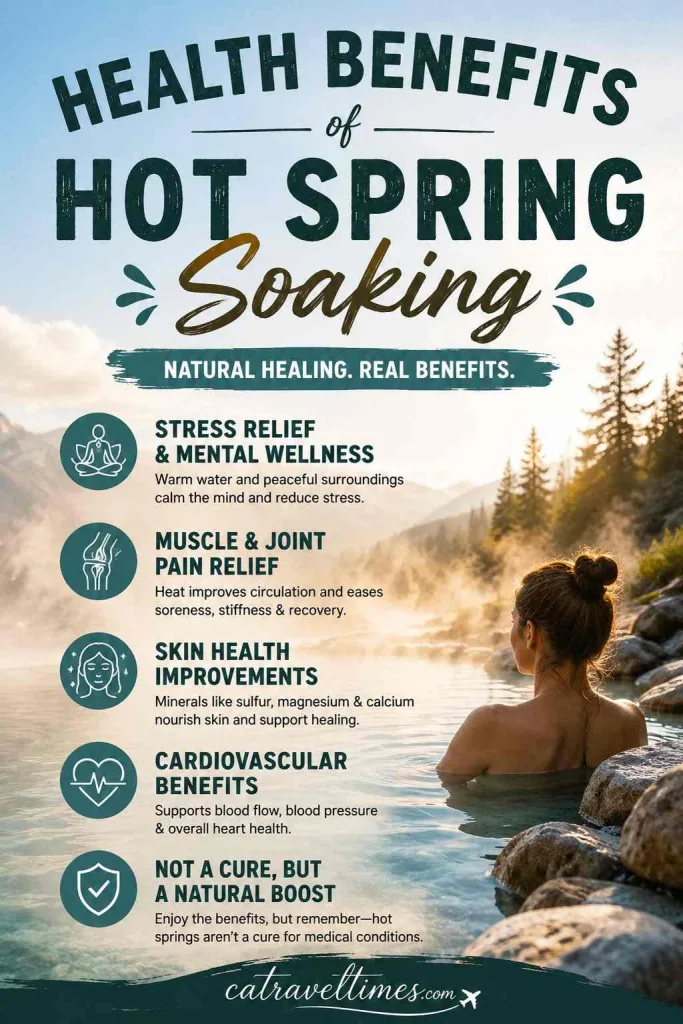
Warm water immersion activates your parasympathetic nervous system, naturally slowing heart rate and reducing stress hormones. The serene natural environment surrounding hot springs enhances this relaxation effect profoundly. Research demonstrates that this combination of warmth and peaceful settings creates measurable improvements in mental well-being and reduces anxiety levels significantly.
Muscle and Joint Pain Relief
Heat increases blood flow to muscles and joints, temporarily reducing soreness and stiffness. Athletes and hikers find particular value in post-activity soaking for recovery. A 2016 study in the Journal of Internal Medicine showed that water immersion improved vascular function in sedentary individuals, making thermal soaking beneficial for physical recovery and wellness.
Skin Health Improvements
Mineral-rich thermal waters may reduce symptoms of psoriasis, dermatitis, and similar skin conditions. Sulfur, magnesium, and calcium naturally present in many springs promote skin hydration and support healing through their anti-inflammatory properties, supporting natural skin health.
Cardiovascular and Vascular Benefits
Research demonstrates that passive hot water immersion can improve blood pressure regulation and vascular function. For individuals with limited exercise capacity, thermal soaking provides cardiovascular benefits comparable to moderate physical activity without the intensity concerns.
What Hot Springs Cannot Do
While benefits are genuine, it’s important to recognize limitations. Scientific evidence does not support hot springs as treatments for disease cure, body detoxification, chronic condition reversal, or anti-aging effects. Approaching with realistic expectations maximizes genuine benefits while avoiding disappointment from unfounded claims.
How Hot Are Hot Springs?
Water temperature varies dramatically between different thermal features. A spring at 122°F (50°C) requires careful engagement practices. At 140°F (60°C) and higher, even brief contact demands extreme attention. Some thermal features exceed boiling point entirely.
Understanding your specific location’s temperature through research ensures informed decisions and comfortable experiences. Never judge safety by appearance alone—clear, calm water may contain extremely hot temperatures requiring careful testing.
Understanding Hot Spring Risks
Are hot springs safe? They present specific environmental conditions requiring respect and understanding. Visitors who educate themselves about these conditions can participate responsibly. Several distinct environmental factors deserve attention when planning thermal soaking experiences.
Temperature and Heat Considerations
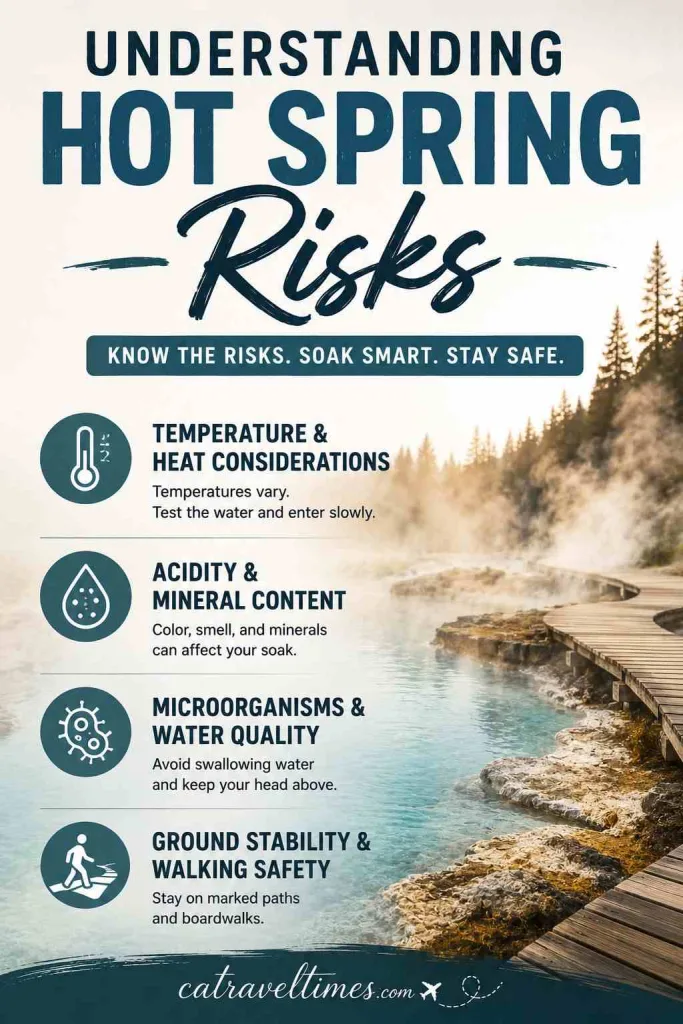
Temperature varies dramatically between springs and within individual springs. Always test incrementally before entering. This simple practice prevents uncomfortable surprises and ensures positive soaking experiences. What appears cool on the surface may contain surprising heat just below.
Acidity and Mineral Content
Some springs feature different acidity levels requiring awareness. Springs with strong sulfur odors or unusual coloration (orange, yellow, green water) typically indicate higher mineral concentrations. These characteristics provide valuable information about water composition, helping visitors make informed choices about where to soak comfortably.
Microorganisms and Water Quality
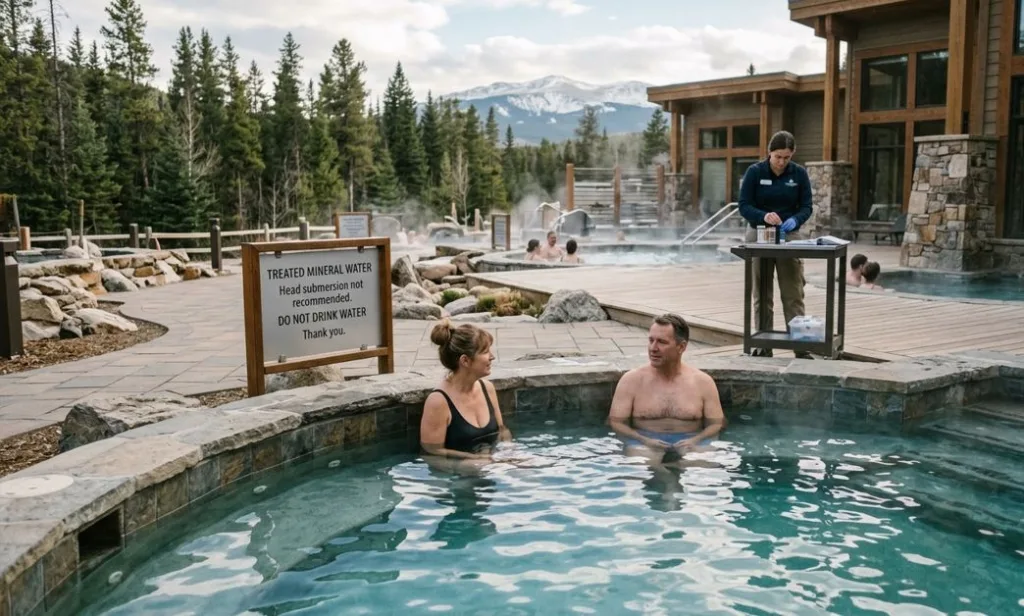
Natural, untreated springs can contain various microorganisms. Avoiding head submersion and never swallowing water significantly reduces exposure. Developed resort springs typically treat water to ensure quality. These locations provide excellent first-time experiences for visitors new to thermal soaking, offering peace of mind.
Ground Stability and Walking Safety
The ground around thermal areas sometimes features thin crusts over heated water below. Staying on designated boardwalks and marked paths ensures safe exploration of geothermal landscapes. These marked areas exist because they’ve been tested for visitor safety. Following these guidelines allows enjoyment of beautiful environments with confidence.
Who Should Consult Healthcare Providers First?
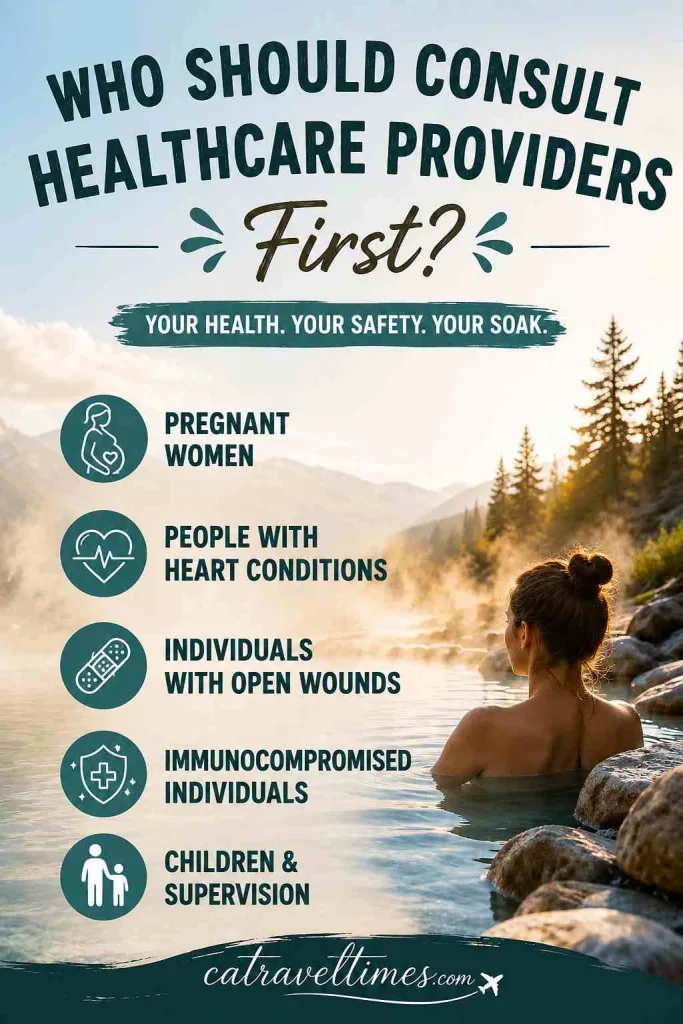
Certain individuals benefit from discussing hot spring visits with healthcare providers. This proactive approach ensures personalized guidance based on individual circumstances and health status.
Pregnant Women
Pregnant women should consult healthcare providers before soaking. Medical professionals can provide personalized guidance. Many sources recommend maintaining core body temperature below 102.2°F (39°C) during pregnancy. Providers can discuss whether thermal soaking aligns with individual pregnancy plans based on specific circumstances.
People with Heart Conditions
Those with cardiovascular conditions benefit from provider consultation. Heat causes blood vessels to dilate significantly, and individual medical histories help determine appropriate participation levels and necessary precautions for thermal experiences.
Individuals with Open Wounds
People with cuts, sores, or surgical wounds should wait until healing completes. This timing allows natural healing processes, making subsequent thermal soaking more enjoyable and safer for all participants.
Immunocompromised Individuals
Those with compromised immune systems benefit from healthcare provider guidance. Personalized recommendations help individuals enjoy thermal experiences while maintaining health safety. Many developed springs treat water specifically for this purpose.
Children and Supervision
Young children benefit from constant supervision near thermal areas. Their smaller body mass heats rapidly, and adult oversight ensures safe, enjoyable experiences at appropriate temperatures and durations.
Developed Versus Backcountry Hot Springs
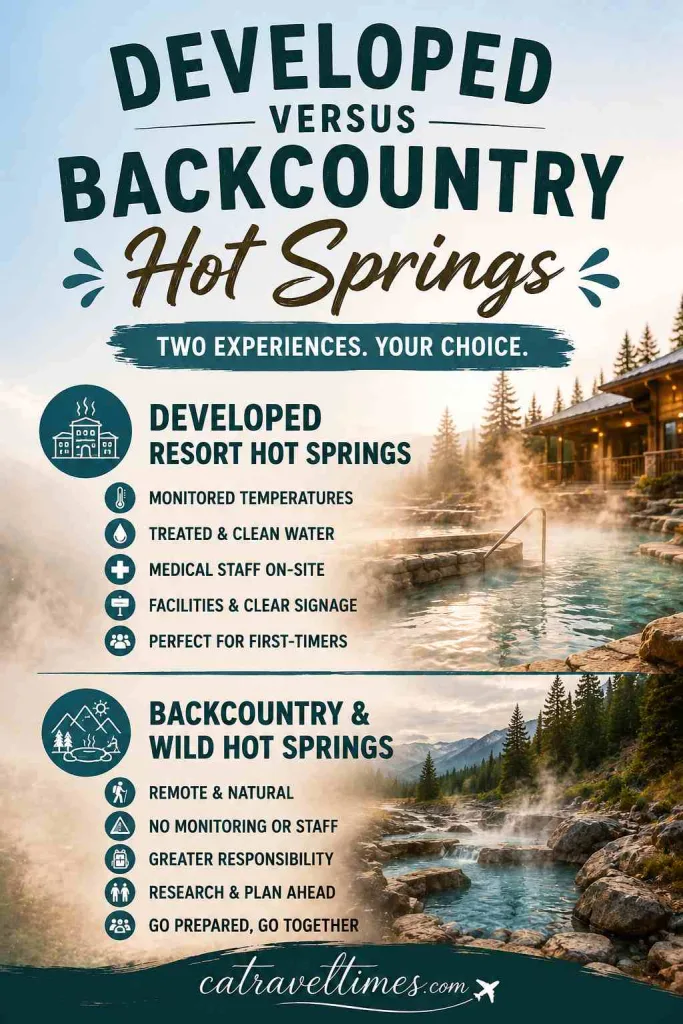
Different thermal settings offer varying experience levels and infrastructure support for visitors of different experience levels and comfort preferences.
Developed Resort Hot Springs
Commercial and resort-managed springs provide excellent first-time experiences. Temperatures receive regular monitoring by trained staff. Water typically receives treatment ensuring quality. Medical personnel remain on-site. Clear signage and facilities create welcoming, safe environments. These locations offer ideal starting points for visitors new to thermal soaking, with trained staff available to answer questions.
Backcountry and Wild Hot Springs
Remote, undeveloped springs in wilderness areas offer magical natural experiences with heightened personal responsibility. No monitoring equipment, trained staff, or immediate medical access means visitors must exercise greater personal responsibility and preparation.
Before visiting remote springs, research temperature information through geological databases, understand terrain conditions, and always travel with companions. Resources like CA Travel Times offer comprehensive guides to both developed and wild springs.
Yellowstone National Park Thermal Features
Yellowstone deserves specific attention because its geothermal features rank among the world’s most extreme. The National Park Service explicitly states that Yellowstone’s springs are not recreational soaking locations. The park strictly prohibits swimming, soaking, or wading in any thermal feature. Boardwalks exist because they represent the only truly safe standing locations. Following marked paths ensures visitor safety while allowing appreciation of spectacular geothermal landscapes.
Hot Spring Safety Guidelines
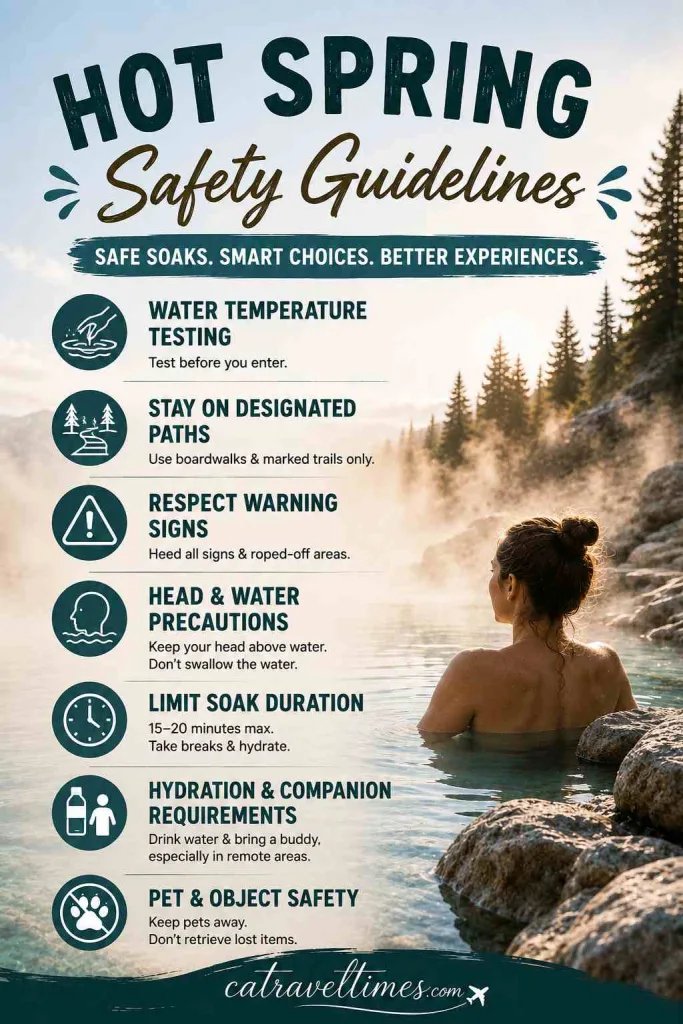
Following established safety practices allows visitors to enjoy thermal springs while minimizing concerns through responsible behavior and informed decision-making.
Water Temperature Testing
Always test water carefully before entering. Dip your hand or foot incrementally, giving yourself time to assess temperature before full immersion. This simple practice ensures comfortable, safe experiences.
Staying on Designated Paths
Stay exclusively on boardwalks and marked trails. Never step off designated paths near thermal features, regardless of ground appearance. Marked areas have been tested for visitor safety, while unmarked areas present variable conditions.
Respecting Warning Signs
Do not enter springs posted with warning signs or roped off areas. These restrictions indicate that conditions require caution. Respecting posted warnings ensures your safety and that of fellow visitors.
Head and Water Precautions
Do not submerge your head or swallow water. Keep your face above the waterline. Avoid swallowing even small water quantities. These practices dramatically reduce infection risks while allowing full thermal soaking benefits.
Limiting Soak Duration
Limit individual soaks to 15-20 minutes maximum. Overexposure causes dehydration, dizziness, and potential heat illness. Take breaks between soaks and spend time rehydrating. Shorter sessions provide benefits while protecting health.
Hydration and Companion Requirements
Drink water before, during, and after soaking. Always bring a companion, particularly in remote areas. This buddy system ensures help availability if complications arise, making experiences safer for all participants.
Pet and Object Safety
Keep pets away from thermal areas—they can be harmed by heat and acidity. Do not attempt retrieving objects that fall into thermal features. If something falls in, consider it permanently lost rather than risking safety.
Planning Your Hot Spring Visit
First-time visitors should start with developed, commercial hot springs offering trained staff and established safety protocols. Research specific springs before visiting using modern resources providing detailed temperature, mineral content, accessibility, and safety information. Visit with a companion sharing your safety commitment.
Discuss protocols before arriving, agreeing on temperature limits and soak duration. Once comfortable with developed springs, carefully researched backcountry experiences become options while maintaining consistent safety-first approaches.
Final Answer: Are Hot Springs Safe?
Are hot springs safe? Absolutely—when approached with knowledge, respect, and genuine care. The same features making hot springs breathtaking (extreme heat, mineral chemistry, geothermal power) also require careful attention and respect. Most visitors soak safely by understanding conditions and following established practices.
The key differentiator between safe and unsafe experiences is preparation. Choose developed springs initially. Follow posted guidelines carefully. Keep soak times reasonable. Never skip temperature testing. Exercise careful attention in all thermal areas. With appropriate knowledge and commitment to safety practices, hot spring soaking becomes one of the most restorative, rewarding experiences available.