Why Is Desert Hot Springs So Dangerous? A Complete Safety Guide
Desert Hot Springs sits in California’s Coachella Valley, drawing thousands of visitors each year with promises of mineral-rich soaking pools, warm desert sunshine, and a slower pace of life. But behind the postcard image of steaming pools and palm trees lies a set of very real hazards that catch unprepared travelers off guard.
So, why is desert hot springs so dangerous? The short answer is that it isn’t one single hazard, it’s a combination of scalding geothermal water, unstable ground, bacterial contamination, and extreme desert heat that together create a uniquely risky environment for anyone who doesn’t plan ahead. This guide walks through each of these dangers in detail and shows exactly how to enjoy the region safely.
If you’re mapping out a wider California itinerary, CA Travel Times has additional destination guides worth bookmarking before you go.
What Makes Desert Hot Springs Geothermally Unique
Desert Hot Springs owes its name and its danger to the same geological feature: the Mission Creek Fault, a branch of the larger San Andreas Fault system. This fault line separates two underground aquifers, one hot and one cold, allowing naturally heated, mineral-saturated water to rise to the surface throughout the area.
Unlike resort spas where water is artificially heated and carefully thermostat-controlled, many of the springs scattered around the region emerge from the earth at raw, untreated temperatures. That single distinction is the root cause of most safety concerns tied to the area.
- The fault system creates dozens of natural seepage points across the valley
- Water temperature varies dramatically from spring to spring
- Some sources are developed and monitored; many are not
- Mineral content and heat levels are set entirely by nature, not by regulation
Scalding Water Temperatures: The Most Immediate Danger
Heat Levels That Exceed Safe Soaking Limits
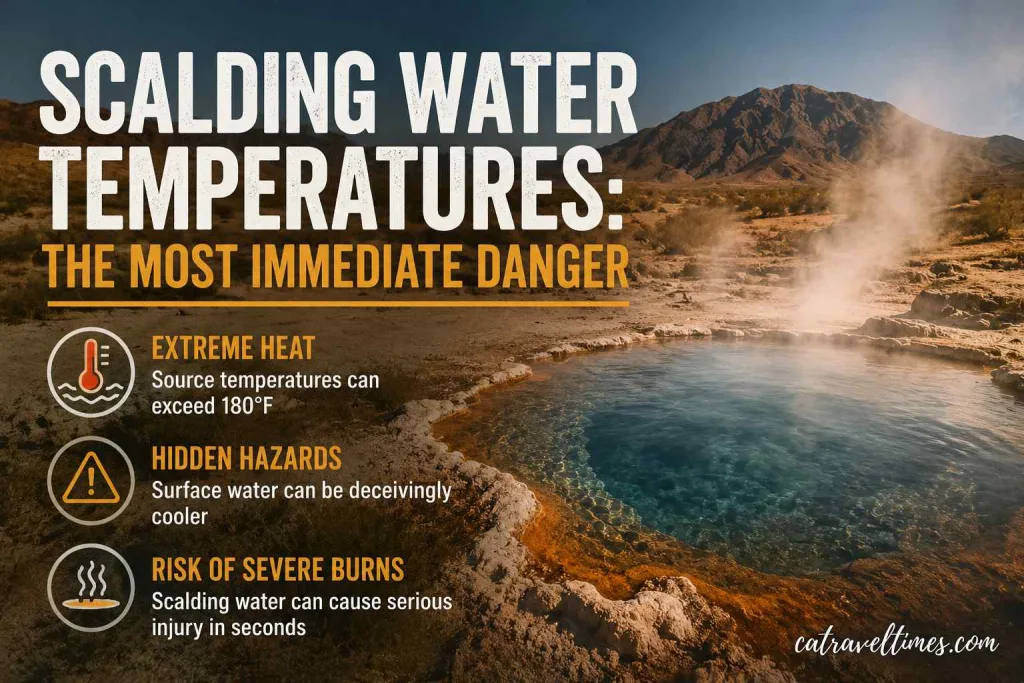
Many natural geothermal springs in the region emerge at temperatures above 180°F (82°C). For comparison, human skin begins to scald at roughly 120°F (49°C), and exposure to water above 150°F can cause serious burns within seconds. Safe recreational soaking temperatures generally sit between 98°F and 104°F, meaning some natural springs run nearly double the tolerable range.
The Deceptive Calm of Geothermal Pools
One of the reasons why Desert Hot Springs is so dangerous for casual visitors is how misleading the water can look. Unlike boiling water on a stove, geothermal pools rarely bubble dramatically, and in dry desert air, steam disperses quickly. A pool that looks completely inviting on the surface can be scalding just below it.
Key temperature hazards to remember:
- Source temperatures can exceed 180°F with no visible warning signs
- Surface water often feels cooler than deeper layers
- Mineral-dense water can transfer heat to skin faster than plain fresh water
- Documented burn injuries and fatalities have occurred at similar unregulated geothermal sites across the American West
Unstable Ground Around Geothermal Vents
The same heat and mineral activity that feeds the springs also breaks down the surrounding earth over time. Soil and rock near active vents can become thin, brittle, and prone to sudden collapse, especially at undeveloped or backcountry locations with no safety infrastructure.
Why Marked Paths Exist for a Reason
Reputable resorts and public facilities invest in walkways, railings, and signage specifically to steer visitors away from unstable ground. Wandering off these designated routes in search of a quieter or “more natural” spot significantly raises the risk of a sudden fall into scalding water or onto unstable terrain. Treat any unmarked ground near a spring as a potential hazard zone rather than a shortcut.
Bacteria and Water Contamination Risks
Warm, mineral-rich water is an ideal breeding ground for certain microorganisms, particularly in springs that aren’t regularly treated or monitored. Travelers researching general soaking safety across the region, including on hot springs-focused resources, will find this listed as one of the most underestimated dangers of natural pools.
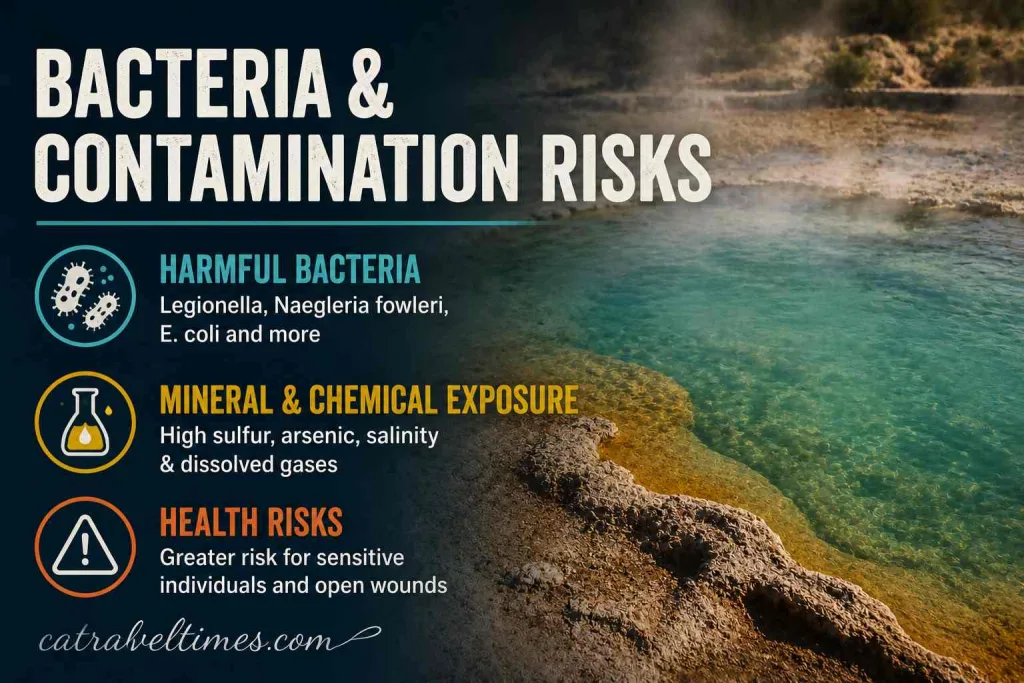
Organisms of concern include:
- Legionella pneumophila, the bacteria behind Legionnaires’ disease, a severe respiratory infection
- Naegleria fowleri, a rare but often fatal amoeba found in warm freshwater
- E. coli and other fecal coliform bacteria introduced by wildlife or human contact
Mineral and Chemical Exposure
Mineral concentration varies by spring. While elements like silica, magnesium, and calcium are generally considered beneficial in moderation, other compounds pose risks with prolonged exposure:
- High sulfur content can irritate skin, eyes, and airways
- Elevated arsenic levels have been recorded in some Western geothermal waters
- High salinity can dry out and irritate skin over long soaks
- Dissolved gases such as hydrogen sulfide can become hazardous in concentrated form
Anyone with a compromised immune system, open wounds, or respiratory sensitivities should limit exposure time and shower thoroughly afterward.
Extreme Desert Heat: A Compounding Threat
Desert Hot Springs sits at the edge of a harsh desert climate zone, where summer temperatures regularly climb past 110°F (43°C). Soaking in hot mineral water while already surrounded by intense ambient heat puts unusual strain on the body’s cooling system.
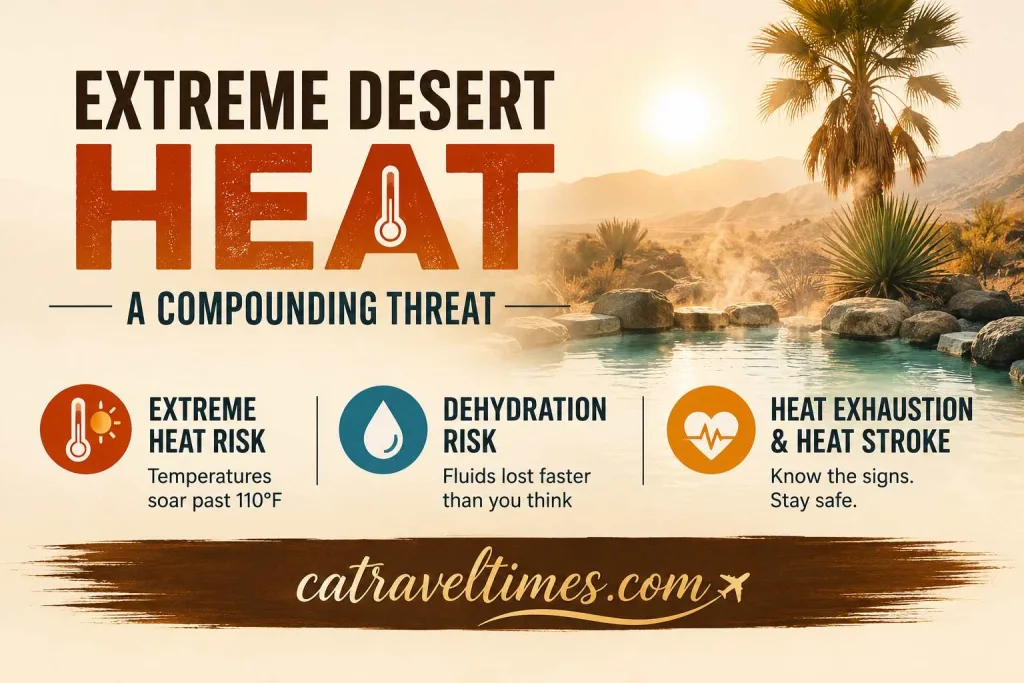
Heat Exhaustion and Heat Stroke
Warning signs to watch for include:
- Heavy sweating combined with a cold, clammy feeling
- Dizziness, nausea, or a rapid pulse
- Muscle cramps and general weakness
Left unaddressed, these symptoms can progress to heat stroke, a medical emergency in which core body temperature spikes above 104°F and can cause organ damage or death.
Dehydration Happens Faster Than You Think
Hot water soaking accelerates fluid loss through sweat, and the desert’s low humidity speeds up dehydration even further. Because soaking is relaxing, many visitors don’t notice how quickly they’re losing fluids until dizziness or fatigue sets in. Dehydration also worsens every other risk on this list by impairing judgment and reducing the body’s heat tolerance.
Who Faces the Greatest Risk
Some visitors need to take extra precautions or avoid undeveloped natural springs altogether:
- Children — thinner skin means faster, more severe burns, and constant supervision is essential
- Older adults — reduced heat tolerance increases cardiovascular strain
- Pregnant travelers — prolonged high-temperature exposure carries added risk; medical advice is recommended beforehand
- People with heart conditions — hot water immersion combined with desert heat places extra load on the cardiovascular system
- Immunocompromised individuals — greater vulnerability to waterborne pathogens in untreated springs
Public Safety Beyond the Water
Part of why Desert Hot Springs is so dangerous for some travelers has nothing to do with geology at all. The city has historically recorded higher crime rates than state and national averages, though local public safety investment has grown substantially in recent years. Isolated or undeveloped areas still warrant extra caution, particularly after dark.
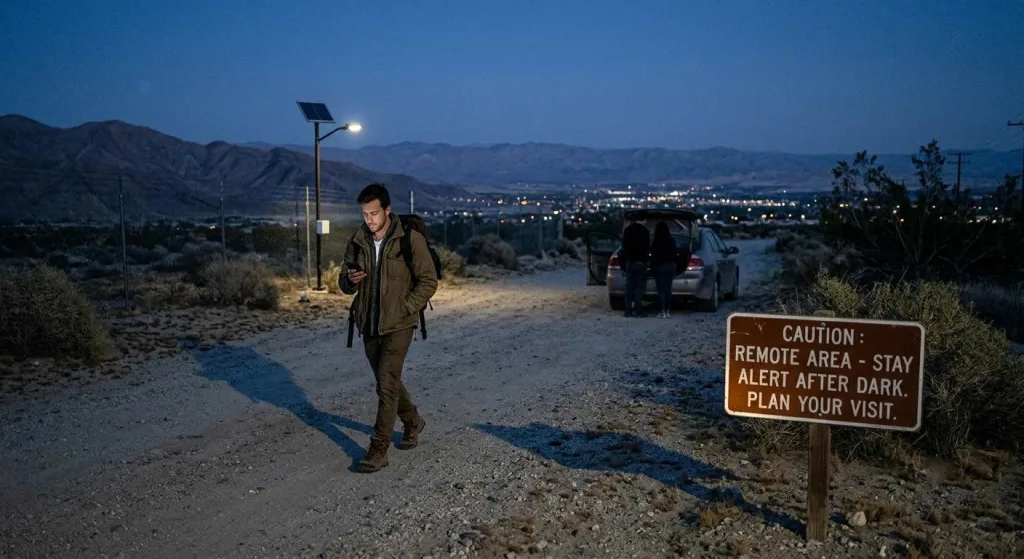
Practical precautions include:
- Avoiding remote spring locations alone
- Researching a specific location before visiting
- Sharing your plans and expected return time with someone
- Staying alert in unfamiliar areas after sunset
How to Visit Desert Hot Springs Safely
Understanding the risks isn’t a reason to skip the destination, it’s a reason to prepare properly. With the right approach, this is still one of California’s most rewarding wellness stops.
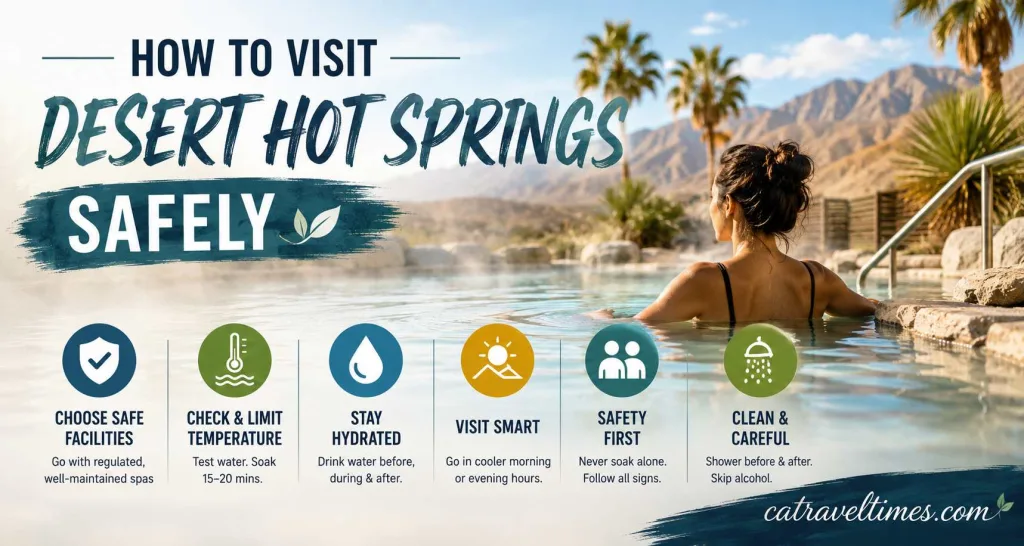
Choose Developed, Regulated Facilities
Established resorts and public spas monitor water temperature, treat for bacteria, maintain safe entry points, and post clear safety signage. This single choice eliminates most of the risks described above.
Additional safety habits worth adopting:
- Test water temperature with your hand or foot before entering
- Limit soaking sessions to 15–20 minutes with breaks in between
- Drink water before, during, and after soaking
- Visit during cooler morning or evening hours, especially from May through September
- Never soak alone
- Respect all posted warning signage
- Shower before and after soaking
- Skip alcohol before or during a soak, since it impairs heat regulation
What to Do in a Hot Spring Emergency
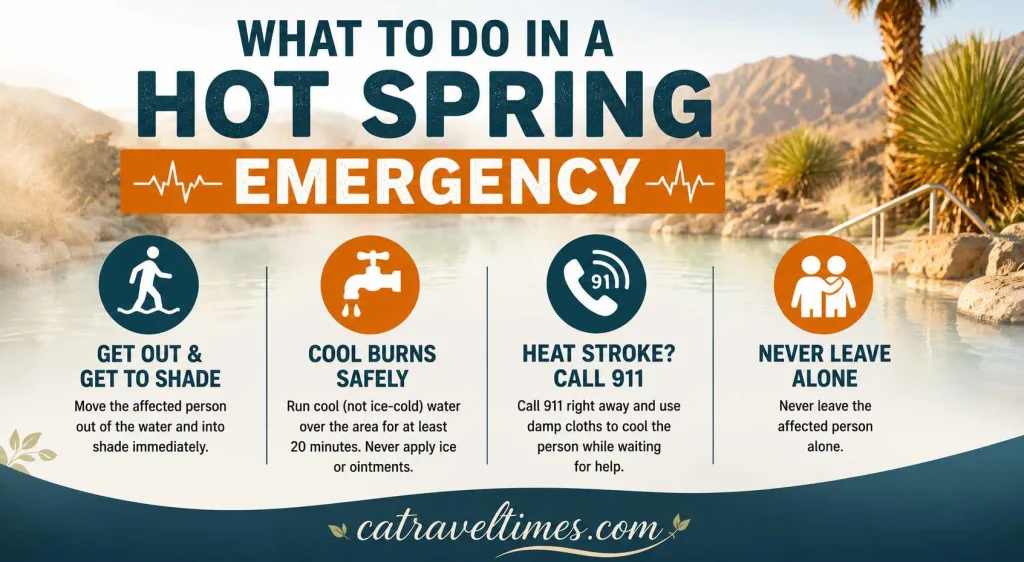
- Move the affected person out of the water and into shade immediately
- For burns, run cool (not ice-cold) water over the area for at least 20 minutes; never apply ice or ointments
- For suspected heat stroke, call 911 right away and use damp cloths to cool the person while waiting for help
- Never leave the affected person alone
Exploring Beyond Desert Hot Springs
Desert Hot Springs is only one stop on California’s much larger map of natural wonders and desert destinations. Travelers planning a broader Southern California trip can pair a soak here with nearby attractions, scenic hikes, and other geothermal spots covered in more detail on CA Travel Times, which tracks current travel conditions and safety updates across the state.
Final Thoughts
So, why is desert hot springs so dangerous? It comes down to a convergence of factors: scalding natural water, fragile ground near geothermal vents, bacterial and mineral contamination in untreated springs, and an unforgiving desert climate that intensifies every other risk. None of these dangers act alone, it’s their overlap that surprises unprepared visitors.
None of this makes the destination off-limits. Choose developed facilities, follow basic safety habits, and respect the power of the geology beneath your feet, and Desert Hot Springs remains a genuinely restorative stop on any California itinerary.