Health Benefits of Hot Springs: 10 Science-Backed Reasons to Soak

People have soaked in naturally heated water for thousands of years, long before anyone called it wellness. The health benefits of hot springs come from a simple combination: geothermal heat, buoyancy, and a mineral profile no hot tub can replicate.
Modern research is now catching up to what soakers have known for generations. This guide covers where hot springs come from, the benefits worth knowing, the minerals behind them, and how to plan a comfortable, well-informed soak.
What Makes Hot Springs Different From a Hot Tub?
A hot tub is heated mechanically and chemically treated. A hot spring is heated by the earth itself, and its water is naturally infused with minerals absorbed as it rises through rock formations. That mineral content, combined with sustained warmth and gentle buoyancy, is the foundation for most of the health benefits of hot springs discussed below.
It’s also why balneotherapy — the formal practice of bathing in mineral water for therapeutic purposes — has been studied and used clinically in parts of Europe and Asia for generations.
10 Health Benefits of Hot Springs
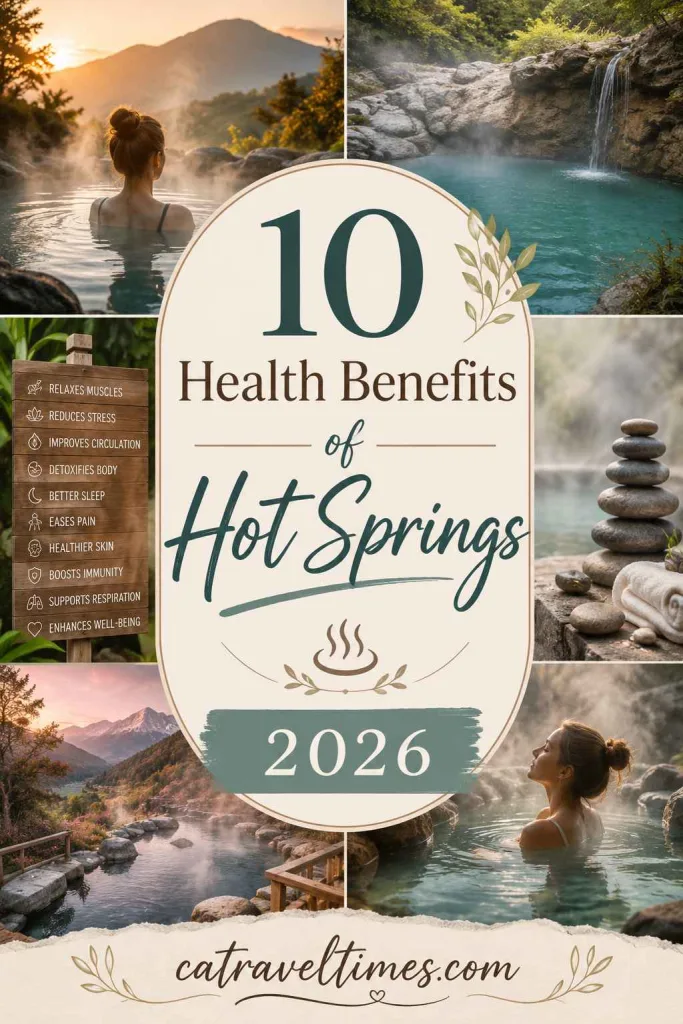
1. Improved Blood Circulation
Warm mineral water causes blood vessels to dilate, which allows blood to flow more freely throughout the body.
- Increased circulation helps deliver oxygen and nutrients to tissues more efficiently
- The effect on the heart is similar to light cardiovascular activity, since heart rate rises slightly during a soak
- Better circulation can also ease cold hands and feet caused by poor blood flow
2. Muscle and Joint Pain Relief
Heat relaxes tight muscles, while buoyancy takes pressure off joints — a combination that makes hot springs popular for chronic pain and post-workout soreness alike.
Minerals such as sulfur, magnesium, and calcium are absorbed through the skin and are widely associated with reduced inflammation, which is part of why soaking is often recommended alongside conventional treatment for conditions like arthritis and fibromyalgia. It’s not a replacement for medical care, but as a complementary practice, it’s one of the more consistently reported benefits of hot springs among regular soakers.
3. Stress Reduction and Mental Clarity
Warm water triggers the release of endorphins, the body’s natural mood regulators, while lowering circulating cortisol — the hormone most closely tied to chronic stress.
- The heat and stillness of soaking create ideal conditions for slowing down racing thoughts
- Being outdoors, surrounded by natural scenery, appears to amplify the calming effect
- Many soakers describe improved focus and creative thinking after a session, likely tied to the drop in stress hormones
4. Healthier, More Radiant Skin
Sulfur-rich hot spring water has natural antibacterial and antifungal properties, and steam opens pores for a deeper cleanse.
- May help calm symptoms of eczema, psoriasis, and general skin irritation
- Mineral content can support skin elasticity and hydration over time
- Regular soaking is linked to a smoother, more even skin tone for many visitors
5. Natural Detoxification
Soaking induces sweating, one of the body’s built-in ways of clearing waste and impurities through the skin. Sulfur in particular is thought to assist in flushing out heavy metals and other residues, giving the body a gentle assist alongside its own detox systems.
6. Better Sleep Quality
The drop in core body temperature after you step out of a hot spring mimics the natural temperature dip your body experiences before sleep, which can help trigger drowsiness.
Pairing this with the stress-relieving effects above makes an evening soak a genuinely effective pre-bedtime ritual, particularly for people who struggle to switch off after a demanding day.
7. Faster Recovery After Injury or Surgery
This is one of the most well-documented health benefits of hot springs in a rehabilitation context. Physical therapists have long used warm water immersion to help patients move joints and muscles that would otherwise be too painful to work on land, since buoyancy removes much of the strain gravity places on the body.
- Encourages gentle range-of-motion exercise during recovery
- Reduces the impact and resistance felt during movement
- Should always be done with medical clearance, particularly after surgery or a serious injury
8. Mineral Replenishment
Modern diets can leave people short on key minerals like magnesium, zinc, and iron. Hot spring water is typically rich in a wide spread of these — commonly including boron, calcium, sodium, sulfate, potassium, and manganese — which the skin absorbs to a degree during a soak, offering a small but real supplement to what you get through food.
9. Improved Vascular Function and Heart Health
Research on hot water immersion has pointed to measurable improvements in vascular function, including increased artery diameter and better blood pressure regulation over time. When approached responsibly and alongside standard medical guidance, this makes hot springs a reasonable complementary habit for people focused on cardiovascular wellness — not a substitute for treatment, but a supportive one.
10. Connection, Mindfulness, and Nature Exposure
The setting matters as much as the water itself. Time spent outdoors is consistently linked to improved mood and reduced stress, and hot springs tend to place you in some of the most striking natural landscapes around — mountains, canyons, forests, and coastlines. Soaking with friends or family adds a social dimension too, turning a wellness activity into a shared experience that reinforces its emotional benefits.
The Minerals Behind the Magic
Not every hot spring has the same mineral profile, but most contain a combination of the following:
| Mineral | Commonly Associated Benefit |
| Sulfur | Anti-inflammatory, antibacterial, supports skin health |
| Calcium | Bone strength, skin barrier support |
| Magnesium | Muscle relaxation, energy, immune function |
| Sodium bicarbonate | Circulation support |
| Potassium | Heart and kidney function |
| Lithium | Mood regulation and calm |
| Iron | Oxygen transport, immune resilience |
| Silica | Collagen production, hair and skin health |
How Long Should You Soak?
There’s no single rule, since water temperature varies widely between springs, but a general guideline works well for most healthy adults:
- For water around 100–104°F, 15–20 minutes per session is a reasonable ceiling
- Test the water gradually — feet first, then ease in — rather than submerging immediately
- Take breaks between soaks, especially at hotter springs, and rehydrate consistently
- Alternate with a cool-down (a cold plunge, shaded rest, or simply stepping out) if you’re staying for several hours
Who Should Be Cautious?
Hot springs are generally safe for healthy adults, but a few groups should check with a doctor first:
- Pregnant women, due to the risk of raising core body temperature too high
- People with cardiovascular conditions, since heat places extra demand on the heart
- Anyone with open wounds or active skin infections
- Those prone to low blood pressure or dizziness, since heat dilates blood vessels
Hot Springs vs. Other Wellness Practices
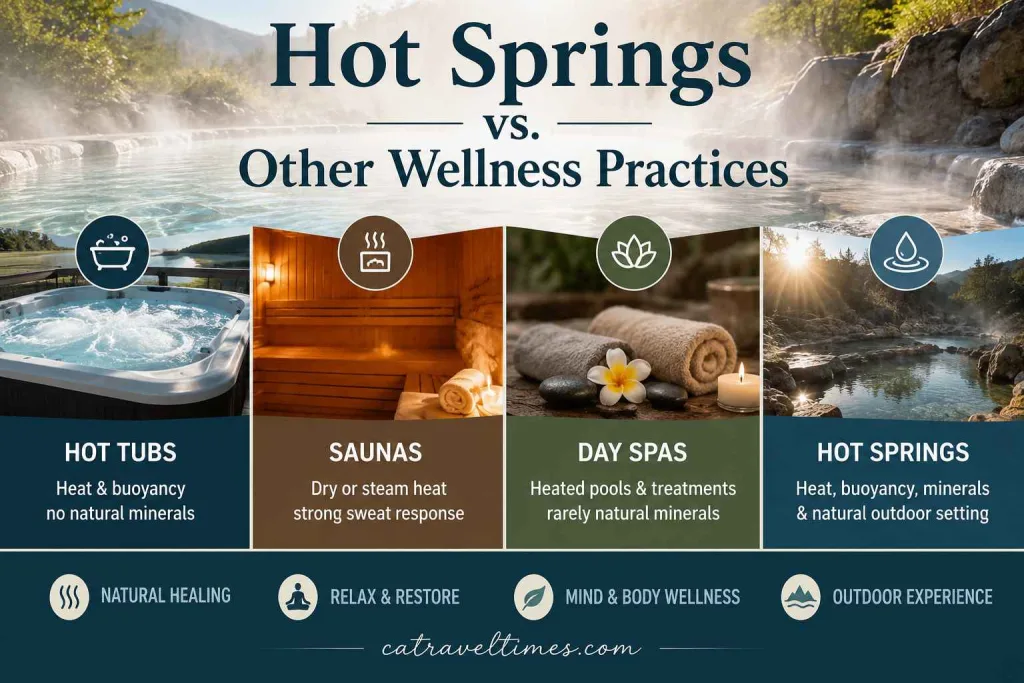
Hot springs are often mentioned in the same breath as saunas, hot tubs, and day spas, but the comparison isn’t quite even.
- Hot tubs offer heat and buoyancy but no natural mineral content, and they rely on chemical treatment to stay sanitary
- Saunas provide dry or steam heat and a strong sweat response, but without water immersion or mineral absorption
- Day spas can replicate some benefits through heated pools and treatments, though rarely with naturally occurring geothermal minerals
- Hot springs combine heat, buoyancy, mineral content, and — often — a natural outdoor setting, which is why they tend to be associated with a broader range of reported health benefits than any single competitor on its own
None of these are mutually exclusive. Many people use saunas or hot tubs as a convenient substitute between hot spring trips, while treating an actual soak as the more complete experience.
Where to Experience These Benefits
If you’re ready to put these benefits to the test, California has one of the country’s richest concentrations of natural geothermal pools, from rugged backcountry soaks to fully developed resorts. Harbin Hot Springs in Lake County is known for its silent pools and digital-detox atmosphere, while Calistoga Spa Hot Springs in Napa Valley pairs geothermal soaking with volcanic mud baths. For a more remote, wilderness-style soak, Big Caliente Hot Springs near Santa Barbara and Mono Hot Springs in the Sierra Nevada are both free and genuinely off the beaten path.
Families and first-time soakers often prefer something more developed, like Avila Beach Hot Springs on the Central Coast or the granite-ringed pools at Grover Hot Springs near Lake Tahoe. Whichever style you’re drawn to, a well-planned trip makes a real difference — and that’s exactly what a dedicated hot springs travel guide is built for.
What to Bring
- Swimsuit and towel
- Plenty of drinking water
- Sunscreen, sunglasses, and a hat for outdoor soaks
- Sturdy footwear for the walk in and out
- A change of clothes, since mineral water can leave a residue or scent
Final Thoughts
The health benefits of hot springs are backed by both centuries of tradition and a growing body of modern research — improved circulation, pain relief, better sleep, stress reduction, and healthier skin among them. None of this replaces professional medical care, but as a complementary practice, few wellness rituals offer this much benefit for so little effort. Find a spring, ease in slowly, and let the water do what it’s always done.