
TravelTweaks .com: What the Site Covers, Who It’s For, and How to Use It Well in 2026
Most travel blogs generally fall into one of two camps: hyper-niche sites that go deep on a single destination, or broad content hubs covering everything from flights to hotels to gear, all under one roof.
traveltweaks .com sits firmly in the second camp a general travel content site built around practical tweaks rather than long-form storytelling, aimed at helping travelers plan an entire trip without switching sites. This guide breaks down what it actually covers, where it genuinely helps, where it falls short, and how to evaluate it yourself before trusting anything it publishes.
At a Glance: What This Site Is and Isn’t?
Before diving into each category, here’s the short version what the site is built for, who it suits, and where its limits are, summed up in a few key points.
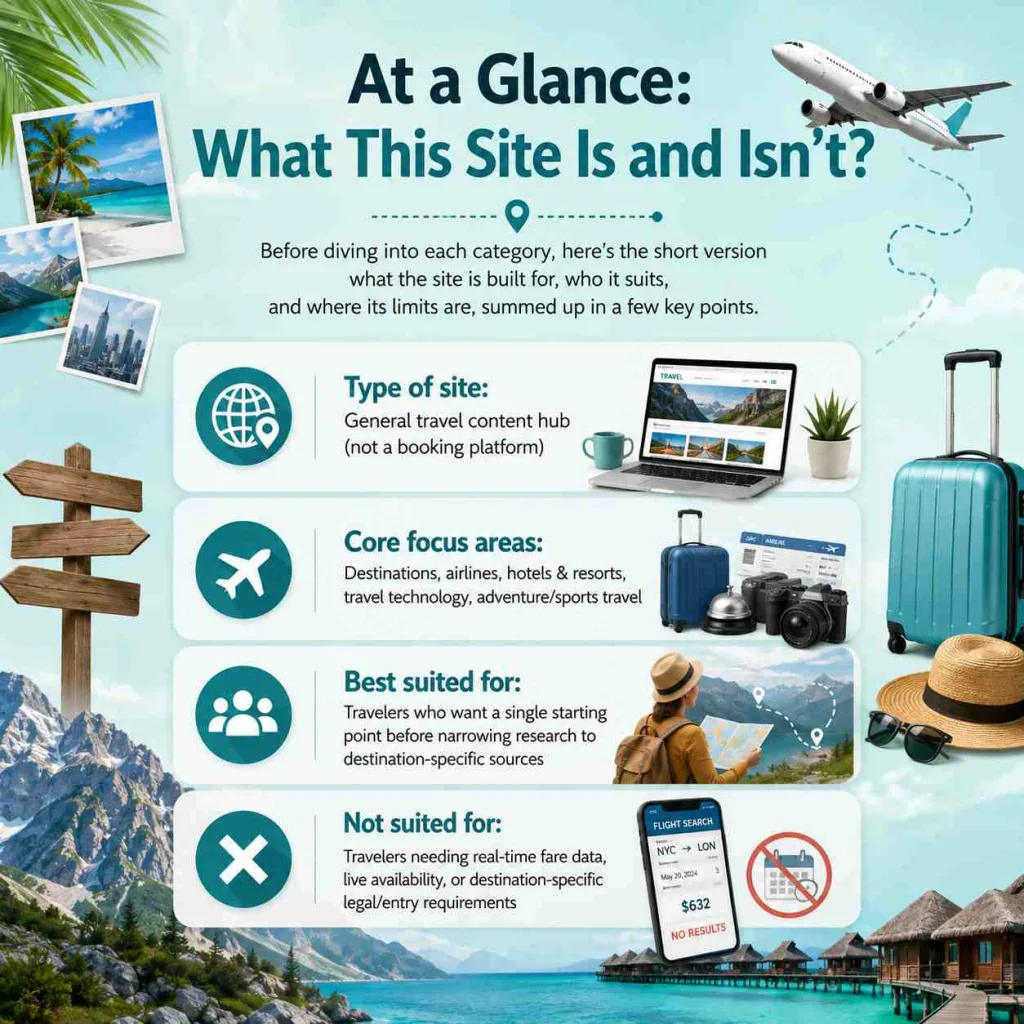
- Type of site: General travel content hub (not a booking platform)
- Core focus areas: Destinations, airlines, hotels & resorts, travel technology, adventure/sports travel
- Best suited for: Travelers who want a single starting point before narrowing research to destination-specific sources
- Not suited for: Travelers needing real-time fare data, live availability, or destination-specific legal/entry requirements
What TravelTweaks .com Actually Covers?
The site’s navigation is built around a handful of recurring categories, and understanding how each one works helps explain why traveltweaks .com functions more like a magazine than a single-purpose guide:
- Destinations — city and regional guides, seasonal picks, and travel-style comparisons
- Airlines — fare guidance, discount-code explainers, and airport/terminal breakdowns
- Hotels & Resorts — booking frameworks and stay comparisons rather than simple “top 10” rankings
- Technology — apps, connectivity tools, and digital planning aids
- Sports & Adventure — outdoor activities, gear, and event-driven travel content
- How Far / What Is the Distance — quick-reference distance and travel-time answers
The breadth is the point: a reader can move from choosing a destination to comparing flights to picking a hotel without switching sites — though, as covered below, that convenience comes with trade-offs worth knowing about.
Where the Content Is Genuinely Useful

Decision Frameworks Over Simple Lists
The stronger hotel and booking articles on the site lean toward how to decide, not just what to pick — for example, walking through when a higher nightly rate is actually justified by amenities, rather than just ranking properties by price. That structural approach is more durable than a static “best hotels” list, which goes stale the moment prices shift.
Logistics-First Airline Coverage
Airline content tends to focus on the parts of flight booking that trip up most travelers — fare rules, terminal navigation, and how discount codes actually apply at checkout — rather than generic “how to find cheap flights” advice. Because fare rules and baggage policies change often, it’s worth confirming anything time-sensitive against the airline’s own site or an industry body like the International Air Transport Association (IATA), which maintains official standards on ticketing and passenger rights.
Technology as Its Own Category
Most travel blogs treat trip-planning tools as an afterthought. Here, technology gets its own section — eSIM explainers, map-based planning tools, in-flight entertainment options — which is a genuinely useful angle for travelers trying to solve logistics problems rather than just pick a destination.
What a Good Hotel-Booking Framework Actually Looks Like
A framework-style article is only useful if it gives you a repeatable process, not just a one-off opinion. A solid version usually walks through something like this:
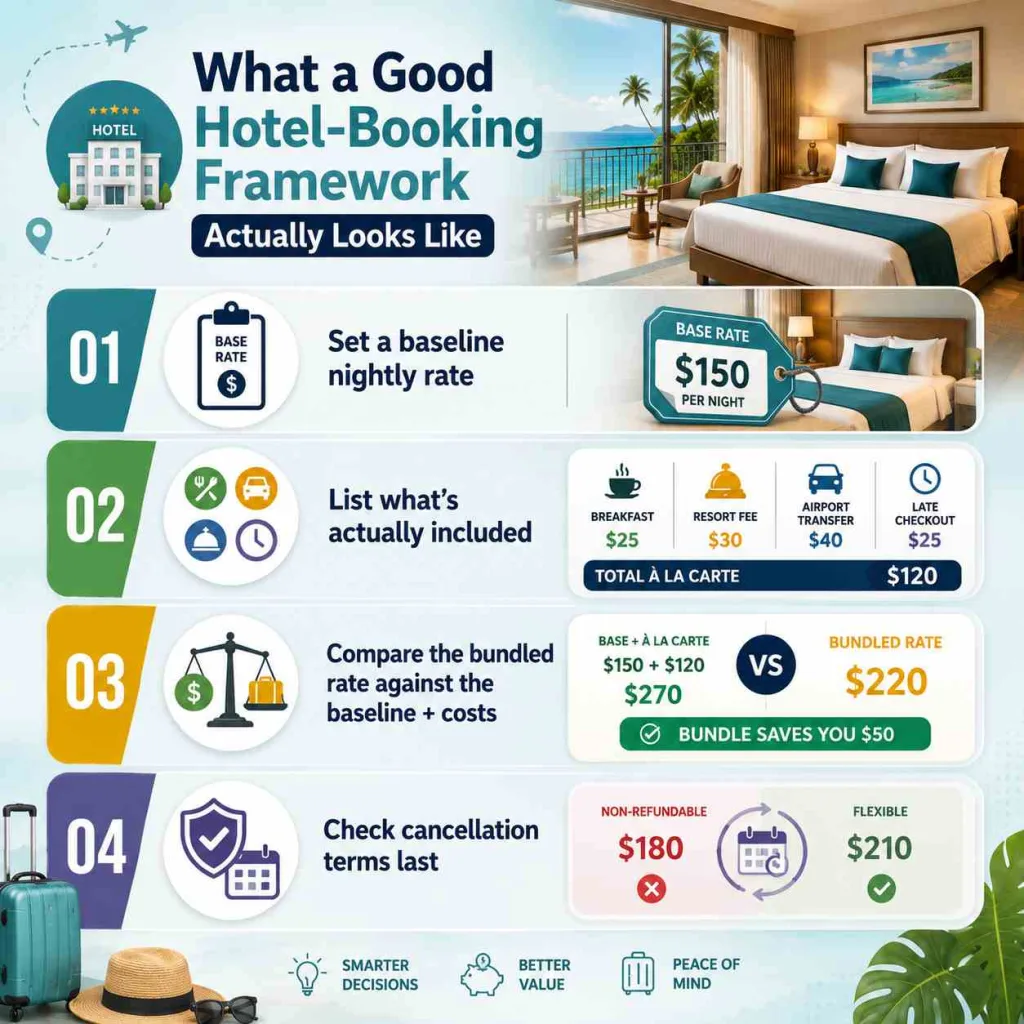
- Set a baseline nightly rate from the room type alone, ignoring amenities for the moment.
- List what’s actually included — breakfast, resort fees, airport transfers, late checkout — and price each one separately if booked à la carte.
- Compare the bundled rate against the baseline plus separate costs. If the bundle costs less than buying the pieces individually, the higher rate is justified.
- Check cancellation terms last. A cheaper non-refundable rate can end up costing more than a flexible one if plans are even slightly uncertain.
That kind of step-by-step logic is what separates a genuinely useful hotel guide from a page that just reorders the same five properties every few months.
How to Verify a Discount Code Before Trusting It
Since airline and hotel discount-code content ages quickly, it’s worth having a quick verification habit rather than assuming any code still works:

- Check the publish or last-updated date on the article — codes older than a few weeks are a coin flip at best.
- Test the code at checkout before paying, not just at the cart stage, since many codes fail silently until the final payment screen.
- Confirm the code’s restrictions — route, cabin class, or booking window — against the airline’s own terms, not just the blog’s summary of them.
- Have a backup plan. If a code fails, compare the “discounted” fare against a plain search with no code applied; sometimes the base fare is already lower elsewhere.
Where to Be More Careful
No general travel hub can go deeper than a resource dedicated to a single region, and that’s true here too:
- Destination depth varies. A city guide covering nightlife and culture won’t necessarily include the granular, neighborhood-level detail a regional specialist site provides.
- Deal and discount-code content ages fast. Always check the publish date before relying on a promo code or fare claim.
- It isn’t a booking engine. Prices, availability, and terms should be verified directly with the airline, hotel, or an official tourism authority before you commit.
A Regional Comparison: General Hubs vs. Destination Specialists
This is really the core trade-off to understand. A broad site like traveltweaks .com is built for breadth — it’s a reasonable first stop when you don’t yet know where you’re going or what you need. But once a destination is chosen, pairing it with a regional specialist closes the depth gap.
For California-specific trips, for instance, a site like CATravelTimes.com goes further into state-level detail than a general hub can — local attraction timing, neighborhood-specific “where to stay” picks, and seasonal advice built around one region instead of the whole world.
Case in Point: Wellness and Hot Springs Travel
Wellness-focused travel — spa holidays, thermal pools, slower itineraries — is a trend that shows up across general travel coverage, including occasional pieces here. But a topic like hot springs travel rewards real specificity: water temperature, access rules, seasonal crowding, and driving directions all vary from spring to spring. That’s the kind of detail better suited to a dedicated regional guide, such as CATravelTimes.com’s California Hot springs coverage, than to a single paragraph on a general-interest site.
How to Judge Any Travel Blog’s Content Quality
This applies beyond one site, but it’s especially relevant when comparing general travel hubs like traveltweaks .com against each other. A few quick signals separate genuinely useful content from filler:
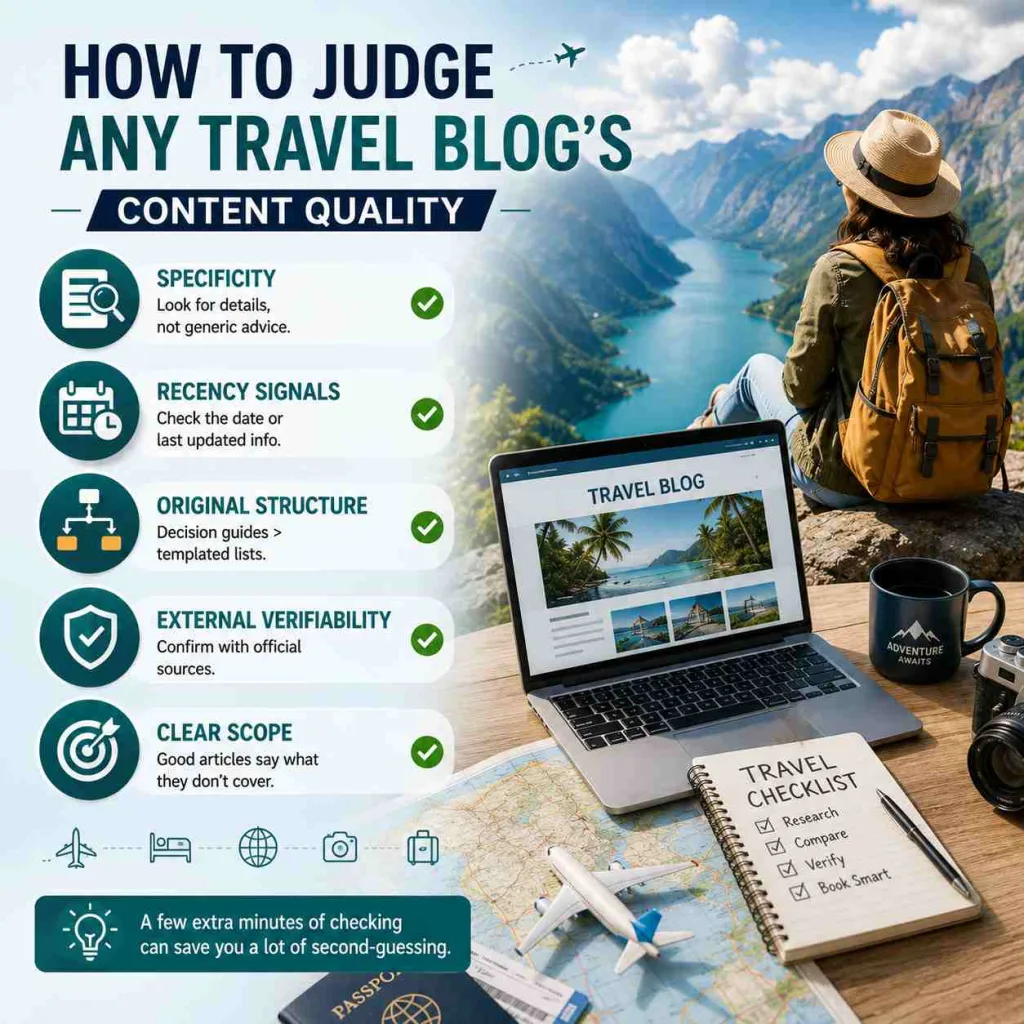
- Specificity over generic advice. “Book early for better prices” is filler; “fares on this route typically rise 3–4 weeks before departure” is specific and checkable.
- Recency signals. A dated byline or a visible “last updated” note matters more for hotel, airline, and deal content than for general destination overviews.
- Original structure, not templated lists. Articles that walk through a decision process (like the booking framework above) tend to hold up better over time than static top-10 rankings.
- External verifiability. Claims about fares, park access, or entry requirements should be checkable against an official source — an airline, a tourism board, or a government site — not just taken on faith.
- Clear scope. A good article is upfront about what it doesn’t cover, rather than implying it’s the only resource a reader needs.
Running any travel article — including the ones covered here — through this checklist takes a few extra minutes and saves a lot of second-guessing later.
Who Should Actually Use TravelTweaks .com?
- First-time trip planners who want a broad overview before narrowing their search
- Travelers comparing travel styles (all-inclusive vs. independent, resort vs. boutique) rather than a specific itinerary
- Readers researching flight or hotel booking mechanics — how fare rules work, how discount codes apply — rather than a specific route or property
- Less ideal for: travelers who already know their destination and need hyper-local, currently-accurate detail
How to Use the Site Without Getting Burned by Stale Information
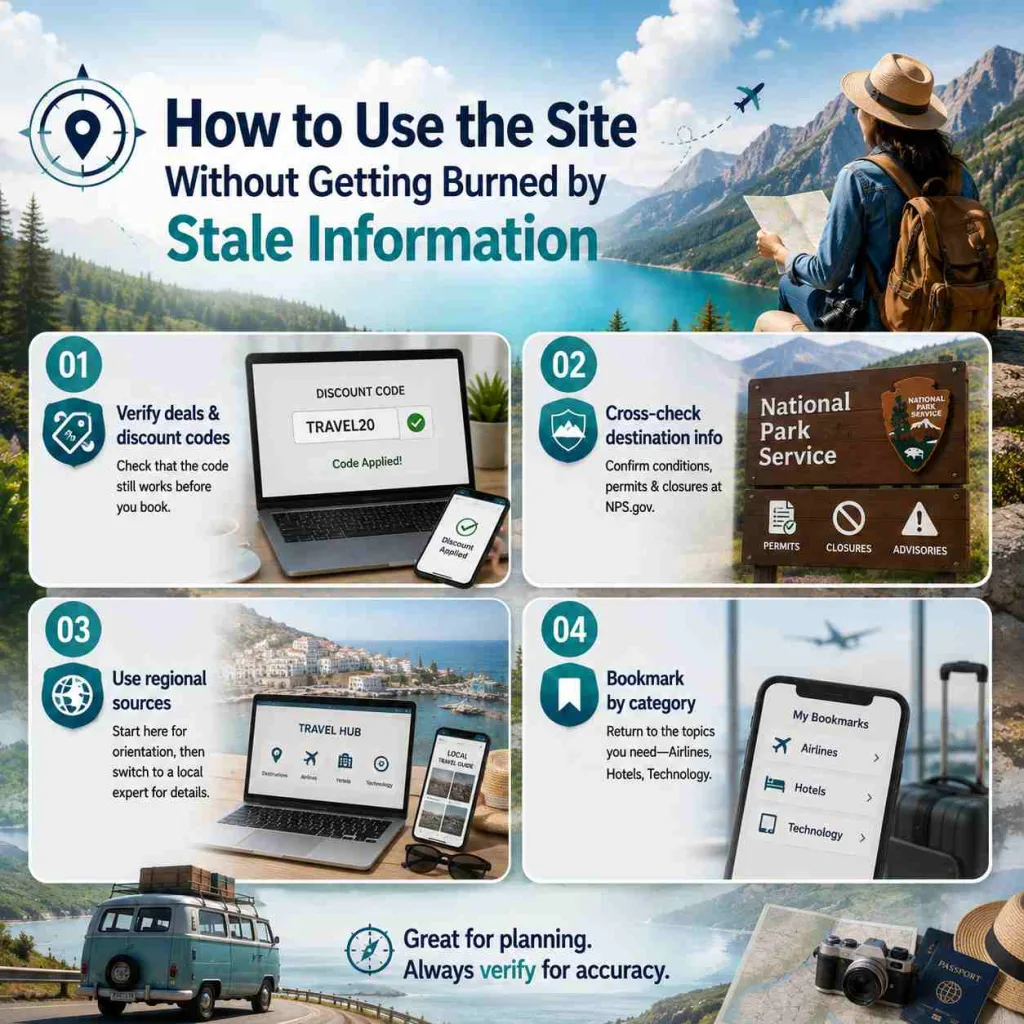
- Treat every deal or discount-code post as time-limited. Verify the code still works before assuming it will apply.
- Cross-check anything destination-specific. For outdoor and national-park content in particular, confirm current conditions with the National Park Service (NPS.gov), which tracks permits, closures, and safety advisories in real time — something no blog updates as reliably.
- Layer in a regional source once your destination is set. Use a general hub for early orientation, then switch to a destination specialist for the details that actually affect your itinerary.
- Bookmark by category, not by article. Because the site is organized around topics (Airlines, Hotels, Technology), it’s more useful as a reference you return to than a single guide you read once.
Final Thoughts
Traveltweaks .com works best as what it actually is: a broad, categorized starting point rather than a destination authority. Its strongest content is the logistics-focused material airline fare mechanics, hotel booking frameworks, trip-planning technology where general advice genuinely applies across destinations. Where it’s thinner is exactly where you’d expect a general hub to be thinner: hyper-local, time-sensitive, or region-specific detail. Used that way as step one of a two-step research process, with a regional specialist as step two it earns a reasonable place in a traveler’s toolkit.
Frequently Asked Questions
What kind of content does TravelTweaks .com publish?
Destination guides, airline and flight-booking explainers, hotel and resort comparisons, travel technology coverage, and adventure or sports-related travel content, organized into distinct categories.
Can I book flights or hotels directly through TravelTweaks .com?
No — the site publishes advice and comparison content rather than functioning as a booking engine. Actual reservations and fare verification should go through the airline, hotel, or a licensed travel agent.
Is TravelTweaks .com a good primary source for a specific destination?
It’s a reasonable starting point for orientation, but for granular, region-specific detail — timing, local logistics, hyper-local recommendations — a destination-specialist site will typically go deeper.
How current is the deal and discount-code content?
Publishing cadence looks frequent, but promo codes and fare-related posts have a short shelf life by nature. Always confirm a code or price against the airline or merchant before relying on it.