Best Outdoor Adventure Camp in Orange County: 5 That Teach Wilderness Survival Skills
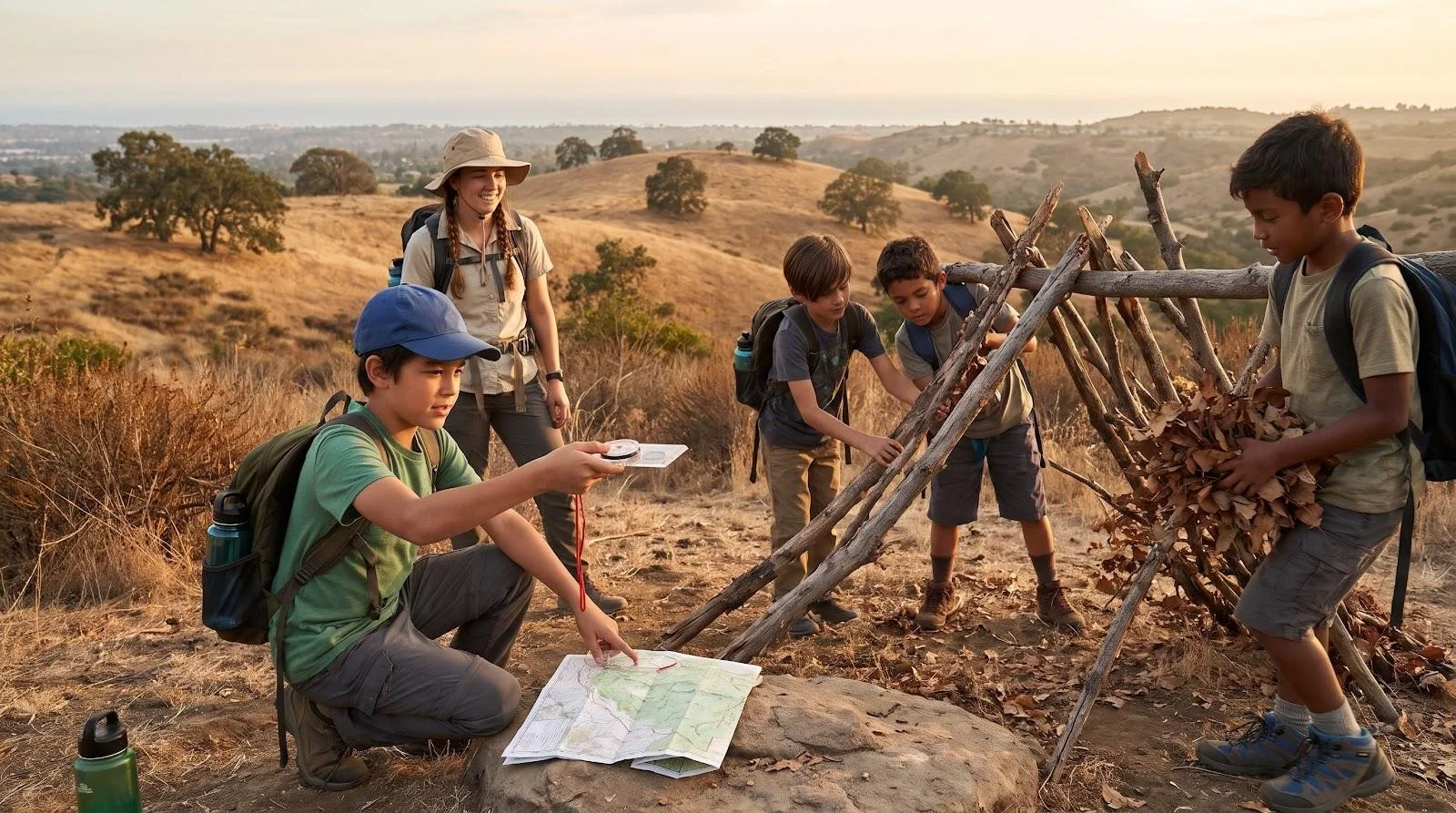
Camp ads shout “adventure,” yet the real payoff comes when a child can read a map, choose a safe campsite, and build a simple shelter before dusk. Orange County families have more options for that kind of learning than most realize, from a city nature park a short drive from home to mountain camps a couple of hours away. The five programs below each list wilderness skills on their own websites or in their official family materials, and they range from a single-day sampler to a full week of sleepaway camp. Each review notes what the camp teaches, who it serves, and which details are worth confirming before registration. Start with the comparison table, then read the reviews for the programs that fit your child’s age and comfort level.
How These Camps Were Chosen
Every program on this list had to teach at least one core wilderness skill, such as navigation, shelter building, or outdoor first aid, and say so on its own website or in its official family materials. Programs that only promised general outdoor fun did not make the cut.
Safety information also mattered. Accreditation from the American Camp Association is a strong signal because it involves an outside review; Pathfinder Ranch’s family packet describes that review as covering up to 300 standards, from staff qualifications and training to emergency management. Published background checks, first aid training, and staff ratios also counted.
Finally, the list mixes formats on purpose. Some families want a week away, while others want their child home for dinner. Where a detail was missing or out of date online, the review says so. That does not mean a camp is unsafe, only that it is a good question to ask the director.
Quick Comparison at a Glance
A single grid cannot tell every campfire story, yet it puts the must-know facts first: where each camp meets, the ages it serves, the wilderness skills it lists, and its main safety signal. Scan the table, pick two or three options for your child, then read on for detail.
| Program | Location | Format and ages | Skills it lists | Safety signal |
| Pali Adventures | Running Springs (San Bernardino Mtns.) | Overnight, ages 6-16 (Outdoor Survival 8-16) | Map and compass, shelters, water filtration | ACA and WAIC accredited; LiveScan and DOJ screening |
| Pathfinder Ranch | Mountain Center (Garner Valley) | Overnight ages 7-14; day camp ages 7-12 | Shelter and fire building (day camp); compass course (school programs) | ACA accredited; DOJ and FBI checks; 1 staff per 5 campers |
| WilderSkills Jr. Trail Guides | Huntington Beach (confirm dates) | Day, ages 7-13 | Primitive shelters, back-country navigation, wilderness first aid | Head instructor trains search and rescue teams |
| Oak Canyon Nature Center | Anaheim Hills | Day; Wilderness Survival Camp (check ages) | Listed by the city as a survival camp | City of Anaheim program |
| Earthroots Field School | Silverado Canyon | One-day Pirate Quest, ages 7-12 | Mapping, sun clock, simple shelter | Participant waiver required |
1. Pali Adventures: Best Overall for Choice, Safety, and Overnight Skill Building
Running Springs sits high in the San Bernardino Mountains, about 90 minutes east of Los Angeles. It is outside Orange County, but the trip is simple: families can book a charter bus from South Coast Plaza in Costa Mesa.

Choice shapes the week. Campers pick from 27 specialties grouped into Adventure, Creative, and Performance categories, and the Adventure group alone includes Flying Trapeze, Hollywood Stunts, Motorsports, and Outdoor Survival Skills. Age groups follow development: Minis 6 to 8, Juniors 8 to 12, and Seniors 13 to 16, with Seniors getting more freedom to design their own schedule. Outdoor Survival Skills is open to ages 8 to 16, so siblings can share the trip yet follow their own interests.
The survival specialty covers shelter building, map and compass navigation, water filtration, campsite selection, and Leave No Trace habits. Each week builds toward an optional overnight campout, where campers set up camp, prepare dinner, and explore after sunset, putting the week’s lessons to work in one memorable night.
Safety is spelled out clearly. Pali is accredited by the American Camp Association and the Western Association of Independent Camps, every staff member passes LiveScan and U.S. Department of Justice background screening, and staff are certified in first aid, CPR, and AED. Meals, lodging, activities, and specialties are all included in the fee. The full list of Adventure specialties sits on the Pali Adventures adventure summer camp page.
Choose Pali if your child wants genuine survival practice, feels ready for a week away, and enjoys shaping a personal schedule instead of following one script.
2. Pathfinder Ranch: Best Traditional Cabin Camp With a Survival Day Track
Pathfinder Ranch sits in Garner Valley against the San Jacinto Mountains, in Mountain Center, at about 4,600 feet. The camp’s family packet puts it about two hours from Los Angeles and about an hour from Temecula, a manageable drive for south Orange County families. Summer evenings can drop into the 50s, so pack warm layers.
The overnight camp serves ages 7 to 14, with sessions of three or four nights. Cabins hold around 12 campers with three counselors, and each cabin helps plan its own week from activities such as rock climbing, canoeing, archery, swimming, horseback riding, team challenge, and arts and crafts. Evenings bring campfires and stargazing.
The survival skills sit in two other programs. The separate day camp for ages 7 to 12 includes an outdoor skills day with archery, shelter building, and fire building and safety. The school-year outdoor education program runs orienteering, with basic map reading and compass use on a compass course. If shelter and compass work are the goal, ask which sessions include them before you book.
Safety details are published. Pathfinder is accredited by the American Camp Association, every program staff member is at least 18 and holds CPR and First Aid certification, and a state (DOJ) and federal (FBI) criminal history check is completed before staff work with campers. The camp reports an overall ratio of one staff member for every five campers, and trained health staff are on call 24 hours a day. Phones are not allowed, which keeps attention on the outdoors.
Choose Pathfinder if your child loves a classic cabin camp and you value clearly published safety practices.
3. WilderSkills Jr. Trail Guides: Best Skill-Focused Day Camp
Want real survival skills without a sleepaway leap? WilderSkills runs Jr. Trail Guides, a roving day camp for ages 7 to 13, with campers split into age groups of roughly 7 to 9 and 10 to 13. Its Orange County site is Central Park East in Huntington Beach.
The skill list is long: improvised primitive emergency shelters, back-country navigation, wilderness first aid and survival techniques, plant identification, animal tracking, outdoor cooking, and knife and tool safety. Each week is different, so campers can attend more than once and still learn something new while repeating core skills like first aid.
Head instructor Dan Baird is a member and trainer of law enforcement search and rescue teams across California. The website does not show third-party accreditation, so ask about staff screening when you register.
One caution: the 2026 WilderSkills calendar listed only Bay Area weeks, and its Huntington Beach line still refers to a 2025 registration date. Huntington Beach registration runs through the city, so check the City of Huntington Beach recreation listings for the coming summer. Huntington Beach days run 9 a.m. to 3 p.m., and there is no extended care.
Choose Jr. Trail Guides for a hands-on local day camp, once you confirm an Orange County week.
4. Oak Canyon Nature Center: Best Close-to-Home Wilderness Setting
Oak Canyon Nature Center is a 58-acre natural park in the Anaheim Hills, run by the City of Anaheim. A year-round stream runs through three adjoining canyons, and four miles of trails cross one of the few remaining areas of oak woodland and coastal sage scrub in the region. The John J. Collier Interpretive Center on site has live animals and regional natural history exhibits.
The city lists a Wilderness Survival Camp on the nature center’s page, alongside its OAKS Day Camp. For families who want survival skills without a long drive, the setting is hard to beat: real canyon terrain, native wildlife, and trails inside Orange County.
The main city page does not list the camp’s ages, dates, or daily skills, so open the Wilderness Survival Camp page or call the center at 714-998-8380 before planning around it. Ask what the camp teaches, whether navigation is part of it, and how staff are screened and trained.
Choose Oak Canyon when your child wants a wilderness feel close to home and you are happy to confirm the details directly with the city.
5. Earthroots Field School: Best Introductory Wayfinding Experience
Earthroots is a nonprofit field school whose home base is Big Oak Canyon, a 39-acre property in Silverado Canyon. Its programs meet across Orange County, from San Clemente to Huntington Beach and east into the Santa Ana Mountains, and its seasonal projects include survival skills, animal tracking, and building with natural materials.
Pirate Quest is the best fit for this list. It is a one-day program for ages 7 to 12, running 10 a.m. to 2 p.m., built around a land-based treasure hunt. Campers learn mapping, use a sun clock, and build a simple shelter, a “pirate hideout.” It works well as a low-commitment test run before a longer camp.
The packing list is short: a reusable water bottle, snacks and lunch, a backpack, sunscreen, and a sun hat. A participant waiver is required. The website does not mention ACA accreditation, so ask about staff training if that matters to your family. Summer programs ran as single days in 2026, so watch the summer camps page for next year’s dates.
Choose Pirate Quest when your child loves puzzles and quests and you want a gentle start to real navigation.
How to Choose the Right Camp and What to Pack
Begin with format. Day programs such as WilderSkills, Oak Canyon, and Earthroots suit children who sleep better at home, while overnight camps like Pali and Pathfinder reward campers eager for independence. Pathfinder’s packet suggests practicing separations first, such as a sleepover at a friend’s house.
Next, read each camp’s website for the exact words map, compass, navigation, or shelter. If a skill is missing, email the director before you register.
Safety matters too. Look for American Camp Association accreditation, background checks, current CPR and First Aid certification, and a stated staff ratio. Compare what the fee covers, such as meals, transportation, and activities, before you measure value.
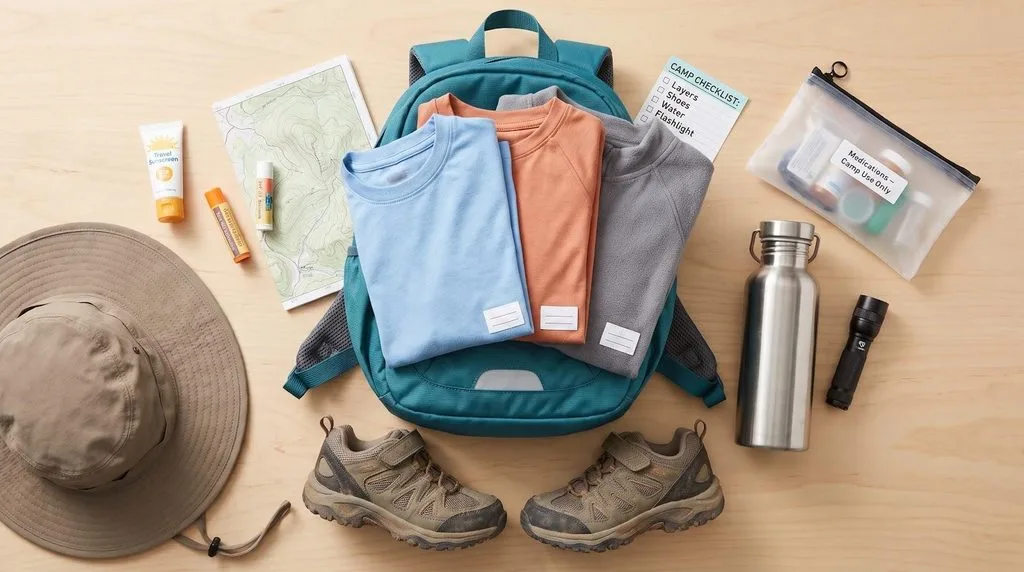
A simple packing list covers most programs:
- Labeled layers, closed-toe shoes, and a brimmed sun hat
- A refillable water bottle and a daypack
- Sunscreen and lip balm with SPF
- A flashlight for overnights, with medications in their original containers
- No knives, lighters, or phones unless the program allows them
Test the kit on a family hike before camp. A desert weekend works well, and these things to do in Joshua Tree include easy trails for practice. If a bottle leaks or shoes rub, you can fix the problem long before drop-off.
Frequently Asked Questions
Do all five camps teach both navigation and shelter skills?
No. Pali’s Outdoor Survival specialty lists both on one page. Pathfinder teaches shelter building in its day camp and compass use in its school-year program. WilderSkills lists primitive shelters and back-country navigation, and Earthroots’ Pirate Quest covers mapping, a sun clock, and a simple shelter. Oak Canyon’s city page names a Wilderness Survival Camp but does not list its skills, so ask the center.
What age is best for an outdoor adventure camp?
Readiness matters more than birthdays. Day formats suit younger or first-time campers who sleep better at home. Earthroots’ Pirate Quest and WilderSkills start at age 7, Pathfinder’s overnight camp serves ages 7 to 14, and Pali’s Outdoor Survival specialty runs from age 8 to 16.
Which safety questions should parents ask before enrolling?
Start with accreditation, then ask about background checks, staff CPR and First Aid certification, staff-to-camper ratios, who handles medication, and how the camp contacts parents in an emergency. Clear, specific answers signal a well-run program.
Final Thoughts
Outdoor adventure is not about snapshot glory; it is about skills that last. Whether your child builds a pirate hideout at Earthroots, learns trail skills in Huntington Beach, or spends a week of survival practice in the mountains at Pali, the right program pairs real skills with clear safety practices. Pick the format that fits your child’s readiness, confirm the coming season’s details in writing, and enjoy watching their confidence grow far beyond the trailhead.