Blood Orange Beet Salad Recipe: A Bright, Simple California Lunch
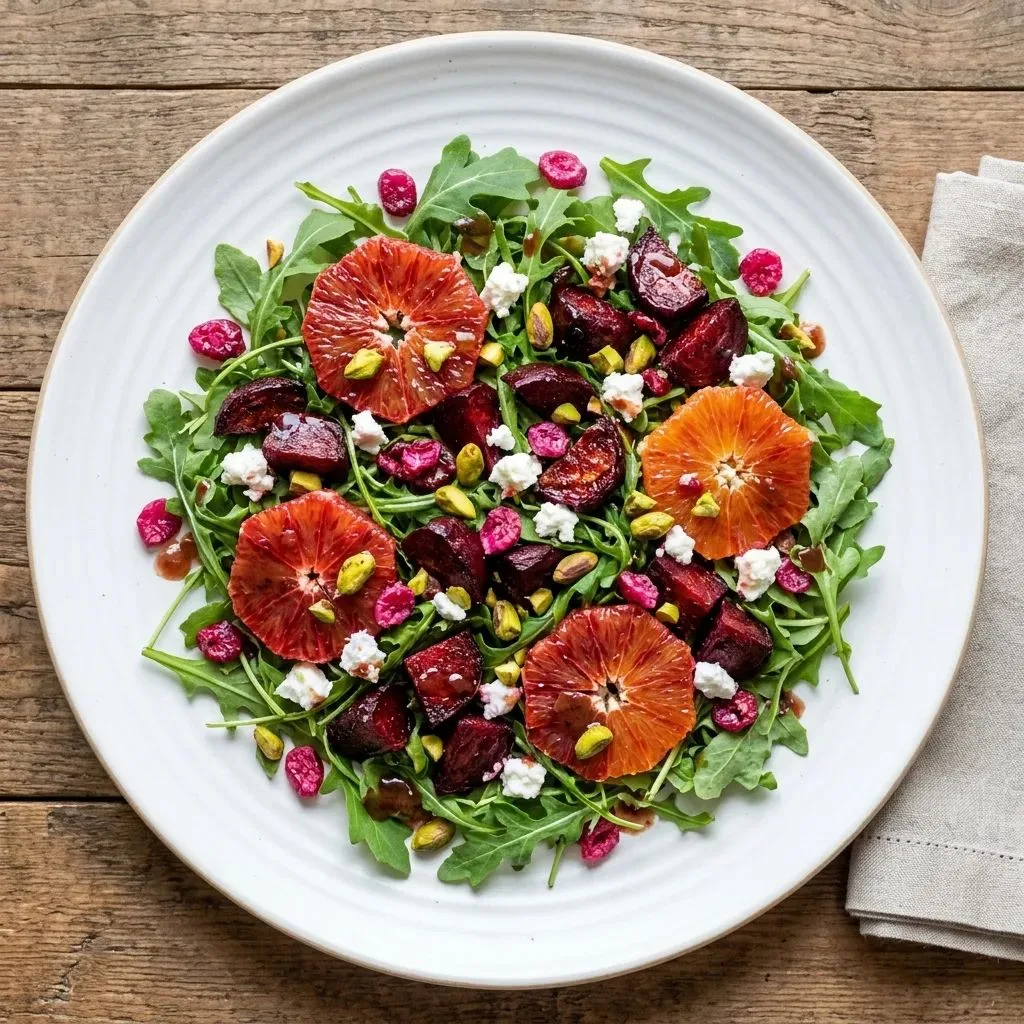
I made this Blood Orange Beet Salad Recipe on a grey winter afternoon, and it instantly lifted my mood. The ruby beets and deep red orange slices look stunning together on one plate. The sweet-tart pomegranate dressing ties every bite together.
It reminded me of the winter farmers markets I used to wander through in California, with crates of citrus stacked high. I now make it whenever I want something light that still feels special.
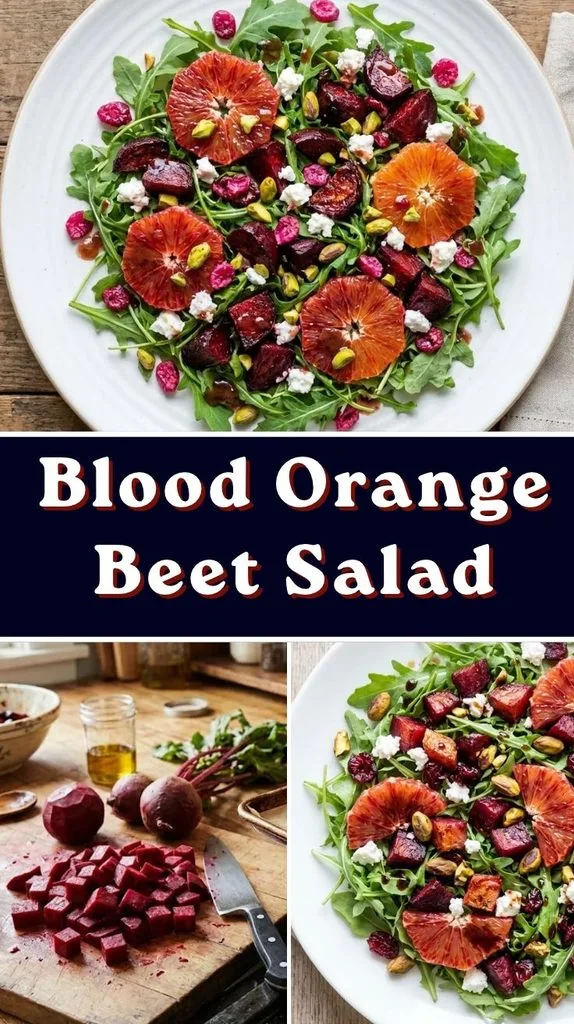
Blood Orange Beet Salad Cooking Time
This salad is quick if you use cooked beets and a little longer if you roast your own. I give both options below so you can plan around your day.
- Prep Time: 10 minutes
- Cooking Time: 45 to 60 minutes (only if you roast the beets yourself)
- Total Time: 10 minutes with pre-cooked beets, or about 1 hour 10 minutes with roasted beets
Ingredients for Blood Orange Beet Salad
Every ingredient here has a job, from sweetness to crunch. Pick the best produce you can find, since there is no cooking to hide anything.
- 1 large beet (beetroot), roasted or pre-cooked: gives the salad its earthy sweetness and deep color.
- 1 blood orange: adds juicy, berry-like citrus brightness.
- 2 handfuls arugula (rocket): brings a peppery bite, and mixed greens work too.
- 2 tablespoons dried cranberries: add chewy sweetness and a pop of red.
- 2 tablespoons pistachios: give crunch, so chop them roughly for better texture.
- 1 oz soft goat cheese: adds creamy tang, so crumble it just before serving.
- 3 tablespoons pomegranate molasses: makes the dressing syrupy and sweet-tart, and you can use a little less to taste.
- 1 tablespoon balsamic vinegar: balances the sweetness with gentle acidity.
- 1 and a half tablespoons virgin olive oil: smooths out the dressing and carries the flavor.
Note: serves 2
Equipment You Need
You do not need anything fancy for this recipe. A few basic kitchen tools will do the job.
- Baking sheet: hold the diced beets while they roast.
- Sharp knife: cuts clean orange rings and even beet cubes.
- Cutting board: gives you a stable surface for peeling and slicing.
- Small bowl or jar: for whisking or shaking the dressing.
- Whisk or fork: blend the oil, vinegar, and molasses.
- Two serving plates: let you build each salad neatly.
How to Make Blood Orange Beet Salad Recipe?
This recipe is mostly assembly, which is why I love it. The only real wait is roasting the beets, and you can skip that with store-bought cooked ones. Follow these steps and you will have a gorgeous plate in minutes.
Roast the Beets
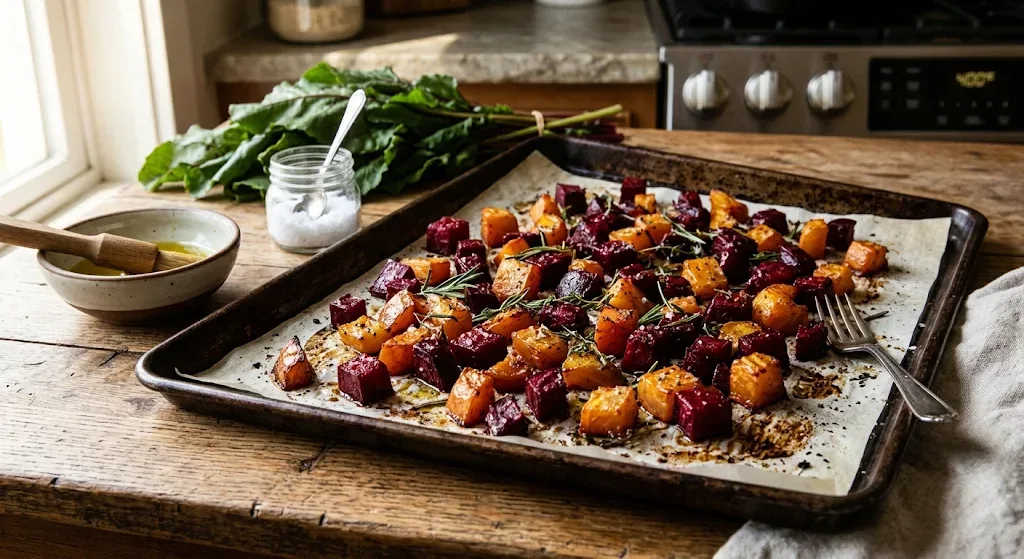
Peel the beet and dice it into pieces about three-quarters of an inch (2 cm) wide. Toss them with a little olive oil and roast at 400°F (200°C) for 45 to 60 minutes. Roasting gives the edges a lightly caramelized flavor that boiled beets never have.
Cool the Beets Completely
Let the roasted beet pieces cool before you build the salad. Warm beets would wilt the arugula and melt the goat cheese. I often roast them a day or two ahead, which makes dinner feel effortless.
Use Pre-Cooked Beets if You Are Short on Time
If you skip roasting, peel and dice the cooked beet instead. Check the label first, because pickled beets will not work here. Plain vacuum-packed beets taste wonderful with the dressing.
Slice the Blood Orange
Cut off the peel and pith so only the juicy flesh remains. Slice the orange into rings, then cut the bigger rings in half. I like smaller pieces because every forkful gets a little citrus.
Build the Salad Base
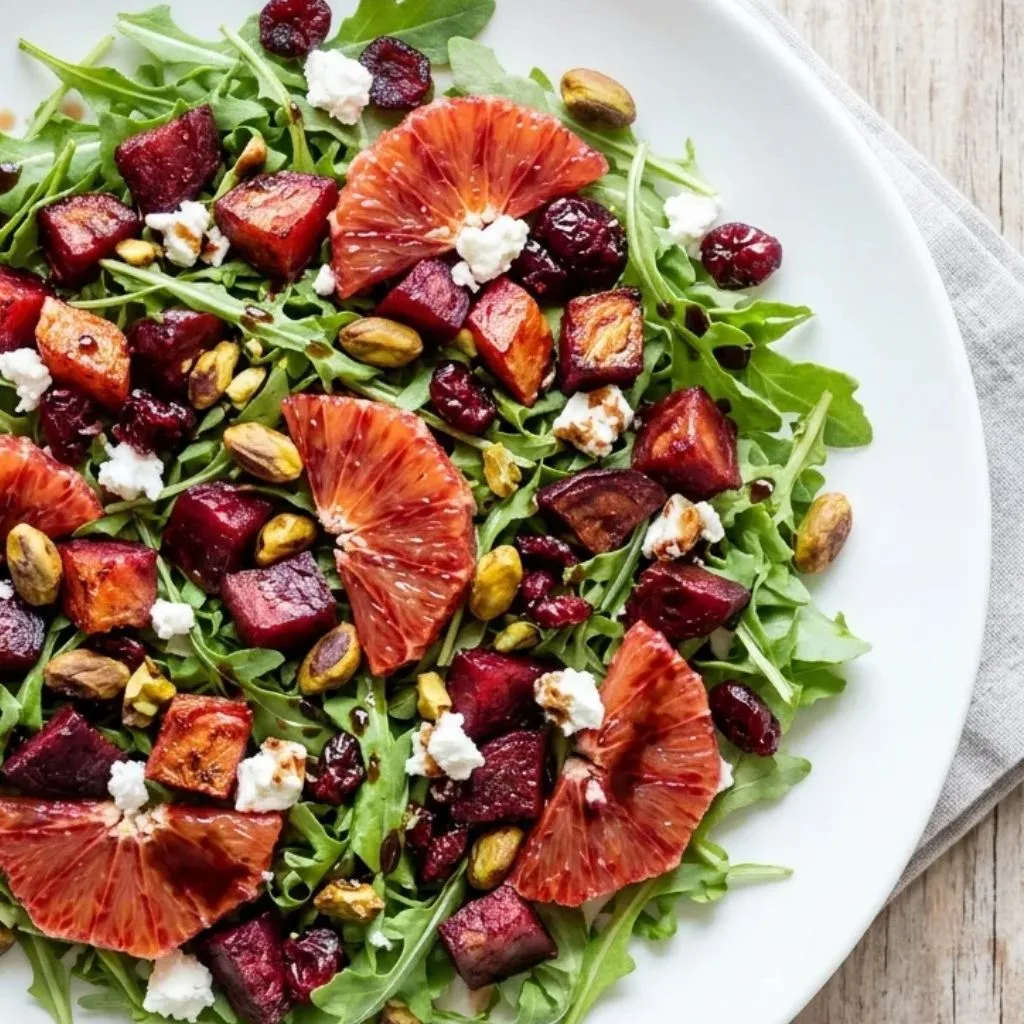
Divide the arugula between two plates as a loose bed. Lay the beet cubes and orange pieces over the top. Scatter on the cranberries, pistachios, and crumbled goat cheese.
Whisk and Drizzle the Dressing
Whisk the pomegranate molasses, balsamic vinegar, and olive oil until smooth. Drizzle it over the salads a little at a time. You may not need all of it, so taste as you go and serve right away.
Additional Tips for Making This Recipe Better
After making this salad many times, I have picked up a few habits that make it better every time. These small tweaks are easy and worth the effort.
- I roast a few extra beets whenever my oven is already on, because they keep a few days in the fridge.
- I dice the beets into small cubes, since smaller pieces roast faster and get those caramelized edges.
- I use a serrated knife on the blood orange, because it grips the slippery peel.
- I taste the dressing before pouring, since pomegranate molasses can be strong.
- I add the dressing at the very last moment, so the arugula stays crisp.
- I toast the pistachios in a dry pan for a couple of minutes when I want deeper flavor.
Common Mistakes to Avoid
A few small slips can dull this salad. I have made most of them myself, so here is how I avoid them now.
- Using pickled beets: I tried it once, and the vinegar clashed with the dressing, so I stick to plain cooked beets.
- Adding warm beets: they wilted my arugula, so I always let them cool completely first.
- Over-dressing the salad: too much molasses makes it heavy, so I drizzle lightly and add more only if needed.
- Leaving the white pith on the orange: it tastes bitter, so I cut it away carefully.
- Dressing too early: the salad turns soggy fast, so I wait until right before serving.
How to Serve Blood Orange Beet Salad?
This salad looks like a painting on the plate, so a little care with presentation goes a long way. It works as a starter or as a light lunch.
- Serve it on white or pale plates so the red and pink colors pop.
- Layer the arugula first, then arrange the orange pieces and beet cubes in alternating groups.
- Crumble the goat cheese over the top in small, uneven pieces.
- Finish with a thin zigzag of dressing instead of pouring it in one spot.
- Add a few extra pistachios and a pinch of flaked sea salt for a polished look.
- Pair it with grilled chicken and crusty bread for a full meal.
- Try a cold glass of sparkling water with citrus, or even a blood orange beer, for a fun winter pairing.
If I am dreaming of a California picnic, I pack this salad in a jar and eat it with sourdough on a sunny bench near the coast.
Variations
You can change this salad in many ways without losing its charm. Here are some swaps I have tried or happily recommend.
- Dairy-free: skip the goat cheese and add extra pistachios or a spoonful of mashed avocado.
- Sugar-free: use fewer dried cranberries and thin the pomegranate molasses with fresh orange juice.
- Citrus dressing: if you cannot find pomegranate molasses, whisk an orange-based dressing instead.
- Feta version: swap the goat cheese for feta if you love a saltier bite.
- Walnut crunch: use toasted walnuts in place of pistachios for a deeper, nuttier taste.
- Balsamic-forward: add a little more balsamic for a tangier finish.
- Ottolenghi-style: finish with fresh mint or parsley for a lively herby lift.
- Roast the beets with a little extra olive oil and black pepper for a richer flavor.
Nutritional Information
Here is a quick look at what you get in one serving. These numbers are approximate and will shift with your exact ingredients.
- Calories: 331 kcal
- Protein: 5 g
- Carbohydrates: 41 g
- Fat: 17 g
Make Ahead and Storage
This salad is best fresh, but you can prepare the parts in advance. Keeping the pieces separate is the secret to a crisp, bright plate.
Make Ahead
Roast and dice the beets a day or two before you need them. Whisk the dressing in a small jar and keep it covered. When you are ready, slice the orange and assemble everything in minutes.
Storage
Store the cooked beets in an airtight container in the fridge for a few days. Keep the dressing, greens, and toppings in separate containers. Assembled salad is best eaten the same day, since the greens soften.
Freezing
I do not recommend freezing the finished salad. The arugula, orange, and goat cheese all lose their texture once thawed. You can freeze plain roasted beet cubes if you want, but fresh ones taste better.
Reheating
This is a cold salad, so it does not need reheating. If you want a warm version, gently warm only the roasted beets and let them cool slightly before adding them. Add the dressing last.
Why You’ll Love This Recipe?
This salad is the kind of dish that makes people ask for the recipe. Here is why it has become a favorite in my kitchen.
- It is quick and easy. With pre-cooked beets, the whole salad comes together in about 10 minutes, and even the roasted version needs very little hands-on work.
- It is full of color. The ruby beets, pink orange slices, and green arugula make it a showstopper for guests, and it photographs beautifully.
- It balances flavors well. Sweet beets, tangy citrus, creamy cheese, and crunchy nuts all meet in every bite, with a peppery kick from the greens.
- It is easy to customize. You can swap the cheese, nuts, or dressing to fit your pantry and dietary needs without any stress.
- It celebrates the season. Winter citrus is at its best, and it brings a fresh, light feeling to cold-weather menus, much like the citrus stands you find across California.
FAQs
Can I use regular oranges instead of blood oranges?
Yes, navel oranges or cara cara oranges work well. You will lose the deep red color, but the flavor will still be sweet and juicy.
Can I use canned beets?
Plain canned or vacuum-packed cooked beets are fine. Avoid pickled beets, because the vinegar flavor does not suit this dressing.
What if I cannot find pomegranate molasses?
Make a citrus dressing with orange juice, olive oil, and a little vinegar instead. It is lighter, but still tastes lovely with the beets.
Can I make this salad ahead for a party?
You can prep the beets and dressing ahead and assemble just before serving. This keeps the greens crisp and the colors clean.
What can I serve with this salad?
It pairs nicely with grilled chicken, crusty bread, or a creamy soup. It also works as a light starter before a heavier main dish.