Sweet Pineapple Tamales Recipe (Tamales de Piña): Soft and Fluffy
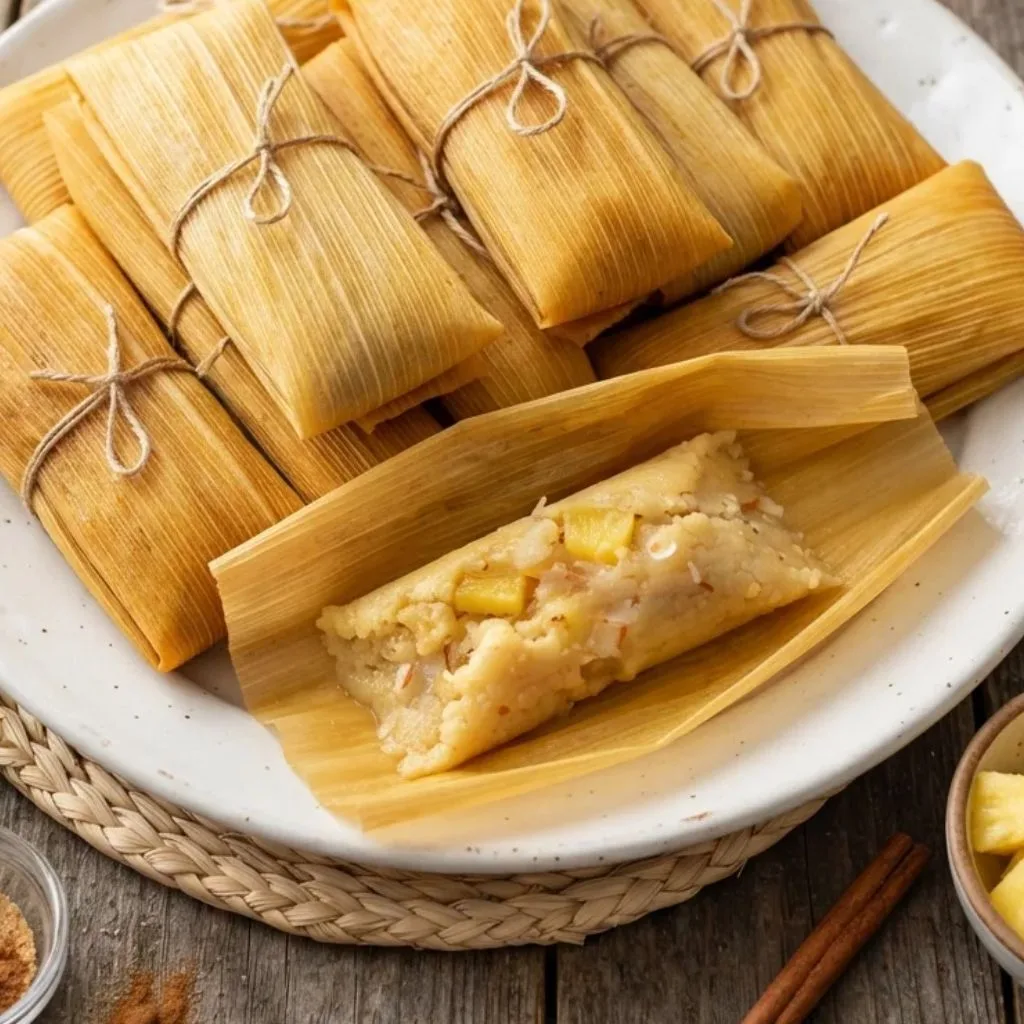
I made this Sweet Pineapple Tamales Recipe on a slow weekend, and my kitchen smelled like a tropical bakery for hours. The masa turned out soft, fluffy, and gently sweet, with juicy bursts of pineapple in every bite. I added coconut milk to the dough, and I will never skip it again.
Tamales take patience, but I honestly enjoyed every step of the process. If you love a dessert that also works for breakfast, this sweet tamales recipe is for you.

Cooking Time
Most of the time here is hands-off, so you can plan a relaxed afternoon in the kitchen.
- Prep Time: 1 hour
- Cooking Time: 1 hour 30 minutes
- Total Time: 2 hours 30 minutes
Ingredients
Everything on this list is simple, and most items are easy to find in a regular grocery store.
- 40 dry corn husks: Wrap and hold the tamales together, so soak them until fully soft.
- 4 cups fresh or thawed frozen pineapple, cubed: Brings the juicy, tangy flavor, and canned pineapple must be drained well.
- 1 cup white sugar: Sweetens the pineapple as it simmers on the stove.
- 1/4 teaspoon ground cinnamon: Adds a warm note that suits the fruit perfectly.
- 1/3 cup water: Helps the pineapple simmer without scorching.
- 14 oz canned coconut milk: Adds creaminess and a light coconut flavor to the dough.
- About 3 cups water: Tops up the coconut milk to make 4 cups of liquid for the masa.
- 1 1/2 cups butter, softened: Keeps the masa tender, so use soft butter and never melted.
- 1 cup brown sugar: Adds a deeper, caramel-like sweetness.
- 6 cups Maseca instant corn masa mix: Forms the corn base of the dough and gives that classic flavor.
- 5 teaspoons baking powder: Lifts the dough so it turns light and fluffy.
- 1 teaspoon kosher salt: Balances the sweetness and brings out the fruit.
- Dulce de leche and diced pineapple (optional): Make a creamy, pretty topping for serving.
Note: serves several
Equipment You Need
These tools make the job smoother, and you likely own most of them already.
- Tamale steamer: Holds the tamales upright over simmering water.
- Large saucepan: Cooks the pineapple with sugar and cinnamon.
- Food processor: Pulses the pineapple into a chunky puree.
- Stand mixer: Beats the masa until it turns light and airy.
- Half-cup ice cream scoop: Portions the masa evenly onto each husk.
- Tongs: Lift out a tamale safely to check if it is done.
- Copper penny: Rattles to tell you when the steamer needs more water.
How to Make Sweet Pineapple Tamales Recipe?
This recipe has a few steps, but each one is easy on its own. I suggest reading through everything once before you begin. Once the husks are soaking, the rest flows along smoothly.
Soak the Corn Husks
Place the dry husks in a large container and cover them with hot water. Set something heavy on top so they stay submerged. Let them soak for 1 hour, then drain and squeeze them dry.
Prepare the Pineapple
If you use fresh pineapple, slice off the top and bottom, then cut away the rind. Cut the fruit in half, remove the core, and rough chop it. Pulse in a food processor until mostly pureed, leaving a few small chunks for texture.
Simmer the Pineapple
Add the pineapple, white sugar, cinnamon, and 1/3 cup water to a large saucepan. Bring it to a boil, stir, then lower the heat and simmer for 10 minutes. Remove it from the heat and let it cool completely.
Mix the Coconut Liquid
Pour the can of coconut milk into a four-cup measuring cup. Fill the rest with water until you reach 4 cups total. Set it aside, since this liquid hydrates the masa later.
Beat the Butter and Brown Sugar
Let the butter soften at room temperature, or microwave it for 15 to 20 seconds. Add it to a stand mixer bowl with the brown sugar. Beat with the paddle attachment for 5 minutes until pale and creamy.
Make the Masa Dough
Add the Maseca, baking powder, salt, coconut mixture, and cooled pineapple mixture to the bowl. Mix on low until the dough comes together. Scrape down the sides, then beat on medium for 10 minutes.
Do the Float Test
Drop a teaspoon of dough into a glass of cold water. If it floats, the masa is light and well mixed. If it sinks, beat it a few more minutes and test again.
Chill or Spread the Masa
You can use the dough right away and spread it on the husks. I prefer chilling it for about 2 hours so it firms up and scoops cleanly. The dough keeps covered in the fridge for 1 to 2 days.
Set Up the Steamer
Fill the bottom of the steamer pot with water and drop in a copper penny. Add the basket and cover it with 5 or 6 spare husks. This protects the tamales from direct contact with the water.
Fill and Fold the Tamales
Place a husk smooth side up with the wide end toward you. Scoop the masa about 2 inches from the wide edge and press it gently with wet fingers. Fold one side over the filling, then the other, and fold the narrow tip up.
Steam the Tamales
Stand the tamales in the steamer with the open end facing up, leaning them against the pot. Cover and bring to a boil over high heat. Lower the heat and steam for 90 minutes to 2 hours.
Check for Doneness
Use tongs to lift out one tamale and open it carefully. The masa should pull away from the husk easily and feel fairly firm. If it is still soft, steam a little longer.
Additional Tips for Making This Recipe Better
These small habits made the biggest difference when I tested this recipe at home.
- I always chill the masa before assembling, because firm dough is far easier to scoop and fold.
- I use the float test every single time, since light masa is what makes these tamales fluffy.
- I let the pineapple mixture cool fully, because hot fruit can melt the butter in the dough.
- I keep the steamer water topped up and listen for the penny, so the pot never runs dry.
Common Mistakes to Avoid
I made a few of these slip-ups myself, so here is how to dodge them.
- Skipping the float test: I did this once, and my tamales came out dense. Always test before you assemble.
- Using wet husks: I learned to squeeze them dry, or the masa slides and the folds fall apart.
- Letting the pot run dry: I now trust the penny, because a scorched pot ruins the whole batch.
- Pulling the tamales too early: I wait for firm masa that releases from the husk, even if it takes the full 2 hours.
- Using syrupy canned pineapple: I stick to fresh or frozen, or well-drained canned fruit in juice, so the dough does not turn gummy.
How to Serve Sweet Pineapple Tamales Recipe?
These tamales are lovely, warm, and a little presentation makes them feel special. Here are my favorite ways to bring them to the table.
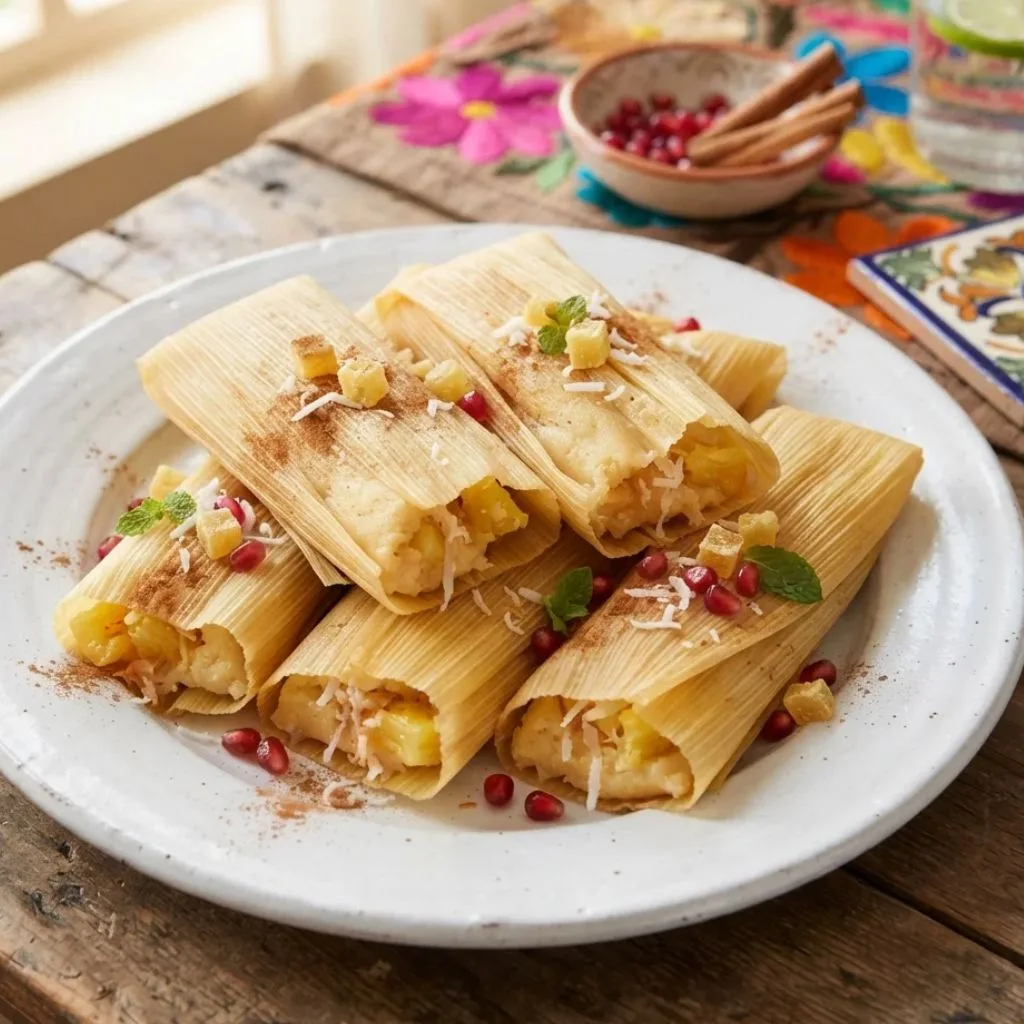
- Serve them in the husk on a wooden board, with the top folded back so the masa shows.
- Drizzle dulce de leche over the top in loose ribbons for a glossy, golden finish.
- Spoon diced pineapple on each tamale for a fresh, colorful garnish.
- Pair them with hot coffee or Mexican hot chocolate for a cozy breakfast.
- If you are in California, treat them like a farmers market breakfast, because the state’s Mexican food traditions make sweet tamales feel right at home.
Variations
This recipe is flexible, so you can adjust it to match your pantry or your diet.
- Pineapple coconut tamales: Stir in shredded unsweetened coconut for extra tropical flavor.
- Pineapple raisin tamales: Fold in a handful of raisins for a classic sweet tamale feel.
- Strawberry and pineapple tamales: Add finely chopped fresh strawberries for a fruity twist.
- Sweet tamales with condensed milk: Replace a little of the sugar with sweetened condensed milk for a richer dough.
- Dairy-free: Swap the butter for dairy-free butter or coconut oil.
Nutritional Information
Here is a rough estimate per tamale, based on a batch of about 30.
- Calories: about 256
- Protein: about 3 g
- Carbohydrates: about 37 g
- Fat: about 11 g
Values are estimates and will change with the brands and ingredients you use.
Make Ahead and Storage
Tamales are perfect for planning ahead, so here is how I handle each stage.
Make Ahead
You can prepare the masa and the pineapple mixture up to 2 days early. Store them separately in airtight containers in the fridge. You can also assemble the tamales a day ahead and steam them just before serving.
Storage
Let the tamales cool completely before storing them. Wrap them tightly or place them in an airtight container. They stay fresh in the fridge for about 5 days.
Freezing
Freeze cooled tamales in labeled, dated freezer bags and squeeze out the extra air. They keep well for up to 3 months.
Reheating
Steam refrigerated tamales over medium heat for 20 to 25 minutes. Frozen ones need about 30 to 40 minutes. If you use the microwave, wrap each tamale in a damp paper towel first.
Why You’ll Love This Recipe?
This recipe checks every box for a cozy, crowd-pleasing treat. Here is why I keep coming back to it.
- Authentic, simple flavor: The recipe uses a handful of traditional ingredients, so you get true Mexican flavor without anything fancy.
- Soft, fluffy texture: Whipping the masa for 10 minutes and doing the float test gives a light, tender tamale.
- Great for any time of day: These tamales work as dessert, a snack, or an indulgent breakfast.
- Easy to customize: You can add coconut, raisins, or strawberries, or go dairy-free.
- Perfect for making ahead: The masa keeps in the fridge, and the finished tamales freeze beautifully.
FAQs
Can I use canned pineapple for this recipe?
Yes, but choose pineapple packed in juice, not syrup. Drain it very well so the dough does not get too wet.
Where can I find pineapple tamales near me?
Check local Mexican bakeries, tamale shops, and farmers markets, especially around the holidays. In California, many neighborhood tamale makers sell sweet flavors in December.
What is the origin of pineapple tamales?
Pineapple tamales are a sweet twist on traditional Mexican tamales. They are made with sweetened masa and pineapple, then steamed in corn husks.
Why is my masa dough sinking in the float test?
It needs more mixing. Beat it for another 2 to 3 minutes, and add a tablespoon of water or coconut milk if it still feels dense.