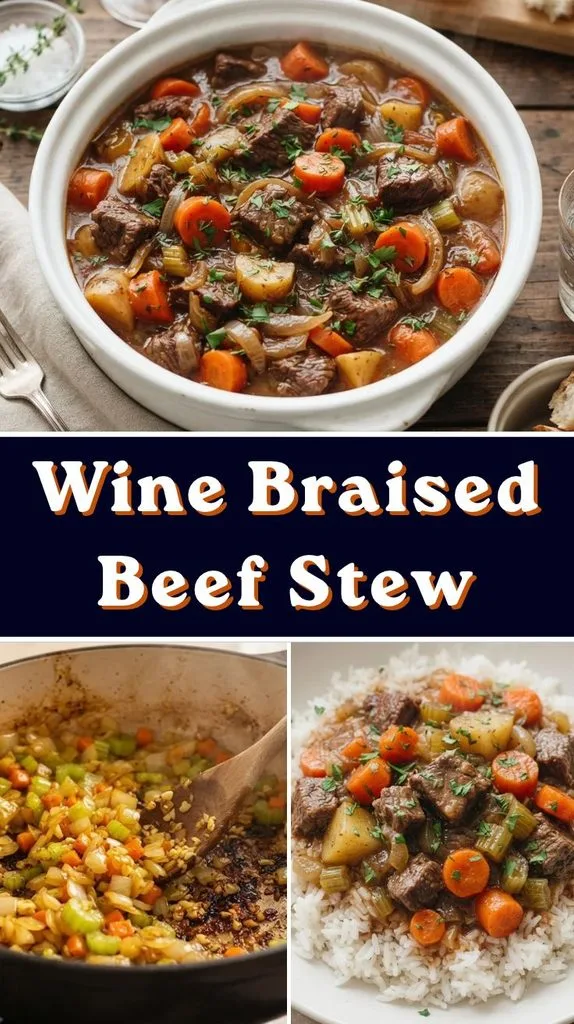
Tender Wine Braised Beef Stew Recipe for Cozy, Comforting Dinners
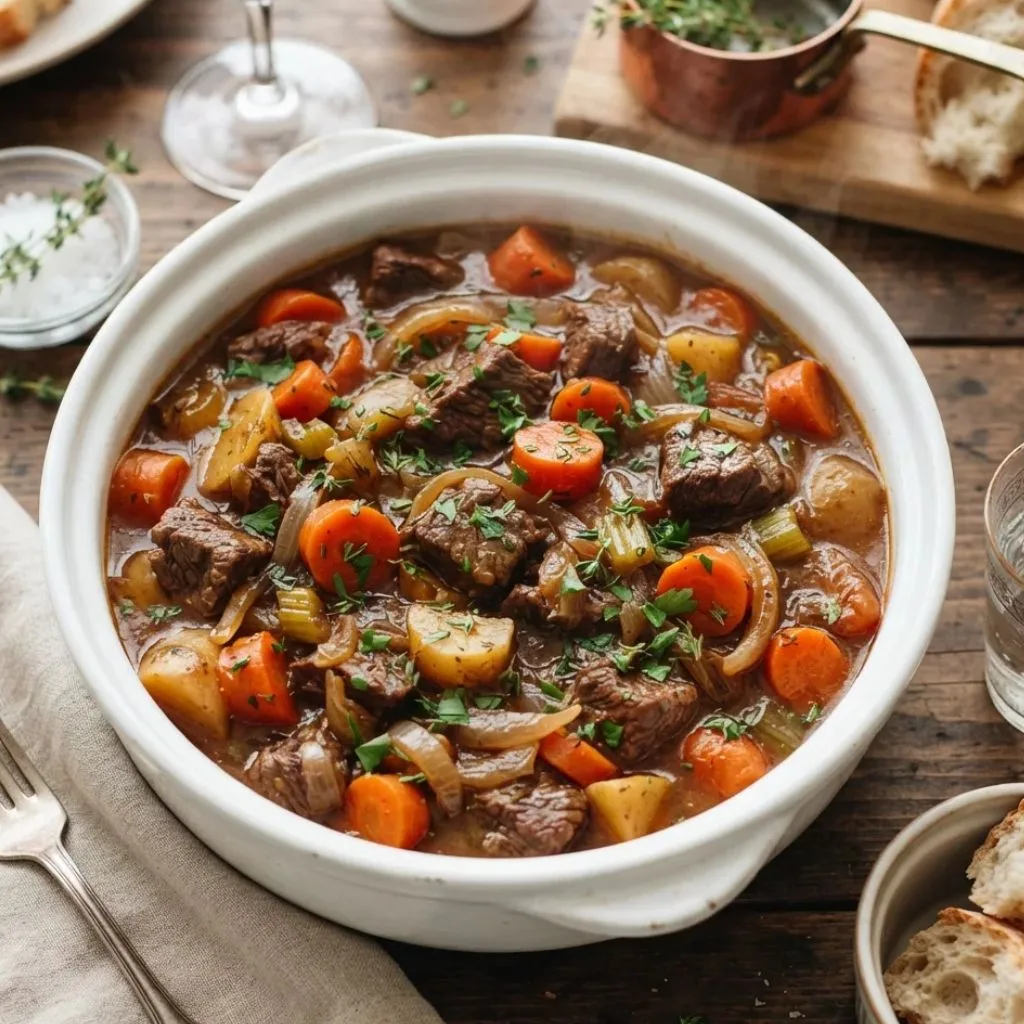
I made this Wine Braised Beef Stew Recipe on a chilly evening, and my kitchen smelled amazing within minutes. The beef turned so soft that it fell apart with a spoon. The sauce was rich, glossy, and full of herbs. It reminded me of foggy San Francisco nights, when all you want is a warm bowl and a slice of crusty sourdough. I now make this easy beef stew with red wine every time the weather cools down.
Cooking Time
This stew needs very little hands-on effort. Most of the time is a slow, gentle simmer.
- Prep Time: 10 minutes
- Cooking Time: 1 hour 30 minutes
- Total Time: 1 hour 40 minutes
Ingredients
Here is everything you need, with a quick note on why each item matters.
- 2 pounds beef stew meat – Chuck gives the most tender, flavorful bites.
- 2 teaspoons coarse salt – Season the beef well before searing.
- 1/4 teaspoon black pepper – Adds gentle warmth to the meat.
- 2 tablespoons olive oil – Use enough to brown the beef without sticking.
- 1 large sweet onion, chopped (about 2 cups) – Cooks down into natural sweetness.
- 4 carrots, sliced (about 3 cups) – Pick firm carrots so they hold their shape.
- 2 stalks celery, sliced – Builds a savory base.
- 1 tablespoon minced garlic – Use fresh garlic, not jarred.
- 1 tablespoon tomato paste – Adds depth and helps lift the browned bits.
- 1 cup beef stock – Choose low-sodium so you control the salt.
- 3/4 cup red wine – Use a dry red you would happily drink, never cooking wine.
- 1/4 teaspoon dried thyme – Gives the stew an earthy background note.
- 1 sprig fresh rosemary – Fresh rosemary smells wonderful and tastes brighter.
- 2 bay leaves – Remove them before serving.
- 2 tablespoons all-purpose flour, or 1 tablespoon cornstarch – Thickens the sauce, and cornstarch keeps it gluten free.
- 1/4 cup water – Mix it with the thickener so the sauce stays smooth.
Note: serves several, about 8 generous bowls.
Equipment You Need
- Large Dutch oven – Holds heat evenly for browning and slow simmering.
- Sharp knife – Makes cutting the vegetables quick and safe.
- Cutting board – Gives you a stable surface for prep.
- Wooden spoon – Scrapes up the flavorful browned bits.
- Small bowl and whisk – Helps you make a lump-free thickener.
- Plate – Holds the seared beef while the vegetables cook.
How to Make Wine Braised Beef Stew Recipe?
This recipe follows a simple order: sear, sauté, simmer, and thicken. Each step builds flavor on top of the last. Take your time with the browning and the simmer. That patience is what makes the beef so tender.
Prep the Ingredients
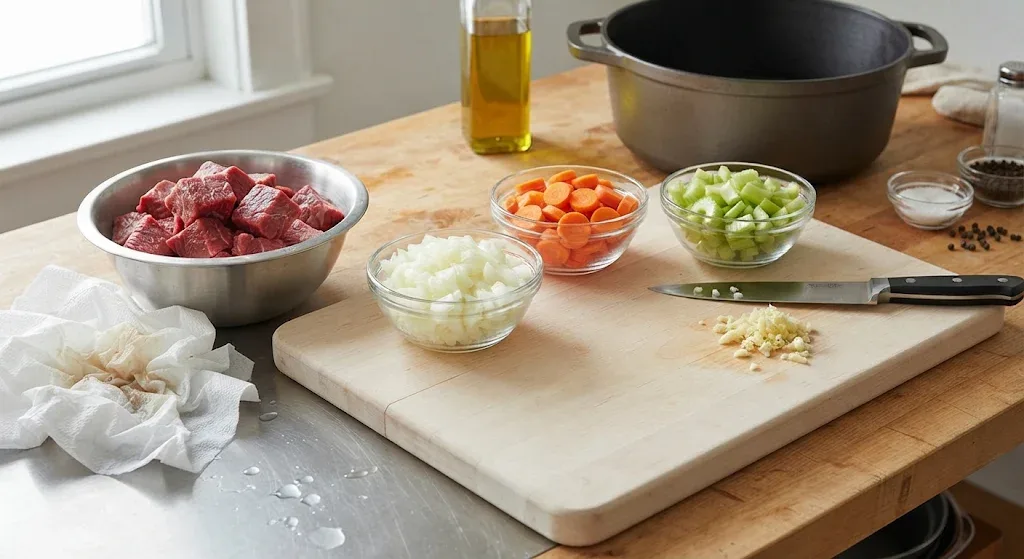
Chop the onion, slice the carrots and celery, and mince the garlic before you turn on the heat. Pat the beef dry with paper towels. Dry meat browns better and gives you a deeper flavor.
Season and Brown the Beef
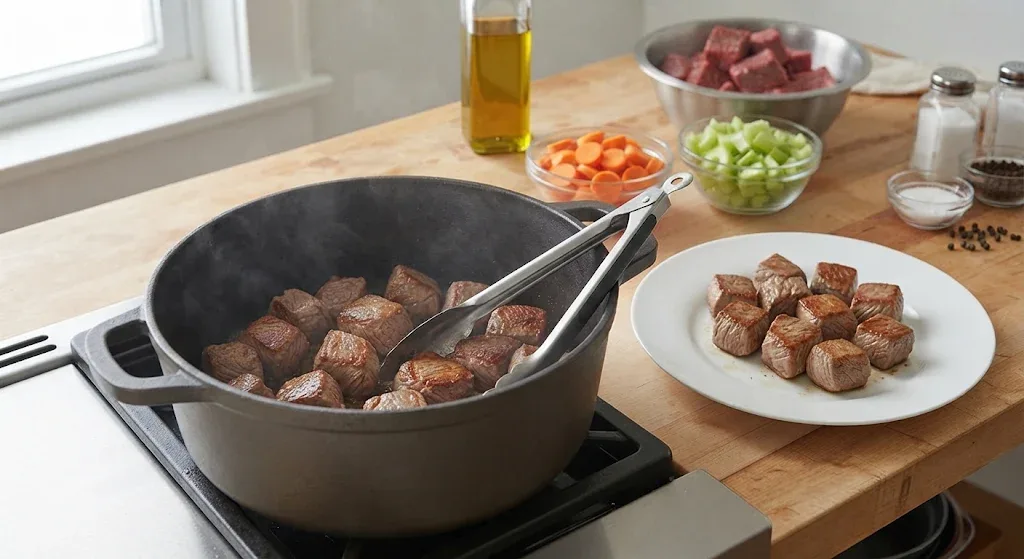
Sprinkle the beef with salt and pepper. Heat the olive oil in your Dutch oven over medium-high heat. Sear the meat on all sides until golden, then move it to a plate.
Sauté the Vegetables
Add the onion, carrots, celery, and garlic to the same pot. Stir often and cook until they soften and pick up color. Those browned bits on the bottom are packed with flavor, so leave them there.
Stir in the Tomato Paste
Add the tomato paste and stir until the vegetables are coated. The paste helps loosen the stuck-on bits from the pot. Let it cook for about five minutes so the raw taste fades.
Add the Beef, Wine, and Herbs
Return the beef to the pot and pour in the wine and beef stock. Add the thyme, rosemary, and bay leaves. Bring it to a boil, then lower the heat and cover.
Simmer Until Tender
Let the stew simmer on low for about an hour and a half. A little longer is fine if you want softer meat. Do not rush this part, because the slow heat is what breaks the beef down.
Thicken and Finish
Whisk the flour or cornstarch with the water until smooth. Raise the heat to medium and stir it into the stew. Cook until the sauce thickens, then taste, adjust the seasoning, and remove the herbs.
Additional Tips for Making This Recipe Better
A few small habits made a big difference when I cooked this stew again and again.
- I always brown the beef in batches. Crowding the pot makes the meat steam instead of sear.
- I buy a Cabernet Sauvignon or Merlot. Both give a smooth, rich sauce that tastes balanced.
- I add a small splash of Worcestershire sauce at the end. It gives the stew an extra savory kick.
- I keep the pot covered during the simmer. This stops the liquid from reducing too fast.
- I trust the long cooking time for the carrots. They stay soft but not mushy in this recipe.
- I taste the stew before serving. A pinch of salt at the end often makes the flavors pop.
Common Mistakes to Avoid
Most stew problems come from rushing or skipping small steps. Here is what I learned.
- I once used cooking wine, and the stew tasted salty and flat. Always pick a real drinking wine.
- I used to skip the searing step. Browning the beef is where much of the flavor comes from.
- I tried cutting the simmer short and ended up with chewy meat. Give it the full time.
- I added too much thickener once, and the sauce turned gluey. Start small and stir well.
- I forgot to remove the bay leaves one night. Now I count them out before I serve.
How to Serve Wine Braised Beef Stew?
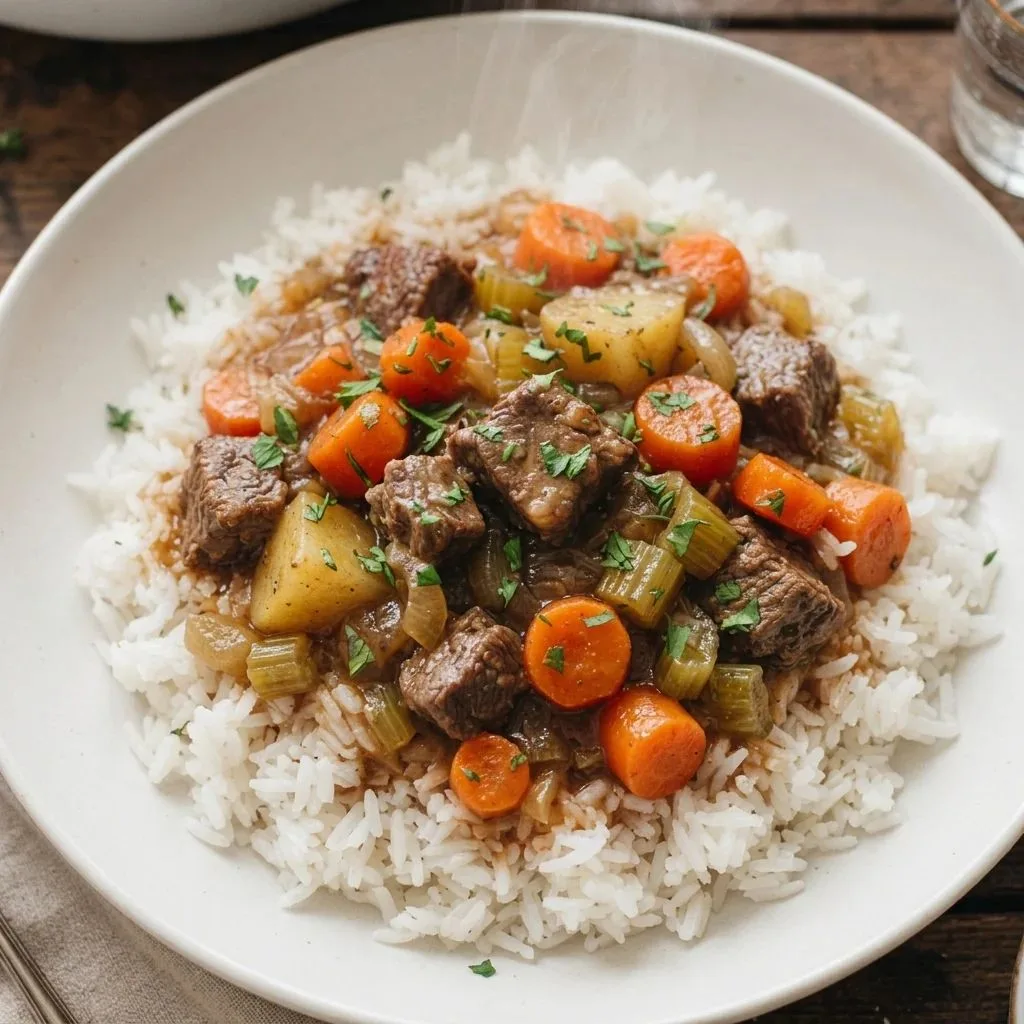
This stew looks beautiful when you serve it with a little care. A rustic bowl and a fresh garnish make it feel special.
- Spoon the stew over creamy mashed potatoes for a classic, filling meal.
- Serve it with warm drop biscuits for soaking up the sauce.
- Add a slice of crusty sourdough on the side, which is a nod to California bakeries.
- Top each bowl with a small rosemary sprig for color and aroma.
- Sprinkle on chopped fresh parsley for a bright green finish.
- Pair it with a glass of the same red wine. A Napa Valley Cabernet or a Paso Robles red works well.
Variations
You can change this stew to fit your pantry or your diet.
- Gluten free: Use cornstarch as the thickener and choose a gluten free beef stock.
- No wine: Swap the wine for the same amount of beef stock or beef consommé.
- With potatoes: Add cut-up potatoes in the last hour for a one-pot meal.
- Extra savory: Stir in a little Worcestershire sauce near the end.
- More vegetables: Add mushrooms or parsnips for a heartier bowl.
- Different cut: Try tri-tip pieces if you cannot find stew meat, and keep an eye on tenderness.
Nutritional Information
These values are approximate and are for one serving.
- Calories: 241 kcal
- Protein: 27 g
- Carbohydrates: 7 g
- Fat: 9 g
Make Ahead and Storage
This stew is a great make-ahead dinner. The flavors settle and deepen overnight.
Storage
Let the stew cool, then store it in an airtight container in the refrigerator. It stays fresh for up to four days. Keep the herbs out of the container so the flavor stays clean.
Reheating
Warm the stew gently on the stovetop over low heat. Add a splash of stock if the sauce looks thick. You can also use the microwave in short bursts, stirring in between.
Freezing
Freeze the cooled stew in freezer-safe containers for up to three months. Leave a little space at the top for expansion. Thaw it overnight in the refrigerator before reheating.
Why You’ll Love This Recipe?
This stew is simple, comforting, and reliable. Here is why it has become a favorite in my kitchen.
- It is easy to make. The steps are simple, and most of the cooking time is hands-off. You only need basic kitchen skills.
- It tastes rich and deep. The wine, tomato paste, and herbs build a sauce with real depth. Every bite feels warm and satisfying.
- It feeds a crowd. One pot serves about eight people. That makes it perfect for family dinners and cozy gatherings.
- It is flexible. You can make it gluten free, skip the wine, or add potatoes. It adapts to what you have at home.
- It is great for leftovers. The stew tastes even better the next day. That makes busy weeknights much easier.
FAQs
When should I add red wine to beef stew?
Add the wine after you sear the beef and sauté the vegetables. Pour it in with the stock and herbs before the long simmer. This gives the alcohol time to cook off and the flavor time to blend.
Can I make this stew in a slow cooker or pressure cooker?
Yes, you can adapt it. Brown the beef and vegetables on the stovetop first, then move everything to your slow cooker or pressure cooker. Cook until the meat is tender, and thicken at the end.
What is the best red wine for beef stew?
A dry red like Cabernet Sauvignon or Merlot works best. Avoid cooking wine, which often has added salt and preservatives. If you like, a California red adds a lovely touch.
Can I make beef stew without wine?
Yes. Replace the wine with the same amount of beef stock or consommé. The stew will still taste rich and hearty.
Should I put potatoes in the stew?
You can, but I often serve the stew over mashed potatoes instead. If you want a one-pot meal, add cut-up potatoes while the stew simmers. Check them for tenderness before serving.