Easy Creamy Butternut Squash Risotto Recipe You’ll Make on Repeat

I made this Butternut Squash Risotto Recipe on a chilly evening, and it instantly became a house favorite. I used to think risotto was fussy, but standing at the stove with a wooden spoon turned out to be oddly relaxing. The sweet squash melts into the rice, and the sage and white wine make the whole kitchen smell amazing. I loved how creamy it turned out without any heavy cream. I think you’ll love it as much as I do!
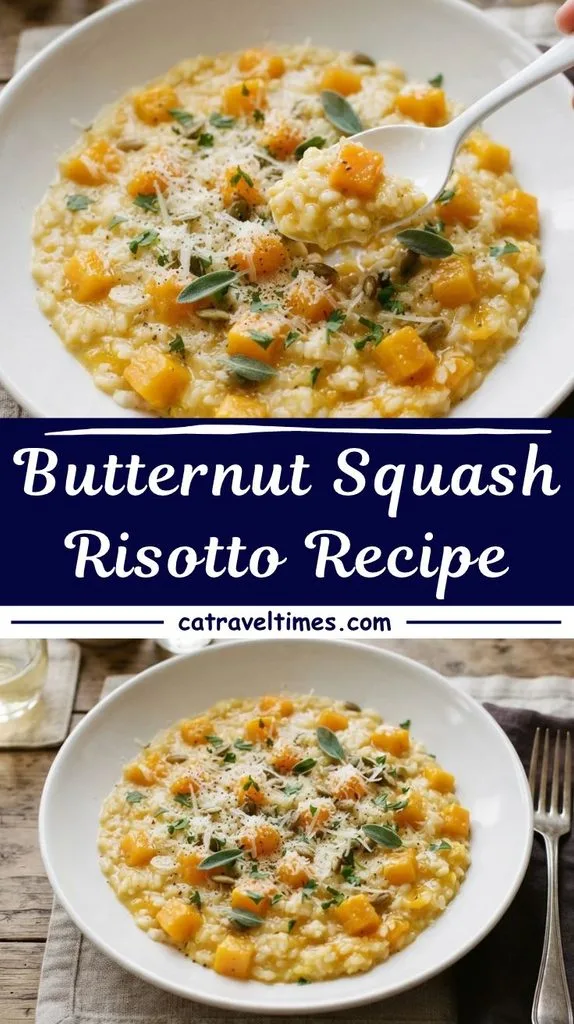
Butternut Squash Risotto Recipe Overview
If you’ve searched for a butternut squash risotto Jamie Oliver, Gordon Ramsay, or Ina Garten would approve of, this version is in that same spirit. It is a classic Italian-style risotto with simple steps and big flavor. It’s also one of the easiest butternut squash recipes I know.
Cooking Time
Here is how long this recipe takes from start to finish:
- Prep Time: 15 minutes
- Cooking Time: 40 minutes
- Total Time: 55 minutes
Ingredients You’ll Need
Every ingredient here plays a small but important part. Gather everything before you turn on the stove, because risotto needs your attention once it starts.
- 1 tablespoon extra-virgin olive oil: Use a good one, since it’s the base flavor.
- 1 medium yellow onion, chopped: Chop it small so it melts into the rice.
- ½ teaspoon sea salt, plus more to taste: Salt the onion early to draw out sweetness.
- Freshly ground black pepper: Fresh pepper has a much brighter bite than pre-ground.
- 2 cups butternut squash, cut into ¼-inch cubes: Keep the cubes small so they soften in time.
- 2 garlic cloves, finely chopped: Chop finely so it blends in without burning.
- 1 teaspoon minced rosemary or sage: Fresh herbs give the best cozy, woodsy flavor.
- 1 cup uncooked Arborio rice: This short-grain Italian rice is what makes risotto creamy.
- ½ cup dry white wine: Choose a wine you’d happily drink for tangy depth.
- 4 cups warmed vegetable broth: Warm broth keeps the rice cooking evenly.
- Chopped parsley or small sage leaves, for garnish: Optional, but they add color and freshness.
- ½ cup grated pecorino or Parmesan cheese, for serving: Optional. Grate it fresh so it melts smoothly.
Note: serves several (about 4 people)
Equipment You Need
- Large skillet or Dutch oven: Holds the rice and gives it room to cook evenly.
- Wooden spoon: Stirs gently without breaking the rice grains.
- Cutting board and sharp knife: Helps you dice the squash into small, even cubes.
- Small saucepan: Keep your broth warm while you cook.
- Ladle or measuring cup: Adds the broth in even portions.
- Cheese grater: Gives you fresh, fluffy cheese for serving.
How to Make Butternut Squash Risotto Recipe?
This recipe is simple, but it rewards patience. You’ll build flavor in layers, then add the broth slowly while the rice turns creamy. Follow these steps in order, and you’ll get restaurant-style results at home.
Prep Your Ingredients
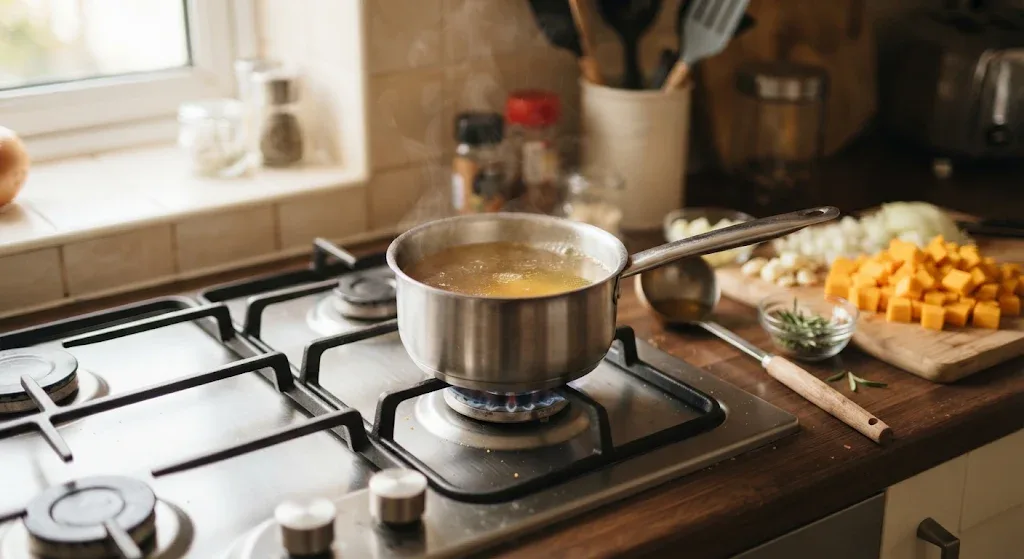
Peel and dice the butternut squash into small ¼-inch cubes. Chop the onion and garlic, and mince the rosemary or sage. Pour the broth into a small saucepan and keep it warm over low heat.
Sauté the Onion
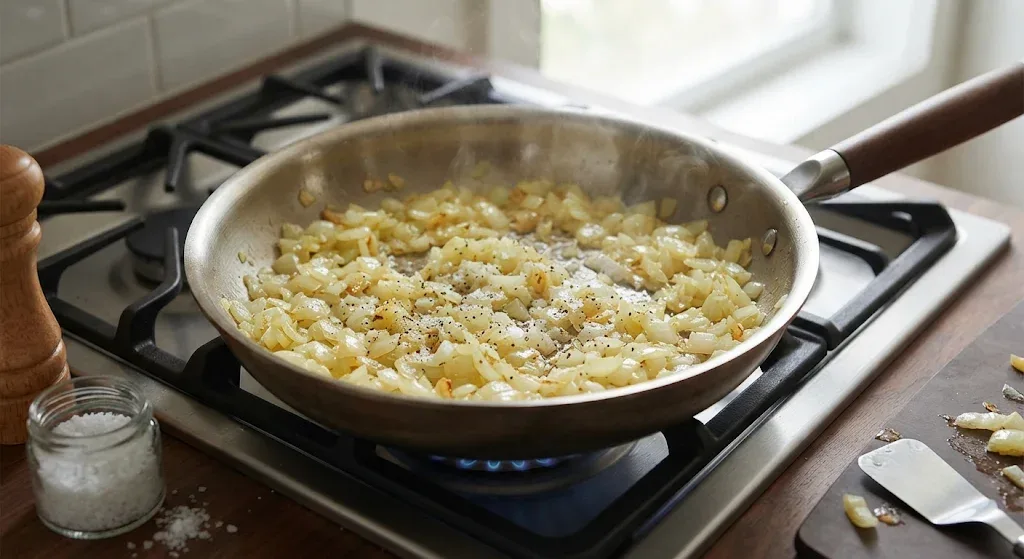
Heat the olive oil in a large skillet over medium heat. Add the chopped onion, the salt, and several grinds of black pepper. Cook for 2 to 3 minutes until the onion starts to soften.
Cook the Squash
Add the diced butternut squash to the pan with the onion. Stir now and then, and cook for 6 to 8 minutes. The squash should begin to soften and take on a little color.
Toast the Rice with Garlic and Herbs
Add the garlic, the rosemary or sage, and the Arborio rice. Stir everything together and let it cook for about 1 minute. This quick toasting step helps the rice stay firm and creamy.
Add the White Wine
Pour in the white wine and stir well. Let it cook for 1 to 3 minutes, until most of the liquid has cooked down. The wine adds a gentle tang that balances the sweet squash.
Add the Broth Slowly
Add the warm broth ¾ cup at a time, stirring constantly. Wait until each addition is absorbed before adding the next. This slow process helps the starch release and creates that creamy texture.
Cook Until Creamy
Keep adding broth and stirring until the squash is tender and the rice is soft. The risotto should look creamy and slightly loose. Taste it, and add more salt or pepper if you need to.
Garnish and Serve
Spoon the risotto into warm bowls right away. Top with fresh parsley or small sage leaves. Add grated pecorino or Parmesan if you like, and enjoy while it’s hot.
Additional Tips for Making This Recipe Better
These small tricks made a real difference when I cooked this at home. Try them for even creamier, tastier results.
- I always cut the squash into true ¼-inch cubes, because larger pieces stay hard.
- I keep my broth warm in a saucepan, since cold broth slows the cooking and makes the rice uneven.
- I add the broth little by little, because dumping it all in makes the risotto watery instead of creamy.
- I stir often, but I don’t panic about constant stirring. A steady rhythm is enough.
- I taste the rice near the end, since it should be tender with a gentle bite.
- I season in stages, so the flavor builds instead of tasting flat at the end.
- I use fresh sage or rosemary, because dried herbs just don’t give the same cozy aroma.
- I sometimes fry a few sage leaves in a little oil for a crispy topping that looks gorgeous.
Common Mistakes to Avoid
Risotto is easy once you know the pitfalls. Here are the mistakes I’ve made so you don’t have to.
- Cutting the squash too big: I once left it chunky, and it stayed firm. Stick to ¼-inch cubes.
- Using the wrong rice: I learned that long-grain rice never gets creamy. Always use Arborio.
- Adding cold broth: It cools the pan and slows everything down, so I always warm it first.
- Pouring in all the broth at once: This makes the rice mushy and watery. I add it in small portions.
- Skipping the final taste test: Risotto needs proper seasoning, so I always taste and adjust at the end.
How to Serve Butternut Squash Risotto?
Risotto thickens as it sits, so serve it right off the stove. A few simple touches make it look as good as it tastes.
- Spoon it into warm, shallow bowls so it stays creamy.
- Sprinkle fresh parsley or small sage leaves on top for color.
- Finish with freshly grated pecorino or Parmesan.
- Serve with homemade focaccia or crusty bread to scoop up every bite.
- Pair it with a pear salad or shaved Brussels sprouts salad for a fresh crunch.
- Add roasted Brussels sprouts, cauliflower, or broccoli on the side.
- Finish the meal with a warm apple crumble for a true fall dinner.

A California Twist: Cooking This Dish Like a Golden State Getaway
I love cooking this risotto the way I’d plan a California road trip, with fresh produce, good wine, and a slow pace. California is famous for its farm-fresh ingredients, so this dish feels right at home there.
- Shop at a California farmers’ market: In fall, markets like the Santa Monica Farmers Market and the Ferry Building Farmers Market in San Francisco are a great place to find butternut squash, herbs, and garlic.
- Think farm-to-fork: Sacramento calls itself America’s Farm-to-Fork Capital, and this recipe fits that idea, with seasonal vegetables as the star.
- Use a wine from wine country: Napa Valley and Sonoma are famous for their wines. Pour a dry white wine from California into the pan, and sip a glass while you stir.
- Make it a cabin or road trip dinner: If you’re staying near Big Sur, Lake Tahoe, or Yosemite in autumn, this one-pot dish is easy to make in a rental kitchen with just a skillet.
- Pair it with Highway 1 memories: Serve it with crusty bread and a simple salad, then plan your next coastal drive.
Variations
You can easily change this recipe to fit your diet or taste. Here are some ideas to try.
- Vegan: Skip the cheese, and use vegetable broth. The risotto is still creamy and delicious.
- Dairy-free: Leave out the pecorino or Parmesan, or top it with nutritional yeast.
- Pumpkin version: Swap the butternut squash for sugar pumpkin, which a few home cooks have tried with great results.
- Herb swap: Use rosemary instead of sage, or the other way around, depending on your mood.
- Extra garlic and herbs: Many home cooks like to double these for a bolder flavor.
- Roasted squash: Roast the squash first for deeper, caramelized flavor, then fold it in.
- Protein boost: Add cooked white beans or lentils, or serve with leftover turkey.
- Crunchy topping: Add toasted pumpkin seeds or spiced almonds for texture.
- Richer finish: Stir in a little extra butter or a pinch of nutmeg at the end.
Nutritional Information
These values are approximate and can change depending on your ingredients and portion size. The numbers below are estimates for one serving, based on a recipe that serves 4.
- Calories: About 330 kcal
- Protein: About 8 g
- Carbohydrates: About 58 g
- Fat: About 6 g
Make Ahead and Storage
Make Ahead: Risotto tastes best fresh, so I don’t recommend making it fully in advance. You can save time by dicing the squash, onion, and garlic earlier in the day. Store them in the fridge until you’re ready to cook.
Storing Leftovers: Leftover risotto keeps well in the fridge for up to 3 days. Store it in an airtight container once it has cooled.
Reheating: The risotto will be thick on days 2 and 3. Reheat it on the stove over low heat with a splash of water or broth to loosen it. Taste and season again before serving.
Freezing: Risotto isn’t ideal for freezing because the texture can change. I suggest eating it fresh or within a few days from the fridge.
Why You’ll Love This Recipe?
This recipe is cozy and simple, and it fits almost any dinner plan. Here are my top reasons for loving it.
- Easy and approachable: The steps are simple, and the ingredient list is short. Even beginners can make it with confidence.
- Creamy without cream: The Arborio rice releases its natural starch as it cooks. You get a rich texture without any heavy cream.
- Naturally flexible: You can make it vegan, dairy-free, or extra cheesy with small swaps. It adapts to almost any diet.
- Packed with seasonal flavor: The sweet squash, woodsy herbs, and tangy wine taste like autumn in a bowl. It’s perfect for date nights and holiday dinners.
- Easy to customize: Add more garlic, swap the herbs, or top it with crispy sage. You can make it yours every time.
FAQs
Can I use frozen butternut squash?
Yes, you can. One home cook froze ¼-inch cubes and said the squash broke down a bit more, but still tasted good.
What kind of rice should I use for risotto?
Use Arborio rice. This Italian short-grain rice gives risotto its creamy texture.
Can I make this risotto vegan?
Absolutely. Use vegetable broth and skip the cheese, and the dish is still creamy and flavorful.
Why is my squash still hard?
The pieces were probably too large. Cut the squash into ¼-inch cubes, and cook it for 6 to 8 minutes before adding the rice.
Can I make butternut squash risotto the day before?
It’s best fresh, since it thickens as it sits. If you have leftovers, reheat them with a splash of water or broth.
Final Thoughts
This butternut squash risotto is simple, comforting, and full of cozy flavor. Once you try it, you’ll want to make it all season long. Pour a glass of California white, stir slowly, and enjoy every creamy bite.