bear gulch cave trail and reservoir hike in pinnacles: My Complete Experience
I had been staring at the Pinnacles entry on my California hiking list for over a year before I finally made the drive down from San Diego.Every time I’d push it aside “it’s too small,” “it’s too far for just a day,” “I’ll go next month.” Then one Saturday morning I just got in the car and drove. No big plan, just coffee in hand and a playlist I’d heard a hundred times.
As someone who spends a lot of time researching trails for CA Travel Times, I thought I knew exactly what to expect a short walk through some rocks. What I actually got was one of the most genuinely thrilling two miles I’ve hiked in all of Central California. The bear gulch cave trail and reservoir hike in pinnacles is a whole experience packed into a surprisingly compact trail, and this guide covers everything you need to know before you go.
Quick Trail Facts: bear gulch cave trail
| Detail | Information |
| Trail Name | Moses Spring Trail → Bear Gulch Cave → Bear Gulch Reservoir |
| Distance | 1.5 miles (out-and-back) / 2.8 miles (full loop via Rim Trail) |
| Elevation Gain | ~275 ft (out-and-back) / ~659 ft (full loop) |
| Difficulty | Easy to Moderate |
| Time to Complete | 1 to 2 hours |
| Trailhead | Bear Gulch Day Use Area, East Entrance |
| Dogs Allowed | No |
| Stroller/Wheelchair Friendly | No |
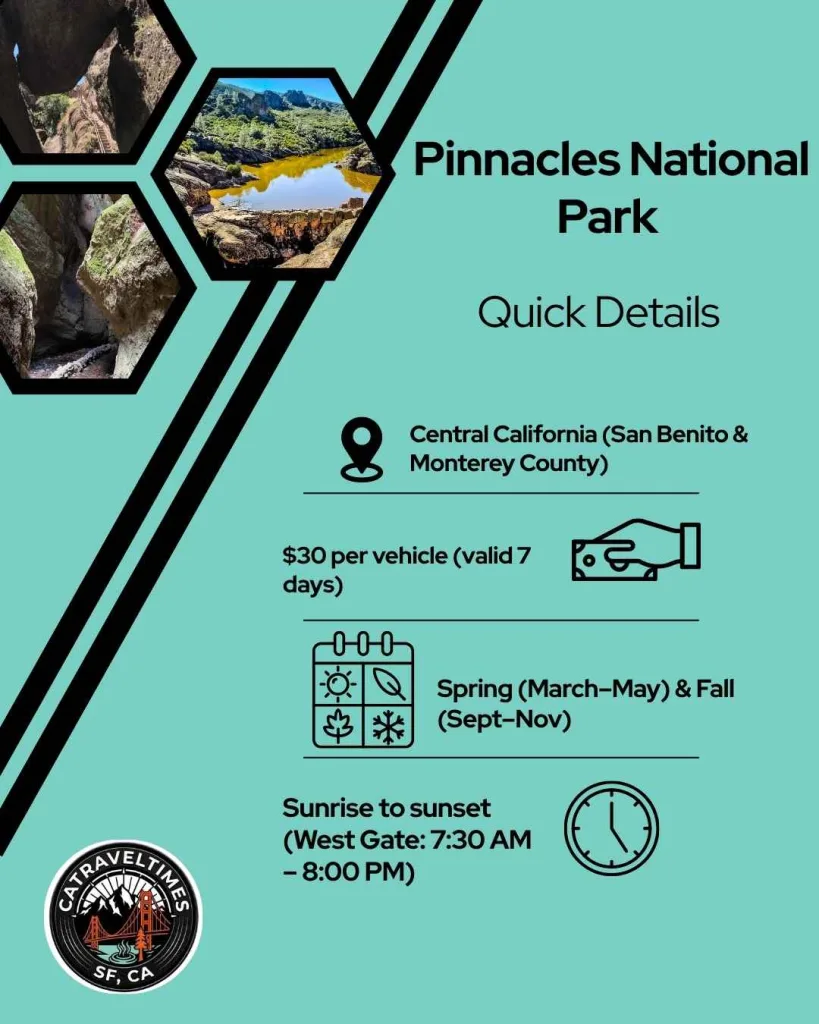
| Entrance Fee | $30 per vehicle (valid 7 days) |
| Flashlight Required | Yes — mandatory inside the cave |
Best Time to Visit for the Bear Gulch Hike
Pinnacles National Park is open year-round, but the experience varies dramatically by season and so does cave access. Picking the right time to visit means checking both the weather and the current cave status before you go.
| Season | Conditions | Cave Status | Vanessa’s Take |
| Spring (Feb–Apr) | 55°F–75°F, wildflowers blooming — California poppies, owl’s clover, blue dicks, shooting stars. Creek flowing through the cave. | Lower cave typically open | The drive on CA-146 alone is worth it — rolling green hills, wildflowers spilling down the slopes, that impossible California light. Best time to visit. |
| Summer (Jun–Aug) | Temperatures climb well above 90°F in exposed sections and at the reservoir. | Cave closes mid-May through mid-July for bats | Go at dawn and be out before 11 AM — no exceptions. |
| Fall (Sep–Nov) | Comfortable temperatures, dramatic morning-to-afternoon swings. Bring layers. | Cave reopens mid-July; crowds thin after Labor Day | My second-favorite time. The afternoon light on the reservoir is golden in a way that makes you want to just stay. |
| Winter (Dec–Feb) | Peacefully quiet, possible muddy trail conditions after rain. | Check NPS cave status before visiting | Worth it if you want solitude — just come prepared. |
Why Pinnacles Is Worth the Drive
Pinnacles National Park sits in a sweet spot of Central California that many people drive right past — and I’ll be honest, I was one of those people for years. Established as a national monument in 1908 by President Theodore Roosevelt, it was redesignated as a full national park in 2013. It sits roughly two hours from the San Francisco Bay Area and five hours from Los Angeles, making it a doable day trip from either direction.
What makes Pinnacles genuinely unusual is its geology. The park protects the eroded remnants of an ancient volcano, producing a dramatic landscape of soaring spire formations found nowhere else in California. The moment I crested that last hill on CA-146 and saw those jagged rock towers rising out of nowhere against the blue sky, I understood immediately why people make the drive. If you’re exploring California’s National Parks and want something off the beaten path, this one delivers.
The Two Entrances: Directions
There is no road connecting the east and west sides of Pinnacles National Park. This is the single most important logistics fact you need to know. The east entrance and the west entrance are separated by the park’s interior, and you can only cross from one side to the other on foot via the hiking trails or by driving around the park, which adds roughly 90 minutes to your route.
The Bear Gulch Cave is on the east entrance side only, accessed via CA-146 West in San Benito County. From Highway 101, take King City Exit 281, head east on County Road G14 to CA-25 north, then follow CA-146 west. From the entrance gate, it’s 3 miles to the trailhead.
Parking: Arrive Before 9 AM on Weekends
Parking at Pinnacles is the biggest logistical challenge — and I learned this the slightly stressful way. I arrived at 8:45 AM on a Sunday thinking I was being smart. The Moses Spring lot was already completely full. There are two small lots near the Bear Gulch trailhead:
- Moses Spring Parking Lot — Closest to the trailhead, but fits fewer than 15 cars. Fills by 8:30 AM on busy weekend mornings.
- Bear Gulch Day Use Area — Slightly larger, has restrooms and picnic tables. This is where I ended up parking, and it still had maybe four spots left.
If both lots are full, you’ll need to park at the Peaks View lot and catch the seasonal shuttle bus to the Bear Gulch Nature Center. During peak season (spring weekends, holidays), expect delays entering the park between 10 AM and 3 PM. I cannot stress this enough get there early. The trail experience itself is peaceful; the parking situation is not.
The Pinnacles Trail Breakdown
The trail unfolds in a natural sequence that feels both manageable and rewarding, guiding you through shaded canyon paths, geological wonders, and open reservoir views. Each section builds on the last, so even first-time visitors find themselves moving confidently from one landmark to the next.
Moses Spring Trail (Trailhead to Cave Junction, ~0.5 miles)
- 0.0 miles — Trailhead bulletin board; check cave status before stepping onto the trail
- 0.2 miles — High Peaks Trail junction on your right; keep left and continue south
- Moses Spring — A natural rock seep feeding a hidden “Fern Chamber” of chain ferns; I stopped here longer than I should have — something almost otherworldly about that tiny green pocket in all that dry volcanic rock
- The Monolith — A massive standalone boulder, one of the park’s most popular rock climbing spots; I craned my neck watching two climbers halfway up the face
- CCC Tunnel — A short tunnel built in the 1930s by the Civilian Conservation Corps; marks the cave junction just ahead
The hike starts at the parking lot’s south end check the bulletin board first for cave closure notices. I stood there for two minutes, relieved the lower cave was open. The first stretch is a shaded, oak-canopied path with creek sounds and mossy boulders surprisingly lush for a volcanic park. At 0.2 miles, keep left past the High Peaks junction.
The canyon narrows and Moses Spring appears a rock seep feeding a hidden “Fern Chamber” of chain ferns that stopped me cold. Further along, The Monolith draws rock climbers up its face. A short CCC-built tunnel from the 1930s marks the cave junction ahead.
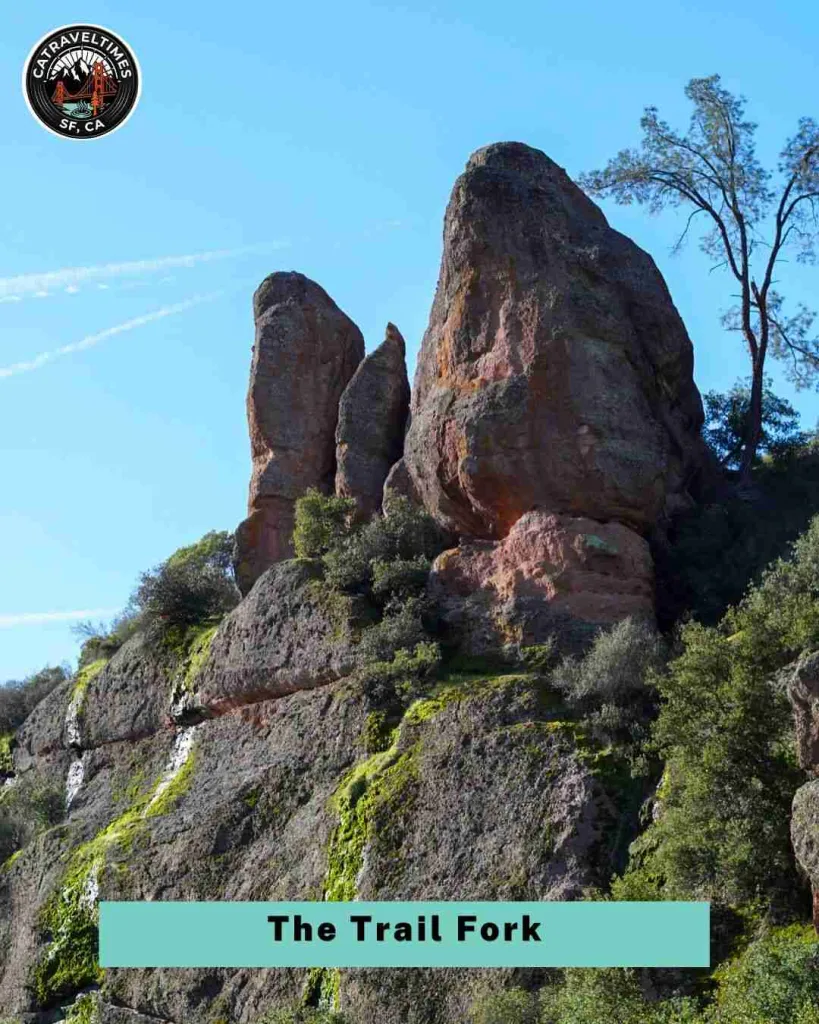
The Trail Fork: Cave Route or Moses Spring Rim Route
At the junction just past the CCC tunnel, the trail splits into two parallel paths that both lead to Bear Gulch Reservoir:
- Bear Gulch Cave Trail — Goes directly through the talus cave system beneath the boulders. This is the main attraction.
- Moses Spring Trail (Upper Route) — Stays on the rim above the cave, offering open-air views of the gorge. This is the bypass if the cave is closed.
I stood at this fork for about thirty seconds before my headlamp was already out of my bag. There was no real decision to make. My strong recommendation: take the cave on the way up and the rim route on the way down (or vice versa). Both are roughly the same length (~1/6 of a mile each) and both are genuinely worth doing. I went through the cave both ways because I simply couldn’t help myself — but the rim views on the way back were honestly better than I expected and I was glad I didn’t skip them.
Inside Bear Gulch Cave (The Main Event)
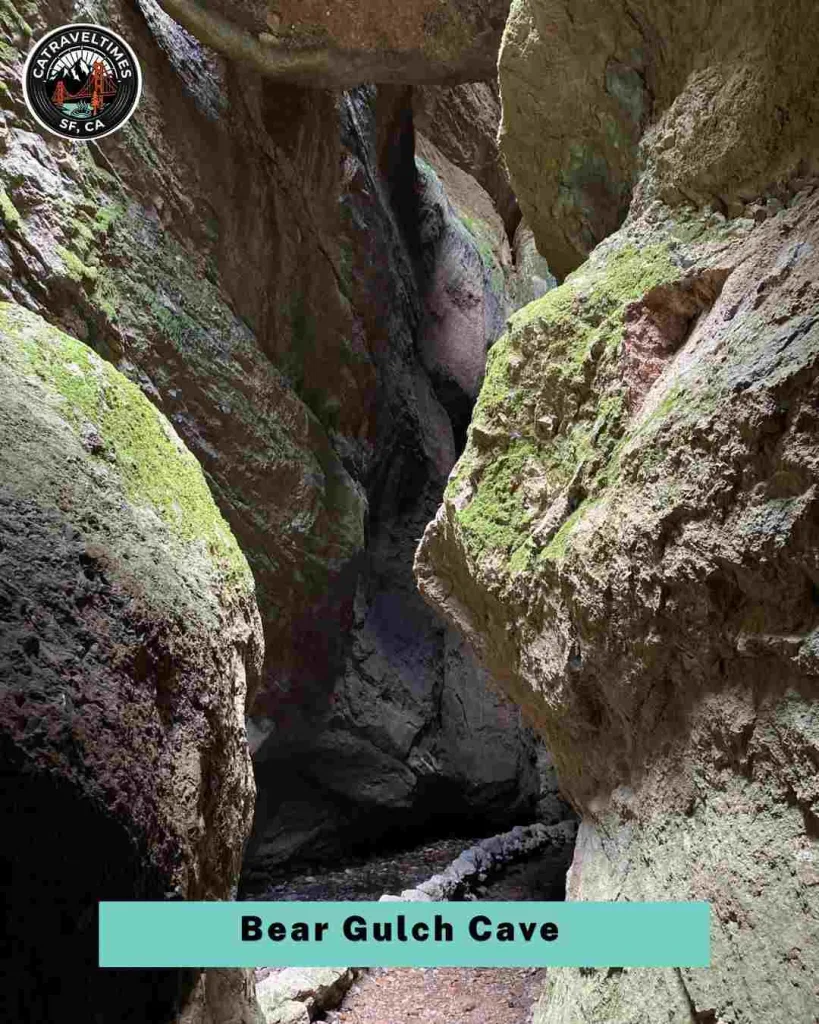
TThis is where the hike becomes something you’ll talk about for years. Bear Gulch Cave is a talus cave — created not by erosion but by gravity, when ancient volcanic boulders fractured and wedged together overhead, leaving hidden passageways in between. The result is a raw geological wonder with wooden bridges, stone steps, and metal handrails guiding you through.
The moment light disappeared around the first bend, I felt that rush you only get when a place genuinely surprises you. Headlamp is non-negotiable — parts are completely pitch-black. The cave also runs cold even on warm days, so pack a light jacket. At one point I had to turn sideways and exhale to squeeze through a gap — and laughed out loud. Bear Gulch Creek flows through the base, so waterproof shoes are a smart call.
Claustrophobic? No need to skip this hike entirely. The Moses Spring Trail (upper rim route) runs parallel to the cave the whole way and deposits you at the same reservoir without any enclosed sections. You can take the open-air rim path up and still experience everything else the trail offers. The junction is clearly signed.
The cave is divided into two sections:
- Lower Cave — Generally open approximately 10 months per year. This is the main section most visitors experience.
- Upper Cave — Rarely open; typically accessible only in March and October for a few weeks at a time.
The closures exist to protect Bear Gulch’s Townsend’s big-eared bat colony — believed to be the largest maternity colony between San Francisco and Mexico — which roosts here year-round. The cave closes mid-May through mid-July, so always check the NPS cave status page before you go.
Bear Gulch Reservoir
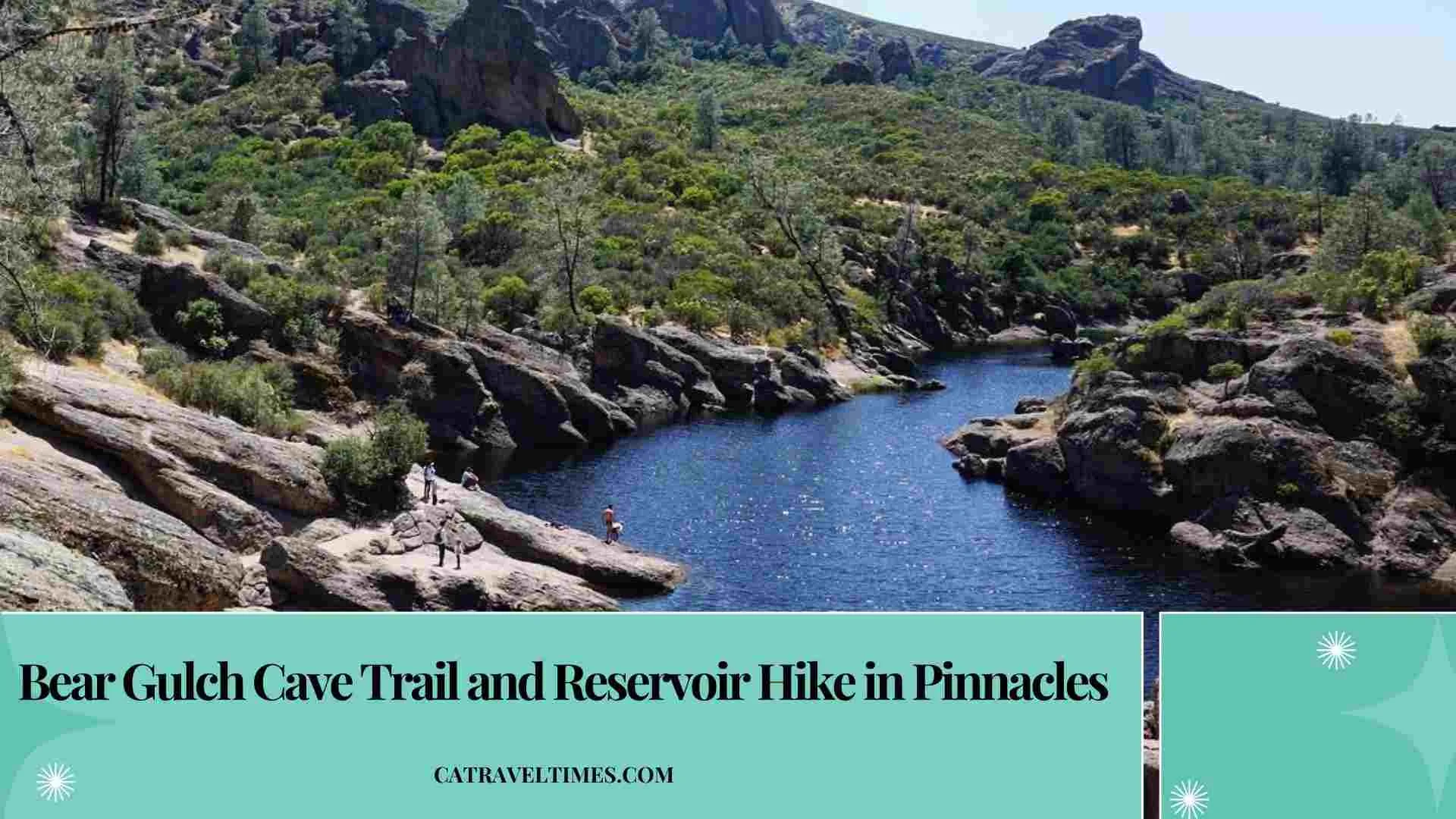
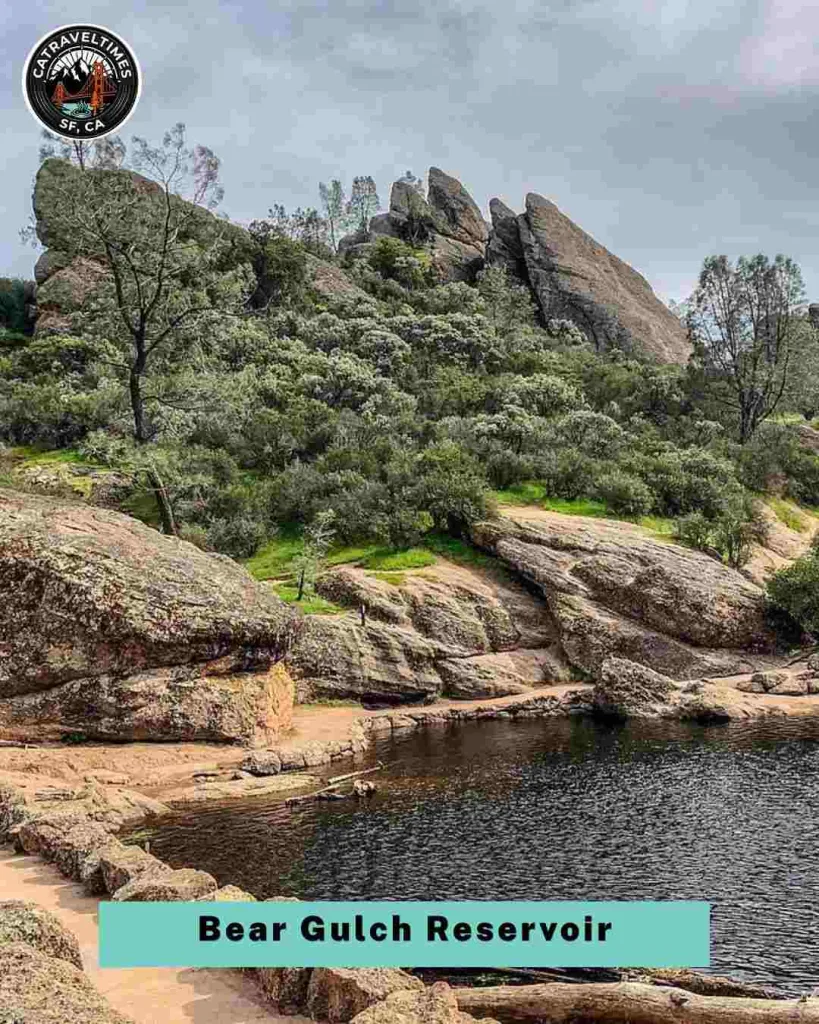
After the cave, a narrow CCC-built stone staircase from 1935 takes you up the dam’s back — watch the mist-slick handrail. My legs were burning from the climb, and then I stepped into the open and completely forgot about them. Bear Gulch Reservoir stops you in your tracks: a serene pool framed by volcanic spires and open sky.
I sat on a flat rock at the water’s edge and stayed twenty minutes without realizing it. The reservoir prevents downstream flooding and provides critical habitat for the threatened California red-legged frog — plus garter snakes and lizards near the shore. The Chalone Peak Trail branches east toward South Chalone Peak, 4.5 miles away — even a short walk gives a stunning new angle on the water.
Return Route Options
Once you’ve taken in the reservoir, you have three ways back:
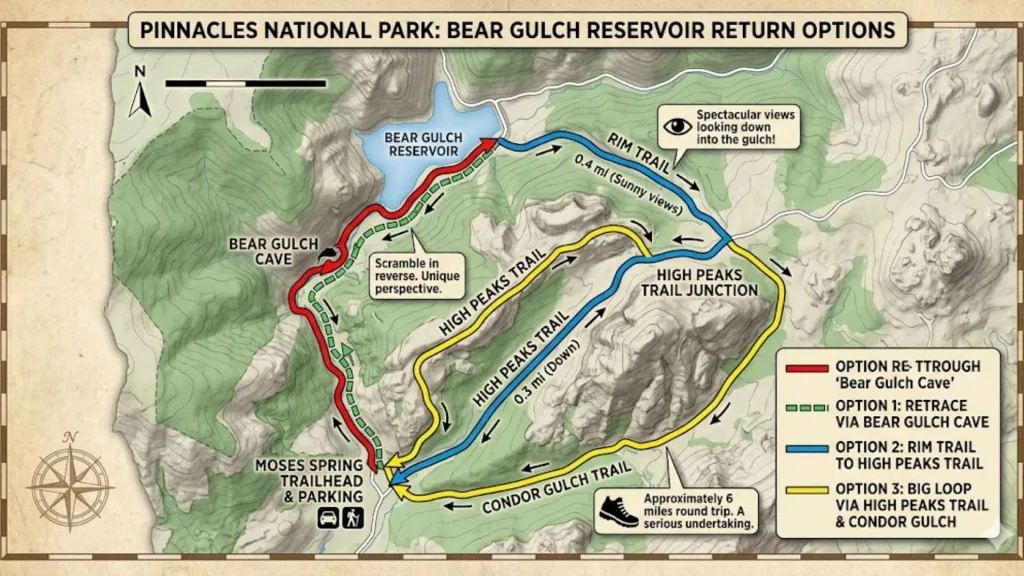
- Retrace through Bear Gulch Cave — The same scramble in reverse. Still just as fun — I did this on my second pass through and noticed completely different details going the other direction.
- Rim Trail back to High Peaks Trail junction — A 0.4-mile stretch above the west side of the gorge, then 0.3 miles down High Peaks Trail to the parking area. More open, sunnier, and the views looking down into the gulch you were just crawling through are genuinely spectacular.
- Big Loop via High Peaks Trail and Condor Gulch — Extends the hike to approximately 6 miles round trip. A serious undertaking, but it transforms a short trail into a full Pinnacles day.
I took the Rim Trail back on my second pass. Standing up there looking down at the exact cave I’d squeezed through an hour earlier gave the whole experience a kind of satisfying full-circle feeling — highly recommended.
Bear Gulch Cave vs. Balconies Cave: Which Should You Hike?
Pinnacles has two talus cave systems, and visitors often wonder which to choose. Here’s the honest comparison:
| Feature | Bear Gulch Cave | Balconies Cave |
| Park Side | East Entrance | West Entrance |
| Difficulty | Easy to Moderate | Moderate (more challenging) |
| Development | Well-marked paths, handrails, stairs | Less developed, wilder feel |
| Crowds | More visited | Fewer visitors |
| Reward at End | Bear Gulch Reservoir | Balconies cliff formations |
| Trail Connection | Moses Spring Trail / Rim Trail | Old Pinnacles Trail to Balconies Cave |
| Best For | Families, first-timers | Those wanting a wilder experience |
The balconies cave trail (accessed via the old Pinnacles trail to balconies cave on the west side) is darker, tighter, and reportedly more physically demanding. Visitors describe it as more of a raw caving experience compared to the more visitor-friendly Bear Gulch setup. If you only have one day and you’re bringing kids or are new to the park, Bear Gulch is the right call. If you’ve done Bear Gulch and want more, the west side’s balconies cave pinnacles experience is the natural next step.
Essential Gear and Packing List
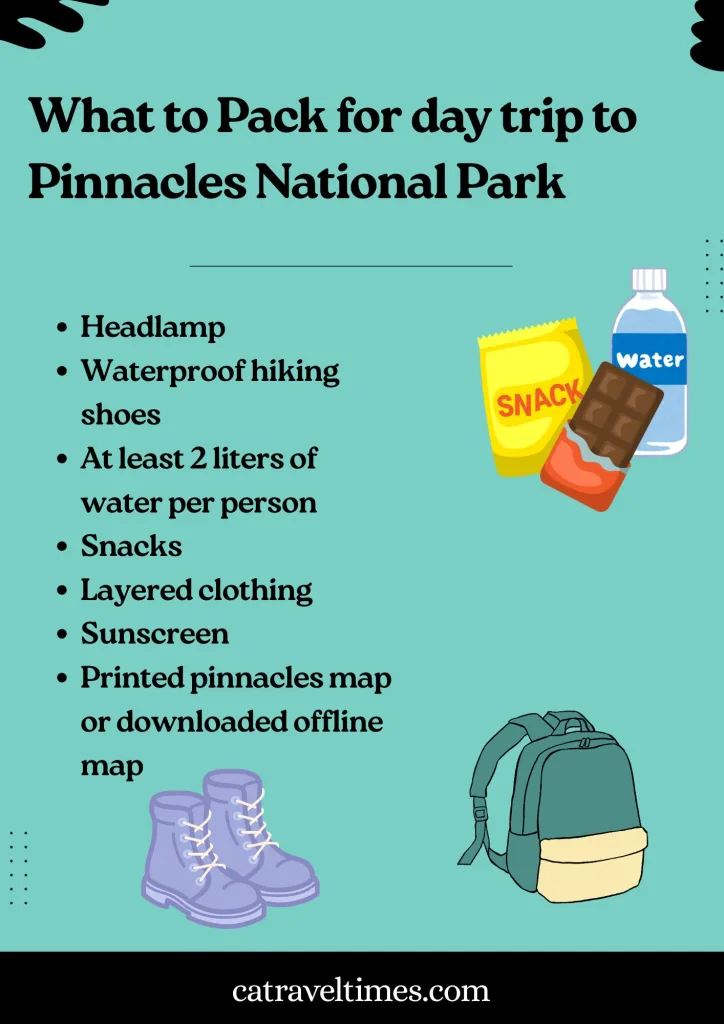
Every item on this list matters I learned most of them from personal experience or near-misses:
- Headlamp (better than a flashlight — keeps your hands free for scrambling)
- Waterproof hiking shoes (the creek runs through the cave; the reservoir stairs are often wet)
- At least 2 liters of water per person (there’s no water on the trail after the trailhead)
- Snacks (no food for sale inside the park; nearest store is the Pinnacles Campground general store on the east side)
- Layered clothing (the cave is cool and damp; outside can be warm or very hot by midday)
- Sunscreen (the Rim Trail and reservoir area are exposed)
- Printed pinnacles map or downloaded offline map (cell signal inside the park is unreliable)
Things to Do Nearby Before or After the Hike
If you’re making a full day of it, don’t skip the Bear Gulch Nature Center just below the Day Use parking area. I almost walked past it on my way to the trailhead and I’m glad I didn’t — the small theater has a short film about the park’s geology and bat colony that genuinely added context to everything I saw inside the cave. Ranger programs run on weekends during peak season and are worth catching if your timing works out.
For those exploring more of the park, check out our full guide on things to do at Pinnacles National Park in Central California for trail combinations, condor spotting tips, and campground details. The Condor Gulch Trail departs from the same general area and is worth adding if you have the energy. And if the High Peaks Trail is calling, the panoramic views from the top on a clear day are the kind that make you stand there silently for a while.
The Pinnacles National Park entry on our site also covers permit requirements, shuttle schedules, and the best times to spot California condors soaring over the rock spires one of the most remarkable wildlife sightings in the entire state.
Practical Tips Before You GO
A few things I wish someone had told me before I arrived:
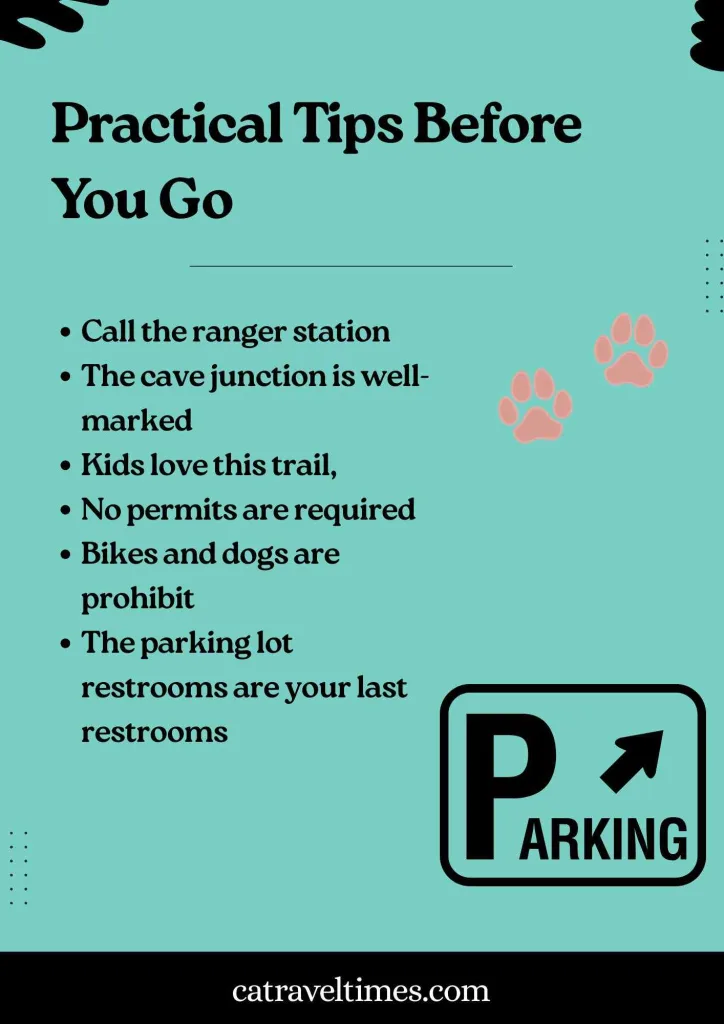
- Call the ranger station (831-389-4486) if the NPS website cave status isn’t updated — rangers will give you real-time conditions.
- The cave junction is well-marked, even in the dark. Do not worry about getting lost inside — the pathway is reinforced and the junctions are signed.
- Kids love this trail, but the cave requires confident footing. Children who are comfortable climbing on playground equipment will handle it fine. Toddlers in carriers — use the rim route instead.
- No permits are required for the Bear Gulch hike specifically. The $30 vehicle entry fee covers all trails on your visit.
- Bikes and dogs are prohibited on the Bear Gulch trails.
- The parking lot restrooms are your last restrooms until you’re back at the trailhead. Use them.
Where to Stay Near Bear Gulch Cave?
If you want to make a proper trip of it rather than a rushed day visit, you have solid options at different price points.
Inside the park
- Pinnacles Campground is the most immersive option. Located on the east side near the visitor center, it has 134 campsites, a swimming pool (open seasonally), a general store, and easy access to all east-side trails. Book early it fills up weeks in advance on spring weekends. Reservations are handled through Recreation.gov.
Nearby towns for hotel stays:
- King City (~25 miles west via Hwy 101) — Closest town with budget-friendly chain motels. Good base if you want a comfortable bed and an early start.
- Hollister (~35 miles north) — A bit further but more options, including mid-range hotels.
- Salinas (~50 miles northwest) — Widest selection of hotels and restaurants; worth it if you’re combining Pinnacles with a Monterey County trip.
- Paso Robles (~60 miles south via Hwy 101) — Ideal if you’re pairing this hike with wine country. Plenty of boutique hotels and great restaurants.
I stayed in King City on my visit it’s no-frills but perfectly functional, and I was on the road and inside the park by 7:45 AM without any stress.
Final Thought
The bear gulch cave trail and reservoir hike in pinnacles packs more variety and genuine surprise into 1.5 miles than trails three times its length. I drove home from Pinnacles that evening already thinking about when I’d come back which is the truest thing I can say about any hike. You get a shaded canyon walk, a legit cave scramble, a peaceful reservoir, and — if you take the Rim Trail back — sweeping views of one of California’s most unusual landscapes. It’s family-friendly without being boring, short enough for a half-day, and memorable enough that you’ll be planning your return before you’ve even reached the parking lot.
If you’re building out your California parks itinerary and want expert help planning your route, timing, and pairings with nearby destinations like Paso Robles or San Luis Obispo, I offer one-on-one travel consultancy services through CA Travel Times. Don’t leave a trip like this to chance.
Frequently Asked Questions
Is Bear Gulch Cave Trail suitable for beginners?
Yes, it is rated easy to moderate and is one of the most beginner-friendly hikes in Pinnacles National Park. The trail is well-marked with handrails and stone steps throughout the cave section.
How long is the Bear Gulch Cave Trail?
The out-and-back route through the cave to the reservoir is 1.5 miles round trip with 275 feet of elevation gain. If you take the full Moses Spring to Rim Trail loop, it extends to about 2.8 miles.
Do I need a permit to hike Bear Gulch Cave Trail?
No permit is required for this specific trail. You only need to pay the standard Pinnacles National Park vehicle entrance fee of $30, which covers all trails for seven consecutive days.
Is Bear Gulch Cave open year round?
Not always. The lower cave is typically open about 10 months of the year, closing from mid-May through mid-July to protect the bat colony. The upper cave is rarely open, usually only in March and October. Always check the NPS cave status page before visiting.
What happens if the cave is closed when I visit?
You can still hike to Bear Gulch Reservoir using the Moses Spring Trail (upper rim route), which runs parallel to the cave and offers great open-air views. The reservoir experience is still very much worth it even without the cave.
Is Bear Gulch Cave Trail kid-friendly?
Yes — kids who are comfortable climbing on playground equipment will handle it well. Toddlers in carriers should stick to the rim route, as the cave involves low ceilings, tight passages, and uneven wet rock.
What should I bring for the Bear Gulch Cave hike?
The three most important items are a headlamp (mandatory inside the cave), waterproof hiking shoes (the creek flows through the cave), and at least 2 liters of water per person. A light jacket for the cave’s cold interior is also highly recommended.
What is the best time of year to hike Bear Gulch Cave Trail?
Spring (February through April) is the best time — the cave is open, wildflowers are blooming, temperatures are mild, and the reservoir is at its most beautiful. Fall (September through November) is a close second with fewer crowds and comfortable weather.