One Day in Death Valley: My Complete Itinerary for First-Time Visitors
I’ll be honest when I first mapped out my one day in Death Valley itinerary, I underestimated this park completely. I thought: it’s a desert, how complex could it be? Within the first hour of driving through its vastness, I realized I had been wrong. Death Valley is enormous, alien, and strangely beautiful in a way that makes you forget you’re still in California. If you’re planning to do it all in a single day and want a route that actually works, I’ve got you covered right here on CA Travel Times.
Is One Day in Death Valley Enough?
One day is absolutely enough to see Death Valley’s most iconic stops if you plan your route carefully. The biggest mistake first-timers make is underestimating the driving distances. Attractions in this park are not clustered together; they’re spread across hundreds of square miles of rugged desert terrain. A poorly planned route can mean hours of backtracking and missed stops. With the right plan, however, you can hit six to eight highlights comfortably and still watch the sunset before leaving.
One Day in Death Valley: Quick Details
Planning before you arrive is non-negotiable for a single-day visit. Here’s everything you need to sort out in advance:
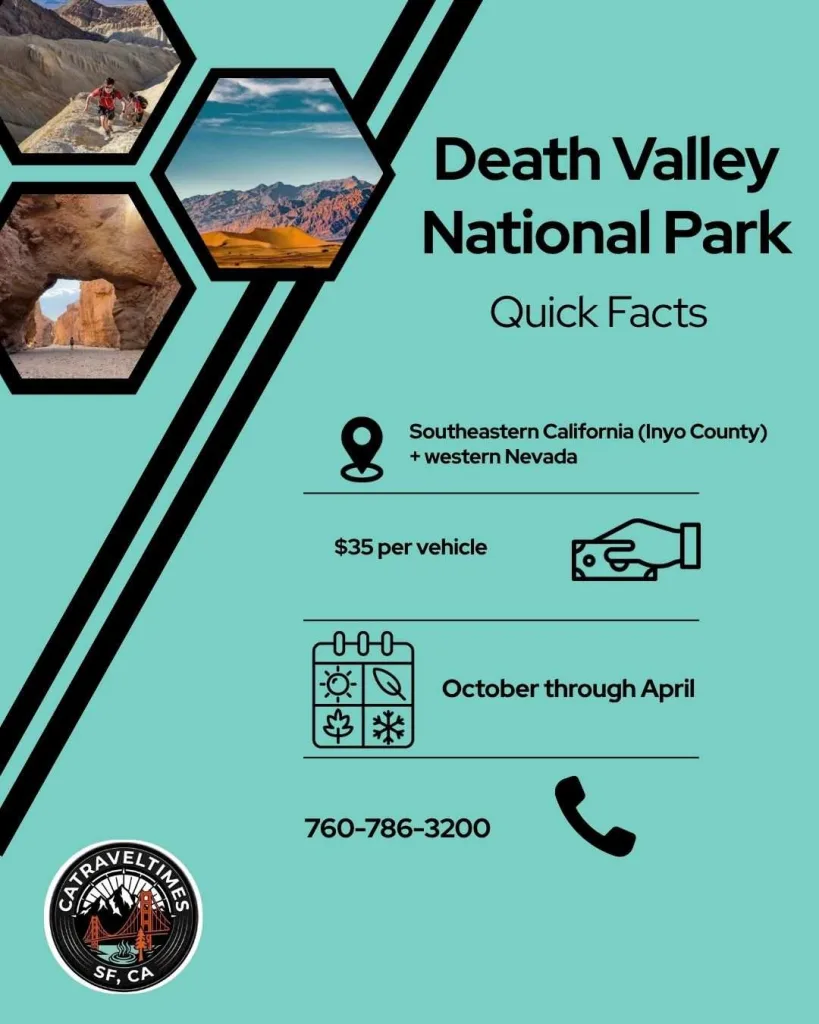
- Entry fee: $35 per vehicle, valid for 7 days. The America the Beautiful Annual Pass covers entry if you visit multiple national parks per year.
- Best time to visit: October through April. Summer temperatures regularly exceed 120°F — dangerous, not dramatic.
- Fuel up before entering: Gas inside the park (Stovepipe Wells and Furnace Creek) costs significantly more than outside. Fill up in Beatty, NV or Lone Pine, CA before entering.
- Water: Carry a minimum of one gallon per person for the day. Dehydration happens faster than you expect in the desert.
- Cell service: Essentially nonexistent inside the park. Download an offline Death Valley map or use a GPS device before you go.
How to get: Death Valley National Park
- San Francisco to Death Valley: ~450 miles | 7 to 7.5 hours via CA-99 S → CA-58 E → CA-190 W
- Santa Barbara to Death Valley: ~230 miles | 3.5 to 4 hours via US-101 N → CA-126 E → I-5 N → CA-14 N → CA-190 E
- Los Angeles to Death Valley: ~270 miles | 4 to 4.5 hours via CA-14 N → US-395 N → CA-190 E
- San Diego to Death Valley: ~310 miles | 4.5 to 5 hours via I-15 N → CA-127 N → CA-190 W
One Day in Death Valley Itinerary: Stop by Stop
This route is optimized for visitors coming from the east (Las Vegas side). If entering from the west, simply reverse the order of stops.
Zabriskie Point (Sunrise | ~6:00 AM)
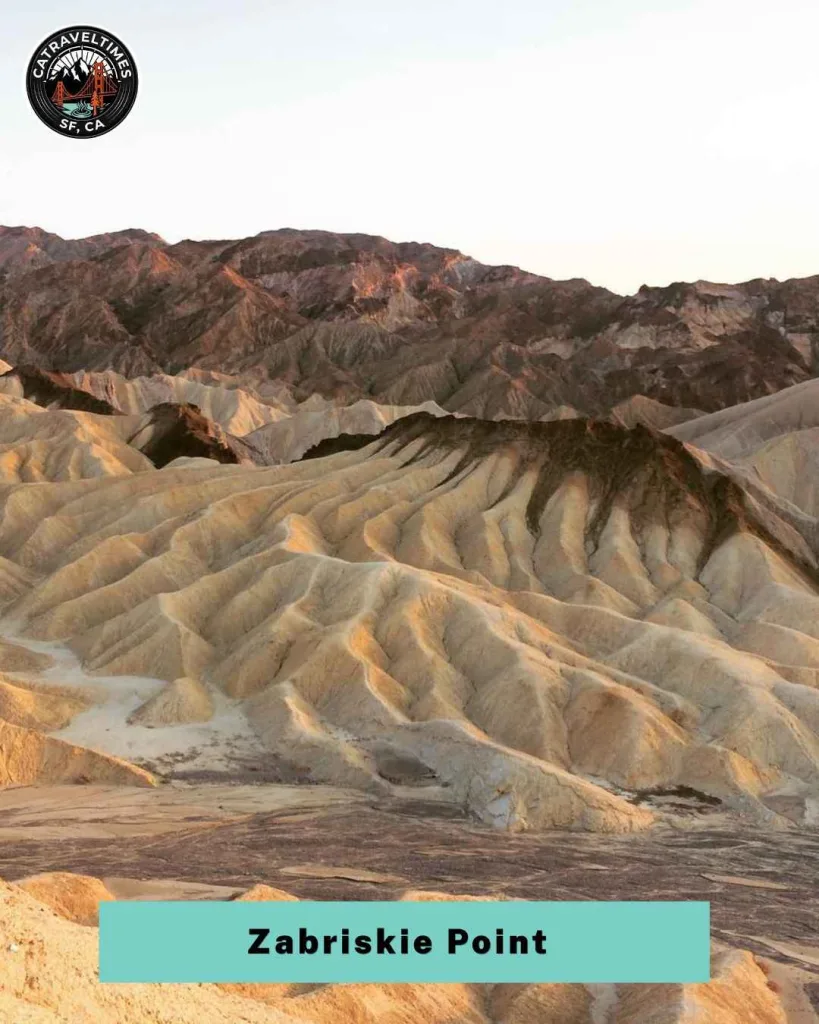
Start here at sunrise — it will be the most memorable 20 minutes of your trip. Zabriskie Point is a short, paved 0.4-mile walk from the parking lot to an elevated overlook above Death Valley’s sculpted badlands.
When the first light hits those golden ridgelines, they turn shades of amber, rust, and rose that no filter can improve. I arrived just before sunrise and had the viewpoint almost entirely to myself. The quiet, the color, and the sheer scale of the landscape genuinely stopped me in my tracks. Budget 30 to 45 minutes here.
Practical details:
- Free to access with park entry
- Large paved parking lot
- Accessible for all fitness levels
- Restrooms available nearby
Golden Canyon & Red Cathedral Trail (7:00 AM | Optional Hike)
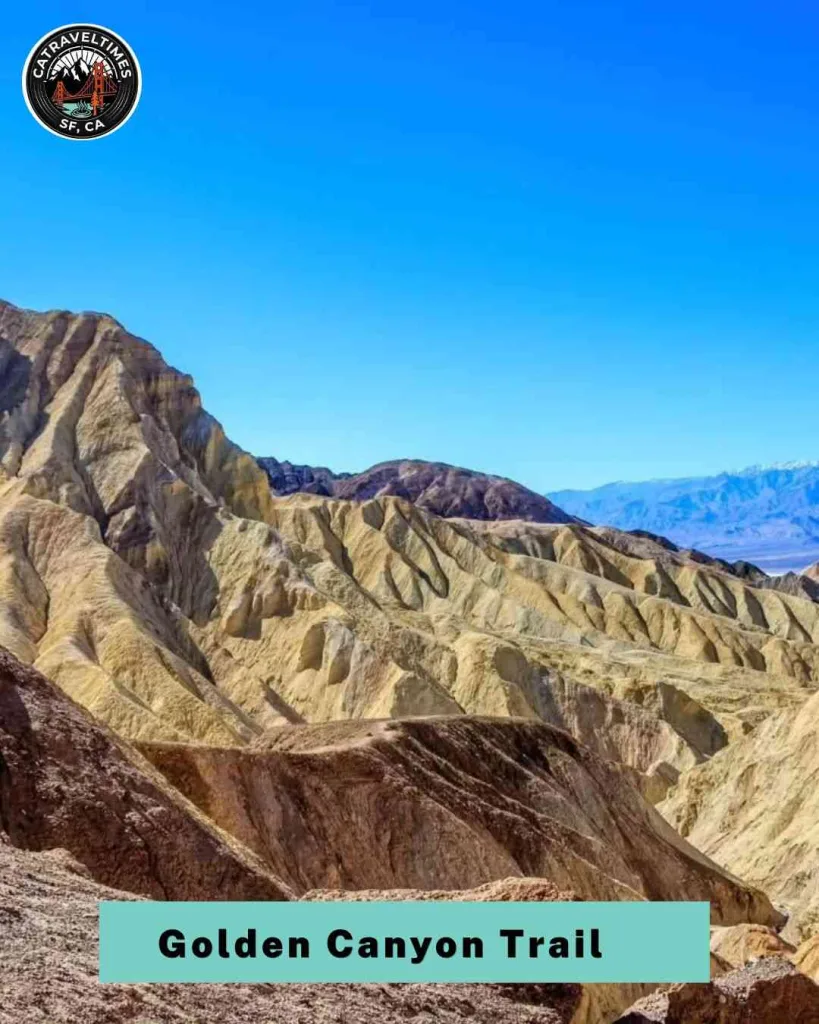
If you want one hike during your day, this is it. The Golden Canyon Trail is a 3-mile round trip that follows the canyon floor between walls that glow gold, red, and purple in the morning light. The trail ends at Red Cathedral — a towering red rock face that feels genuinely cathedral-like in its scale.
The colors here are most vivid in the early morning before direct overhead sunlight flattens them. I completed this trail in just over an hour at a comfortable pace. If you’re skipping hikes to maximize driving stops, you can bypass this one, but I’d encourage you to make the time.
Furnace Creek Visitor Center (9:00 AM)
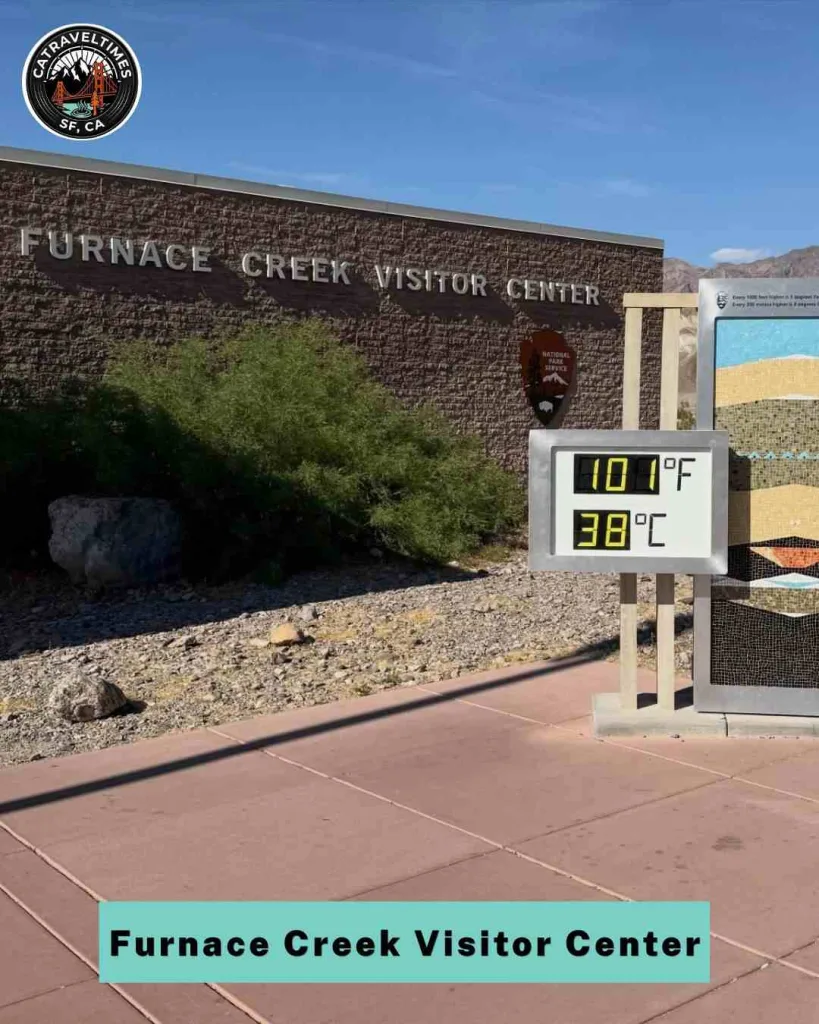
Stop here before diving into the southern section of the park. The Furnace Creek Visitor Center is the logistical heart of Death Valley National Park. Rangers post updated trail closures and road conditions here daily — critical information in a park where gravel roads can wash out unexpectedly.
Pick up a paper map as a backup, refill your water, and use the restrooms. The visitor center also has a short film about the park’s geology and ecology that’s worth 15 minutes of your time. The adjacent Furnace Creek area offers a gas station, general store, and dining options if you need to refuel.
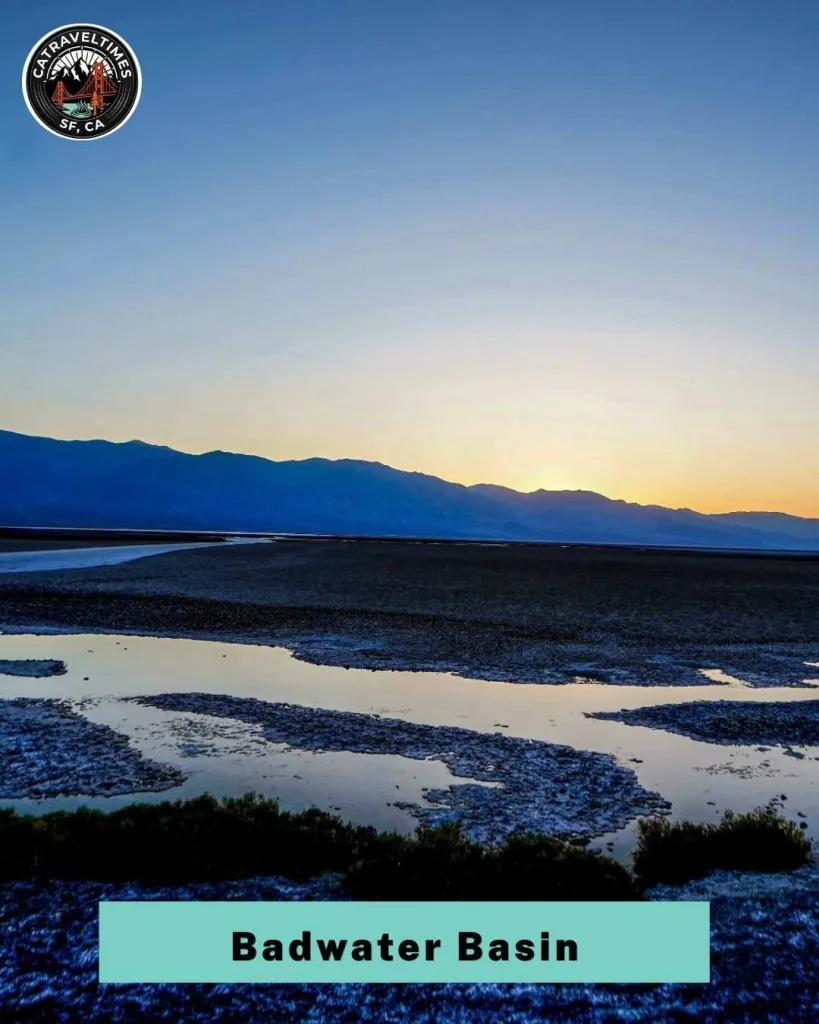
Badwater Basin (10:00 AM)
Badwater Basin is the undisputed centerpiece of any Death Valley itinerary — and it delivers. At 282 feet below sea level, this is the lowest point in North America, and standing there feels genuinely surreal. The vast salt flat stretches in every direction, white and cracked into hexagonal patterns that seem almost geometric by design.
I walked about a mile out from the parking area to get away from the crowd and into the full silence of the basin. The scale only becomes apparent once the other visitors shrink to tiny figures behind you. Budget 45 minutes to an hour here.
Practical tip: Look up at the canyon wall behind the parking lot — you’ll see a sign marking sea level high above you. That visual context makes the elevation difference click in a way that no statistic can.
Natural Bridge (11:15 AM)
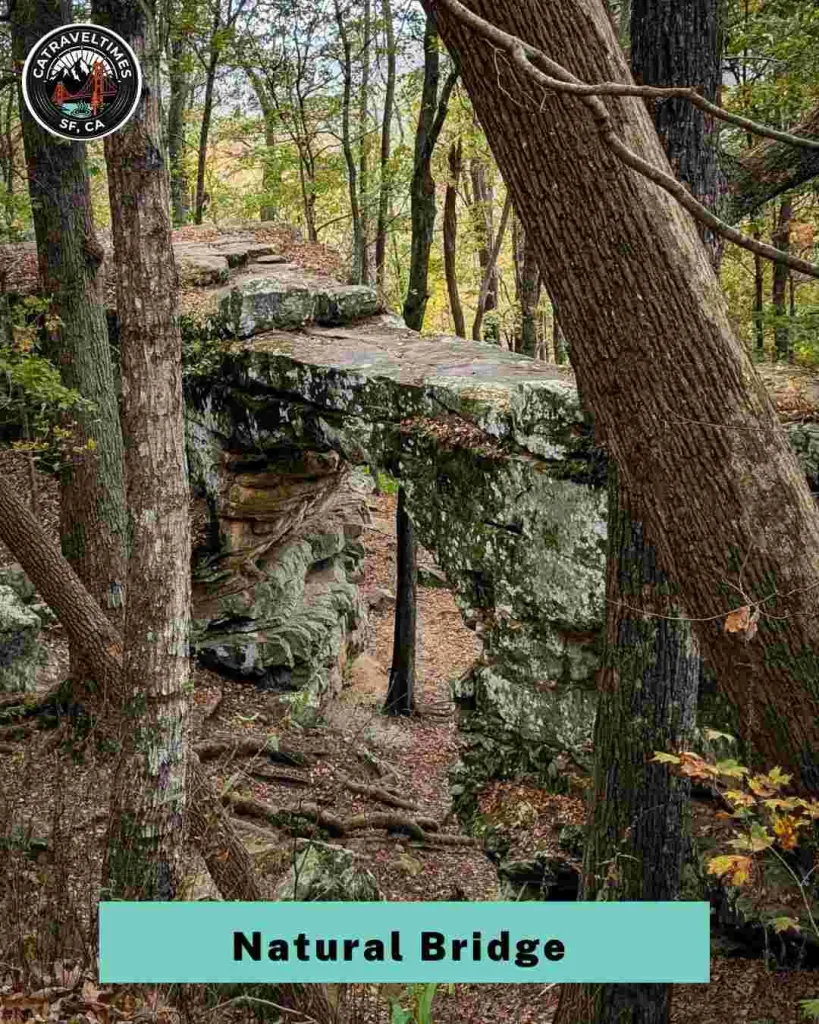
Natural Bridge is one of Death Valley’s most underrated stops, and it takes less than an hour. Access it via a short gravel road off Badwater Road. The hike itself is about 1.5 miles round trip along a canyon floor, ending at a dramatic natural arch spanning the canyon walls above you.
The surrounding rock walls display layers of geological history in bands of color — cream, rust, and charcoal. Because it’s slightly off the main road, Natural Bridge sees far fewer visitors than Badwater Basin, and the canyon quiet is a welcome contrast to the openness of the salt flats.
Artist’s Drive & Artist’s Palette (12:00 PM)
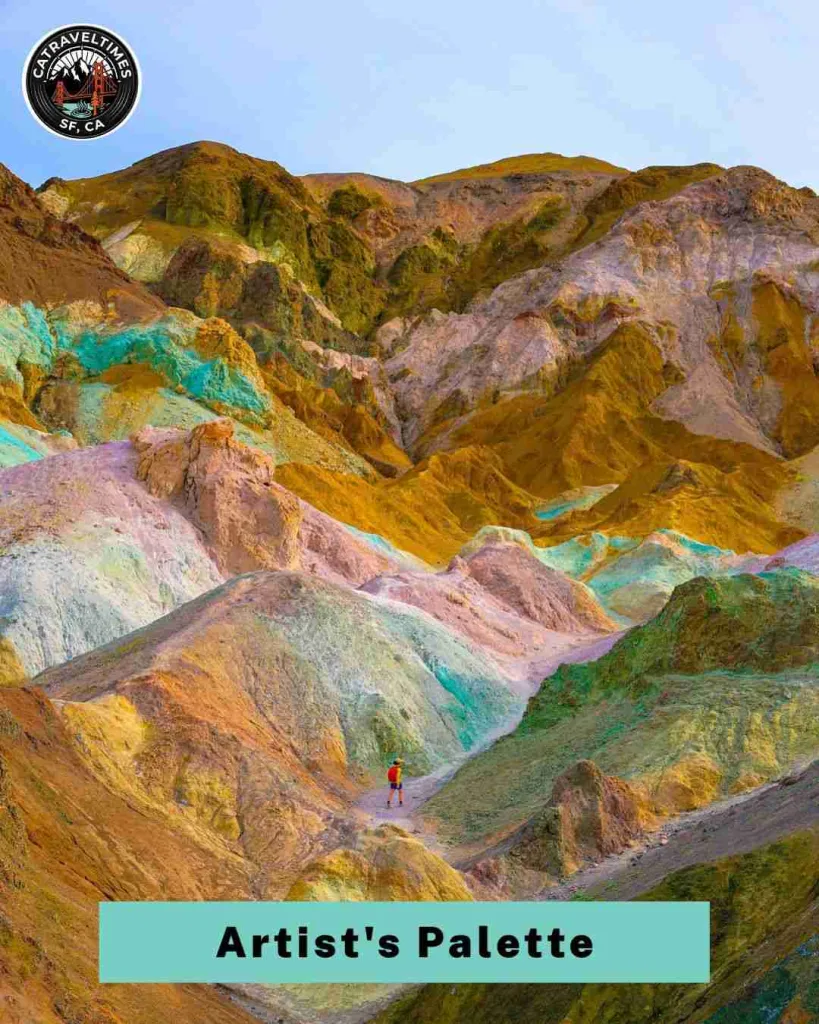
Artist’s Drive is a 9-mile one-way scenic loop, and Artist’s Palette is its undisputed highlight. This section of the park stopped me mid-sentence during a conversation because the colors seemed impossible for a natural landscape. The hills are daubed with pink, green, purple, yellow, and orange — the result of different minerals oxidizing over millennia.
The pinks and reds come from iron oxide, the yellows from sulfur compounds, and the greens from mica and chlorite. I pulled over at every viewpoint along the drive. Don’t rush this one. The short walk up to the Artist’s Palette overlook is steep but quick, and the panoramic view is worth every step.
Note: Artist’s Drive is one-way, entering from the south. Make sure you approach from the correct direction off Badwater Road.
Devil’s Golf Course (1:30 PM)
Devil’s Golf Course is a five-minute stop that’s genuinely unlike anything else I’ve seen. A short gravel road leads to an expanse of jagged salt crystal formations — spiky, sharp, and otherworldly. The name comes from an old saying that only the devil could golf here. What surprised me most was the sound: if you stand quietly and listen, you can hear a faint crackling as the salt crystals expand and contract in the heat. It’s one of those small details that makes a place feel alive despite appearing completely desolate. Don’t skip this one.
Mesquite Flat Sand Dunes (3:00 PM)
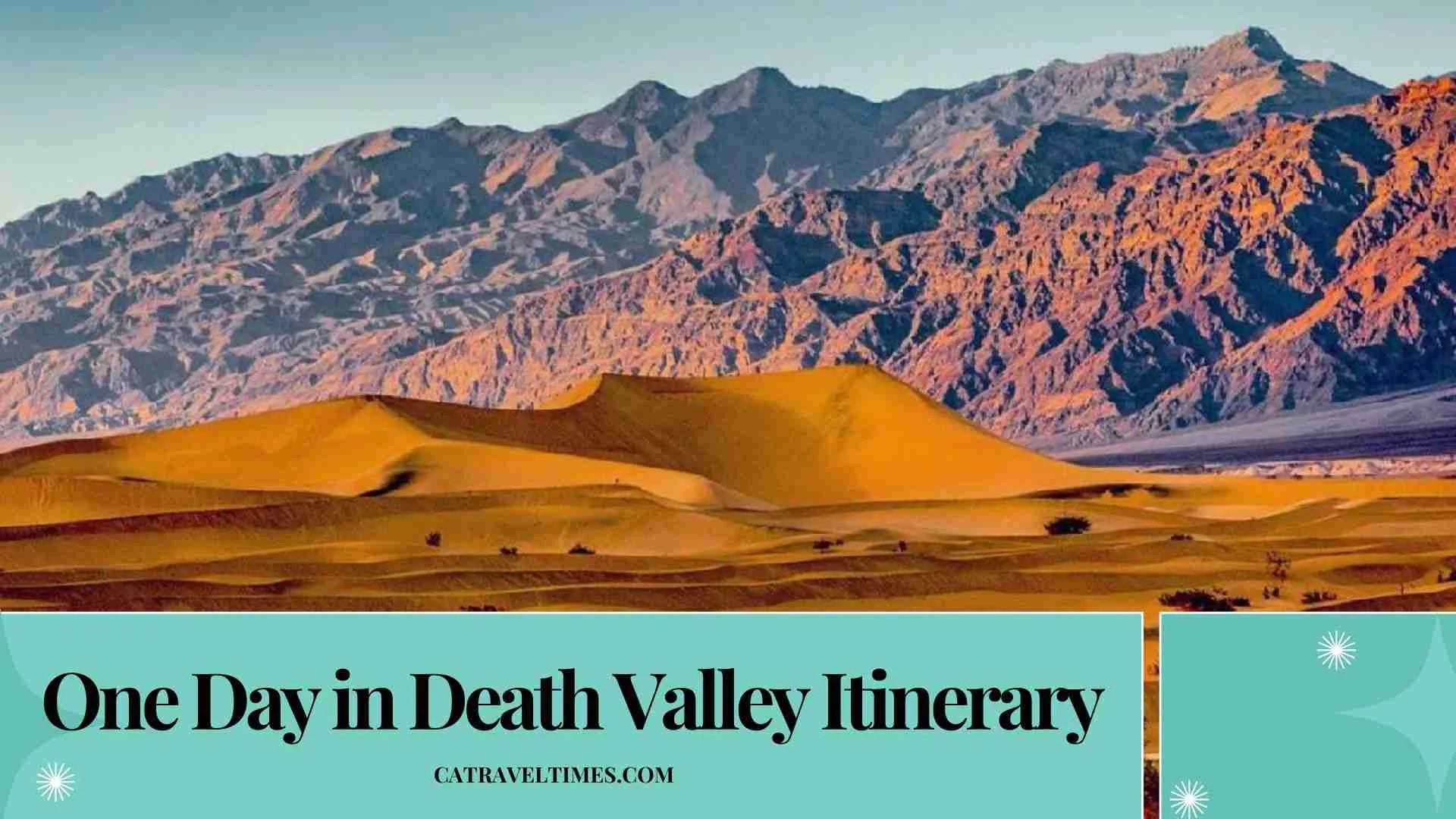
The Mesquite Flat Sand Dunes are where Death Valley surprises you by looking like the Sahara. These dunes sit just outside Stovepipe Wells, rising to about 100 feet at their highest point. There’s no marked trail — you simply walk into the dunes in whatever direction calls to you.
The late afternoon light (or early evening, depending on your timeline) creates long shadows across the rippled sand that make for stunning photographs. I spent about 45 minutes wandering through them, and it was one of the most meditative parts of my entire day.
Dante’s View (5:00 PM | Sunset)
End your day at Dante’s View for a sunset that justifies every mile of driving. This overlook sits at 5,476 feet above sea level and delivers a panoramic view of the entire Death Valley floor below — including Badwater Basin, which looks like a distant white mirror from up here. The elevation drop from valley floor to overlook is striking, and the temperature up here can be 20°F cooler than the basin.
I brought a light jacket and was glad I did. As the sun dropped behind the Panamint Range and the valley filled with shadow, I understood exactly why Death Valley earned its reputation as one of the most spectacular places in the American Southwest. For more on what makes this park extraordinary, check out all the National Parks guides on this site.
Death Valley Half Day Itinerary (Shortened Route)
If you only have a half day — arriving late morning or needing to leave by early afternoon — here’s the tightest possible version that still captures the essence of the park:
| Stop | Time Needed | Why It’s Essential |
| Zabriskie Point | 30 min | Best views in the park |
| Badwater Basin | 45 min | Lowest point in North America |
| Artist’s Drive | 45 min | Most visually dramatic scenery |
| Devil’s Golf Course | 15 min | Unique salt formations |
This condensed route takes approximately 4 hours including driving between stops.
What to Pack for One Day in Death Valley
I’ve learned from experience that what you pack matters more in Death Valley than almost any other national park. Here’s my non-negotiable packing list:
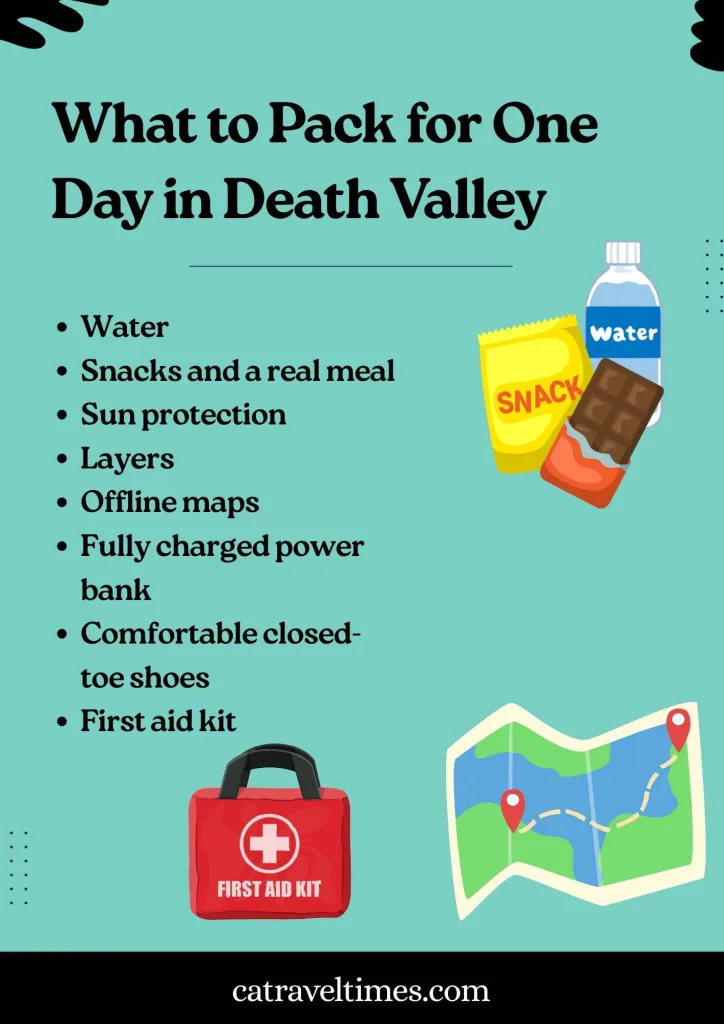
- Water: 1 gallon per person minimum — more in summer
- Snacks and a real meal: options inside the park are limited and expensive
- Sun protection: sunscreen SPF 50+, hat with full brim, UV-blocking sunglasses
- Layers: temperatures drop sharply at higher elevations (Dante’s View especially)
- Offline maps: download before you lose cell service
- Fully charged power bank: your phone battery drains faster in heat
- Comfortable closed-toe shoes: essential for salt flat and canyon hikes
- First aid kit: always carry one in desert environments
Where to Stay Near Death Valley
If you want to make the most of a one day visit to Death Valley without a brutal same-day drive, staying nearby the night before is a smart move. Here are the best options by budget:
Inside the park:
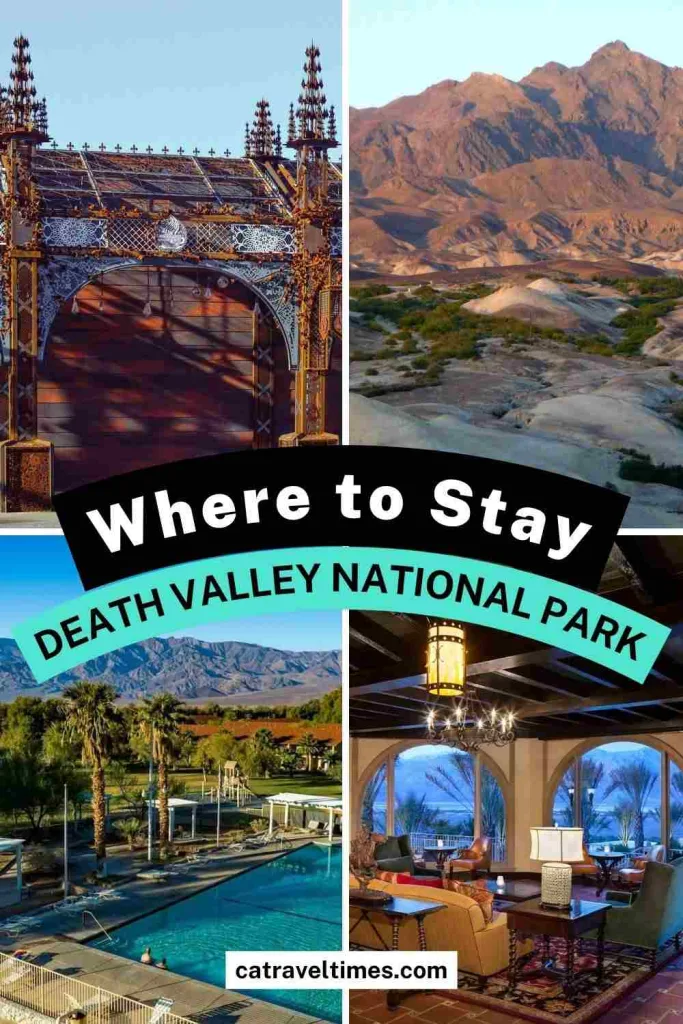
- The Inn at Death Valley (luxury) — stunning historic property near Furnace Creek
- The Ranch at Death Valley (mid-range) — casual resort with pool, restaurant, and central location
- Furnace Creek Campground (budget) — the only campsite taking advance reservations via recreation.gov
Outside the park:
- Beatty, NV — 30 minutes from the eastern entrance; affordable motel options
- Pahrump, NV — about 1 hour from the park; good selection of hotels
- Lone Pine, CA — 1.5 hours from the western entrance; charming town with great food
For a more detailed breakdown of every accommodation option inside and outside the park — including photos, price ranges, and booking tips — I’ve covered it all in my complete Death Valley National Park guide.
How Many Days Do You Need at Death Valley?
One full day covers the highlights comfortably with good planning. A death valley itinerary 2 days allows you to add Ghost Town at Rhyolite, Mosaic Canyon, Ubehebe Crater, and the remote Racetrack Playa (where rocks mysteriously move across the desert floor). If you love hiking or photography, two days is genuinely the sweet spot. Three or more days is for the dedicated explorer who wants to push into backcountry areas and 4WD roads.
For everything you need to plan a complete visit — from entrance fees to permit requirements — read our full Death Valley National Park guide, which covers the park in comprehensive detail.
Bonus Tips I Wish I’d Known Earlier
These are the details no one tells you until you’ve already made the mistake:
- Artist’s Drive is one-way — you must enter from the south, not the north. Arriving from the wrong direction means a significant detour.
- Gravel roads are rougher than they look on maps — Natural Bridge Road and Devil’s Golf Course Road are both passable in a standard car, but drive slowly.
- Don’t save Dante’s View for last if you’re tight on time — the road up is 13 miles round trip on a winding mountain road and takes longer than you expect.
- The park entrance fee is charged even if you’re just passing through — plan for it.
- Morning and evening are dramatically cooler than midday — structure your active stops accordingly, even in mild months.
For a deeper look at specific activities, our guide to top things to do in Death Valley National Park covers every major attraction with detailed logistics.
Final Thoughts
I came to Death Valley expecting stark desolation and left with one of my most vivid travel memories. The salt flats at Badwater, the painted hills of Artist’s Palette, the silence of Natural Bridge none of it felt like what I’d prepared myself for. It felt like something wilder and more alive. If you’re doing a one day in Death Valley visit and you follow this itinerary closely, I genuinely believe you’ll feel the same way. Plan it right, start early, and let the park do what it does best: surprise you.