Redwood National Park: The Complete Travel Guide 2026
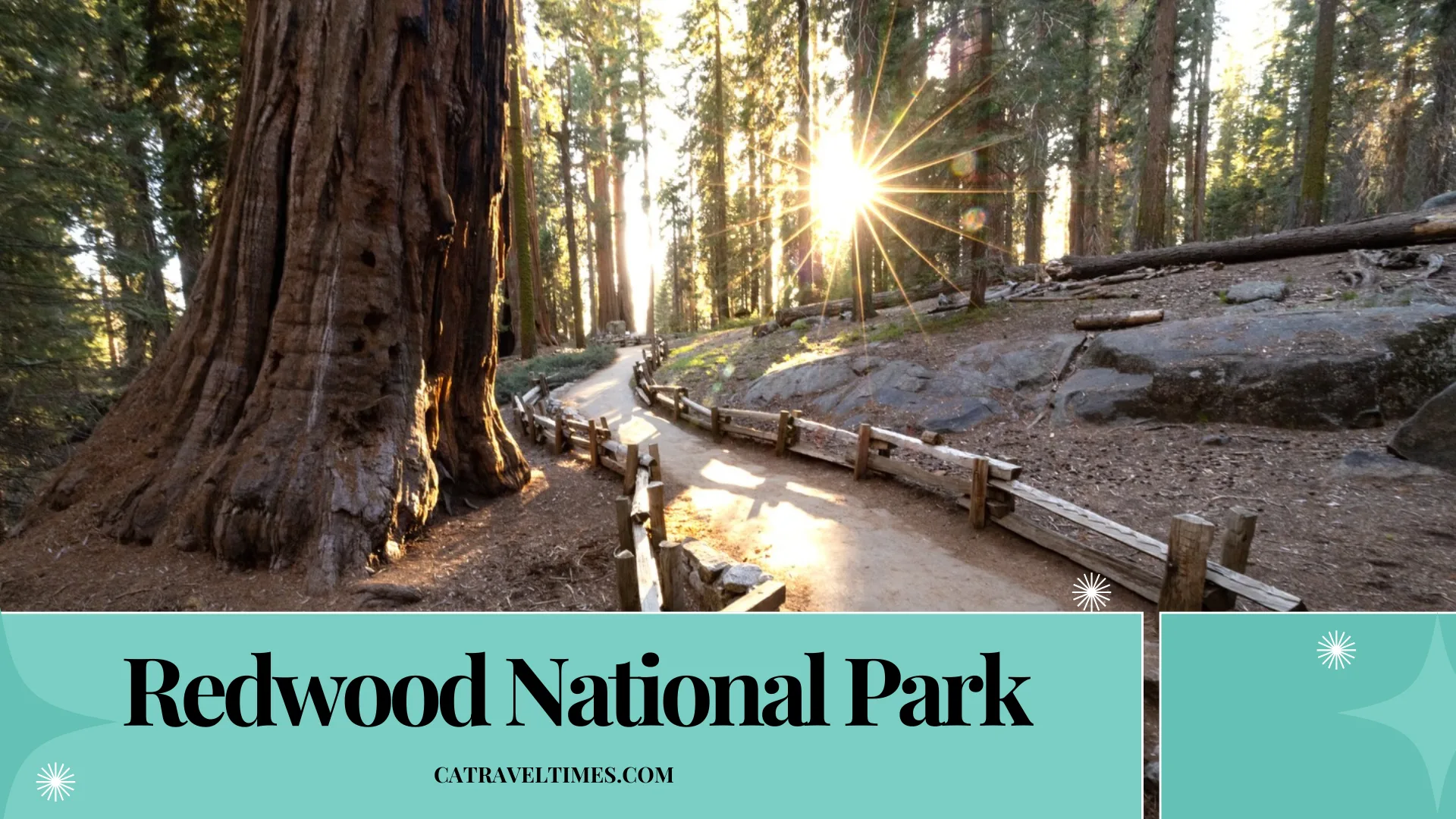
The first time I stood at the base of a 300-foot coastal redwood, I forgot how to speak. I am Vanessa, a San Diego native, researcher, and the founder of CA Travel Times. Redwood National Park is, without question, one of the most humbling places I have visited in all of California. I had my maps, my weather forecasts, and my trail permits ready. But nothing prepared me for what it actually feels like to be swallowed whole by an ancient forest.
If you are planning a trip and want to know everything from how to get there and what it costs, to the best trails, camping spots, and what time of year is truly ideal, this guide has it all. I built this from personal experience and rigorous research so that you can walk in with complete confidence.
Redwood National Park at a Glance — Key Facts
Here are the essential facts every visitor needs to know before arrival:
| Fact | Detail |
| Official Name | Redwood National and State Parks (RNSP) |
| Location | Northwestern California, near Crescent City |
| Total Size | 131,983 acres (federal + state combined) |
| Established | 1968 (National Park); state parks since the 1920s |
| UNESCO Status | World Heritage Site & Biosphere Reserve |
| Tallest Tree | Hyperion — 380.3 feet tall (exact location kept secret) |
| Average Tree Age | 500–700 years; some over 2,000 years old |
| Wildlife | Roosevelt elk, black bears, mountain lions, banana slugs |
| Park Phone | 707-464-6101 |
| Park Address | 1111 Second Street, Crescent City, CA 95531 |
What Is Redwood National Park?
Redwood National and State Parks (RNSP) is a joint partnership between one federal national park and three California state parks. Together, they protect nearly 40,000 acres of old-growth redwoods — roughly half of all remaining ancient redwood forests on Earth. When most people say “Redwood National Park,” they mean the entire system. You can explore more of California’s protected landscapes on our National Parks page.
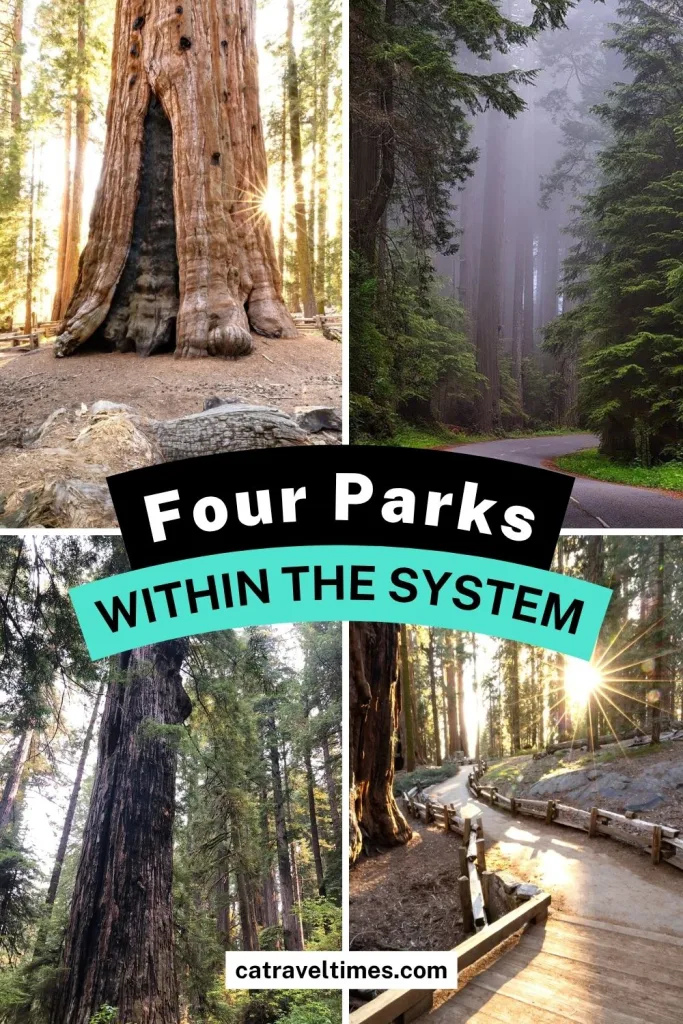
The four parks within the system each have a distinct personality:
| Park | What It’s Known For |
| Redwood National Park | Largest unit (71,000 acres); access to Tall Trees Grove & Hyperion area |
| Prairie Creek Redwoods State Park | Famous Roosevelt elk herds; Fern Canyon; Newton B. Drury Scenic Parkway |
| Del Norte Coast Redwoods State Park | Stunning coastline; Mill Creek Campground; dramatic mixed terrain |
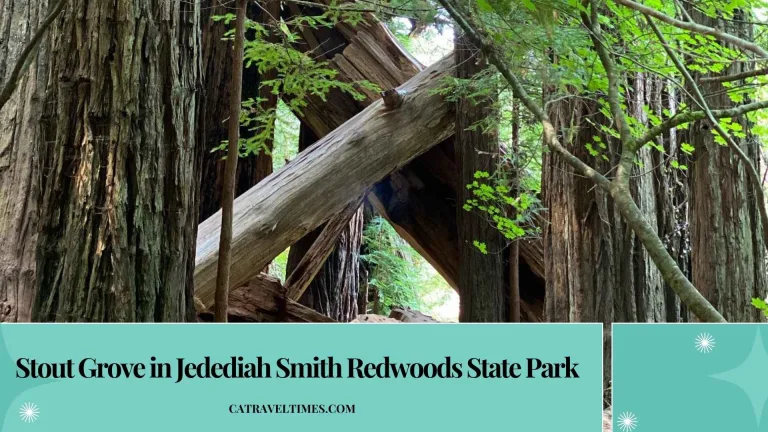
| Jedediah Smith Redwoods State Park | Densest, most pristine old-growth forest; Stout Grove; Smith River |
Once you know which of these four parks holds what you came to see, directions and logistics suddenly make a lot more sense — which brings me to the map.
Understanding the Redwood National Park Map & Directions
Before my trip, I had no idea how spread out this place actually was and it cost me half a morning of wrong turns. The park is not one neat unit you drive into; it is four separate parks stitched together across 40 miles of northern California coastline.
I have added a custom Google map below, marking every trailhead, visitor center, campground, and scenic drive so you can plan your exact route before leaving home. Download the NPS official map as a backup too — cell service vanishes the moment the redwoods close in around you.
Is Redwood National Park Open? Hours & Year-Round Access
Yes, Redwood National and State Parks are open 24 hours a day, 365 days a year, with no seasonal closures for the park itself. This was one of the things I loved most about planning my trip: no stressful permit windows just to enter.
That said, specific roads, campgrounds, and visitor centers operate on seasonal schedules. Some unpaved roads, like Davison Road to Gold Bluffs Beach can close temporarily after heavy rain, so always check current conditions before setting out.
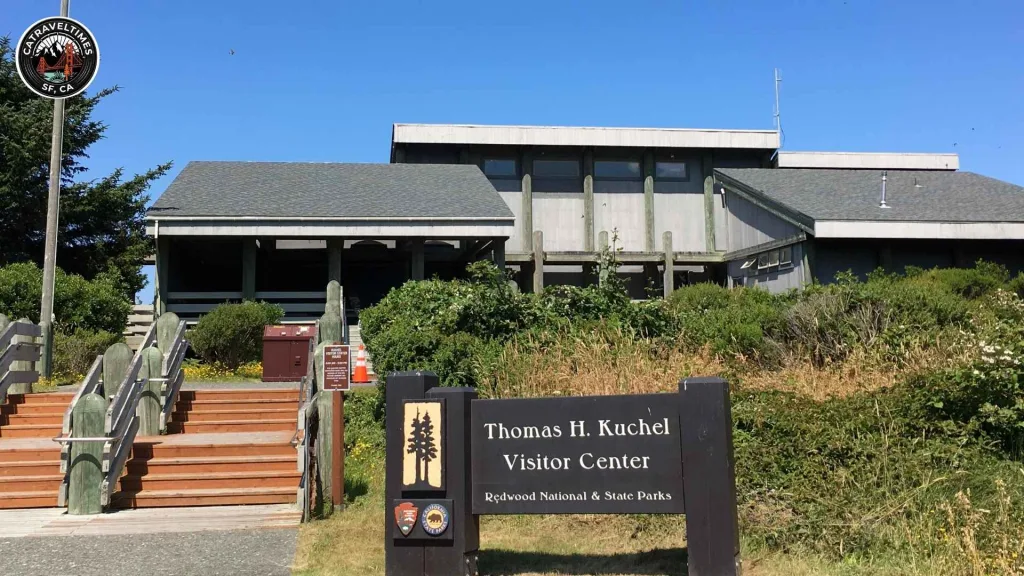
Redwood National Park Visitor Centers — Where to Start
There are five visitor centers spread across the park system, and stopping at one before diving into trails is genuinely worth the 20 minutes. Rangers here gave me local intel that no app could replicate — including a tip about a fresh elk sighting near Elk Prairie that made my afternoon.
| Visitor Center | Best For |
| Thomas H. Kuchel Visitor Center (Orick) | Southern entry point; permits for Tall Trees Grove; great introductory films |
| Prairie Creek Visitor Center | Trail info for Fern Canyon and Gold Bluffs area; elk meadow updates |
| Crescent City Information Center | Northern hub; nearest to downtown Crescent City lodging |
| Hiouchi Visitor Center | Gateway to Jedediah Smith; backcountry permits; Smith River info |
| Jedediah Smith Visitor Center | Stout Grove access; Howland Hill Road guidance; kayak tour info |
After your visitor center stop, the next thing most people want to nail down is whether they need to pay anything — and the answer might genuinely surprise you.
Redwood National Park Tickets & Entrance Fees — What You’ll Actually Pay
This is the part that surprises most first-time visitors: entering Redwood National Park itself is completely free. There are no entrance gates, no toll booths, and no advance tickets required just to access the national park. However, several specific areas within the state parks do charge fees — and a few popular spots require timed permits during peak season.
| Area / Activity | Fee / Requirement |
| Redwood National Park (general entry) | Free — no ticket required |
| Gold Bluffs Beach Day-Use | $12 per vehicle; free permit required May 15 – Sept 15 |
| Fern Canyon (via Davison Road) | Included in Gold Bluffs Beach fee; permit required May–Sept |
| Tall Trees Grove | Free permit required year-round; issued at Kuchel VC (limited daily) |
| Jedediah Smith Day-Use (Smith River) | $8 per vehicle |
| Developed Campgrounds | $35/night (family sites); book via Reserve California |
| Backcountry Camping | Free permit; issued in person up to 24 hours in advance |
| America the Beautiful Pass | Covers all state park fees — highly recommended |
My honest recommendation: grab an America the Beautiful Annual Pass ($80) before your trip. It paid for itself on day one and covered every state park fee I encountered throughout the system.
Once you have the logistics of cost sorted, the next thing I always audit before any California destination is the weather — and this park has a climate unlike anything else in the state.
Redwood National Park Weather — What to Expect Each Season
The weather here is unlike anywhere else in California. The coastal marine climate keeps temperatures mild year-round but brings thick fog and frequent rain, especially in winter and early spring. I visited in late September and was genuinely shocked by how cool and damp the mornings were, even with sunshine by afternoon.
| Season | Conditions | Best For |
| Spring (Mar–May) | Lush, green, frequent showers; wildflowers bloom | Smaller crowds; beautiful forest colors |
| Summer (Jun–Aug) | Driest months; mild 55–65°F; morning fog common | Peak season; all facilities open; busiest period |
| Fall (Sep–Nov) | Clear, warm days; cool nights; light rain resumes | Sweet spot — good weather with fewer visitors |
| Winter (Dec–Feb) | Heavy rain; 45–55°F; some road closures | Maximum solitude; magical misty forest atmosphere |
Pack layers regardless of when you visit. Even summer mornings can feel like 50°F under the forest canopy. A waterproof shell is non-negotiable.
Once you know when you want to visit, the next practical question is how you actually get there — and this is where honest planning really matters.
Closest Airport to Redwood National Park — How to Arrive
Getting to this park requires some planning — it sits in one of California’s most remote corners. The closest airport to Redwood National Park with regular commercial service is California Redwood Coast–Humboldt County Airport (ACV) in McKinleyville, approximately 25 miles south of the park and a 35-minute drive. Airlines including United and Avelo serve this airport with connections from San Francisco.
| Airport | Distance | Drive Time | Notes |
| Del Norte County Airport (CEC) | ~4 miles from Crescent City | ~10 min | Closest, but very limited flights |
| CA Redwood Coast–Humboldt County (ACV) | ~25 miles south | ~35 min | Best option; United & Avelo flights |
| Rogue Valley Intl–Medford (MFR) | ~100 miles north | ~2 hours | Good Oregon option with more airlines |
| San Francisco International (SFO) | ~320 miles south | ~5.5 hours | Most flights; ideal for a road trip approach |
| Portland International (PDX) | ~360 miles north | ~6 hours | Good for combining with Oregon coast |
I flew into SFO and drove north along Highway 101 — it is one of the most spectacular drives in the country and I cannot recommend it enough as an approach. You pass through wine country, the Sonoma and Mendocino coasts, and eventually the Avenue of the Giants before the redwoods swallow you completely.
If flying and driving are not options, it is worth knowing whether you can arrive by rail — and the honest answer is a nuanced one.
Redwood National Park Train — Can You Arrive by Rail?
There is no direct train service to Redwood National Park. The closest Amtrak station is in Klamath Falls, Oregon, roughly 178 miles from the park. From there, you would need to arrange a rental car or bus connection. Amtrak Thruway bus service does connect several California and Oregon cities directly to Crescent City, which serves as a practical alternative to driving if you do not have a vehicle.
There is also no shuttle system within the park itself. A car is essentially required to explore the full park system — the areas are spread across 40+ miles, and trail access points are not walkable from each other. If you do not drive, look into guided bus tours departing from Arcata or Eureka as an alternative.
And once you have your transport sorted, the most common question I get from readers planning this trip is simply: when should I actually go?
Best Time to Visit Redwood National Park
The best time to visit Redwood National Park is late May through June or September through early October, which I call the shoulder sweet spots. Late May offers lush green forest after winter rains without the full summer crowds. September delivers the clearest skies and warmest afternoons, with significantly thinner visitor numbers than July or August.
Summer (July–August) is peak season and the only time all visitor centers and facilities run at full capacity. It is also when you need reservations for Fern Canyon permits and Gold Bluffs Beach well in advance. Fog is common in summer mornings but usually burns off by midday. If solitude and atmosphere are your priority over sunny weather, a January or February visit in the misty rain can feel genuinely otherworldly.
Best Things to Do in Redwood National and State Parks
The park offers far more than just walking among tall trees. Here is everything worth putting on your list. For a full breakdown, visit our guide to things to do in Redwood National and State Parks.
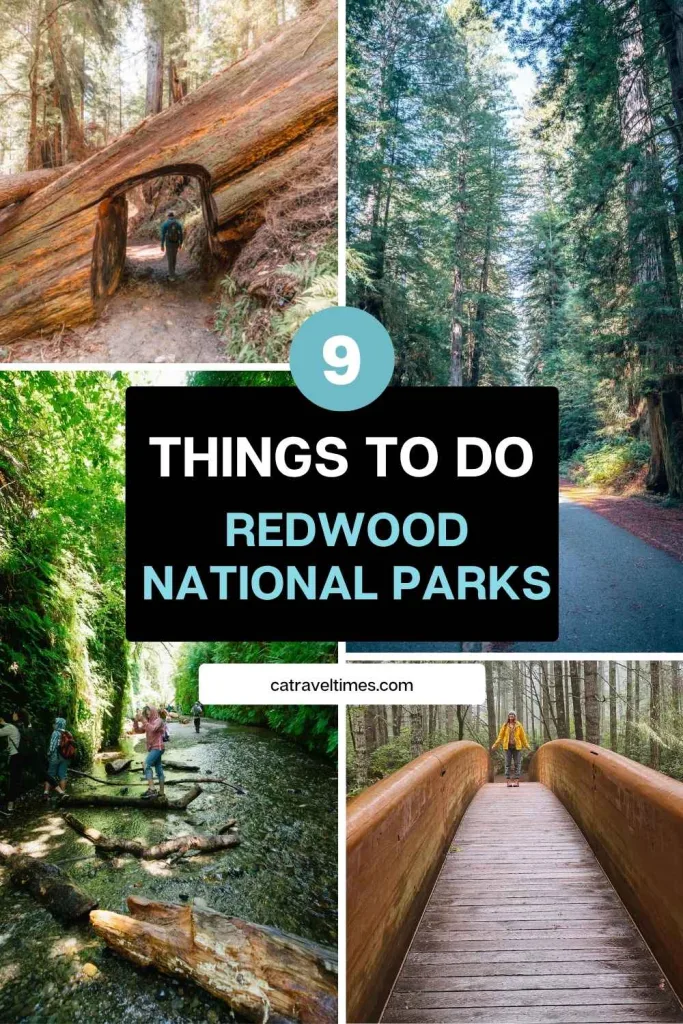
- Hike the Fern Canyon Loop — Walking the floor of a 50-foot-deep canyon carpeted wall-to-wall in prehistoric ferns is unforgettable. Filmed in Jurassic Park 2, the 1.3-mile loop feels like another world entirely. Read the full Fern Canyon hike guide before you go.
- Walk Through Tall Trees Grove — Permit-only, intentionally limited, and completely worth it. I was one of eight people in a grove where 360-foot trees block out the sky. Home to Hyperion — the world’s tallest known tree at 380.3 feet.
- Drive the Newton B. Drury Scenic Parkway — A free 10-mile paved drive through Prairie Creek’s old-growth forest. I pulled over six times. Perfect for visitors with limited time who cannot commit to a full hike.
- Spot Roosevelt Elk — Prairie Creek has one of California’s largest free-roaming elk herds. I watched a bull graze 40 yards from the road. Visit early morning or late afternoon near Elk Prairie Campground for the best sightings.
- Drive Howland Hill Road — The densest, darkest, most primeval forest I have ever driven through. This narrow 12-mile unpaved road leads to Stout Grove in Jedediah Smith Redwoods State Park and the Grove of the Titans boardwalk. No RVs or trailers allowed.
- Visit Lady Bird Johnson Grove — A flat, accessible 1.4-mile loop through massive old-growth trees. Dedicated in 1969, it is ideal for families or anyone wanting big-tree impact without serious elevation gain.
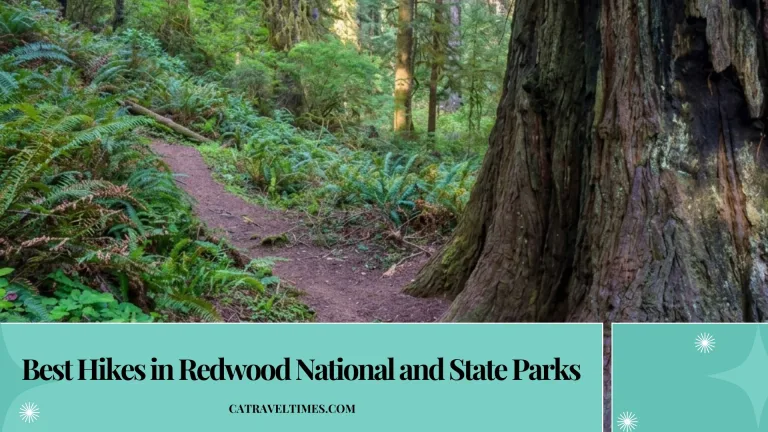
- Explore the Best Hiking Trails — Over 200 miles of trails cross the four parks. Our best hikes in Redwood National and State Parks guide breaks down every major route by difficulty, mileage, and what makes each one worth doing.
- Visit Trees of Mystery — Touristy but genuinely worth it. A gondola ride lifts you above the old-growth canopy for views you simply cannot get on foot. Find it just north of Klamath on Highway 101. Full details in our Trees of Mystery guide.
- Drive the Avenue of the Giants — A 31-mile scenic highway through Humboldt Redwoods State Park, about an hour south of the main system. Do not skip Founders Grove in Avenue of the Giants — the Founders Tree stop alone is worth the detour. Full guide at Avenue of the Giants.
Redwood National Park Camping — Everything You Need to Know
Camping is the only way to stay inside the park overnight — there are no lodges or hotels within park boundaries. There are four developed campgrounds and seven designated backcountry sites across the system. I camped at Jedediah Smith Campground and woke up every morning with giant redwoods literally overhead. The campfire crackle against complete forest silence at night is something I still think about.
| Campground | Key Features | Fee |
| Jedediah Smith | Smith River access; dense old-growth setting; max 25ft motorhomes | $35/night |
| Mill Creek (Del Norte) | Forested, secluded; creek nearby; max 31ft vehicles | $35/night |
| Elk Prairie (Prairie Creek) | Year-round; elk meadow views; RVs up to 27ft welcome | $35/night |
| Gold Bluffs Beach (Prairie Creek) | Beach camping; ocean sounds; 24 sites; no hookups | $35/night |
| Backcountry Sites (7 locations) | Free; permit required; hike, bike, or raft access only | Free |
Book developed campgrounds through Reserve California — reservations are essential from May through September. Backcountry permits are free, first-come-first-served, and issued in person at the Hiouchi or Kuchel visitor centers up to 24 hours in advance.
For those who prefer a proper bed after a long trail day, you have solid options just outside the park boundaries — and the choice of where to base yourself matters more than most guides let on.
Where to Stay and Eat Near Redwood National Park?
There are no hotels or restaurants inside the park itself — so where you base yourself matters. I stayed in Crescent City for my entire trip and found it the most practical choice. It sits just minutes from Jedediah Smith Redwoods, has full grocery and gas options, and offers a range of accommodation at reasonable prices.
Where to Stay:
- Crescent City — Best overall base. Close to the northern parks, budget-friendly hotels, and easy access to Highway 101. Options range from national chains to cozy coastal vacation rentals.
- Eureka / Arcata — About an hour south of the park. Better restaurant scene and more accommodation variety, but adds daily drive time to the trails.
- Trinidad — A charming small coastal town between Eureka and the park. Higher-end bed and breakfasts, stunning ocean views, and a quieter atmosphere than Crescent City.
- Klamath — Tiny town right inside the northern park boundary. Very limited options but puts you closest to Prairie Creek and the elk meadows.
Where to Eat:
- Crescent City has the widest dining selection near the park — seafood is the obvious choice this close to the Pacific. Local spots serve fresh Dungeness crab that I still think about.
- Orick has a small handful of casual diners near the southern park entrance — good for a quick breakfast before hitting Tall Trees Grove.
- Palm Café (Crescent City) — A local favourite for hearty breakfast before a long trail day.
- Good Harvest Café (Arcata) — Worth the stop if you are driving up from the south. Farm-to-table menu with excellent vegetarian options.
Pack a cooler and lunch for trail days regardless of where you stay. Most trailheads have zero food access, and driving out mid-day to eat costs you hours of prime morning light in the forest. For a full planning breakdown, see our guide on where to stay in Redwood National and State Parks.
How Many Days Do You Need? Suggested Itineraries
The park rewards longer visits, but even a day trip delivers memories. Here is how I would structure it depending on your time:
- 1 Day: Drive Newton B. Drury Scenic Parkway → Fern Canyon → Elk Prairie meadow at dusk
- 2 Days: Add Tall Trees Grove permit hike and Stout Grove via Howland Hill Road
- 3 Days: Follow our complete 3 days in Redwood National Park itinerary — the most efficient way to cover all four parks
- 4+ Days: Add Avenue of the Giants, Trees of Mystery, Klamath River Overlook, and the backcountry coastal trails
Redwood National Park Photos — Best Spots for Photography
The photographic opportunities here are extraordinary, but light matters enormously. The forest floor is dark even at midday, so golden hour — the first 30 minutes after sunrise and the last 30 before sunset — is when shafts of light pierce through the canopy and create those iconic glowing-cathedral-in-the-forest shots. My favourite photo spots:
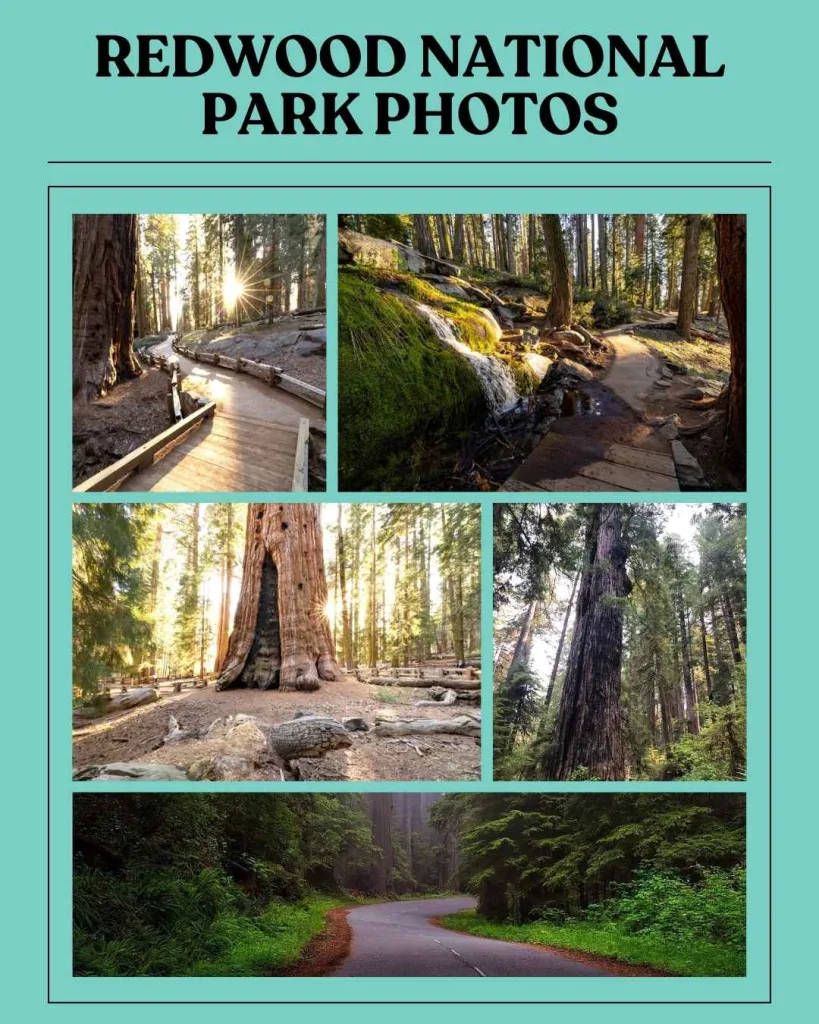
- Fern Canyon walls — the green-on-green texture is unlike anything else on camera
- Howland Hill Road — shoot straight down the road into the vanishing green tunnel
- Stout Grove — the Smith River in the background with 300-foot trees is breathtaking
- Lady Bird Johnson Grove at dawn — near-zero foot traffic and misty light
- Klamath River Overlook — wide-angle shots of river meeting Pacific Ocean
- Gold Bluffs Beach — redwood trees behind ocean dunes is a surreal composition
Bring a wide-angle lens if you can — standard focal lengths simply cannot capture the full height of these trees. A tripod is essential in low-light forest conditions.
What Visitors Say — Redwood National Park Reviews & Honest Tips From My Visit
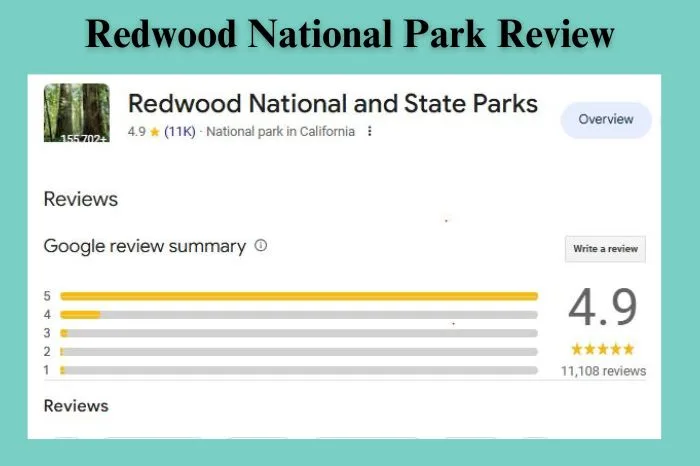
Redwood National and State Parks holds a 4.9-star rating across 11,108 Google reviews — and honestly, that does not surprise me at all. The overwhelming consensus is one of genuine awe, with visitors consistently describing it as the most humbling natural experience of their lives. Common praise centers on the silence and scale of the old-growth groves, the uncrowded trails compared to Yosemite or Yellowstone, and the surprising variety of the landscape — forest, coast, river, and meadow all packed into one park.
Common frustrations I noticed and experienced myself:
- No cell service: Download offline maps before entering. Google Maps will fail you mid-forest.
- Davison Road washouts: The unpaved road to Gold Bluffs Beach and Fern Canyon closes after rain. Always check conditions at the visitor center first.
- Permit confusion: Tall Trees Grove and Fern Canyon permits have different windows and systems. Read the NPS permit page carefully before your trip date.
- Underestimating distances: The four parks span 40+ miles. What looks close on a map is often a 45-minute drive. Build in more transit time than you think you need.
Practical Information — Everything Else You Need

Pets
Pets are allowed in developed campgrounds and on paved roads but are not permitted on most hiking trails within the park. The park offers a BARK Ranger program for dogs — check with any visitor center for details.
Accessibility
All five visitor centers are wheelchair accessible. Beach wheelchairs are available free of charge at the Kuchel and Prairie Creek visitor centers. Lady Bird Johnson Grove has a paved, accessible 1.4-mile loop. The Newton B. Drury Scenic Parkway is fully accessible by vehicle.
Safety
Ocean currents along the park’s coastline are extremely dangerous — never turn your back on the waves. River crossings in Fern Canyon can be tricky after rain; waterproof boots are recommended. The NPS Redwood safety page has current conditions and hazard advisories.
Food & Gas
There are no restaurants or food services inside the park. Crescent City has full services including grocery stores, restaurants, and gas stations. If you are heading into the Orick area from the south, fill up before you get there — gas options between Orick and Crescent City are limited and expensive. I learned this the hard way.
Is Redwood National Park Worth Visiting?
Without hesitation — yes. Redwood National Park is the kind of place that recalibrates your sense of scale and time. Standing beneath a tree that was alive when the Roman Empire was still standing is genuinely disorienting in the best possible way. The park is less crowded than most other major national parks, more accessible than you might expect for such a remote location, and free to enter.
Whether you have one day or five, whether you camp in the forest or stay in Crescent City, and whether you are a veteran hiker or a first-time national park visitor — this park delivers. Plan ahead for permits, download your offline maps, pack layers, and go. For more California destination guides built on boots-on-the-ground research, explore everything we cover at CA Travel Times.
Frequently Asked Questions
Q1. Is Redwood National Park free to enter?
Yes — entering Redwood National Park itself is completely free with no ticket or entrance fee required. However, specific areas like Gold Bluffs Beach ($12) and Fern Canyon require day-use permits during peak season.
Q2. What is the best time to visit Redwood National Park?
Late May through June and September through October are the sweet spots — good weather, lush forest, and significantly fewer crowds than peak summer. July and August are busiest but offer the driest conditions and fully open facilities.
Q3. How long does it take to see Redwood National Park?
A minimum of two full days is needed to cover the highlights across all four parks. Three days is the ideal sweet spot — enough time for Fern Canyon, Tall Trees Grove, Howland Hill Road, and a scenic drive without rushing anything.
Q4. Do you need a car to visit Redwood National Park?
Yes — a personal vehicle is essentially required. There is no shuttle system inside the park, no public transport between trail areas, and the four parks are spread across 40+ miles of coastline that simply cannot be explored on foot alone.