Visiting Yosemite in Winter: Snow, Silence & What to Expect (2026)
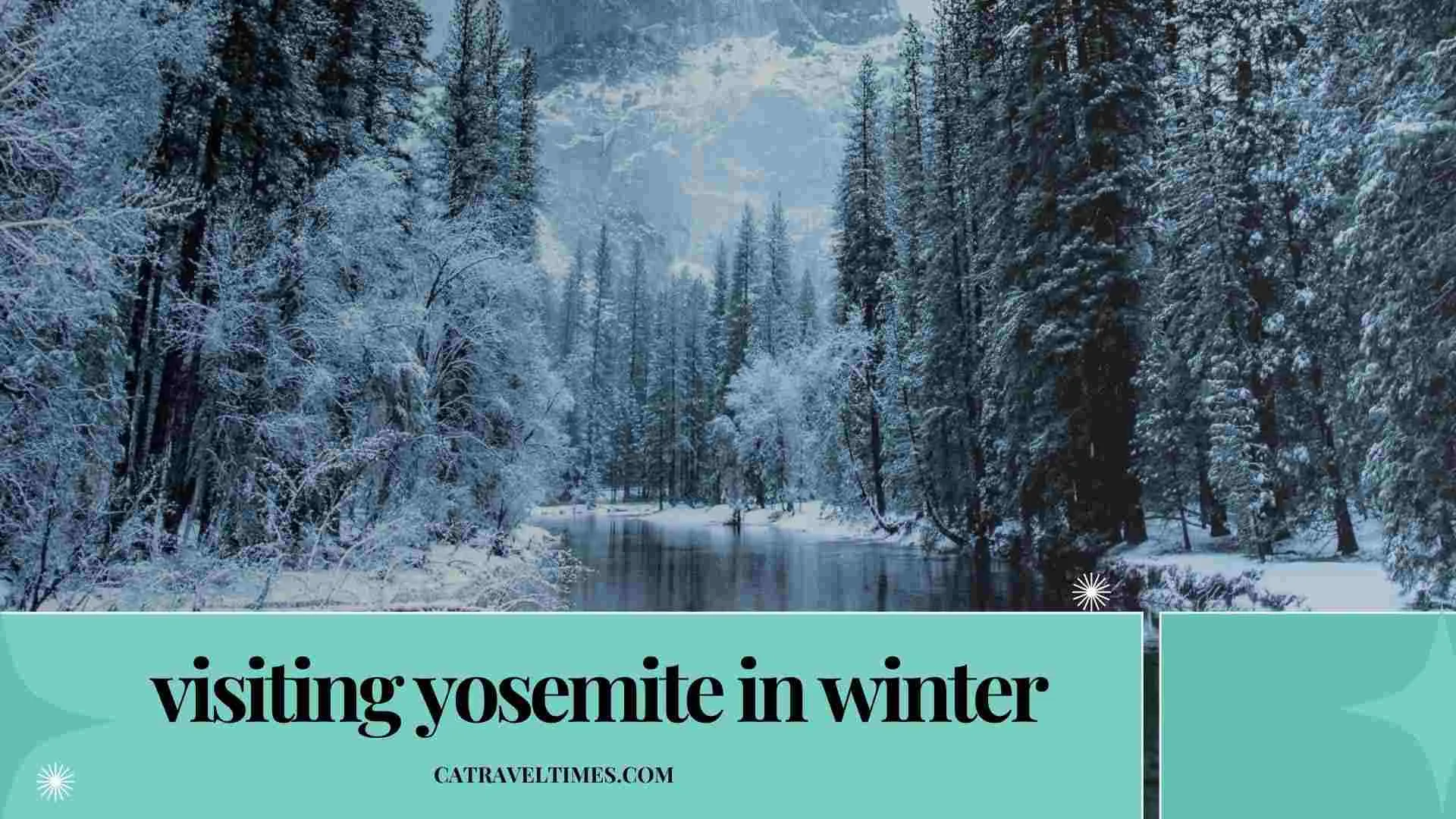
I still remember pulling up to Tunnel View on a cold December morning, stepping out of the car, and just standing there with my mouth open. The valley was blanketed in fresh snow. Half Dome wore a cap of white. The waterfalls were partially frozen, catching the early light like shards of glass. That was the moment I became completely hooked on visiting Yosemite in winter and I haven’t looked back since.
I’m Anu, a Bay Area local who has been exploring California for over 20 years. Yosemite is my favorite national park, and I visit it in every season. But if I had to pick one time of year that surprised me the most, it’s winter hands down.
If you’ve been wondering whether a winter trip is worth it, let me answer that straight away: yes, absolutely. This guide covers everything I’ve learned from my winter visits, so you can plan your own trip with total confidence. And if you’re looking for more California trip inspiration, CA Travel Times is a great place to start.
Is It Worth Visiting Yosemite in Winter?
Yes, visiting Yosemite in winter is genuinely one of the best decisions you can make. The park transforms into something almost otherworldly. Snow-dusted granite cliffs, quiet meadows, roaring waterfalls swollen from winter rains, and barely a crowd in sight. The usual summer chaos, the packed shuttle buses, the reserved entry tickets, the endless wait at Tunnel View simply disappears.
Here’s a quick summary of what I love most about the winter experience:
- No day-use reservation system (except on select February weekends during Firefall season)
- Far fewer crowds — trails, viewpoints, and parking lots feel luxuriously open
- Lower lodging prices compared to summer rates
- Unique winter-only activities like ice skating, snowshoeing, and skiing at Badger Pass
- Dramatic photography conditions — snow-covered valley, misty waterfalls, dynamic winter light
- Wildlife sightings — I’ve spotted coyotes roaming the meadows every single winter visit
The trade-offs are real too: some roads and trails close, temperatures can be biting, and you’ll need to plan around potential winter storms. But with the right preparation, the rewards far outweigh the challenges.
Yosemite Winter Temperatures: What to Actually Expect
Temperatures in Yosemite Valley during winter are cold but manageable if you layer up properly. Daytime highs in the valley (elevation ~4,000 ft) typically sit in the mid-40s to low 50s°F. Nights drop sharply into the high 20s to mid-30s°F. On particularly cold snaps, the valley floor can dip into the teens.
Here’s a rough monthly breakdown:
| Month | Average High | Average Low | Snow Likely? |
| November | 50–55°F | 28–34°F | Possible, especially late Nov |
| December | 44–48°F | 26–30°F | Yes, especially mid-month on |
| January | 42–47°F | 24–29°F | High likelihood |
| February | 45–50°F | 26–31°F | Yes; snowmelt may begin late Feb |
Always dress in moisture-wicking base layers, an insulating mid-layer, and a waterproof outer shell. Waterproof boots with solid traction are non-negotiable; the valley can be icy, especially in the mornings. I also never leave without hand warmers tucked in my pockets.
Visiting Yosemite in November: The Shoulder Sweet Spot
November is the quietest and most underrated time to visit Yosemite before winter fully sets in. Early November still feels like a late fall golden oak leaves linger on the valley floor, and you might catch fresh snow dusting the upper peaks without any significant closures yet. What to do in Yosemite in November is the same as any winter month, but with more trail access since ice hasn’t set in yet.
Tioga Road typically closes by early to mid-November, so Tuolumne Meadows becomes inaccessible. But Yosemite Valley, Mariposa Grove, and Hetch Hetchy remain open and beautiful. I find the light in November absolutely stunning golden hour stretches across the valley walls in a way that summer never quite delivers.
Visiting Yosemite in December: What to Expect
December is when the park truly shifts into winter mode, and it’s one of my favorite times to visit. Visiting Yosemite in early December means catching the first big snowfalls of the season. The valley might be freshly coated in white, and the holiday atmosphere around The Ahwahnee adds something extra special. The annual Bracebridge Dinner at The Ahwahnee is a unique December tradition, a theatrical, medieval-style feast that has been running for decades. Tickets sell out fast, so book well in advance if that interests you.
Visiting Yosemite in late December brings the holiday crowds back somewhat, particularly around Christmas and New Year’s. This is one of the busier winter weekends, so book lodging early and arrive at viewpoints before 9 AM to avoid the rush. But even at its “busy” winter worst, December is blissfully quiet compared to July.
Visiting Yosemite in January: The Quietest Month
January is arguably the most peaceful month to visit Yosemite, with the lowest visitor numbers of the entire year. Visiting Yosemite in January means having Tunnel View practically to yourself, being able to linger at Mirror Lake without a crowd, and walking the valley loop trail in total silence except for the crunch of snow under your boots. I’ve done this multiple times, and it never gets old.
The downside? January can bring intense winter storms that temporarily close park entrances or require tire chains. Always check conditions the morning of your visit and have chains in the car regardless of whether you drive a 4WD vehicle the park can require them even then.
Driving in Yosemite in Winter: Everything You Need to Know
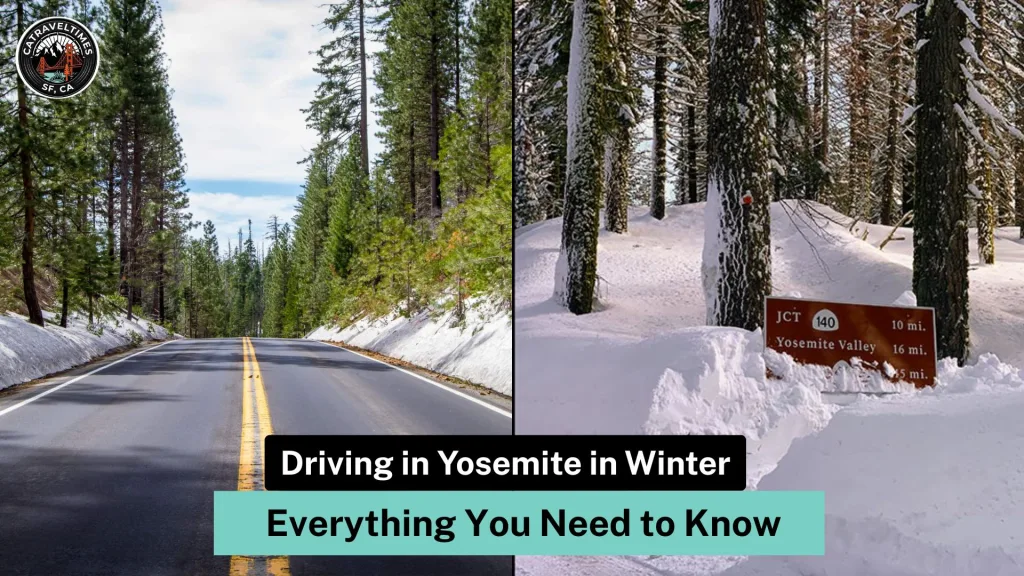
Chain controls and road closures are the most important practical consideration for any winter visit. Two major roads close every winter without exception: Tioga Road (usually from early November through late May) and Glacier Point Road (though it is plowed as far as Badger Pass Ski Area). These closures cut off Tuolumne Meadows and Glacier Point from vehicle access entirely.
Three entrances remain open year-round: the Big Oak Flat (Hwy 120 west), Arch Rock (Hwy 140), and South (Hwy 41) entrances. Highway 140 via El Portal is generally the most reliable winter route because it’s the lowest elevation and least likely to close during storms.
My practical driving tips for winter:
- Always carry tire chains or cables, even if you have AWD/4WD the park can require them regardless
- Check the Yosemite road conditions hotline (209-372-0200, press 1 then 1) the morning of your visit
- Fill up on gas before entering the park the only winter fuel available inside is at Wawona
- Plan to drive slowly black ice forms quickly on shaded sections of road
- The Yosemite Valley Shuttle runs year-round and is a convenient alternative to driving loops inside the valley
Things to Do in Yosemite Valley in Winter: My Favorite Experiences
Yosemite Valley is the heart of the winter experience, and it offers far more than most people expect. Here is a detailed look at the best things to fill your visit.
1. Watch Sunrise at Tunnel View
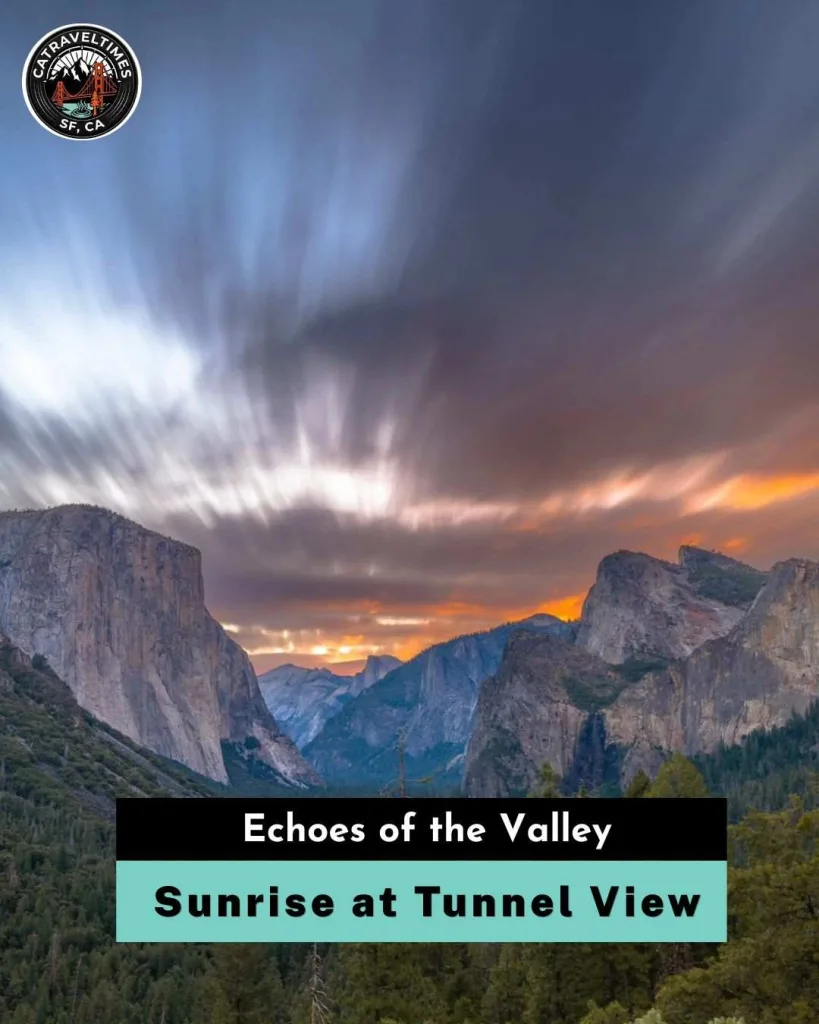
This is my non-negotiable first stop on any winter visit. Arrive 20–30 minutes before official sunrise. In winter, the pink and orange light creeping across El Capitan and Half Dome, sometimes with low fog drifting through the valley below, is the most breathtaking sight I’ve experienced in California. Stay 30 minutes after sunrise to catch the sun touching the Dawn Wall of El Capitan.
2. Walk to Bridalveil Fall
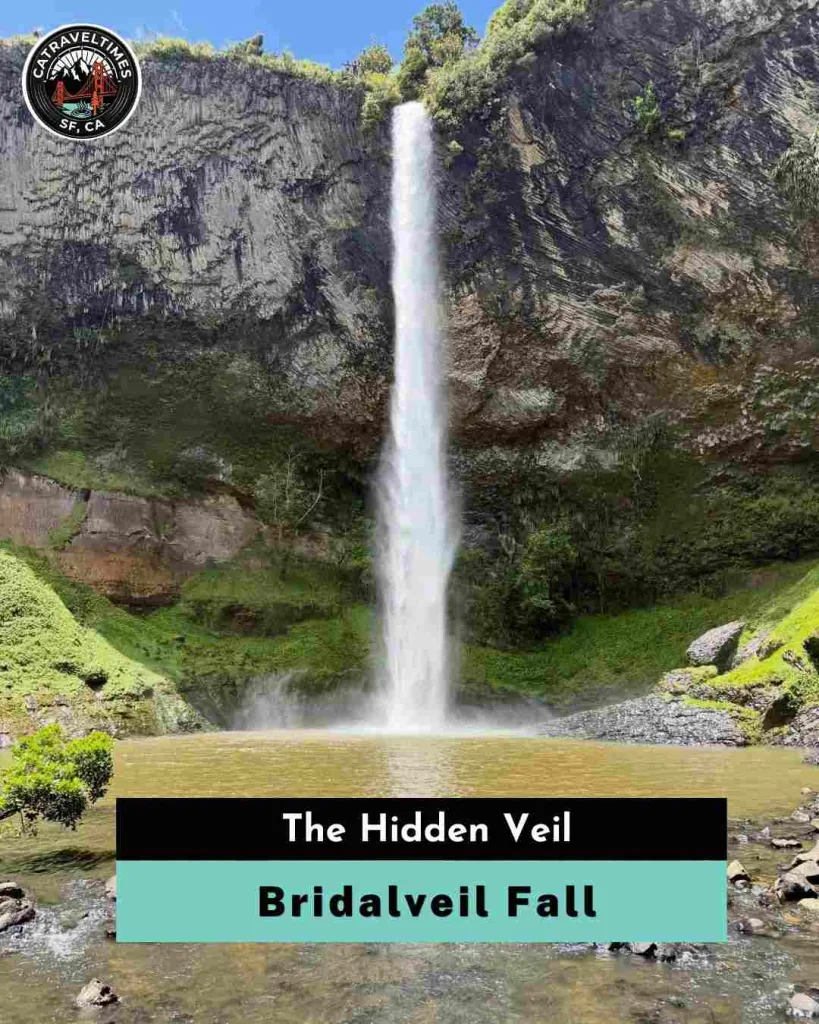
The short, easy trail to Bridalveil Fall (roughly 0.5 miles round-trip) stays accessible all winter and rewards you with a roaring waterfall that often wears a rim of ice around its base in cold snaps. The mist can freeze on the surrounding boulders, creating an ethereal icy landscape. Wear waterproof gear and you will get misted.
3. Hike the Lower Yosemite Falls Loop
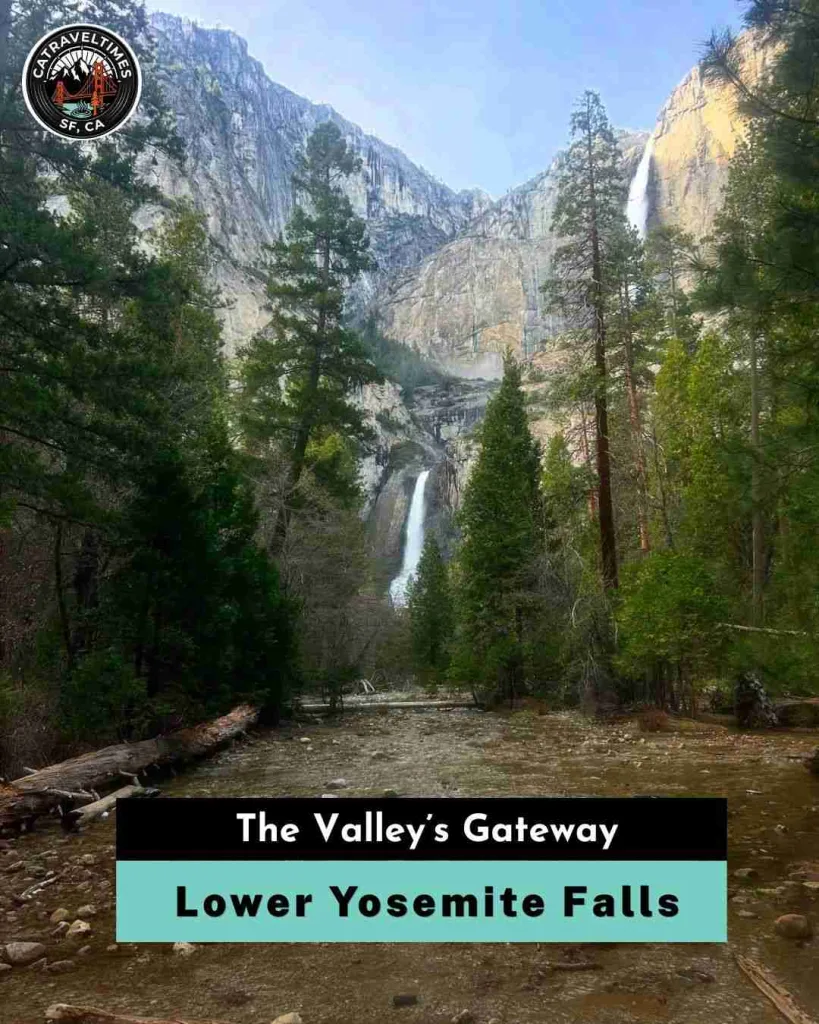
The 1-mile loop to Lower Yosemite Falls is open most of winter and offers dramatic views of the falls which are at their most powerful from winter rains and snowmelt. The boulders near the base can accumulate ice cones in freezing temperatures. Traction devices like Yaktrax are worth packing for this trail.
4. Stroll the Valley Loop Trail and Meadows
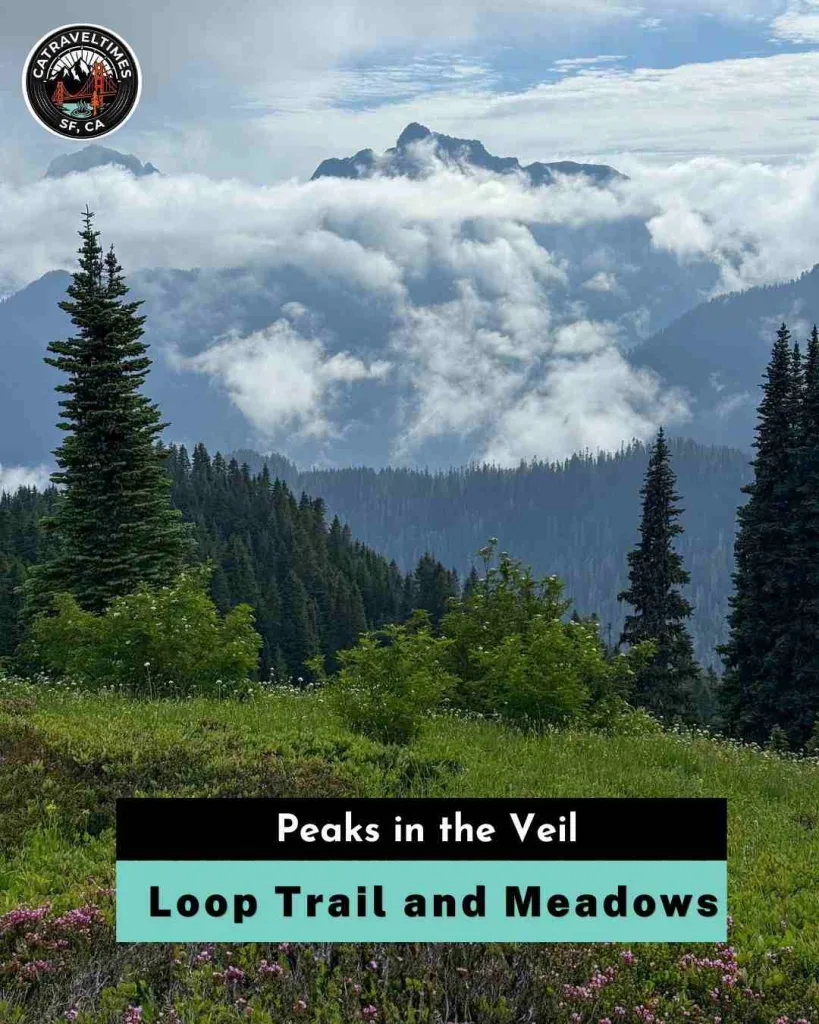
The valley loop trail is one of the best things to do in Yosemite in winter. Walking across the snowy meadows Cook’s Meadow, Stoneman Meadow with Half Dome rising straight ahead and the valley walls glowing in winter light is a feeling I genuinely cannot describe in words. This is also prime wildlife watching territory: coyotes frequently cross the meadows in the early morning.
5. Visit Mirror Lake
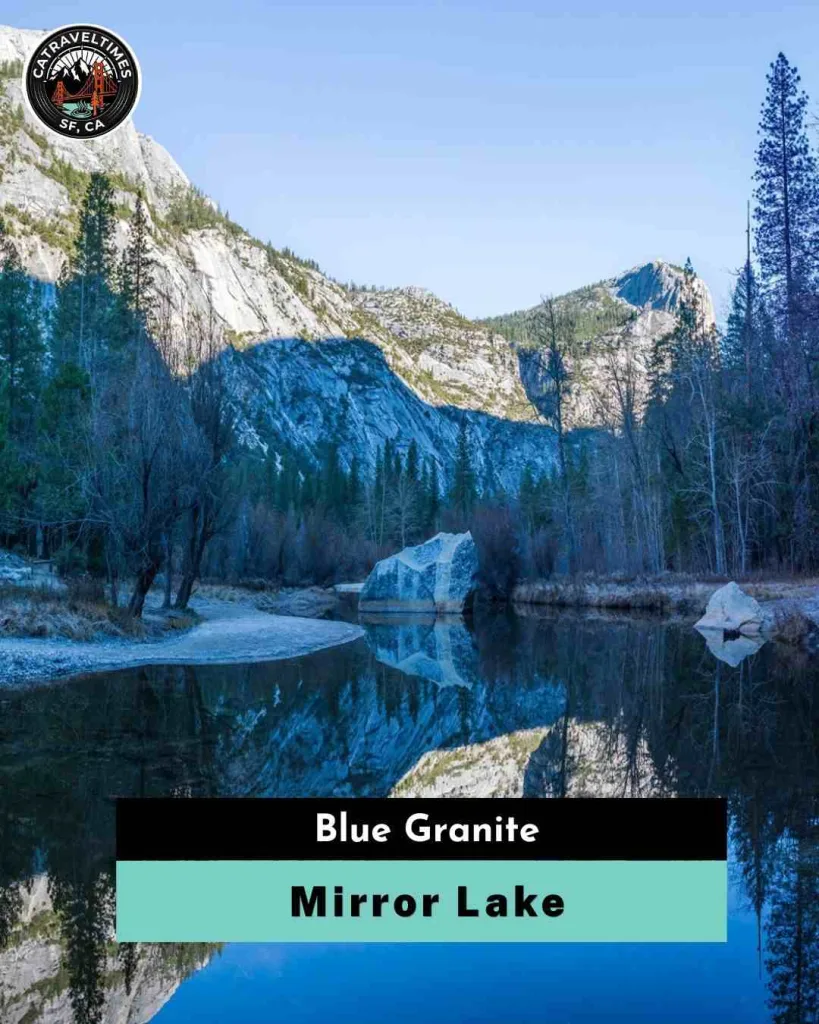
The 5-mile round-trip loop to Mirror Lake is one of the most rewarding winter hikes in the park. In winter, the reflections in the lake (when it isn’t frozen over) are spectacular, with snow-dusted walls of Tenaya Canyon rising above. The trail can be icy in spots, so traction devices help.
6. Valley View (El Capitan) Sunset
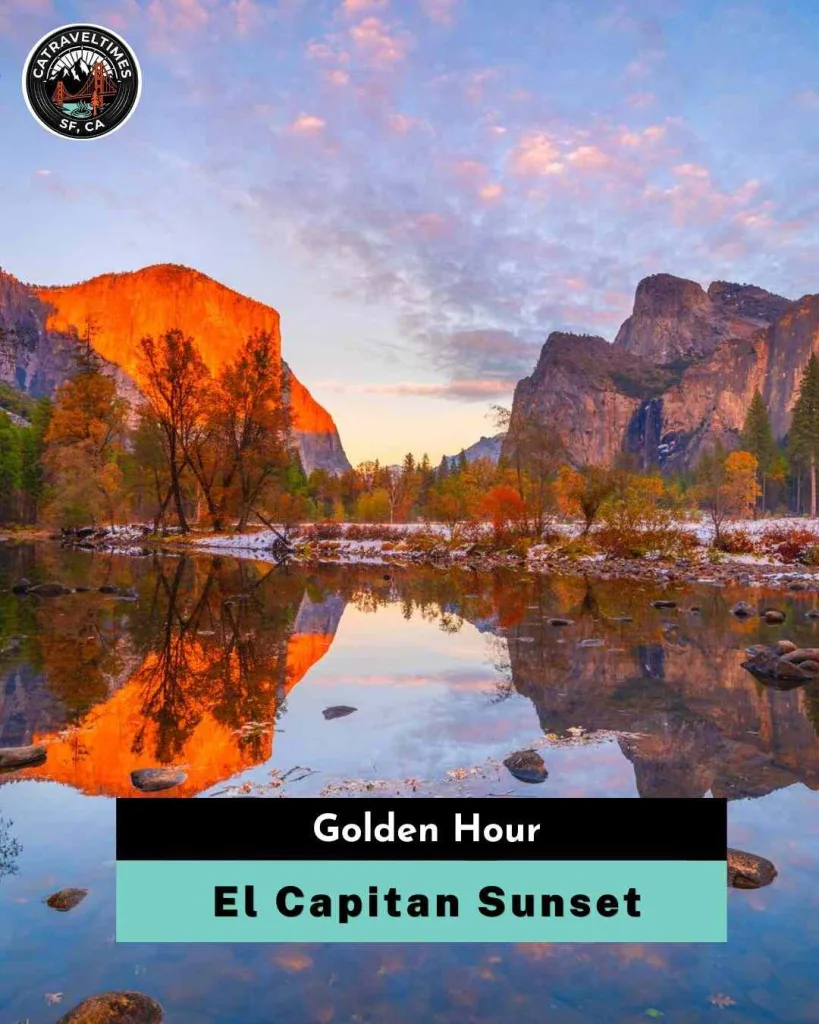
Valley View on Southside Drive offers a stunning framing of El Capitan above the Merced River at sunset. In winter, the light turns golden and warm on the granite face, often contrasting beautifully with snow on the riverbanks. This is one of those spots I always save for the last hour of daylight.
7. Ansel Adams Gallery and Yosemite Exploration Center
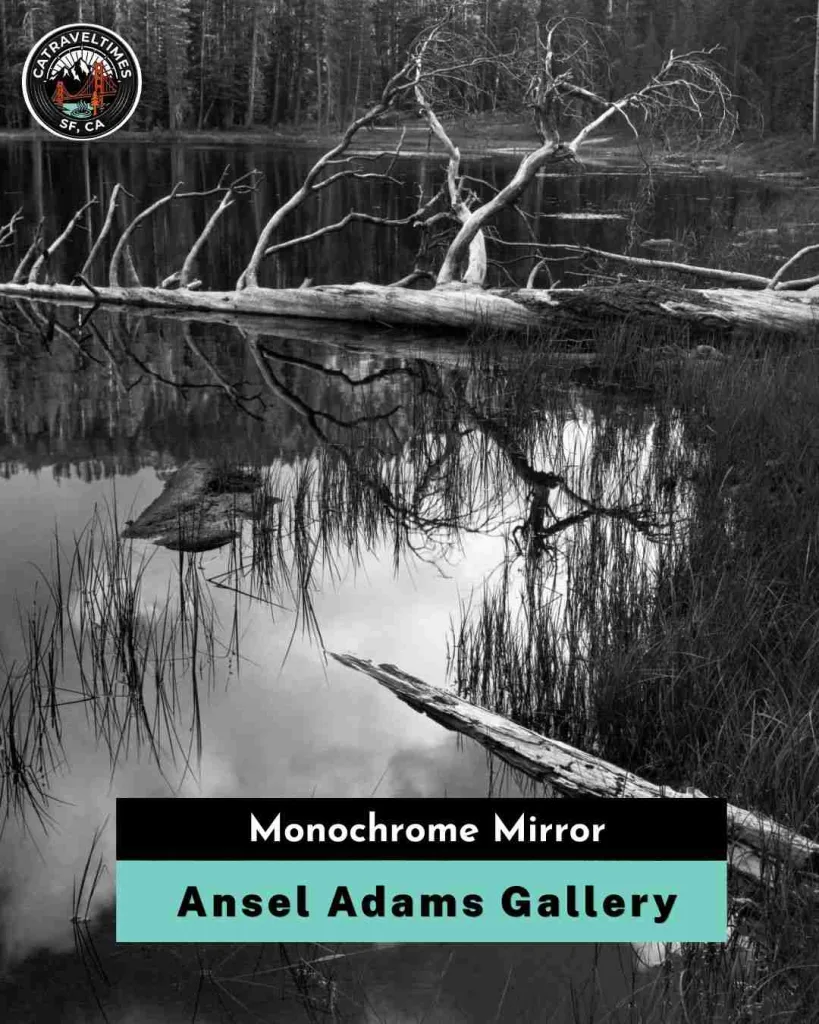
On stormy or overcast days, I head inside. The Ansel Adams Gallery in Yosemite Village houses original and replica works by the legendary photographer many of which captured the park in winter. The adjacent Yosemite Exploration Center has fascinating exhibits on geology, history, and wildlife. Both are free to enter.
8. Stargazing
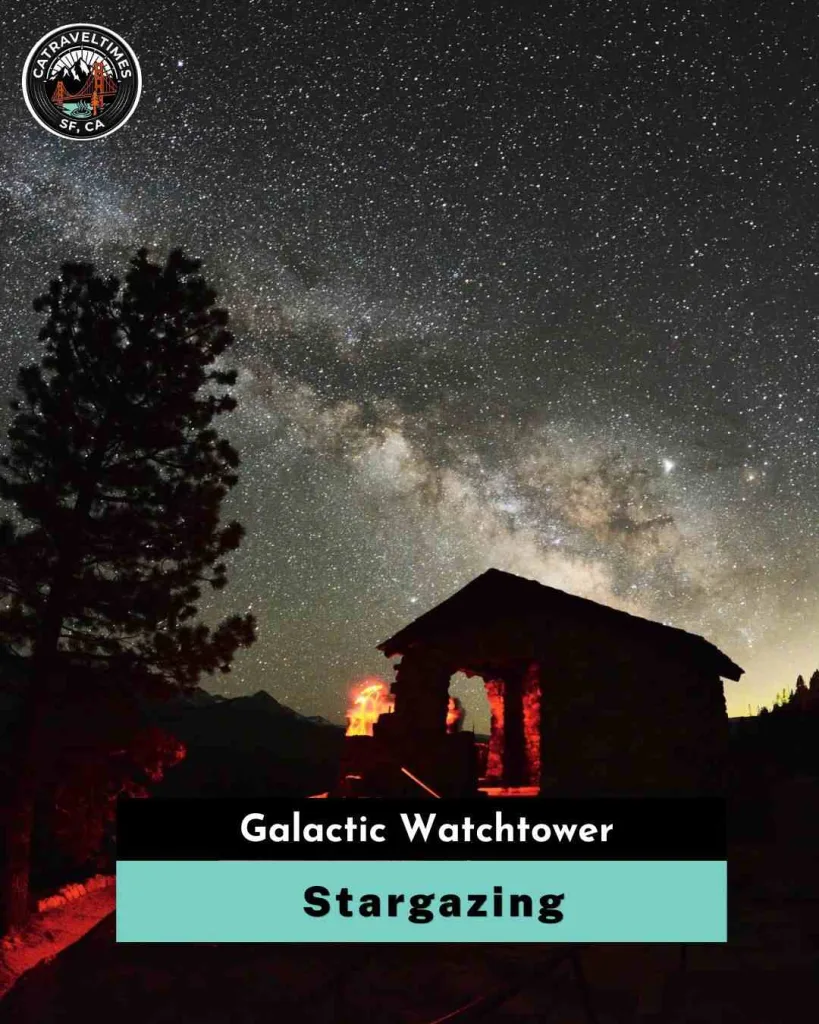
Yosemite is one of California’s designated dark-sky areas, and winter nights cold and crystal clear after a storm passes offer extraordinary stargazing. I stood in the parking lot of Yosemite Valley Lodge at midnight watching the Milky Way arc overhead. Bring a red-light headlamp and dress extremely warmly.
Winter-Only Activities: What You Can Only Do in Cold Months
Some of the most memorable Yosemite experiences are only available in winter and they’re worth the trip on their own.
Ice Skating at Curry Village
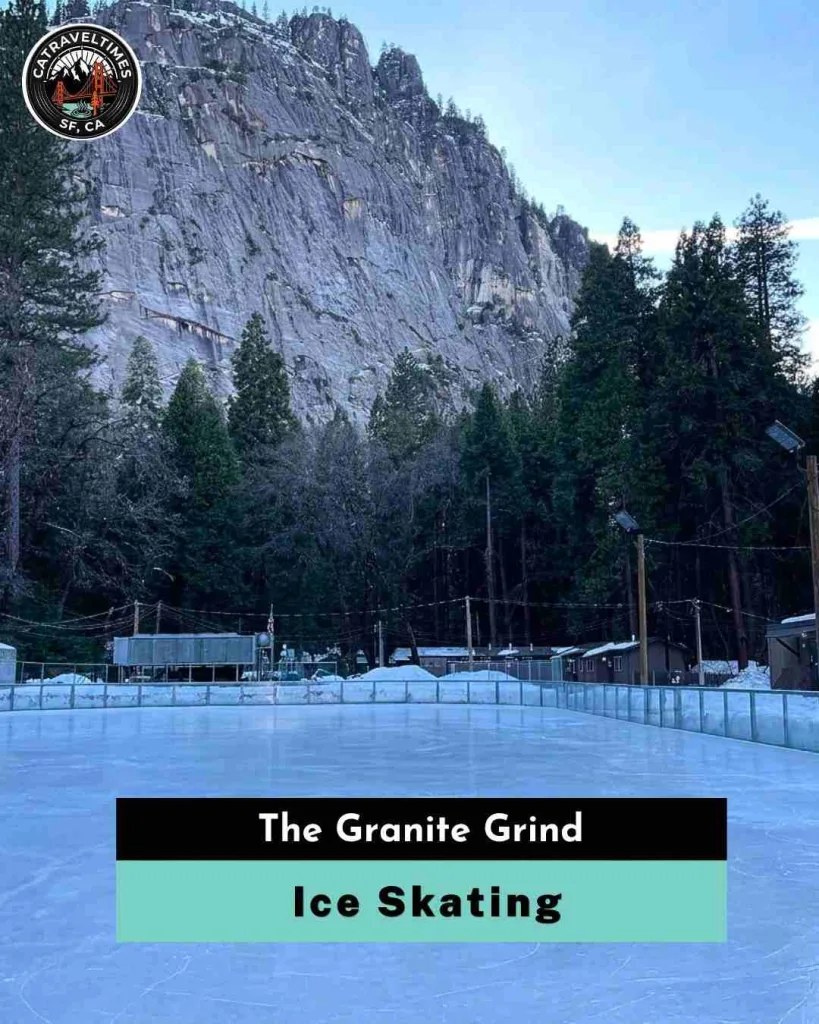
The outdoor ice skating rink at Curry Village is one of the most magical settings imaginable: gliding across the ice beneath Glacier Point and Half Dome looming above. The rink typically operates from mid-November through early March, with multiple daytime and evening sessions. Skate rentals are available on-site. If you’re staying near the south entrance, Tenaya Lodge also has a covered rink surrounded by pine forest with fire pits nearby.
Skiing and Snowboarding at Badger Pass
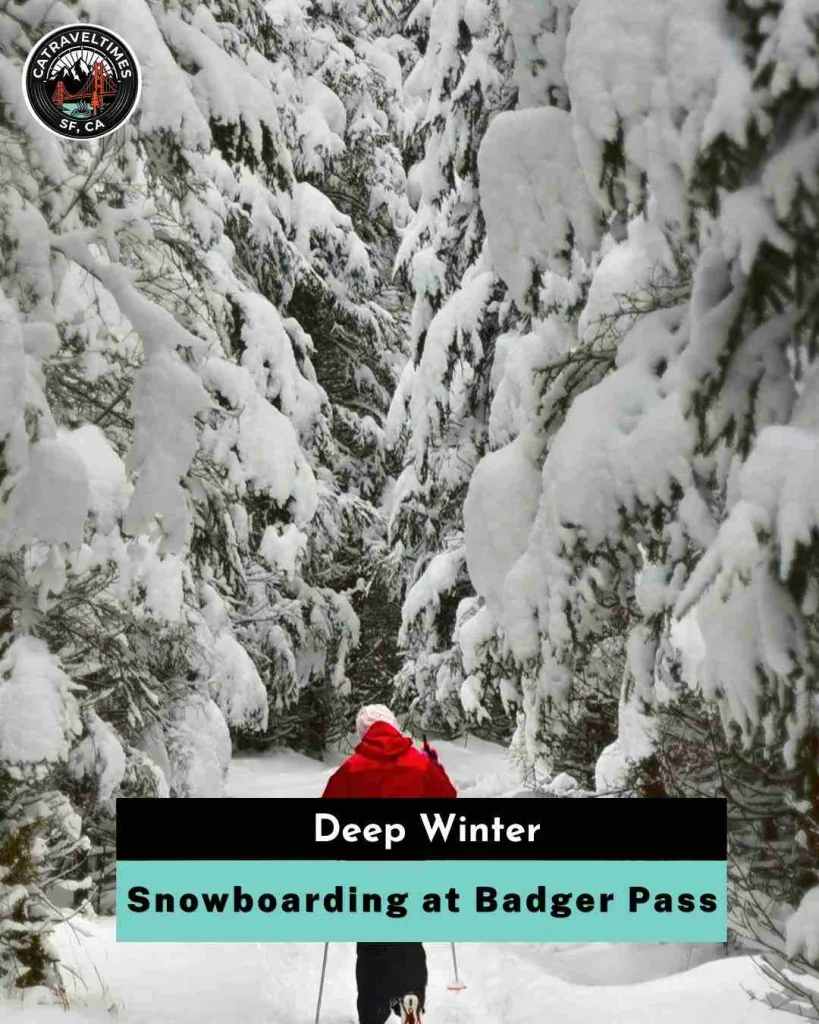
Badger Pass Ski Area is not just California’s oldest downhill ski area, it’s a genuinely charming, family-friendly mountain with a refreshingly mellow vibe. Five lifts serve a mix of green, blue, and black runs. Ski and snowboard lessons, gear rentals, and a cozy day lodge are all available. The ski season typically runs mid-December through March, conditions permitting. A free shuttle connects Yosemite Valley to Badger Pass on ski days.
Snowshoeing: My Favorite Winter Activity
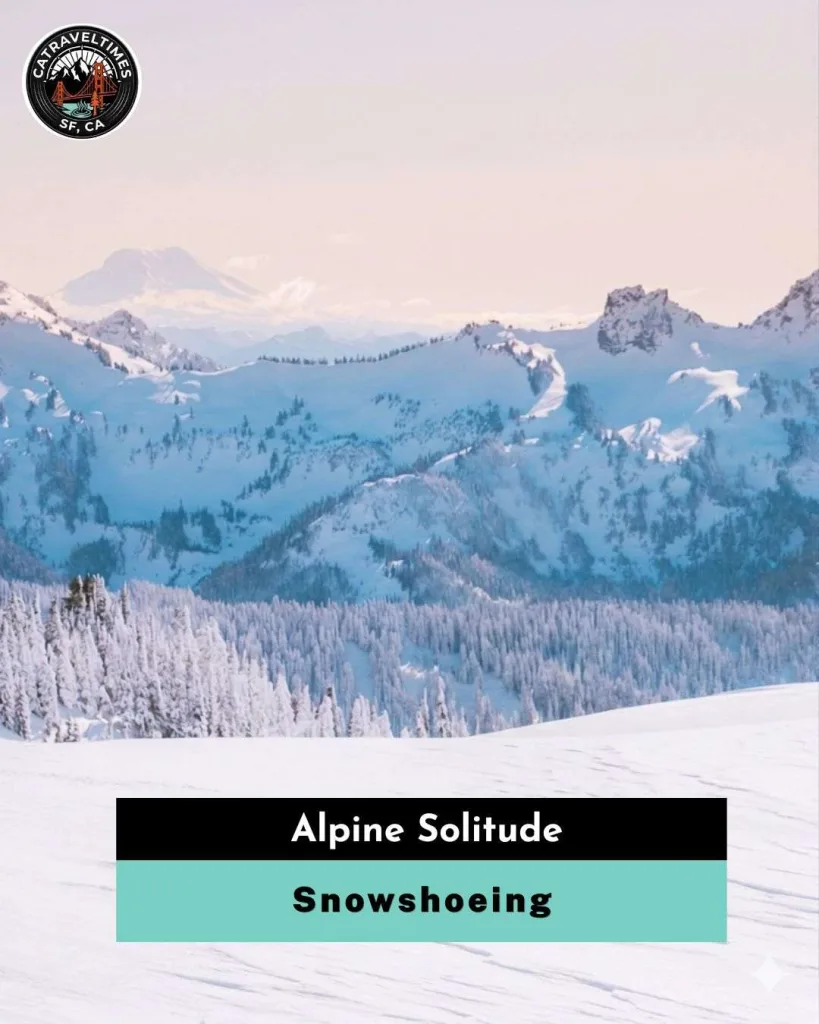
My absolute favorite thing to do on any winter visit is snowshoeing. The trail from Badger Pass to Dewey Point (7.3 miles round-trip, ~1,000 ft elevation gain) is incredible. You emerge at the edge of the valley rim with a sweeping view of El Capitan, Half Dome, and Cathedral Rocks spread below you. Even beginners can handle it with moderate fitness. Snowshoe rentals are available at the Nordic Center at Badger Pass and at Tenaya Lodge outside the park.
Snowshoeing to the Tuolumne Grove of Giant Sequoias
In winter, the road to the Tuolumne Grove closes to vehicles, but you can snowshoe in roughly 2.5 miles round-trip to see the giant sequoias in a completely snowy, silent, solitary setting. I did this on a weekday in January and saw exactly two other people. It was extraordinary.
The Yosemite Firefall (February Only)
Every mid-to-late February, if conditions align perfectly, Horsetail Fall glows molten orange at sunset, an optical illusion caused by the setting sun striking El Capitan’s eastern face at precisely the right angle. The effect lasts only 3–10 minutes, but it’s breathtaking. Three things must sync: clear skies, sufficient water flow, and that narrow February sun angle. For current viewing guidance, check the National Park Service’s official Horsetail Fall page.
Where to Stay in Yosemite in Winter?
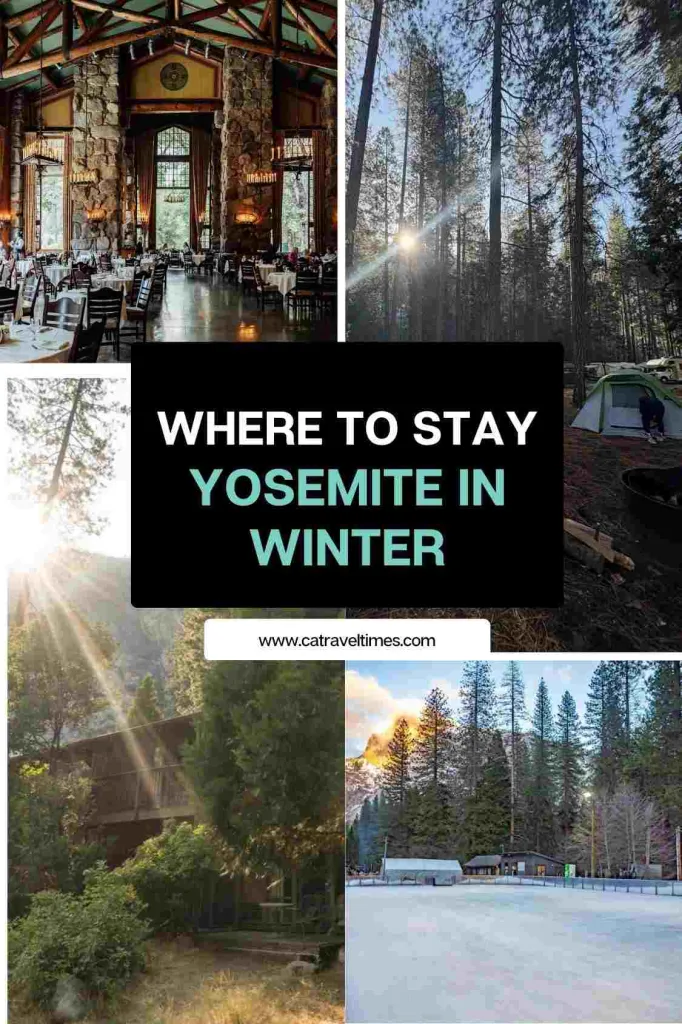
Booking lodging early is essential; winter options inside the park are limited, and the best spots fill quickly. Here’s a breakdown of your choices.
Inside the Park
- The Ahwahnee — Yosemite’s iconic luxury hotel, built in the 1920s. Staying here in winter is something I dream about: crackling stone fireplaces, massive log-beamed ceilings, and waking up to snow on the meadows outside. It’s pricey, but if budget allows, it’s a bucket-list experience. Book months in advance.
- Yosemite Valley Lodge — My go-to for practical comfort. 245 rooms close to Yosemite Falls, with a restaurant and lounge, free parking for guests, and direct shuttle access throughout the valley. Much more affordable than The Ahwahnee and genuinely convenient. In-park lodging prices are stable with no surge pricing which is a rare blessing.
- Curry Village (winter weekends only) — Canvas tent cabins at Curry Village open on select winter weekends. Budget-friendly, but cold pack a sleeping bag liner if you’re sensitive to the chill.
- Upper Pines Campground — The main year-round campground in the valley. Has flush toilets and bear boxes. Cold camping is genuinely rewarding in winter if you’re properly equipped.
Outside the Park
For more flexibility and lower prices, gateway towns offer solid options:
- El Portal (2 miles from Arch Rock Entrance) — Closest town on Hwy 140; best for winter access
- Fish Camp / Oakhurst (Hwy 41 south entrance side) — Tenaya Lodge is the standout here: a full resort with spa, pools, restaurants, and its own ice rink
- Mariposa — Charming historic town with B&Bs and chain hotels, about 35 miles from the valley
What to Pack for Visiting Yosemite in Winter
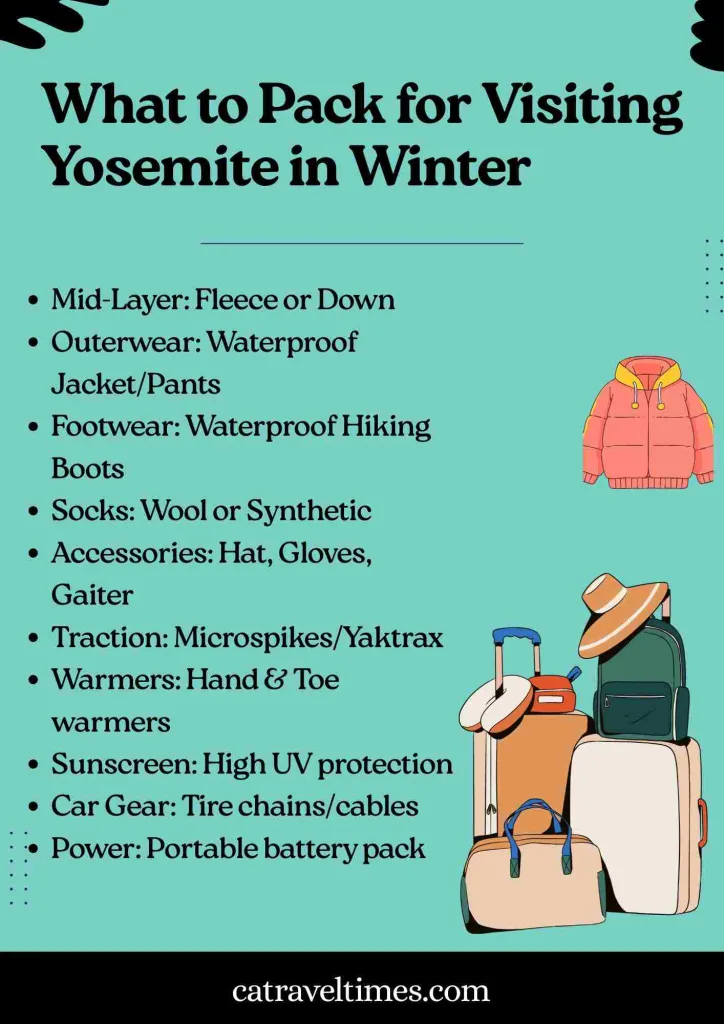
Dressing right is the difference between a miserable shiver-fest and a magical experience. Here’s my packing checklist:
- Moisture-wicking thermal base layers (top and bottom)
- Fleece or down mid-layer
- Waterproof, windproof outer jacket and pants
- Waterproof hiking boots with ankle support
- Wool or synthetic warm socks (bring extras wet feet ruin everything)
- Warm hat, gloves, and neck gaiter
- Traction devices (Yaktrax or microspikes) for icy trails
- Hand and toe warmers
- Sunscreen (UV is stronger at elevation, even in winter)
- Tire chains or cables (keep in the car)
- Portable battery pack (cold drains phone batteries fast)
Tips for Planning Your Visit
Visiting Yosemite in winter is genuinely one of the best experiences California’s National Parks have to offer but a little planning goes a long way.
- Check conditions daily: Road and trail conditions change overnight. Bookmark the NPS current conditions page and call 209-372-0200 before leaving your accommodation each morning.
- Arrive early: Even in winter, the best viewpoints (Tunnel View, Valley View) fill up by 9–10 AM on weekends.
- Weekdays are significantly quieter than weekends if your schedule allows, aim for Tuesday through Thursday.
- February Firefall weekends are the busiest winter period — plan accordingly or arrive on a weekday during that window.
- No day-use reservation required for most of winter (except select February weekends historically during Firefall season always verified on the NPS website for the current year).
- Download offline maps — cell service inside the park is unreliable and sometimes nonexistent.
My Final Thoughts
I’ve visited Yosemite in spring, summer, fall, and winter and every season has something beautiful to offer. But visiting Yosemite in winter gives you the park in its most raw, dramatic, and intimate form. The quiet is profound. The scenery is jaw-dropping. And there’s something incredibly satisfying about having one of America’s greatest national parks almost entirely to yourself.
If you’ve been holding off on a winter Yosemite trip because it seemed too complicated or too cold, I hope this guide gives you the confidence to just book it. Pack your layers, throw the chains in the trunk, and go. You won’t regret it. I share honest, experience-based guides for everything from weekends at the coast to multi-day national park itineraries.
Frequently Asked Questions
Can you visit Yosemite in winter?
Yes Yosemite is open 365 days a year. Yosemite Valley, Wawona, and Hetch Hetchy remain accessible throughout winter, though Tioga Road and Glacier Point Road (except to Badger Pass) are closed.
Do you need a reservation to visit Yosemite in winter?
For most of winter, no reservation is needed. The exception has historically been select weekends in February during Firefall season; always check the current year’s requirements on the NPS website before going.
Is it worth visiting Yosemite in winter?
Absolutely. Lower crowds, dramatic snow-covered scenery, unique activities like ice skating and snowshoeing, and the possibility of witnessing the Firefall make winter one of the most rewarding times to visit.
What roads are closed in Yosemite in winter?
Tioga Road and Glacier Point Road (beyond Badger Pass) are closed in winter. Three western entrances and the south entrance remain open year-round.
When does it snow in Yosemite?
Snow in the valley typically begins in mid-to-late November and can persist through March. January and February are the snowiest months.