20+ Top Things To Do in Death Valley National Park (Complete Visitor’s Guide 2026)
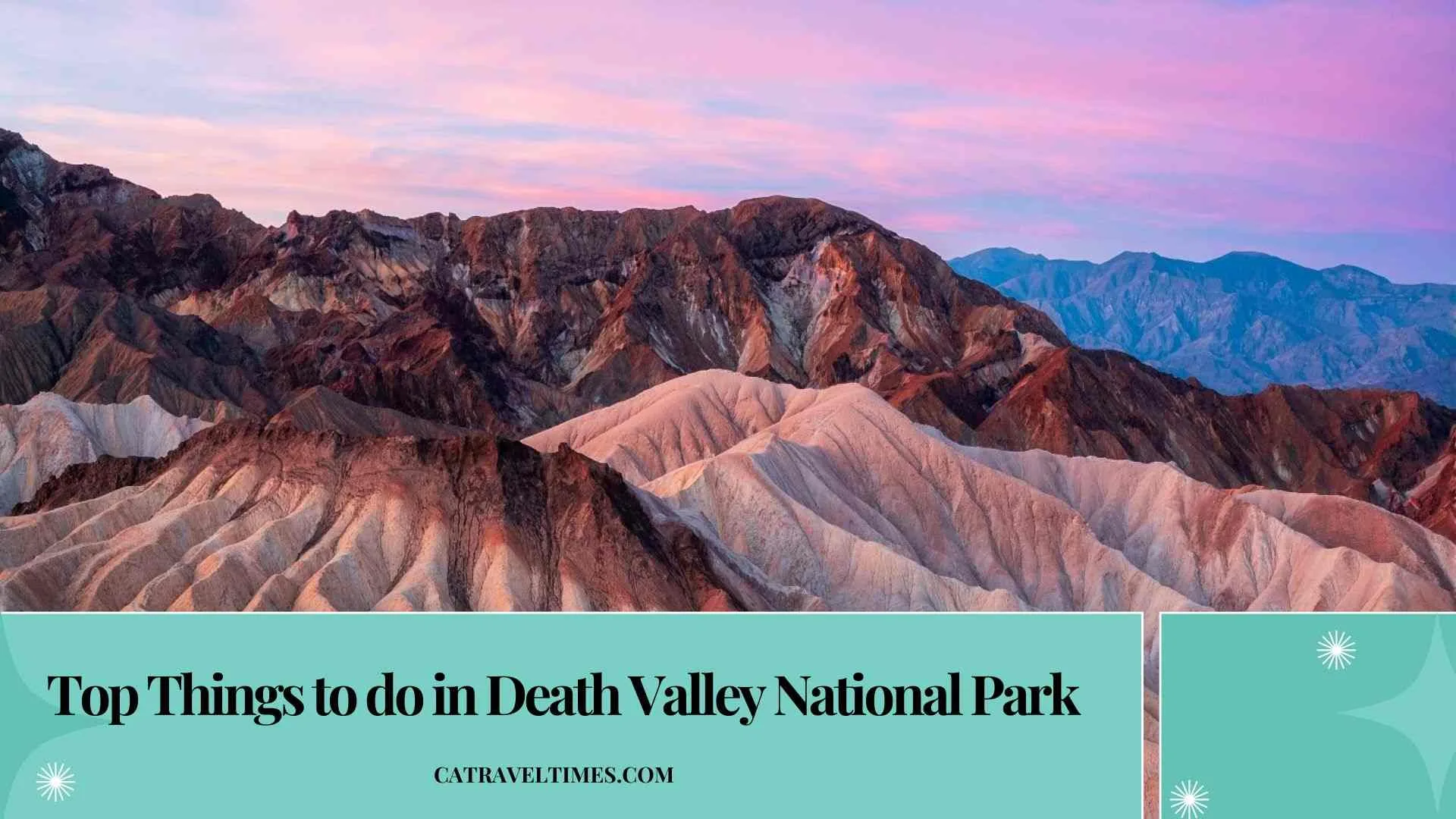
There is no way to fully prepare yourself for Death Valley. You drive for hours through an empty desert, the landscape growing stranger and more stripped down with every mile, until you reach a place that feels genuinely alien: cracked salt flats shimmering like broken mirrors, dunes glowing gold at sunset, and silence so deep you can hear your own heartbeat. The air feels heavy, dry, electric, and ancient. Nothing looks like it belongs to the world you know.
Death Valley National Park is the hottest, driest, and lowest national park in the United States. Summer temperatures often exceed 120°F (49°C), yearly rainfall is around 2 inches, and Badwater Basin sits 282 feet below sea level, the lowest point in North America. Yet despite these extremes, it remains one of the most beautiful and unforgettable places in the American West.
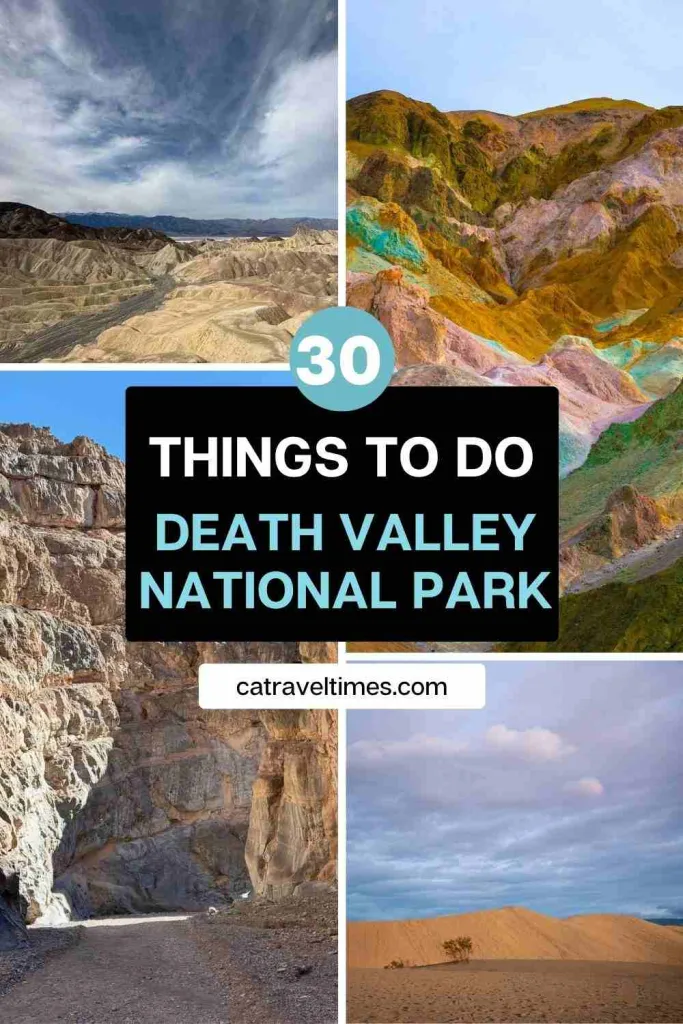
This guide includes 20 best things to do, nearby attractions, the best time to visit, directions, places to stay and eat, safety tips, and a 1–3 day itinerary. For broader planning, visit CA Travel Times.
Quick Details: Death Valley National Park
| Detail | Info |
| Location | Inyo County, California, USA |
| Nearest City | Las Vegas, NV (~2 hrs) · Los Angeles, CA (~4 hrs) |
| Park Entrance Fee | $35 per vehicle (valid 7 days) |
| Best Time to Visit | October – April |
| Average Summer Temp | 110–125°F (43–52°C) |
| Park Size | 3.4 million acres |
| Official Website | nps.gov/deva |
| Annual Visitors | ~1 million per year |
When Is the Best Time to Explore Death Valley National Park
Getting the timing right for Death Valley matters more than for almost any other national park.I visited in November and the weather was absolutely perfect — cool mornings around 55°F, warm sunny afternoons reaching the mid-70s, and no crowds at the main viewpoints. I was at Zabriskie Point completely alone for twenty minutes at sunrise. That’s rare.
October–April is best, 65–93°F, clear skies; Feb–Mar wildflowers possible. May–Sept extremely hot (up to 103°F) and risky floods. June–Aug should be avoided due to 120°F+ dangerous heat and fatalities.
Month-by-Month Guide
| Month | Avg Temp (°F) | Conditions | Recommended? |
| January | 65°F day / 39°F night | Cool & clear | ✅ Great |
| February | 72°F day | Wildflower potential | ✅ Excellent |
| March | 82°F day | Peak season | ✅ Best month |
| April | 93°F day | Warm, busy | ✅ Good |
| May | 103°F day | Getting hot | ⚠️ Mornings only |
| June–August | 115–125°F day | Extreme heat | ❌ Not recommended |
| September | 103°F day | Cooling down | ⚠️ Caution needed |
| October | 88°F day | Great weather | ✅ Excellent |
| November | 72°F day | Cool, quiet | ✅ Great |
| December | 62°F day | Cold nights | ✅ Good |
How to Get to Death Valley National Park : Directions
Getting to Death Valley feels like driving off the edge of the known world — the landscape slowly empties out until it’s just you, the road, and the desert. The last stretch before Furnace Creek, coming in from Beatty, NV, crosses a valley so wide and flat and dry that you start to understand, viscerally, what ‘remote’ actually means.
Driving from Major Cities
- From Las Vegas, NV: ~2 hours via US-95 North and SR-160 West (most common approach)
- From Los Angeles, CA: ~4 hours via I-15 North to Baker and SR-127 North
- From San Francisco, CA: ~7 hours via I-5 South to US-395
- 🔵 Blue markers represent recommended Things To do in Redwood National & State Parks
- 🔴 Red markers represent recommended Things To do Near Redwood National & State Parks
Always check the official NPS Death Valley page for current road closures and conditions before you go.
20 Top Things to Do in Death Valley National Park
The 20 attractions below are in no particular order and that’s intentional. Death Valley is a massive park (larger than Rhode Island), so your best plan depends entirely on where you’re staying. If you’re based near Furnace Creek, start with Badwater Basin, Zabriskie Point, and Artists Palette. Heading to the north side? Ubehebe Crater and Titus Canyon belong at the top of your list. Don’t try to see everything in one day this park rewards those who slow down and let the landscape work on them.
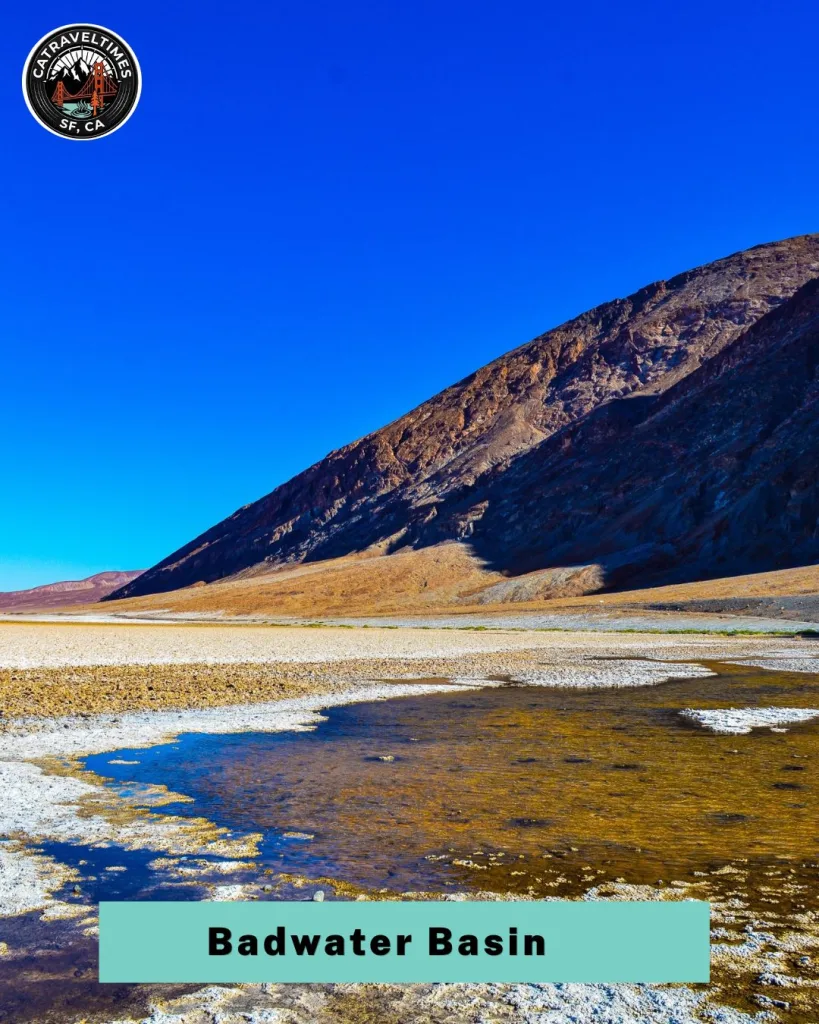
1. Walk on the Ancient Salt Polygon Fields at Badwater Basin
Standing at Badwater Basin for the first time is a genuinely surreal experience. The salt flat stretches out toward a horizon of black mountains in complete silence, with a thin crust of crystalline salt forming hexagonal polygons beneath your feet — patterns that took thousands of years to form. Walk as far out as you like; the further you go, the more extraordinary it feels.
This is the lowest point in North America at 282 feet below sea level, and a small sign on the cliff above marks exactly where sea level would be. It’s one of those places that quietly rearranges your sense of scale.
Parking: Large paved lot at the trailhead. Can get crowded by mid-morning. No shade — bring a hat and plenty of water even in winter.
- Distance from Furnace Creek: 18 miles south
- Difficulty: Easy
- Best Time: Sunrise or early morning
2. Chase Sunrise at Zabriskie Point — Death Valley’s Most Iconic Viewpoint
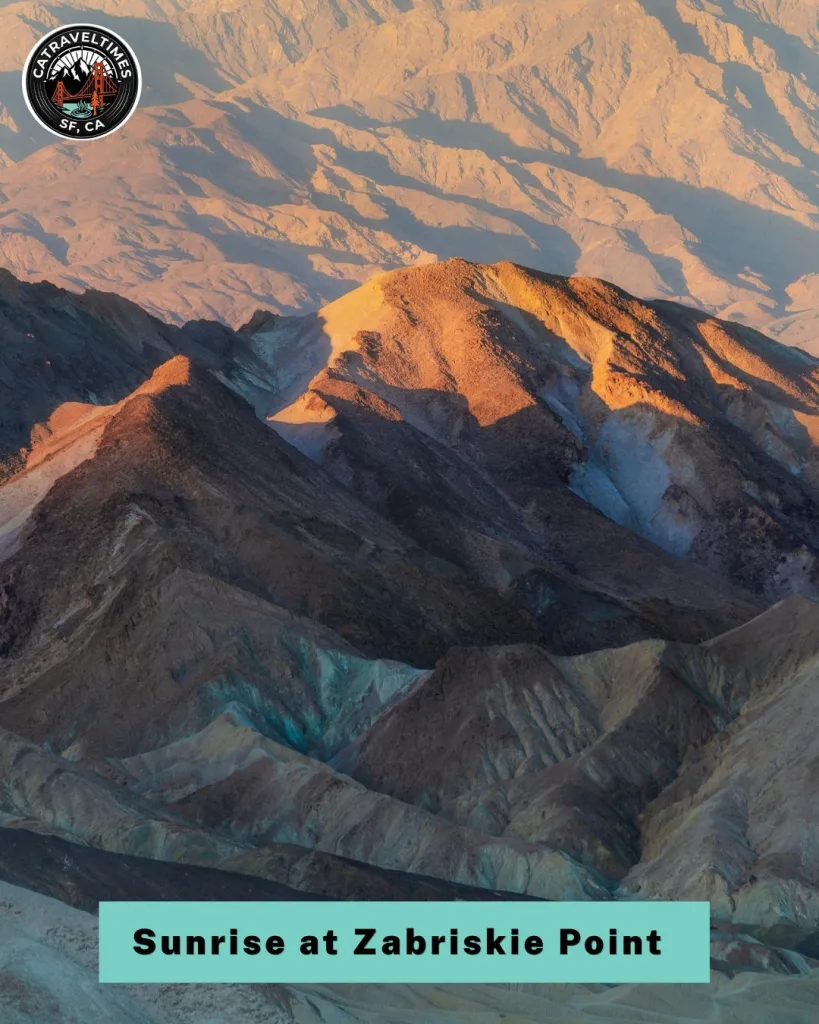
“When I first stood at the edge of Zabriskie Point just before sunrise, I had no idea the sky could turn that shade of deep orange. The eroded badlands below glowed like something from another planet — pink, gold, and burnt sienna all layered on top of each other. I stayed far longer than planned.”
Zabriskie Point is one of the most photographed viewpoints in all of California. The panorama of golden badlands — ancient lake sediments eroded into rippling ridgelines — is unlike anything else in the park. Sunrise is the magic hour here, when low-angle light turns the formations into something almost incandescent. Arrive 30–45 minutes before sunrise to get a good spot. It’s a very short, paved walk from the parking lot.
- Distance from Furnace Creek: 4.5 miles east
- Difficulty: Very Easy
- Best Time: 30 minutes before sunrise
Note: This is also a superb sunset location if you can’t make sunrise work.
3. Summit the High Dune at Mesquite Flat Sand Dunes
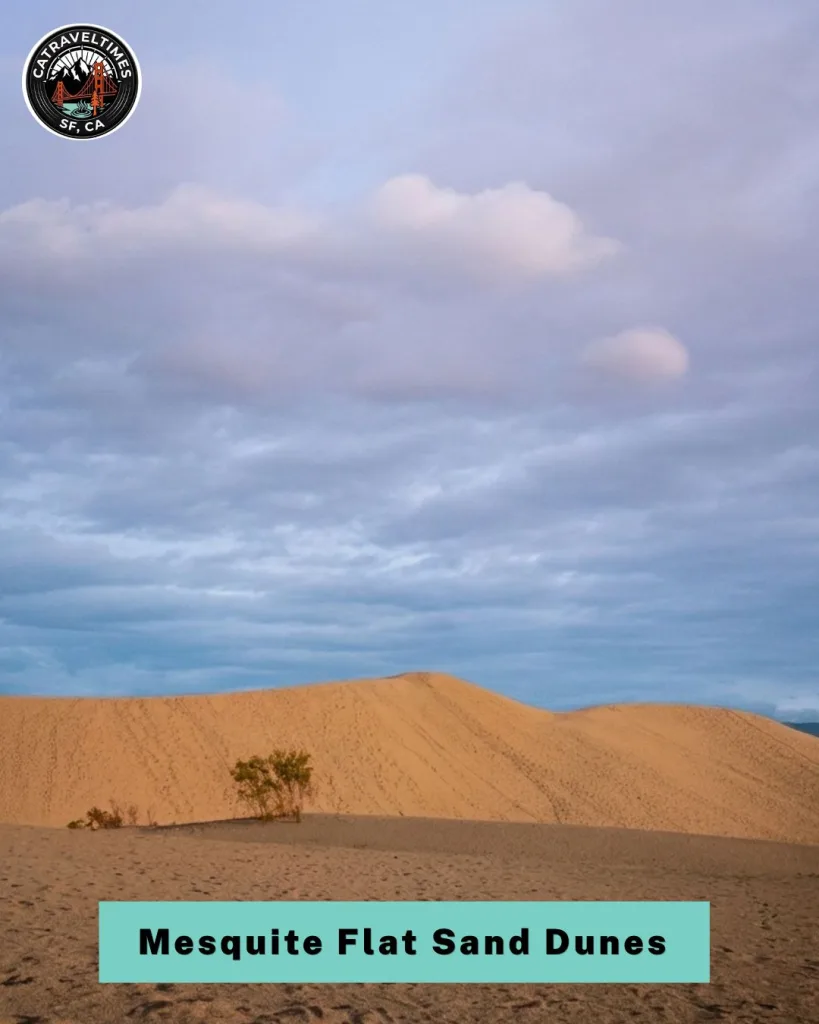
Watching the sun rise or set over Mesquite Flat Sand Dunes is one of the quieter, more meditative experiences Death Valley offers. The dunes rise to about 100 feet at their highest, and while there’s no marked trail, the basic goal is to pick your line up toward the top. Early morning visits come with a bonus: undisturbed wind-ripple patterns on the sand surface, unmarked by other footprints, that catch the low light beautifully. This is also one of the best stargazing spots in the park after dark.
Parking: Paved lot along Hwy 190. No facilities. Start hikes early.
- Distance from Furnace Creek: 19 miles north
- Difficulty: Moderate (soft sand)
- Best Time: Sunrise or late afternoon
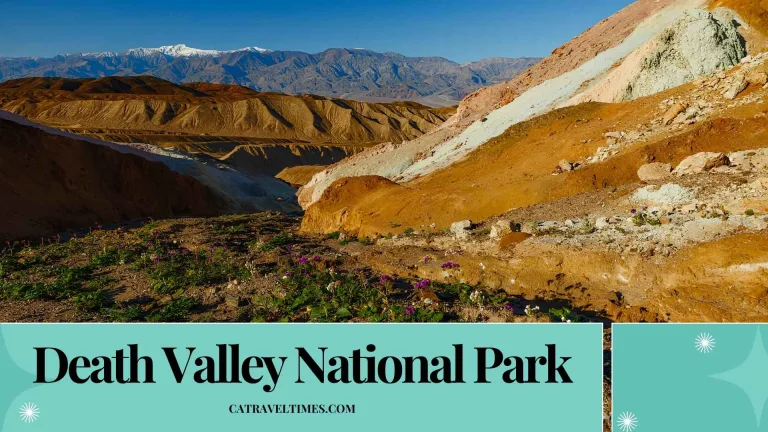
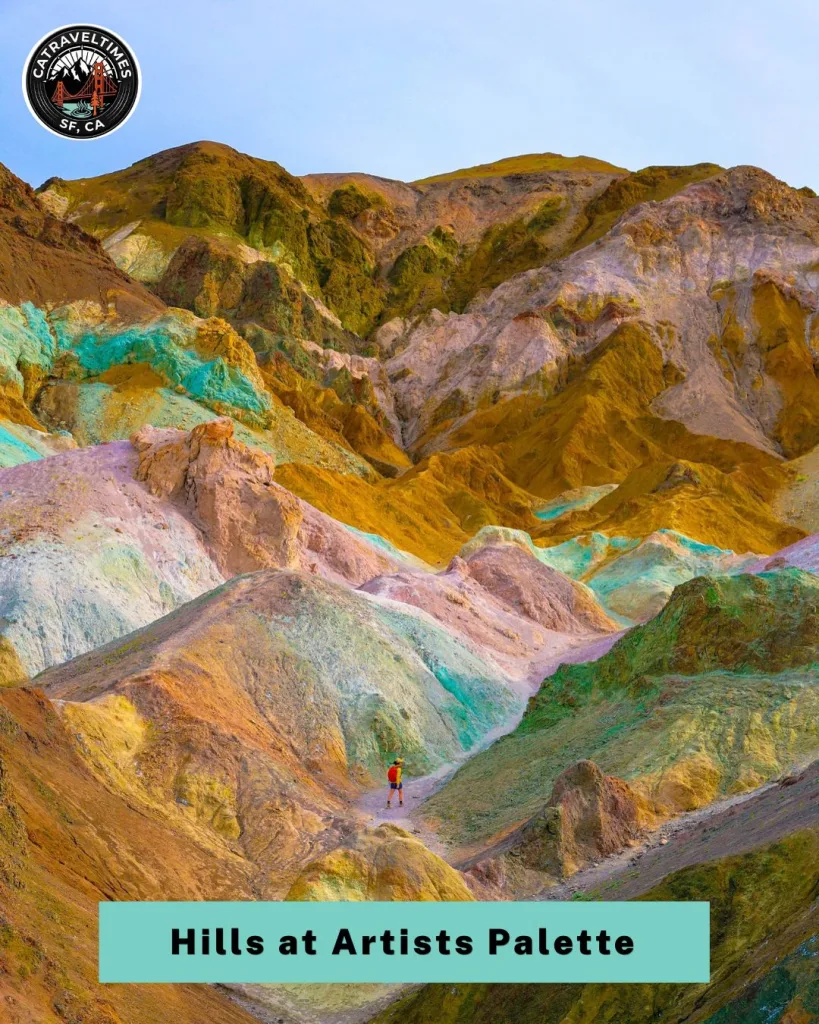
4. Hike the Colorful Hills at Artists Palette (Best at Sunset)
Artists Palette is one of those places that makes you stop the car and just stare. The hillside is painted in extraordinary bands of pink, green, yellow, purple, and rust the result of different mineral oxidation processes working on ancient volcanic ash over millennia. The colors are most saturated in late afternoon light, roughly an hour before sunset. A one-way 9-mile scenic drive (Artists Drive) loops past the Palette from the main road.
- Distance from Furnace Creek: 11 miles south
- Difficulty: Easy (accessible by car)
- Best Time: Late afternoon / sunset
Tip: The one-way drive is not suitable for large vehicles. Check NPS signage before entering.
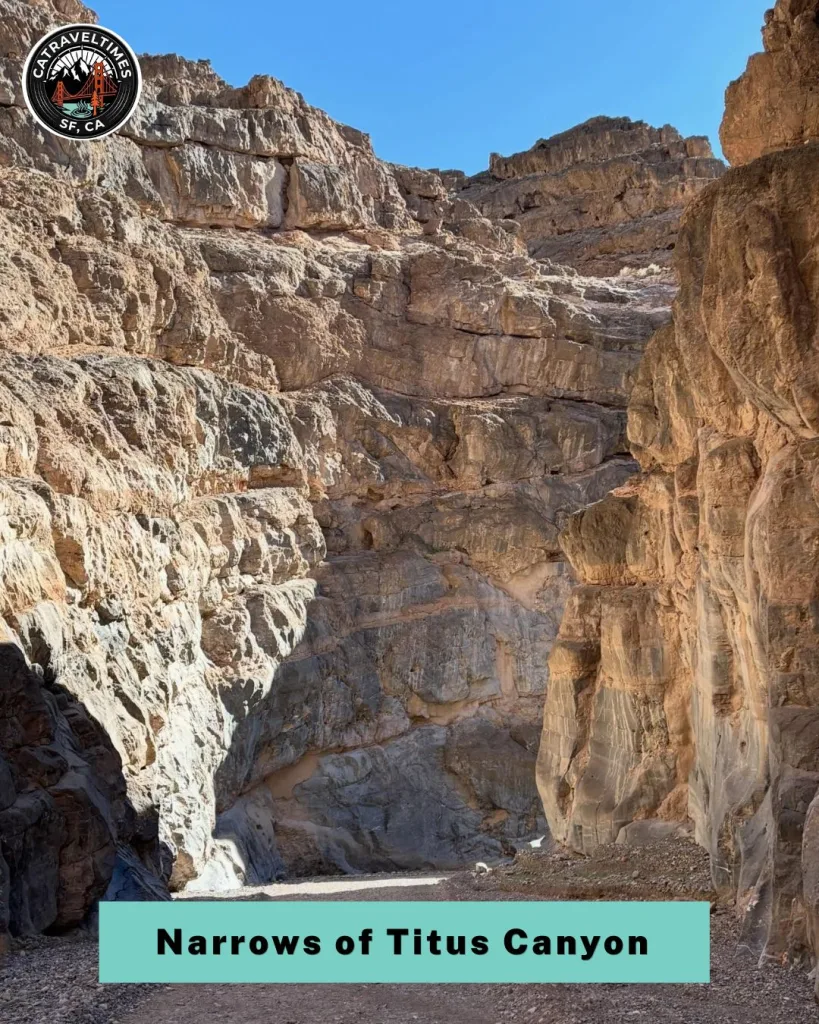
5. Explore the Narrows of Titus Canyon on Foot
The lower narrows of Titus Canyon — accessible on foot from a small parking area near the canyon mouth — are one of the best slot canyon experiences Death Valley has to offer. Towering walls press in close overhead, the rock layered in deep reds and tans, and the path winds through passages sometimes only a few feet wide. The lower 2 miles are walkable for most fitness levels with no technical skill required.
- Distance from Furnace Creek: 33 miles north
- Difficulty: Easy to Moderate
- Best Time: Morning
Wildlife note: Bighorn sheep are sometimes spotted near the canyon entrance.
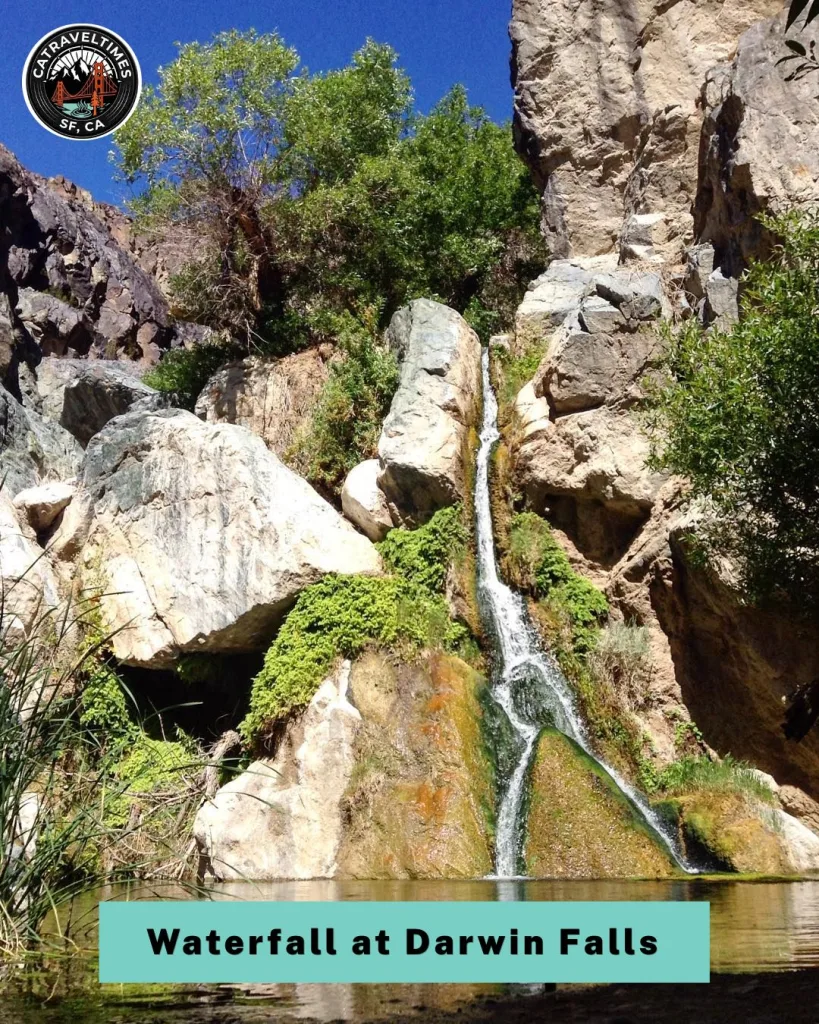
6. Discover the Hidden Waterfall at Darwin Falls
The idea of a waterfall in Death Valley sounds almost absurd and yet Darwin Falls is exactly that, a year-round cascade tucked into a shaded canyon in the western reaches of the park. The 2-mile round-trip hike follows a stream through increasingly lush riparian vegetation, with the sound of running water growing louder as you approach the 30-foot falls. It’s a complete sensory contrast to the rest of the park, cool, green, and alive.
- Distance from Furnace Creek: 55 miles west
- Difficulty: Easy
- Best Time: Any time of day
Getting there: Turn off Hwy 190 about 1 mile west of Panamint Springs. Short dirt road to the trailhead; passable in a standard car.
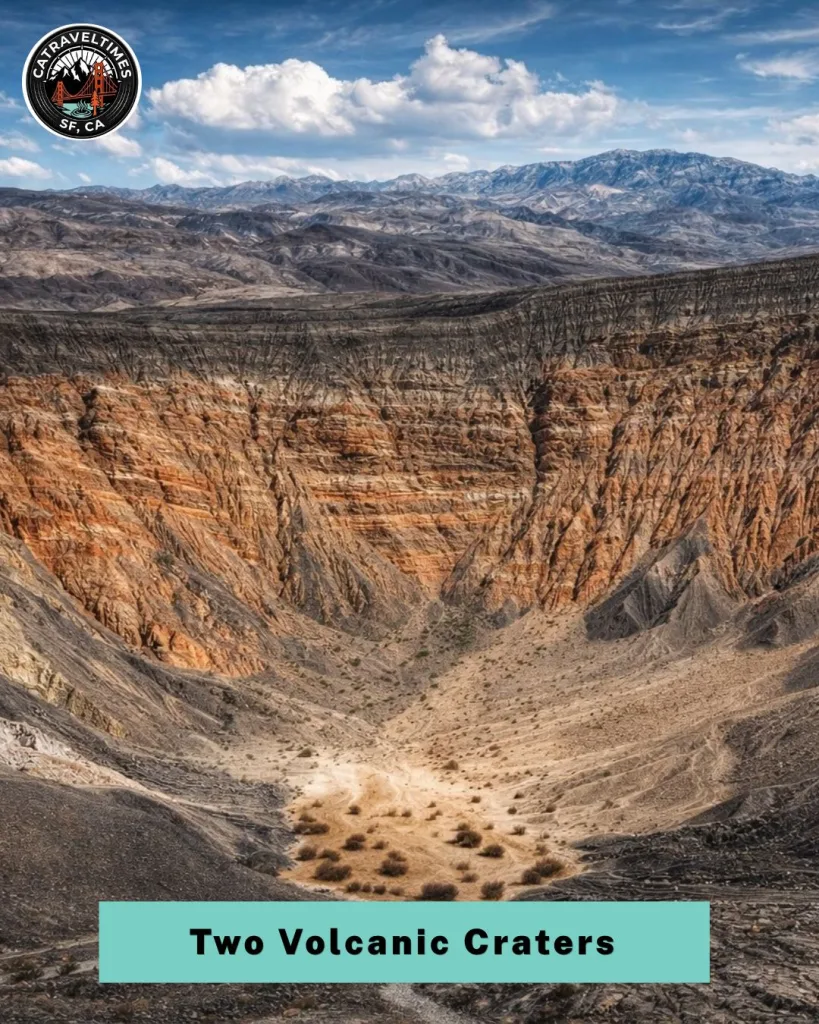
7. Loop Around Two Volcanic Craters at Ubehebe Crater
Ubehebe Crater is a half-mile-wide, 600-foot-deep volcanic crater that looks like a god took a scoop out of the earth. It formed in a massive steam explosion sometime in the last few thousand years. You can walk the full 1.5-mile rim loop, with views down into the rust-and-black crater walls and out over the Cottonwood Mountains. The nearby Little Hebe Crater adds another point of interest. Wind can be strong up here bring a layer.
- Distance from Furnace Creek: 53 miles northwest
- Difficulty: Moderate (steep rim trail)
- Best Time: Morning
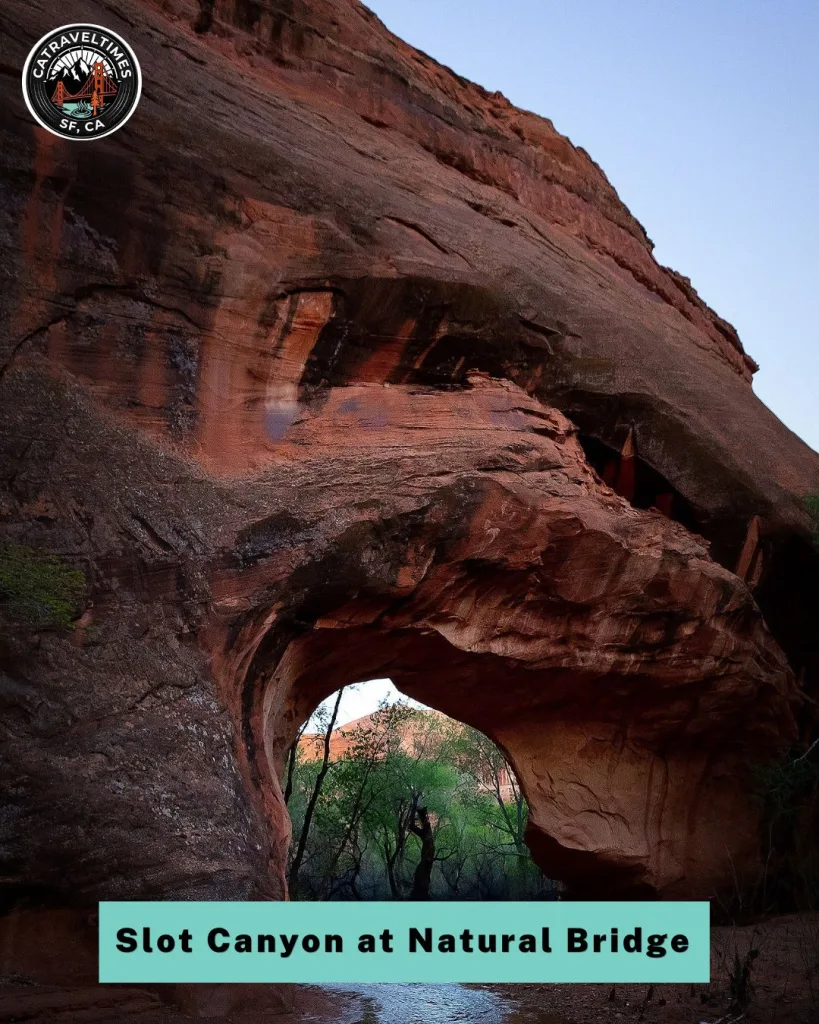
8. Wander Through the Slot Canyon at Natural Bridge
Natural Bridge is one of the most underrated short hikes in Death Valley. A 2-mile round trip leads up a dry canyon that narrows impressively before opening at a natural rock bridge spanning the canyon walls overhead about 35 feet wide. The hike continues beyond the bridge into more canyon terrain for those who want to explore further.
Parking: Small gravel lot off Badwater Road. Short dirt road approach, usually passable in a standard vehicle.
- Distance from Furnace Creek: 14 miles south
- Difficulty: Easy to Moderate
- Best Time: Morning
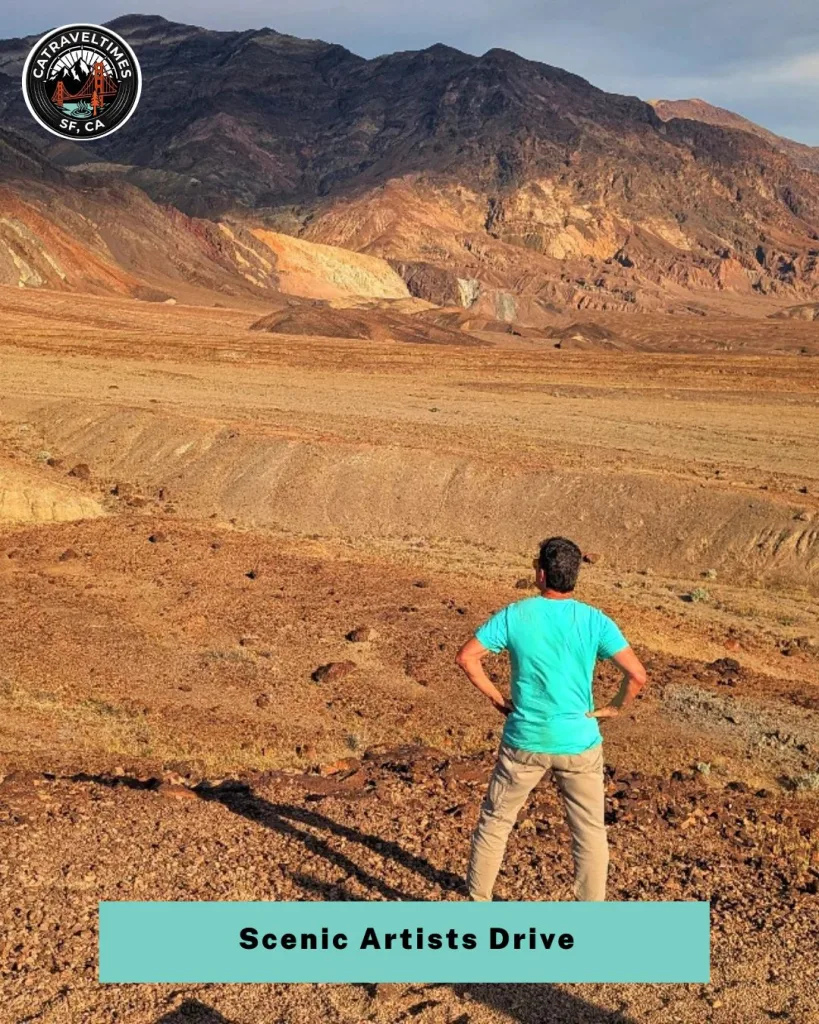
9. Drive the Scenic Artists Drive (No Hike Required)
For those who want extraordinary scenery without leaving their car, Artists Drive is the answer. This 9-mile one-way loop winds through eroded badlands and volcanic hills, passing Artists Palette at the midway point. The road is paved but narrow with a 25 mph speed limit. Allow 30–45 minutes minimum. The one-way entrance is from the northern end.
- Distance from Furnace Creek: 9 miles south to entrance
- Difficulty: None (drive only)
- Best Time: Late afternoon
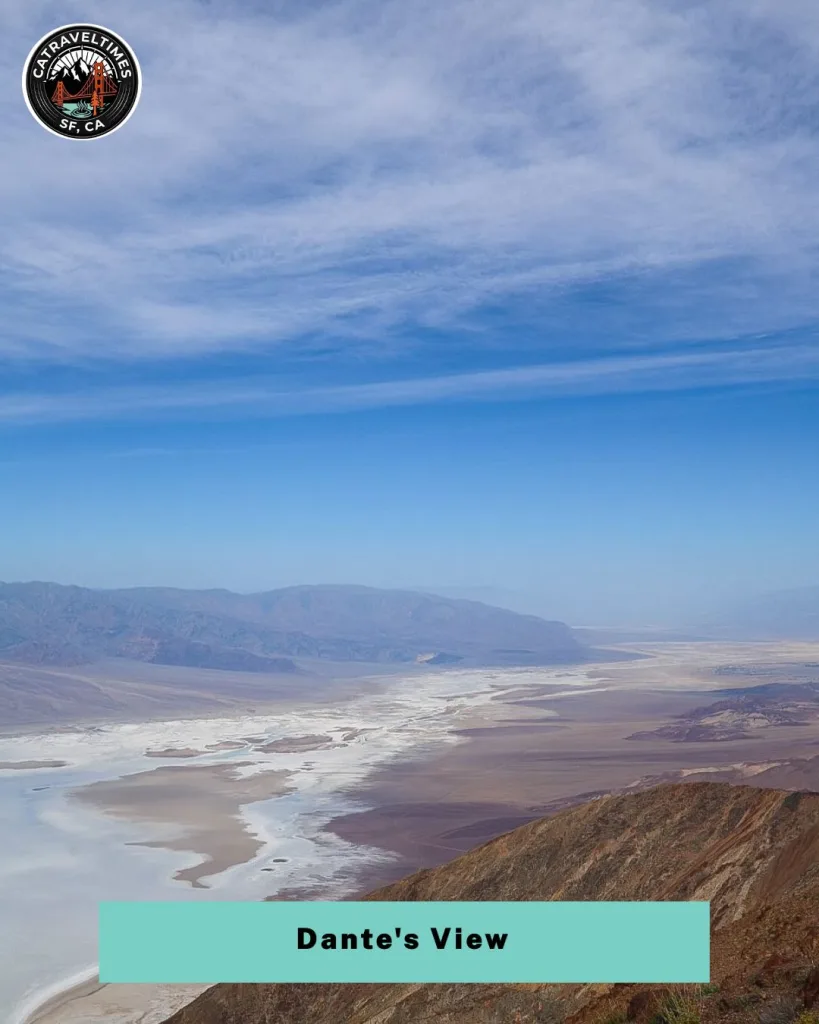
10. Watch the World Change Colors from Dante’s View
“I drove up to Dante’s View in the pre-dawn darkness and sat on a cold rock watching the light come up over the valley. On one side, the Badwater salt flat glowed white below sea level. On the other, the snow-capped summit of Telescope Peak rose more than 11,000 feet above. The entire vertical span of Death Valley, nearly two miles of relief was visible in a single glance. I don’t think I said a word for twenty minutes.”
Dante’s View sits at 5,476 feet elevation and offers arguably the best panoramic view in the entire park. On a clear day you can see Badwater Basin shimmering far below, the Panamint Range rising steeply to the west, and snow on distant peaks in winter. The temperature up here is significantly cooler than the valley floor.
- Distance from Furnace Creek: 25 miles southeast
- Difficulty: Easy (viewpoint)
- Best Time: Sunrise or early morning
🌲 For more national park inspiration, check out these National Parks guides on CA Travel Times.
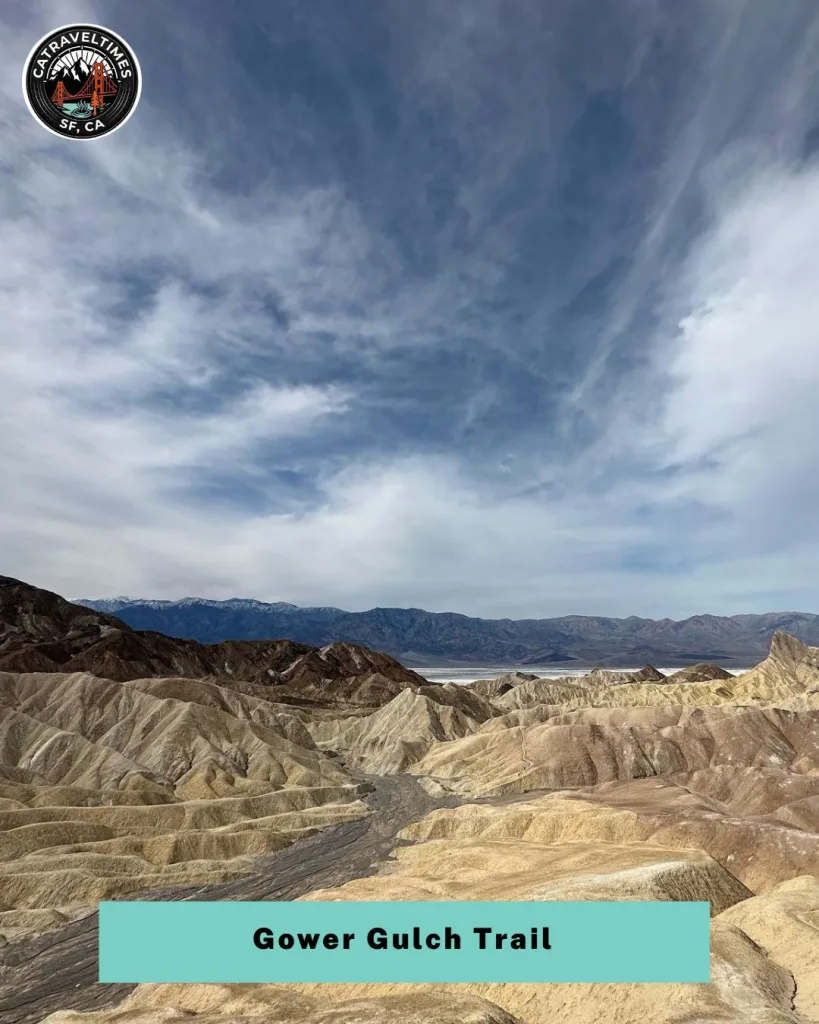
11. Conquer the Golden Canyon–Gower Gulch Loop Trail
The Golden Canyon–Gower Gulch loop is one of the best hiking routes in the park for real geology up close. The 4.2-mile loop takes you through golden badlands, past the famous Red Cathedral rock face, and up through the Gower Gulch wash. The colors shift from honey-gold to orange to burgundy as you wind through the formations.
- Distance from Furnace Creek: 4 miles south
- Difficulty: Moderate
- Best Time: Early morning or late afternoon
Note: Start early in warmer months there is almost no shade.
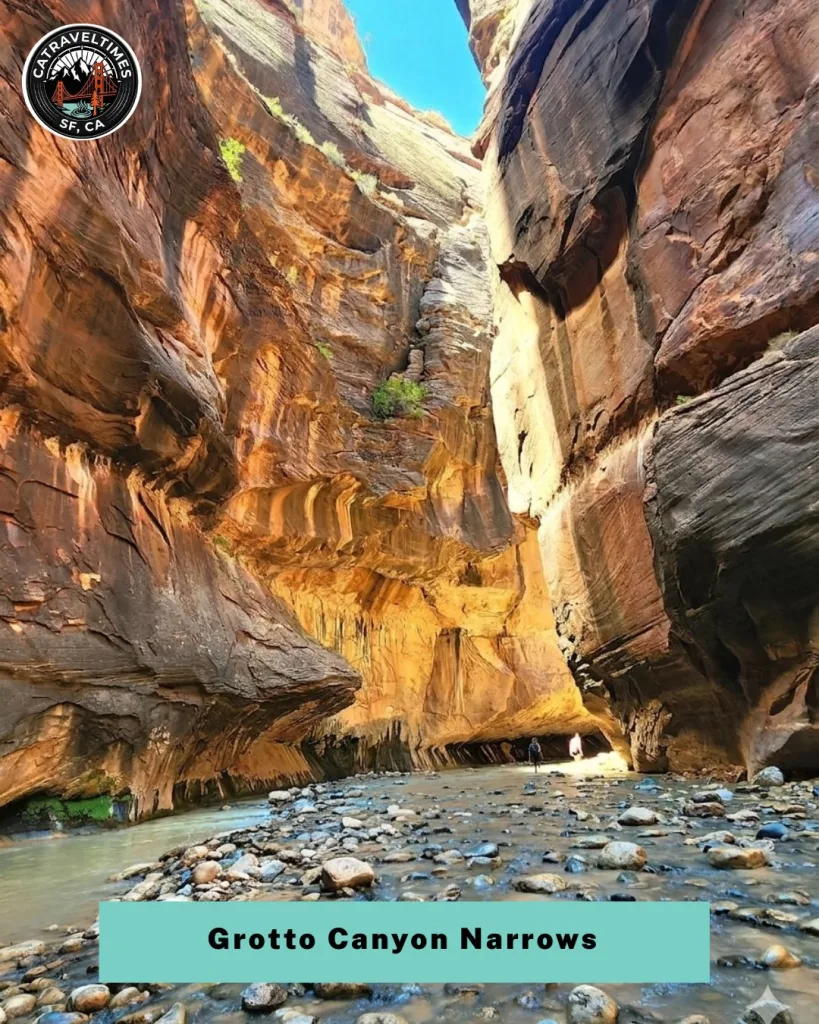
12. Scramble Through the Grotto Canyon Narrows
Grotto Canyon is a wonderful adventure that most visitors entirely miss. The canyon opens into a series of smooth, water-sculpted chambers called the “grottos” where the walls are worn into flowing curves by centuries of flash floods. There is some easy scrambling involved, hopping over boulders and squeezing through tight passages. Roughly 2 miles round trip to the farthest grotto. Parking is off Hwy 190 north of Stovepipe Wells.
- Distance from Furnace Creek: 19 miles northwest
- Difficulty: Easy to Moderate
- Best Time: Morning
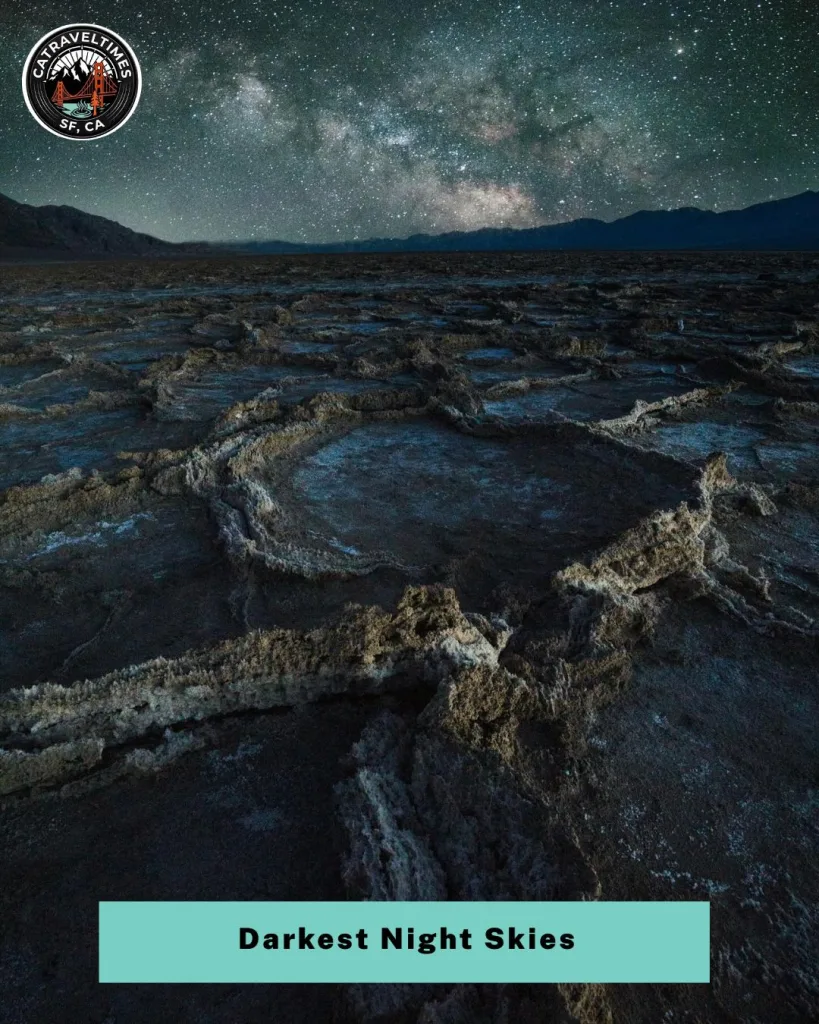
13. Stargaze at One of America’s Darkest Night Skies
Death Valley is an International Dark Sky Park which means on a clear, moonless night, the Milky Way arches overhead with a density that seems almost unreal to anyone used to city skies. The Mesquite Flat Sand Dunes area is one of the most popular stargazing spots. No telescope needed, the naked-eye experience alone is extraordinary. Bring a warm layer: desert nights cool dramatically once the sun sets.
- Distance: Anywhere remote in the park
- Difficulty: None
- Best Time: After full dark, new moon
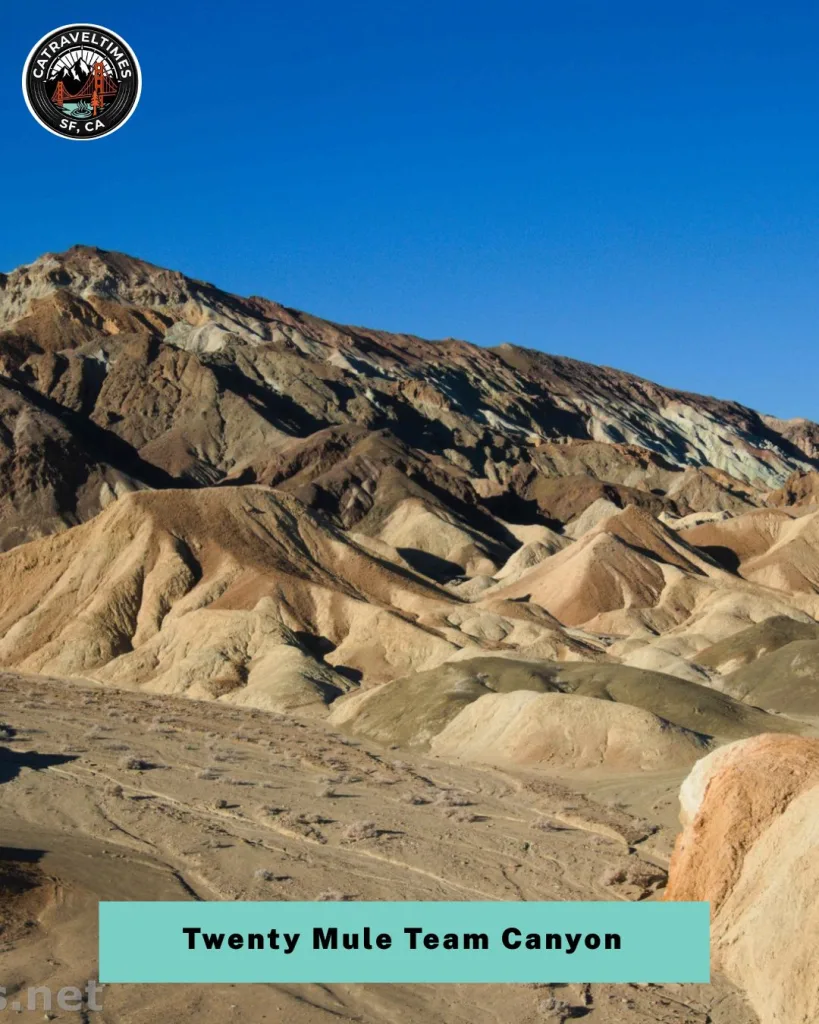
14. Take the Scenic Drive Through Twenty Mule Team Canyon
Named for the famous mule teams that hauled borax out of Death Valley in the 1880s, this 2.7-mile one-way dirt road winds through eroded badlands with an intimate, enveloping quality very different from the park’s big open viewpoints. The road is unpaved but generally passable in a standard vehicle when dry. A quieter, more contemplative experience and often far less crowded.
- Distance from Furnace Creek: 17 miles east
- Difficulty: None (drive only)
- Best Time: Any time
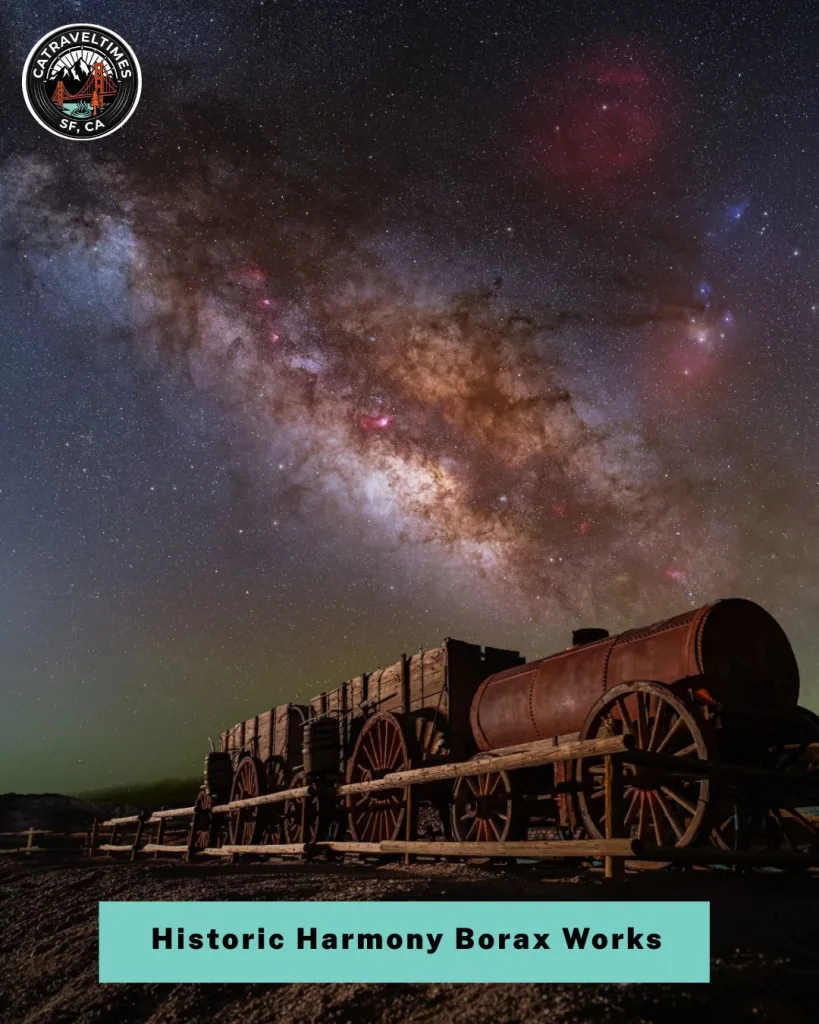
15. Visit the Historic Harmony Borax Works
The ruins of the Harmony Borax Works are a short, flat walk from the road near Furnace Creek the remains of the 1880s borax mining operation that put Death Valley on the map. The interpretive trail winds through rusted machinery, adobe walls, and historical displays. The preserved 20-mule-team wagons parked nearby are surprisingly massive up close. A fascinating 20-minute stop.
- Distance from Furnace Creek: 1 mile north
- Difficulty: Very Easy
- Best Time: Any time
16. Explore the Ghost Town of Rhyolite (Near Park Entrance)
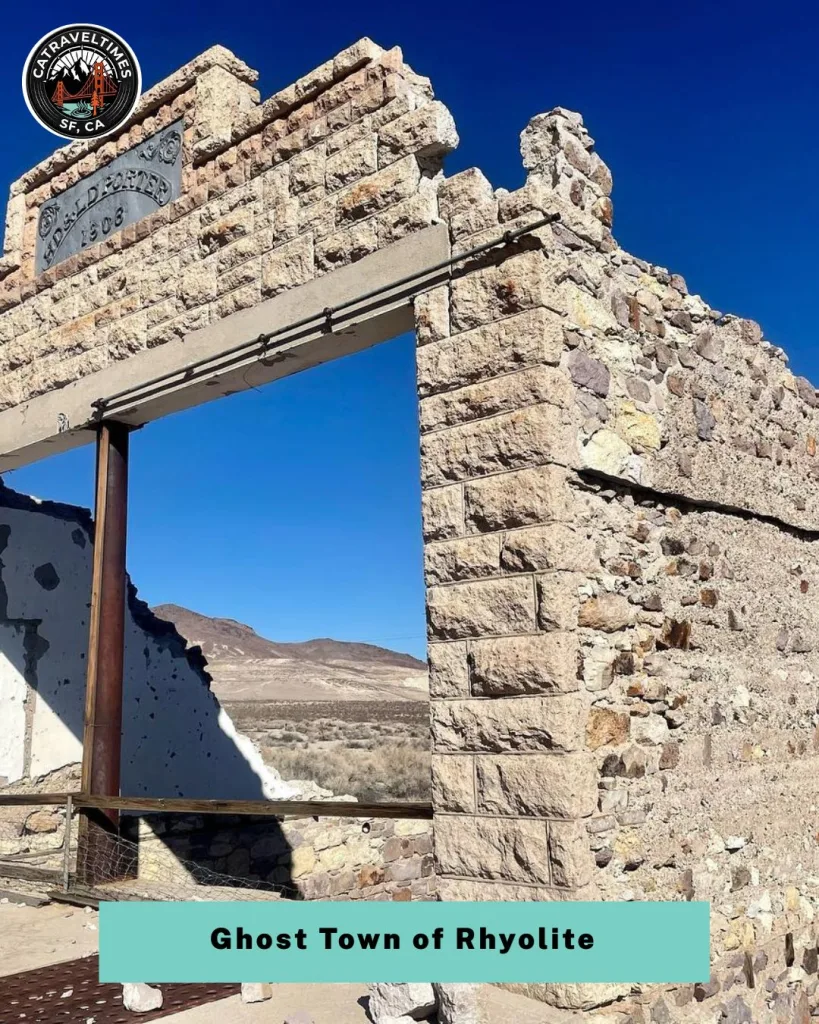
Rhyolite is one of the most atmospheric ghost towns in the American West. What was once a booming gold rush city of 10,000 people at the turn of the 20th century is now a hauntingly beautiful collection of crumbling stone walls, a roofless bank building, and a train depot slowly being reclaimed by the desert. Admission is free and it’s open year-round. The light here in the golden hour before sunset is exceptional for photography.
- Distance from Furnace Creek: 45 miles northeast (just outside park)
- Difficulty: Very Easy
- Best Time: Morning or late afternoon
17. Drive Through the Colorful Mosaic Canyon
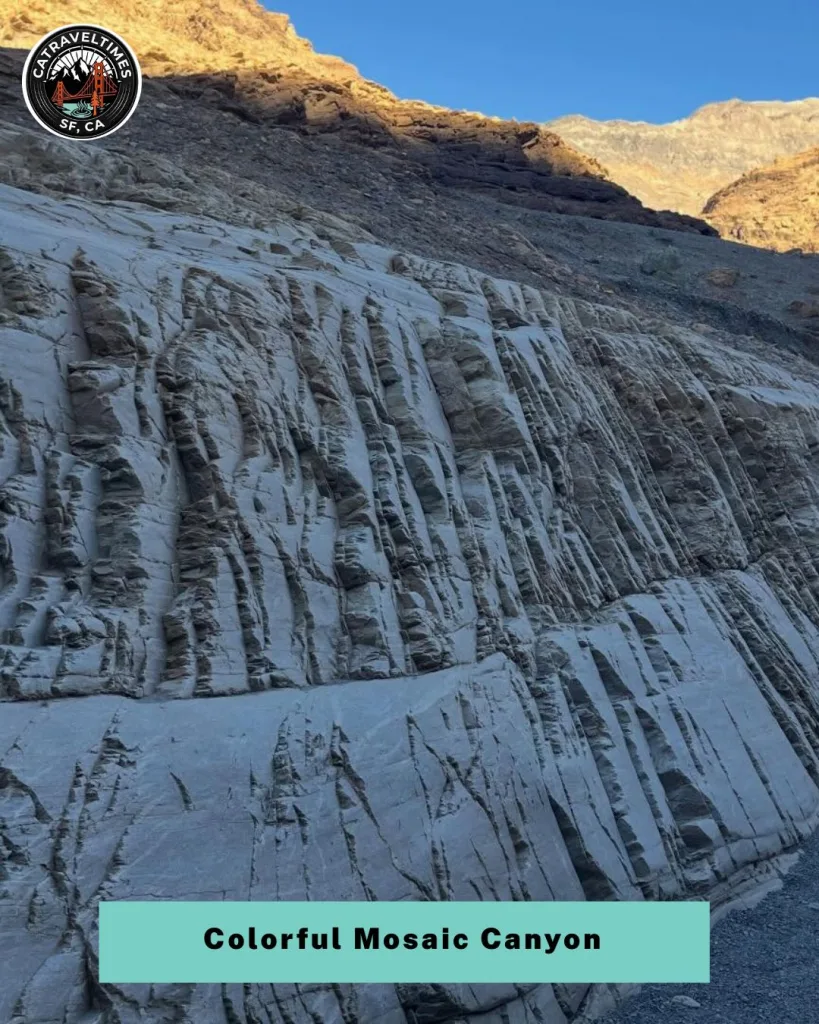
Mosaic Canyon near Stovepipe Wells is named for the polished marble breccia fragments of multicolored rock cemented together that make up its walls, creating a genuinely mosaic-like pattern. The first mile of the hike involves smooth, polished marble walls in a tight narrow passage and is suitable for most visitors. Beyond that, the canyon extends another 3 miles for those who want a longer adventure.
- Distance from Furnace Creek: 22 miles northwest
- Difficulty: Easy (first mile) to Moderate
- Best Time: Morning
18. Photograph Eureka Sand Dunes (The Tallest in California)
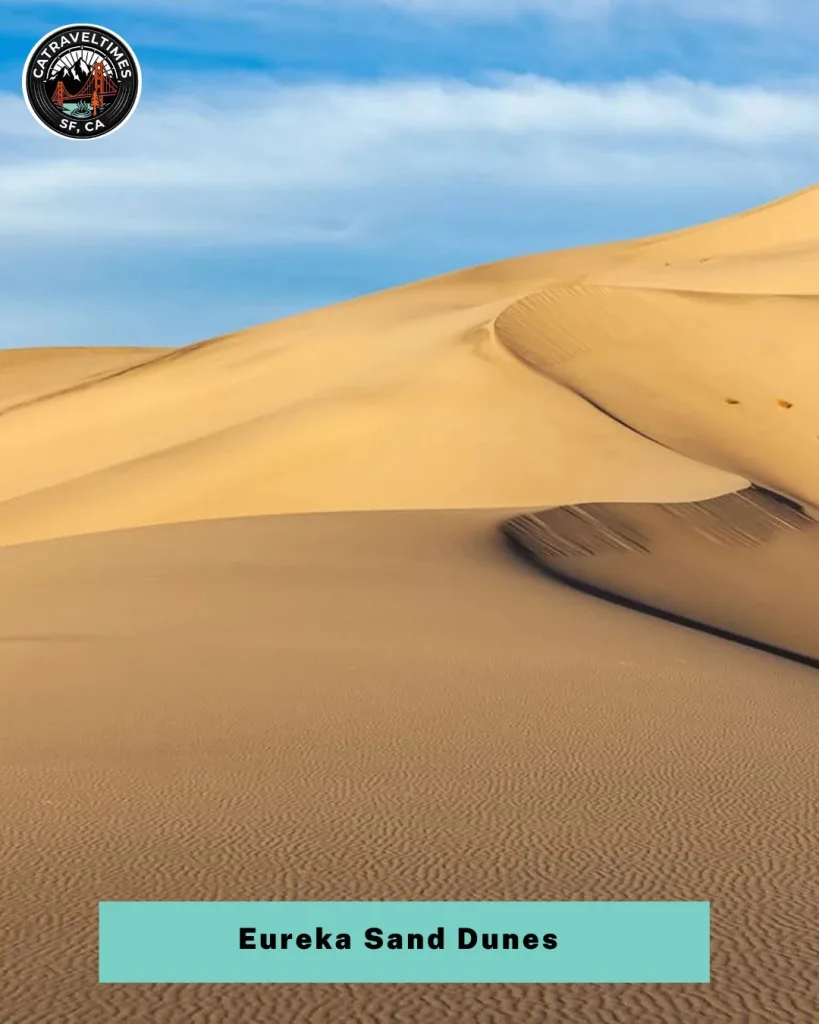
At nearly 700 feet tall, the Eureka Sand Dunes are the tallest sand dunes in California and among the tallest in North America. They sit in the remote northwest corner of the park, requiring a long drive on a dirt road but the reward is total, extraordinary solitude. These are also “singing dunes” in the right conditions, the sand makes a deep booming or humming sound as it slides.
- Distance from Furnace Creek: 95 miles north
- Difficulty: Moderate (soft sand)
- Best Time: Sunrise or sunset
19. Camp Under the Stars at Mesquite Spring Campground
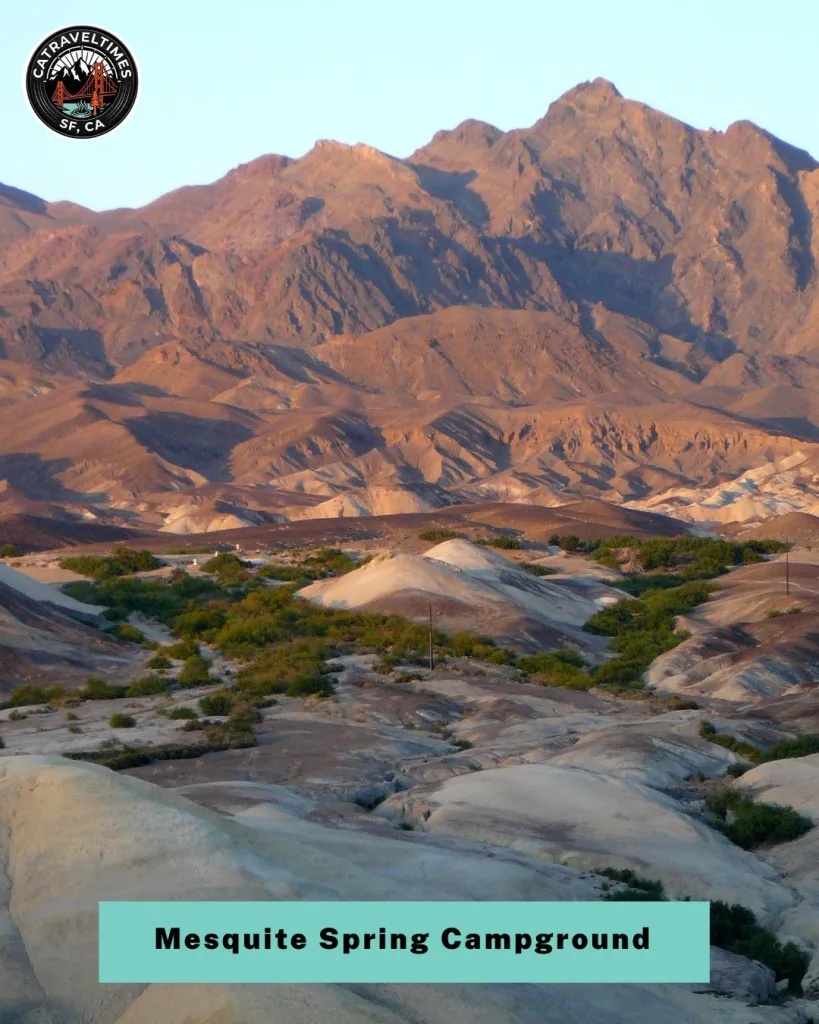
Mesquite Spring Campground is one of Death Valley’s quietest and most peaceful places to spend the night. Sites are basic but spacious, surrounded by desert vegetation, with a distant view of the Grapevine Mountains. At this slightly higher elevation, temperatures are more comfortable, especially in spring and fall. Waking up in the desert at dawn, when the air is still cool and the light is just warming the canyon walls, is one of the genuinely transcendent experiences Death Valley offers.
- Distance from Furnace Creek: 50 miles north
- Best Time: October through April
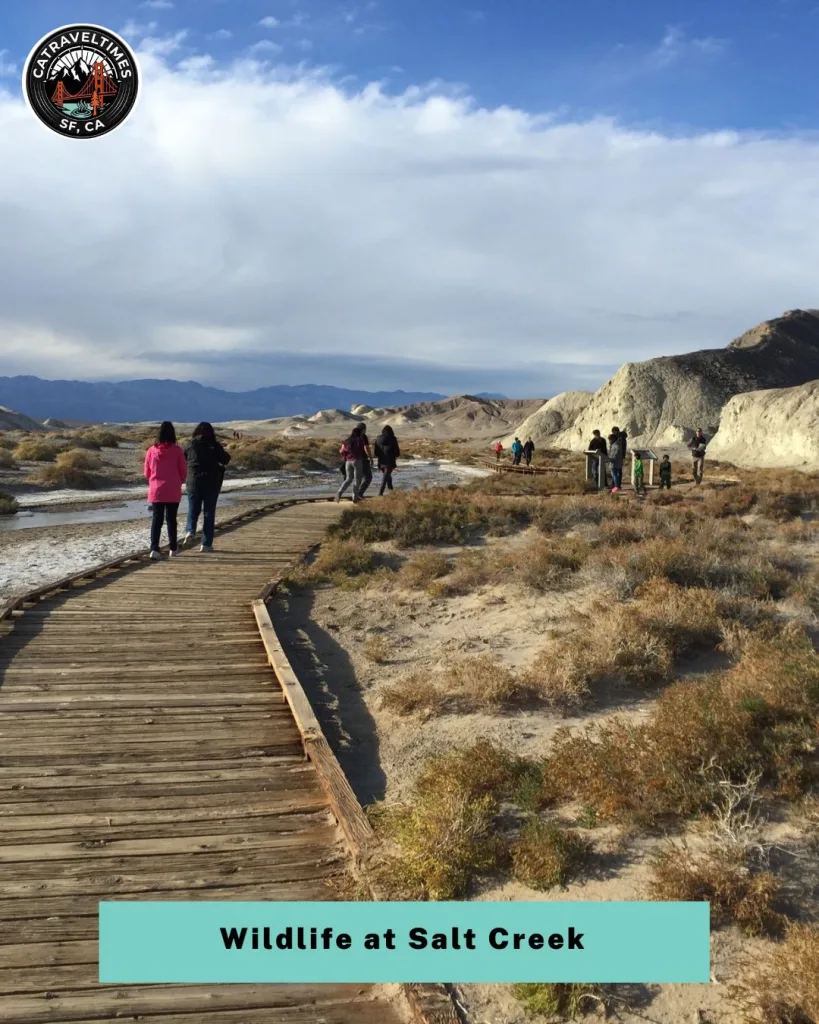
20. Spot Desert Wildlife at Salt Creek Interpretive Trail
Salt Creek is home to the Death Valley pupfish a tiny species found nowhere else on Earth, having adapted over thousands of years to survive in water far saltier than the ocean. A 0.5-mile boardwalk loop crosses the creek and offers excellent viewing of these iridescent little fish, especially in late winter and spring. The creek is also a magnet for migratory birds, making it a surprisingly active wildlife spot.
- Distance from Furnace Creek: 14 miles north
- Difficulty: Easy (boardwalk)
- Best Time: February–April
10 Best Things to Do Near Death Valley National Park
Death Valley’s remote location places it within striking distance of some extraordinary destinations. To the east, Las Vegas is less than two hours away. To the south and west, the Mojave Desert opens up toward Joshua Tree, Red Rock Canyon, and the Eastern Sierra. If you’re building a multi-stop road trip, Death Valley makes an ideal anchor point.
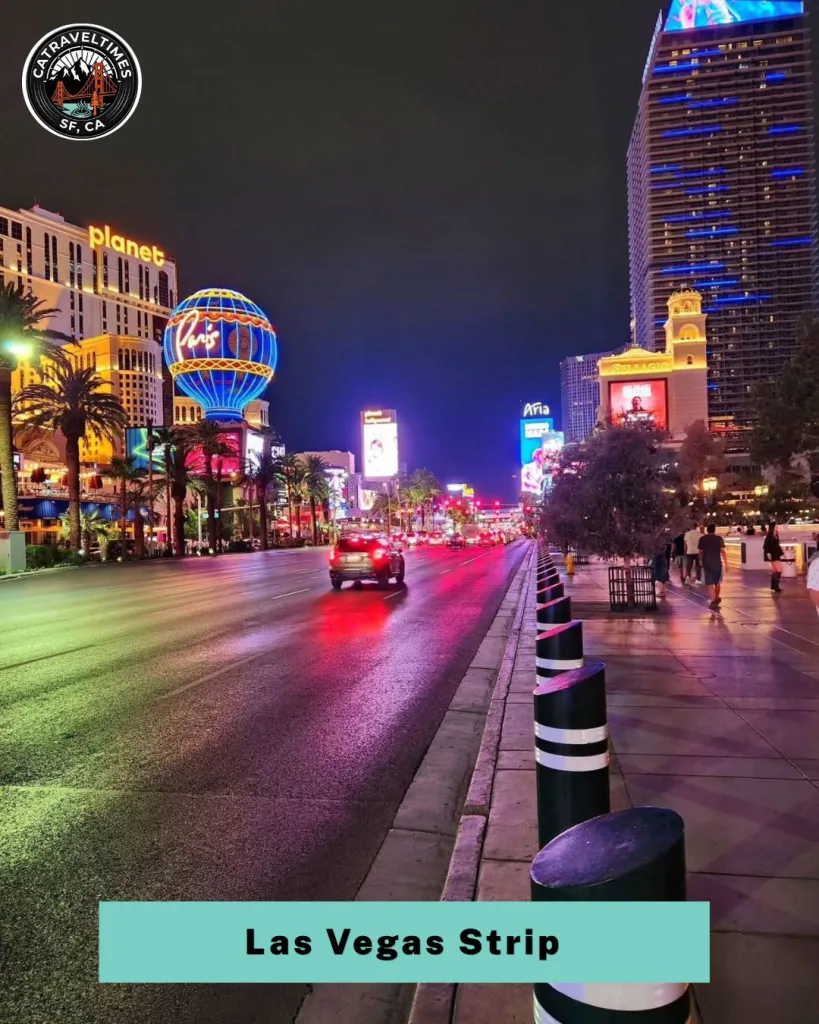
1. Las Vegas Strip, Nevada
The contrast between Death Valley’s profound silence and the blazing sensory overload of the Las Vegas Strip could not be more complete which is partly what makes pairing them so memorable. After days in the desert, the cold air-conditioning, the buffets, and the sheer spectacle of the Strip feel almost surreal. Las Vegas is also the most practical base for a Death Valley trip if you want comfortable, affordable accommodation.
- Distance: ~110 miles east
- Drive time: ~2 hours from Furnace Creek
Tip: Book accommodation on the Strip or downtown for the best value. Parking at major casino hotels is often free for guests.
2. Mojave National Preserve
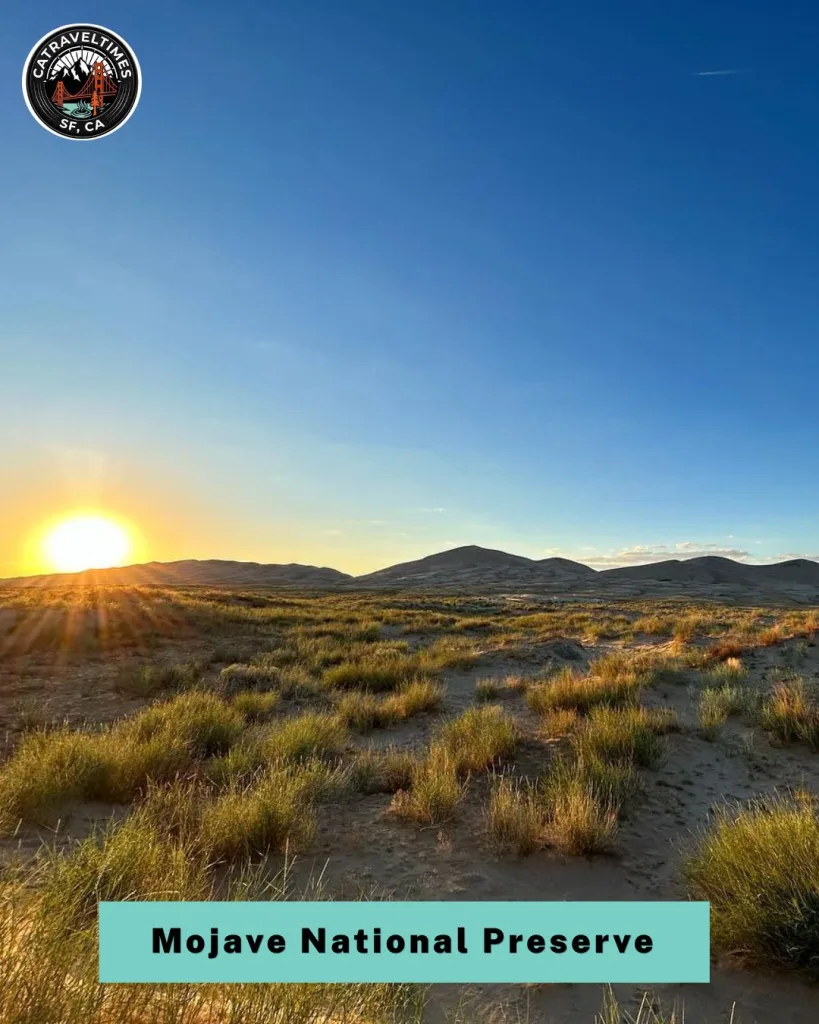
The Mojave National Preserve is a sprawling, dramatically undervisited park covering 1.6 million acres of Joshua tree forests, volcanic cinder cones, and towering sand dunes at Kelso. Unlike Death Valley, it’s rarely crowded, and the Kelso Dunes offer their own singing-sand experience. The historic Kelso Depot is beautifully restored.
- Distance: ~150 miles south
- Drive time: ~2.5 hours
Tip: Combine with a Joshua Tree National Park visit for a multi-day Southern California desert loop.
3. Joshua Tree National Park
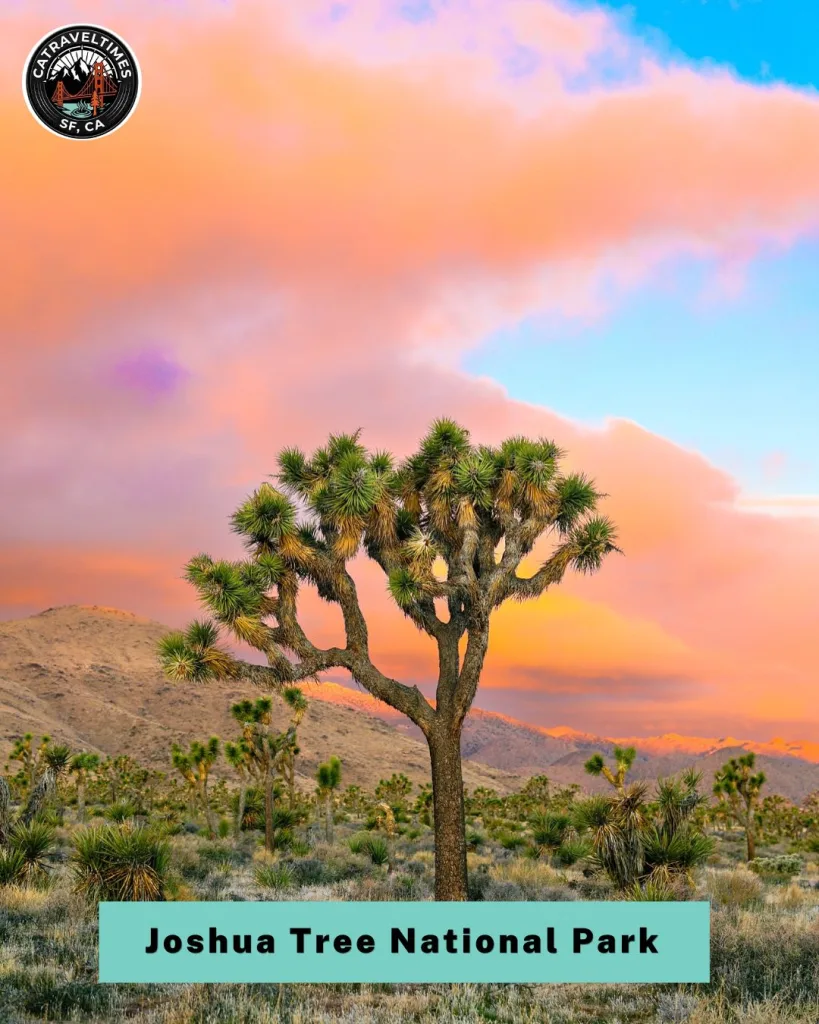
Joshua Tree is one of the most visually distinctive national parks in the country, where two desert ecosystems meet and the namesake trees stand against enormous tumbled granite boulders. Rock climbing, hiking, and stargazing are the main draws. Spring wildflower season (March–April) can be spectacular here.
- Distance: ~230 miles southwest
- Drive time: ~3.5 hours
Tip: Book accommodation in the town of Joshua Tree or 29 Palms well in advance for spring visits.
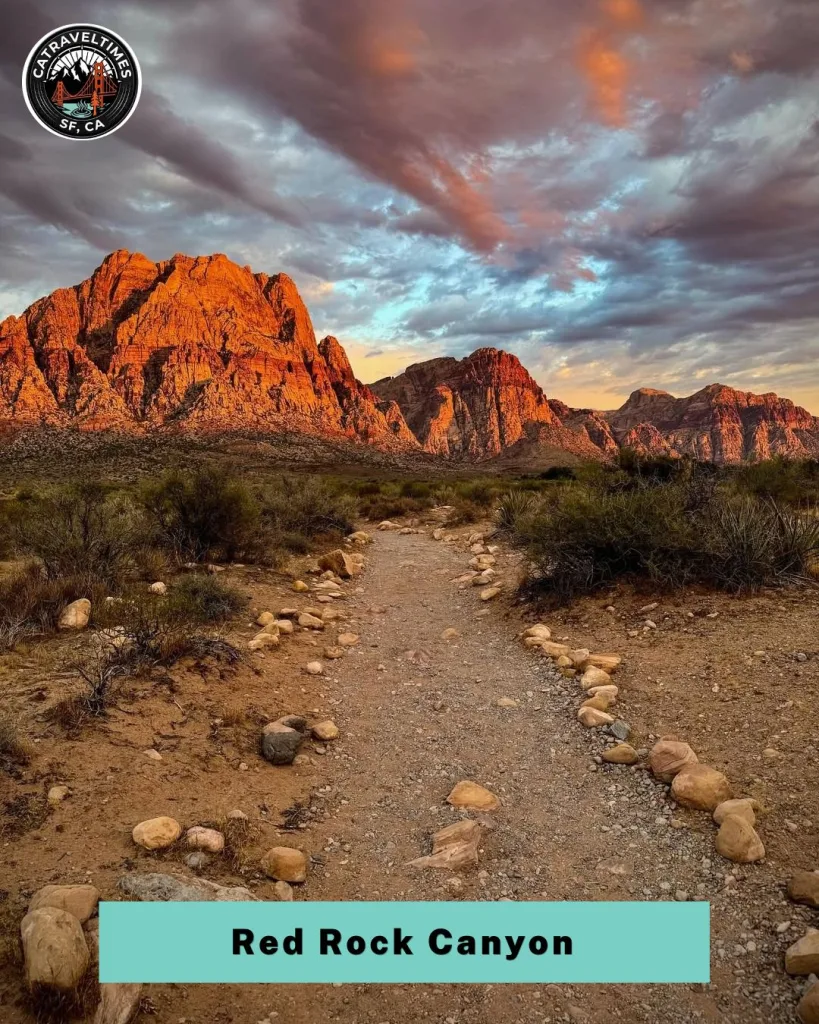
4. Red Rock Canyon National Conservation Area, Nevada
Just 17 miles west of Las Vegas, Red Rock Canyon is a stunning escarpment of Aztec sandstone rising 3,000 feet above the Mojave floor. The 13-mile scenic drive, dozens of hiking trails, and world-class rock climbing make it one of the best day trips from Las Vegas.
- Distance: ~140 miles east
- Drive time: ~2.5 hours
Tip: The scenic drive requires a timed entry reservation during peak season. Book at recreation.gov well in advance.
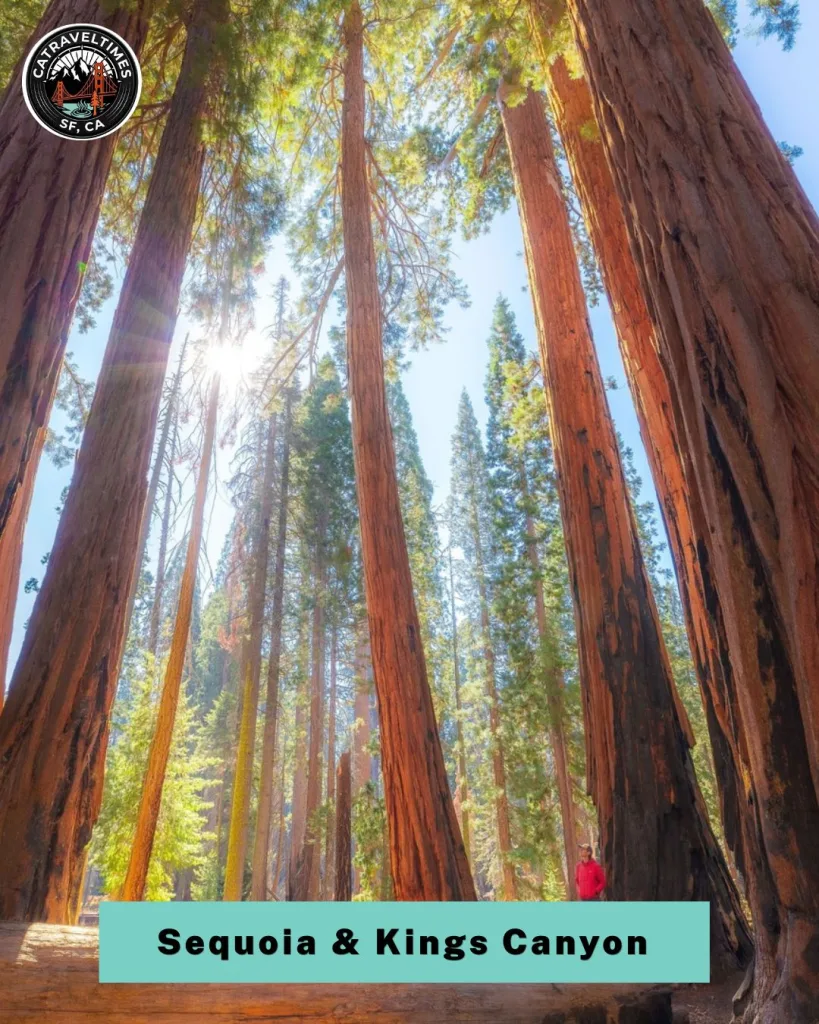
5. Sequoia & Kings Canyon National Parks
The transition from Death Valley’s parched below-sea-level landscapes to the towering giant sequoias of the Sierra Nevada is one of the great California road trip moments. General Sherman Tree, the largest living tree on Earth by volume is reason enough to make the detour.
- Distance: ~220 miles west
- Drive time: ~3.5 hours
Tip: The road to Giant Forest can be closed by snow in winter. Check nps.gov/seki for road conditions November through May.
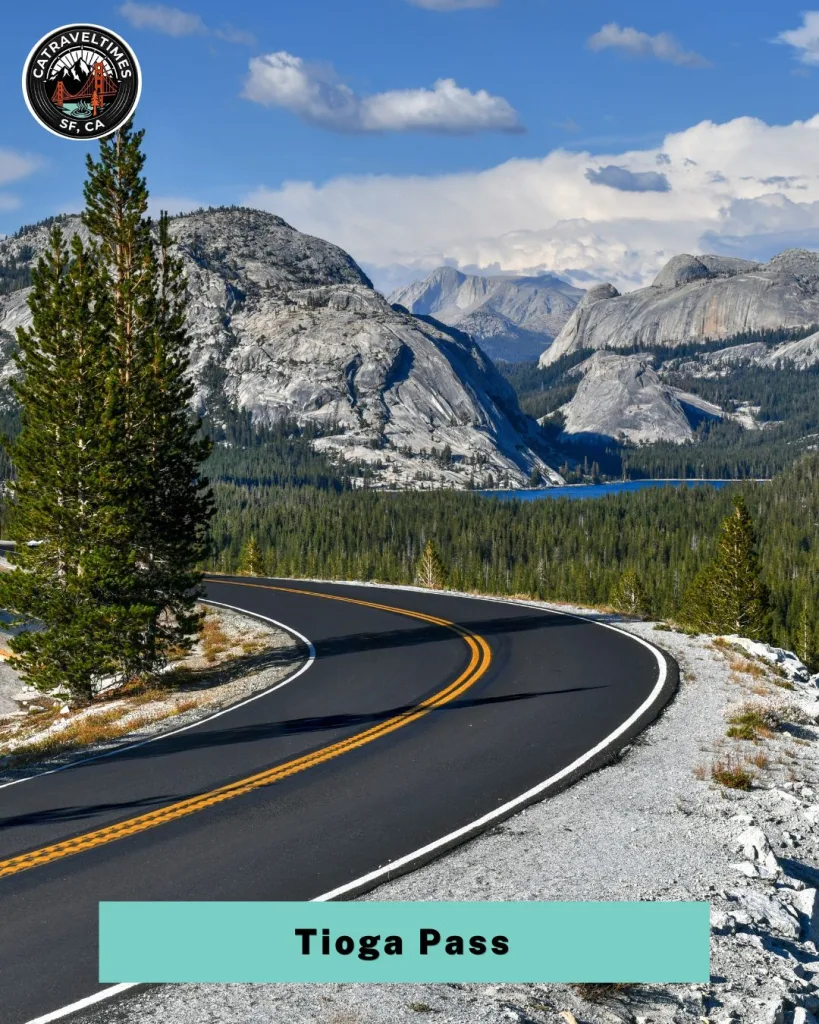
6. Yosemite National Park (via Tioga Pass, seasonal)
The Tioga Pass route through Yosemite is one of the most spectacular drives in North America, but open only roughly May through November depending on snowpack. From Death Valley, this route carries you up from below sea level through the Eastern Sierra to alpine meadows, then descends into Yosemite Valley.
- Distance: ~310 miles northwest
- Drive time: ~5 hours (when Tioga Pass is open)
Tip: Yosemite Valley requires timed entry reservations in peak season. Book months in advance through recreation.gov.
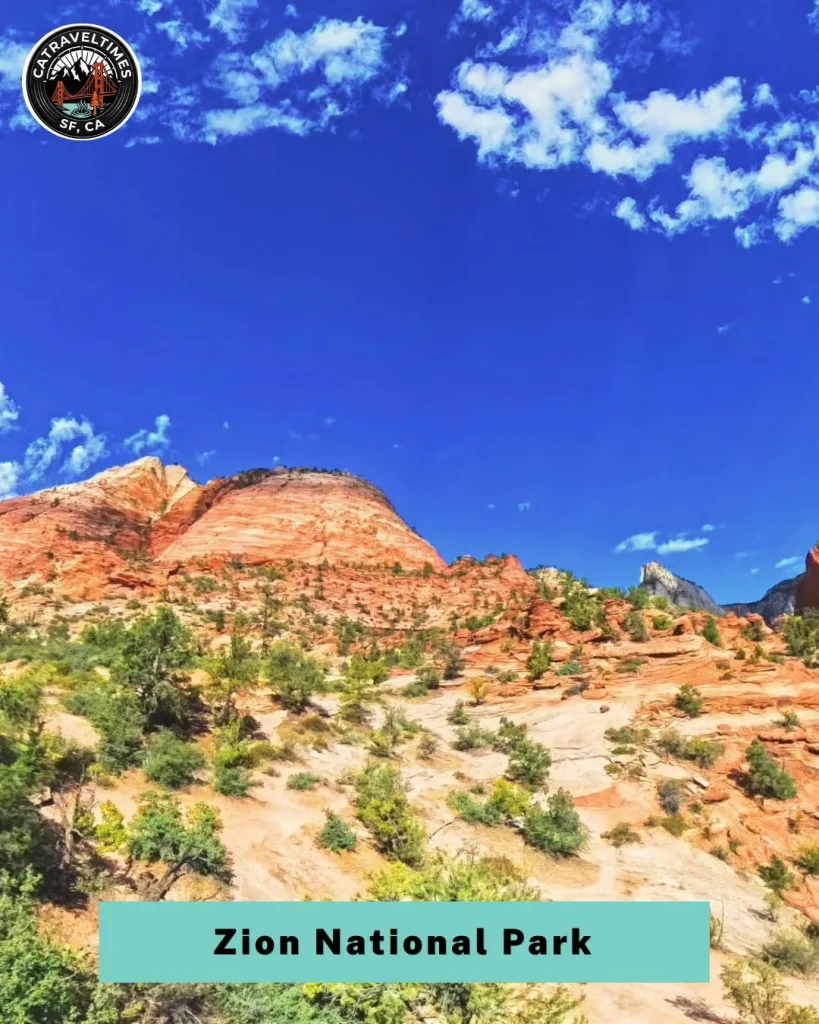
7. Zion National Park, Utah
Zion is one of America’s most beloved national parks, a canyon of towering red and white Navajo sandstone walls carved by the Virgin River. The famous Angels Landing and Narrows hikes are extraordinary, and the park’s shuttle system keeps the main canyon accessible even during busy periods.
- Distance: ~270 miles northeast
- Drive time: ~4.5 hours
Tip: Angels Landing requires a permit lottery. The Narrows is walk-up access and arguably the more memorable experience.
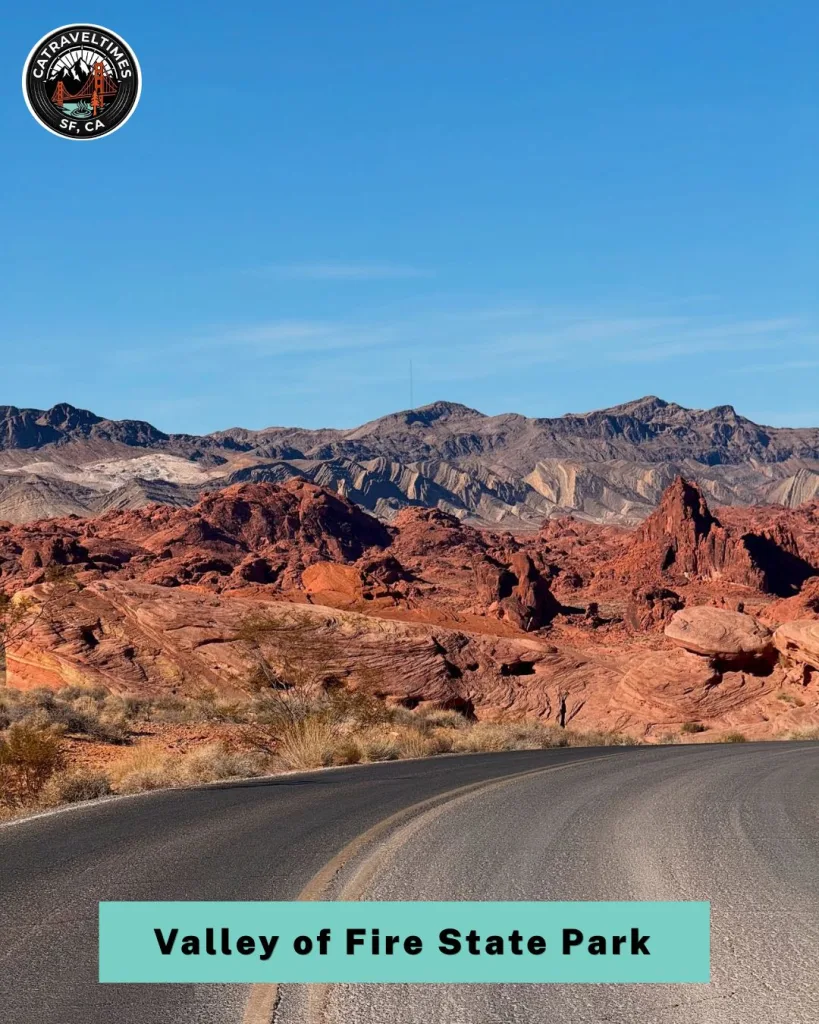
8. Valley of Fire State Park, Nevada
Valley of Fire is Nevada’s oldest state park with 40,000 acres of brilliant red Aztec sandstone formations, ancient petroglyphs, and petrified trees. It’s an easy loop with Death Valley and Las Vegas and is far less crowded than most national parks.
- Distance: ~135 miles east
- Drive time: ~2.5 hours
Tip: The best photography light is in the two hours after sunrise. White Domes Trail is the best hike in the park.
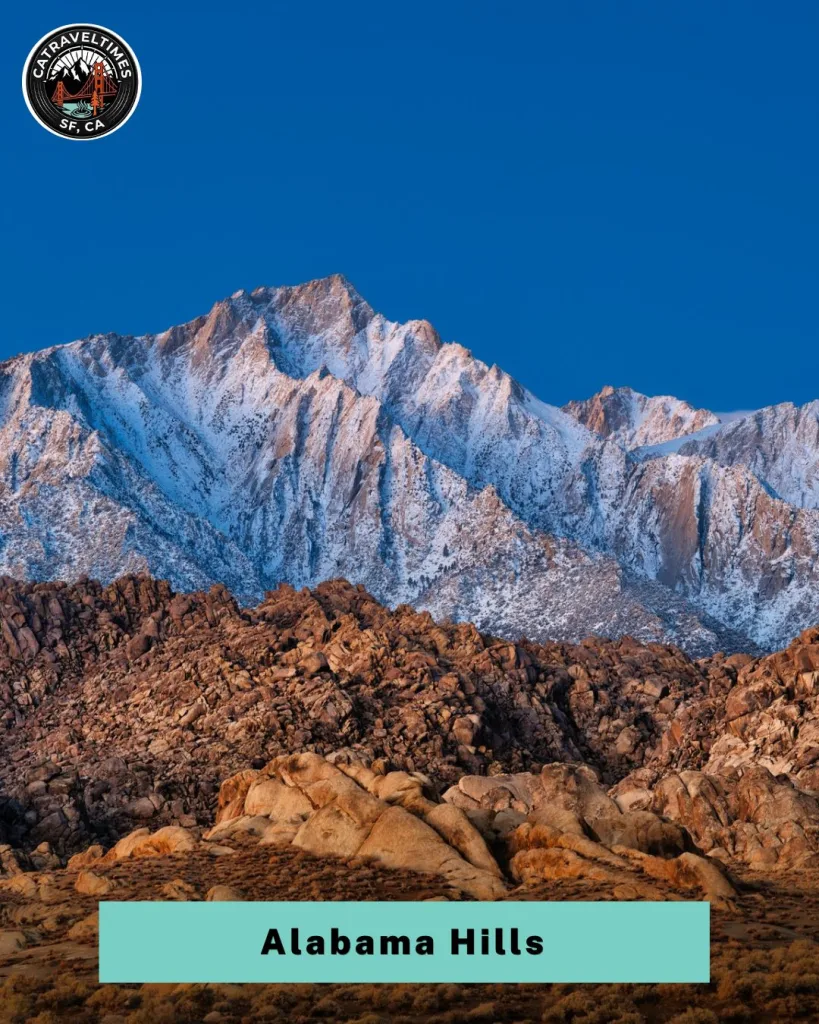
9. Lone Pine & Alabama Hills (Eastern Sierra)
Lone Pine sits at the foot of Mt. Whitney the highest peak in the contiguous United States and the Alabama Hills just outside town are a landscape of smooth, rounded granite boulders that have served as a backdrop for hundreds of Hollywood westerns. The combination of boulder formations and Sierra Nevada peaks is hard to forget.
- Distance: ~95 miles northwest
- Drive time: ~1.5 hours
Tip: The Alabama Hills Scenic Byway is a short loop drive through the boulders. Arch Rock is a popular photography spot with the Whitney massif in the background.
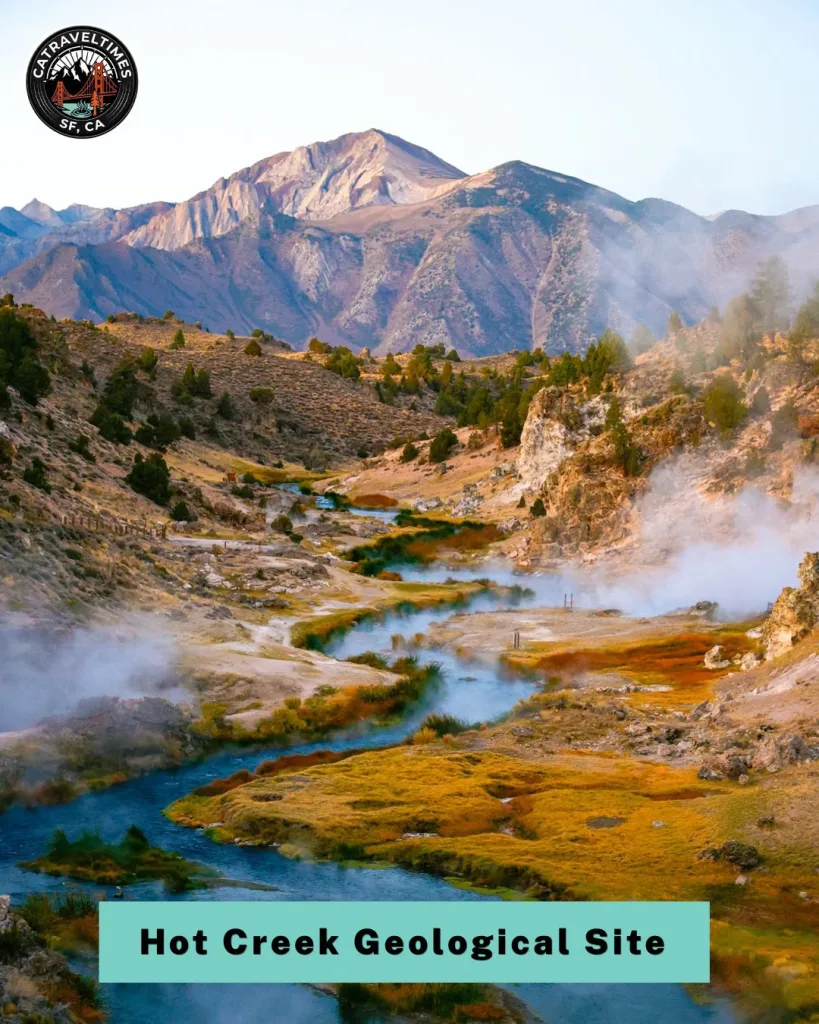
10. Bishop, CA & Hot Creek Geological Site
Bishop is the main supply town of the Eastern Sierra and a worthy destination in its own right surrounded by volcanic tablelands and the surreal landscape of the Owens Valley. Hot Creek, a short drive east of Mammoth Lakes, is a geothermal stream where hot springs bubble up through a dramatic volcanic gorge.
- Distance: ~130 miles north
- Drive time: ~2 hours
Tip: Swimming in Hot Creek is not permitted (dangerously hot water), but the viewing walkways above the gorge are spectacular.
Itinerary — Plan Your Death Valley National Park Trip
Death Valley is bigger than Rhode Island without a plan, you’ll spend more time driving than exploring. The key is to group attractions by location. Furnace Creek sits near the geographic center and is the best base for most visits. Here’s how I’d structure different trip lengths.
One Day in Death Valley (Best Short Visit)
🗺️ I’ve put together a detailed one day in Death Valley itinerary that you can follow step by step.
Morning (6:00–10:00 AM)
- Zabriskie Point at sunrise (arrive 30 min before first light)
- Drive to Badwater Basin — walk out to the salt polygons
- Devil’s Golf Course quick photo stop on the way back north
Midday (10:00 AM–2:00 PM)
- Artists Drive scenic loop (enter from north end)
- Lunch at Furnace Creek Ranch or a packed lunch at a shaded picnic area
- Visit Harmony Borax Works — short flat walk
Afternoon (2:00–6:00 PM)
- Mesquite Flat Sand Dunes — best light in late afternoon
- Stovepipe Wells area exploration
- Sunset at Dante’s View (allow 25 min drive each way)
2 Days in Death Valley
Day 1: Follow the one-day itinerary above.
Day 2:
- Morning: Titus Canyon Narrows hike (lower section, walk-in from canyon mouth)
- Afternoon: Natural Bridge Canyon hike + Grotto Canyon narrows
- Evening: Return to Mesquite Flat Dunes after dark for stargazing
3 Days in Death Valley
Day 1 & 2: Follow the two-day itinerary above.
Day 3:
- Early morning: Ubehebe Crater — arrive before 9 AM, walk the full rim loop
- Mid-morning: Darwin Falls hike (with a stop at Panamint Springs for gas and food)
- Afternoon: Scenic drive through Twenty Mule Team Canyon
- On the way out: Rhyolite Ghost Town near Beatty, NV
🌲 Planning to extend your trip? Browse more California and Southwest national park guides on CA Travel Times.
Where to Sleep & Where to Eat in Death Valley
Accommodation inside Death Valley is limited and books up fast especially from October to March. Book as early as possible for peak season visits. The Inn at Death Valley in particular can fill up 3–6 months out. If you can’t get something inside the park, Beatty, NV is the best budget alternative at just 45 minutes from Furnace Creek.
Campgrounds Inside the Park
I stayed at Mesquite Spring on my last trip, completely alone, with silent nights, coyotes nearby, a star-filled sky, cool sleep, and a sunrise painting canyon walls rose-gold unforgettable experience.
| Campground | Fee | Open | Hookups | Notes |
| Furnace Creek | $36/night | Year-round | Some sites | Most popular — book via recreation.gov |
| Mesquite Spring | $16/night | Year-round | No | Quieter, remote, great stargazing |
| Sunset Campground | $16/night | Oct–Apr | No | Large, near Furnace Creek |
| Texas Spring | $16/night | Oct–Apr | No | Scenic, tents & RVs |
| Wildrose | Free | Year-round | No | Higher elevation, cooler temps |
| Thorndike / Mahogany Flat | Free | Mar–Nov | No | 4WD required; spectacular views |
Hotels & Lodges Inside the Park
- The Inn at Death Valley — Luxury resort with a gorgeous spring-fed pool, exceptional dining, and architecture dating to 1927. Book 3–6 months ahead for peak season.
- The Ranch at Death Valley — Mid-range, large resort near Furnace Creek with multiple restaurants, a golf course, and a family-friendly atmosphere.
- Stovepipe Wells Village Hotel — Basic but conveniently located near the sand dunes. Great for self-sufficient travelers.
- Panamint Springs Resort — Remote, small, and characterful. On the western edge is a good base for Darwin Falls and the Panamint Mountains.
Budget-Friendly Stays Nearby
- Beatty, NV — 45 minutes east. Cheapest motel prices in the area, plus gas stations and diners. Next door to Rhyolite Ghost Town.
- Pahrump, NV — ~1 hour southeast. More hotel choices, full grocery store, cheaper gas than anywhere inside the park.
- Shoshone, CA — Small desert town ~1 hour southeast, with a basic motel, a hot spring, and a surprisingly good local museum.
Where to Eat
- The Inn Dining Room — Best food in the park. Upscale American cuisine in a beautiful historic dining room. Reservations strongly recommended.
- 19th Hole Bar & Grill — Casual burgers and sandwiches at the Ranch. Good for a quick midday break.
- Toll Road Restaurant — Breakfast and lunch at Stovepipe Wells. Reliable and reasonably priced by park standards.
- Furnace Creek General Store — Grab-and-go snacks and limited groceries. Prices are high — this is for emergencies.
💡 Pro tip: Pack your own food. A cooler full of groceries from Pahrump before entering will save you $50–100 per day compared to eating exclusively inside the park.
Essential Tips Before You Visit Death Valley
I’ve visited Death Valley on four separate occasions across different seasons, and the lessons I’ve picked up are the kind that don’t always make it into generic travel articles. Here’s what genuinely matters.
Water & Heat Tips
Carry at minimum 1 gallon of water per person per day — more if you’re hiking. The desert air is so dry that you lose moisture through breathing and evaporation before you even feel thirsty. In warmer months, plan all physical activity before 9 AM or after 4 PM. Canyon trails are particularly dangerous in midday heat because the walls trap and radiate heat, and shade disappears fast as the sun climbs.
What to Pack for Death Valley
- Wide-brimmed sun hat and sunscreen SPF 50+
- Quality sunglasses (the light reflects intensely off the salt flats)
- Sturdy closed-toe hiking shoes — not sandals for canyon hikes
- Portable phone charger + downloaded offline maps (Google Maps or Maps.me)
- Extra gas can if you plan to explore remote roads
- Emergency blanket and basic first aid kit
- Warm layer for evenings and high-elevation viewpoints
Photography Tips
The best light comes in the 30 minutes before and after sunrise and sunset. Badwater Basin’s geometric salt patterns photograph best after rain. Artists Palette looks most saturated in late afternoon light, roughly an hour before sunset. Bring a wide-angle lens if you have one — the scale of this park humbles a standard lens.
Cell Service & Connectivity
Cell service inside Death Valley is very limited and unreliable. Furnace Creek has limited Wi-Fi at the lodge, but beyond that, plan to be offline. Downloading offline maps before entering this is not optional. Tell someone your itinerary before you go, including where you plan to camp and when you expect to be back in contact.
Key Travel Essentials: Vehicle Access, Fuel & Entry Costs
Traveling here may require checking vehicle access, carrying sufficient fuel and supplies, and understanding entry fees. Proper planning ensures a safe, smooth, and hassle-free journey without unexpected problems or delays.
Do You Need a 4WD Vehicle?
For the vast majority of visitors — and for all 20 attractions listed in this guide — a standard passenger car is perfectly fine. The park’s main roads are paved and well-maintained. A high-clearance 4WD vehicle is required for a few remote roads: the full one-way Titus Canyon drive, Racetrack Playa (home of the sliding rocks), and the road to Eureka Dunes.
Always check the NPS Death Valley road conditions page before heading onto any unpaved road — flash floods can wash them out without warning.
Gas & Supplies Warning
⚠️ Important: Gasoline inside Death Valley is significantly more expensive than outside — often $1.50–$2.00 more per gallon. Fill up in Beatty, NV (east) or Pahrump, NV (southeast) before entering. The nearest full grocery store is also in Pahrump or Lone Pine, CA.
Entrance Fees
- Vehicle: $35 (valid 7 days)
- Motorcycle: $20
- Pedestrian / cyclist: $15
- America the Beautiful Annual Pass: $80/year — covers all US national parks and is excellent value if visiting two or more parks in a year
Stay Safe in Death Valley National Park — What Every Visitor Must Know
Death Valley is genuinely dangerous in ways that are not always obvious when you’re standing in comfortable weather looking at beautiful scenery. The park sees heat-related fatalities every summer, flash flood incidents throughout the year, and vehicle breakdowns that strand visitors miles from help. Read this section before you go.
Heat & Sun Safety
⚠️ Never hike in summer midday. Multiple deaths occur in Death Valley every year from heat-related illness — most of them among visitors who underestimated how quickly conditions deteriorate.
Heat stroke causes confusion, hot red skin, rapid heartbeat, no sweating. Medical emergency—call 911, move to shade, cool body, never leave children or pets in hot parked cars immediately.
For comprehensive guidance, refer to the NPS Death Valley safety page.
Flash Flood Warning
Flash floods in Death Valley can arrive with zero visible warning — a thunderstorm 30 miles away can send a wall of water surging through a canyon where the sky above you is completely clear. Always check weather for the entire surrounding region, not just the park. Never camp in a wash, arroyo, or canyon bottom. If you hear a distant roaring sound while in a canyon, move immediately to high ground.
Road & Vehicle Safety
Check tire pressure and coolant level before entering the park. If your vehicle overheats while driving, pull over immediately, turn off the air conditioning, and turn the heater on full blast this draws heat away from the engine. Do not open the radiator cap while the engine is hot. If you break down on a remote road, stay with your vehicle. It is far more visible to rescue teams than a person walking.
Wildlife
Rattlesnakes and scorpions are present throughout the park. Shake out shoes before putting them on in the morning, and never place hands or feet into crevices or under rocks where you can’t see. Bighorn sheep are sometimes spotted near Titus Canyon keeping a respectful distance. Do not feed any wildlife.
Emergency Contacts
| Contact | Details |
| Park Emergency | 911 (cell service may not work — use satellite communicator in remote areas) |
| Visitor Center | (760) 786-3200 |
| NPS Emergency Dispatch | (760) 786-2330 |
Final Thoughts
In a word: yes. But not in the way most places are. Death Valley doesn’t seduce you with lush scenery or charm you with quaintness. It does something rarer: it overwhelms you with scale and strangeness, with a beauty so extreme and so indifferent that you end up slightly rearranged by the experience. The silence alone is worth the drive.
Standing at Badwater Basin or watching the light shift across the badlands at Zabriskie Point, you understand, in a physical way you can’t quite get from a photograph, why people keep coming back here. Go in the right season, drink far more water than you think you need, have a rough plan, and then leave room for the park to surprise you because it will. Death Valley is one of the great American landscapes, full stop.
Frequently Asked Questions
Is Death Valley worth visiting?
Death Valley feels completely otherworldly, with salt flats, dunes, craters, and colorful hills unlike anywhere else on Earth. Visit between October and April with a solid plan for the best experience.
How many days do you need in Death Valley?
Two to three days is ideal for seeing Death Valley’s main highlights comfortably. One day works for Furnace Creek, while four or more days let you explore remote gems like Racetrack Playa and Eureka Dunes.
What is the best month to visit Death Valley?
March is the ideal time to visit, offering pleasant hiking weather, possible wildflower blooms, manageable crowds, and stunning photography light. October through April also provides cooler temperatures, quieter conditions, and an overall excellent experience.
Can you visit Death Valley in summer?
You can, but death valley in summer is extremely dangerous, with temperatures above 120°F. Visit only if necessary, stay on paved roads, travel at night, avoid daytime exposure, and carry far more water than expected.
Is Death Valley free to enter?
No — Death Valley entrance costs $35 per vehicle, $20 per motorcycle, and $15 per pedestrian or cyclist for seven days. The $80 America the Beautiful Pass grants access to all US national parks annually.
Where should I stay in Death Valley?
Stay at The Inn at Death Valley for luxury, The Ranch for mid-range comfort, or camp at Mesquite Spring and Furnace Creek for budget-friendly immersion. If full, Beatty, Nevada offers nearby affordable motels.
What should I absolutely not miss in Death Valley?
Death Valley’s must-see highlights include Badwater Basin, Zabriskie Point sunrise, Mesquite Flat Sand Dunes, Artists Drive, Dante’s View, Titus Canyon Narrows, and unforgettable stargazing under clear moonless desert skies.
Is Death Valley safe for families with kids?
Yes, absolutely — With proper planning, Death Valley can be a safe and unforgettable family trip. Visit between October and April, start activities early, carry extra water, avoid summer heat, and stick to accessible roads and trails.