
Why Anglesey Cave Diving Is Dangerous: What Every Diver Needs to Know
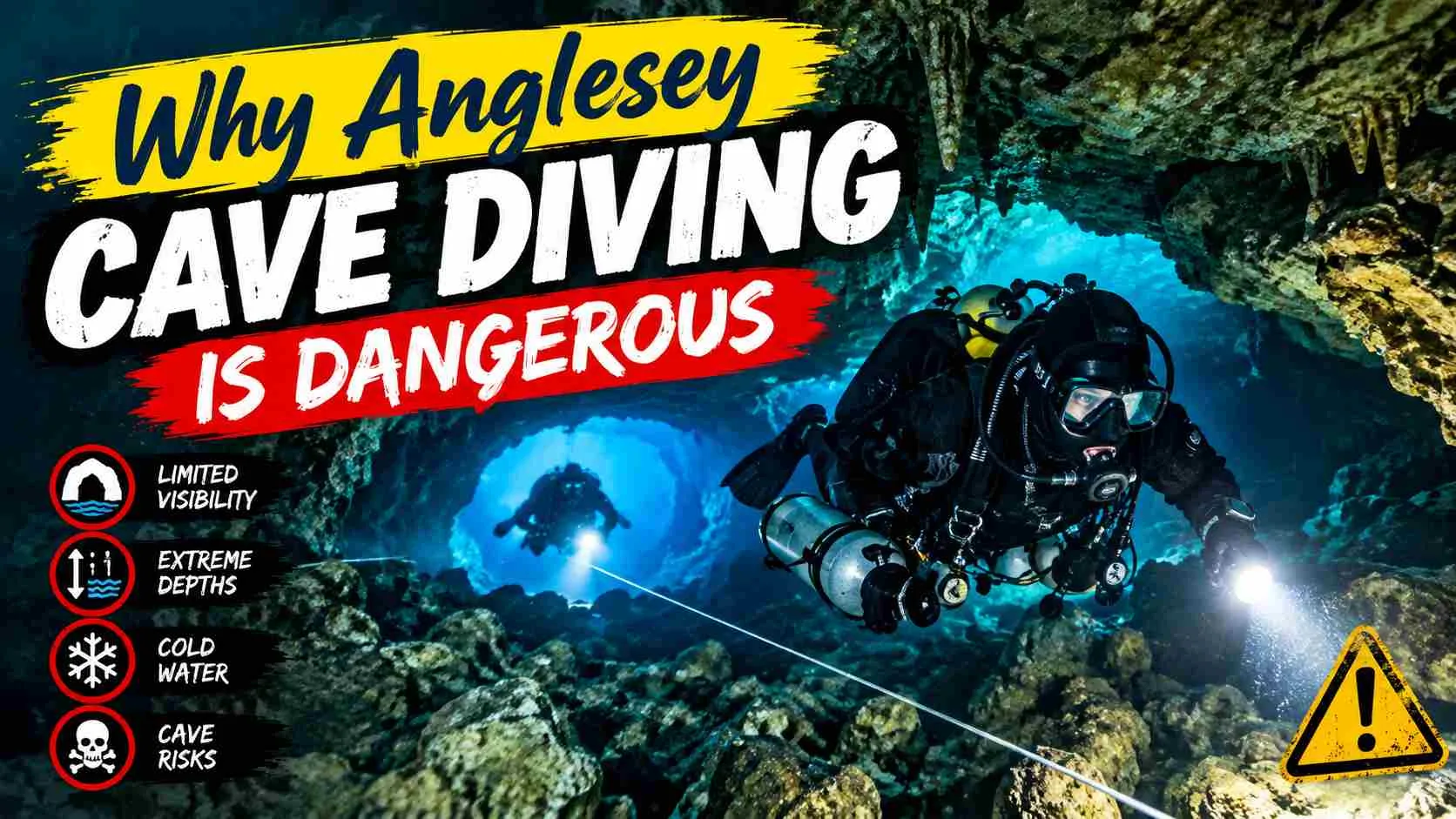
Anglesey’s rugged North Wales coastline hides some of the UK’s most breathtaking underwater terrain sheer rock walls, sunken wrecks, and narrow, flooded passages carved over thousands of years. It’s a magnet for experienced divers chasing something beyond the usual reef dive, the kind CATravelTimes readers often chase too.
But beneath that beauty sits a warning every diver here eventually hears: why Anglesey cave diving is dangerous isn’t rhetorical it’s documented fact, backed by incident reports, coroner’s findings, and hard lessons from the UK’s technical diving community.
Is Cave Diving Dangerous? Understanding the Baseline Risk
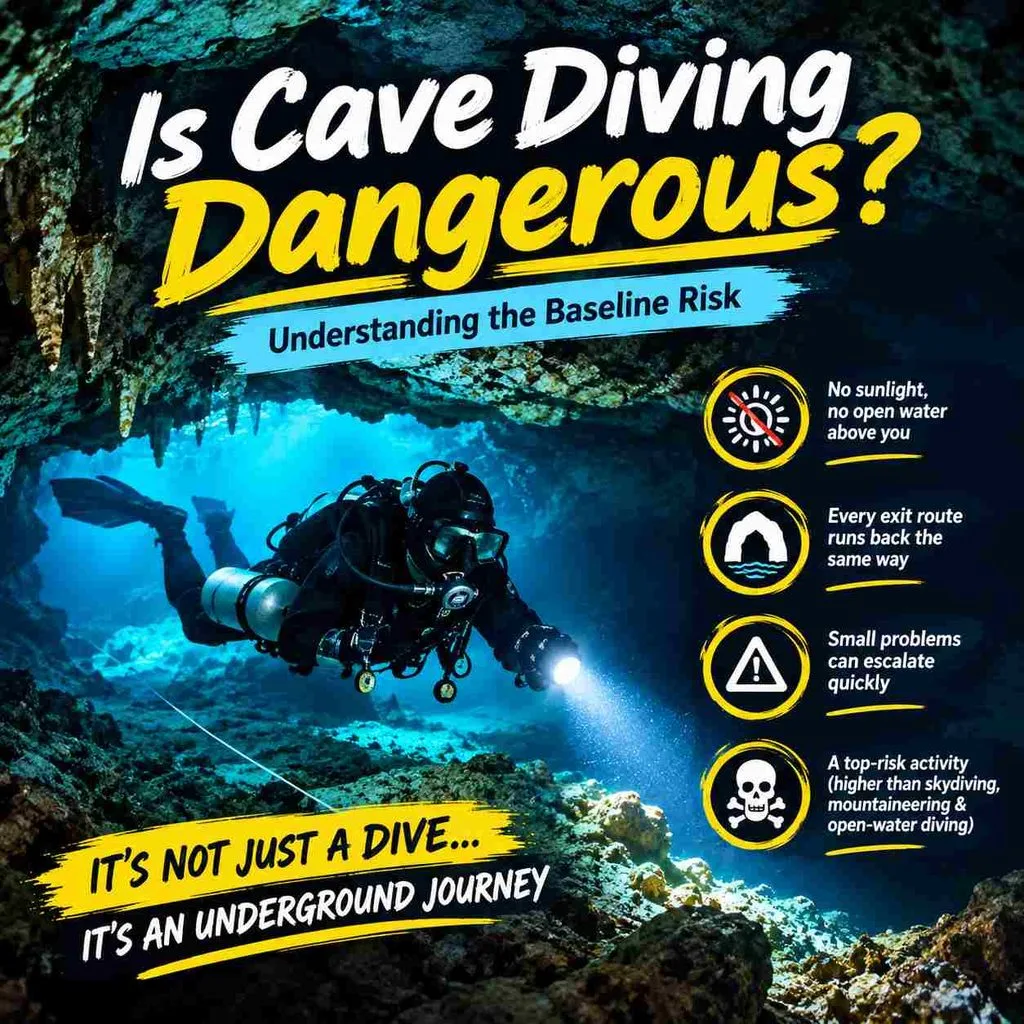
Yes — and not in a mild, “wear a helmet” sense. Cave diving is consistently ranked among the most hazardous recreational activities in the world, sitting above skydiving, mountaineering, and even open-water technical diving on most risk scales. The reason comes down to one unforgiving fact: once you’re inside a flooded cave system, a direct ascent to the surface is physically impossible.
- No sunlight, no open water above you, no quick bailout
- Every exit route runs back the way you came in, through the same tunnels, restrictions, and silt
- A small problem — a jammed reel, a flooded torch, a moment of disorientation — can escalate into a life-threatening one within minutes
Divers with dozens of years of open-water experience have died in caves precisely because open-water instincts don’t transfer to an overhead environment. This is the foundation you need before looking at Anglesey specifically.
Why Anglesey Cave Diving Is Dangerous: The Local Hazards
North Wales’ coastal geology, including the waters around Anglesey and Holyhead’s South Stack, combines several risk factors that make an already dangerous sport even riskier here.
Strong Currents and Tidal Surges
Anglesey sits where the Irish Sea funnels through narrow channels, creating some of the strongest tidal currents in the UK. A cave entrance that looks calm at slack tide can turn into a washing machine within the hour, trapping divers against rock or sweeping them off a guideline.
Cold Water and Limited Visibility
Water temperatures rarely climb high even in summer, and cold accelerates fatigue, slows reaction time, and increases air consumption — all of which compound the core reasons why Anglesey cave diving is dangerous once you’re past the entrance and out of daylight.
Submerged Wrecks and Unstable Rock
Decades of shipping history around Anglesey mean many flooded passages and cavities are tangled with old wreckage, loose rock, and mining debris from the region’s industrial past — hazards that can snag lines, block exits, or collapse without warning.
The Core Dangers Behind Every Cave Dive
Whether you’re diving off Anglesey or anywhere else in the world, the same handful of hazards account for nearly every serious cave diving incident. Understanding each one is non-negotiable before attempting any overhead dive.
The Overhead Environment
There is no straight line to the surface. Any emergency — equipment failure, panic, low air — has to be solved and resolved inside the cave itself, using only what you brought in with you.
Silt-Outs and Zero Visibility
Fine sediment coats most cave floors. One careless fin kick can turn crystal-clear water into total darkness in seconds, and once visibility drops to zero, the guideline becomes the only reliable way out.
False Chimneys and Dead Ends
A false chimney is a passage that looks like it leads upward to open air but actually dead-ends in solid rock. Divers running low on air have wasted precious minutes — and their lives — chasing what looked like an exit.
Gas and Air Mismanagement
The “Rule of Thirds” exists for a reason:
- One third of your gas supply for the way in
- One third reserved for the way out
- One third held back as an emergency buffer
Stress dramatically increases breathing rate, so a diver who enters with a perfect plan can still run short if panic sets in.
Equipment Failure Without Backup
Cave divers carry redundant everything — lights, cutting tools, regulators — because a single point of failure in total darkness can be fatal. Standard recreational gear simply isn’t built for this environment.
Spelunking vs Cave Diving: Not the Same Risk Category
People often lump these together, but they’re not comparable:
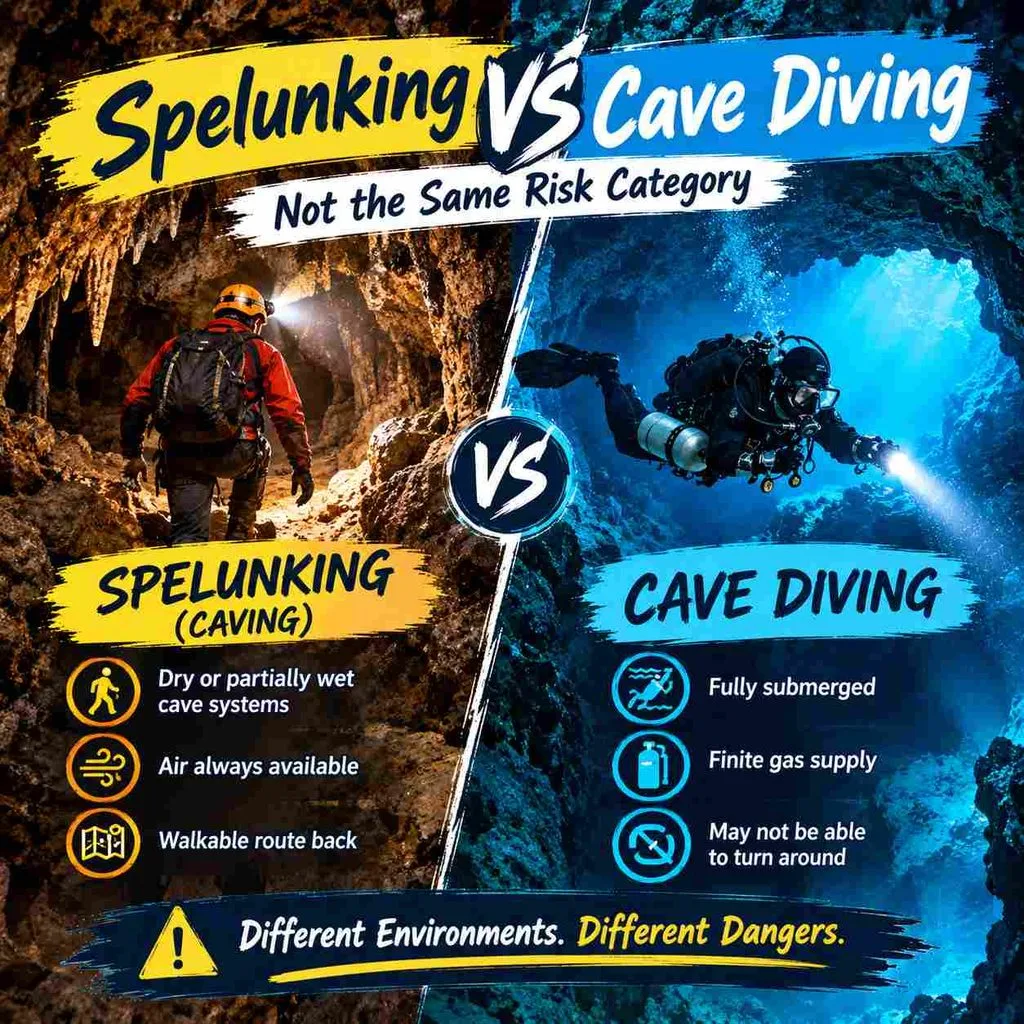
- Spelunking (caving) involves exploring dry or partially wet cave systems on foot, with air always available and a walkable route back
- Cave diving removes both of those safety nets — you’re fully submerged, breathing from a finite gas supply, in passages you may not be able to turn around in
Spelunking carries its own risks (falls, flooding, getting stuck), but cave diving adds the compounding danger of drowning if anything goes wrong with navigation, gas, or equipment.
Statistically, yes, by most fatality-per-participant estimates. Skydiving fatalities are usually tied to equipment or human error during a short, well-monitored window. Cave diving fatalities stack multiple ongoing risk factors — depth, darkness, gas limits, and navigation — over a much longer, more complex exposure window with no rescue shortcut. This is one of the clearest answers to why Anglesey cave diving is dangerous compared to other adrenaline sports people casually compare it to.
Famous Cave Diving Deaths and Lessons Learned
History has repeatedly shown what happens when preparation doesn’t match the environment:

- The 2018 Tham Luang cave rescue in Thailand demonstrated just how quickly conditions in a flooded cave system can shift, even for elite technical divers
- UK coroner’s inquests, including incidents recorded around Wales’ Clydach Gorge and Pwll y Cwm cave systems, have repeatedly cited air exhaustion and restricted passages as contributing factors
- The Cave Diving Group of Great Britain, the country’s official body for the sport, maintains detailed incident records showing that experienced divers remain far more likely to survive a dive than untrained ones — training, not bravado, is the deciding factor
These aren’t cautionary tales from a bygone era — they’re recent, documented reminders that the sport punishes complacency severely.
Cave Diving Claustrophobia: The Psychological Danger
The physical hazards get most of the attention, but the mental toll is just as real. Total darkness, tight restrictions, and the knowledge that you cannot simply swim upward can trigger claustrophobia even in divers who never had an issue with confined spaces before.
- Panic is the single biggest contributor to fatal cave diving accidents, often outweighing equipment failure
- Task loading — managing buoyancy, navigation, and air simultaneously — can overwhelm even a calm diver under stress
- Many recovered divers have been found with air still in their tanks, unable to think clearly enough to use it
Mental preparedness, stress-tested through structured training, is treated as seriously as physical skill by every reputable cave diving agency.
Essential Cave Diving Equipment for Survival
Standard scuba gear is not sufficient for this environment. A properly equipped cave diver carries:
- A primary dive light plus two independent backup lights
- Redundant breathing systems — twin tanks or a manifolded system
- A primary reel and a safety spool for guideline management
- Directional and non-directional line markers
- A backup mask and pressure gauge
- At least two cutting devices for line entanglement
None of this is optional, and skipping any item is one of the most common threads running through serious incidents.
Is Cave Diving Safe? What Actually Changes the Odds
Despite everything above, cave diving is not inherently a death wish. With the right progression — Cavern Diver, then Intro-to-Cave, then Full Cave certification — divers build the specific skills this environment demands: precise buoyancy, silt-avoidance techniques, and guideline discipline practiced until it’s automatic.
- Never dive beyond your certification level, regardless of how confident you feel
- Always dive with a trained buddy and a continuous guideline to open water
- Treat every dive plan as flexible — turning back early is always the right call if something feels off
Divers who follow these principles rarely become statistics. Those who skip steps or push their limits are where nearly every fatality record begins.
Enjoying Anglesey Beyond the Dive

If the risks above have you leaning toward admiring Anglesey from dry land instead, you’re in good company the island’s coastal walks, lighthouses, and seal colonies are worth the trip on their own. For a full breakdown of where to base yourself and what else to explore around the Welsh coast, CATravelTimes covers destination guides for travelers who’d rather take in dramatic scenery without the tanks. And if the idea of being submerged in cold, dark water sounds like the opposite of your kind of relaxation, a soak in a natural hot spring makes a far gentler way to unwind after a day on the coast.
Final Thoughts
Anglesey’s underwater world is genuinely spectacular, but it earns its reputation the hard way. Strong currents, cold water, zero-visibility silt-outs, and the simple fact that there’s no shortcut to the surface all combine to explain why Anglesey cave diving is dangerous for anyone without full cave certification. That doesn’t mean the sport should be avoided altogether it means respect, training, and redundancy aren’t optional extras. They’re the only things standing between an unforgettable dive and a tragic headline.
Frequently Asked Questions
Why is cave diving dangerous?
Because divers cannot make a direct ascent to the surface in an emergency. Every risk — low air, equipment failure, disorientation — has to be managed inside the cave using only the gas, tools, and training the diver brought in.
Why is cave diving so dangerous compared to other diving?
It combines total darkness, silt-outs, finite air, and complex navigation into a single dive, with no possibility of a quick surface bailout if something goes wrong.
Why is cave diving in areas with sinkholes so dangerous?
Sinkholes often connect to unmapped or partially explored passage networks with unpredictable currents, unstable rock, and multiple confusing branches — conditions that make it easy to lose the guideline and become disoriented.
Why is cave diving dangerous on Reddit and diver forums so often discussed?
Experienced divers frequently share near-miss stories online precisely because the consequences of small mistakes are so severe; these communities function as informal safety education for newer divers.
Is cave diving safe with proper certification?
It becomes dramatically safer, though never risk-free. Full cave-certified divers who follow the Rule of Thirds, dive within their training, and carry redundant equipment have significantly better survival outcomes than untrained or overconfident divers.