
How Much Is Child Support for 1 Kid in California? Complete Guide 2026
When parents separate or divorce in California—whether married or in a common-law relationship—both parents have a legal obligation to financially support their children. (California doesn’t recognize common-law marriage, but child support obligations still apply.) To learn more about California’s stance on marriage recognition, read our guide on Does California Recognize Common Law Marriage.
The answer depends on multiple factors unique to your situation. While the average child support for one child in California falls between $400-$500 per month, your actual payment could be significantly higher or lower depending on income, custody arrangements, and other expenses.
This guide breaks down everything you need to know about How Much Is Child Support for 1 Kid in California—including how the state calculates it, what factors influence the amount, and how you can estimate your obligation.
What Is Child Support?
Child support is a legal financial obligation that ensures both parents contribute to their child’s living expenses after separation or divorce. In California, both parents are legally required to provide financial support for their children, regardless of marital status or custody arrangement.
The purpose of child support is straightforward: to maintain your child’s standard of living and ensure they have access to necessities like food, housing, clothing, healthcare, and education.
Key point: Child support in California is not discretionary. It’s a court-ordered or agreed-upon obligation that must be followed. The money typically goes to the parent with primary custody (the custodial parent) to help cover the child’s daily needs.
Average Child Support Payment for 1 Child in California
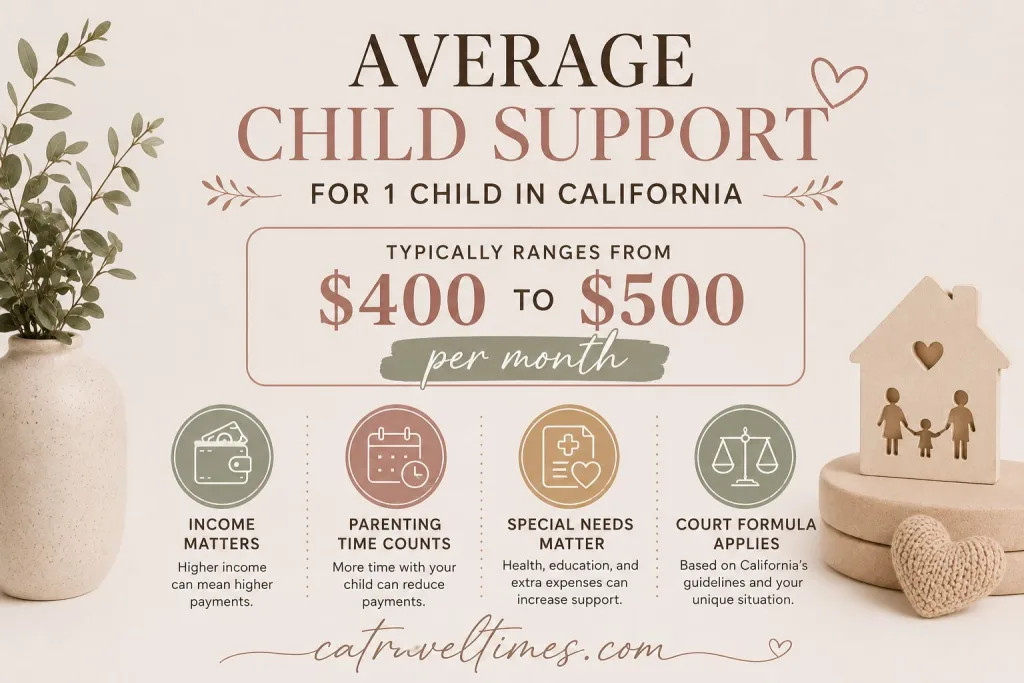
Based on current data and legal guidelines, the average child support for one child in California ranges from $400 to $500 per month. However, this is just an average—your specific amount will differ based on your family’s financial situation.
Why the range varies:
- Some parents earn minimum wage and pay less
- High-income earners often pay significantly more
- Parenting time arrangements affect the final amount
- Special expenses or health needs can increase payments
The actual number you’ll pay or receive depends on the specific California child support formula applied to your income, custody arrangement, and other relevant factors.
How California Calculates Child Support for One Child
California uses a specific formula to calculate child support amounts. Understanding this formula is essential if you want to estimate your potential obligation.
The California Child Support Formula
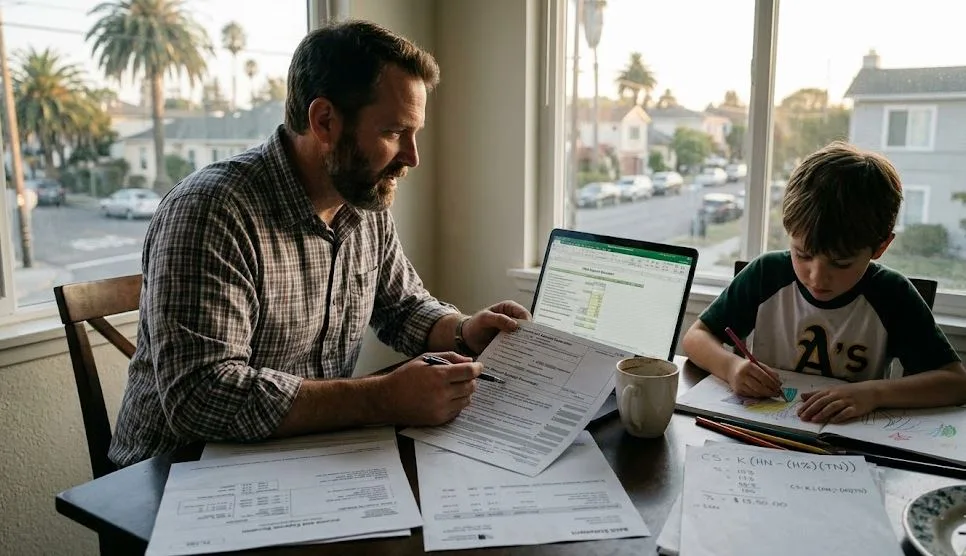
California calculates child support using this equation:
CS = K (HN – (H%) (TN))
Let’s break down what each variable means:
- CS = Child Support payment amount
- K = Combined total income of both parents
- HN = Net disposable income of the parent with higher income
- H% = Percentage of time the higher-earning parent has physical custody
- TN = Combined total net monthly disposable income of both parents
This formula might look complex, but it essentially compares both parents’ incomes and custody time to determine a fair distribution of child support responsibility.
Step-by-Step Calculation Process

Step 1: Calculate Net Disposable Income
Both parents must calculate their net disposable monthly income. This starts with gross income from all sources (wages, bonuses, self-employment income, investment returns, unemployment benefits) and then subtracts:
- Federal and state income taxes
- Social Security taxes (FICA)
- Health insurance premiums
- Mandatory union dues
- Mandatory retirement contributions (like CalPERS or 401k)
- Existing child support or spousal support obligations from other relationships
Step 2: Determine Parenting Time Percentage
California courts calculate the percentage of time each parent spends with the child. This is based on:
- Overnight stays
- Weekday parenting time
- Summer and holiday schedules
- Special occasions
For example, if the higher-earning parent has the child 30% of the time (roughly 3 days per week), their H% would be 0.30. If they have 50/50 custody, it’s 0.50.
Step 3: Apply the Formula
Once you have both parents’ net incomes and the custody percentage, you plug the numbers into the formula. The result is the monthly child support obligation.
Real-World Example:
Let’s say:
- Parent A (higher earner) earns $5,000/month after deductions
- Parent B earns $2,500/month after deductions
- Combined income (K) = $7,500
- Parent A’s net income (HN) = $5,000
- Parent A has 35% parenting time (H% = 0.35)
- Combined net income (TN) = $7,500
Using the formula: CS = 7,500 (5,000 – (0.35)(7,500))
- CS = 7,500 (5,000 – 2,625)
- CS = 7,500 (2,375)
- CS = $17,812.50 annually, or approximately $1,484 per month
Key Factors That Impact Child Support Payments
Several important factors directly influence the amount of child support for one child in California. Courts carefully consider each of these when determining payment amounts.
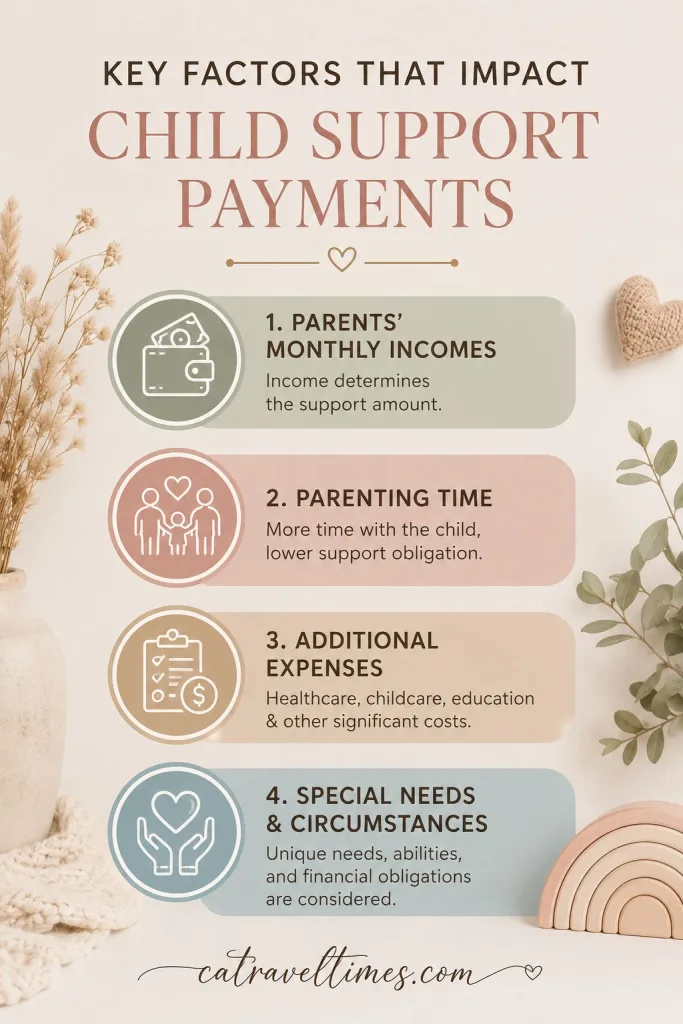
1. Parents’ Monthly Incomes
Income is the most significant factor in child support calculations. The courts look at:
- W-2 wages and salary
- Self-employment income
- Bonuses and commissions
- Rental income
- Investment returns and dividends
- Unemployment benefits
- Disability benefits
- Social Security income
- Pension or retirement income
Important: If a parent is voluntarily unemployed or underemployed, the court may “impute income”—meaning they’ll assign an income figure based on what the parent could earn rather than what they currently earn.
2. Parenting Time (Custody Percentage)
The amount of time each parent spends with the child directly affects the child support obligation. More specifically:
- The parent with less parenting time typically pays more child support
- Parents with equal parenting time (50/50) typically have lower support obligations
- Overnight stays are weighted more heavily than daytime parenting
For example, a parent with only 15% of parenting time will pay more support than one with 40% parenting time (assuming equal incomes).
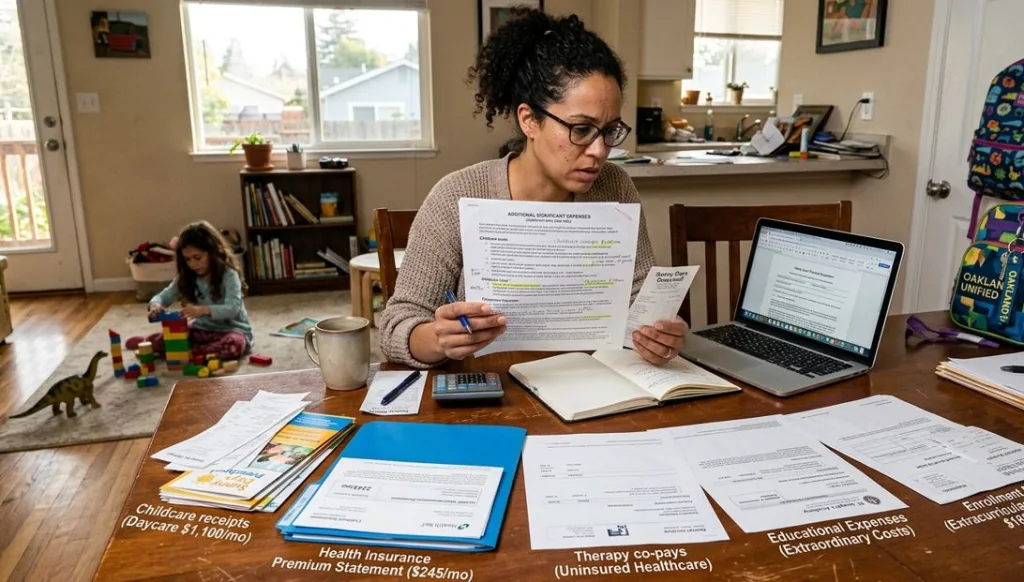
3. Additional Significant Expenses
California law recognizes that children have needs beyond basic living expenses. The court considers:
- Childcare costs (daycare, preschool, babysitter fees)
- Health insurance premiums paid by either parent
- Uninsured healthcare expenses (copays, dental work, therapy)
- Educational expenses (private school tuition, special tutoring)
- Extraordinary medical or dental costs
- School-related activities and extracurricular programs
These expenses don’t directly reduce income but are factored into the court’s overall analysis of the child’s needs.
4. Special Needs or Circumstances
If the child has special needs, courts may order additional support beyond the standard calculation:
- Therapy or behavioral health services
- Specialized educational programs
- Medical equipment or ongoing treatment
- Physical or occupational therapy
Similarly, courts consider:
- Each parent’s tax filing status
- Each parent’s ability to work
- Any other child support or spousal support obligations
- Debts the parent must pay
Understanding the 25% Standard Child Support Percentage
California law establishes a standard child support percentage for one child, which is 25% of the non-custodial parent’s net income.
This 25% figure applies when:
- The parent without primary custody pays support
- The child is an only child
- The guideline income cap isn’t exceeded
Important caveat: This is just a starting point. The actual percentage can be higher or lower depending on:
- How much parenting time each parent has
- Each parent’s income level
- Childcare and health insurance costs
- Whether either parent has other support obligations
For reference, California’s percentages for multiple children are:
- 1 child: 25%
- 2 children: 40%
- 3 children: 50%
- 4 children: 60%
- 5+ children: 65% or more (judge determines)
How Long Does Child Support Last?
In most California cases, child support continues until the child reaches a certain age or life milestone. Here’s when child support typically ends:
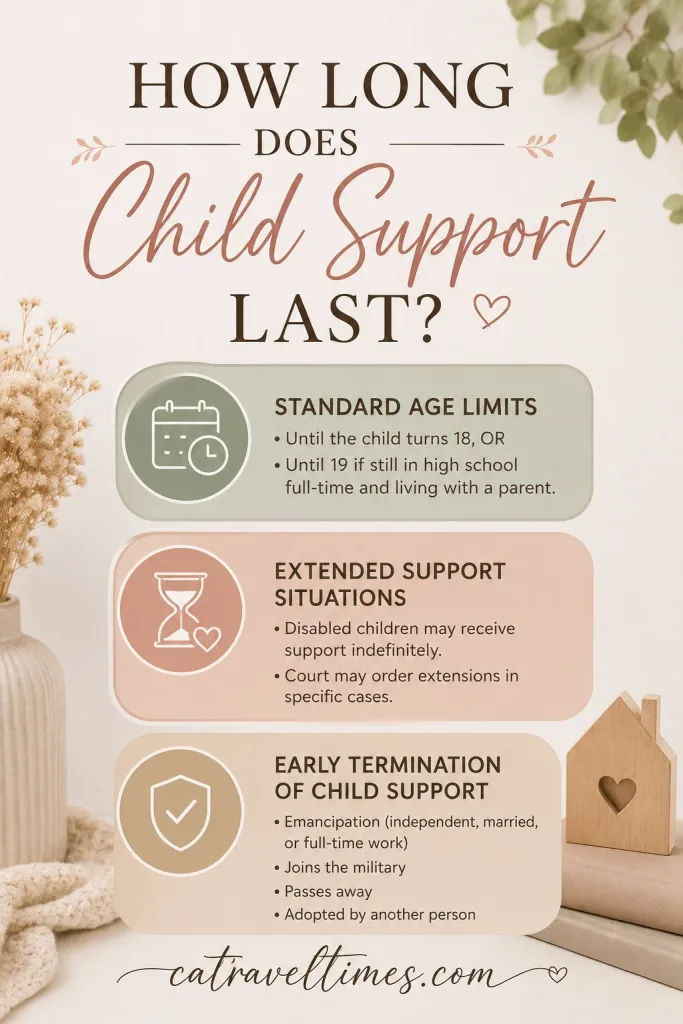
Standard Age Limits
Child support in California generally lasts until:
- The child turns 18 years old, OR
- The child turns 19 years old if they’re still in high school full-time and living with a parent
Once the child graduates or turns 19 (whichever comes first), support typically ends.
Extended Child Support Situations
In some cases, support may continue beyond age 18-19:
- Disabled children: If the child is disabled and unable to self-support, payments may continue indefinitely
- Court-ordered extensions: A judge may order extended support in specific circumstances
Early Termination of Child Support
Support can end before age 18-19 if:
- The child becomes emancipated (legally independent, working full-time, married)
- The child joins the military
- The child passes away
- The child is adopted by another person
How to Modify or Change a Child Support Order
Life circumstances change. If your current child support order no longer fits your situation, California law allows you to request a modification.
When You Can Request a Change
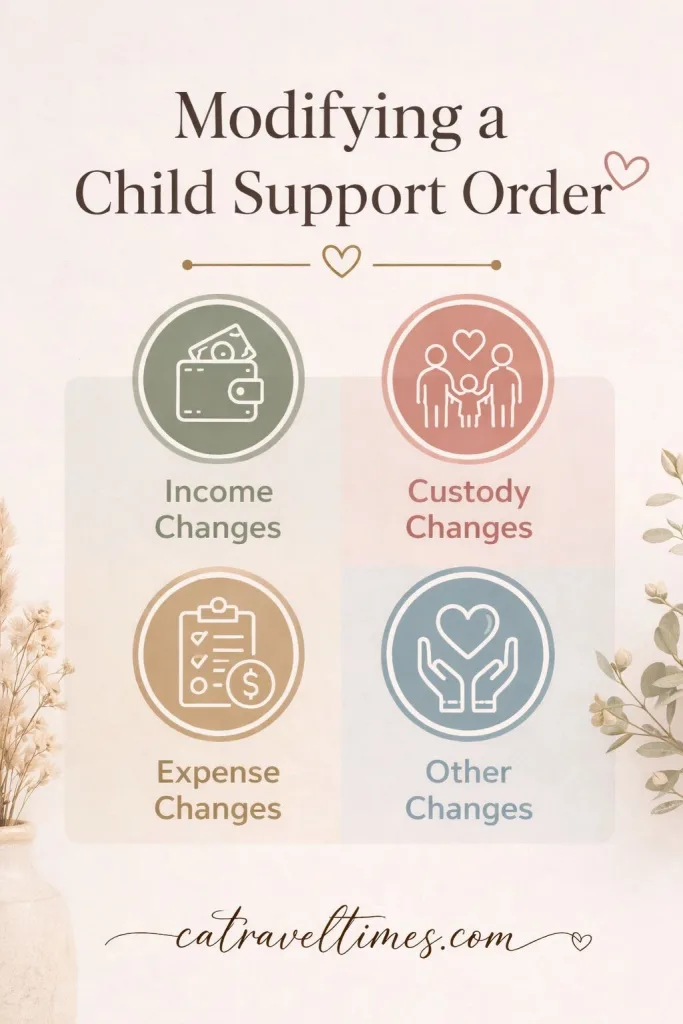
You must demonstrate a significant change in circumstances to modify an existing support order. Examples include:
Income-Related Changes:
- You lose your job or take a significant pay cut
- The other parent receives a substantial raise or promotion
- You become unable to work due to illness or disability
- You have a new job with different income
Custody-Related Changes:
- Parenting time increases or decreases significantly
- The child’s primary residence changes to the other parent
- A formal custody modification is approved by the court
Expense-Related Changes:
- New, substantial childcare costs appear or disappear
- The child develops special needs requiring additional support
- Health insurance costs change dramatically
- Educational expenses increase or decrease
Other Changes:
- A new child is born, creating new support obligations
- Your existing child support or spousal support obligations change
- Relevant tax laws change
How to File for Modification
To modify a child support order in California:
- Contact your county’s child support services office or file directly with the court
- Complete the required forms (typically FL-670 or similar)
- File with the court that issued the original order
- Serve the other parent with copies of your paperwork
- Attend a court hearing if the other parent objects
If you and the other parent agree on the new amount, you can file a stipulation (agreement) with the court to avoid a hearing.
Important: Don’t stop paying your current child support amount while requesting a modification. Continue paying the existing order until the court approves a change, or you could face legal consequences.
Using Online Calculators and Tools
Several resources can help you estimate child support for one child in California:
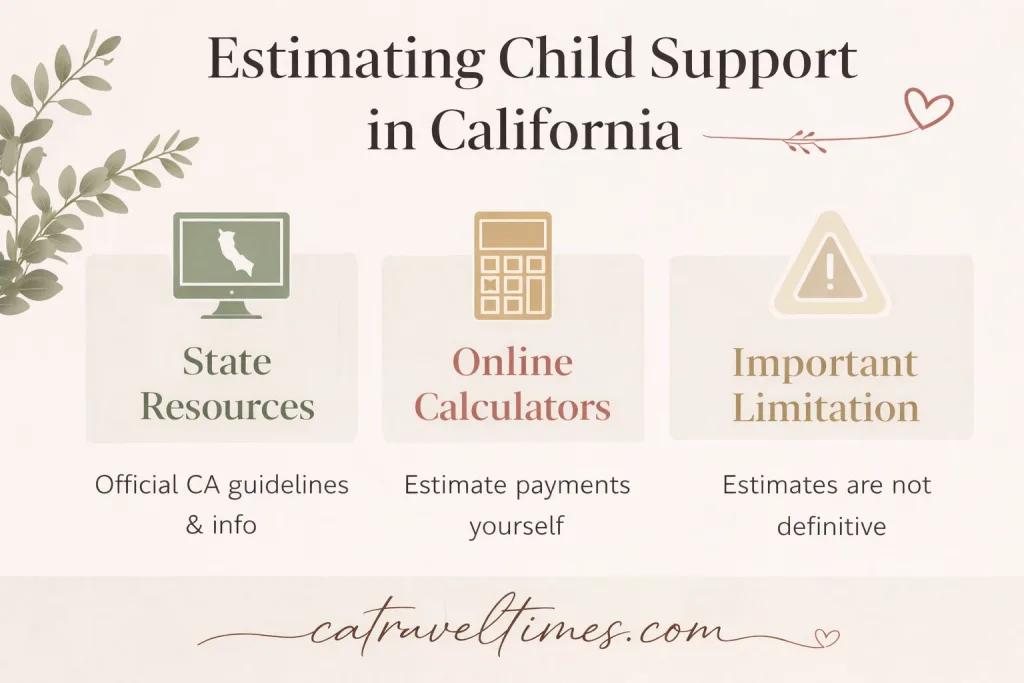
California State Resources
The California Department of Child Support Services maintains official guidelines and information at childsupport.ca.gov. They provide:
- The official child support formula
- Income guidelines and caps
- County-specific information
- Links to local child support agencies
Online Child Support Calculators
Multiple online tools let you input your financial information and see estimated amounts:
- Custody X Change calculator: Allows you to enter income, custody time, and number of children to see an estimate
- Law firm calculators: Many family law attorneys offer simple calculators on their websites
- County court websites: Some California counties provide basic calculators
Important limitation: Online calculators provide estimates only. They’re useful for ballpark figures but don’t account for all individual circumstances. A lawyer or the court system will provide definitive calculations.
When to Consult with a Family Law Attorney?
While this guide provides general information, every child support situation is unique. Consider consulting with a family law specialist if:
- You’re facing a child support case for the first time
- Your financial situation is complex (self-employment, multiple income sources, significant assets)
- You disagree with a proposed child support amount
- You want to modify an existing order
- The other parent isn’t complying with orders
- Your case involves high income or complex custody arrangements
- You need help enforcing a child support order
An experienced family law attorney can:
- Calculate your likely child support obligation accurately
- Represent you in court proceedings
- Help negotiate fair agreements
- File modification requests
- Enforce unpaid support orders
- Protect your parental rights
Important: If you can’t afford an attorney, contact your county’s public defender’s office or legal aid society for assistance.
Final Thoughts
How much is child support for 1 kid in California? The average ranges from $400-$500 per month, but your specific amount depends on:
- Both parents’ incomes (the primary factor)
- Parenting time percentages
- Childcare and health insurance costs
- Special needs or extraordinary expenses
- Other financial obligations
California calculates child support using a specific formula designed to ensure both parents contribute fairly to their child’s expenses. The state emphasizes that both parents must support their children, regardless of custody or marital status.
If you’re unsure about your potential child support obligation, use an online calculator for estimates, but consult with a family law attorney for accurate information specific to your situation. Remember that child support is not optional—it’s a court-enforceable obligation that must be taken seriously.
This article is for informational purposes and should not be considered legal advice. For more California-specific information and local guides, visit our California Local Guides section.