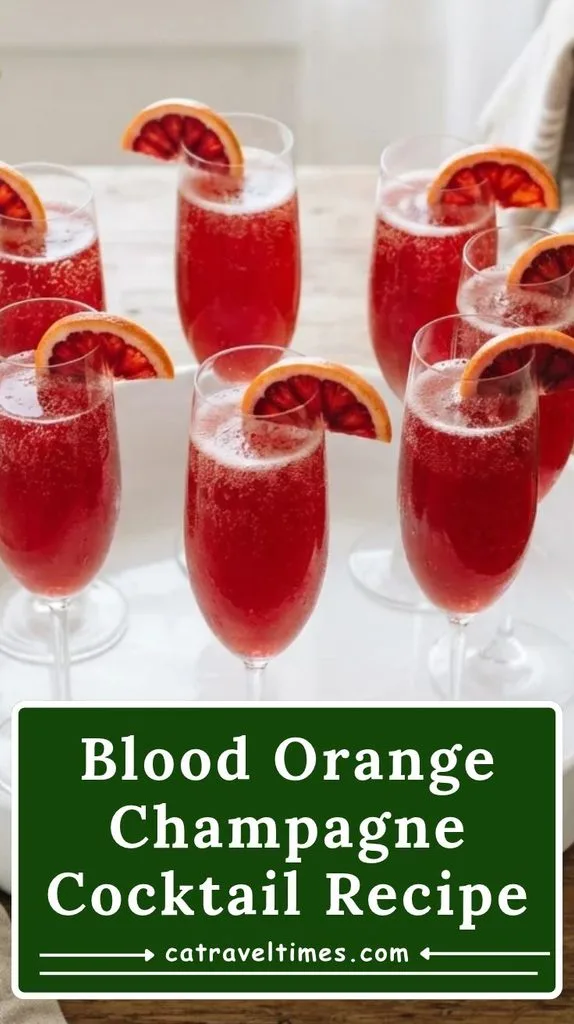
Blood Orange Champagne Cocktail Recipe: Easy 5-Minute Ruby Bubbly
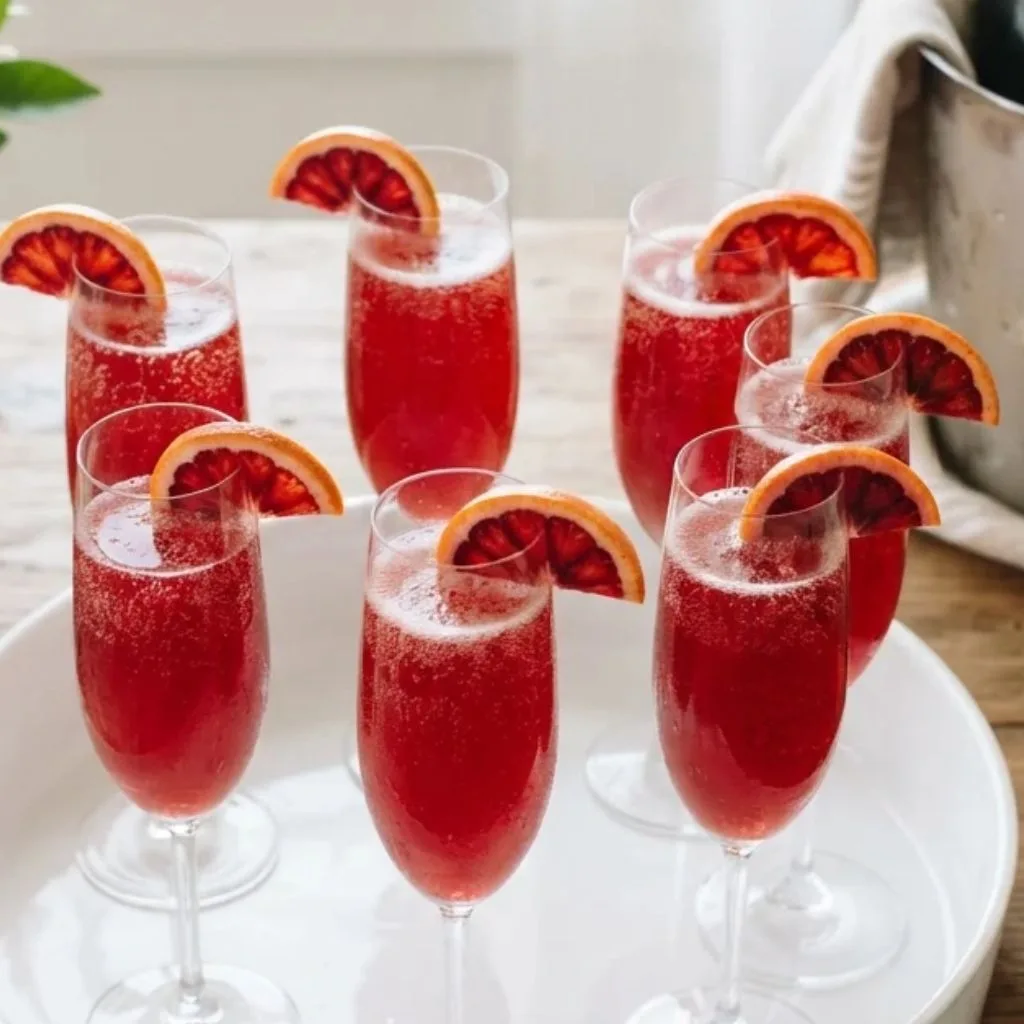
I made this Blood Orange Champagne Cocktail Recipe on a chilly winter evening, and I have been making it ever since. The juice turned my plain flutes into glowing ruby glasses that looked like they came from a Napa Valley tasting room.
It took me about five minutes, and I never turned on the stove. My friends kept asking what was in it, and I loved telling them it was only two ingredients. If you want an easy drink for a celebration, I think you will adore this one as much as I do.
Cooking Time
This cocktail needs no cooking at all. Most of your time goes into squeezing the oranges.
- Prep Time: 5 minutes
- Cooking Time: 0 minutes
- Total Time: 5 minutes
Ingredients
The ingredient list is short, so each one matters. Here is what I use and why.
- 2¼ cups freshly squeezed blood orange juice: gives the deep ruby color and a sweet, berry-like citrus flavor.
- 2 bottles (750 ml each) champagne, well chilled: brings the bubbles, and cold bottles keep the fizz lively.
- Blood orange slices (optional): a pretty garnish that makes every glass look special.
Note: serves several (about 12 flutes)
Pro tip: frozen blood orange juice works too, but thaw it fully and shake it before measuring.
Equipment You Need
You probably have most of this in your kitchen already.
- Citrus juicer: squeezes the blood oranges quickly and gets every drop out.
- Fine mesh strainer: removes pulp and seeds for a smooth, silky pour.
- Liquid measuring cup: helps you get the juice amount right.
- Champagne flutes: show off the color and keep the bubbles lasting longer.
- Small pitcher: makes pouring the juice into each glass neat and easy.
- Ice bucket: keeps the champagne cold while you serve.
- Knife and cutting board: for halving the oranges and cutting garnish slices.
How to Make Blood Orange Champagne Cocktail Recipe?
This recipe is as simple as a mimosa, only prettier. You squeeze, pour, and top with bubbles. Follow these steps and you will have a party-ready drink in minutes.
Chill Everything First
Put both champagne bottles in the fridge at least three hours before serving. I also pop my flutes in the freezer for ten minutes. Cold glasses and cold bubbly keep the drink crisp from the first sip to the last.
Juice the Blood Oranges
Roll each orange on the counter first to loosen the juice. Cut them in half and squeeze them with a juicer. I cover my hand with a towel because the juice stains easily. You need about 2¼ cups, which is roughly 8 to 10 medium oranges.
Strain the Juice
Pour the juice through a fine mesh strainer into a pitcher. This removes seeds and pulp that can make the cocktail feel thick. I press the pulp lightly with a spoon so I do not waste any color. The juice should look clear, bright, and deep red.
Pour the Juice Into the Glasses
Add 3 tablespoons of blood orange juice to each flute. I use a tablespoon measure so every glass looks the same. Pouring the juice first also helps the champagne mix itself, so you do not need to stir.
Top With Champagne
Tilt the flute and pour the chilled champagne slowly down the side. Fill the glass almost to the top. Pouring at an angle protects the bubbles and stops the foam from rising too fast.
Garnish and Serve
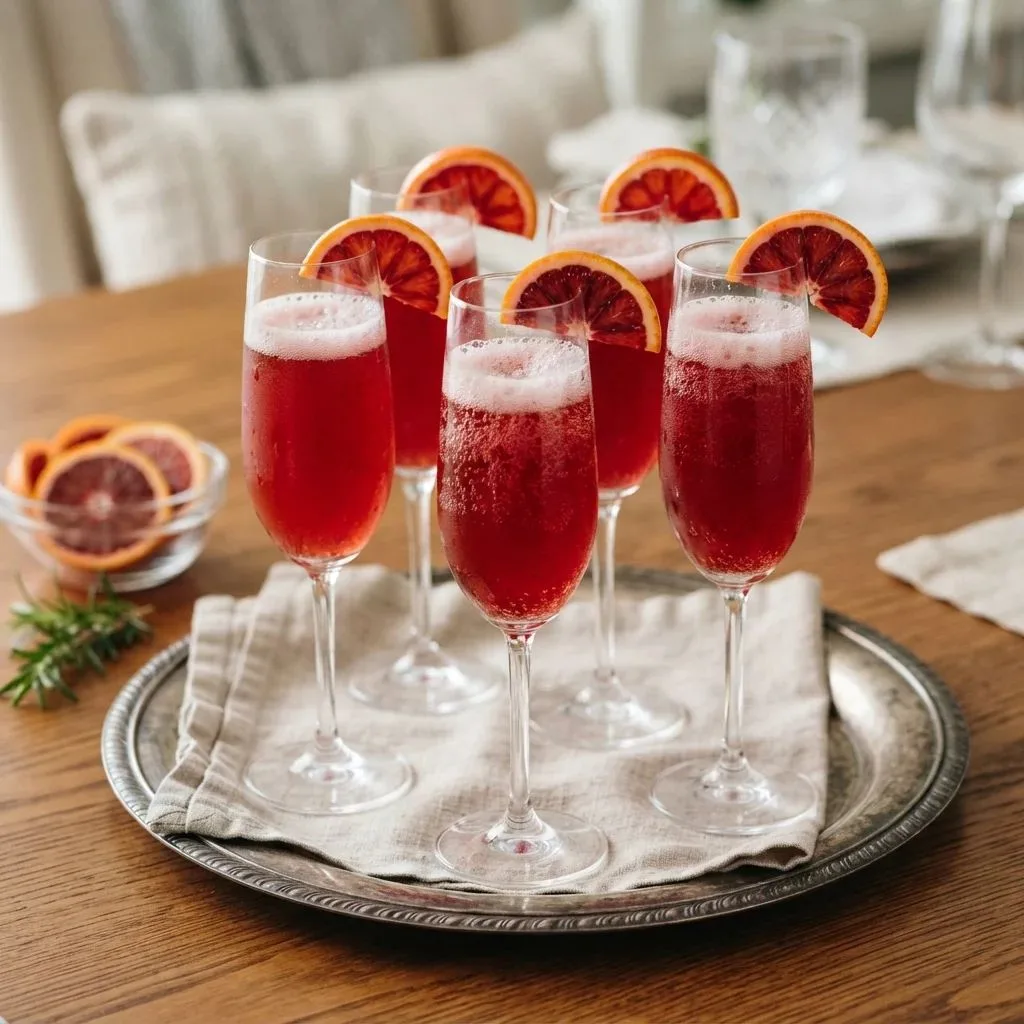
Add a thin blood orange slice to the rim or drop it into the glass. Serve right away while the bubbles are lively. I like to hand the glasses out on a tray so the color is the first thing guests see.
Additional Tips for Making This Recipe Better
A few small habits make a big difference. These are the things I learned after making this several times.
- I choose a dry or brut sparkling wine because the blood oranges already bring plenty of sweetness.
- I squeeze the juice the same day because fresh juice tastes brighter than anything from a carton.
- I taste the juice before measuring, since blood oranges can be sweeter or tarter depending on the batch.
- I keep the juice in the fridge until the last minute so it never warms up the champagne.
- I pour the juice first and the champagne second, which saves me from stirring and losing bubbles.
- I look for Moro or Tarocco oranges when I can, because the Moro gives the deepest color.
Common Mistakes to Avoid
These are the slip-ups I made early on. They are easy to fix once you know them.
- Using warm champagne: I once skipped chilling and the bubbles disappeared fast, so now I always chill ahead.
- Pouring champagne too quickly: I got a glass full of foam, so I tilt the flute and pour slowly.
- Skipping the strainer: my first batch had pulp floating in it, and straining fixed the texture.
- Adding too much juice: I tried doubling it and lost the champagne flavor, so I stick to 3 tablespoons per glass.
- Mixing too early: I poured drinks ahead of guests and they went flat, so I top with champagne at the last minute.
How to Serve Blood Orange Champagne Cocktail?
Presentation turns a simple drink into a moment. Here are my favorite ways to serve it.
- Use tall flutes so the ruby color and rising bubbles show clearly.
- Add a thin blood orange wheel on the rim or floating inside the glass.
- Tuck in a small rosemary sprig for a fresh scent and a pop of green.
- Serve on a silver tray with a little bowl of sliced oranges beside it.
- Set up a blood orange champagne coast picnic, like an afternoon on the California coast with the ocean in the background. I love the idea of this drink along Pacific Coast Highway, at a Santa Barbara patio dinner, or at a Malibu sunset gathering.
- Dress up the evening too. I like to wear champagne mule heels with a fun party outfit when I host.
Serve it with cheese boards, smoked salmon bites, citrus salads, or buttery pastries.
Variations
You can keep the base and change the flavor to suit any season or crowd. Try these easy twists.
- Ginger beer champagne cocktail: swap half the champagne for chilled ginger beer for a spicy kick.
- Pomegranate vodka champagne cocktail: add a small splash of vodka and pomegranate juice for a deeper red.
- Blackberry champagne cocktail: drop two fresh blackberries into each flute for a jammy flavor.
- Fall champagne cocktail: garnish with a cinnamon stick and an orange peel curl for a cozy look.
- Sugar-free: choose an extra brut champagne, since this recipe has no added sugar.
- Dairy-free: it is already dairy-free as written.
- Non-alcoholic: use chilled sparkling water or sparkling white grape juice instead of champagne.
- Cozy rustic style: add thyme sprigs and sugared cranberries, like a Half Baked Harvest champagne cocktail table.
Nutritional Information
These numbers are estimates for one flute, made with 3 tablespoons of juice and about 2 ounces of champagne.
- Calories: about 70
- Protein: less than 1 g
- Carbohydrates: about 6 g
- Fat: 0 g
Make Ahead and Storage
This is a champagne batch cocktail in the best sense. You prep the juice early and add the bubbles at the end.
Make Ahead
Squeeze and strain the juice up to one day ahead. Store it in a covered jar in the fridge. Keep the champagne chilled and pour only when guests arrive.
Storage
Leftover blood orange juice keeps well for 2 to 3 days in the fridge. Once champagne is added, the drink is best enjoyed right away. Open champagne goes flat quickly, even with a stopper.
Freezing
You can freeze the juice in ice cube trays for up to 2 months. Do not freeze the finished cocktail, because the bubbles will be lost. Frozen juice cubes also work as a chilled base later.
Reheating
This cocktail is meant to be served cold, so there is no reheating needed. If your juice has been frozen, thaw it in the fridge overnight. Shake well before using it.
Why You’ll Love This Recipe
This drink hits every note I want in a party recipe. It looks fancy and takes almost no work.
- It takes only 5 minutes. You squeeze, pour, and serve, so you spend more time with your guests than in the kitchen.
- It uses just two main ingredients. There is no long shopping list, which makes it perfect for last-minute hosting.
- It looks stunning. The deep ruby juice and golden bubbles make each glass feel like a celebration, even on an ordinary night.
- It works for any occasion. I serve it at brunch, on New Year’s Eve, at anniversaries, and during holiday gatherings.
- It is easy to customize. You can add ginger beer, berries, or herbs, and make it sugar-free or non-alcoholic with simple swaps.
FAQs
Can I use regular orange juice instead of blood orange juice?
Yes, but the color will be golden instead of ruby. The flavor will be a little less berry-like.
What kind of champagne works best?
A dry or brut champagne or sparkling wine works well. Prosecco and cava are good budget-friendly options.
Can I make this as a champagne batch cocktail for a party?
Yes. Mix the juice in a pitcher ahead of time and pour 3 tablespoons per glass. Add champagne just before serving.
When are blood oranges in season?
They are usually in season from winter to early spring. Many are grown in California, so they are easy to find at markets there during those months.
Can I make it without alcohol?
Yes. Use sparkling water or sparkling white grape juice in place of champagne. It looks and tastes just as festive.