Bridalveil Fall in Yosemite: Trail, Best Time to Visit & Honest Tips 2026
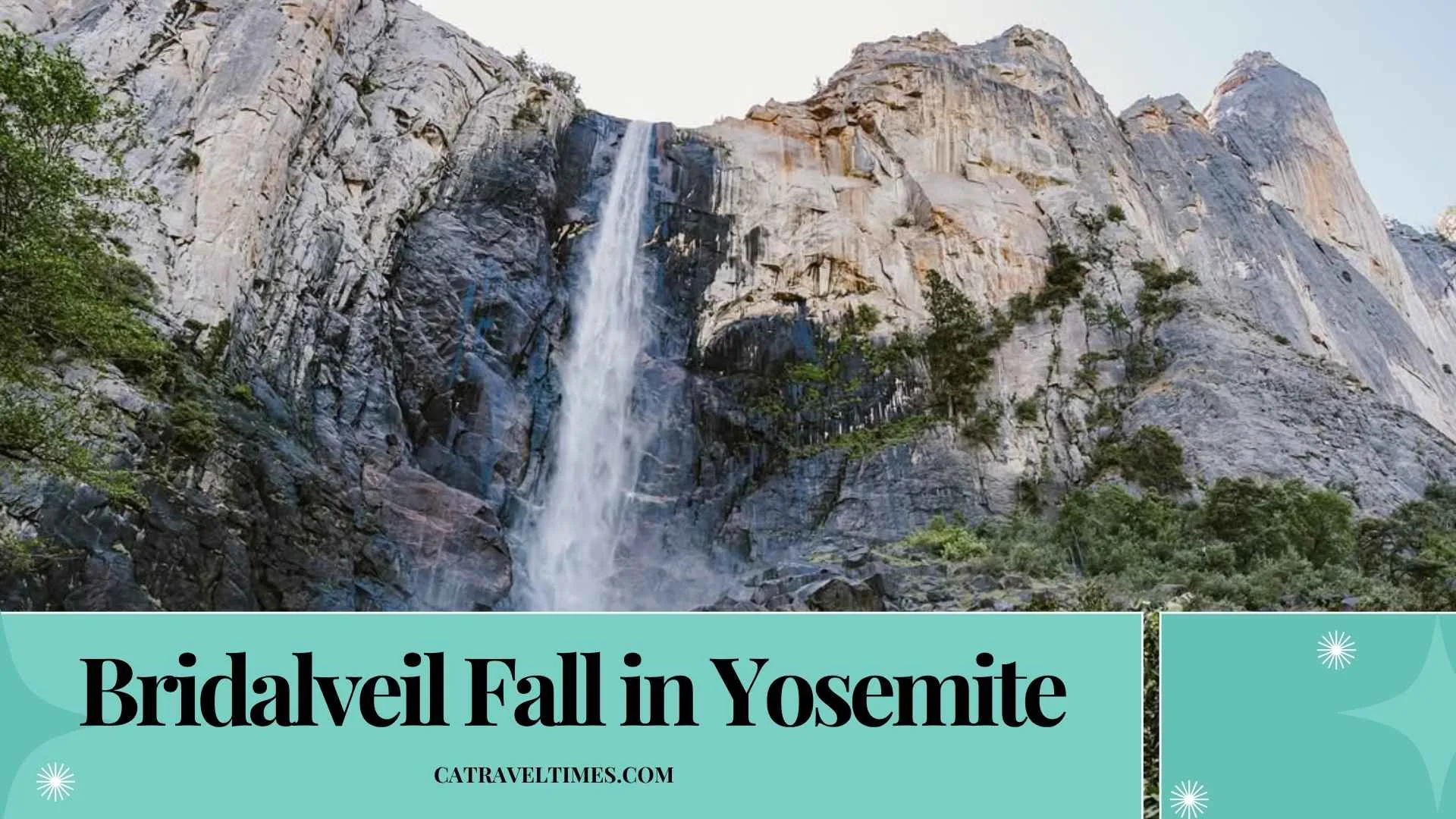
I still remember the exact moment I first saw it. I had just come through the Wawona Tunnel, and as the valley opened up in front of me, there it was — a thin, silver ribbon of water floating down a granite cliff like it was barely touching the rock. I actually pulled over at Tunnel View and just stared. That was my introduction to Bridalveil Fall in Yosemite, and it completely set the tone for everything I experienced in the park that day.
I’ve been to Yosemite National Park more times than I can count, and I always end up at this waterfall. It’s one of those places that never loses its magic, no matter the season. Whether you’re planning your first trip to the valley or coming back for another look, this guide covers everything I’ve learned from my own visits — the trail, the best views, the timing, the parking headaches, and a few things I wish someone had told me before I went.
What Is Bridalveil Fall? (Quick Facts)
Bridalveil Fall is one of the most iconic and recognizable waterfalls in all of Yosemite National Park. It drops 620 feet (189 meters) straight down the south wall of Yosemite Valley, and unlike many other waterfalls in the park, it flows year-round. That alone makes it special.
The waterfall got its English name in 1856, when a local newspaper editor named Warren Baer described the way the water looked — delicate and lacy, like a bride’s wedding veil. And that description still fits perfectly today. When the wind picks up, the mist swirls sideways and the whole cascade seems to float rather than fall.
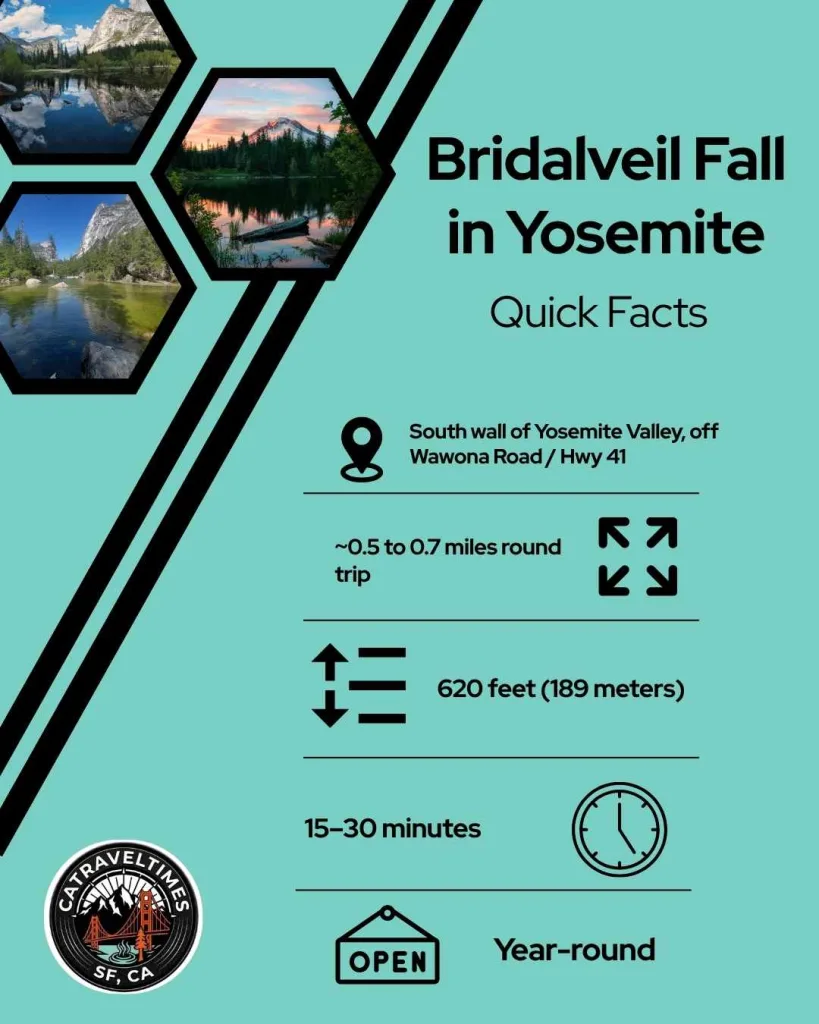
Here are the key facts at a glance:
| Detail | Info |
| Height | 620 feet (189 meters) |
| Location | South wall of Yosemite Valley, off Wawona Road / Hwy 41 |
| Trail Length | ~0.5 to 0.7 miles round trip |
| Difficulty | Easy |
| Elevation Gain | ~82 feet |
| Average Hike Time | 15–30 minutes |
| Trail Open | Year-round |
| Dogs Allowed | Yes, on leash |
| Parking | Free lot at trailhead (fills fast) |
The Story Behind the Name: Pohono and the “Spirit of the Puffing Wind”
Before it was ever called Bridalveil Fall, this waterfall had a name that felt more powerful — Pohono, given to it by the Ahwahneechee people who lived in Yosemite Valley for thousands of years. Pohono translates roughly to “Spirit of the Puffing Wind” or, in some interpretations, the “evil wind.” To the Ahwahneechee, this was no ordinary waterfall. It was a spiritual place, believed to be guarded by a vengeful spirit that lured those who wandered too close.
That legend makes a lot more sense once you’re standing at the base. The wind off the falls can be sudden and surprisingly strong. You’ll feel the mist hit you hard — cold, fast, and coming from every direction. It feels alive. Whether or not you believe in spirits, that sensation of nature’s raw energy wrapping around you is something you just don’t forget.
Bridalveil Fall Directions: How to Get There
Bridalveil Fall is located on the south side of Yosemite Valley, near the junction of Wawona Road (Highway 41) and Southside Drive. If you’re coming through the south entrance, it’s one of the first things you’ll see. If you’re coming in from the west via Highway 140, you’ll follow Southside Drive and find the turnoff a short distance into the valley.
Here’s how to get there from major nearby cities:
- From San Francisco: About 3.5 to 4 hours via I-580 East and Highway 120 or Highway 140
- From Los Angeles: Around 5 to 5.5 hours via I-5 North and Highway 41
- From San Diego: Approximately 6 to 6.5 hours — a long day trip but very doable
- From Fresno: Only 1.5 hours via Highway 41, making it the closest major city
The nearest airports are Mariposa-Yosemite Airport (RMY), about 26 miles away; Merced Municipal Airport (MCE), about 56 miles; and Fresno Yosemite International Airport (FAT), which offers the most flight options. Most visitors fly into Fresno or San Francisco and drive from there.
For the most up-to-date trail conditions, road closures, and any temporary closures, always check the official NPS Yosemite page before leaving home.
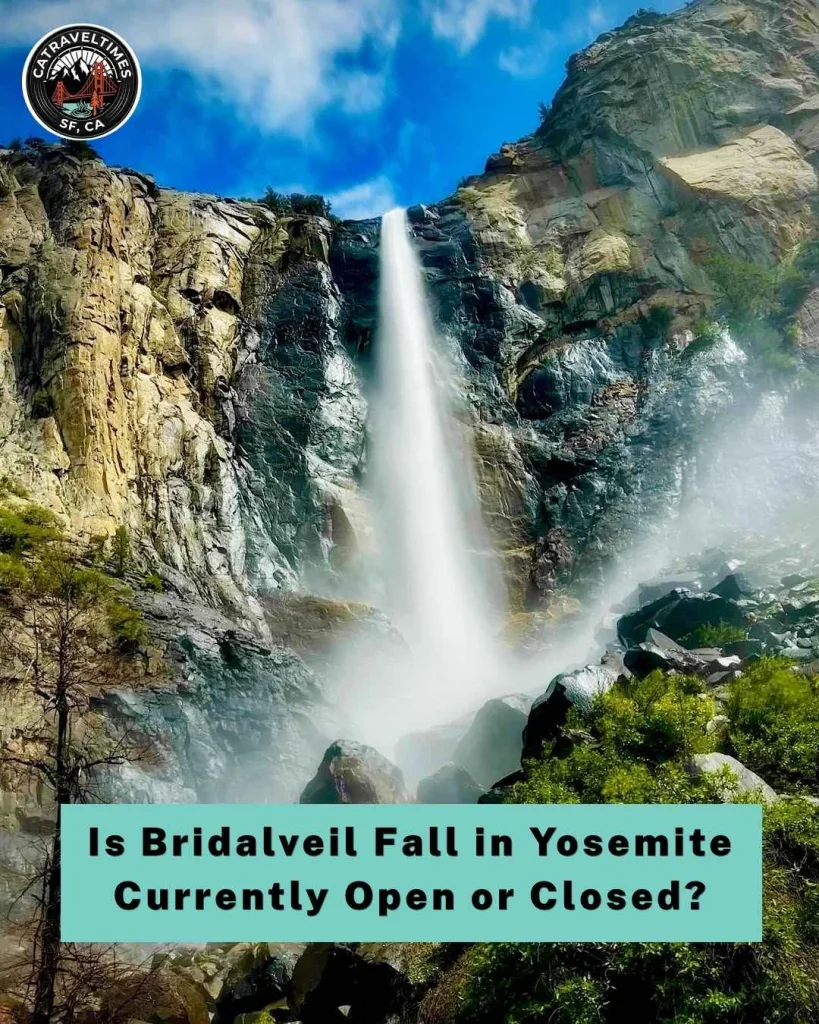
Is Bridalveil Fall in Yosemite Currently Open or Closed?
If you’ve searched “bridal veil falls Yosemite closed,” you’re probably thinking of the lengthy rehabilitation project. The trail was closed from 2019 through fall 2023 for a major restoration effort supported by the Yosemite Conservancy. The project was completed in fall 2023, and Bridalveil Fall in Yosemite is now fully open to visitors with an improved parking area, new boardwalks, ADA-accessible viewing points, and updated wayfinding signs.
As of my most recent visit, the experience is noticeably better than it was before. The new parking layout is less chaotic, the trail is cleaner, and the interpretive panels near the base share excellent information about the fall’s geology and the cultural history of the Ahwahneechee people. Always check the National Park Service website for the latest conditions before you go, especially in winter.
Best Time to Visit Bridalveil Fall in Yosemite
Every season delivers something different here.
- Spring (March–May) is the most dramatic — peak snowmelt sends enormous water volumes over the falls, mist reaches you from a quarter mile away, and afternoon rainbows form in the spray. Come prepared to get wet.
- Summer (June–August) keeps the flow strong early on, though it slows by August and crowds are heaviest — arrive before 9 AM.
- September and October are personally my favorite for photography — the fall turns slender and graceful, crowds thin out, afternoon light goes golden, and mid-October brings fall color to the surrounding trees.
- Winter (November–February) is magical and nearly empty — mist freezes into icy formations on nearby rocks and trees, though the path gets slippery. For full winter planning tips, read our guide to Visiting Yosemite in Winter.
Bridalveil Fall Weather: What to Expect
Bridalveil Fall in Yosemite weather tracks closely with general Yosemite Valley conditions, but there’s one important thing to factor in: the microclimate created by the waterfall itself.
Even on a warm, sunny day, standing at the base of Bridalveil in spring or early summer can feel 15–20°F colder than the parking lot, purely because of the mist. Bring a layer. In the fall and winter, the rocks near the viewing platform can be icy even when the path above is clear.
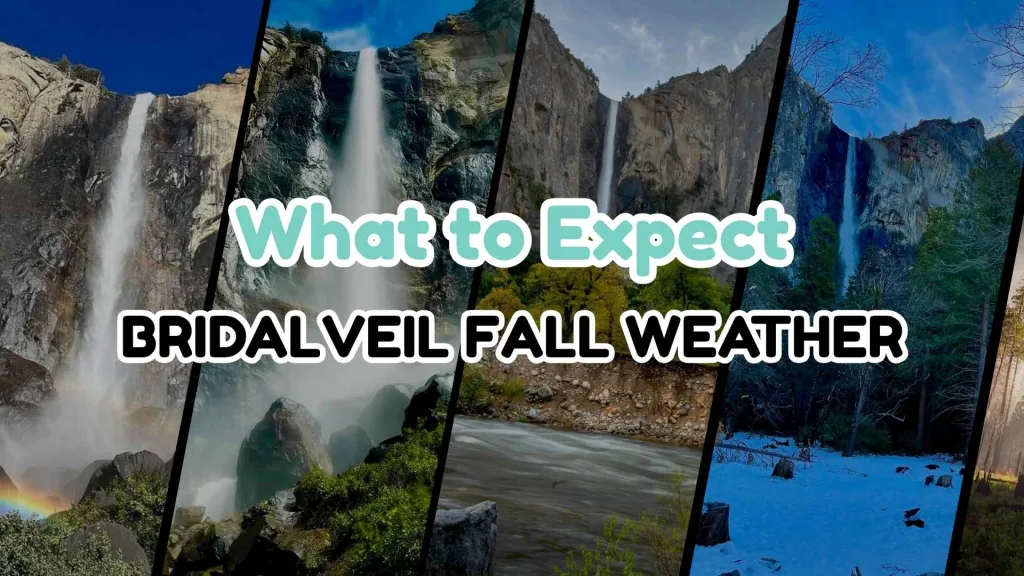
Here’s a quick seasonal temperature guide for the valley floor (4,000 ft elevation):
- Spring (Apr–Jun): 45–75°F; expect wet conditions near the falls
- Summer (Jul–Aug): 65–90°F; lighter mist, still cool near the base
- Fall (Sep–Oct): 45–75°F; golden light, crisp mornings
- Winter (Nov–Mar): 28–55°F; potential ice on the trail
What Type of Glacial Feature Is Bridalveil Fall?
This is a question I get asked often, and it’s a fascinating one. Bridalveil Fall in Yosemite is what geologists call a hanging valley waterfall. When massive glaciers carved through the Sierra Nevada thousands of years ago, they deepened the main Yosemite Valley far more than the smaller side valleys feeding into it. Bridalveil Creek, which flows from Ostrander Lake about 10 miles to the south, runs through one of these side valleys — but its valley floor now sits high above the main valley floor.
When the water reaches the edge of that elevated valley, it has no gradual slope to follow. It simply leaps off the cliff and drops freely, which is why it falls so dramatically and why the mist puffs outward rather than cascading in steps. The force of the water over thousands of years has actually carved the cliff’s edge backward into an alcove, making Bridalveil one of the most geologically unique of Yosemite’s 26 main waterfalls.

The Firefall Connection: Does Bridalveil Fall Have Its Own Firefall?
Here’s where I need to clear something up, because a lot of people search for bridal veil falls Yosemite firefall and get confused.
The famous Firefall phenomenon — where a waterfall appears to glow like flowing lava — actually happens at Horsetail Fall, not Bridalveil Fall. Horsetail Fall is on the east face of El Capitan. In mid-to-late February, when conditions align perfectly (the fall is flowing from recent snowmelt, the skies are clear, and the sun sets at just the right angle), it lights up orange-red for about 10 minutes. It’s breathtaking.
Bridalveil Fall is not the Firefall waterfall — but it is visible from many of the same vantage points in Yosemite Valley. If you’re visiting for the Firefall, you’ll almost certainly pass by Bridalveil too, and it’s 100% worth a quick stop on your way in or out. For more on planning your full Yosemite experience, check out the National Parks guides on CA Travel Times.
The Wedding Legend: Is Bridalveil Fall a Wedding Spot?
Given its name and the Ahwahneechee legend about the mist improving one’s chances of marriage, it’s no surprise that Bridalveil Fall in Yosemite is associated with weddings in Yosemite. Ansel Adams’ in-laws were married here in 1901, and the tradition has carried on for generations.
The area around the fall is technically part of Yosemite National Park, so any formal ceremony would require a Special Use Permit through the NPS. That said, plenty of couples come here simply to take photos, propose, or celebrate at the base of the falls — the setting is naturally romantic in any season.

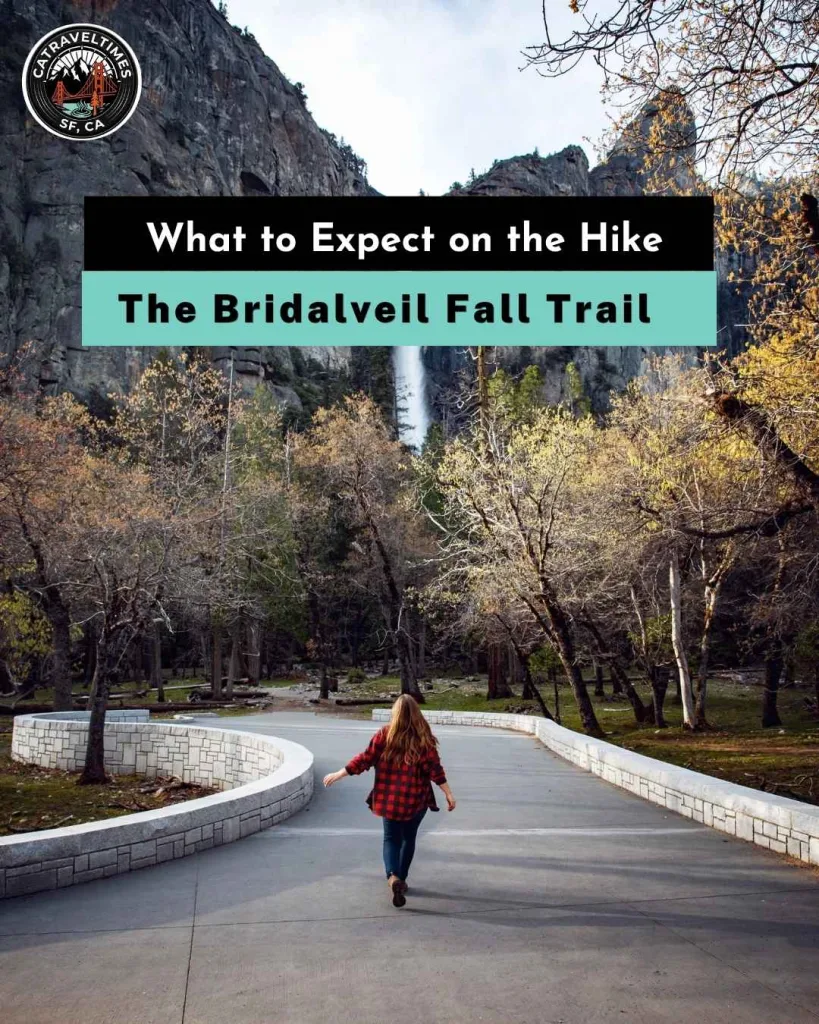
The Bridalveil Fall Trail: What to Expect on the Hike
The Bridalveil Fall trail in Yosemite National Park is genuinely one of the easiest and most rewarding short hikes I’ve ever done. Here’s what you need to know before you lace up your shoes.
Trail Stats at a Glance:
| Detail | Info |
| Distance | 0.6–0.7 miles (round trip) |
| Elevation Gain | ~82 feet |
| Difficulty | Easy |
| Time to Complete | 15–30 minutes |
| Trail Surface | Paved path with boardwalk sections |
| Dogs Allowed | Yes, on leash |
| Open | Year-round |
What to Expect on the Trail
The trail from the main parking lot is mostly paved, with a new raised boardwalk added during the 2023 restoration. It starts gradual, then gets slightly steeper near the base — still manageable for most fitness levels. Within a quarter mile in spring, the mist starts hitting you, building until you may need to wipe your glasses at the viewing platform. The renovated platform gives a clear, unobstructed view of the full drop — close enough to feel the power, safe enough to enjoy it.
Trail Tips I’ve Learned the Hard Way
- Go early. I mean it. By 10 AM on a summer weekend, the parking lot can already be full. I aim for 7–8 AM.
- Wear shoes with grip. The rocks near the base get slippery from the mist. Flip-flops are a bad idea.
- Bring a light rain jacket in spring. The spray can soak your shirt in minutes during peak flow.
- Check behind you as you walk. Some of the best angles of the fall are looking back from the trail, framed by pine trees.
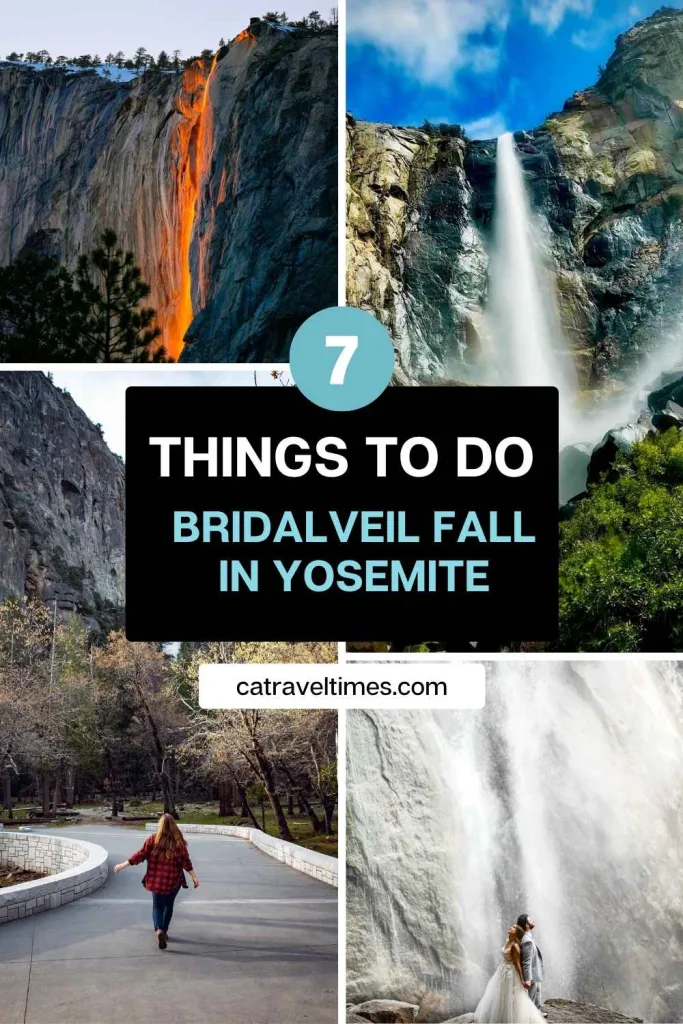
Things to Do at Bridalveil Fall in Yosemite
There’s more to do here than just hike to the base and leave. On my visits, I’ve found plenty of ways to spend time around the waterfall and its surroundings.
- Hike the Bridalveil Fall Trail: The main paved path from the Wawona Road trailhead is 0.5 miles round trip with gentle elevation. It ends at a viewing platform right at the base where you can feel the mist on your face. In spring, you’ll get thoroughly soaked — bring a rain jacket.
- Take photos from Tunnel View: Before you even reach the parking area, stop at Tunnel View on the east side of the Wawona Tunnel. This is where Bridalveil Fall in Yosemite frames the full valley panorama alongside El Capitan and Half Dome. This is the view that photographers like Ansel Adams made world-famous.
- Stop at Valley View: On your way out of the valley via El Portal Road, Valley View gives you another stunning angle on Bridalveil Fall reflected against the valley entrance. It’s easy to miss, so look for the small pullout on your left.
- Spot “Hidden Snoopy”: Look carefully at the granite wall to the right of the waterfall. There’s a natural discoloration in the rock that forms a shape resembling the famous cartoon dog. It’s subtle but once you see it, you can’t unsee it. A fun little detail that the kids love.
- Watch for rainbows: On sunny spring afternoons, the mist from the fall creates vivid rainbows. I’ve had some of my best photos from just standing at the viewpoint in the late afternoon light watching the rainbow grow as the sun moved lower.
- Picnic nearby: Cathedral Beach Picnic Area is just a short drive east along Southside Drive and makes a perfect post-waterfall lunch spot with views of El Capitan.
- Photograph the firefall phenomenon: This one is seasonal and rare — during certain winter conditions in February, the last light of sunset can strike Horsetail Fall (nearby on El Capitan) and turn it glowing orange. While not Bridalveil itself, serious photographers often visit both falls in the same February trip. Check conditions carefully if this is your goal.
If you’re planning a full day in the valley, I’d highly recommend pairing this with a 2 Days in Yosemite Itinerary to make the most of your time and not miss any of the major highlights.
Where to Stay Near Bridalveil Fall in Yosemite?
Accommodation near Bridalveil Fall in Yosemite ranges from iconic in-park lodges to budget-friendly options in gateway towns. Book as early as possible — in-park rooms open 366 days in advance and sell out fast, especially for summer.
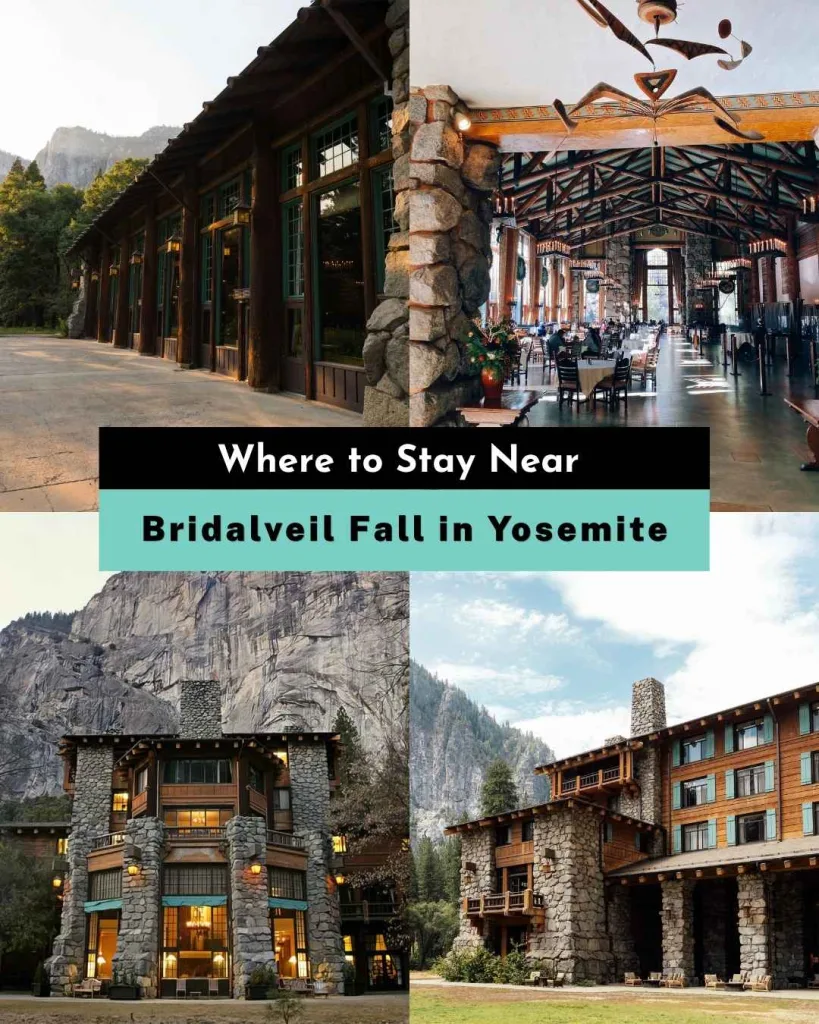
Inside Yosemite Valley (closest to the falls):
- The Ahwahnee — The grand historic hotel of Yosemite Valley. It’s elegant, atmospheric, and expensive. Rooms start around $500+ per night but the setting is unmatched. Fun fact: Ansel Adams photographed Bridalveil Fall from near here, and his wife’s parents were married at the base of the fall in 1901.
- Yosemite Valley Lodge — More affordable than the Ahwahnee but still inside the valley. Simple, clean rooms starting around $330/night. Walking distance to Yosemite Falls. My go-to choice for winter and fall visits.
- Curry Village (Half Dome Village) — Canvas tent cabins and standard rooms. Budget-friendly and social atmosphere. Great for families.
Outside the park (better value, more availability):
- AutoCamp Yosemite (El Portal): Upscale Airstream glamping about 30 minutes from the valley entrance. Perfect for couples wanting something unique.
- Yosemite View Lodge (El Portal): Simple riverside motel just outside the park boundary. Genuinely convenient for year-round visits since Highway 140 is the lowest-elevation entrance and almost never closes in winter.
- Tenaya at Yosemite (Fish Camp): Near the south entrance, pet-friendly, and more resort-style.
- Best Western Plus Yosemite Way Station (Mariposa): Reliable chain option with free breakfast. Good value if you’re okay with about a 1-hour drive to the valley.
For a truly special stay inside the park, read my Ahwahnee Hotel Yosemite Review to see if it’s worth the splurge for your trip.
Travel Tips for Visiting Bridalveil Fall in Yosemite
I’ve been to Bridalveil more times than I can count, and here’s what I always tell people before they go:
Timing:
- Arrive before 9 AM on weekends or summer weekdays to get parking and avoid the worst crowds
- Late afternoon on weekdays is also relatively quiet
- Spring mornings give you the best mist and rainbow light
What to Bring:
- A light rain jacket or wind shell (especially in spring)
- Grippy shoes or hiking boots
- A small daypack with water and snacks
- A camera with a lens cloth — mist will hit it
What to Skip:
- Flip-flops or sandals near the base in spring
- Strollers (the trail is stroller-friendly on the wider sections, but the steeper paved climb near the base is tricky)
- Heading straight back to your car after the waterfall — take a few minutes to look across the valley toward El Capitan from the Southside Drive section of the trail
If you’re building a broader Yosemite itinerary, pairing Bridalveil with the Lower Yosemite Falls Trail and a stop at Tunnel View makes for a perfect half day in the valley.
Is Bridalveil Fall in Yosemite Worth It?
Bridalveil Fall in Yosemite is one of those places that sounds like a tourist checkbox — until you’re actually standing there, watching 620 feet of water catch the wind and dissolve into mist. It’s easy to reach, takes under an hour to hike, flows every month of the year, and rewards you differently in every season.
There’s almost no wrong time to visit. If you’re planning a full Yosemite trip and want to go deeper, our guide to Things to Do in Yosemite National Park is a great next step.