Traveling Hacks CwBiancaVoyage: A Smart Travel Guide 2026
Every trip comes with the same hidden threats: overpacked bags, surprise fees, jet lag, and the nagging feeling you forgot something important at home. These problems are not random; they follow predictable patterns that can be solved with the right system.
That is exactly the philosophy behind traveling hacks cwbiancavoyage, a practical approach built on tested strategies rather than generic advice you have read before. This guide breaks down that full framework, and for travelers who want a deeper resource to plan around, CA Travel Times is a great starting point for destination-specific guides.
What Are Traveling Hacks CwBiancaVoyage?
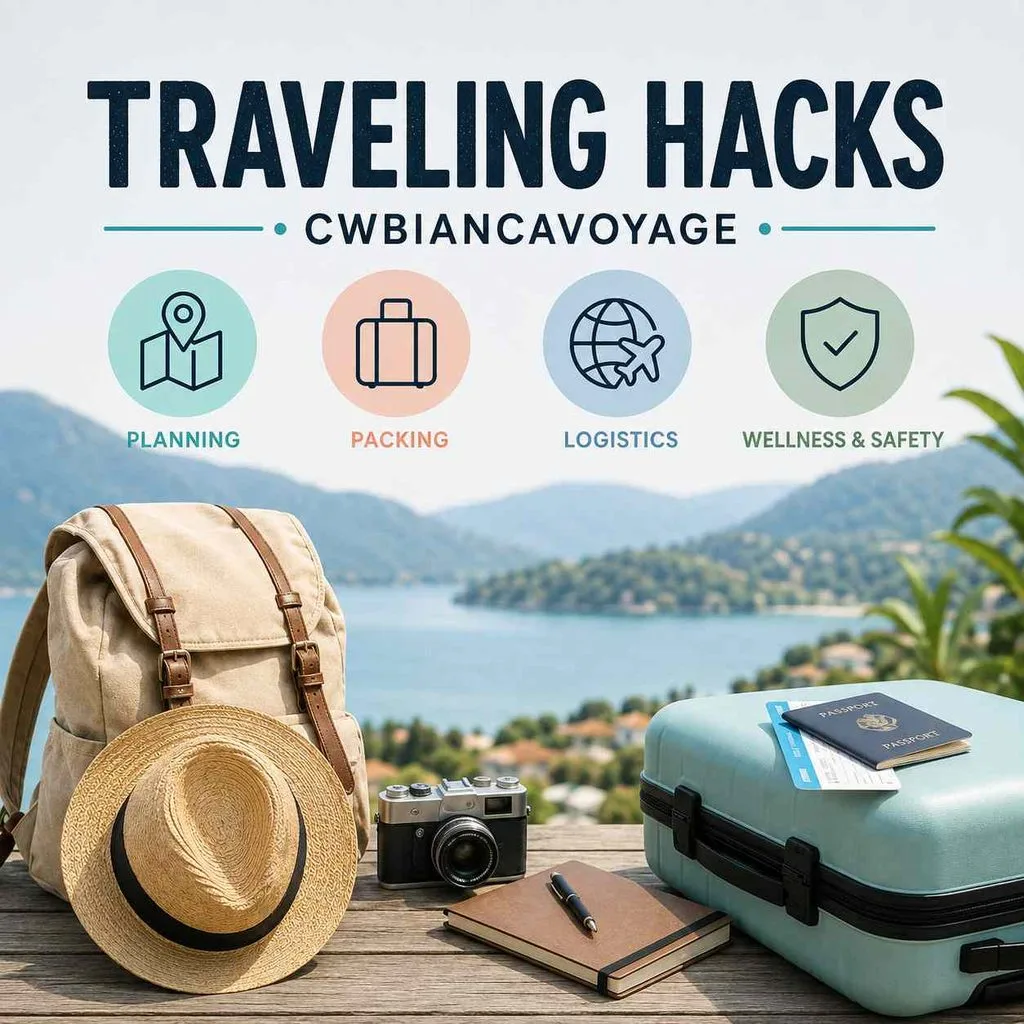
At its core, traveling hacks cwbiancavoyage refers to a collection of real-world, tested strategies designed to remove friction from every stage of a trip. Rather than offering vague tips like “pack light” without explaining how, this approach focuses on specific, repeatable actions: which apps to use, how to structure a packing list, when to book flights, and how to stay safe in unfamiliar places.
Why This Framework Works
The strength of this framework lies in its structure. Instead of treating travel as a series of unrelated decisions, it groups everything into four manageable categories:
- Planning — research, documentation, and itinerary building
- Packing — space-saving techniques and gear selection
- Logistics — flights, transportation, and budgeting
- Wellness and safety — staying healthy, secure, and rested throughout the trip
Each category addresses a specific pain point that causes stress or wasted money, which is why travelers who apply this system consistently report smoother, cheaper, and more enjoyable trips.
Smart Trip Planning Before You Leave
A successful trip is decided well before departure day. Rushed planning is where most travel budgets and itineraries fall apart. Browsing curated destination guides before you commit to a route can also help you decide what to prioritize, from national parks to hidden coastal towns.
Research and Documentation
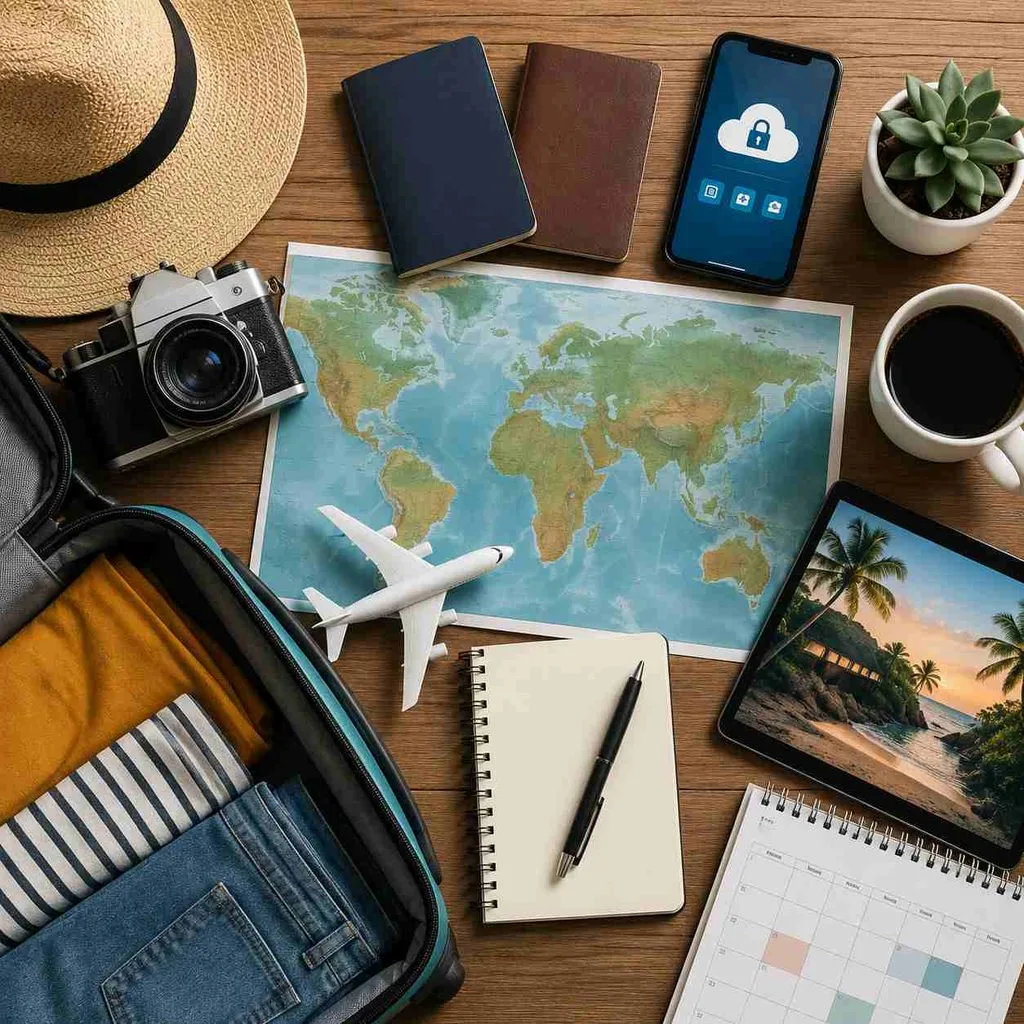
Start by understanding the destination’s climate, local customs, and entry requirements. Government resources such as the U.S. Department of State’s travel page are useful for checking visa rules, passport validity requirements, and current travel advisories before you commit to dates.
- Confirm passport expiration dates at least six months out
- Store digital copies of your passport, insurance, and itinerary in a password-protected cloud folder
- Build a flexible itinerary that leaves room for spontaneous discoveries
- Set flight and hotel price alerts 60–90 days before departure
Use Digital Tools to Stay Organized
Apps like TripIt, Google Maps, and PackPoint consolidate bookings, offline navigation, and packing lists into one place. Downloading offline maps before you leave home Wi-Fi is one of the simplest habits travelers rely on, since it keeps you moving even without a signal.
Packing Hacks That Actually Save Space and Money

Packing mistakes cost real money. Checked bag fees on many airlines run between $35 and $75 per bag each way, and overweight charges can add far more on top.
Roll, Compress, and Categorize
- Roll clothes instead of folding to reduce wrinkles and free up space
- Use packing cubes to separate outfits by day or category
- Choose compression bags for bulky items like jackets and sweaters
- Pick multi-purpose gear — a sarong or scarf can double as a towel, blanket, or cover-up
- Stick to solid toiletries and travel-sized containers to stay compliant with carry-on liquid rules
The Lay-Out-and-Remove-Half Rule
Lay out everything you plan to pack, then remove half of it. Most travelers overpack out of anxiety, not necessity — and laundry is available almost everywhere. This single adjustment is one of the most repeated packing habits among seasoned travelers, and it consistently frees up an entire section of luggage.
Airport and Flight Hacks for Stress-Free Journeys
Airports amplify stress faster than almost any other part of a trip, but a few adjustments change that experience entirely.
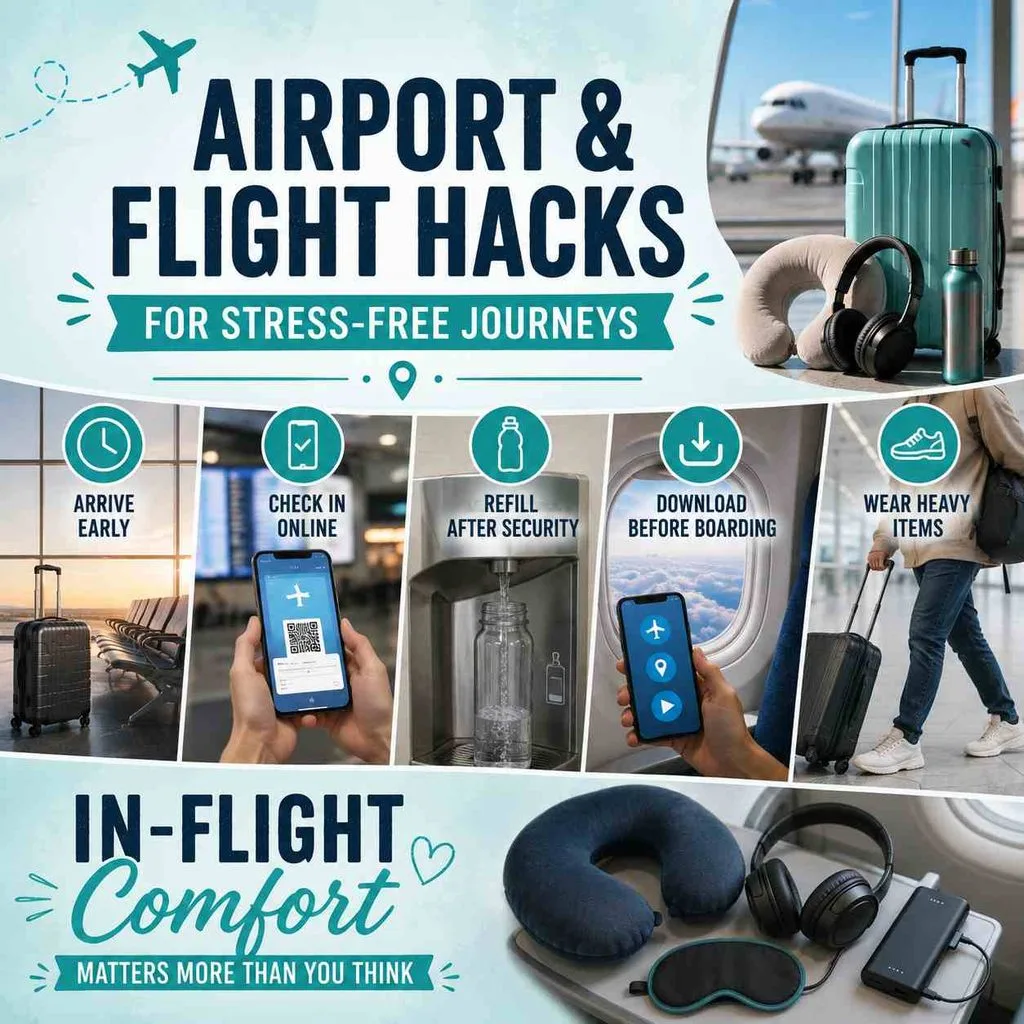
- Arrive at least three hours early for international flights to allow time for check-in and security
- Check in online as soon as it opens to improve seat selection
- Carry an empty reusable water bottle and refill it after security
- Download boarding passes, maps, and entertainment before boarding to avoid relying on in-flight Wi-Fi
- Wear your heaviest shoes and jacket on the plane to reduce luggage weight
In-Flight Comfort Matters More Than You Think
Small additions like a travel pillow, noise-canceling headphones, and a portable charger make long-haul flights noticeably easier. Syncing your sleep schedule to the destination time zone a day or two before departure also helps reduce jet lag once you land.
Money-Saving Hacks to Stretch Your Travel Budget
Traveling well doesn’t require overspending — it requires spending with intention.
Booking Smarter
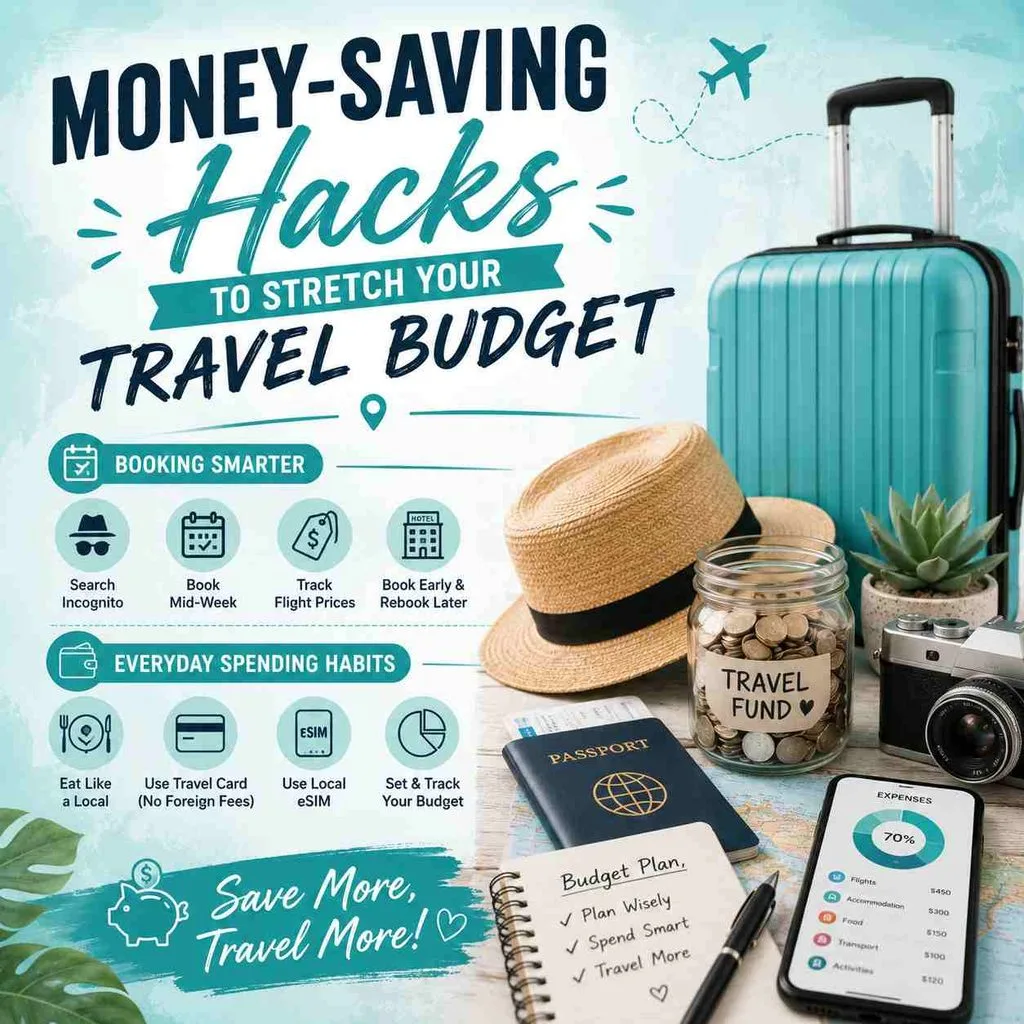
- Search in incognito mode to avoid price increases tied to repeated searches
- Book flights mid-week, when fares are often slightly lower than weekend pricing
- Use a flight price tracker to catch drops automatically instead of checking manually
- Book refundable hotel rates early, then rebook if prices fall before the cancellation window closes
Everyday Spending Habits
- Use a travel credit card with no foreign transaction fees
- Eat where locals eat instead of near major landmarks
- Compare local eSIM options like Airalo for data instead of paying for roaming
- Set a daily budget and track it with a simple expense app
These money-saving strategies compound quickly — small savings on flights, food, and data add up to meaningfully lower trip costs without cutting into the experience itself.
Safety and Digital Security on the Road
Confident travel starts with basic precautions that take only minutes to set up.
Personal Safety Essentials
- Share your real-time location with a trusted contact
- Keep copies of travel documents separate from the originals
- Research common local scams before arriving at a new destination
- Avoid displaying valuables in busy tourist areas
Digital Safety Checklist
- Use a VPN on public Wi-Fi in hotels, cafés, and airports
- Enable two-factor authentication on important accounts before departure
- Notify your bank three to five days before travel to prevent automatic fraud blocks
- Back up your photos to cloud storage in case a device is lost or stolen
Wellness Travel: Rest and Recovery Matter Too
Long trips take a physical toll, and recovery deserves the same planning attention as flights and packing.
Fighting Jet Lag and Staying Energized
- Adjust your sleep schedule to the destination time zone before departure
- Stay hydrated during flights and limit caffeine and alcohol
- Build at least one slow, unscheduled day into longer itineraries
The Hot Springs Advantage for Trip Recovery

One of the most restorative additions to any itinerary is a stop at a natural hot spring. Geothermal soaking has long been valued for easing muscle tension and promoting circulation after days of walking, hiking, or long flights. If wellness is part of your travel goals, the Hot springs guides on CA Travel Times cover destinations across California and beyond in detail, making it easier to plan a soak into your route without extra research. National recreation sites, including those listed by the National Park Service, also feature geothermal areas worth visiting responsibly.
Pairing a demanding travel schedule with even one recovery stop is a habit that experienced travelers rarely skip, and it’s a wellness principle that fits naturally within any traveling hacks cwbiancavoyage itinerary.
Transportation Hacks: Getting Around Smarter
Efficient local transportation saves both time and money, especially in unfamiliar cities.
- Download offline maps for each day’s destination before heading out
- Use local transit apps to identify the cheapest and fastest routes
- Consider overnight buses or trains for longer distances, which double as accommodation
- Check whether your destination offers a tourist transport pass covering unlimited rides
- Compare rideshare apps against traditional taxis, since rates often differ significantly
The Hub-and-Spoke Model
Rather than changing hotels every night, base yourself in one central location and take day trips outward. This reduces repacking, keeps energy levels higher, and often costs less than constantly relocating.
Building Your Own Travel Hack System
The real value of this approach isn’t any single tip — it’s the repeatable system behind them. A reliable structure looks like this:
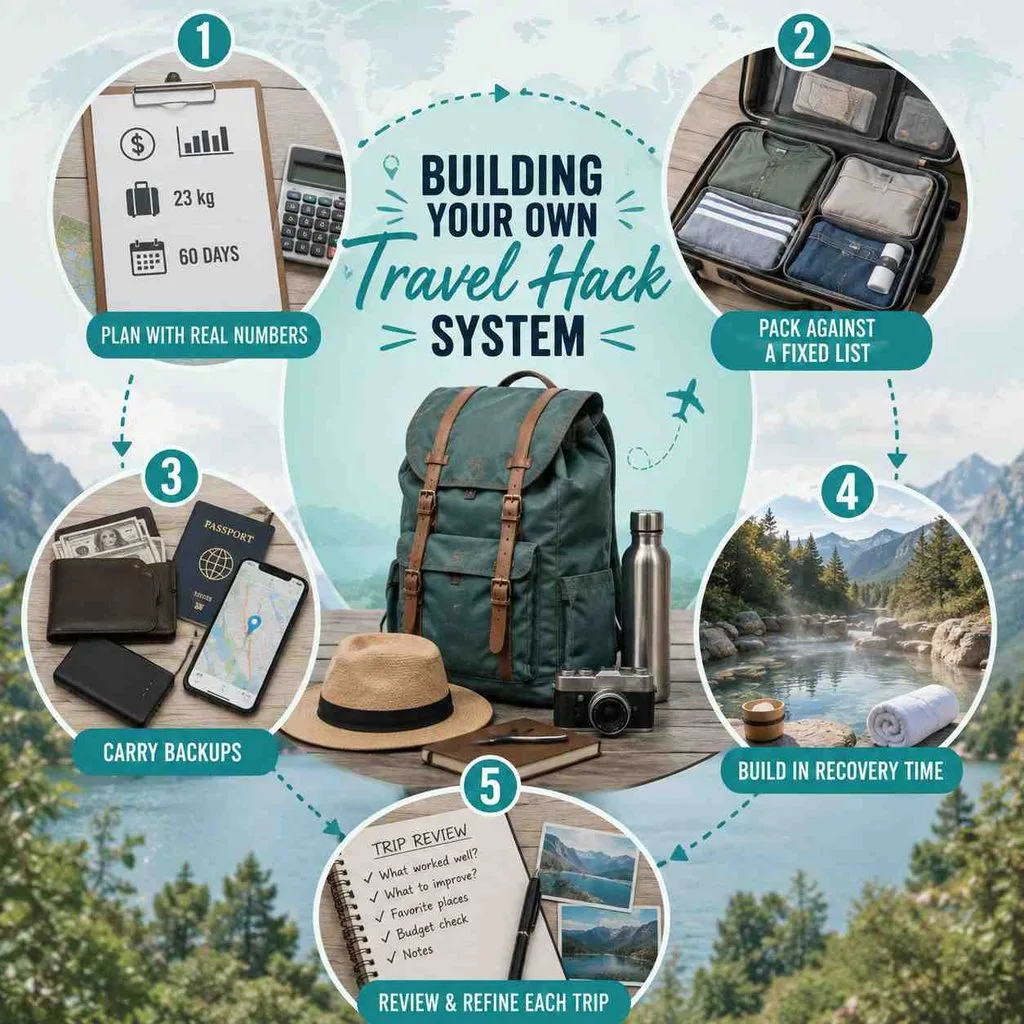
- Plan with real numbers: budget caps, luggage weight limits, and booking timelines
- Pack against a fixed list rather than figuring it out at the last minute
- Carry backups for money, documents, and navigation
- Build in recovery time, including wellness stops like hot springs when possible
- Review each trip afterward to refine the next one
Final Thoughts
Travel feels effortless when logistics fade into the background and the experience takes center stage. That is the outcome traveling hacks cwbiancavoyage is designed to deliver: fewer surprise costs, less packing stress, safer navigation, and more energy for what truly matters.
Apply even a handful of these strategies on your very next trip, and the difference in how relaxed and prepared you feel will be immediate. For more destination-specific planning, CA Travel Times offers detailed guides to help you get started.
Frequently Asked Questions
What is the main idea behind traveling hacks cwbiancavoyage?
It is a system-based approach to travel planning that focuses on specific, repeatable actions across packing, booking, safety, and recovery, instead of generic tips that do not explain how or why they work.
How much can smart packing actually save on a trip?
Avoiding checked bag fees alone can save thirty five to seventy five dollars per flight, while rolling clothes and using packing cubes typically frees up twenty to thirty percent more suitcase space.
Is it better to book flights on a specific day of the week?
Mid-week bookings, particularly Tuesday or Wednesday afternoons, tend to run slightly cheaper than weekend fares on most domestic routes, though prices still depend heavily on the destination and season.
What is the safest way to carry money while traveling internationally?
Carry two cards from separate banks along with some local cash, notify your bank before departure, and avoid standalone airport ATMs, which often charge higher withdrawal fees and worse rates.
Should hot springs be part of a travel itinerary?
Yes, geothermal soaking is a proven way to ease muscle tension and support recovery after long flights or heavy walking days, making it a valuable addition to any wellness-focused itinerary.
How far in advance should trip planning start?
Start sixty to ninety days out for flight tracking, visa research, and accommodation comparisons, then follow a shorter timeline for confirming bookings, downloading offline maps, and finalizing packing closer to departure.