20 Best Things to Do in Redwood National & State Parks (2026 Guide)
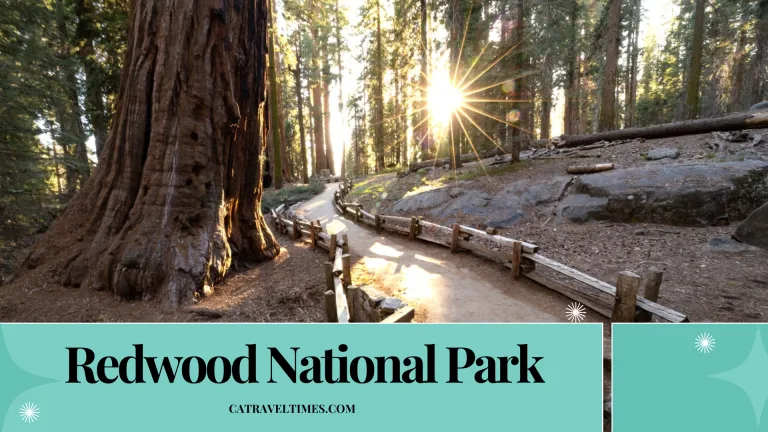
The first thing that hits you isn’t the size, it’s the silence. I stepped off the trail into an old-growth grove on a September morning, fog threading between trunks wider than my living room, and the entire world outside ceased to exist. No wind. No birds. Just the slow breathing of something ancient. I stood there for what felt like ten minutes before I realized I’d stopped walking entirely. That moment is why people return to the Redwood National and State Parks of Northern California again and again and why, despite the CA travel times from San Francisco running close to six hours, visitors make the journey without hesitation.
These aren’t just big trees, they’re a different category of existence, one that makes you recalibrate your sense of scale, time, and your own smallness in a genuinely comforting way. This guide covers the 20 Best Things to Do in Redwood National & State Parks and across all four associated state parks in 2026 when to visit, how to get there, where to stay, what wildlife to expect, and two ready-to-use itineraries. Two days or a week, this is the only planning resource you’ll need.
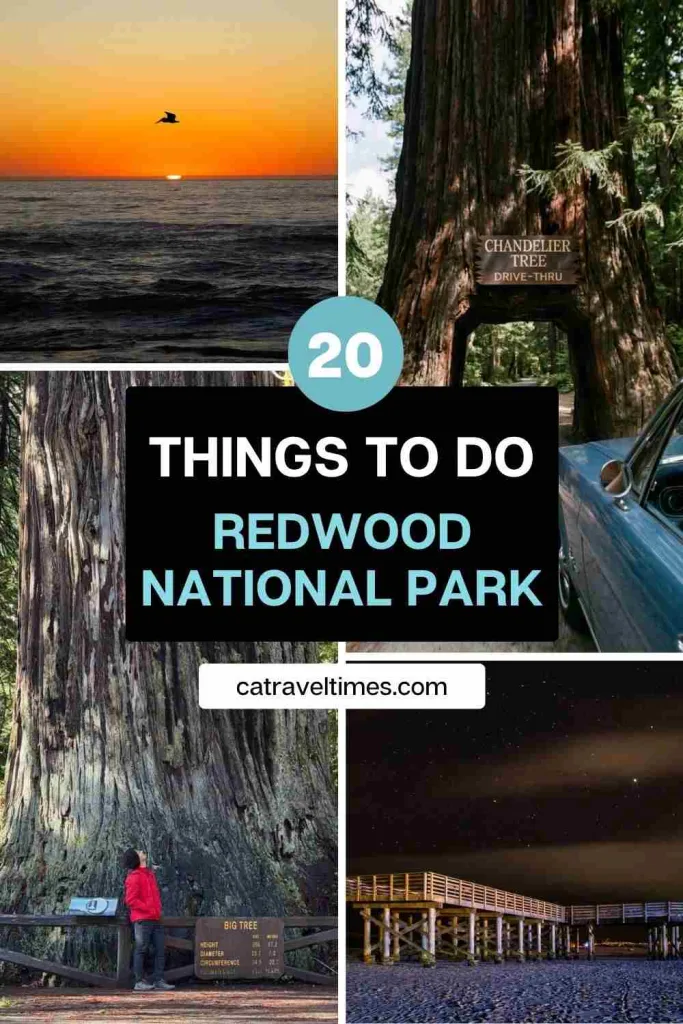
Redwood National & State Parks — Quick Facts at a Glance
| Detail | Info |
| Location | Northern California (Del Norte & Humboldt Counties) |
| Total Area | 139,000+ acres (560+ km²) |
| Entrance Fee | Free (National Park & all State Parks) |
| UNESCO Status | World Heritage Site & Biosphere Reserve |
| Tallest Tree | Hyperion — 380.3 ft (secret location, not open to visitors) |
| Annual Visitors | ~500,000 |
| Old-Growth Protected | ~45% of remaining old-growth coast redwoods |
| Parks Included | Redwood NP + Prairie Creek, Jedediah Smith, Del Norte, Humboldt Redwoods SP |
| Coastline | 80+ miles of Pacific coast |
Best Time to Visit Redwood National & State Parks in 2026
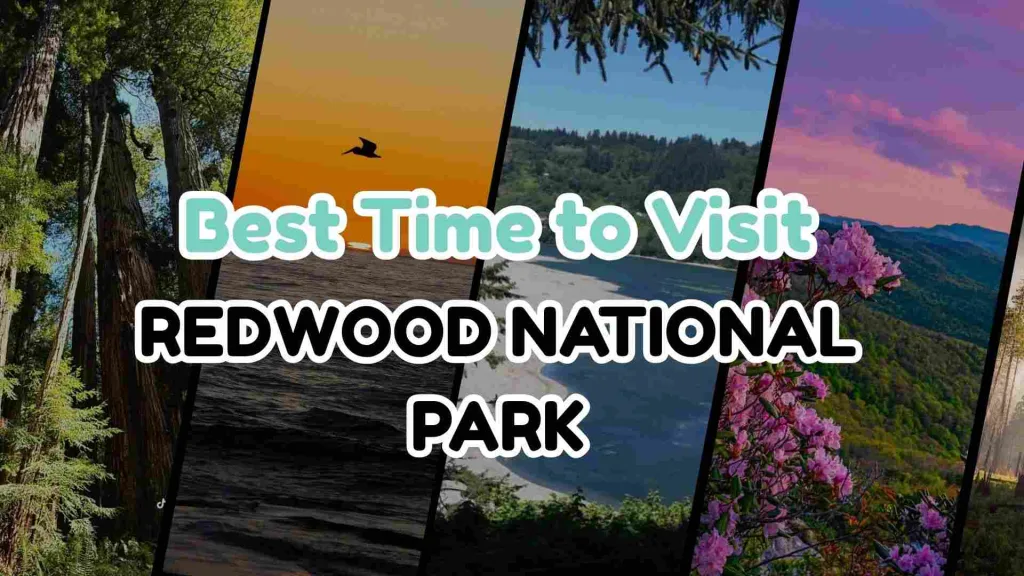
🌸 April–May — Best Sweet Spot Rhododendrons in bloom, waterfalls at full force, green and lush. Fewer crowds than summer. Cooler but rarely wet. Top pick for first-timers.
☀ ️ June–August — Peak Season Warmest and driest. Fern Canyon and Gold Bluffs Beach are at their most beautiful. Book everything 3–4 months in advance. Expect company on popular trails.
🍂 September–October — Hidden Gem Window Crowds thin dramatically after Labor Day. September is especially magical: warm days, cool evenings, and golden afternoon light that makes the trees glow amber.
🌫️ November–February — Moody & Empty Fog-wrapped groves with almost no other visitors. Mild temperatures (rarely below 40°F). Perfect for slow, contemplative hiking.
- Whale watching: December–April for gray whale migration offshore. Best viewpoints: Crescent City headlands and Enderts Beach bluffs.
- Wildflowers & rhododendrons: April–May throughout the forest understory.
How to Get to Redwood National Park: Directions
✈️ By Air Arcata/Eureka Airport (ACV) is the closest 45 minutes to Prairie Creek. From Portland (PDX), plan a 5.5-hour drive. From San Francisco (SFO), it’s a 5-hour scenic drive north on US-101. Rental cars are available at all three airports.
🚗 By Car US-101 runs directly through all parks it’s one of America’s great coastal drives. From San Francisco allow ~6 hours. From Portland, ~5 hours south. Coming from the north, enter at Crescent City and work south; coming from the south, enter at Humboldt and work north.
🚌 By Bus Greyhound serves both Crescent City and Eureka, the two main gateway towns. Once there, a rental car is strongly recommended. The parks have no internal shuttle system, and distances between trailheads are too great to walk between.
The map below shows all 20 in-park activity locations from this guide, plus 10 nearby spots, color-coded by category: green markers for hikes, blue for beaches and water, orange for scenic drives, purple for wildlife spots, and grey for gateway towns.
- 🔵 Blue markers represent recommended Things To do in Redwood National & State Parks
- 🔴 Red markers represent recommended Things To do Near Redwood National & State Parks
20 Best Things to Do in Redwood National & State Parks
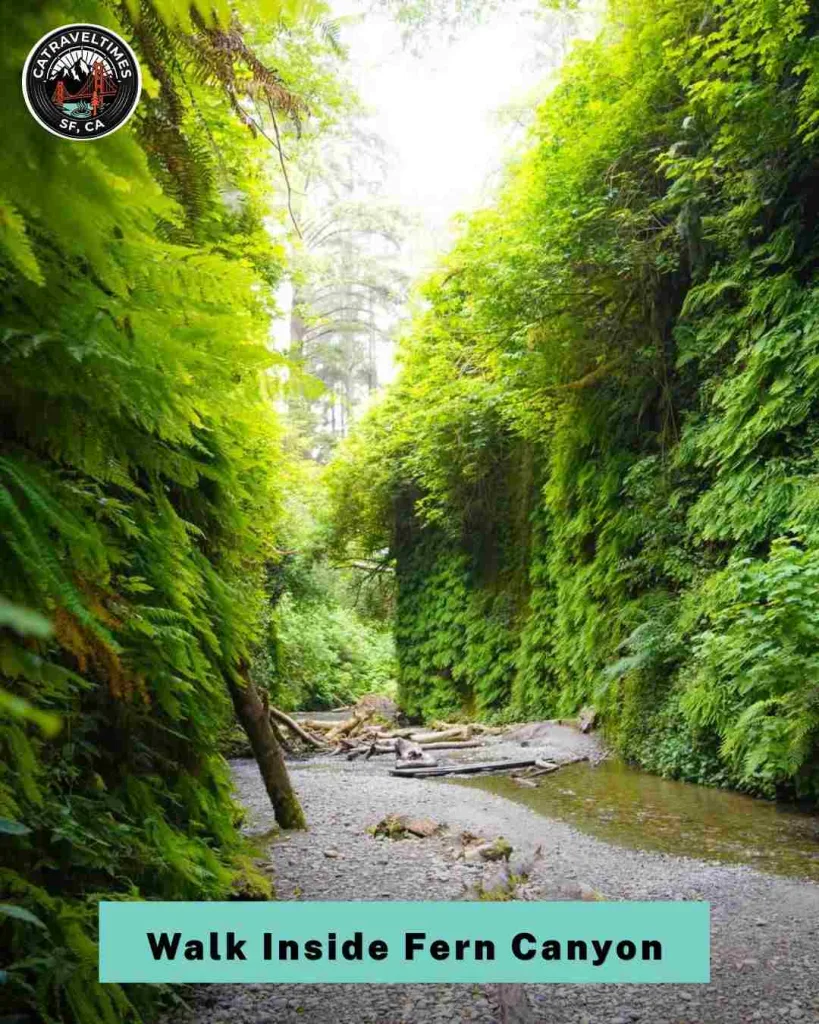
1. Walk Inside Fern Canyon — a 30-Million-Year-Old Living Gorge
The first thing that strikes you entering Fern Canyon is that the walls are alive. Not decorated with plants — alive, carpeted floor to ceiling in five-fingered ferns so thick you can’t see the canyon rock beneath. I waded ankle-deep through the creek in August, looking up at fifty-foot walls of ancient green, and understood immediately why Steven Spielberg chose this exact place to film a dinosaur sequence for The Lost World. The canyon was carved by Home Creek over millions of years and is one of the most photographed natural features in Northern California. The 1.2-mile loop involves several creek crossings with no bridges — wear waterproof shoes or sandals if you don’t mind getting wet.
- Difficulty: Easy to Moderate
- Time needed: 1–2 hours
- Cost: Free with park entry; vehicle reservation required May 15–Sep 15 (recreation.gov)
- Best season: June–August when the canyon is at its most lush; April–May for waterfalls
- Quick tip: Arrive before 8 AM to have the canyon entirely to yourself and catch the morning light at its best.
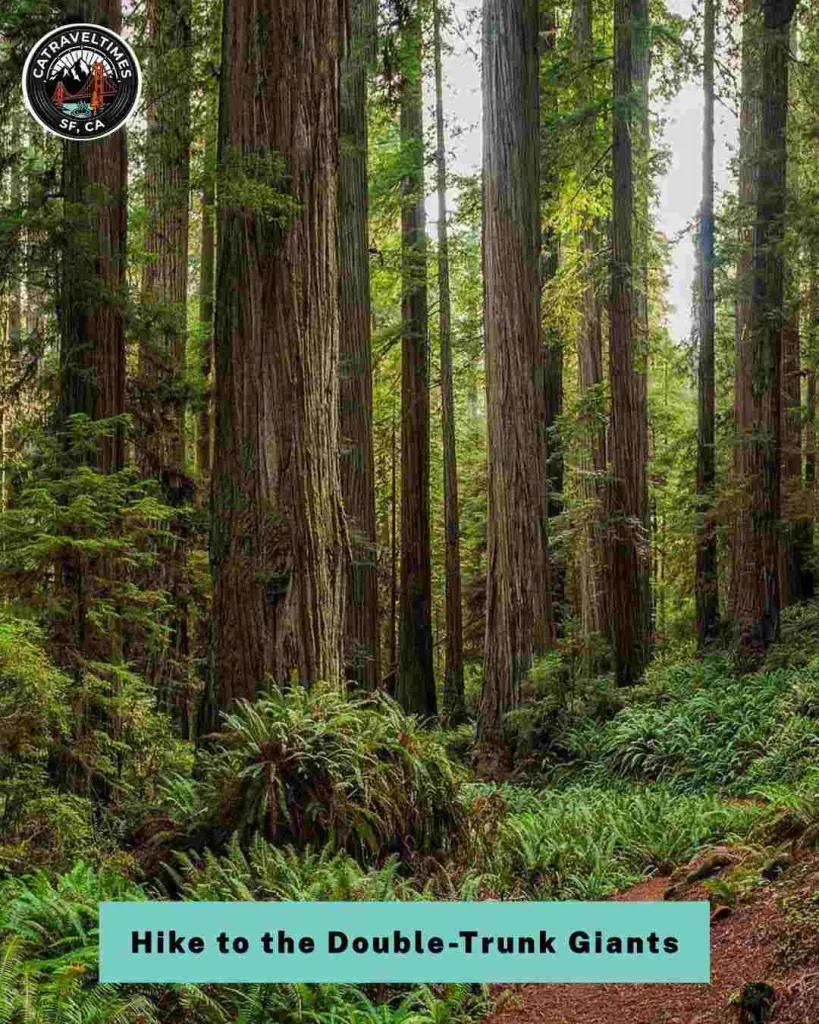
2. Hike to the Double-Trunk Giants on the Boy Scout Tree Trail
After nearly three miles of winding through old-growth that grows progressively more cathedral-like, you round a curve and find two enormous redwoods that have fused at the base — leaning together like old friends. I could lie down in the root cavity and disappear. This is the only trail in the park complex that takes you deep into the Jedediah Smith interior, well away from any road, and the old-growth here is virtually untouched. A short side spur to Fern Falls adds just 0.4 miles and one of the park’s best waterfall views.
- Difficulty: Moderate
- Time needed: 3–4 hours
- Cost: Free with park entry
- Best season: Year-round; April–June for lush greenery and Fern Falls at full flow
- Quick tip: Start early — the parking area off Howland Hill Road is small and fills quickly on summer mornings.
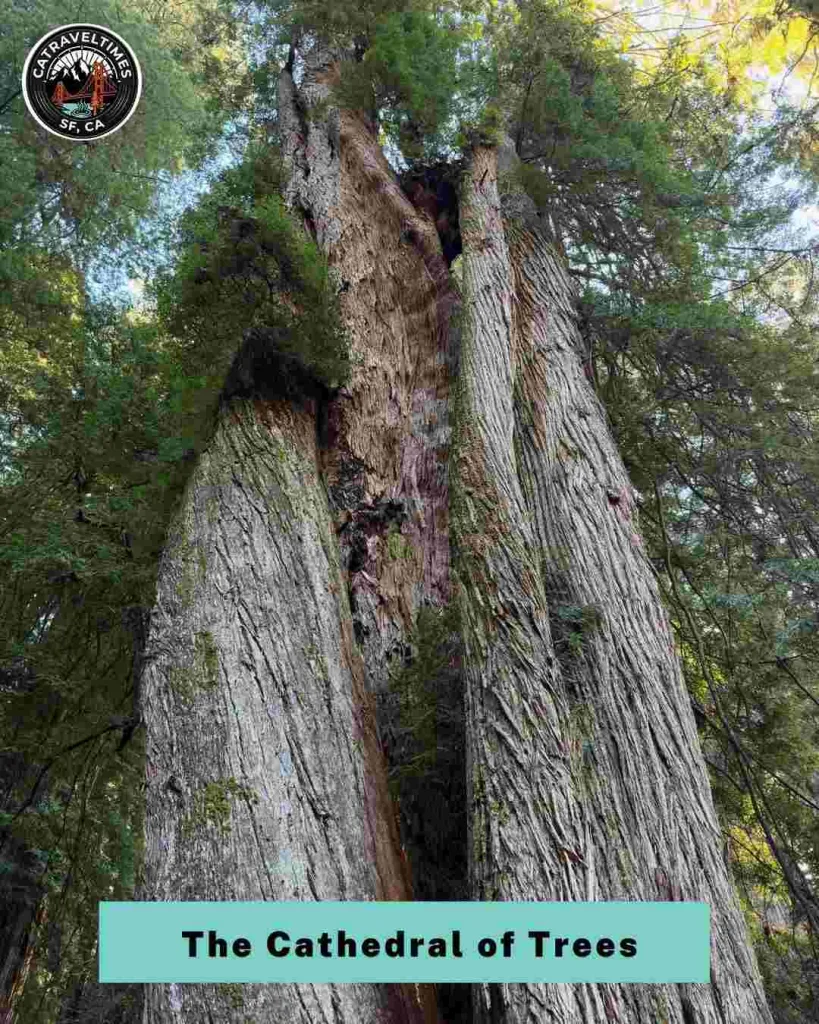
3. Drive Howland Hill Road — the Cathedral of Trees
Howland Hill Road is arguably the finest 30 minutes of driving in Northern California. The narrow unpaved road winds directly through one of the densest concentrations of old-growth redwoods in existence, close enough that you can lean out the window and nearly touch thousand-year-old trunks. Drive it slowly — 10 mph or under — and stop often. Early morning is best; fog settles between the trunks and the light filtering through creates something that looks more like a painting than reality.
- Difficulty: Easy (drive-based)
- Time needed: 45–60 minutes minimum; longer with photo stops
- Cost: Free with park entry
- Best season: Year-round; most magical in fog (fall and winter mornings)
- Quick tip: Large RVs, motorhomes, and any vehicle towing a trailer are completely banned on this road — a standard car or small SUV is ideal.
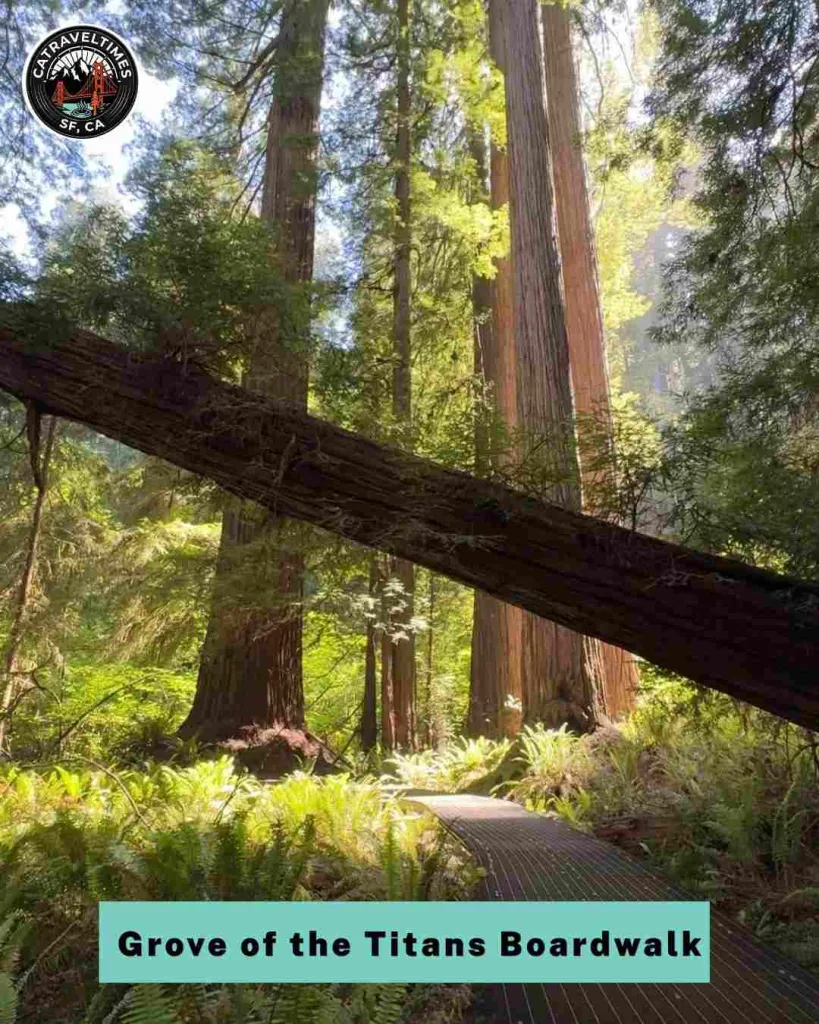
4. Discover the Grove of the Titans Boardwalk
The Grove of the Titans was, for years, a barely-marked secret among serious redwood enthusiasts — a cluster of trees that includes some of the largest coast redwoods on earth by volume, hidden deep in the Jedediah Smith interior. In 2022, NPS completed an elevated boardwalk that now allows close-up viewing while keeping fragile root systems fully protected. The experience is remarkable — you’re suspended at eye level with the bases of trees that were saplings before the Norman Conquest.
- Difficulty: Easy
- Time needed: 1–1.5 hours
- Cost: Free with park entry
- Best season: Year-round; weekday mornings are quietest
- Quick tip: Arrive before 9 AM on a weekday and you’ll have long stretches of boardwalk entirely to yourself — this is now the most popular day hike in Jedediah Smith.
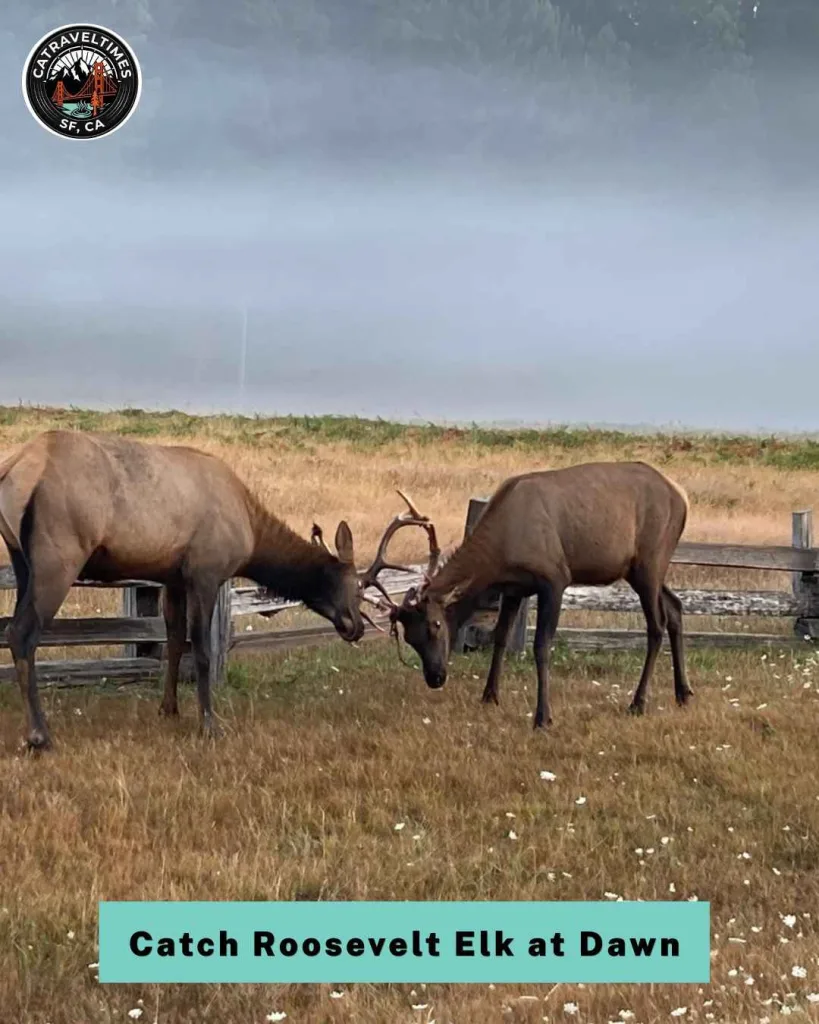
5. Catch Roosevelt Elk at Dawn on the Elk Prairie Meadow
It was just past 6 AM and still dark enough that the meadow was a single grey shape. I stood at the fence line with my coffee going cold, watching shapes emerge as light arrived. A bull elk materialized from the mist at the far tree line — enormous, rack heavy with velvet, moving with total indifference to my presence. He walked to within forty feet. Nothing I’d read had prepared me for how large Roosevelt elk actually are in person. Herds of 20–30 animals are common at dawn and dusk, particularly in fall when bulls are in rut.
- Difficulty: Easy (flat meadow walking)
- Time needed: 1–2 hours
- Cost: Free with park entry
- Best season: Fall (September–November) for rutting bulls; year-round for general sightings
- Quick tip: Bring binoculars and stay at least 50 feet from all elk at all times — bulls exceed 1,000 lbs and will charge if they feel threatened.
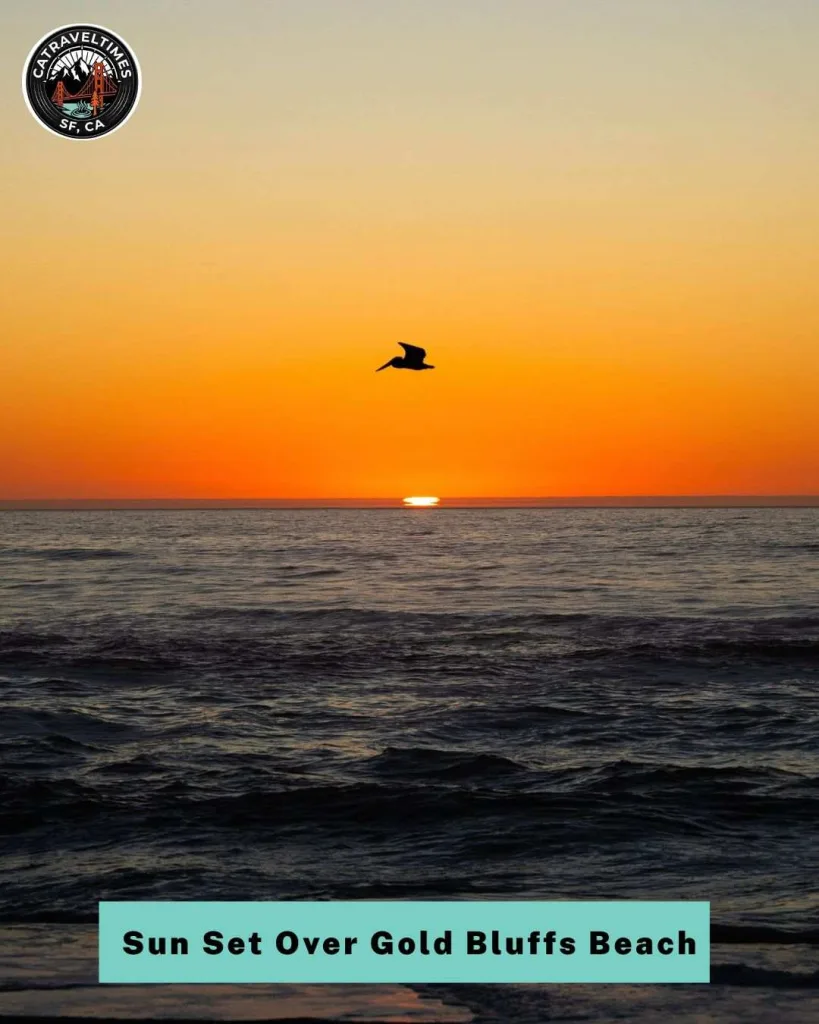
6. Watch the Sun Set Over Gold Bluffs Beach
There is a specific quality of late-afternoon light on Gold Bluffs Beach — angled, golden, oceanic — that makes the sandstone bluffs behind the beach look lit from within. I sat on driftwood watching the fog bank roll in from the Pacific at sunset, the bluffs turning amber, and felt with absolute certainty that I was somewhere extraordinary. Gold Bluffs Beach is a 10.8-mile stretch of wild Pacific coastline where Roosevelt elk frequently wander onto the sand, and it’s one of the few beaches in California where you can camp literally on the sand with old-growth forest visible from your tent.
- Difficulty: Easy
- Time needed: 1–3 hours for the sunset experience; overnight if camping
- Cost: Free with park entry; vehicle reservation required May–September
- Best season: June–October for warmest evenings; September for fewer crowds
- Quick tip: Book the Gold Bluffs Beach Campground months in advance for summer dates — it fills faster than almost any other site in the park.
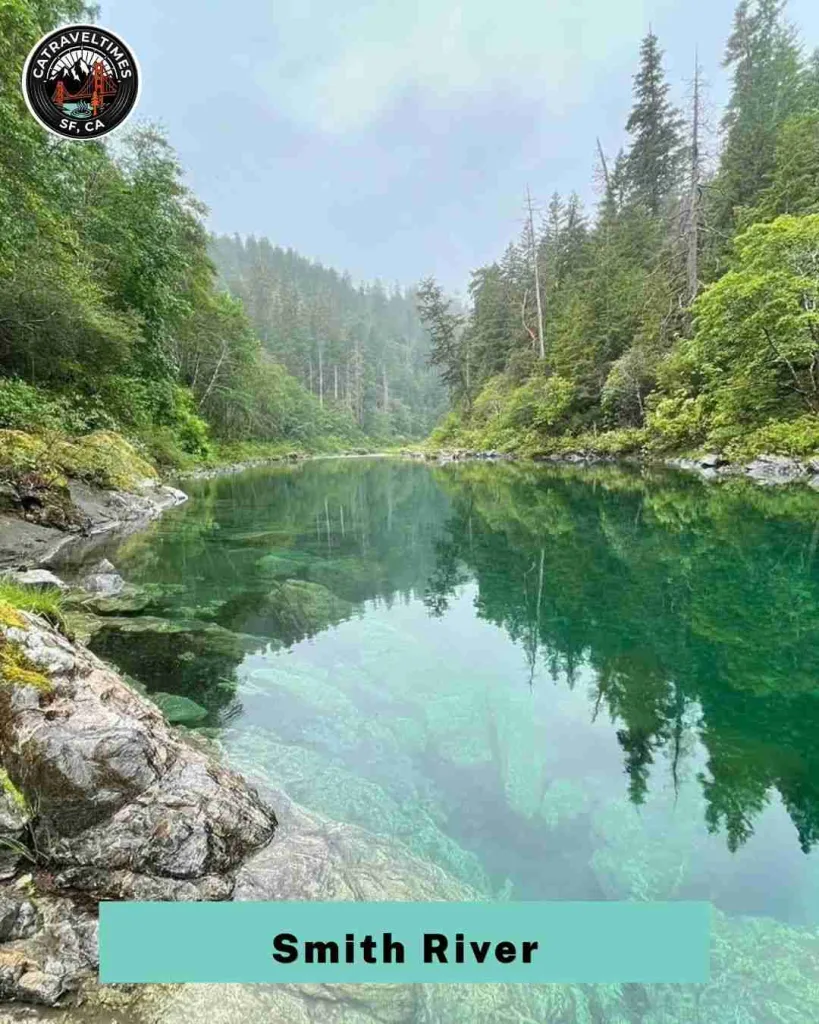
7. Stroll the Stout Memorial Grove Loop by the Smith River
Stout Grove is the most photographed old-growth grove in Jedediah Smith — and possibly in all of the redwood parks. A short 0.6-mile loop puts you among towering giants with the Smith River visible through the trunks on one side, dappled light filtering from 300 feet above. What makes Stout special beyond other groves is the visual composition — the trees aren’t just big, they’re spaced in ways that let the morning light work between them beautifully, creating natural shafts of gold through the canopy.
- Difficulty: Easy
- Time needed: 30–45 minutes
- Cost: Free with park entry
- Best season: Year-round; best on clear mornings in spring and fall
- Quick tip: Arrive before 9 AM to catch the horizontal golden light shafts before the canopy closes off the angle — this grove photographs best in those early hours.
8. Challenge Yourself on the Damnation Creek Trail to a Hidden Beach
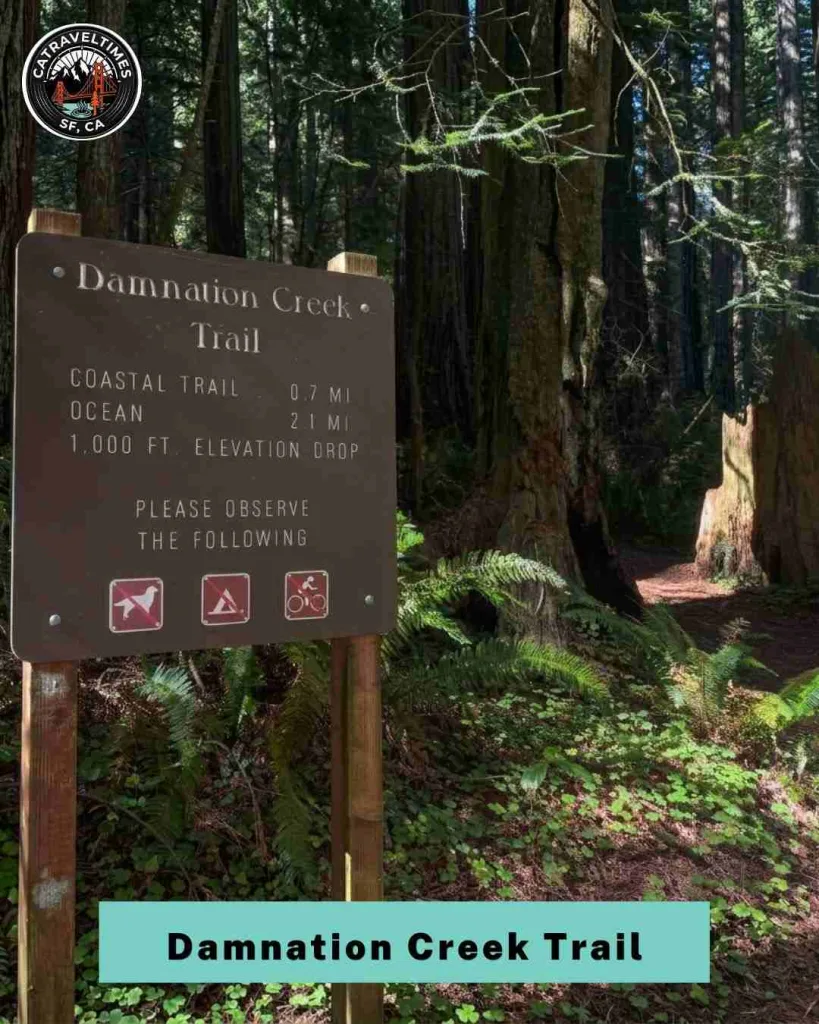
Damnation Creek is the most rewarding strenuous hike in the park complex, and also one of the most unique. The trail descends 1,170 feet through old-growth redwood forest, transitions to coastal scrub and rhododendrons, and ends on a remote beach accessible only by this trail — no road, no parking lot, no crowds. The downward journey through old-growth with the sound of the Pacific growing louder with each switchback is a genuinely memorable experience. The secret beach at the bottom is small, wild, and entirely isolated — budget time to sit there.
- Difficulty: Hard
- Time needed: 3.5–4 hours round trip
- Cost: Free with park entry
- Best season: April–October; rhododendrons bloom on the trail in spring
- Quick tip: Bring trekking poles — the 1,170-foot descent and ascent are steep enough that they make a real difference on your knees.
9. Cruise All 31.5 Miles of the Avenue of the Giants
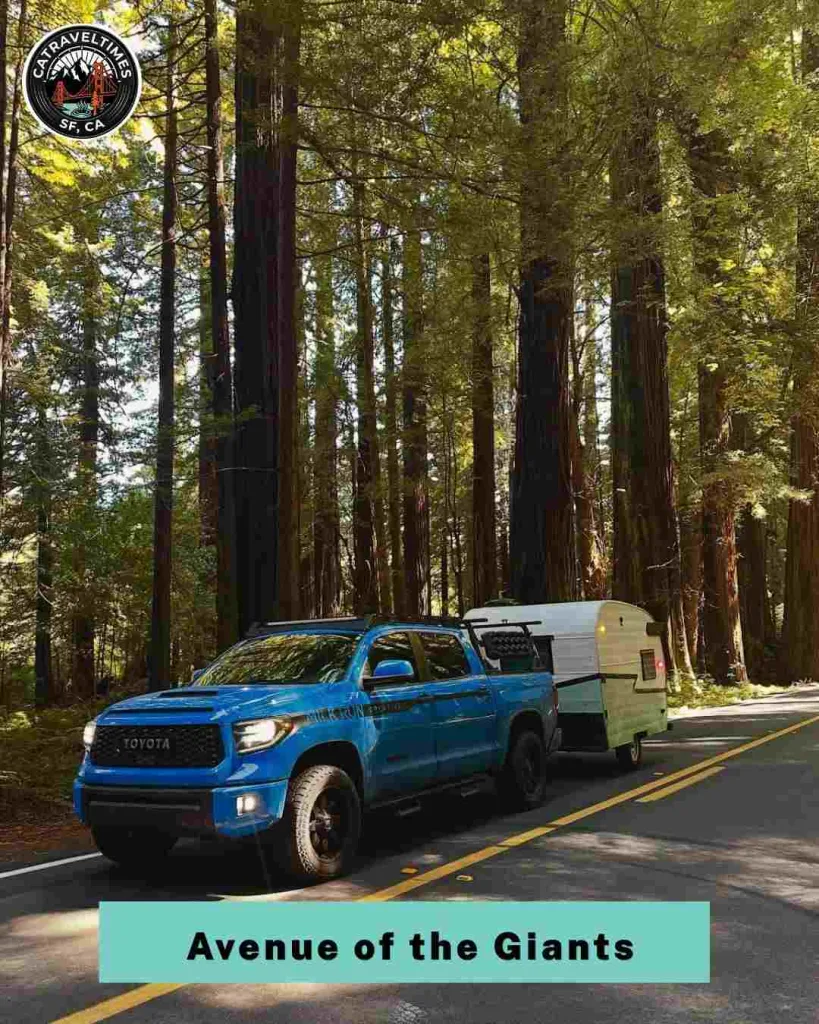
The Avenue of the Giants is one of the great scenic drives of the American West — an old highway that runs parallel to US-101 through the heart of Humboldt Redwoods State Park, shadowed on both sides by enormous trees for mile after mile. Stop at Founders Grove, where you can walk to the enormous Founders Tree in five minutes, and at Dyerville Giant, a fallen redwood so large you can walk along its trunk like a low bridge. The drive takes about 90 minutes done properly — this is not a road that rewards speed.
- Difficulty: Easy (drive-based)
- Time needed: 1.5–3 hours depending on stops
- Cost: Free with park entry
- Best season: Year-round; October is spectacular with golden valley light
- Quick tip: Grab coffee in Garberville or Fortuna before you start, and if you’re entering from San Francisco, make this your very first stop — it sets the tone for everything else.
10. Stand Beneath the Big Tree in Prairie Creek
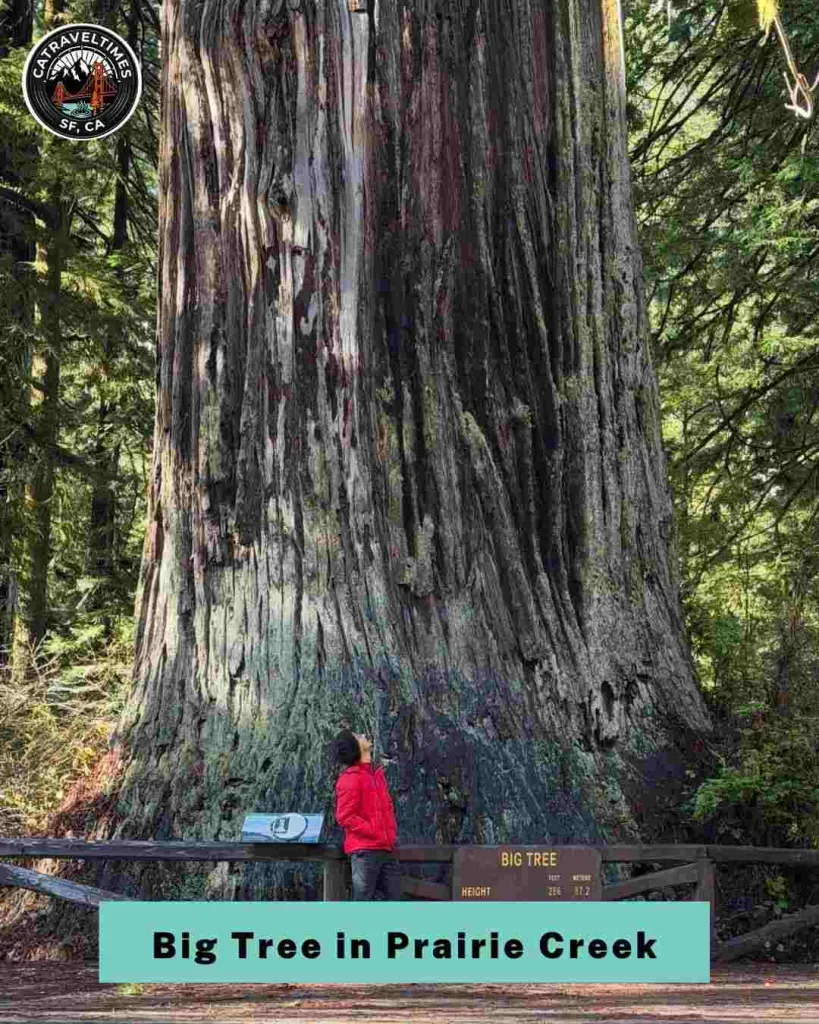
The Big Tree in Prairie Creek is one of those obligatory stops that turns out to be genuinely worth it — a single 1,500-year-old coast redwood of extraordinary size, just a two-minute walk from a pullout on Newton B. Drury Scenic Parkway. But here’s what most visitors miss: continue past the Big Tree on the Foothill Trail for another 10–15 minutes and you’ll be in equally impressive old-growth with a fraction of the crowd. The Big Tree is a gateway; the Foothill Trail is where the experience actually deepens.
- Difficulty: Easy
- Time needed: 15–30 minutes at the tree; 1–2 hours if you continue on the Foothill Trail
- Cost: Free with park entry
- Best season: Year-round
- Quick tip: Arrive before 9 AM for the best morning light on the trunk and almost no other visitors — the pullout fills quickly after that on summer days.
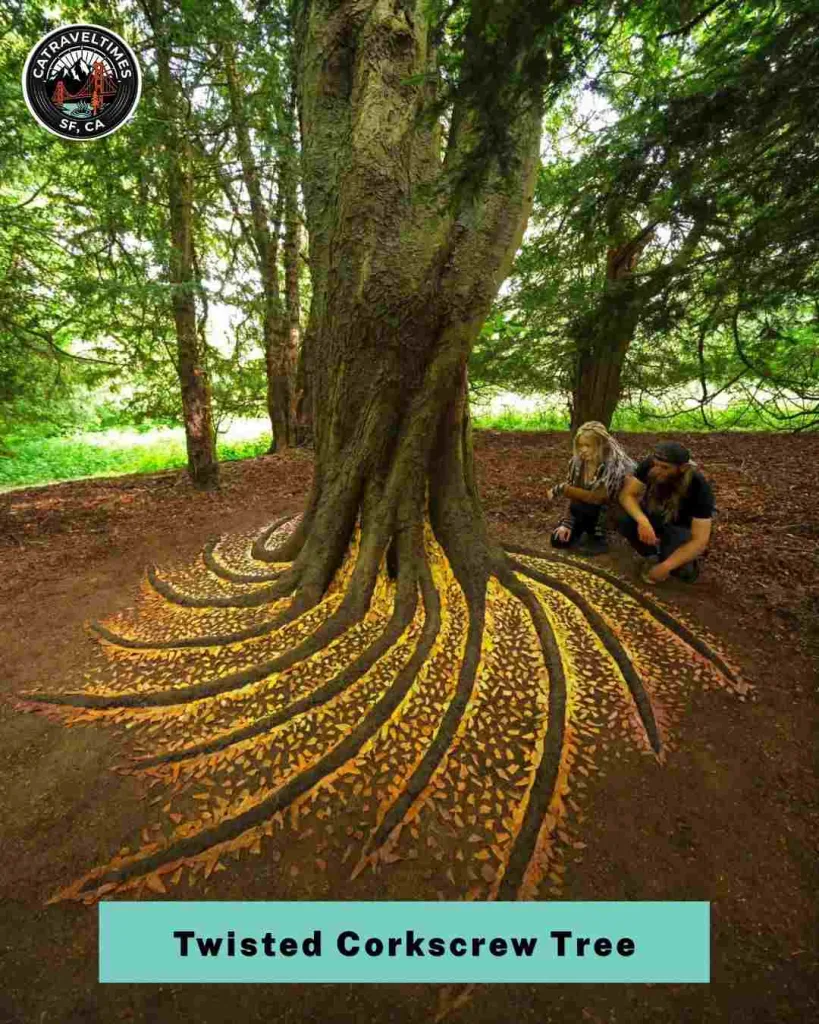
11. Find the Twisted Corkscrew Tree — Prairie Creek’s Living Sculpture
The Corkscrew Tree is one of the most unusual individual redwoods in the entire park system — a massive tree whose trunk spirals in a full corkscrew twist as it rises, the result of unusual growth conditions early in its life. It looks like something from a fairy tale, and photographs of it never quite do justice to the physical strangeness of standing beside it. NPS improved signage to the Corkscrew Tree in 2023, making it significantly easier to find — it’s less than two minutes off Newton B. Drury Scenic Parkway.
- Difficulty: Easy
- Time needed: 15–20 minutes
- Cost: Free with park entry
- Best season: Year-round
- Quick tip: Most people who find it stand there far longer than they planned — budget the extra time and don’t rush it.
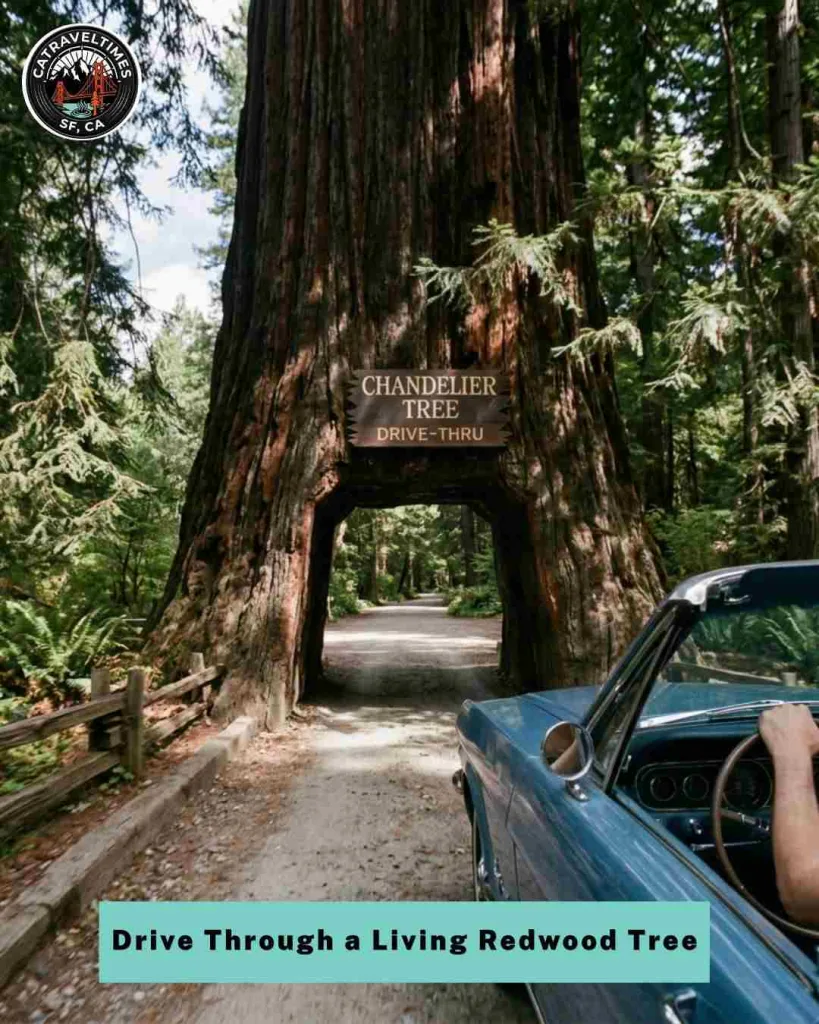
12. Drive Through a Living Redwood Tree
Drive-through trees are part of the Redwood cultural tradition and worth doing at least once. Three options exist along US-101, each with its own character: Chandelier Tree in Leggett is the most iconic, carved in the 1930s with a dramatic approach through Cathedral Trees grove; Shrine Drive-Thru Tree in Myers Flat sits along the Avenue of the Giants; and Klamath Tour-Thru Tree is most convenient for Prairie Creek visitors. All three charge a small vehicle fee and are open year-round.
- Difficulty: Easy
- Time needed: 20–30 minutes per stop
- Cost: Small vehicle fee (a few dollars) at each private attraction
- Best season: Year-round
- Quick tip: The Chandelier Tree is the most photogenic of the three — if you only do one, make it that one.
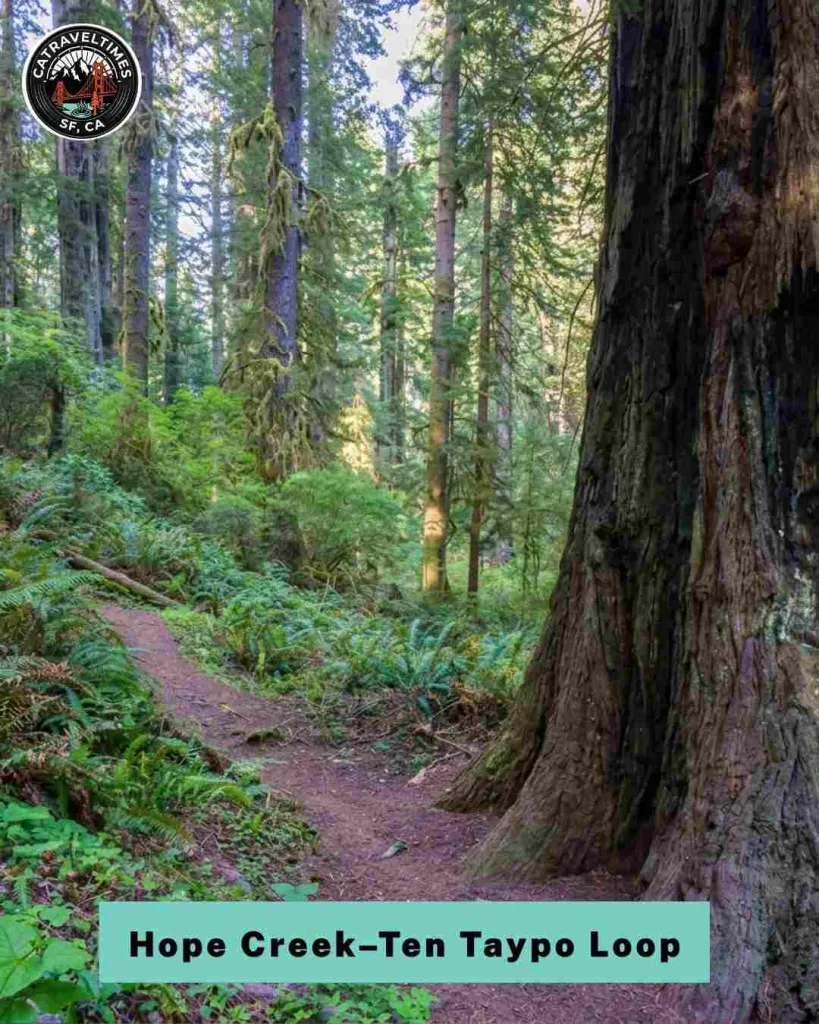
13. Escape the Crowds on the Hope Creek–Ten Taypo Loop
While Fern Canyon and the Big Tree draw the crowds, the Hope Creek–Ten Taypo Loop runs through equally impressive old-growth with a fraction of the foot traffic. This 3.7-mile moderate loop combines old-growth redwood, fern-lined creek walking, and ridge views into one satisfying circuit — and on summer weekdays, you may see almost no one on the Ten Taypo section. The trail is also one of the best in the park complex for trail running, with a smooth surface and enough elevation change to keep it interesting.
- Difficulty: Moderate
- Time needed: 2–3 hours
- Cost: Free with park entry
- Best season: May through October
- Quick tip: Combine with an early morning elk watch at the adjacent Elk Prairie meadow for a full Prairie Creek morning — trailhead is right at the Prairie Creek Visitor Center.
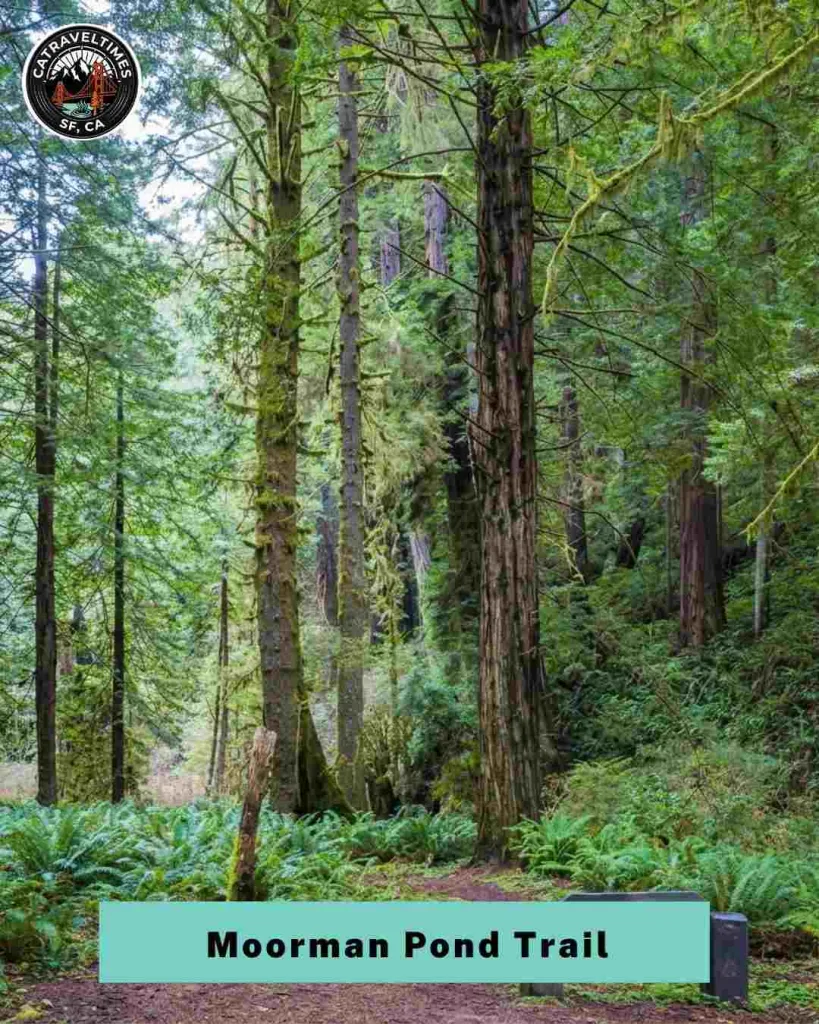
14. Discover the Hidden Moorman Pond Trail
The Moorman Pond Trail is one of those short detours that almost nobody takes but everyone who does remembers. A 0.4-mile out-and-back leads to a small, fog-shrouded pond entirely enclosed by old-growth forest — still, quiet, and unlike anything else in the park complex. The reflected tree canopy on the water surface is extraordinary in early morning light, and waterfowl are common. This trail sees almost zero visitors even in peak season, making it an excellent option for families with young children or anyone wanting five minutes of perfect solitude on a crowded summer day.
- Difficulty: Easy
- Time needed: 20–30 minutes
- Cost: Free with park entry
- Best season: Year-round; most magical on foggy mornings
- Quick tip: Ask a ranger at the Prairie Creek Visitor Center for current directions — signage can be easy to miss on your first visit.
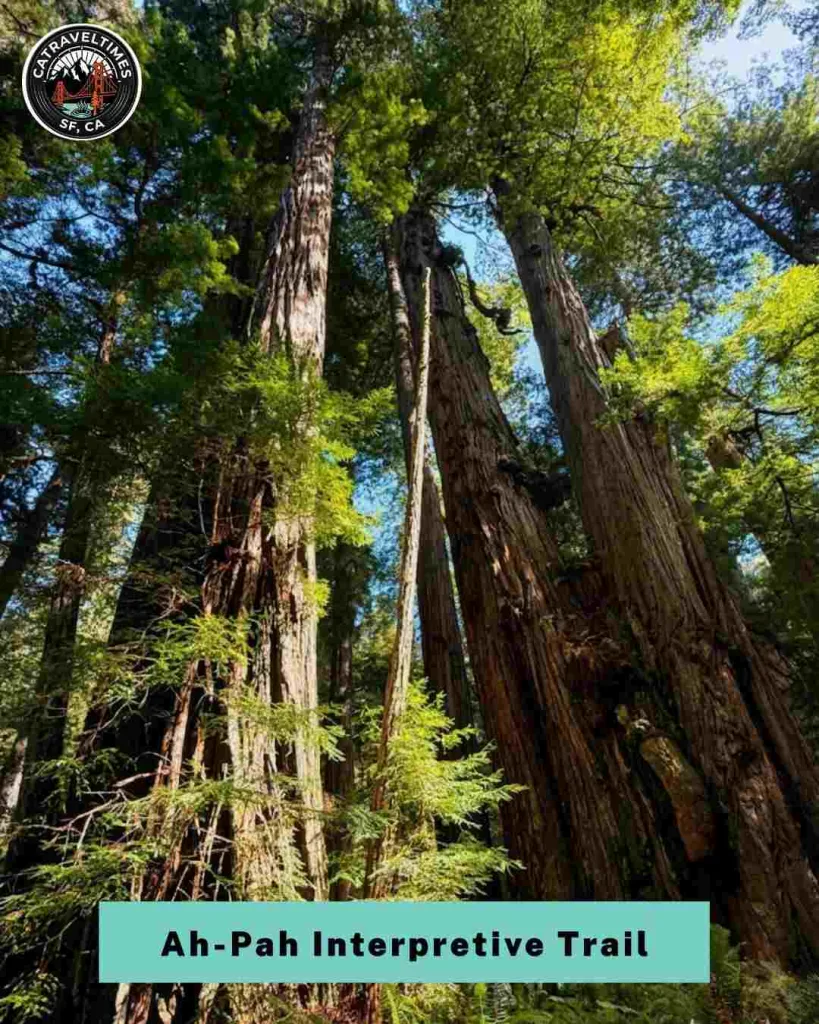
15. Learn the Story of Logging on the Ah-Pah Interpretive Trail
The Ah-Pah Interpretive Trail is a short, flat walk through recovering forest — previously logged land that is slowly, visibly returning to old-growth. Interpretive signs along the trail explain the history of the timber industry in Northern California, the conservation battles of the 1960s–1980s that created Redwood National Park, and the ongoing reforestation efforts today. Walking through recovering second-growth alongside actual old-growth makes the scale of what was nearly lost — and what was saved — immediately comprehensible in a way no visitor center exhibit can match.
- Difficulty: Easy
- Time needed: 30–45 minutes
- Cost: Free with park entry
- Best season: Year-round
- Quick tip: Do this trail before or after your old-growth walks — the contrast between recovering and ancient forest is what makes it land.
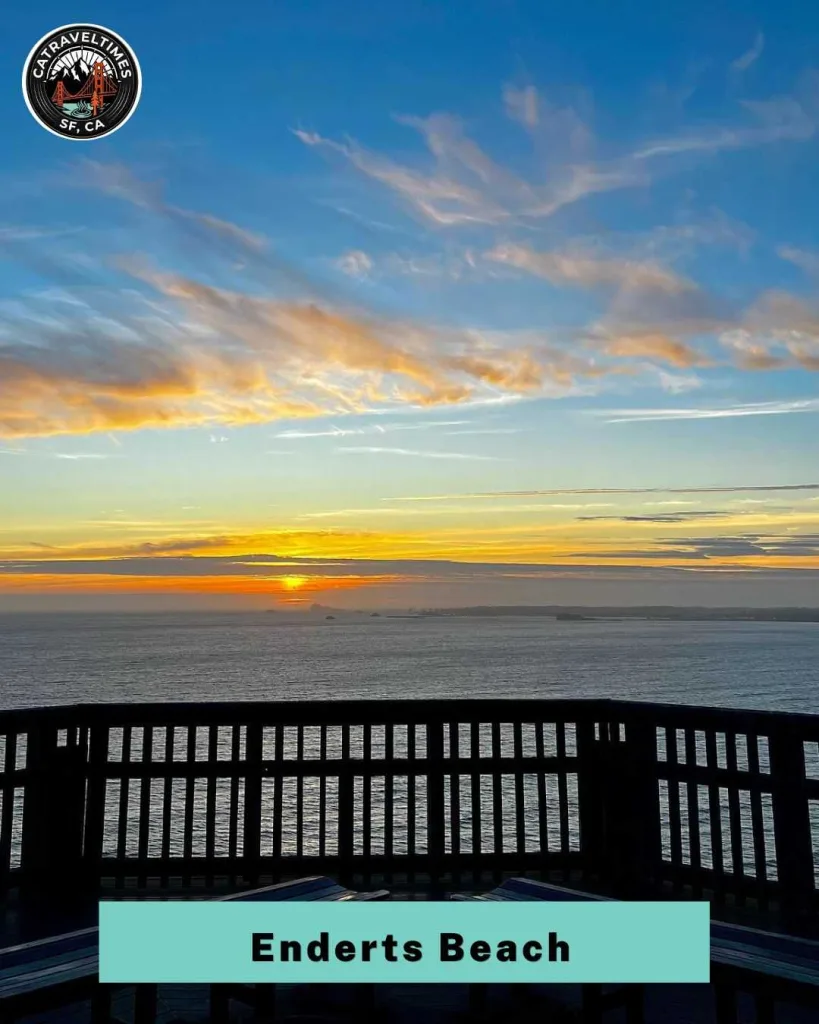
16. Go Tide Pooling at Enderts Beach
I was crouching over a tidal pool at low tide — barely aware of the cold soaking through my jeans — when I spotted a purple sea urchin wedged between two rocks, surrounded by a ring of lime-green anemones. It looked entirely artificial, like someone had staged it. I spent 40 minutes at that single pool before moving on. At low tide, the rocky reef at Enderts Beach exposes purple sea urchins, ochre sea stars, giant green anemones, hermit crabs, limpets, and chitons. The best pools are at the southern end of the beach.
- Difficulty: Easy
- Time needed: 1–2 hours
- Cost: Free with park entry
- Best season: Year-round; December–April also offers gray whale sightings from the bluffs above
- Quick tip: Check a tide chart before going — you want a low tide of +1.0 feet or lower for the best pool access.
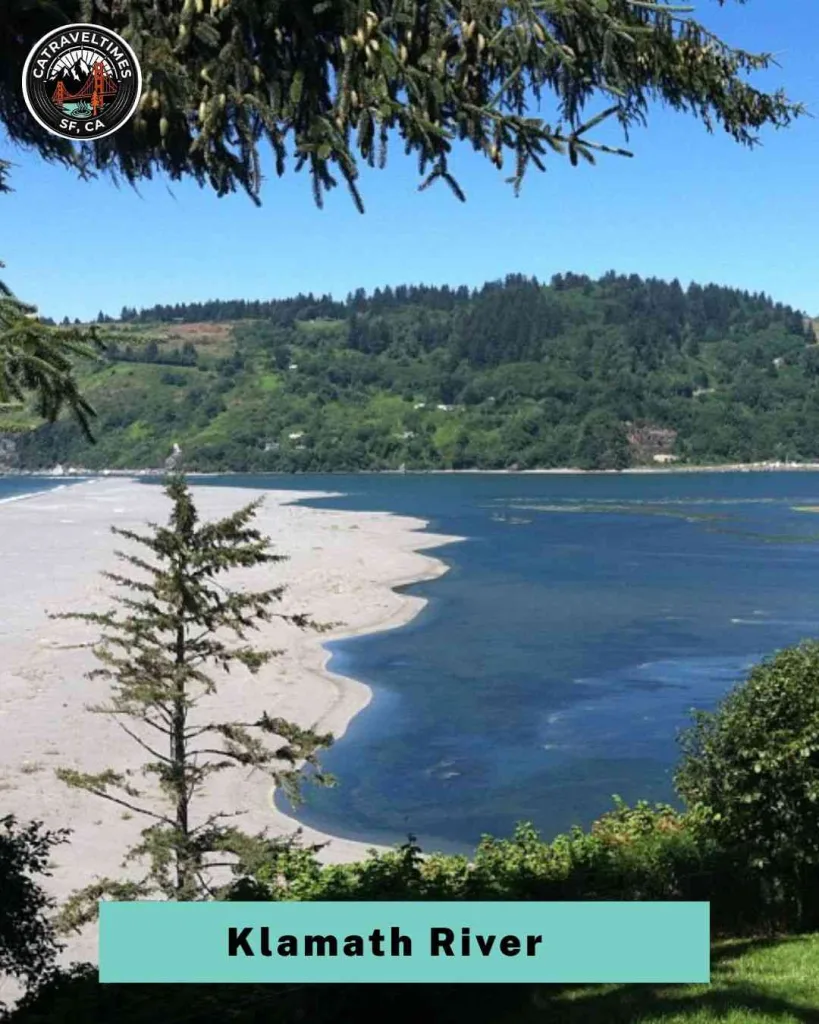
17. Kayak the Klamath River Estuary at Sunrise
Paddling out onto the Klamath estuary just after sunrise, the water was so still it reflected the tree line perfectly — I felt like I was floating in a mirror. A river otter surfaced six feet from my kayak, looked at me with total indifference, and dove. The Klamath River estuary supports extraordinary wildlife density: river otters, harbor seals, brown pelicans, great blue herons, osprey, and in fall and winter, returning chinook salmon. No experience is necessary for flat-water estuary paddling.
- Difficulty: Easy
- Time needed: 2–3 hours
- Cost: Kayak rental fees apply (available in Klamath town)
- Best season: May–October for calm water; fall for salmon runs
- Quick tip: Launch at golden hour — the wildlife is most active before motor traffic begins and the light on the water is something else entirely.
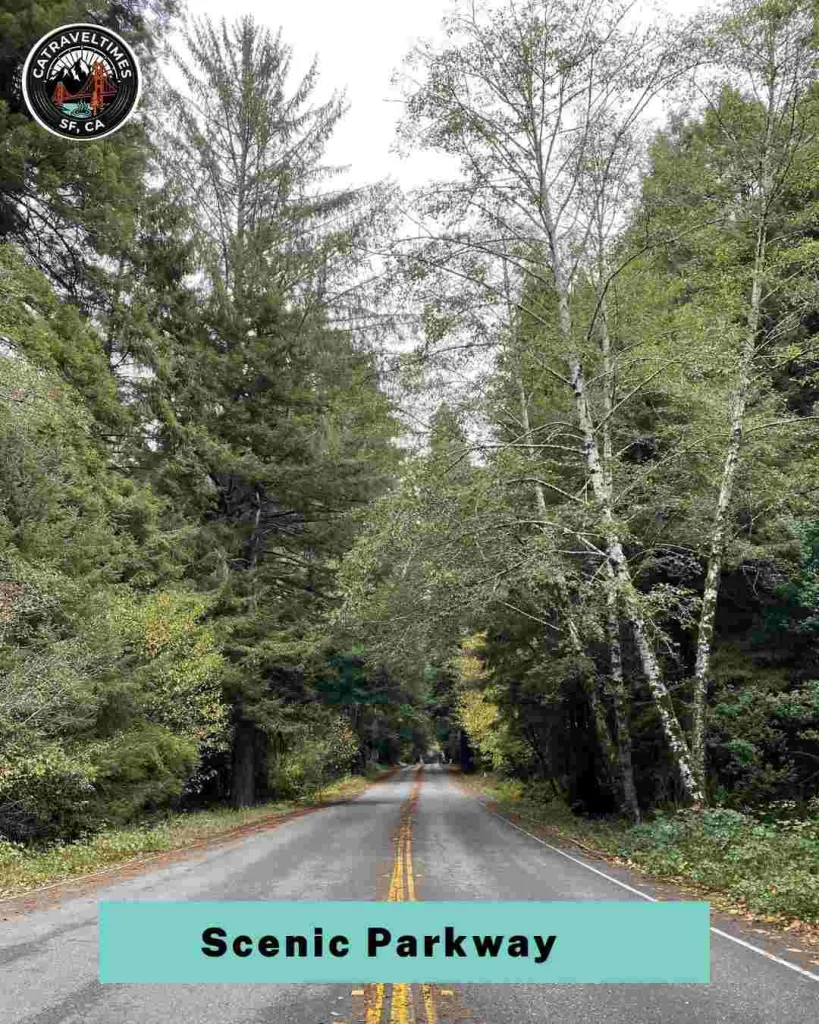
18. Cycle Newton B. Drury Scenic Parkway on Car-Free Days
On select summer days, NPS closes Newton B. Drury Scenic Parkway to motor vehicles and opens it exclusively to cyclists and pedestrians. The result is one of the most extraordinary bike rides anywhere in the United States — 10 miles round trip through a tunnel of old-growth redwoods with no cars, no exhaust, just silence, filtered light, and the occasional elk sighting. The parkway is flat and entirely paved, making it suitable for families with young riders.
- Difficulty: Easy
- Time needed: 1.5–3 hours round trip
- Cost: Free with park entry; bike rental fees apply (available in Orick)
- Best season: Summer car-free days only — check NPS website for 2026 dates
- Quick tip: Check NPS.gov well before your trip for the exact car-free dates — they’re announced months in advance and the experience is worth planning your whole visit around.
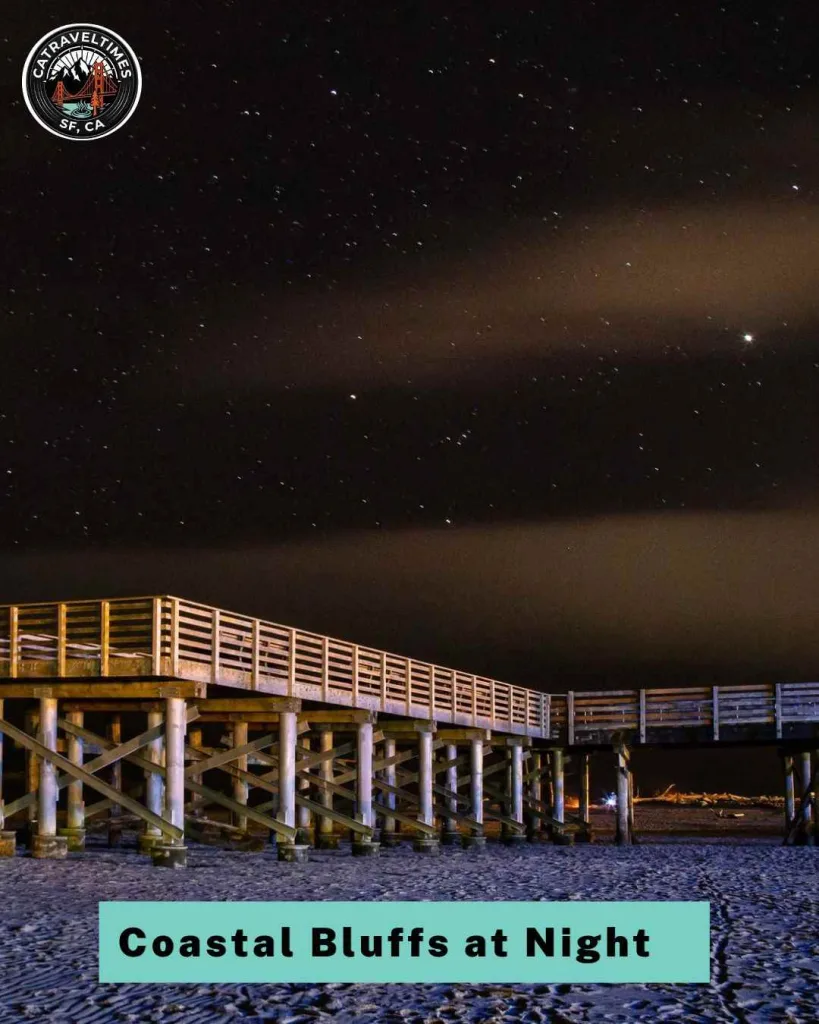
19. Stargaze from the Coastal Bluffs at Night
The Redwood Coast is one of the darkest stretches of the California shoreline. Light pollution is minimal between Crescent City and Eureka, and on clear summer nights the Milky Way is clearly visible with the naked eye from the coastal bluffs. The bluffs above Gold Bluffs Beach and the Crescent City headlands just south of town are the two best spots. Coastal temperatures drop sharply after dark even in summer, and the marine layer can roll in quickly — dress accordingly.
- Difficulty: Easy
- Time needed: 1–2 hours
- Cost: Free with park entry
- Best season: June through October; new moon nights are best
- Quick tip: Bring a red-light headlamp — it preserves your night vision far better than a standard flashlight and makes the experience dramatically better.
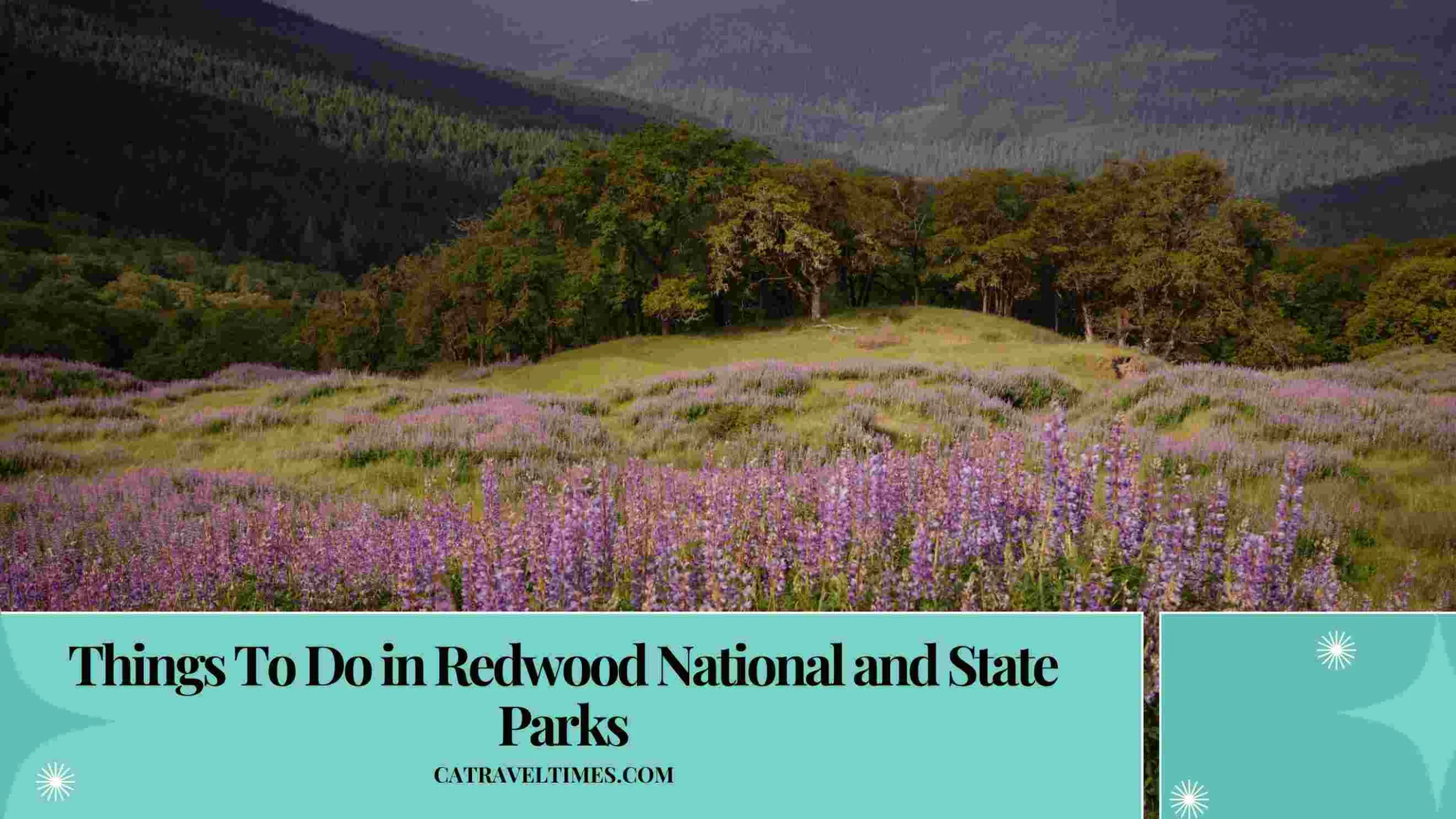
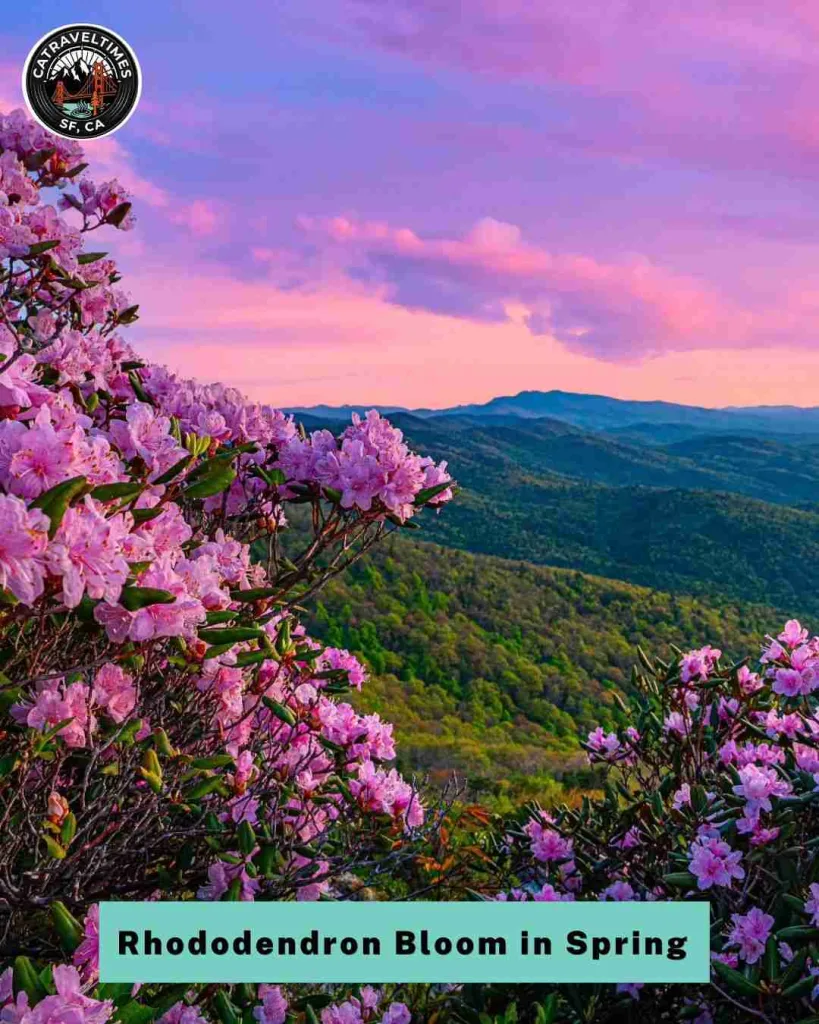
20. Photograph the Rhododendron Bloom in Spring
Most visitors picture only the giant trees when they imagine the Redwood parks — but in April and May, the forest understory transforms completely. Pacific rhododendrons, some growing over 15 feet tall, burst into flowers in large purple-pink clusters throughout the old-growth forest. The contrast of vivid magenta blooms against the dark bark of ancient redwoods is one of the most distinctive visual experiences in the parks. The Rhododendron–West Ridge Loop in Prairie Creek is the best dedicated rhododendron hike in the park system at about 6 miles round trip.
- Difficulty: Moderate
- Time needed: 3–4 hours for the full loop
- Cost: Free with park entry
- Best season: Late April through early May; peak bloom runs two to three weeks
- Quick tip: Check with the Prairie Creek Visitor Center for current bloom conditions before you go — peak timing shifts by one to two weeks depending on the year’s weather.
10 Best Things to Do Near Redwood National Park
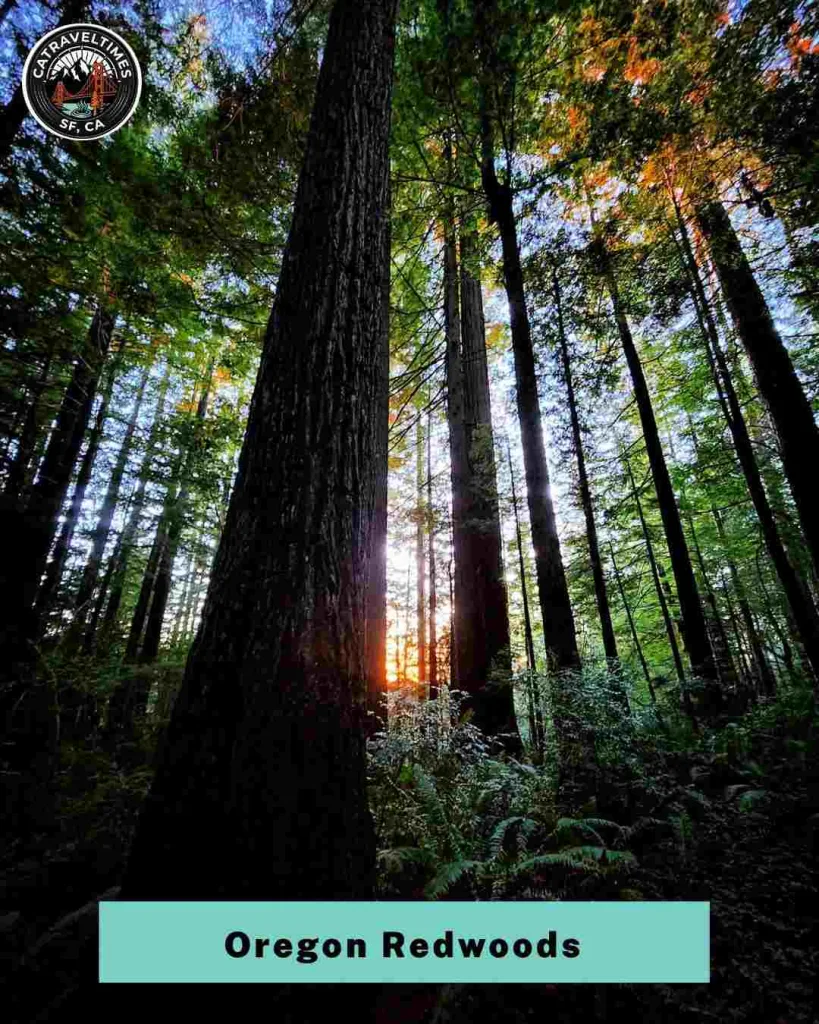
1. Hike the Oregon Redwoods Trail Near Brookings
Just over the Oregon border old-growth redwoods with far fewer visitors than the California parks. Note that the unpaved access road requires 4WD in winter months.
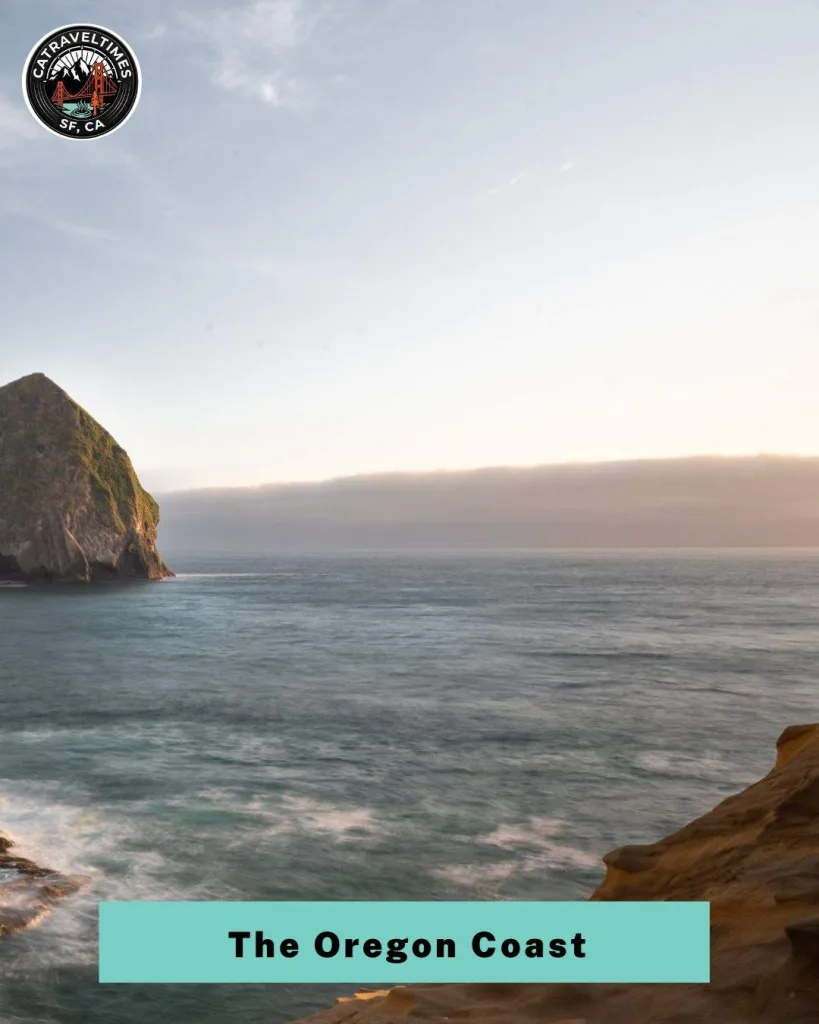
2. Drive the Oregon Coast
The natural northward extension of any Redwood road trip. US-101 continues into Oregon with an unbroken sequence of dramatic sea stacks, beaches, headlands, and charming small towns.
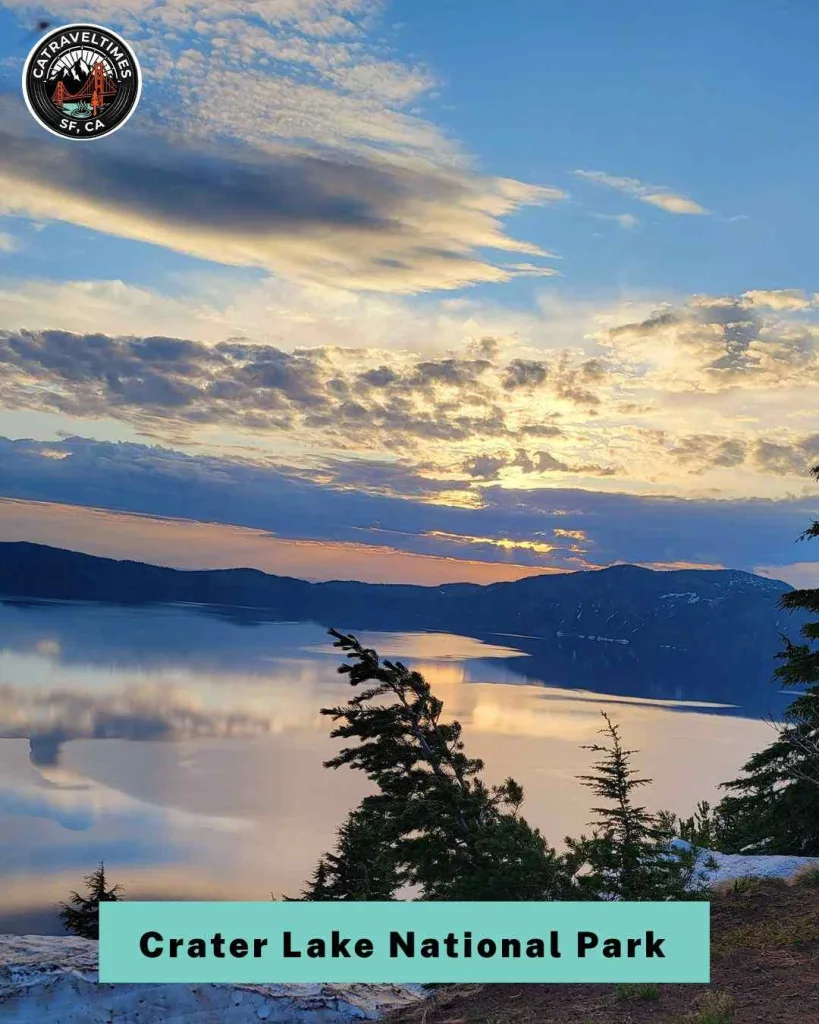
3. Visit Crater Lake National Park
4.5 hours northeast the deepest lake in the United States, filling a collapsed volcanic caldera. The blue of the water is genuinely unlike anything else you’ll see in North America. A full day trip minimum.
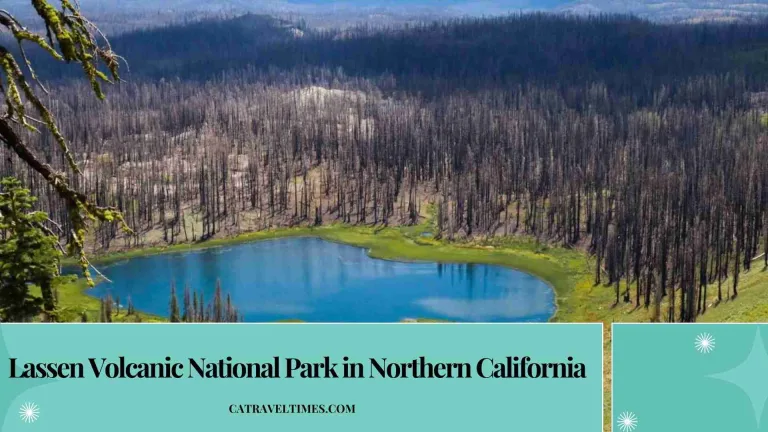
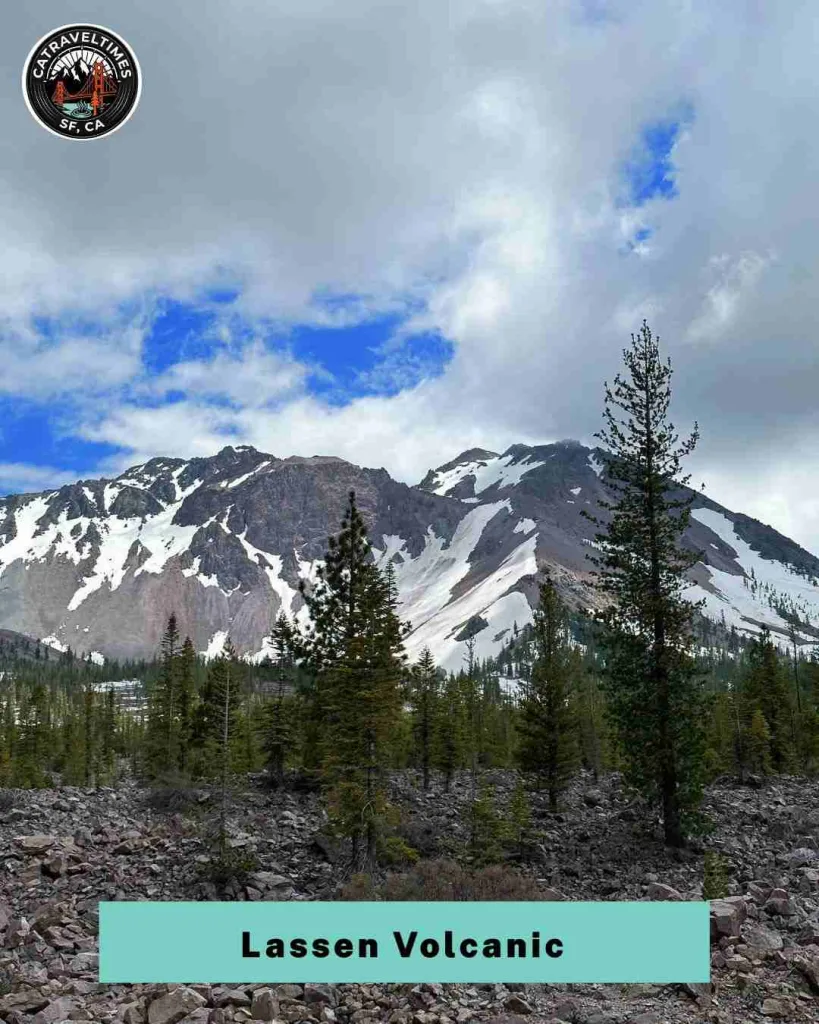
4. Explore Lassen Volcanic National Park
4 hours southeast active hydrothermal features, volcanic peaks, and pristine wilderness with a fraction of Yosemite’s crowds. One of the most underrated parks in the system.
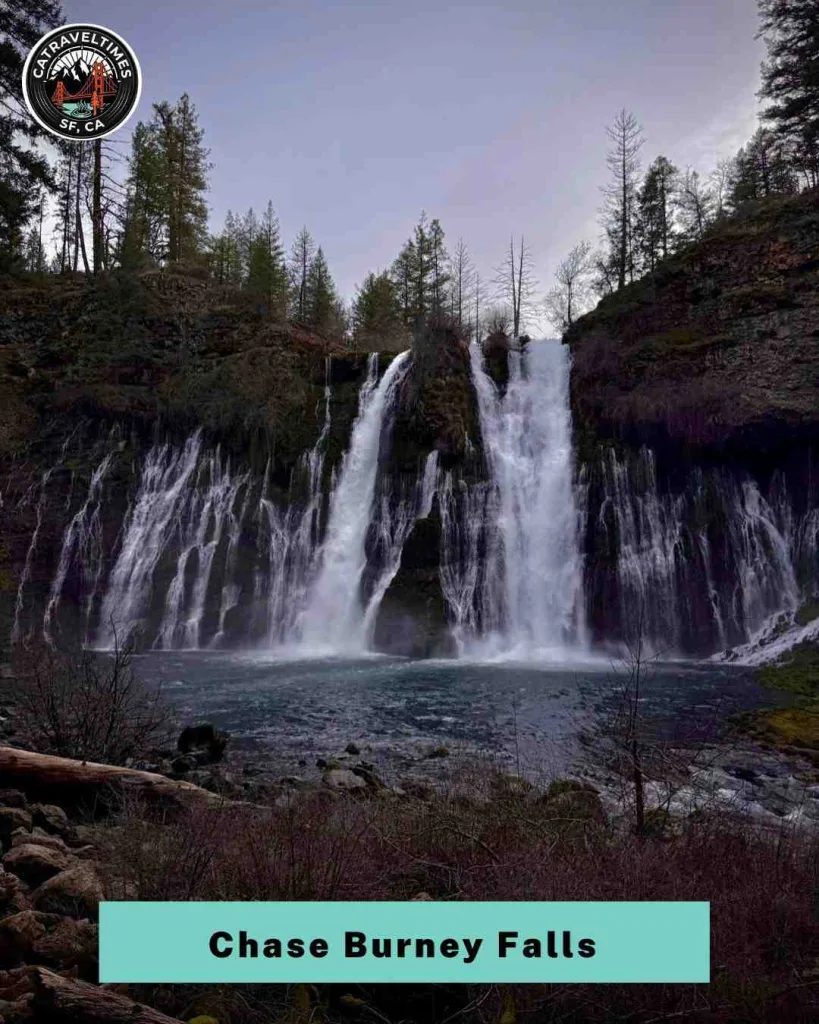
5. Chase Burney Falls
Often called the “Eighth Wonder of the World,” Burney Falls drops 129 feet year-round regardless of rainfall (it’s fed by underground springs). The 1.1-mile loop around the falls is best photographed in the early morning.
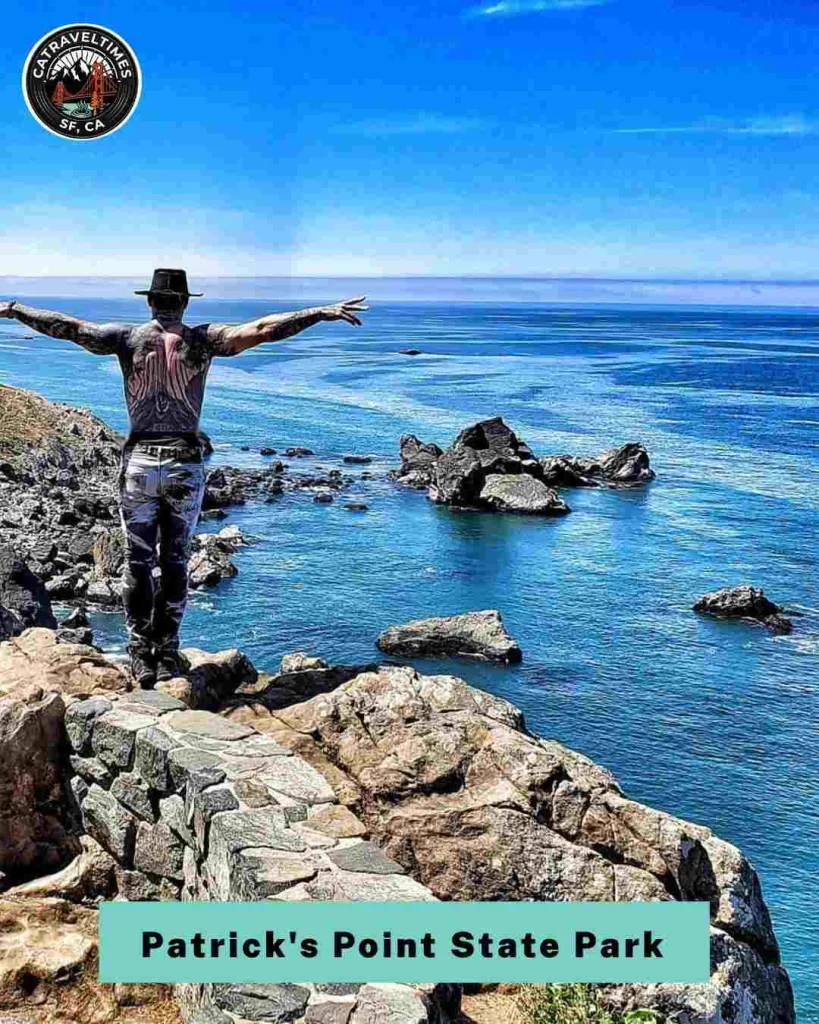
6. Discover Patrick’s Point State Park
30 minutes south of Crescent City sea stacks, agate-hunting on Agate Beach, excellent whale watching bluffs, and a full replica of a traditional Yurok village at Sumeg. Fantastic for families.
7. Ride the Gondola at Trees of Mystery, Klamath
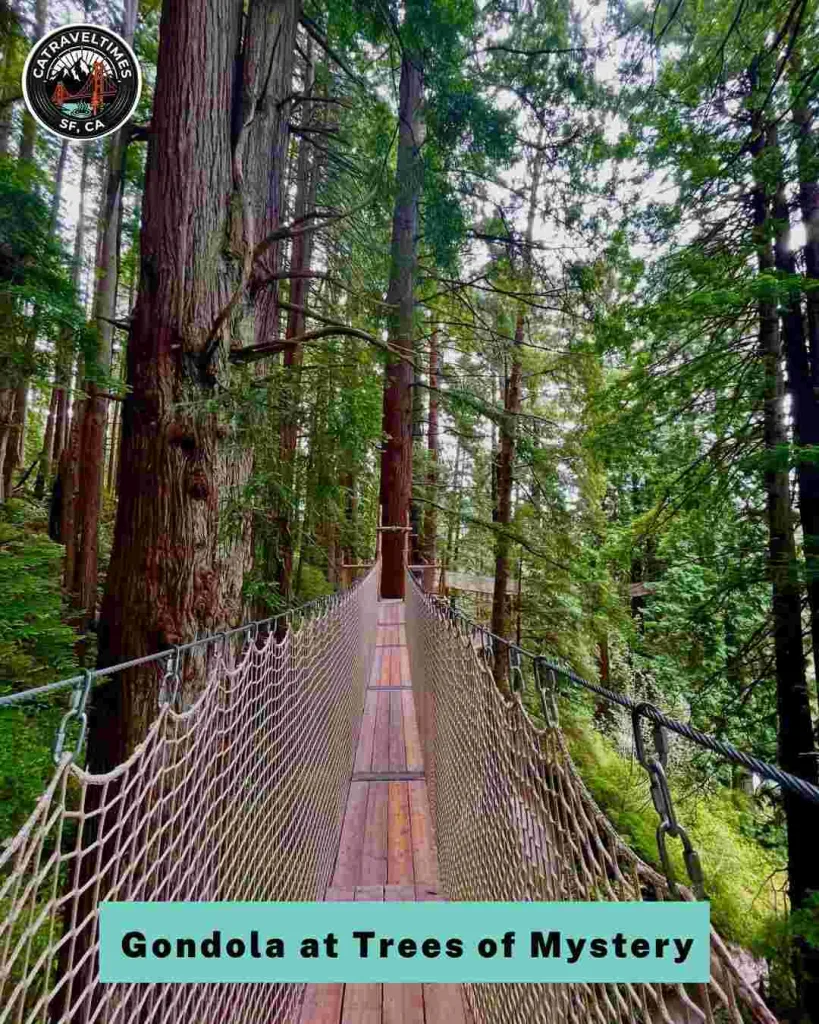
A gondola ride above the redwood canopy is genuinely spectacular for a sense of scale from above plus the famous Paul Bunyan folk art installations and a surprisingly excellent Yurok cultural museum.
8. Explore Old Town Eureka
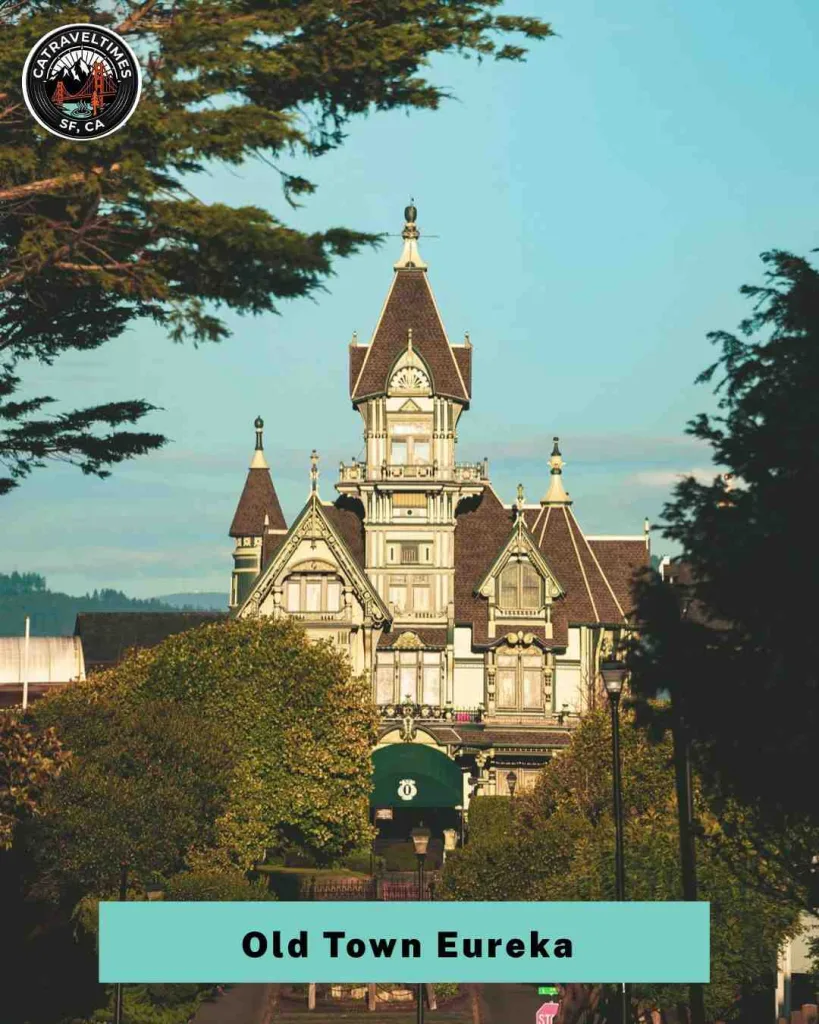
Eureka’s Old Town waterfront features extraordinary Victorian architecture, fresh-off-the-boat seafood restaurants, and Blue Ox Millworks, a working Victorian mill still producing gingerbread architectural details by hand.
9. Road Trip to Sequoia & Kings Canyon
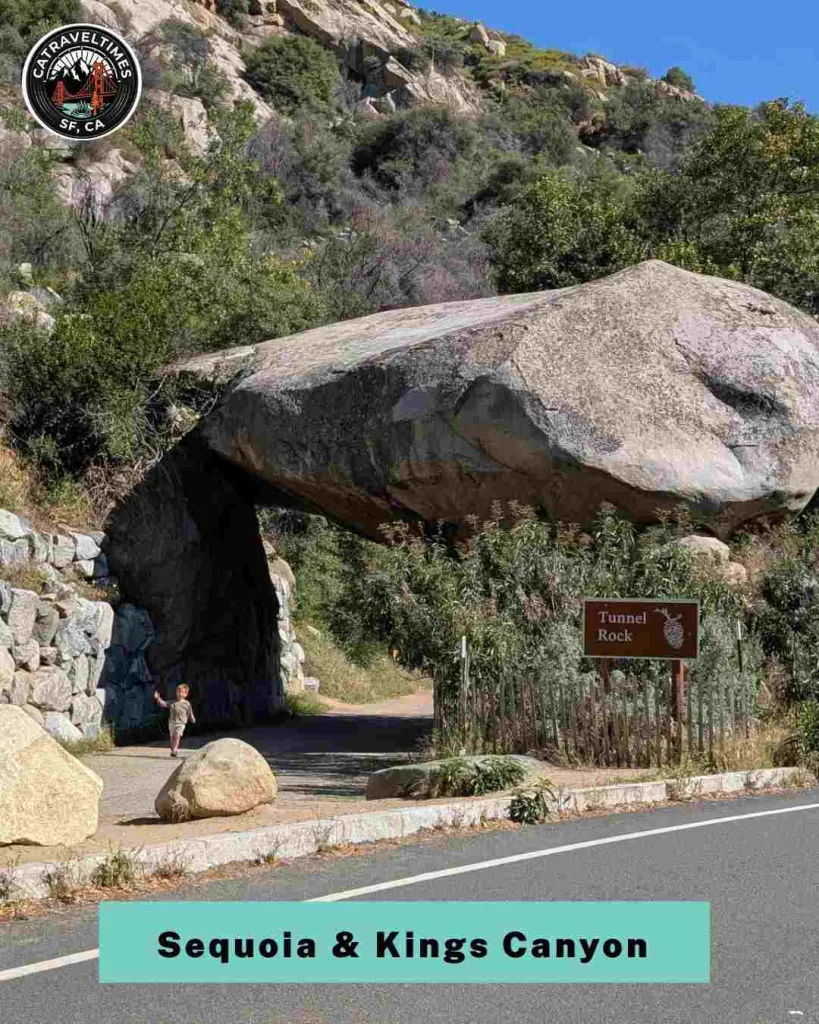
A 10-hour drive south, but worth doing as a two-park California combo the world’s most massive trees (giant sequoias) versus the world’s tallest (coast redwoods). An unforgettable pairing for any serious tree enthusiast.
10. Hike Smith Rock State Park, Oregon
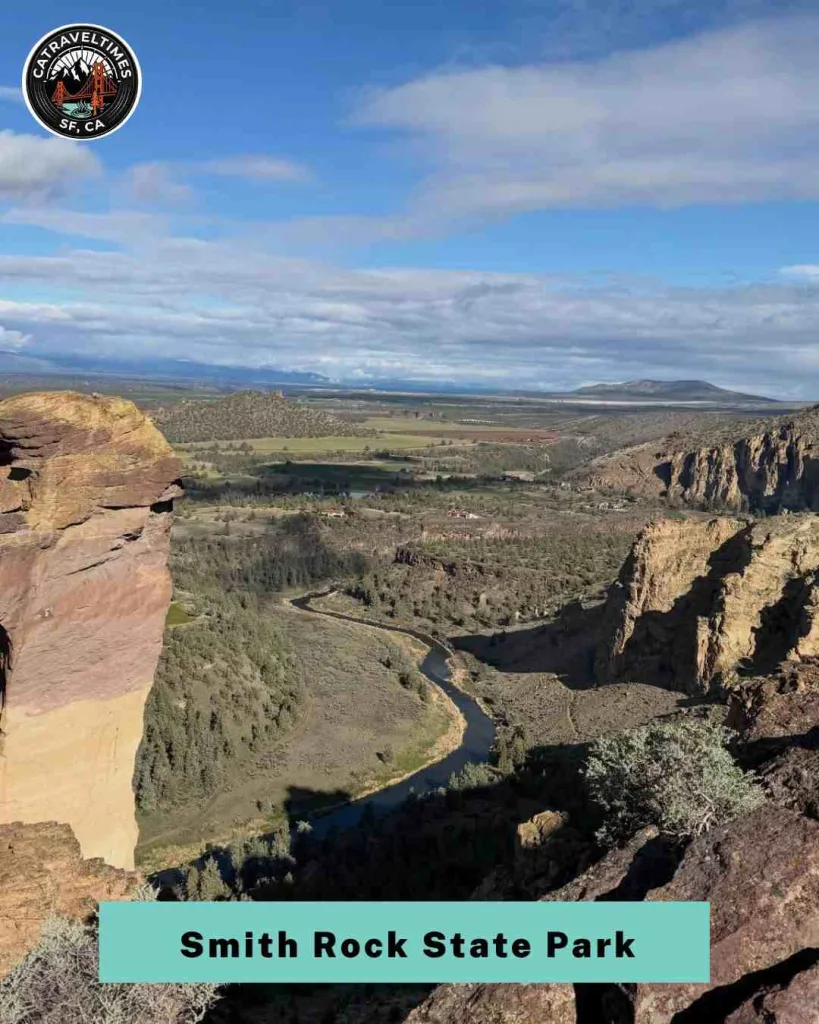
5 hours north near Bend dramatic volcanic spire formations rising above the Crooked River, world-class rock climbing, and beautiful canyon hiking. One of the most photogenic landscapes in the Pacific Northwest.
5 Things You Should Know Before Visiting Redwood National Park
- The best old-growth trees are in the state parks, not the national park. Congress established Redwood National Park in 1968 — decades after much of the surrounding land had already been heavily logged. The older, protected groves you came for are primarily in Prairie Creek, Jedediah Smith, Del Norte, and Humboldt Redwoods State Parks. Plan your days around the state parks first.
- Fern Canyon & Gold Bluffs Beach require advance reservations (May 15–Sep 15). These two are the most popular destinations in the entire park complex, and they fill up fast — sometimes within minutes of reservation windows opening. The moment you book your travel dates, go directly to recreation.gov and lock in your slot. Don’t assume you’ll walk in.
- Cell service is essentially zero inside the parks. This isn’t a “spotty” situation — it’s genuinely gone. Download offline maps via Google Maps or AllTrails before you leave your hotel or campsite. Download trail PDFs from the NPS website the night before. Being prepared here is the difference between a great day and a stressed one.
- Large RVs and vehicles with trailers are banned on Howland Hill Road. The road is narrow, unpaved, and runs directly through the forest. If you’re traveling in a large RV or pulling a trailer, you simply cannot take it. Plan your vehicle choice carefully — a regular car or small SUV is ideal for the full experience.
- The parks span 80+ miles of coastline — plan by geographic zone. Many visitors make the mistake of trying to see everything in one loop. Redwood NP is not a compact park. Organize your days by region: Humboldt Redwoods in the south, Prairie Creek in the middle, and Jedediah Smith / Del Norte in the north. Driving between zones eats half your day.
Redwood National Park Itinerary — How to Plan Your Trip
Perfect 2-Day Redwood Itinerary
Day 1 — Prairie Creek starts with Fern Canyon first thing in the morning (before 8am to avoid crowds and catch the canyon light at its best). Drive to the Big Tree pullout on Newton B. Drury Scenic Parkway for a quick stop, then continue to the Elk Prairie Meadow for a midday elk watch. End the day at Gold Bluffs Beach for sunset.
→ Fern Canyon (8am) → Big Tree Pullout → Elk Prairie Meadow → Gold Bluffs Beach Sunset
Day 2 — Jedediah Smith Drive north to Jedediah Smith. Take Howland Hill Road slowly from west to east (budget 60 minutes minimum). Stop at the Grove of the Titans boardwalk for a 1.8-mile RT walk. In the afternoon, tackle the Boy Scout Tree Trail for a deep old-growth immersion. End with a swim in the Smith River near Jedediah Smith Campground.
→ Howland Hill Road → Grove of the Titans → Boy Scout Tree Trail → Smith River Swim
Best 4-Day Redwood Itinerary
Day 1 — Humboldt Redwoods (South) Enter from the south. Drive the full Avenue of the Giants (31.5 miles), stopping at Founders Grove and Dyerville Giant. Pick up coffee in Garberville before you start. End the afternoon at Rockefeller Forest — the largest contiguous old-growth redwood forest in the world.
→ Avenue of the Giants → Founders Grove → Dyerville Giant → Rockefeller Forest
Day 2 — Prairie Creek Fern Canyon at dawn (reservation required May–Sep). Elk Prairie meadow and Big Tree mid-morning. Drive Newton B. Drury Scenic Parkway or hike the Hope Creek–Ten Taypo Loop for solitude. Camp at Gold Bluffs Beach for an evening on the wild Pacific shore.
→ Fern Canyon (dawn) → Elk Prairie → Newton B. Drury Pkwy → Gold Bluffs Beach Camping
Day 3 — Del Norte Morning: Damnation Creek Trail (allow 3.5 hours for the full 4.2-mile RT). Afternoon: Enderts Beach tide pools (check tide chart the night before). Evening: Crescent City harbor district for seafood.
→ Damnation Creek Trail → Enderts Beach Tide Pools → Crescent City Evening
Day 4 — Jedediah Smith Started with Howland Hill Road at first light. Walk the Grove of the Titans boardwalk mid-morning. Afternoon: Boy Scout Tree Trail. Finish with a swim in the Smith River and dinner in Crescent City.
→ Howland Hill Road → Stout Grove → Boy Scout Tree Trail → Smith River Swim
Where to Stay & Eat Near Redwood National & State Parks
Finding the right base here takes a little strategy — the parks stretch 100 miles along the coast, so where you sleep shapes everything. I always split my nights between the north and south to avoid losing hours on the road.
🏕️ Best Campgrounds Inside the Parks
- Gold Bluffs Beach Campground — Beachfront, Prairie Creek; tents between dunes and old-growth. Reservations required May–Sep. Best for: sunsets, elk on the beach, the full coastal experience.
- Jedediah Smith Campground — Riverside, old-growth canopy; the most scenic campground setting in the parks. Reservations required May–Sep. Best for: swimmers, nature photographers, serious hikers.
- Elk Prairie Campground — Old-growth forest, adjacent to the elk meadow. Reservations required May–Sep. Best for: wildlife watchers, families with young kids.
- Mill Creek Campground — Forested, Del Norte; least visited and quietest. Reservations recommended. Best for: anyone wanting solitude and a base for Del Norte hikes.
🏨 Hotels Near Redwood National & State Parks
- The Historic Requa Inn — 10 rooms, 2 guests/room; Klamath, 5 min from Prairie Creek. $$ · A historic riverside inn perched above the Klamath River where it meets the Pacific — warm rooms, extraordinary views, profound quiet. ⭐ 4.7
- Holiday Inn Express Klamath – Redwood Ntl Park Area by IHG — Standard rooms, 2–4 guests; 171 Klamath Blvd, Klamath; centrally located between north and south parks. Mid-range · Hot breakfast included, spacious rooms, friendly staff — the most practical full-service base in the park corridor. ⭐ 4.2
- Redwood Hotel and Casino — Standard rooms, up to 4 guests; 171 Klamath Blvd, Klamath; open 24 hours. Mid-range · Spacious, clean rooms with complimentary hot breakfast; casino and pool on-site for evening downtime. ⭐ 4.0
🍽️ Restaurants Near Redwood National & State Parks
- Requa Inn Restaurant — American / farm-to-table; 451 Requa Rd, Klamath; $$ · Hours: 8:30–9:30 AM (breakfast), dinner seasonal · Locally caught salmon, foraged mushrooms, and scratch cooking in a historic riverside dining room. ⭐ 5.0
- Log Cabin Diner — American diner; 301 CA-169, Klamath; $$ · Hours: Wed–Sun 8 AM–3 PM, closed Thu · The best breakfast near the parks — legendary Navajo fry bread, homemade biscuits, and portions built for hungry hikers. ⭐ 4.7
- EdeBee’s Snack Shack — American burgers; 12079 Redwood Hwy, Orick; $ · Hours: Wed–Sat 11 AM–5 PM, Sun 11 AM–4 PM · Roadside outdoor spot near the visitor center — elk burgers, loaded tots, and enormous milkshakes. ⭐ 4.1
Quick tip: Pack lunch every day — dining options inside the parks are nonexistent, and most gateway restaurants close by 8 PM. Grab supplies the night before in Crescent City or Eureka.
Essential Tips for Visiting Redwood National Park
- Download offline maps via Google Maps or AllTrails before leaving town — cell service is essentially zero inside all parks
- Pack a rain jacket and warm layers year-round — coastal weather is unpredictable even in July
- Arrive at Fern Canyon and Stout Grove before 9am to avoid crowds and catch the best light
- Reserve Gold Bluffs Beach campsite and Fern Canyon day-use permit the moment you book your trip — they sell out months in advance
- Bring bear-safe food containers — food left in cars gets broken into regularly, even in daylight
- Check NPS.gov for current road conditions before your visit (Howland Hill Road closes after severe storms)
Wildlife You Can Spot in Redwood National & State Parks
- 🦌 Roosevelt Elk — Best at Elk Prairie (dawn/dusk). Bulls exceed 1,000 lbs. Keep 50 ft minimum distance — they charge.
- 🐻 Black Bears — Present throughout all parks. Use bear canisters for food — cars get broken into regularly. Never leave food unattended.
- 🐋 Gray Whales — December–April offshore migration. Watch from Crescent City headlands and Enderts Beach bluffs. Binoculars essential.
- 🦦 River Otters & Harbor Seals — Klamath River estuary is the best spot, especially by kayak at golden hour. Both species are reliably present.
- 🦅 Bald Eagles & Osprey — Best seen in the Smith River corridor in Jedediah Smith. Winter months bring higher eagle concentrations.
- 🐟 Salmon & Steelhead — October–February in the Smith River. Some of the largest wild salmon runs in California. Visible from riverbanks at low water.
Safety Precautions in Redwood National Park
- Stay on marked trails at all times — fragile root systems extend 10–12 feet from trunks and are easily damaged by foot traffic off-trail
- Damnation Creek Trail: bring trekking poles, not suitable for young children or those with knee problems
- Do NOT swim at Gold Bluffs Beach — strong rip currents and sneaker waves make it genuinely dangerous
- Keep a minimum 50-foot distance from all Roosevelt elk — bulls in rut will charge without warning
- Check the NPS website for road closures before visiting, especially Howland Hill Road in storm season (Oct–Feb)
- Carry at least 2 liters of water per person on any hike over 3 miles — there are no water sources on most trails
Frequently Asked Questions
Q: Is there an entrance fee for Redwood National Park?
Free no entrance fee for the national or state parks. Gold Bluffs Beach has a vehicle fee and Fern Canyon requires a day-use reservation fee.
Q: How many days do you need in Redwood National Park?
Three days covers the highlights comfortably. Two days managing Prairie Creek and Jedediah Smith. Four days adds Humboldt Redwoods and Del Norte at a relaxed pace.
Q: Can visitors find Hyperion, the world’s tallest tree?
NPS strongly discourages it the location is withheld, off-trail travel risks heavy fines, and the Grove of the Titans is just as extraordinary.
Q: Are RVs allowed in Redwood National Park?
Yes, but Howland Hill Road and Gold Bluffs Beach Road are completely off-limits to large RVs. Most campgrounds cap length at 24–35 feet check the NPS website first.
Q: Is Redwood National Park good for families with kids?
Excellent. Big Tree, Stout Grove, and Elk Prairie suit young kids perfectly. Fern Canyon works if they don’t mind wet feet. Teens will love Boy Scout Tree and Damnation Creek.
Q: What is the difference between Redwood National Park and the state parks?
The national park (est. 1968) protects mostly recovered forest. The four state parks Prairie Creek, Jedediah Smith, Del Norte, and Humboldt Redwoods hold the majority of iconic old-growth groves.
Final Thoughts
The redwoods stay with you not as a memory exactly, but as a recalibration of scale that you carry forward into ordinary life. I hope this guide gives you everything you need to plan a trip that feels genuinely unhurried and genuinely yours. Take the quiet trails. Stay for the elk at dawn. Sleep under the trees if you can.
If you have questions about specific trails, campsite availability, or help building a custom itinerary, drop them in the comments below we read and respond to every one.