Do Hot Springs Have Brain-Eating Amoeba? What Every Traveler Should Know
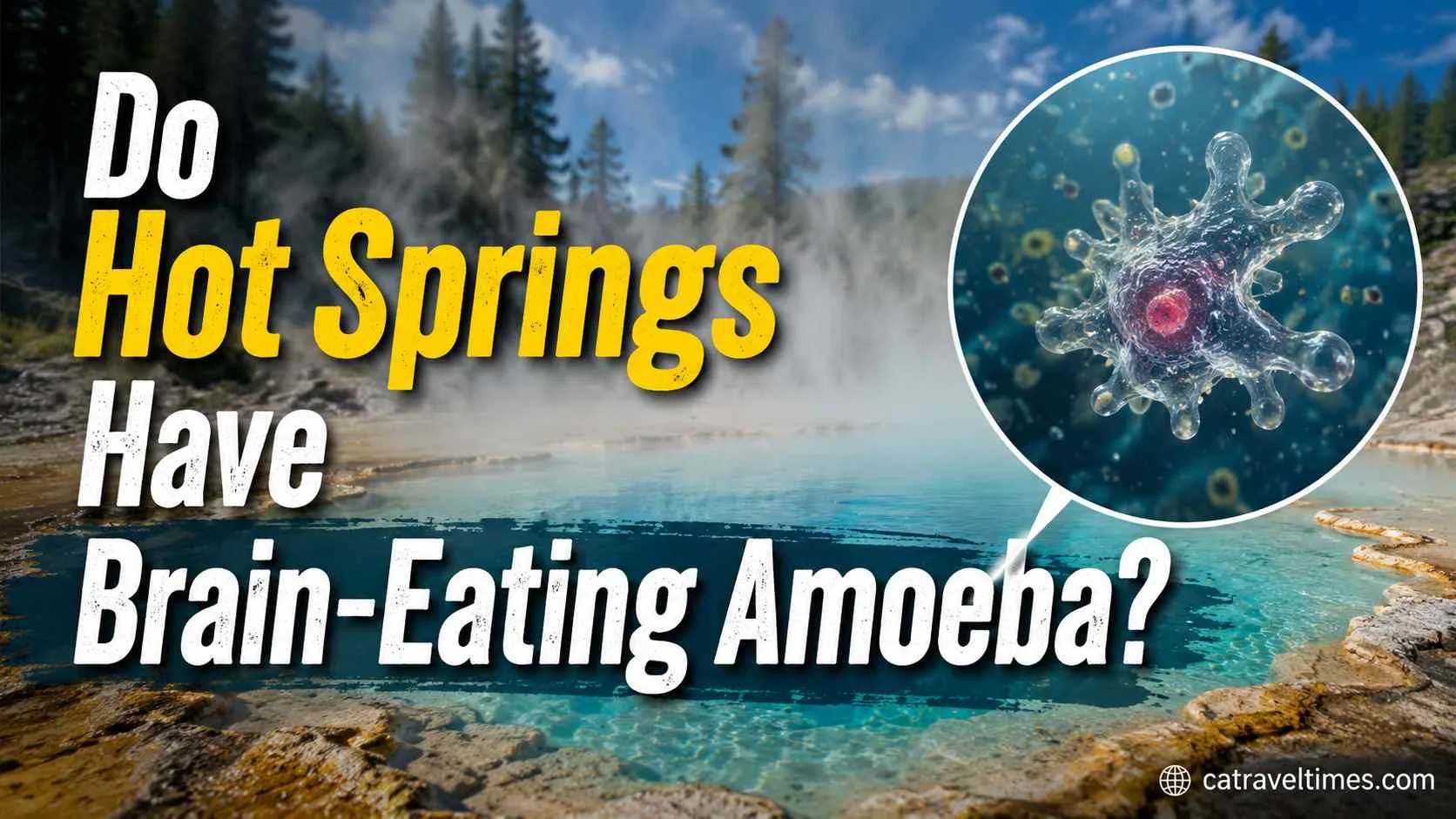
Soaking in a steaming natural pool surrounded by mountains or forest is one of travel’s simplest pleasures — but a growing number of headlines are making soakers pause before they dip in. So, do hot springs have brain-eating amoeba, and if so, how worried should you actually be? The short answer is yes: a microscopic organism called Naegleria fowleri, nicknamed the “brain-eating amoeba,” does live in many warm freshwater environments, including hot springs.
Recent research has confirmed its presence in some of the most visited geothermal areas in the United States. This guide breaks down what the science actually says, where the risk is highest, and how you can keep enjoying hot springs safely.
Do Hot Springs Have Brain-Eating Amoeba? What Science Says
So, do hot springs have brain-eating amoeba? Yes, in some locations — but with millions of safe visits every year, informed travelers have every reason to keep exploring these destinations confidently. A few mindful habits, like keeping your head above water, make hot springs one of the most rewarding experiences nature has to offer. For more inspiration on where to soak next, explore catraveltimes.com for curated hot springs and nature travel guides.
If you’re planning any trip that involves natural pools, this is exactly the kind of practical research travelers should check before booking — much like reviewing safety notes on any hot springs destination before you go.

What Exactly Is Naegleria fowleri?
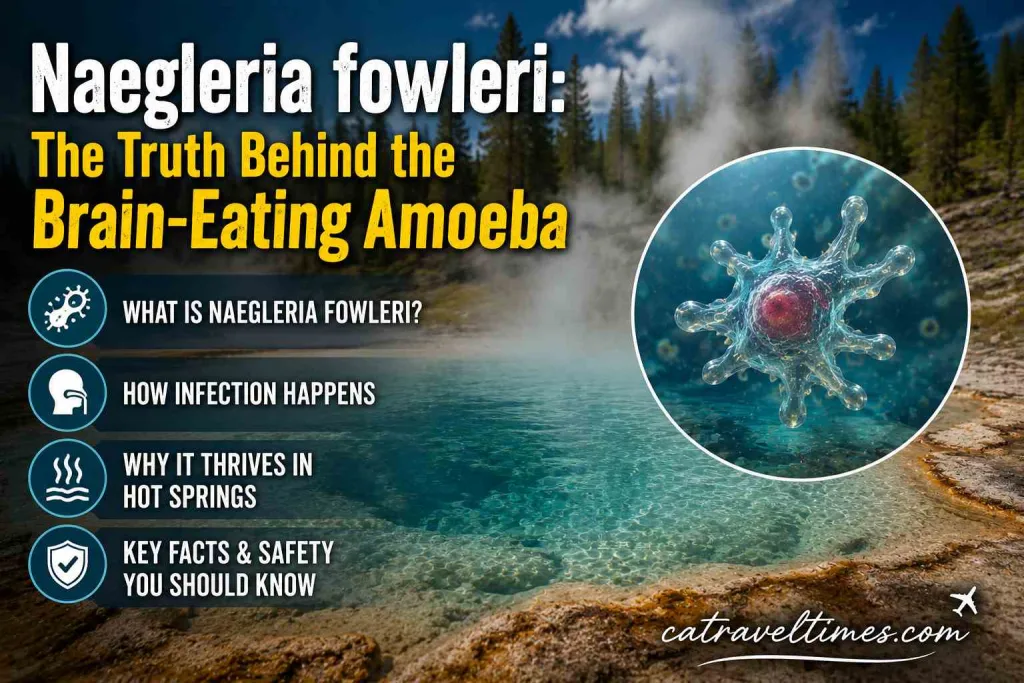
Naegleria fowleri is a single-celled, free-living amoeba — not a bacteria or virus — that occurs naturally in soil and warm freshwater environments. It’s often called the “brain-eating amoeba” because, in extremely rare cases, it can infect the brain and destroy brain tissue.
How the Infection Happens
The amoeba does not cause illness by being swallowed. Infection only occurs when contaminated water is forced up the nose with enough force to reach the olfactory nerve, allowing the organism to travel to the brain. This leads to a condition called primary amebic meningoencephalitis (PAM).
- You cannot get infected by drinking water containing the amoeba.
- You cannot catch it from another person; it does not spread person-to-person.
- Infection requires water entering specifically through the nasal passage.
Why It Thrives in Hot Springs
Naegleria fowleri favors warm conditions, and recent research shows it can survive across a surprisingly broad temperature range — from roughly 63°F to nearly 131°F — which explains why it shows up in both moderately warm swimming holes and genuinely hot geothermal pools. Other sources note it thrives most actively between 71°F and 115°F, a range many natural hot springs fall well within.
The 2026 National Park Study: What Researchers Found
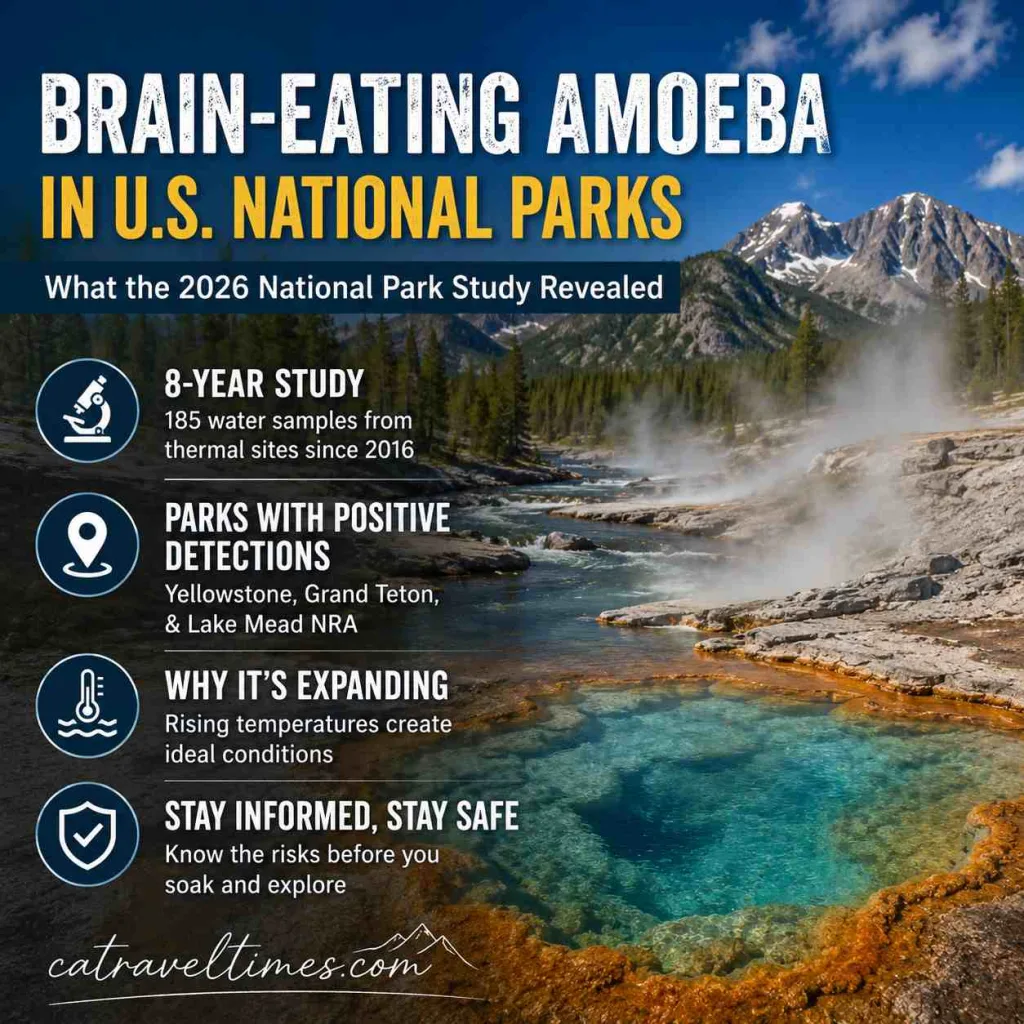
The clearest and most current answer to “do hot springs have brain-eating amoeba” comes from a peer-reviewed study conducted over an eight-year period beginning in 2016. Researchers collected 185 water samples from thermally influenced recreational sites and found the amoeba present in more than a third of them.
Parks Where the Amoeba Was Confirmed
- Yellowstone National Park (Wyoming) — detected in the Boiling River, Firehole River (including the Goose Lake and Firehole Canyon swimming areas), and multiple springs along Lewis Lake’s southern shore.
- Grand Teton National Park (Wyoming) — the highest concentrations recorded anywhere in the study came from Polecat Hot Springs, with both the upper and lower pools testing positive; Huckleberry and Granite Hot Springs also tested positive.
- Lake Mead National Recreation Area (Nevada/Arizona) — four separate sites tested positive, including Boy Scout, Nevada, Blue Point, and Rogers Hot Springs.
Notably, two other sites included in the study — Olympic National Park and Newberry National Volcanic Monument in Oregon — showed no detectable presence of the amoeba, which suggests risk is tied closely to specific water temperature and mineral conditions rather than being universal across every geothermal site.
Why the Range Appears to Be Expanding
Researchers point to rising water temperatures as a key factor behind the amoeba’s expanding geographic footprint. Historically associated mostly with southern U.S. states, confirmed cases and detections have gradually moved northward since 1962. As drought conditions lower water levels and warm temperatures persist longer into the year, thermally influenced waters — hot springs especially — become more hospitable to the organism.
This is a useful consideration if you’re mapping out a broader western road trip; pairing park research with a look at nature and geothermal travel guides can help you plan routes around the seasons when risk is comparatively lower.
How Serious Is the Actual Risk?
Here’s where context matters enormously. While the presence of Naegleria fowleri in hot springs is real and confirmed, infections themselves remain extraordinarily rare.
The Numbers Behind the Fear
- Between 1962 and 2024, the CDC recorded only 167 confirmed PAM infections in the entire United States.
- Of those, only four people survived — infections are nearly always fatal once symptoms begin.
- The CDC estimates fewer than 10 people contract PAM annually nationwide, despite millions of swimming and soaking visits to warm freshwater sites every year.
Why Detection Doesn’t Equal Danger
Finding the amoeba in water is not the same as that water causing an infection. N. fowleri must be present in high enough concentration, water must go forcefully up the nose, and the individual’s own physiology plays a role that scientists still don’t fully understand. Millions of people swim, wade, and soak in warm freshwater every summer without incident, even in locations where the amoeba is known to exist.
This is precisely why public health experts describe the risk as “rare but real” rather than something requiring travelers to avoid hot springs altogether — a balanced framing worth keeping in mind before crossing a geothermal destination off your list.
Symptoms of Primary Amebic Meningoencephalitis (PAM)
Recognizing the signs early — though treatment success remains limited — can still matter for prompt medical attention.
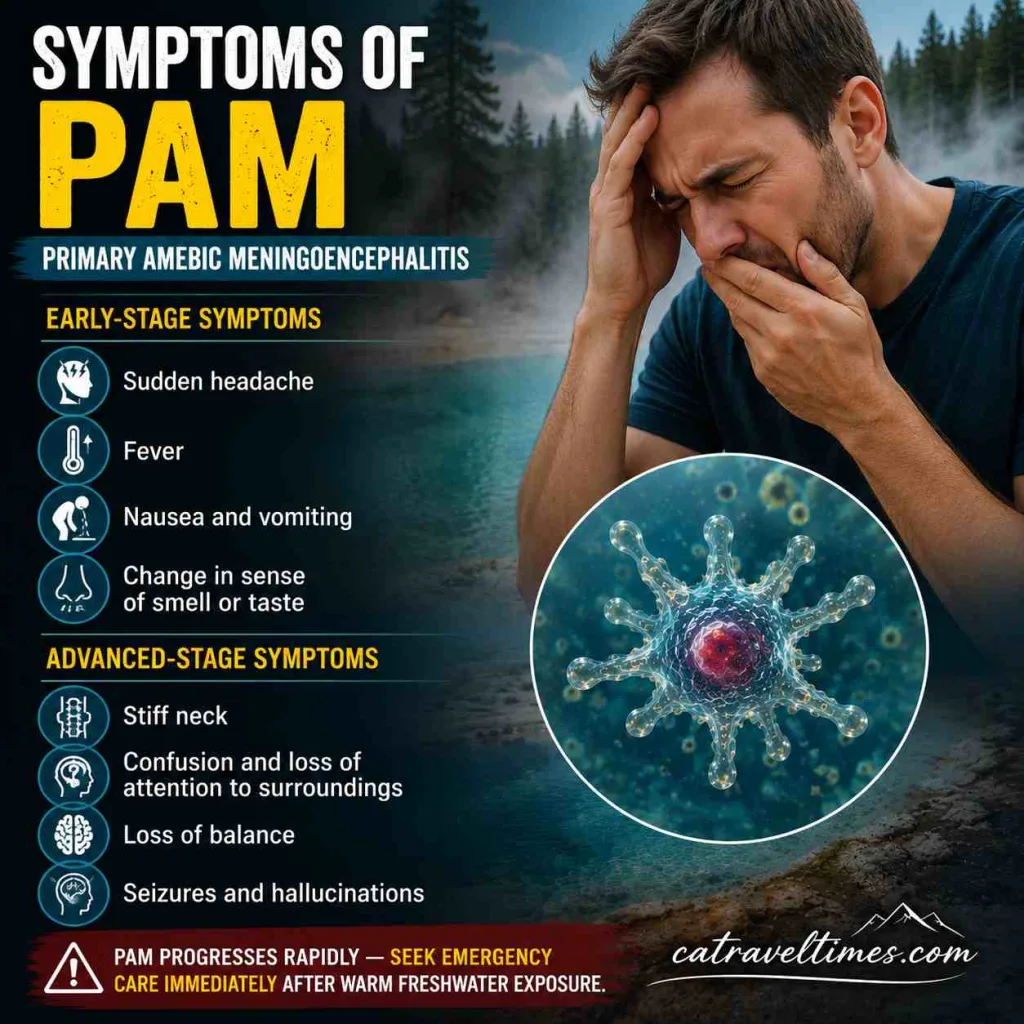
Early-Stage Symptoms
- Sudden headache
- Fever
- Nausea and vomiting
- Change in sense of smell or taste
Advanced-Stage Symptoms
As the infection progresses, typically within 1 to 12 days of exposure, symptoms can escalate rapidly to include:
- Stiff neck
- Confusion and loss of attention to surroundings
- Loss of balance
- Seizures and hallucinations
Because PAM advances so quickly — often causing coma and death within about five days of the onset of symptoms — anyone who develops these symptoms after swimming or soaking in warm freshwater should seek emergency medical care immediately and inform providers about recent water exposure.
How to Reduce Your Risk at Hot Springs
The encouraging news is that infection is highly preventable with a few simple precautions, according to CDC guidance.
Before You Soak
- Check recent advisories for the specific hot spring or park you plan to visit.
- Avoid lesser-known or undeveloped hot springs during peak summer heat, when water temperatures and amoeba concentrations tend to be highest.
- Consider visiting during cooler months or at higher-elevation springs where water temperatures may run lower.
While You’re in the Water
- Keep your head above water at all times. This single habit dramatically lowers your risk, since infection requires water forced up the nose.
- Use a nose clip if you’re prone to submerging your head or if children are swimming nearby.
- Avoid jumping, diving, or dunking your head in natural hot springs or warm freshwater pools.
- Don’t dig or stir up sediment at the bottom of shallow pools, since the amoeba is more likely to concentrate near the bottom.
After Your Visit
- Rinse off with clean, treated water when possible.
- If you use a neti pot or nasal rinse device at home afterward, only use distilled, sterile, or previously boiled water — never tap water — since a small number of documented infections have been traced back to nasal irrigation.
Which Hot Springs Carry Higher Risk?
Not every hot spring poses equal risk, and awareness of the following patterns can help travelers make informed choices.
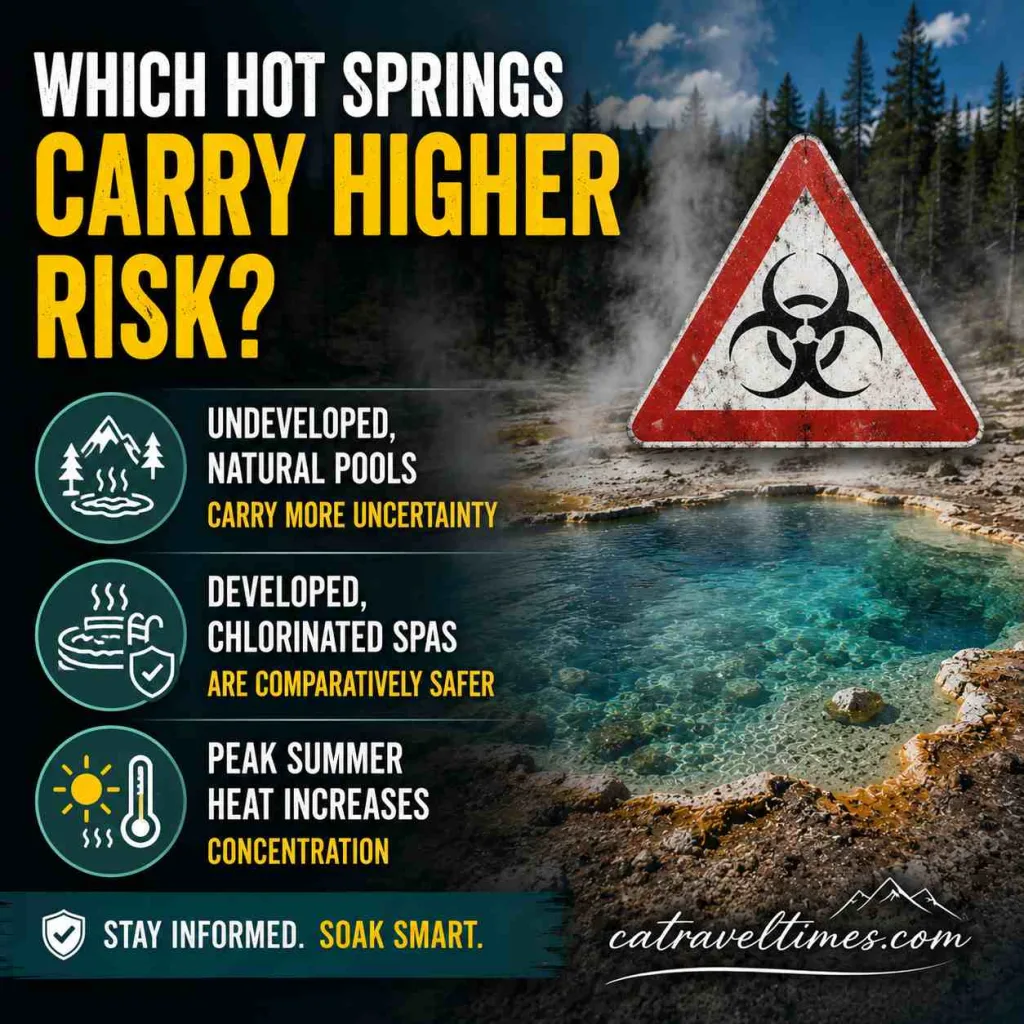
Undeveloped, Natural Pools Carry More Uncertainty
Backcountry or undeveloped hot springs — the kind reached by hiking trails rather than managed facilities — generally lack water treatment, filtration, or monitoring, making conditions harder to predict compared to regulated pools.
Developed, Chlorinated Spas Are Comparatively Safer
Commercial hot spring resorts and spas that treat and circulate their water with chlorine or other disinfectants significantly reduce amoeba survival, which is why infections are overwhelmingly linked to natural, untreated water rather than managed facilities.
Peak Summer Heat Increases Concentration
Water temperature and stagnation both influence amoeba levels, and the warmest months of the year — combined with lower water levels during drought — tend to correspond with the highest recorded concentrations.
If you’re researching specific soaking destinations for an upcoming trip, cross-referencing conditions with a detailed hot springs travel guide alongside official park advisories is one of the smartest planning steps you can take.
Do All Hot Springs Have Brain-Eating Amoeba?
Not necessarily. While the organism is widespread and can be found in warm freshwater around the world, not every hot spring tests positive. As the 2026 national park study showed, some geothermal areas — including Olympic National Park and Newberry National Volcanic Monument — returned no detections at all, even though nearby thermal sites in other parks tested positive at high concentrations. This tells us that local water chemistry, temperature stability, and sediment composition all play a role in whether the amoeba establishes itself at a given location.
So while it’s accurate to say hot springs can have brain-eating amoeba, it would be inaccurate to assume every single geothermal pool is automatically affected. The safest approach is to treat all natural warm freshwater — hot springs included — as a location where the organism could potentially be present, and to take standard precautions regardless of whether a specific site has been tested.
Final Thoughts: Should You Avoid Hot Springs?
So, do hot springs have brain-eating amoeba? Yes, in some locations — but with millions of safe visits every year, informed travelers have every reason to keep exploring these destinations confidently.
A few mindful habits, like keeping your head above water, make hot springs one of the most rewarding experiences nature has to offer. For more inspiration on where to soak next, explore catraveltimes.com for curated hot springs and nature travel guides.