Lassen Volcanic National Park Itinerary: My Complete Guide
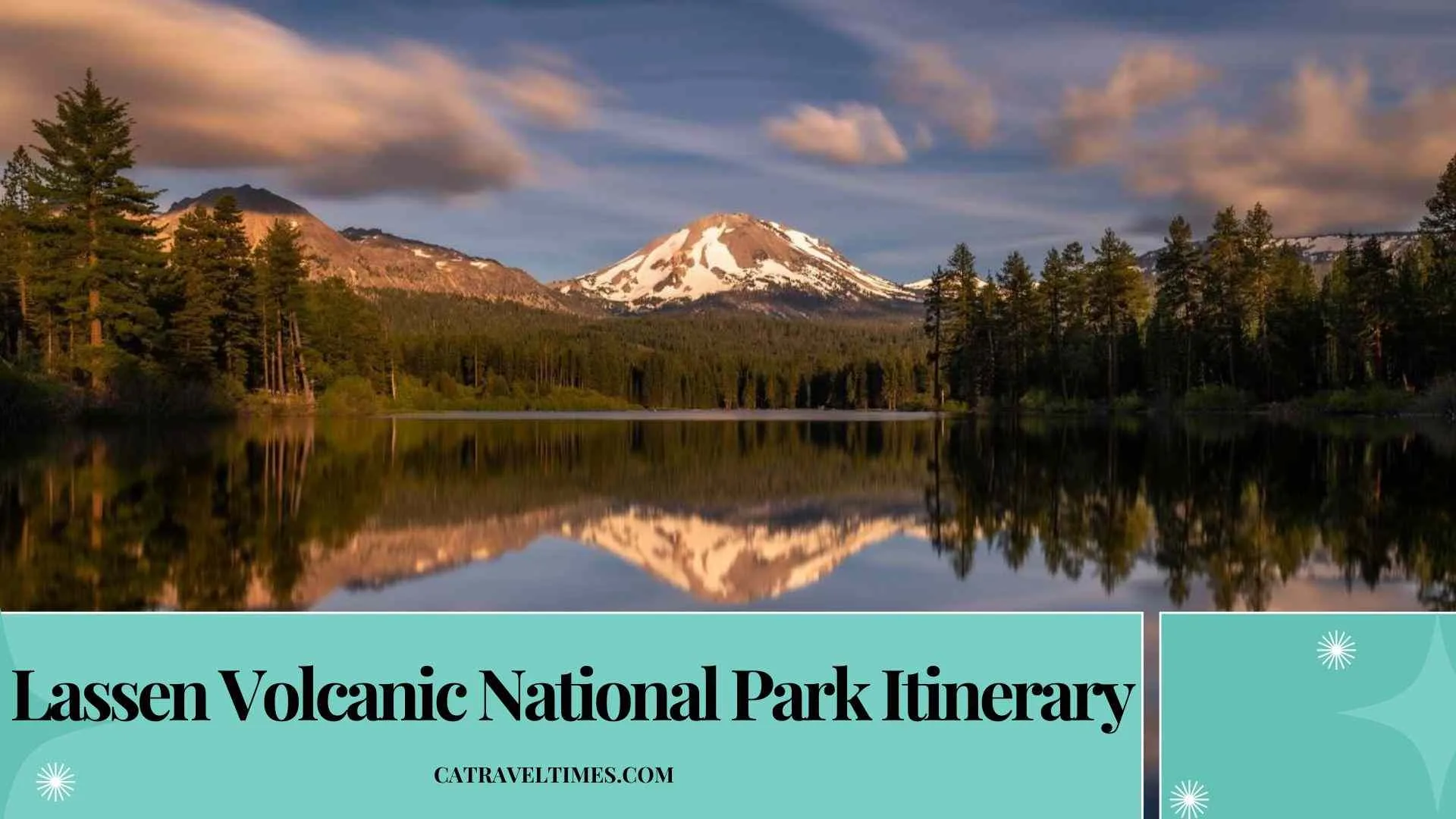
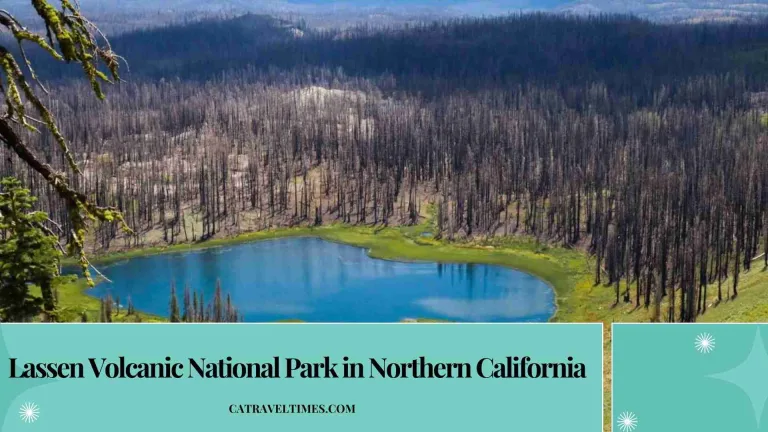
I’ll be honest — Lassen Volcanic National Park was never at the top of my California bucket list. Yosemite, Death Valley, Big Sur — those were the names that always came first. But the moment I pulled off Highway 89 and saw Lassen Peak rising above a cobalt-blue lake ringed by wildflowers, I understood immediately why people who know California well call this place their best-kept secret.
If you’re planning a trip and need a complete Lassen Volcanic National Park itinerary, I’ve done the legwork for you — and I’m sharing every detail from my own boots-on-the-ground experience right here on CA Travel Times.
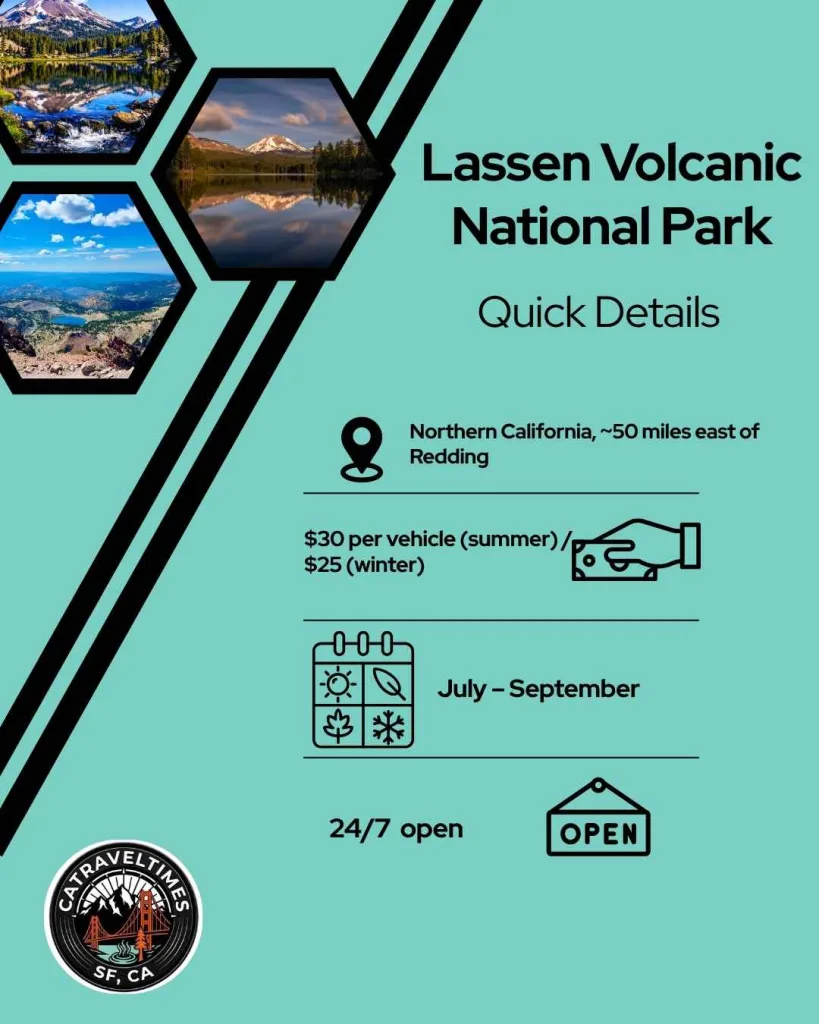
lassen volcanic national park itinerary: Quick Details
Before diving into the full itinerary, here is everything you need to know about Lassen Volcanic National Park at a glance.
| Details | info |
| Park Location | Northern California, ~50 miles east of Redding |
| Nearest City | Redding, CA (45 min drive) |
| Entrance Fee | $30 per vehicle (summer) / $25 (winter) |
| Payment Method | Cashless only — credit/debit card |
| Best Time to Visit | July – September |
| Park Open | 24/7 — facilities & roads have seasonal hours |
| Best Waterfall | Kings Creek Falls |
| Hardest Hike | Lassen Peak Summit (5 mi, 2,000 ft gain) |
| Cell Service | Very limited — download offline maps before arrival |
How to Get Lassen Volcanic National Park: Directions
Lassen Volcanic National Park sits roughly 50 miles east of Redding in Northern California, at the crossroads of the Cascades, Sierra Nevada, and Great Basin. From San Francisco, the drive takes about 3.5 to 4 hours via I-5 North to Highway 36 East. From Sacramento, expect around 3 hours.
The park has two main entrances:
- Southwest Entrance — off Highway 36, near the Kohm Yah-mah-nee Visitor Center (21820 Lassen National Park Hwy, Mineral, CA 96063). Open year-round.
- Northwest Entrance — off Highway 44, near the Loomis Museum (29489 Lassen National Park Hwy, Shingletown, CA 96088). Open seasonally.
| From | Distance | Drive Time | Route |
| San Francisco | ~250 miles | ~4.5 hours | I-5 North → Highway 36 East |
| Sacramento | ~190 miles | ~3 hours | I-5 North → Highway 36 East |
| Redding | ~50 miles | ~50 minutes | Highway 36 East or Highway 44 East |
| Los Angeles | ~490 miles | ~7 hours | I-5 North → Highway 36 East |
| Reno, NV | ~185 miles | ~3 hours | Highway 395 North → Highway 36 West |
Download the NPS App before you arrive — it includes a 16-stop audio tour that lines up with numbered posts along the highway, and it works offline.
Key stops from south (SW entrance) to north (NW entrance):
- Kohm Yah-mah-nee Visitor Center
- Sulphur Works
- Brokeoff Mountain Trailhead
- Ridge Lakes Trailhead
- Lake Helen
- Bumpass Hell Trailhead
- Cold Boiling Lake / Crumbaugh Lake Trailhead
- Kings Creek Falls Trailhead
- Summit Lake (North & South Campgrounds)
- Devastated Area
- Hot Rock
- Lassen Peak Trailhead
- Manzanita Lake / Loomis Museum
Is Lassen Volcanic National Park Worth Visiting?
Yes — and it’s not even close. Lassen receives around 500,000 visitors per year, compared to Yosemite’s 4 million. That means no lines at the entrance gate, no competition for trailhead parking at 9 AM, and an actual sense of wilderness that’s increasingly rare in California’s most famous parks.
The park contains all four types of volcanoes found on Earth — plug dome, shield, cinder cone, and composite — making it geologically one of the most diverse places on the continent. For anyone who enjoys geology, alpine scenery, and solitude, Lassen consistently exceeds expectations.
Lassen Volcanic National Park Tickets & Entrance Fees
No timed-entry reservations are required for general admission. You simply pay at the entrance station or purchase your pass in advance. The park operates a fully cashless system — only credit or debit cards are accepted at the entrance kiosks.
| Pass Type | Fee |
| Private Vehicle (Apr 16 – Nov 30) | $30 / 7 days |
| Private Vehicle (Dec 1 – Apr 15) | $25 / 7 days |
| Motorcycle | $25 / 7 days |
| Individual (foot, bike) | $15 / 7 days |
| Lassen Annual Pass | $55 |
| America the Beautiful Pass | $80 (covers all federal parks) |
If you plan to visit multiple National Parks during your California trip, the America the Beautiful Pass pays for itself quickly. Seniors, military, and those with disabilities qualify for discounted or free passes through the NPS.
How Many Days in Lassen Volcanic National Park Do You Need?
The honest answer is at least two days, ideally three. The main park highway is 30 miles long and connects the two entrances, but the side trails, hydrothermal areas, and remote corners of the park take far more time than the drive suggests.
One full day covers the highlights if you’re driving through. Two days lets you hike properly and relax. Three days allows you to visit the Warner Valley, climb Lassen Peak, and explore the northeast corner of the park near Butte Lake — areas most visitors never reach.
Best Time to Visit Lassen Volcanic National Park
Late June through September is the ideal window. The main park highway — Highway 89 — typically closes from late November through late spring due to heavy snowfall. Even by early June, popular trails like Bumpass Hell may still be snow-covered. The park’s higher elevations can hold snow well into July in a big snow year.
- July–August: Peak season. All facilities open, all trails accessible. Wildflowers peak in July.
- September: My personal favorite. Crowds thin dramatically, temperatures are perfect for hiking, and fall colors begin appearing in lower elevations.
- Winter: The park road closes, but the Southwest Entrance area and Kohm Yah-mah-nee Visitor Center remain open. Snowshoeing and cross-country skiing are popular.
lassen volcanic national park itinerary Day-1
One day is tight, but very doable if you stay focused. Start from the Southwest Entrance and drive north — this way you experience the biggest attractions first when your energy is highest.
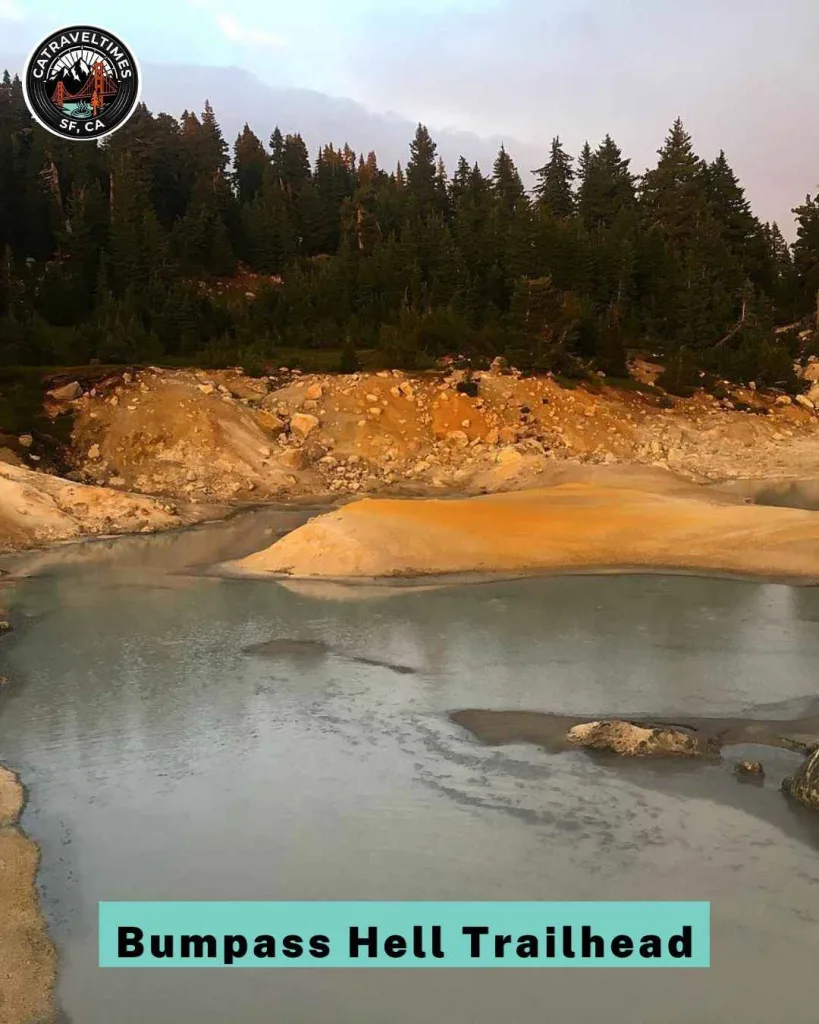
Kohm Yah-mah-nee Visitor Center
- 🚗 Arrive at the Southwest Entrance
- 🏛️ First Stop: Kohm Yah-mah-nee Visitor Center — pick up trail map, check conditions
- 🌋 Second Stop: Sulphur Works — 1 mile north, boardwalk over fumaroles and mud pots
- ⏱️ Time Needed: 15 minutes
- 👃 Note: Strong sulfur smell — completely normal
Morning (8:00 AM) Arrive at the Southwest Entrance and stop briefly at Kohm Yah-mah-nee Visitor Center. Pick up a trail map and check current trail conditions. Then drive a mile north to Sulphur Works — a compact hydrothermal area right off the highway with a boardwalk over fumaroles and mud pots. It smells intensely of sulfur, but it’s a 15-minute stop that immediately sets the tone for Lassen’s volcanic character.
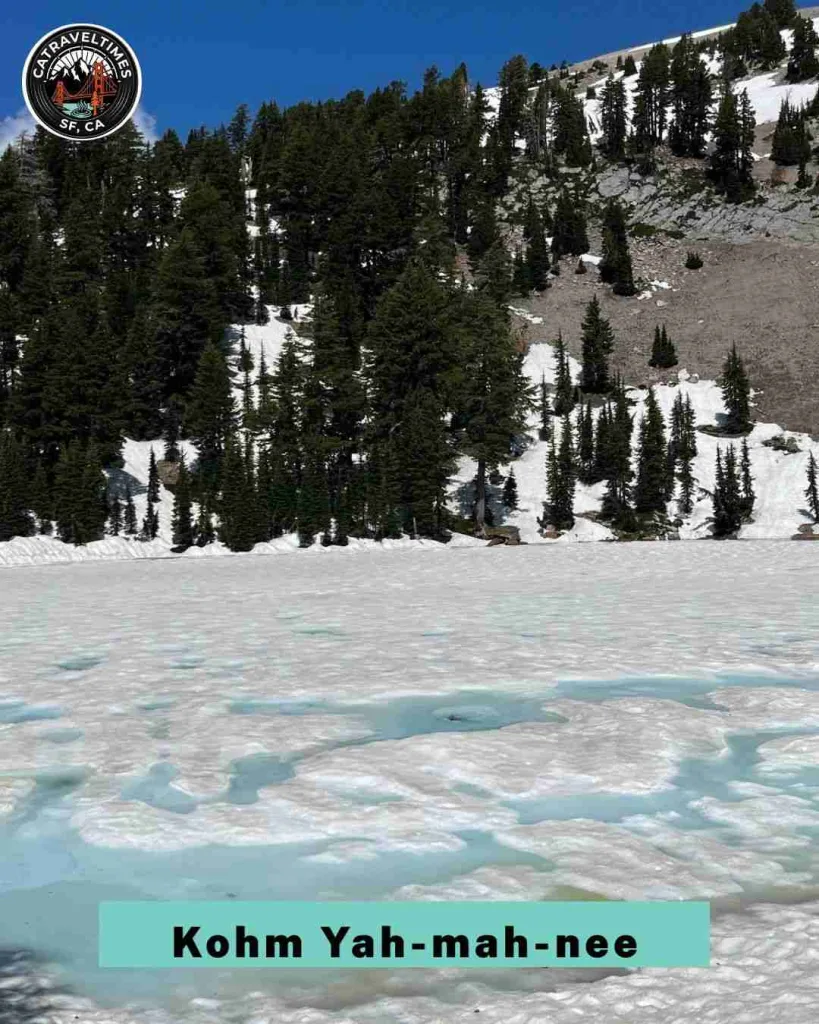
Bumpass Hell Trailhead
- 📍 Destination: Bumpass Hell Trailhead
- 🥾 Trail Length: 3 miles round trip
- 💪 Difficulty: Moderate
- ⏱️ Time Needed: 2 to 2.5 hours
- 👀 See: Boiling mud pots, hissing steam vents, turquoise acidic pools
- ⚠️ Stay on the boardwalk — ground crusts over boiling water, burns are severe
- 📖 History: Named after Kendall Bumpass who lost his leg breaking through the crust in the 1880s.
Mid-Morning (9:30 AM) Drive to the Bumpass Hell Trailhead. This is the most important hike of your trip. The 3-mile round-trip trail (moderate difficulty) descends into the largest hydrothermal area in the park.
You’ll walk a boardwalk above boiling mud pots, hissing steam vents, and turquoise acidic pools. Stay on the boardwalk — the ground can crust over boiling water, and the burns are severe. The area was named after Kendall Bumpass, who lost his leg after breaking through the crust in the 1880s. Allow 2 to 2.5 hours.
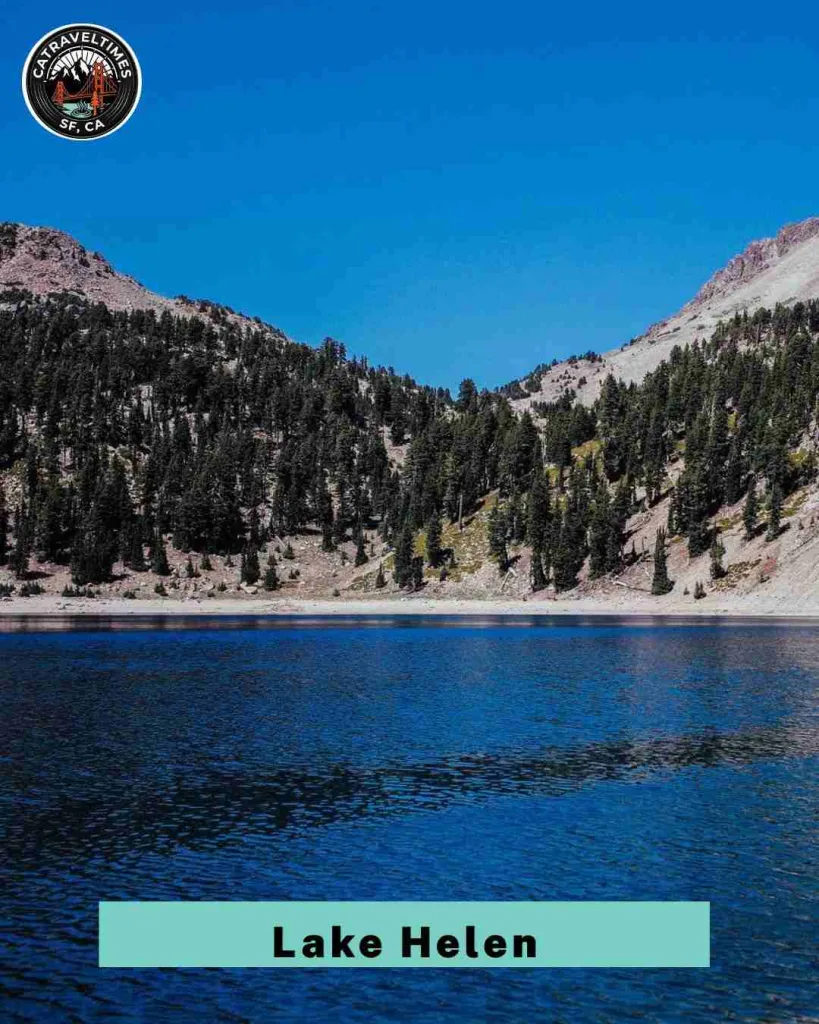
Lake Helen
- Stop: Lake Helen
- 🏔️ Location: Directly beneath Lassen Peak
- 🍱 Activity: Packed lunch picnic at the lake
- 📸 Photo Tip: Peak reflects perfectly in still water on clear days
- 👥 Crowds: Almost always quieter than trailheads
Afternoon (12:30 PM) Pack lunch. Eat at Lake Helen, an alpine lake sitting directly beneath Lassen Peak. On a clear day, the peak reflects perfectly in the still water. This is one of the most photogenic spots in the park and almost always quieter than the trailheads.
Devastated Area
- 📍 Stop: Devastated Area Interpretive Trail
- 🥾 Trail Length: 0.5 mile gravel loop
- 💪 Difficulty: Easy — short and flat
- 📖 Learn: How 1915 pyroclastic flow obliterated everything in its path
- 🪨 See: Giant volcanic boulders called “Hot Rocks” hurled by the eruption
- 🚗 Bonus: Hot Rocks also visible from the road nearby
Early Afternoon (2:00 PM) Continue north to the Devastated Area interpretive trail. This short, flat, 0.5-mile gravel loop walks through the blast zone of the 1915 Lassen Peak eruption.
Signage explains how a pyroclastic flow obliterated everything in its path. Giant volcanic boulders called “Hot Rocks” were hurled here by the eruption — you can stop to see them from the road nearby.
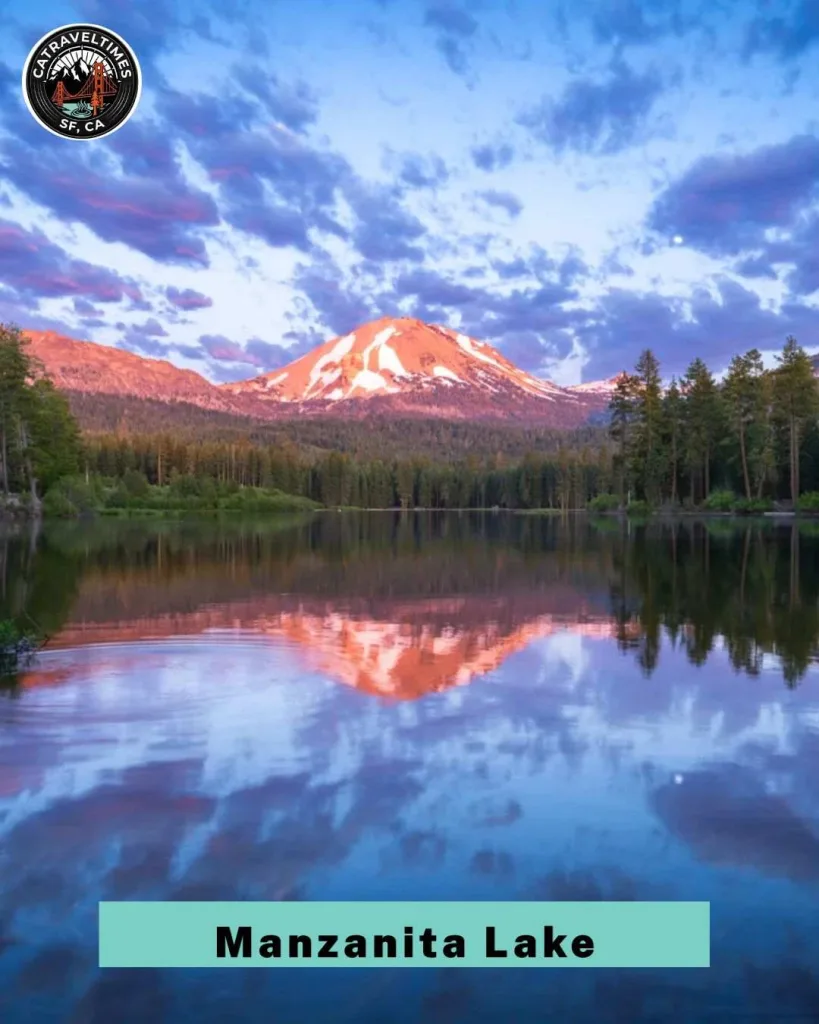
Manzanita Lake
- 📍 Stop: Manzanita Lake
- 🥾 Trail: 1.9 mile loop around the lake
- 💪 Difficulty: Easy and flat
- 👀 See: Lassen Peak reflected in the still water
- 🚣 Activities: Kayak and canoe rentals available at camp store in summer
- 📸 Photo Tip: Exceptional spot for evening photography on clear days
Late Afternoon (3:30 PM) End at Manzanita Lake. Walk the easy, flat 1.9-mile loop around the lake for stunning views of Lassen Peak reflected in the water. Kayak and canoe rentals are available at the camp store in summer. If the skies are clear and you have energy, this lake is exceptional for evening photography.
lassen volcanic national park itinerary day-2
Day 1: Follow the 1-Day Itinerary Above
Spend the night in Chester, Redding, or at a park campground (Manzanita Lake Campground is the most convenient — book via Recreation.gov).
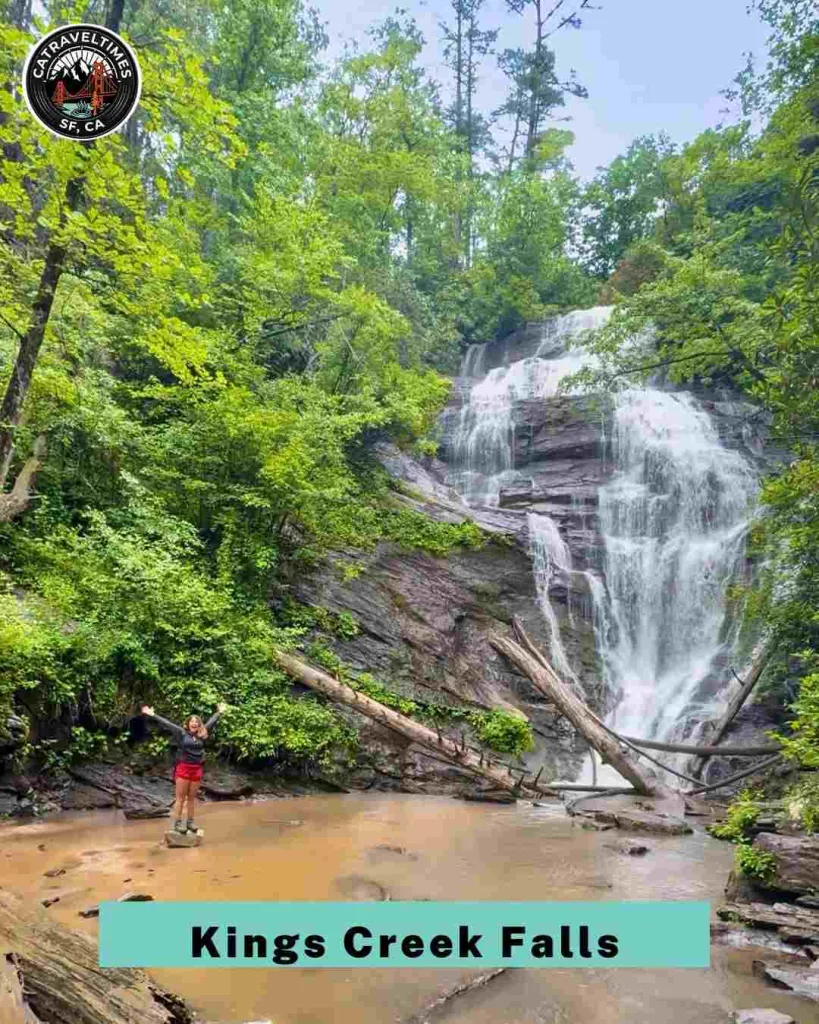
Day 2: Kings Creek Falls
- 📍 Destination: Kings Creek Falls Trailhead — 12 miles from Southwest Entrance on Highway 89
- 🥾 Trail Length: 2.8 miles loop
- 💪 Difficulty: Moderate
- ⏱️ Time Needed: 2 hours
- 🦌 Wildlife: Mule deer often spotted in Lower Kings Creek Meadow early morning
- 💧 Waterfall: 30 to 40 foot drop over dark volcanic basalt
- 🪜 Return Route: Dramatic stone staircase alongside frothing cascades
- 🅿️ Parking Tip: Arrive early — pullouts fill by mid-morning
Morning (8:00 AM) Start at the Kings Creek Falls Trailhead, located about 12 miles from the Southwest Entrance on Highway 89. This is the park’s most beloved waterfall hike.
The 2.8-mile loop trail descends through Lower Kings Creek Meadow — a lush, wildflower-covered valley where you’ll often spot mule deer in the early morning — before reaching a fenced overlook above a 30- to 40-foot waterfall that drops over dark volcanic basalt. The return route climbs a dramatic stone staircase alongside frothing cascades. Allow 2 hours and arrive early; the parking pullouts fill by mid-morning.
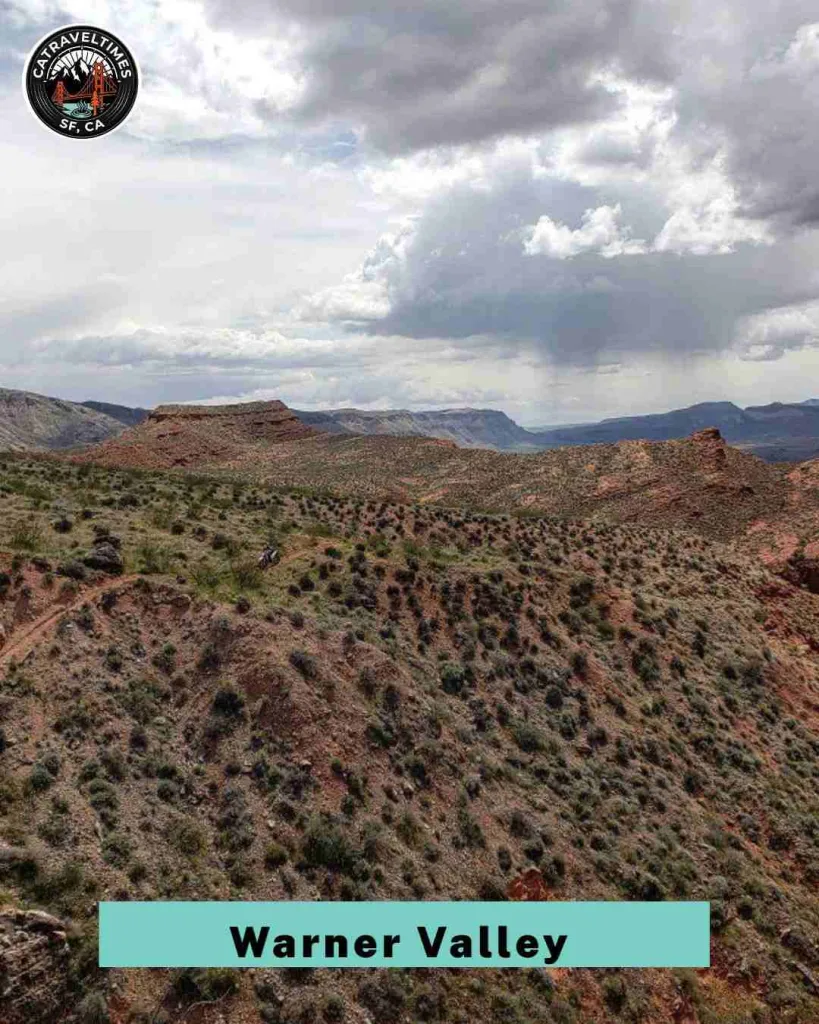
Warner Valley
- 📍 Destination: Warner Valley Area
- 🚗 Distance: ~1.5 hours from Southwest Entrance via Chester
- 💧 Stop 1: Boiling Springs Lake — 125°F hydrothermal lake surrounded by mudpots
- 🌋 Stop 2: Devil’s Kitchen — 2nd largest hydrothermal area in the park
- 👥 Crowds: Very few visitors — feels completely different from main highway
- ⏱️ Extra Time Needed: 1.5 hours
Late Morning (10:30 AM) If you have the energy and an extra 1.5 hours, drive around to the Warner Valley area (approximately 1.5 hours from the southwest entrance via Chester). This remote section contains two of the park’s most dramatic thermal features.
Boiling Springs Lake, a 125°F hydrothermal lake surrounded by mudpots, and Devil’s Kitchen, the second-largest hydrothermal area in the park. Very few visitors make it out here, which makes the experience feel completely different from the main highway corridor.
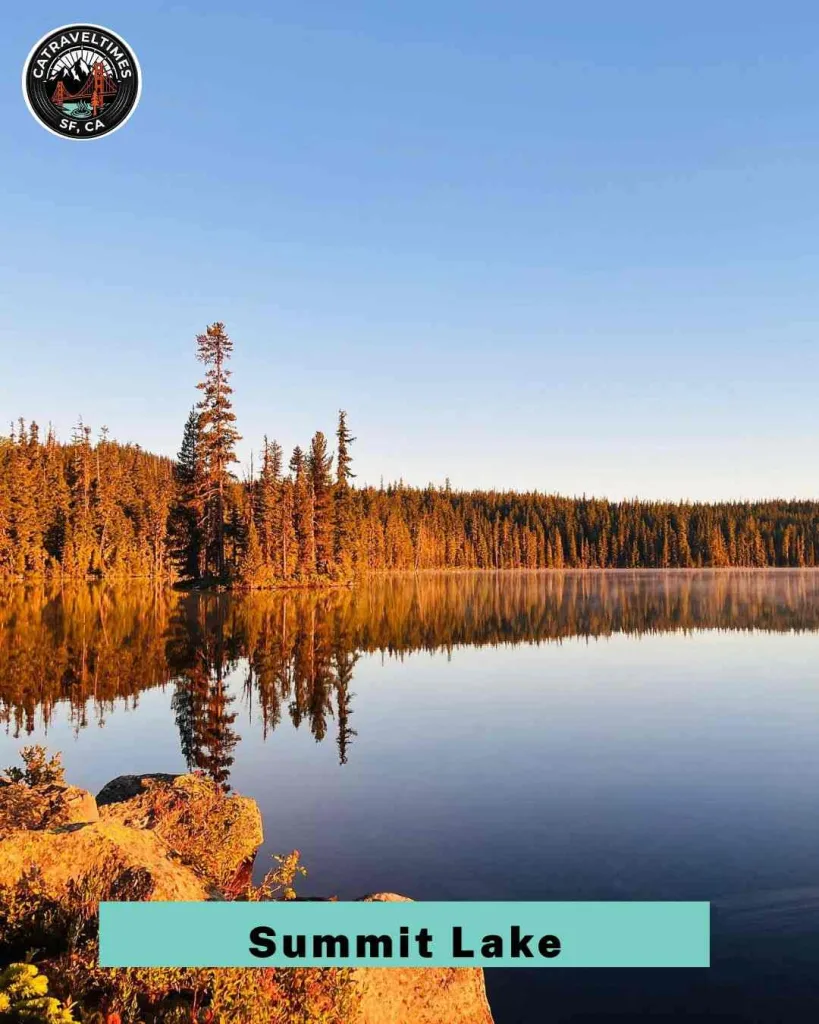
Summit Lake
- 📍 Destination: Summit Lake
- 🏔️ Elevation: 6,695 feet
- 🌲 Surroundings: Ringed by dense forest
- 🏊 Swimming: Cold but refreshing
- 🎣 Fishing: Available at the lake
- 👨👩👧 Great for: Families with kids
- 📸 Activity: Watch light change on the mountains from lakeshore
Afternoon (1:00 PM) Return to the main highway and spend the afternoon at Summit Lake. Swim (the water is cold but refreshing), fish, or simply sit on the lakeshore and watch the light change on the mountains. The lake sits at 6,695 feet and is ringed by dense forest. Families with kids love this spot.
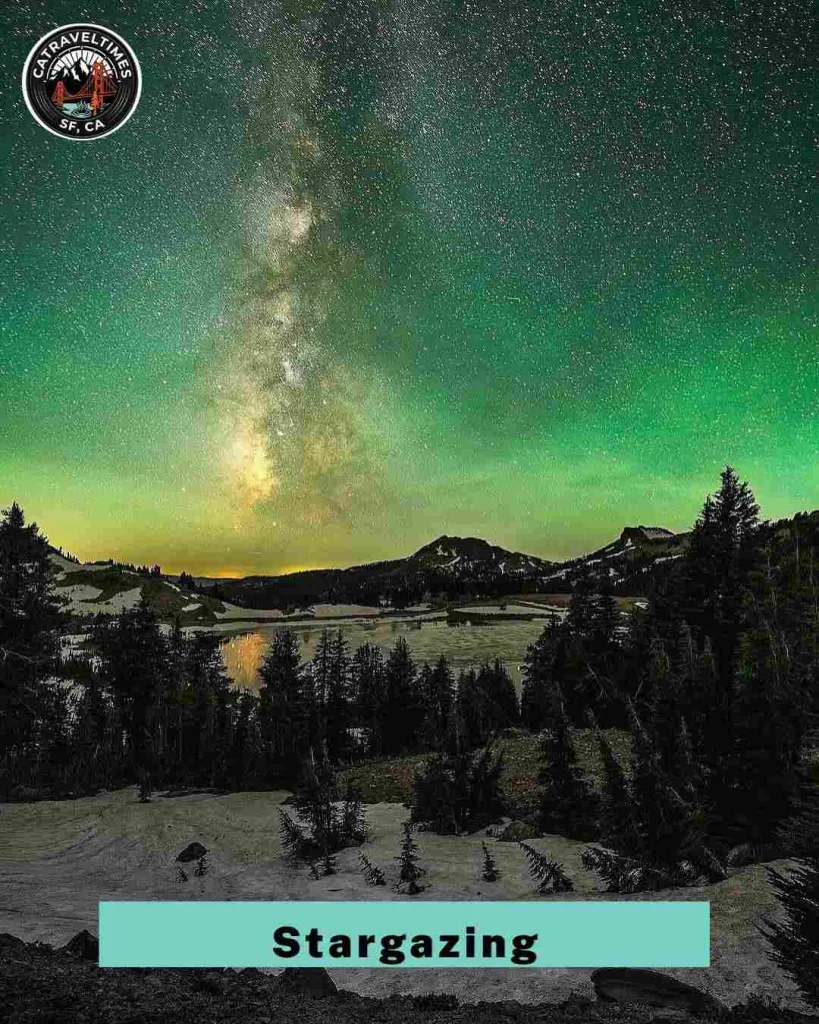
Stargazing
📍 Best Spots:
- Manzanita Lake Campground
- Summit Lake
Evening Stay after dark for stargazing. Lassen is designated dark-sky territory. The Milky Way is visible with the naked eye on clear nights. Manzanita Lake Campground and Summit Lake are both excellent viewing locations.
lassen volcanic national park itinerary day-3
Day 1 & 2:
Follow the 2-Day Itinerary Above
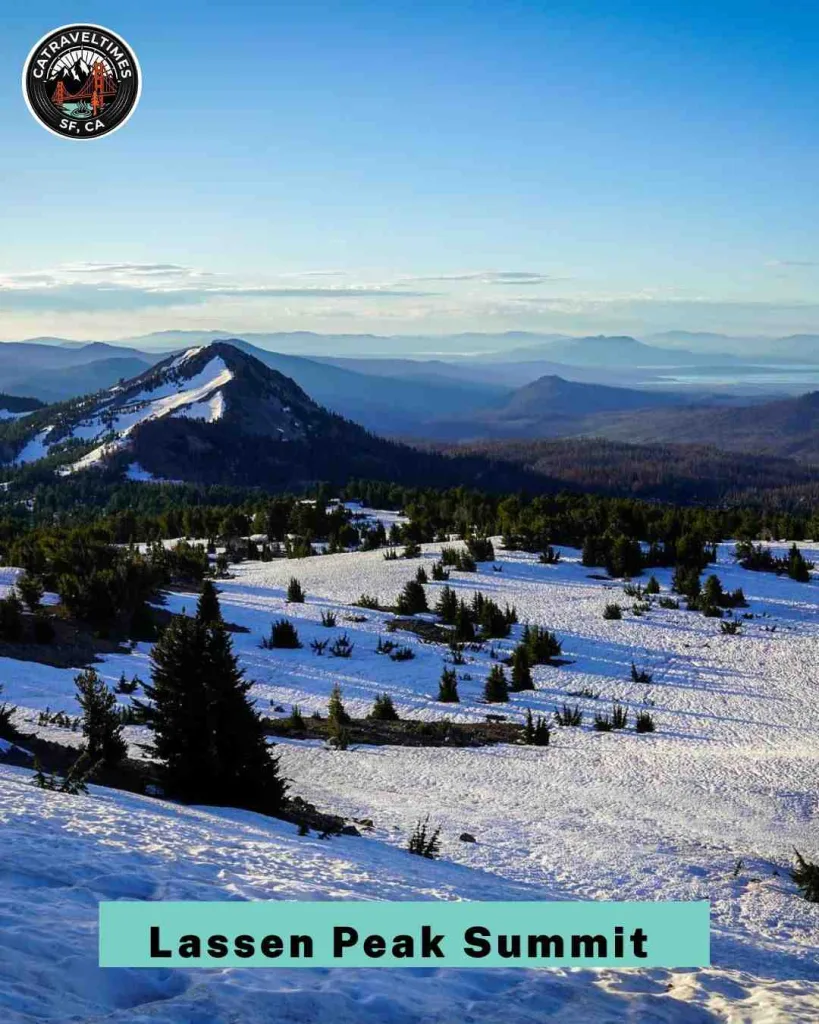
Day 3: Lassen Peak Summit
- 📍 Trailhead Elevation: 8,500 feet
- 🥾 Trail Length: 5 miles round trip
- ⛰️ Elevation Gain: 2,000 feet
- 🏔️ Summit Elevation: 10,457 feet
- 👀 Views from Summit: 100+ miles — Sacramento Valley, Sierra Nevada, Mount Shasta
- ⏱️ Time Needed: 4–5 hours
- 🌡️ Terrain: Alpine tundra and loose volcanic rock
- 🧥 Must Bring: Warm layers — summit is significantly colder than trailhead
- ⛈️ Weather Warning: Afternoon thunderstorms develop quickly in summer — start early
- ❄️ Snow Conditions: Check with visitor center before hiking
- 💪 Difficulty: Hardest hike in the park
This is the hardest hike in the park: 5 miles round trip with 2,000 feet of elevation gain, starting at 8,500 feet. The trail winds through alpine tundra and loose volcanic rock before reaching the summit at 10,457 feet. Views from the top extend more than 100 miles on clear days — across the Sacramento Valley, the Sierra Nevada, and neighboring Cascade volcanoes like Mount Shasta.
Allow 4 to 5 hours. Bring layers regardless of the weather at the trailhead; the summit temperature is significantly colder, and afternoon thunderstorms develop quickly in summer. Check with the visitor center for current snow conditions.
Cinder Cone
- 📍 Location: Northeast corner of the park — off Highway 44 via unpaved road
- 🚗 Distance from NW Entrance: ~45 minutes drive
- 🌋 Feature: Perfectly shaped volcanic cone rising 700 feet above lava fields
- 🥾 Trail Length: 4 miles round trip
- ⛰️ Terrain: Loose volcanic cinder — steep climb
- 👀 Views from Summit: Painted Dunes, Snag Lake, and Butte Lake
- 👥 Crowds: Very low — fraction of main highway traffic
- ⏱️ Time Needed: 3–4 hours
Cinder Cone (Butte Lake Area) Located in the northeast corner of the park (about 45 minutes from the northwest entrance via unpaved road off Highway 44), Cinder Cone is a perfectly shaped volcanic cone rising 700 feet above the surrounding lava fields.
The 4-mile round-trip hike climbs loose volcanic cinder — two steps up, one step back — to a summit with panoramic views of colorful Painted Dunes, Snag Lake, and Butte Lake below. This area gets a fraction of the crowds of the main highway and rewards those willing to make the drive.
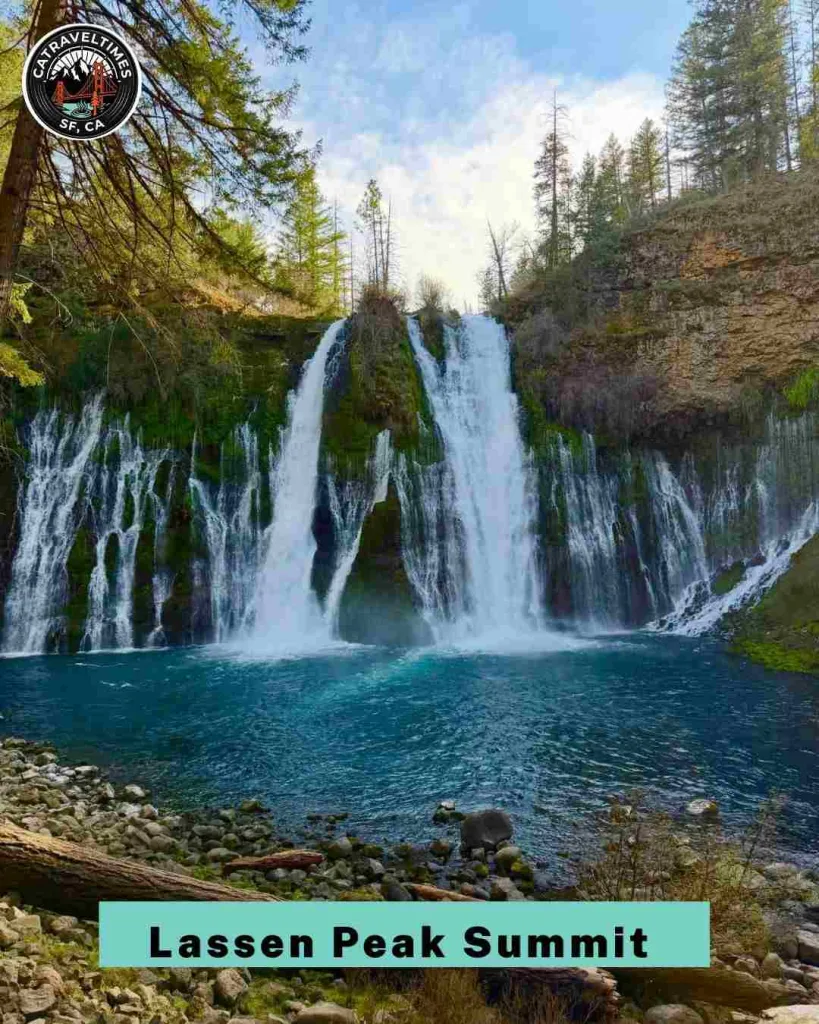
Burney Falls
- 📍 Location: McArthur-Burney Falls Memorial State Park
- 🚗 Distance from Lassen NW Entrance: ~45 minutes drive
- 💧 Waterfall Height: 129 feet
- 🥾 Trail: Loop trail to base and back
- ⏱️ Time Needed: 1.5 to 2 hours
- 🎟️ Entrance Fee: State park day-use fee applies
- 🌅 Best Time to Visit: Morning for soft light and fewer crowds
Burney Falls is one of the most spectacular waterfalls in all of California and sits just 45 minutes from Lassen’s northwest entrance — making it an obvious and deeply rewarding Day 3 add-on. Located inside McArthur-Burney Falls Memorial State Park, this 129-foot waterfall is not a single drop but a dramatic cluster of falls that burst from the cliffside and thunder into a pool below.
The mist hits you well before you reach the base. A well-maintained loop trail descends to the base of the falls, circles the river, and climbs back up. Allow 1.5 to 2 hours including the hike and time to simply stand and stare.
Subway Cave Lava Tube
- 📍 Location: Old Station, Highway 89 — 15 min from NW Entrance
- 🎟️ Entrance Fee: Free
- 🥾 Trail Length: 1/3 mile loop
- ⏱️ Time Needed: 30–45 minutes
- 🎒 Must Bring: Headlamp or flashlight, sturdy shoes
- 🚻 Facilities: Parking, picnic tables, restrooms
This is the perfect Day 3 choice for families or anyone who wants something different from strenuous summit hikes. Both stops sit just outside the park’s northwest entrance and pair together effortlessly into one full day.
Subway Cave Lava Tube is a free activity located in Old Station, just 15 minutes from the Manzanita Lake northwest entrance on Highway 89. It is technically outside Lassen National Park but sits within Lassen National Forest — no entrance fee required. A short 1/3-mile loop trail takes you through an underground lava tube formed by ancient volcanic activity.
Top 10 Things to Do in Lassen Volcanic National Park
Beyond the itinerary stops, here is a complete reference of the best experiences in the park:
| Activity | Difficulty | Time Needed | Notes |
| Bumpass Hell Trail | Moderate | 2–2.5 hrs | Must-do; largest hydrothermal area |
| Kings Creek Falls | Moderate | 2 hrs | Best waterfall in park; arrive early |
| Lassen Peak Summit | Strenuous | 4–5 hrs | Highest point; breathtaking views |
| Manzanita Lake Loop | Easy | 45 min | Best peak reflection photos |
| Cinder Cone | Strenuous | 3–4 hrs | Remote NE corner; worth the drive |
| Boiling Springs Lake | Easy | 1.5 hrs | Warner Valley; 125°F thermal lake |
| Devil’s Kitchen | Moderate | 2 hrs | 2nd largest hydrothermal area |
| Sulphur Works Boardwalk | Easy | 15 min | Quick stop; sulfur fumaroles |
| Devastated Area Trail | Easy | 30 min | 1915 blast zone; interpretive signs |
| Summit Lake Swimming | N/A | 1–2 hrs | Cold, clear alpine lake |
I have covered each of these activities in far greater detail — with trail tips, timing advice, and insider notes — in my dedicated Things to Do in Lassen Volcanic National Park in Northern California guide. If you want the full breakdown on any of the activities below, that article is the place to go. The table here gives you a quick planning reference so you can decide what fits your schedule before you dive deeper.
Lassen Volcanic National Park Waterfall Guide
The park has two primary waterfalls accessible by trail:
Kings Creek Falls
Kings Creek Falls is the most visited waterfall in Lassen. The falls drop 30 to 40 feet over a basalt cliff, preceded by nearly a quarter mile of cascades along Kings Creek. The loop trail through Lower Kings Creek Meadow and up the stone staircase alongside the upper cascades is one of the most complete hiking experiences in the park. Trailhead parking fills by 10 AM in summer — arrive by 8 AM or visit on a weekday. The trail opens in June or July depending on snowmelt and closes when snow returns in fall.
Mill Creek Falls
Mill Creek Falls is the tallest single-drop waterfall in the park at 75 feet, reached via a short 1.7-mile trail from near the Southwest Entrance. It sees far fewer visitors than Kings Creek and is a worthwhile add-on if you’re starting from the south. The trail to Mill Creek Falls is easy and takes about 50 minutes round trip, making it one of the most accessible waterfall hikes in Lassen.
Where to Stay Near Lassen Volcanic National Park
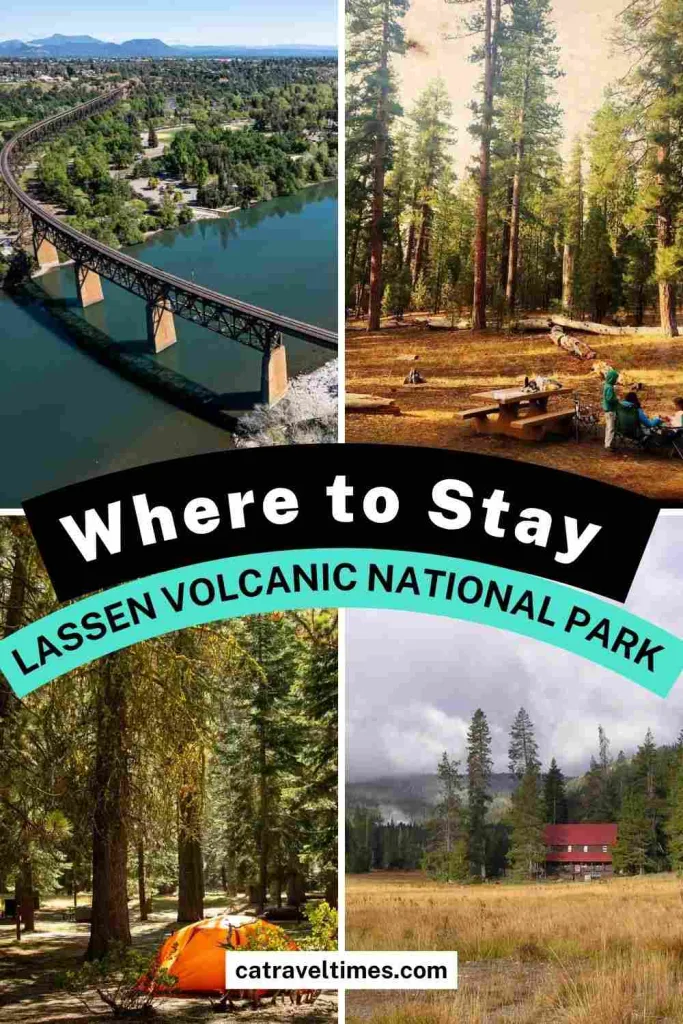
Inside the Park
Lassen has no traditional lodge, but several campgrounds operate inside park boundaries:
- Manzanita Lake Campground: The most popular and accessible, near the northwest entrance. Manzanita Lake Camping Cabins here offer beds and a covered porch without plumbing — restrooms and showers are shared nearby. Book via Recreation.gov up to six months in advance.
- Summit Lake North & South: Midway through the park. Reservations available in some loops; others are first-come, first-served.
- Butte Lake Campground: Remote, northeast section. No hookups. Great base for Cinder Cone.
- Warner Valley Campground: Not recommended for trailers. 18 sites. Close to Devil’s Kitchen and Boiling Springs Lake.
Outside the Park
- Chester, CA is the most convenient gateway town, a 30-minute drive from the Southwest Entrance. Several motels and vacation rentals.
- Redding, CA offers the widest selection of hotels and is about 45 minutes from the northwest entrance.
- Susanville, CA is another option on the eastern side of the park, with more hotel choices than Chester.
For a more detailed breakdown of where to stay — including specific hotel recommendations, pricing tips, and which area suits which type of traveler — my dedicated Lassen Volcanic National Park in Northern California guide covers everything you need before making a booking decision.
Practical Tips for Your Visit
- Fuel up before entering. Gas stations inside the park do not exist. Fill your tank in Chester (south approach) or Old Station / Shingletown (north approach).
- Download offline maps. Cell service is unreliable throughout most of the park. The NPS App works offline. You can also download the park map from the National Park Service’s official Lassen Volcanic page before your trip.
- Pets are not allowed on trails. Dogs must remain in vehicles or in developed areas (campgrounds, parking lots). This is strictly enforced.
- Altitude awareness is real. Trailheads sit between 5,000 and 8,500 feet. If you’re arriving from sea level, drink extra water, eat well, and take the first hour slowly. Lassen Peak’s summit sits just over 10,400 feet — altitude sickness is a genuine risk for visitors who push too hard.
- Stay on designated trails and boardwalks near thermal areas. The hydrothermal ground can appear solid while concealing boiling acidic water just beneath the surface. The burns are severe and the park takes this safety rule seriously.
- Cashless entry only. Since 2023, the park has operated on a fully digital payment system. Bring a credit or debit card — cash is not accepted at entrance stations.
For more deeply researched guides to California’s volcanic north and beyond, explore our full coverage of Lassen Volcanic National Park in Northern California and the things to do in Lassen Volcanic National Park that most itineraries overlook.
Final Thoughts: Is Lassen Worth the Drive?
Every time someone asks me whether Lassen Volcanic National Park is worth visiting, I tell them the same thing: it’s the park I wish I’d visited years before I did. The combination of accessible hydrothermal wonders, challenging summit hikes, pristine alpine lakes, and genuine quiet makes it one of the most complete park experiences in California. Whether you have one day or three, use this Lassen Volcanic National Park itinerary as your starting framework — then let the park surprise you with what it has beyond the plan.